Best Portable Power Station for Ice Fishing Electronics
There's nothing quite as frustrating as heading out onto the frozen expanse of a North Dakota lake, getting your ice fishing shelter set up, dropping your transducer, only to have your fish finder or electric auger sputter and die after an hour or two. In today's tech-driven ice fishing world, reliable power is an absolute game-changer, and this guide is all about helping you find the best portable power station to keep your essential electronics humming on the ice, no matter how long your day is.
Why a Portable Power Station is Essential for Ice Fishing
The days of relying solely on bulky, heavy lead-acid batteries for every single piece of ice fishing equipment are slowly fading. While those still have their place, modern electronics demand more consistent, portable, and often lighter power sources. When you're out on a sprawling lake like Devils Lake or Lake Sakakawea, battling the elements and trying to pinpoint those elusive walleye or perch, the last thing you want is a dead battery interrupting your flow.
The Frustration of Dead Batteries on the Ice
Picture this: you've spent the morning drilling holes, jigging for a while, and your fish finder has been painting a beautiful picture of fish coming in. Then, just as you're starting to get into a rhythm, the screen flickers, dims, and goes black. Your carefully planned day turns into a scramble. Maybe it's your phone dying, leaving you without a GPS to find your way back, or perhaps your heated mitts run out of juice, and your hands start to freeze. These are common frustrations for anglers who haven't quite figured out their power strategy. The biting North Dakota winds and frigid temperatures are already challenging enough; adding power woes on top of that can just ruin a trip. It's not just about convenience; it's about comfort and safety when you're far from shore.
Powering Modern Ice Fishing Electronics
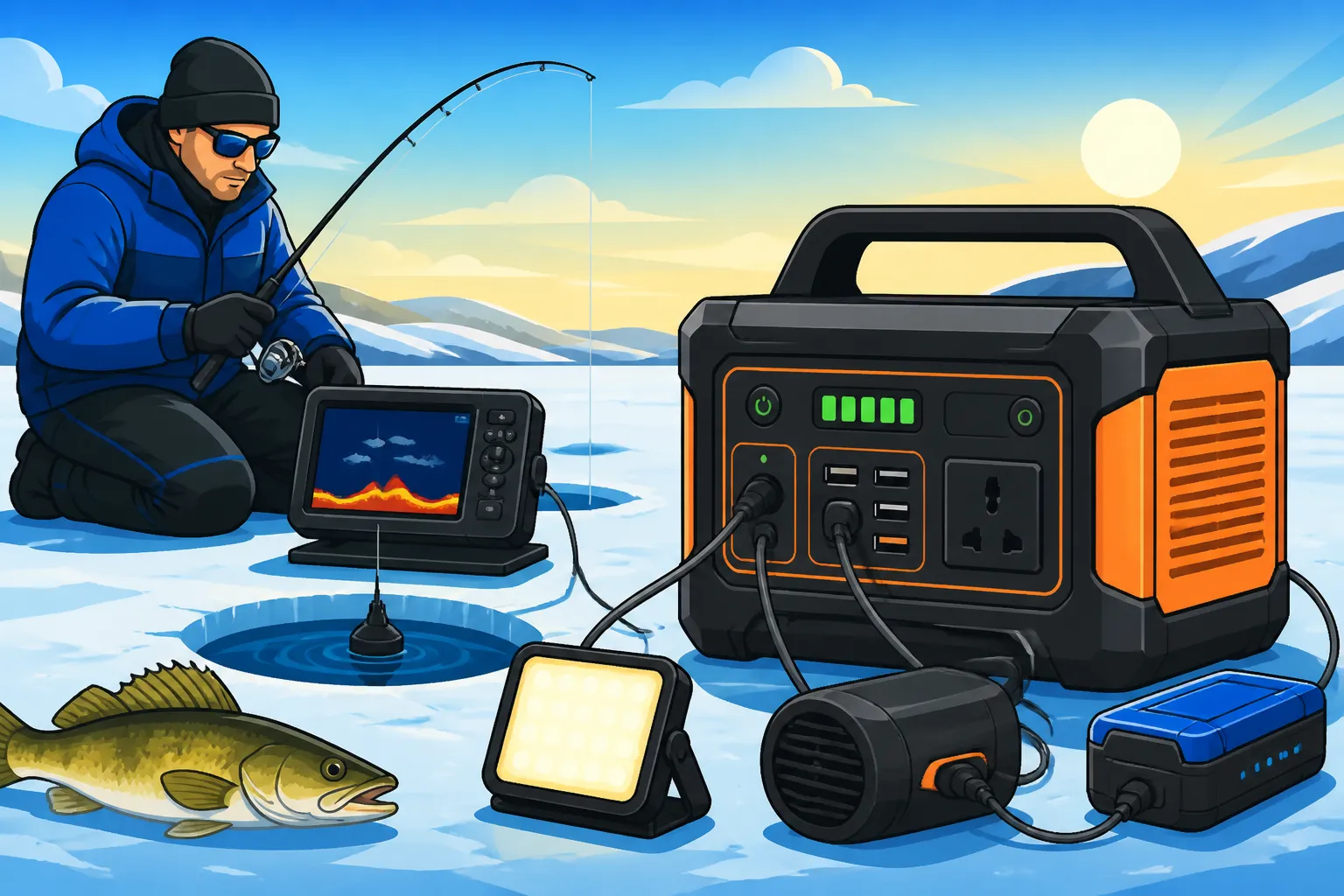
Today's ice anglers use an incredible array of electronics. We're talking about high-definition fish finders with GPS mapping, underwater cameras to spy on fish behavior, electric augers that make quick work of thick ice, and even heated clothing or charging ports for smartphones and tablets. Each of these devices, while making our lives easier and our fishing more productive, draws power. A single 12V lead-acid battery might handle one or two items for a day, but what if you're running a powerful live scope, an electric auger, and keeping your phone charged for emergencies or sharing those trophy photos? That's where a dedicated, efficient portable power station comes into its own. It allows you to run multiple devices simultaneously without worrying about one draining the other or running out of juice mid-day. Think about it: an electric auger is a lifesaver when the ice is four feet thick, but only if it has enough power for all those holes! Best Ice Fishing Auger Brands for North Dakota can make your drilling much easier, but they all need power.
Key Features to Look for in an Ice Fishing Power Station
Choosing the right portable power station isn't just about picking the biggest one you can find. It's about finding the right balance of capacity, portability, durability, and features that suit the demanding environment of North Dakota ice fishing. You need something that can stand up to the cold, the snow, and the jostling of being hauled across the ice.
Capacity and Output (mAh, Wh, Wattage)
When you're looking at power stations, you'll often see terms like mAh (milliampere-hour), Wh (watt-hour), and wattage. Don't let these terms intimidate you.
- Watt-hours (Wh) are probably the most important number for overall capacity. This tells you how much energy the battery can store. A higher Wh rating means it can run your devices for longer. For a full day of running a fish finder and charging a phone, you're probably looking for something in the 100-300 Wh range, but if you're adding an electric auger or multiple heaters, you'll want to go much higher, perhaps 500 Wh or more.
- Wattage refers to the power output. This is crucial if you're planning to run devices that draw a lot of power, like some electric augers or small heaters. Make sure the continuous wattage output of the power station is higher than the maximum wattage draw of your most power-hungry device. If your auger needs 500W, a power station that only puts out 300W won't cut it.
- mAh (milliampere-hour) is often used for smaller batteries like those in phones or smaller portable devices. For larger power stations, Wh is a more comprehensive measure.
Consider what you'll be powering. If it's just a Vexilar or a Humminbird ice flasher and your phone, you won't need as much capacity as someone running a Garmin LiveScope, charging multiple phones, and perhaps even a portable espresso machine (hey, some people get fancy!). It's always better to have a bit more capacity than you think you'll need, especially if you plan extended trips or are going Deepwater Bay Fishing Spots on Lake Sakakawea where you can be quite a ways from a charging point.
Portability and Durability for North Dakota Winters
North Dakota winters are no joke, and your gear needs to be tough enough to handle them. When you're dragging your ice fishing sled or pulling your gear behind a snowmobile, a heavy, unwieldy power station is a nuisance.
- Weight and Size: Look for something compact and relatively lightweight. Lithium-ion batteries, for example, are significantly lighter than traditional lead-acid batteries for the same amount of power. A good power station should have a sturdy handle and be easy to fit into your existing ice fishing setup, whether that's a bucket, a specialized tackle box, or an ice fishing sled.
- Construction: The casing should be robust, able to withstand bumps, drops, and exposure to snow and slush. Water resistance is a huge plus, even if it's not fully waterproof. You don't want a stray splash of water from a drilled hole or melting snow to fry your investment. Many quality power stations are designed with durable plastics or aluminum housings.
- Temperature Rating: This is critical for North Dakota. Some batteries perform poorly or won't charge in extreme cold. Check the operating temperature range for both discharge (when you're using it) and charge (when you're plugging it in after a trip). You need a power station that's designed to function well in sub-zero temperatures, which are a common occurrence when you're ice fishing in North Dakota. Brands like Jackery and Goal Zero are known for their performance in various conditions, and you can often find a wide selection of these at outdoor retailers like Bass Pro Shops or even online through Amazon.
Charging Options and Speed
A portable power station is only as good as its ability to be recharged efficiently.
- Input Methods: Most power stations can be charged via a standard AC wall outlet, which is great for home. Many also offer DC car charging, which is incredibly useful for topping up on the drive to the lake or even between spots if you're moving your vehicle. Solar panel charging compatibility is a fantastic feature for longer trips, off-grid adventures, or just being more environmentally friendly. Imagine being able to recharge your battery while you're out fishing, just by setting up a small portable solar panel outside your shanty.
- Output Ports: Look for a variety of output ports. You'll likely need standard AC outlets (for chargers that require a wall plug), USB-A ports (for phones, headlamps, heated clothing), USB-C PD (Power Delivery) ports (for faster charging of newer devices and laptops), and often a 12V DC car port (for smaller accessories or specific fish finder setups). The more versatile the output, the more devices you can power.
- Charging Speed: Some power stations charge faster than others. If you're someone who often forgets to charge things until the last minute, or if you need to quickly top up overnight between fishing days, a faster charging time can be a lifesaver. Look for models that boast rapid charging capabilities, sometimes using their own specialized chargers.
Types of Portable Power Stations for Ice Anglers
The market for portable power has really exploded, giving ice anglers more options than ever before. Understanding the basic types will help you narrow down what best fits your needs and budget.
Lead-Acid Battery Packs vs. Lithium-Ion Power Stations
This is perhaps the biggest distinction you'll encounter.
- Lead-Acid Batteries (SLA or AGM): These are your traditional, often heavy, deep-cycle batteries. They are generally much cheaper upfront and are still very common, especially for running a single fish finder or for those who don't need extreme portability. They're robust and can handle a lot of abuse. However, they are heavy, bulky, and usually only allow you to discharge about 50% of their capacity before it starts to significantly reduce their lifespan. They also perform less efficiently in extreme cold compared to lithium-ion, losing more of their usable capacity. If you're just looking for a simple, cost-effective way to power a basic flasher, a small 12V lead-acid battery and a carrying case might do the trick. You can often find these at local automotive stores or places like Bass Pro Shops.
- Lithium-Ion Power Stations (LiFePO4, NMC): These are the newer, more advanced options. They are significantly lighter, more compact, and can typically be discharged much deeper (80-100% of capacity) without damage, giving you more usable power. They also tend to perform better in cold weather and have a much longer lifespan in terms of charge cycles. While the initial cost is higher, their longevity and performance often make them a worthwhile investment for serious anglers. They usually come in a self-contained unit with various output ports and a built-in battery management system (BMS) for safety and efficiency. This is what most people are referring to when they talk about a "portable power station." For more detailed information, you might look into articles discussing Best Ice Fishing Electronics and Fish Finders to see how these power stations integrate.
Here's a quick comparison:
| Feature | Lead-Acid Battery Pack | Lithium-Ion Power Station |
|---|---|---|
| Weight | Heavy and bulky | Much lighter and more compact |
| Cost | Lower initial cost | Higher initial cost, but better long-term value |
| Usable Capacity | Roughly 50% of rated capacity | 80-100% of rated capacity |
| Cold Weather | Performance degrades significantly | Generally better performance, some optimized for cold |
| Lifespan | Shorter cycle life | Longer cycle life (thousands of cycles) |
| Convenience | Separate components (battery, inverter, charger) | All-in-one unit with multiple ports |
| Safety | Can be safely managed, but fewer built-in protections | Advanced BMS for overcharge/discharge protection |
Purpose-Built Ice Fishing Power Boxes
Beyond generic portable power stations, some companies design specific power boxes with ice anglers in mind. These often take a lithium-ion battery and integrate it into a robust, insulated, and often waterproof casing with specific features like:
- Built-in cable management: Keeping transducer cables and charging wires neat and protected is a huge plus.
- Integrated LED lights: A small light in your shanty can be incredibly useful, especially during those early morning or late evening bites.
- Accessory mounts: Some might have RAM mount bases or other attachment points for your fish finder screen.
- Insulated compartments: Helping to keep the battery warmer, which improves performance and longevity in extreme cold.
- External ports: Designed for easy connection of common ice fishing devices.
These specialized units might cost a bit more, but the convenience and integration can be well worth it, especially if you want a streamlined setup. Consider checking out brands like Norsk, Amped Outdoors, or Dakota Lithium for these types of specific ice fishing power solutions. They often have designs that fit perfectly into popular ice fishing sleds and shelters, making your setup and teardown much quicker. For instance, knowing how to manage your Ice Fishing Shelter Rules on North Dakota Lakes and having a compact power source can make your whole setup more efficient.
Integrating Your Power Station with Your Ice Fishing Setup
Having the best portable power station is one thing, but knowing how to seamlessly integrate it into your existing ice fishing routine and properly care for it in North Dakota's harsh conditions is another.
Charging on the Go and in the Shanty
Maximizing your power station's utility means thinking about how and where you'll charge your devices.
- In the Shanty: Most portable power stations are designed to sit neatly in a corner or under a bench in your ice fishing shelter. Many come with DC output ports that can directly power your fish finder, often eliminating the need for an inverter. Use the USB ports for charging phones, headlamps, or portable speakers. If you have an electric auger, many lithium power stations can directly power its charger or some models can even act as a jump starter for a lead-acid auger battery (though checking compatibility is key). Remember, while heating your shanty with a propane heater, you'll want to ensure adequate ventilation. Setting Up an Ice Fishing Shelter properly includes thinking about power flow.
- Charging in Transit: If you're driving to different spots throughout the day, or have a long commute, take advantage of the car charging feature (if your power station has one). A simple 12V car charger can add valuable watt-hours back into your battery while you're traveling. This is especially handy for topping off an electric auger battery after several holes.
- Solar Charging: For multi-day trips or for those who want to extend their time on the ice without needing a generator or vehicle, a portable solar panel can be a game-changer. These panels fold up for easy transport and can be set up outside your shanty. Even on cloudy North Dakota days, they can provide a trickle charge to keep your batteries from fully depleting, ensuring you have power for your essentials. Just make sure the solar panel is compatible with your power station.
Maintenance and Longevity in Cold Weather
Portable power stations are an investment, and proper care will ensure they last for many seasons.
- Keep it Warm (When Possible): While lithium-ion batteries perform better in the cold than lead-acid, extreme cold still impacts their efficiency and lifespan. If you're not actively using it, consider keeping your power station in an insulated bag or inside your heated shanty. Avoid leaving it exposed to sub-zero temperatures overnight if possible. When it's extremely cold, you might find your battery gauge drops faster, simply because the battery is struggling to deliver its stored energy.
- Storage: When the ice fishing season is over, and you're putting your gear away, make sure to store your portable power station in a cool, dry place. Most manufacturers recommend storing lithium-ion batteries at a partial charge (e.g., 50-80%) for optimal longevity. Don't store them completely dead or fully charged for extended periods.
- Regular Charging: Even if you're not using it, give your power station a full charge every few months to keep the battery healthy. This prevents deep discharge, which can permanently reduce the battery's capacity over time.
- Cleanliness: Keep the ports and casing clean and free of snow, ice, and dirt. A small brush can help clear out any debris from the ports. Always ensure everything is dry before connecting devices or charging.
- Read the Manual: Seriously, every power station is a little different. Take the time to read the manufacturer's manual. It will provide specific instructions for charging, storage, operating temperatures, and troubleshooting unique to your model.
A reliable portable power station is more than just a convenience; it's an essential piece of gear for the modern North Dakota ice angler. It provides the freedom to run all your electronics, enhancing your fishing experience and keeping you safe and comfortable, even when the wind howls and the temperatures plummet. Don't let a dead battery cut short your next adventure on the ice.
Disclaimer
This article is for general informational purposes only and does not constitute professional advice. Laws, prices and regulations vary by location and change over time. Consult a qualified professional for guidance on your specific situation.