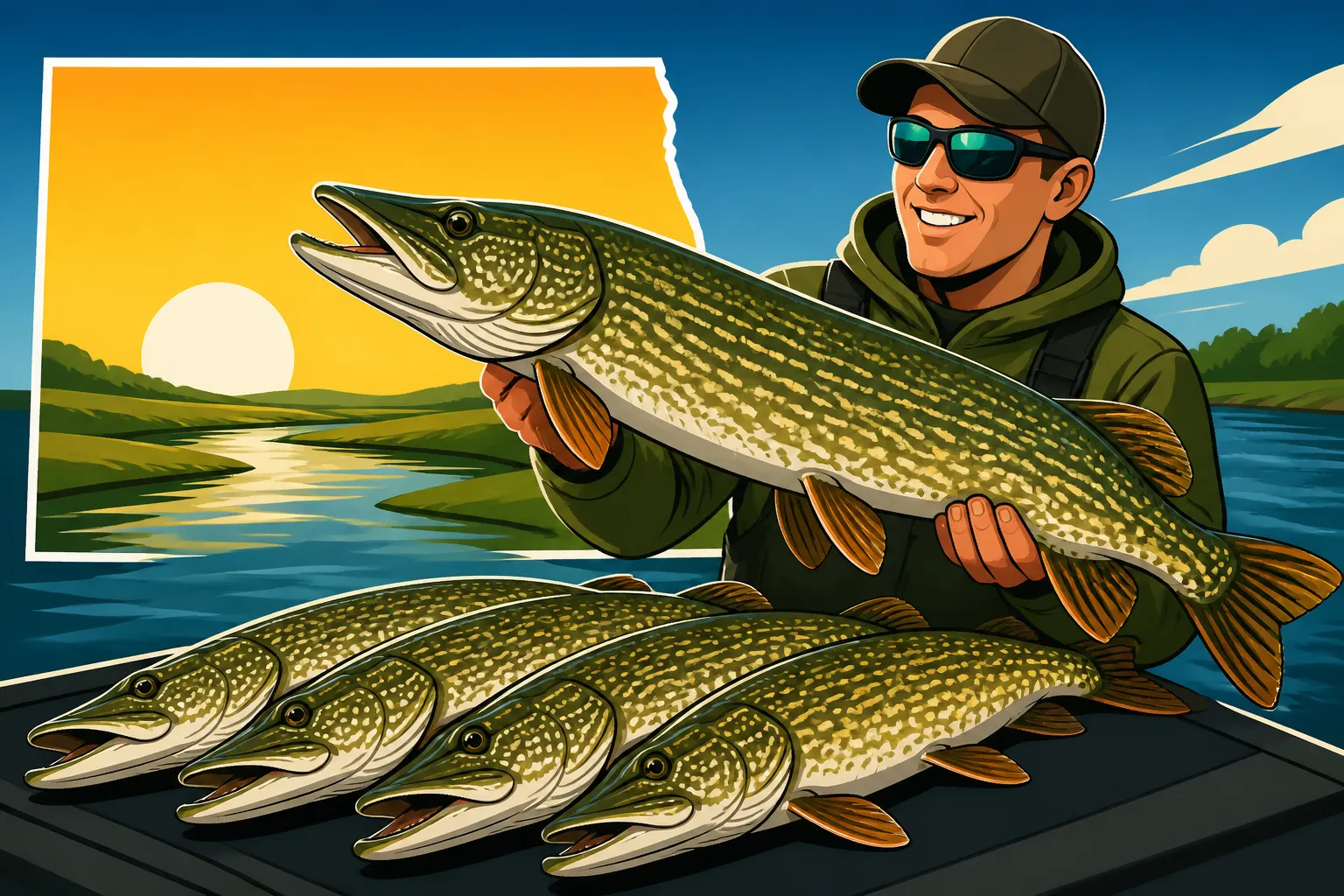
North Dakota Northern Pike Daily Limit on the Red River
It's a common head-scratcher for many of us who love to chase those toothy northern pike on the Red River: "What's the actual daily limit?" With the river acting as a natural border, regulations can get a little murky, leaving anglers wondering if they're following North Dakota's rules, Minnesota's rules, or some hybrid of both. This guide is here to untangle that confusion, offering a clear, comprehensive look at the specific northern pike daily limit for the Red River.
Understanding North Dakota's Northern Pike Regulations
Fishing in North Dakota offers an incredible variety, and northern pike are certainly one of the state's most popular game fish. They're aggressive, put up a fantastic fight, and are truly a blast to catch, whether you're jigging or casting. But before you head out, knowing the regulations specific to your fishing spot is absolutely crucial. General statewide rules often differ significantly when you're dealing with unique water bodies, and the Red River is a prime example of this complexity.
Why the Red River Has Unique Rules
The Red River of the North isn't just any river; it’s a shared waterway, forming a significant portion of the border between North Dakota and Minnesota. This unique geographical position means that fishing regulations aren't solely dictated by North Dakota's Game and Fish Department. Instead, both states have come together to create a reciprocal agreement, harmonizing the rules to make it simpler for anglers. The idea is to allow folks to fish both sides of the river without needing two separate licenses or constantly checking which state they're technically in. However, this convenience also means that certain species, like northern pike, have specific limits that differ from the standard statewide rules in either North Dakota or Minnesota. It’s a well-intentioned system, but it definitely requires a bit of extra attention from us anglers to ensure we're always compliant. You can dive deeper into these shared rules by checking out our guide on Reciprocal Fishing Rules on the Red River Border Waters.
The Standard Statewide Daily Limit vs. Red River Specifics
Across most of North Dakota, when you're fishing for northern pike, the general regulation is quite generous. For instance, on many lakes and reservoirs, you're allowed a daily limit of 10 northern pike. This means you can keep up to 10 pike that you catch in a single day, and your possession limit (the total number of fish you can have on hand, including those from previous days) typically matches that daily limit. There might be some nuances in specific lakes, possibly with slot limits to protect larger fish, but 10 pike is a good general rule of thumb for most inland waters. However, the Red River operates under a different set of rules due to that reciprocal agreement with Minnesota. It's a key distinction that can trip up even experienced anglers if they're not careful. Understanding the North Dakota Northern Pike Daily Limit is essential for any angler pursuing these fish.
The North Dakota Northern Pike Daily Limit on the Red River
Now, let's get down to the brass tacks. When you're fishing the Red River, whether you launch your boat from Grand Forks, Fargo, or any point in between, you're operating under specific border water regulations. These rules are designed to be consistent, no matter which side of the invisible line your boat is on, or if you're casting from the shore. This consistency is a huge benefit, preventing a lot of potential headaches, but it also means you absolutely must know these particular limits.
The Exact Numbers for Anglers
For northern pike specifically, the North Dakota Game and Fish Department, in cooperation with Minnesota, has established a clear daily limit for the Red River. Anglers are allowed to keep a maximum of 3 northern pike per day. This limit applies to all anglers, regardless of whether you're a resident of North Dakota or Minnesota, or even an out-of-state visitor with a valid fishing license. This limit is often less than what you might find in other parts of North Dakota, making it a critical regulation to remember. If you plan to fish for other species, remember that North Dakota Fishing Regulations Explained cover a wide array of fish and their specific limits.
Navigating Length Limits and Protected Slots
Another important aspect of northern pike regulations, often associated with daily limits, is the presence of length limits or protected slots. These are rules designed to manage fish populations, allowing smaller fish to grow or protecting large, breeding-size fish. On the Red River, the good news for pike anglers is that currently, there is no length limit for northern pike. This means that any pike you catch, as long as it's within your 3-fish daily limit, can be kept, regardless of its size.
This "no length limit" rule on the Red River simplifies things considerably, as you don't have to worry about measuring each fish to ensure it falls within a legal slot or exceeds a minimum size. However, it's always wise to remember that regulations can change, so a quick check of the most current fishing proclamation before your trip is a habit worth cultivating. This differs from many other lakes where specific North Dakota Walleye Size Limit Rules or other species might have strict length requirements.
What "Possession Limit" Really Means
Understanding the difference between a daily limit and a possession limit is fundamental to staying compliant with fishing regulations, especially if you're on a multi-day trip or have a freezer full of fish at home. For northern pike on the Red River, the possession limit is typically the same as the daily limit, meaning you cannot possess more than 3 northern pike at any given time, regardless of how many days you've been fishing.
Let's break that down with a real-world scenario:
- Scenario 1: Day Trip
- You go fishing on the Red River on a Saturday.
- You catch and keep 3 northern pike.
- You return home. Your daily limit is met, and your possession limit for those fish is 3. You cannot return to the Red River on the same day and keep more pike.
- Scenario 2: Weekend Trip
- You fish on Friday and keep 3 northern pike.
- You continue fishing on Saturday. Even though it's a new day, you still possess the 3 pike from Friday. Therefore, you cannot keep any more pike on Saturday. Your total possession cannot exceed 3.
- To keep more pike on Saturday, you would need to consume or give away the pike from Friday so that your possession limit (the fish you have) drops below 3.
This is a critical distinction, as violating possession limits can lead to serious penalties. It means you can't simply accumulate fish day after day if they remain in your possession.
Here's a quick reference table for clarity:
| Location / Water Body Type | Northern Pike Daily Limit | Northern Pike Length Limit | Possession Limit |
|---|---|---|---|
| Red River | 3 fish | No length limit | 3 fish |
| Most Inland North Dakota Waters (General) | 10 fish | No length limit (check local exceptions) | 10 fish |
Note: Always consult the most current North Dakota Game and Fish Department Fishing Guide for exact and up-to-date regulations, as rules can change.
Practical Implications for Anglers on the Red River
Fishing the Red River is a fantastic experience, known for its diverse fishery, especially impressive channel catfish and, of course, a healthy population of northern pike. Understanding the specific regulations isn't just about avoiding trouble; it's about being a responsible angler and contributing to the sustainability of this unique waterway. These regulations have practical impacts on how you plan your trip, what gear you might consider, and how you handle your catch.
Crossing State Lines with Your Catch
One of the most frequent questions anglers have about the Red River's reciprocal rules is what happens when you catch fish in North Dakota waters (or what feels like North Dakota waters) and then travel back into Minnesota, or vice-versa. Because of the reciprocal agreement, a North Dakota fishing license allows you to fish the entire Red River, including the Minnesota side, and a Minnesota license allows you to fish the entire river, including the North Dakota side. This extends to your catch as well.
Since the northern pike daily and possession limit on the Red River is 3 fish, this limit applies regardless of which side of the river you're on. So, if you catch 3 pike on the North Dakota side and then drive home to Minnesota, those 3 pike are considered legally caught and possessed under the reciprocal agreement, as long as you adhere to the 3-fish limit. The same applies if you started on the Minnesota side and ended up in North Dakota. This simplifies things immensely, allowing you to focus on the fishing rather than constantly checking your GPS coordinates. However, always ensure your North Dakota Fishing License Guide is current and properly displayed.
Essential Gear for Red River Pike Fishing
Targeting northern pike on the Red River requires robust gear to handle their aggressive strikes and powerful runs. While the river isn't always known for trophy pike as much as it is for its fantastic catfish, you can still encounter some decent-sized fish that will put your equipment to the test.
- Rods and Reels: A medium-heavy to heavy action spinning or baitcasting rod, typically 6'6" to 7'6" in length, is ideal. Pair this with a sturdy reel spooled with 20-30 lb braided line for sensitivity and strength. Braided line is particularly helpful here, especially if you're fishing near cover or snags, as it cuts through weeds better and has less stretch for solid hooksets. You can find excellent options for specific rod and reel combos for northern pike on sites like Amazon, offering a wide range of price points and features.
- Lures: Pike are ambush predators, so noisy, flashy, and fast-moving baits are often the ticket.
- Spinnerbaits: Large spinnerbaits with tandem blades are fantastic for covering water and creating vibrations that attract pike.
- Spoons: Classic metal spoons, especially in silver, gold, or flashy colors, are irresistible to pike.
- Crankbaits: Dive-and-rise crankbaits or lipless crankbaits that mimic baitfish can be very effective, particularly around deeper holes or current breaks.
- Soft Plastics: Large swimbaits rigged on heavy jig heads can also entice strikes.
- Terminal Tackle: Always use a steel or heavy fluorocarbon leader (at least 50 lb test) to prevent bite-offs. Pike have razor-sharp teeth that can easily slice through monofilament or fluorocarbon main lines. Keep a good pair of long-nosed pliers or hook removers handy for safe de-hooking, as those teeth are no joke. Many anglers source their leader material and specific lures for Best Lures for Northern Pike in Spring or other seasons from online retailers like Amazon, benefiting from the wide selection.
Where to Find Northern Pike on the Red River
Northern pike on the Red River, like in many river systems, are often found in areas with slower current, cover, and access to deeper water. They are ambush predators, so they love to hide and wait for unsuspecting prey.
- Confluence Areas: Where smaller tributaries or creeks flow into the Red River, these areas often create current breaks and bring in baitfish, making them prime pike territory.
- Backwaters and Oxbows: Any slough, backwater, or old oxbow lake connected to the main river will likely hold pike, especially during periods of higher water. These areas offer refuge from strong currents.
- Weed Beds and Structure: Look for submerged weed beds, fallen trees, log jams, or rock piles. Pike will hug these structures, waiting to dart out and strike.
- Bridge Pilings and Culverts: Man-made structures can also create current breaks and offer ambush points.
- River Bends and Deeper Holes: The outside bends of the river often scour out deeper holes, and pike will stage in these areas, especially as water temperatures fluctuate.
- Access Points: Public access points, especially those with boat ramps or shore fishing opportunities near Grand Forks or Fargo, can often put you in proximity to good pike water. For more specific local insights, check out information on Red River Catfish Fishing Spots in North Dakota, as pike often share similar holding areas with catfish. You might even find specialized gear and maps tailored to these spots on Amazon.
Ensuring Compliance and Avoiding Penalties
Fishing is meant to be relaxing and enjoyable, but nothing ruins a day faster than realizing you've accidentally broken a rule or, worse, facing a hefty fine. Staying informed about the Red River's specific northern pike daily limit isn't just a suggestion; it's a legal requirement. Knowing the rules and adhering to them is part of being a responsible steward of our natural resources and ensures that we all get to enjoy the fantastic fishing opportunities North Dakota offers for years to come.
Double-Checking Current Regulations
The single most important piece of advice any veteran angler can give is to always double-check the current fishing regulations before you head out. While this guide provides the most up-to-date information at the time of writing, fishing laws and limits can and do change. The North Dakota Game and Fish Department (NDGFD) publishes a new fishing guide every two years, usually available online and at license vendors.
- Online Resources: The NDGFD website is the definitive source. They typically have a PDF version of the current fishing proclamation readily available. This is the official document that outlines all daily limits, length limits, seasons, and other rules for every species and water body.
- Printed Guides: Grab a physical copy from any vendor where you purchase a North Dakota Fishing License Cost Guide, such as sporting goods stores or even some local bait shops. Keeping a copy in your tackle box or boat is a smart move.
- Mobile Apps: Some states offer mobile apps that provide quick access to regulations. Check if North Dakota has an official one, as this can be incredibly convenient on the water.
A few minutes spent reviewing the rules can save you from a lot of grief and potential fines, ensuring your fishing trip remains stress-free and enjoyable.
Consequences of Exceeding Limits
The penalties for violating fishing regulations in North Dakota, including exceeding daily or possession limits for northern pike on the Red River, can be quite serious. Wildlife and game wardens patrol these waters, and they are well-versed in the specific rules for border waters.
- Fines: The most common consequence is a monetary fine. These fines can range from moderate to substantial, depending on the severity of the violation and the number of fish over the limit.
- Forfeiture of Catch and Gear: Game wardens have the authority to seize any illegally taken fish. In more serious cases, particularly repeat offenses or gross violations, fishing equipment (rods, reels, even boats) can also be confiscated.
- Loss of Fishing Privileges: Anglers found in violation may also face a suspension of their fishing license, meaning they could be prohibited from fishing in North Dakota (and potentially other states through interstate compacts) for a certain period.
- Criminal Charges: While rare for a minor over-limit infraction, severe or repeated violations can, in extreme cases, lead to misdemeanor criminal charges, especially if combined with other offenses like fishing without a license.
It's simply not worth the risk. Always err on the side of caution. If you're unsure if a fish is legal, or if you're approaching your limit, it's always best to release the fish. Understanding What Happens If You Fish Without a License in North Dakota gives you a broader perspective on the seriousness of fishing violations. Play it safe, know the rules, and enjoy the fantastic northern pike fishing the Red River has to offer!
Disclaimer
Please remember that fishing regulations, including daily and possession limits, can change. While this guide provides information based on current public records, it is your responsibility to consult the most recent official North Dakota Game and Fish Department Fishing Guide or website before engaging in any fishing activities to ensure full compliance.