Is Lake Sakakawea Low This Year?
It can be incredibly frustrating to plan a fishing trip to a legendary spot like Lake Sakakawea, only to hear whispers or see photos that make you wonder, "Is the lake even fishable right now?" Changing water levels are a constant reality on big reservoirs, and they profoundly impact everything from boat ramp access to where the fish are holding. This guide will cut through the speculation, help you understand Lake Sakakawea's current water levels, and equip you with the knowledge to adapt your fishing strategy for success, no matter what the gauges say.
Understanding Lake Sakakawea's Dynamic Water Levels
Lake Sakakawea, a jewel in North Dakota's crown and a major impoundment on the Missouri River, is far from a static body of water. Its levels are constantly fluctuating, a dance dictated by a complex interplay of natural forces and human management. If you've ever arrived at your favorite launch, only to find the water's receded far from the ramp, you know this firsthand. It's a common challenge for anglers across the state, but understanding why it happens can make all the difference in preparing for your next outing.
Historical Fluctuations and Their Causes
The story of Lake Sakakawea's water levels is deeply tied to the broader Missouri River Basin. The lake, formed by the Garrison Dam, is part of a massive system designed for flood control, power generation, navigation, irrigation, and recreation across multiple states. This means its levels aren't just a product of local rainfall or snowmelt in North Dakota; they're influenced by conditions hundreds of miles upstream in Montana and Wyoming, and by the needs downstream in South Dakota, Nebraska, Iowa, Kansas, and Missouri.
Think about it: a heavy snowpack in the Rocky Mountains upstream can lead to significant runoff into the tributaries that feed the Missouri River, eventually pushing more water into Lake Sakakawea. Conversely, a prolonged drought in those same areas can mean less inflow. Local rainfall and drought conditions certainly play a role, but the larger basin management often has the most significant impact. The U.S. Army Corps of Engineers carefully manages releases from Garrison Dam based on a delicate balance of competing priorities throughout the year. This balancing act means that the lake's elevation, often measured in feet above sea level, is always in flux, making it a truly dynamic fishery.
How to Check Current Lake Sakakawea Water Levels
Before you even hook up the boat trailer, getting an accurate, up-to-date reading on Lake Sakakawea's water level is crucial. Relying on old forum posts or last month's fishing report simply won't cut it. The most reliable source for real-time data is typically the U.S. Army Corps of Engineers (USACE), which manages the Garrison Dam and the overall Missouri River system. They provide daily updates on lake elevations, inflow, outflow, and projections.
You can usually find this information on the USACE website, specifically their Missouri River Basin Water Management division page. They'll show the current elevation in feet above sea level (often abbreviated as MSL or Mean Sea Level). To put this number into perspective, it's helpful to know the lake's "full pool" elevation, which is around 1850 feet. Anything significantly below that means lower water. Many local news outlets, fishing guide services, and bait shops also monitor these official sources and often provide simplified updates, but it's always best to go directly to the source for the raw numbers. Understanding these numbers helps you anticipate conditions, whether you're looking for specific Lake Sakakawea Walleye Fishing Spots or just wanting to know if your favorite ramp is usable.
Analyzing Lake Sakakawea's Current Status
So, you've checked the official reports. What do those numbers actually mean for your upcoming trip? The question of "Is the lake low this year?" isn't always a simple yes or no, but rather a comparison to averages, historical data, and what constitutes a "good" or "challenging" level for fishing. Anglers who frequent this mighty reservoir know that low water isn't necessarily bad, just different.
Is the Lake Low Right Now?
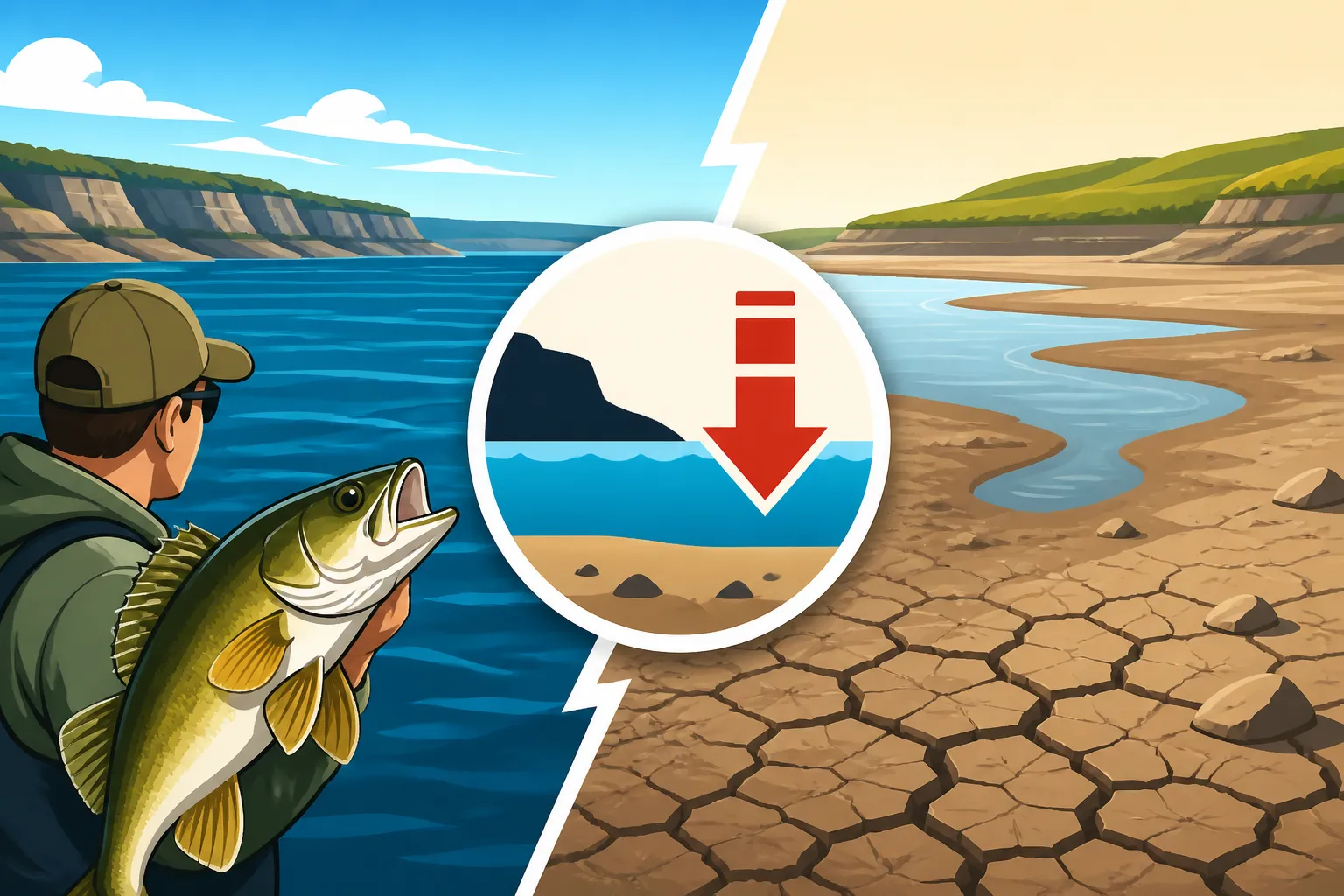
As of our current understanding, Lake Sakakawea has been experiencing varying conditions, often influenced by the preceding winter's snowpack and spring rainfall. While the lake has seen periods of significant low water in the past, causing some serious concerns, recent trends often show it hovering below its historical "full pool" of 1850 feet but generally within a range that still supports robust fishing and recreational activities. For instance, if the reports indicate an elevation around 1830-1835 feet, that's noticeably lower than full but still allows for good boat access at many ramps and provides excellent fishing opportunities, albeit with some adjustments. However, if levels dip closer to 1820 feet or below, as has happened in drier cycles, that's when boaters really need to pay attention to navigation and launch options.
It's a common observation that the lake rarely sits exactly at full pool, and managing expectations around this is key. Many long-time anglers have learned to appreciate the unique fishing opportunities that arise during lower water periods, as these conditions can consolidate fish in specific areas and expose new structure. What might seem "low" to a newcomer could be perfectly normal, or even preferred, by a seasoned veteran looking for those submerged points and humps. If you're wondering about How Deep Is Lake Sakakawea at Full Pool?, remember that its sheer size means even a 20-foot drop still leaves vast expanses of deep water.
Impact of Water Levels on Fishing Conditions
Lower water levels fundamentally change the playing field for fishing on Lake Sakakawea, and not always for the worse. The primary impacts fall into two categories: access and fish behavior.
Access Issues: The most immediate and noticeable effect of low water is on boat ramps. Some ramps, especially those designed for higher lake levels, might become completely unusable, leaving only a concrete slab extending into the mud. Others might require a much longer backing distance, and launching might be tricky with softer bottoms at the end of the ramp. Marinas might also have reduced services or need to extend their docks. Shallow bays that were once easy to navigate might become impassable, revealing stumps, rocks, and other hazards. Always check with local resources, such as bait shops or resorts, for current ramp conditions before heading out, particularly if you're traveling a long distance to access Best Boat Ramps on Lake Sakakawea.
Fish Behavior and Habitat Changes: This is where the challenge—and opportunity—lies. As water recedes, certain areas become shallower or even dry up. This can:
- Concentrate Fish: Fish, especially species like walleye and northern pike, often follow the receding water to the nearest available cover or deeper drop-offs. Areas that were once vast and featureless might suddenly have well-defined edges where fish can be found.
- Expose New Structure: Old creek beds, rock piles, humps, and submerged timber that were too deep to effectively fish in higher water become accessible. These are prime areas where baitfish will congregate, and predatory fish will follow.
- Change Forage Location: Baitfish, like smelt and shad, also react to changing depths, which in turn influences where game fish will hunt.
- Impact Spawning Areas: While not an immediate concern for a single trip, consistently low water during critical spawning periods can affect future year classes of fish by reducing suitable habitat. However, the North Dakota Game and Fish Department (NDGFD) manages stockings, particularly for species like Lake Sakakawea Chinook Salmon Fishing, to help mitigate natural reproductive challenges.
For anglers, lower water means adapting your approach. You might need to focus on sharper breaks, deeper contours, and areas where the remaining water offers a clear advantage for ambush predators. It might also mean longer runs to deeper, more central parts of the lake from the accessible ramps.
Adapting Your Fishing Strategy to Current Lake Levels
Don't let fluctuating water levels discourage you from fishing Lake Sakakawea! Instead, embrace the challenge as an opportunity to learn and refine your skills. Every veteran angler knows that adaptability is key on big, dynamic waters. When the water is low, the fish are still there; they've just moved to new comfort zones, and you need to find them.
Adjusting Your Approach to Exposed Structure
Lower water often means previously submerged structure becomes more defined and, sometimes, even exposed. These features, whether they are old fence lines, rocky points, or hidden humps, become crucial fish-holding areas.
- Focus on Deeper Edges and Transitions: Fish will often hug the deepest available break lines adjacent to the newly exposed structure. If a long, sloping point used to be productive, during low water, the fish might be concentrated on the much steeper break at its furthest, deepest reach. Utilize your electronics to identify these sharp transitions.
- Look for Isolated Cover: Any piece of submerged timber, a rogue boulder field, or an old roadbed that now stands out more prominently can be an absolute magnet for walleye and northern pike. These provide ambush points and shade.
- Lure Selection for Deeper, Tighter Areas: When fish are concentrated and potentially holding tighter to structure, jigs become incredibly effective. A 1/2 oz to 3/4 oz jig tipped with a plastic paddle tail or a minnow imitation can be worked along these breaks. Crankbaits that run deeper, particularly those designed to "bang" off the bottom, can also trigger reaction strikes as they deflect off rocks or wood. North Dakota Walleye Fishing Techniques often revolve around understanding these depth and structure relationships. Bottom bouncers with spinner rigs or snell hooks tipped with live bait like leeches or nightcrawlers are also deadly for slowly covering contours.
Finding Alternative Access and Navigating Safely
One of the biggest headaches of low water on Lake Sakakawea can be finding a reliable boat ramp. It’s not uncommon for anglers to drive to a familiar launch only to find it high and dry. This means you need to do your homework before you leave home.
- Consult Local Experts and Online Forums: The best, most up-to-date information on usable boat ramps often comes from local bait shops, fishing resorts, and dedicated North Dakota fishing forums. These communities are usually quick to share intel on which ramps are still functional and what conditions to expect. You might even find guides listed on platforms like FishingBooker who specialize in navigating low water conditions and know the best access points.
- Utilize Mapping Apps and Satellite Imagery: Before your trip, use apps with satellite imagery to scout potential alternative launch sites or to get a better visual of how far the water has receded from your usual spot. Some apps even have community-contributed "hot spots" or warnings for hazards.
- Exercise Extreme Caution While Navigating: With lower water comes a myriad of new hazards. Areas you once cruised over safely might now hold submerged stumps, rock piles, or shallow sandbars just waiting to ding your prop or worse. Keep a keen eye on your depth finder, stay well within marked channels if they exist, and slow down considerably in unfamiliar territory. Even well-known areas might have surprises. Remember, safety always comes first, and hitting an unseen obstacle can quickly ruin your day and your boat. Having a good Essential Gear Checklist for North Dakota Fishing includes safety equipment like spare props and emergency repair kits.
Here's a quick reference table to help visualize how different lake levels might impact your trip:
| Lake Sakakawea Elevation (Feet MSL) | General Status & Impact on Fishing | Primary Fishing Adjustments | Access Considerations |
|---|---|---|---|
| 1850+ (Full Pool) | Excellent. All ramps open, vast water, fish potentially more dispersed. | Focus on traditional points, main lake humps, and structure. Trolling can be highly effective. | All major boat ramps generally accessible. |
| 1840-1849 (Near Full) | Very Good. Minimal impact, slight changes in shallow water fish behavior. | Similar to full pool, but fish might start using slightly deeper edges of shallow structure. | Most ramps fully accessible. |
| 1830-1839 (Average/Moderate Low) | Good. Some shallower ramps may become tricky. Fish more concentrated on primary breaks and channels. | Target pronounced drop-offs, old river channels, and deep structure. Jigging and bottom bouncing excel. | Some shallower ramps may require caution or be closed. Check local reports for Best Boat Ramps on Lake Sakakawea. |
| 1820-1829 (Significant Low) | Challenging for access, but can be excellent for those who adapt. Many hazards exposed. Fish highly concentrated. | Extreme focus on the deepest available structure. Exposed hazards become fish magnets along their edges. Navigation is critical. | Many ramps likely closed. Only deeper, concrete ramps usable. Increased navigation hazards. |
| Below 1820 (Very Low) | Very Challenging. Limited access, extreme navigation hazards. | Fish will be in the deepest parts of the main lake and river channels. Consult guides for safe routes. | Very few ramps available. Extreme caution for all boaters. Consider shore fishing or guided trips. |
Even with lower water, North Dakota is still home to some of the Best Places to Fish in North Dakota, and Sakakawea remains a top destination for trophy fish. It just means being a little smarter and more strategic in your approach. Whether you're chasing North Dakota Northern Pike Fishing Guide or big walleye, adapting to the lake's ever-changing personality is part of the adventure.
Disclaimer
The information provided in this guide is for general informational purposes only and is subject to change. Water levels, fishing regulations, and access points can vary based on weather conditions, seasonal changes, and management decisions by authorities. Always consult official sources like the North Dakota Game and Fish Department and the U.S. Army Corps of Engineers for the most current regulations, lake conditions, and safety advisories before planning your fishing trip. Stay safe and enjoy your time on the water!