Devils Lake Perch Bite Locations This Winter
It's a common lament among ice anglers on Devils Lake: you know the monster perch are there, lurking beneath the vast frozen expanse, but actually finding them in the dead of winter can feel like searching for a needle in a massive, icy haystack. The ever-changing water levels and complex underwater terrain of Devils Lake present unique challenges, making it tough to consistently pinpoint those hungry schools. This guide is here to cut through the guesswork, offering realistic insights into the prime perch bite locations on Devils Lake this winter and the strategies you'll need to fill your bucket.
Understanding Devils Lake's Winter Perch Dynamics
Devils Lake is legendary for its jumbo yellow perch, but what makes them so elusive, yet so rewarding, in winter? It boils down to their behavior, the lake's unique characteristics, and the seasonal changes that drive them. Unlike many other lakes, Devils Lake is a system of flooded timber, old roadbeds, and varying depths, constantly evolving.
The Influence of Flooded Timber and Structure
Imagine driving through a submerged forest – that's often what it's like under the ice on Devils Lake. Years of rising water have inundated vast areas of trees, brush, and structures like old farmsteads and roads. This submerged landscape creates incredible habitat for yellow perch, offering protection from predators, abundant food sources, and ideal ambush points. During winter, as oxygen levels can vary and baitfish move, perch will often relate closely to this structure.
However, fishing flooded timber comes with its own set of frustrations. You'll snag lures, lose jigs, and spend precious time untangling lines. But persist, because where there's timber, there are often perch. They might be nestled deep within the branches, requiring a precise drop, or holding just off the edge of a thicket. The key is to understand that "structure" here isn't just a rock pile or a submerged hump; it's a complex, multi-layered environment that changes from one bay to the next. Perch often use these areas as security blankets and feeding grounds, moving through the branches to find schools of minnows or tiny aquatic insects. If you're new to fishing this incredible body of water, our comprehensive Devils Lake Fishing Guide for North Dakota Anglers can give you a great overview of its unique layout.
Seasonal Shifts and Perch Movement
While we talk about "winter," the season isn't a monolith. Early ice, mid-winter, and late ice all present different scenarios for perch anglers. In early winter, right after ice-up, perch can often be found shallower, still relating to weed lines or shallower breaks where they were feeding in fall. As mid-winter sets in and the ice thickens, they tend to move deeper, seeking more stable temperatures and concentrating around significant underwater structures or basin areas. Late ice, just before ice-out, can see them venturing back into shallower zones, sometimes staging for their spring spawn.
Understanding these broad movements is crucial, but remember that perch are also constantly on the hunt for food. They are opportunistic feeders, chasing schools of baitfish, nymphing for insects, or scouring the bottom for crustaceans. Their nomadic nature means a spot that was hot yesterday might be quiet today, prompting a need for mobility and adaptability. Many local guides listed on FishingBooker offer specialized trips focused purely on jumbo perch, and they are masters at tracking these subtle seasonal shifts.
Prime Perch Bite Locations on Devils Lake
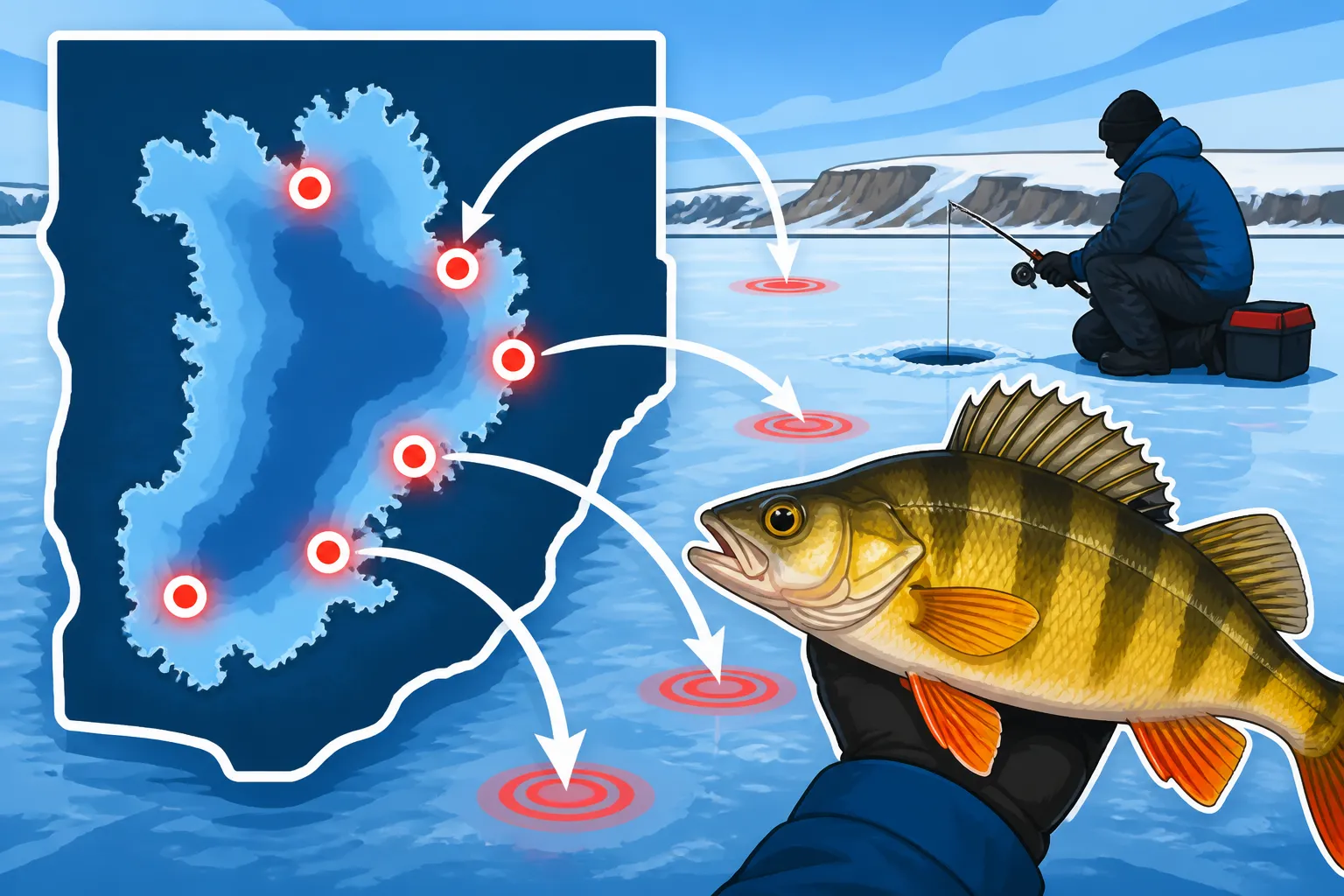
Now, let's talk brass tacks. While no spot is guaranteed, certain areas of Devils Lake consistently produce perch throughout the winter. These locations typically offer a combination of ideal structure, forage, and depth, making them magnets for these highly sought-after fish.
Six Mile Bay and Creel Bay
These two bays are perhaps some of the most famous perch fishing grounds on Devils Lake, and for good reason. Both offer extensive flooded timber, gradual breaks, and varying depths that appeal to perch at different times of the winter.
- Six Mile Bay: This vast bay is a labyrinth of submerged trees, old fence lines, and gradual contours. Anglers often find success by targeting the edges of the timber lines, as well as the deeper pockets within the bay. Look for subtle humps or old roadbeds that cut through the flooded forest; these can act as highways for perch. The sheer size of Six Mile Bay means there’s always new water to explore, but it also means you need to be mobile. A good strategy is to drill a grid of holes, covering different depths and densities of timber, until you mark fish. Sometimes, the perch are right in the thickest stuff, requiring a very vertical presentation. Other times, they are just off the edge in the slightly cleaner bottom. Access points around Six Mile Bay are generally good, but always check ice conditions.
- Creel Bay: Similar to Six Mile, Creel Bay offers fantastic perch opportunities, often with slightly less dense timber in certain areas, making it a bit more manageable for some anglers. The deeper central basin of Creel Bay can hold large schools of perch, especially in mid-winter. Focus on the transition zones where a soft, muddy bottom meets harder structure, or where old creek channels wind through the bay. Early and late ice can see perch push into the shallower weed edges (if any remain) or sun-warmed flats. Don't overlook the points and fingers that extend into the main body of the bay, as these can concentrate fish. For those who prefer walking on, remember to check out Devils Lake Ice Fishing Access Points before you head out.
Mauvais Coulee and the East Devils Lake Basins
Moving further east, Mauvais Coulee and the deeper basins of East Devils Lake present another set of prime targets, often holding very large perch.
- Mauvais Coulee: This area is known for its dramatic underwater topography, including deep holes, steep breaks, and a mix of timber and rock. Perch here will often relate to these sharp structural changes. During mid-winter, probing the deeper portions of the coulee, especially where it widens or forms distinct basins, can be incredibly productive. Pay attention to your electronics for schools of baitfish, as perch will rarely be far behind. The sheer depth in some parts means the fish can be spread out vertically, so be prepared to adjust your jigging depth. The currents from natural springs or groundwater can also create subtle variations in water temperature and oxygen, drawing in fish.
- East Devils Lake Basins (beyond the bridges): Once you cross the bridges connecting the western and eastern portions of the lake, you enter some of the deepest and most expansive water on Devils Lake. These large basins, sometimes reaching 40-50 feet, can be challenging to fish due to their size, but they often hold enormous schools of perch. Look for distinct humps, underwater points, or even subtle changes in bottom composition within these vast, open water areas. Using GPS and mapping software (like a Humminbird or Lowrance with LakeMaster or Navionics chips) is absolutely essential here to find these hidden gems. Perch in these deeper basins might suspend over baitfish, so don't always assume they are glued to the bottom. Checking out local reports or even booking a trip through FishingBooker can give you a real-time advantage in deciphering these complex deeper patterns.
Other Productive Areas
Devils Lake is so vast that many other areas can shine depending on the year and conditions.
- Minnewaukan Bay: This bay on the western side can be a sleeper hit, especially in early and late ice. It has diverse habitat, including areas of flooded brush and shallower flats that can warm up quickly.
- The "Rock Piles" (Various Locations): Throughout Devils Lake, there are numerous natural and man-made rock piles. These provide excellent cover and foraging grounds for perch. While not always easy to locate, if you find one, it can be a goldmine. Using a good mapping chip is key to identifying potential rock piles that don't get as much pressure.
- Old Roadbeds and Breaklines: These are perpetual perch magnets. As the lake expanded, old roads and farm lanes became submerged. These elevated structures, often with hard bottom and adjacent ditches, funnel fish and create distinct feeding zones. Similarly, any sharp breakline from shallow to deep water should be investigated thoroughly. Understanding how to approach How to Ice Fish in North Dakota effectively is key, particularly when dealing with varying depths and structures.
Factors Influencing the Winter Perch Bite
Finding the right location is only half the battle. Once you're on a promising spot, several environmental factors can dramatically influence whether the perch decide to bite. Being aware of these elements can help you adjust your strategy and increase your success.
Weather and Barometric Pressure
Just like us, fish react to changes in the weather. While a warm, sunny day might sound inviting to us, stable weather patterns, often associated with high barometric pressure, can sometimes lead to a more consistent perch bite. Conversely, a rapidly falling barometer, indicative of an approaching storm, can trigger a feeding frenzy or shut the bite down entirely, depending on the species and the specifics of the front.
- High Pressure (Stable Weather): Often means clear skies and calm winds. Perch might be less aggressive and hold tighter to structure. You might need a more subtle presentation, smaller baits, and slower movements to entice a bite.
- Low Pressure (Approaching Storms): This can be a mixed bag. Sometimes, right before a cold front or a blizzard rolls in, fish go on a feeding binge, knowing that the next few days might be tough. Other times, the rapid change puts them into a funk. The key is to be out there when the pressure starts to drop, but don't be discouraged if it's tough once the storm hits.
- Wind: Wind can be a major factor, even on the ice. While it affects open water by creating currents and baitfish movement, on the ice, strong winds can make fishing incredibly uncomfortable and cause ice shanties to shift. However, a little wind can sometimes stimulate baitfish, which in turn can stimulate perch. The most direct impact of wind, though, is on angler comfort and visibility. This is why having a sturdy ice fishing shelter is crucial.
Time of Day and Light Conditions
Perch, like many fish, have peak feeding times that often correlate with light conditions. While they can be caught throughout the day, certain windows tend to be more productive.
- Low Light Periods (Dawn and Dusk): These are classic prime times for many fish species, and perch are no exception. As the sun rises and sets, light penetration through the ice changes, often stimulating perch activity. Early morning and late afternoon into early evening are excellent times to be on the ice.
- Midday: While often slower, perch can still be caught midday, especially if you're over a large school or during periods of stable weather. Sometimes, a midday bite can surprise you, particularly if you're fishing deeper water where light penetration is less of a factor.
- Overcast vs. Sunny Days: Overcast days can sometimes extend the low-light bite, making perch more active throughout the day. On bright, sunny days, perch might move to deeper water or denser cover to escape the intense light filtering through the ice. Adjusting your lure colors (natural on bright days, brighter on cloudy days) can also make a difference.
| Factor | Impact on Perch Behavior | Angler Adjustment |
|---|---|---|
| High Barometric Pressure | Less aggressive, hold tight to structure, move slower. | Slower presentations, smaller baits, subtle jigging. |
| Low Barometric Pressure | Can trigger feeding frenzy before a front, or shut down. | Be ready for aggression or scale down to finesse; fish during pressure drop. |
| Dawn/Dusk | Peak activity, actively feeding. | Focus efforts, use aggressive jigging, larger baits. |
| Midday (Sunny) | May move deeper or into dense cover; can be less active. | Fish deeper water, target thick cover, use natural colors. |
| Midday (Overcast) | Extended feeding periods, can be active throughout the day. | Experiment with presentation and depth, good for covering ground. |
Essential Gear and Techniques for Winter Perch
Having the right gear and employing effective techniques can dramatically improve your success rate on Devils Lake's winter perch, especially when navigating its complex underwater world.
The Right Rod, Reel, and Line
Forget your heavy summer gear; finesse is often the name of the game for perch.
- Rod: A sensitive, light-action ice fishing rod, typically 24 to 30 inches in length, is ideal. The sensitive tip allows you to detect those subtle perch bites, which often feel like nothing more than a slight "tick" or added weight. A rod with a good backbone, however, is still important for handling those Devils Lake jumbo perch once they commit.
- Reel: A small spinning reel (500 to 1000 series) spooled with light line is perfect. It provides smooth drag, which is crucial when battling a strong perch on thin line.
- Line: Using a good quality monofilament or fluorocarbon line in 3 to 6-pound test is usually sufficient. Some anglers prefer a very light braided line (4-6 lb test) with a fluorocarbon leader (2-4 lb test) for added sensitivity and abrasion resistance, especially when fishing around timber. The low stretch of braid transmits even the slightest bite, but the leader is important for invisibility. Before you even think about dropping a line, it's essential to understand the basics of How to Catch Perch Through the Ice in North Dakota.
Baits, Lures, and Jigging Techniques
Perch on Devils Lake can be particular, but a few go-to options consistently produce.
- Live Bait: Minnows are king, especially small fatheads or crappie minnows. Tipping your jig with a whole minnow or just its head can be incredibly effective. Maggots, waxworms, and even small pieces of real bait (like a perch eye, if legal and ethical) can also entice finicky fish.
- Jigs and Spoons: Small jigging spoons (like a Northland Forage Minnow, Lindy Rattl'n Flyer Spoon, or Acme Kastmaster) in silver, gold, or glow colors are excellent. Tip them with a minnow head or a couple of maggots. Small lead-head jigs (1/32 to 1/8 ounce) paired with soft plastics (like a tiny VMC Tungsten Teardrop Jig or a Custom Jigs & Spins Ratso) or live bait are also deadly. Don't underestimate the power of tried-and-true Perch Jigging Techniques for Devils Lake.
- Jigging Techniques: Perch often respond to a variety of jigging motions. Start with a slow, methodical lift-drop, pausing frequently. If that doesn't work, try a more aggressive "rip-and-fall" action to draw attention, followed by a pause. Sometimes, just holding the bait perfectly still a few inches off the bottom, or even dead-sticking a second rod (if legal) with a minnow, can trigger a bite. When those perch are schooled up tight, having good Ice Fishing Electronics and Fish Finders can make all the difference, allowing you to see their reactions to your presentation in real-time. For more details on what size jigs work best, refer to our guide on Best Jig Size for Perch Through the Ice.
Electronics and Ice Fishing Shelters
These tools aren't luxuries on Devils Lake; they are necessities for efficiency and comfort.
- Fish Finders/Flasher Units: A high-quality flasher (like a Vexilar, Marcum, or Humminbird Ice Helix) is non-negotiable for serious Devils Lake perch anglers. It allows you to see the bottom, your lure, and any fish that come into your cone angle in real time. This instant feedback tells you how fish are reacting to your bait, how fast they're moving, and at what depth they are holding. It saves countless hours of blindly fishing unproductive holes. To learn more about selecting the right unit, check out our piece on Best Fish Finders for Ice Fishing.
- GPS/Mapping: Given the expansive and complex nature of Devils Lake, a good GPS unit with detailed lake mapping (like LakeMaster or Navionics) is essential. Mark productive spots, access points, and navigate safely, especially in low visibility. This helps you efficiently move between known structures and find new ones. Learning How to Find Perch Schools Under the Ice becomes much easier with the right technology.
- Ice Shelters: Devils Lake is notoriously windy and cold. A well-insulated, portable ice shelter (flip-over or hub style) provides crucial protection from the elements, allowing you to fish comfortably and focus longer. Many shelters now come with integrated sleds, making transport of your gear much easier. Make sure to anchor your shelter properly in windy conditions. A good Best Ice Fishing Gear for North Dakota setup will make your day more comfortable and productive. Always remember to be aware of the Ice Fishing Shelter Rules on North Dakota Lakes.
Disclaimer
Fishing conditions on Devils Lake, especially during winter, can change rapidly due to weather, ice conditions, and fish movements. Always prioritize safety, check current ice conditions, and adhere to all North Dakota Game and Fish Department regulations, including Yellow Perch and Panfish Daily Limits Explained. This guide provides general information and recommendations; personal experience and local knowledge are invaluable on this unique body of water.