Smallmouth Bass Techniques on Rocky Shorelines
There’s nothing quite like the thrill of feeling that aggressive strike from a smallmouth bass, especially when you’re fishing the challenging, rugged terrain of North Dakota's rocky shorelines. Many anglers focus on walleye, but ignoring these feisty bronzebacks means missing out on incredible action. This guide will walk you through the nuances of targeting smallmouth bass on rocky shorelines, from understanding their behavior to mastering the techniques that consistently put fish in the net.
Understanding Smallmouth Bass in North Dakota Waters
Before you can effectively target smallmouth bass, you need to get inside their heads a little. These aren't your lazy, slow-moving bottom feeders; smallmouth are active, predatory fish that thrive on structure and ambush opportunities. In North Dakota, they might not be as widespread as walleye or pike, but where they do exist, they offer some of the most exhilarating fights.
Smallmouth Bass Habitat and Preferences
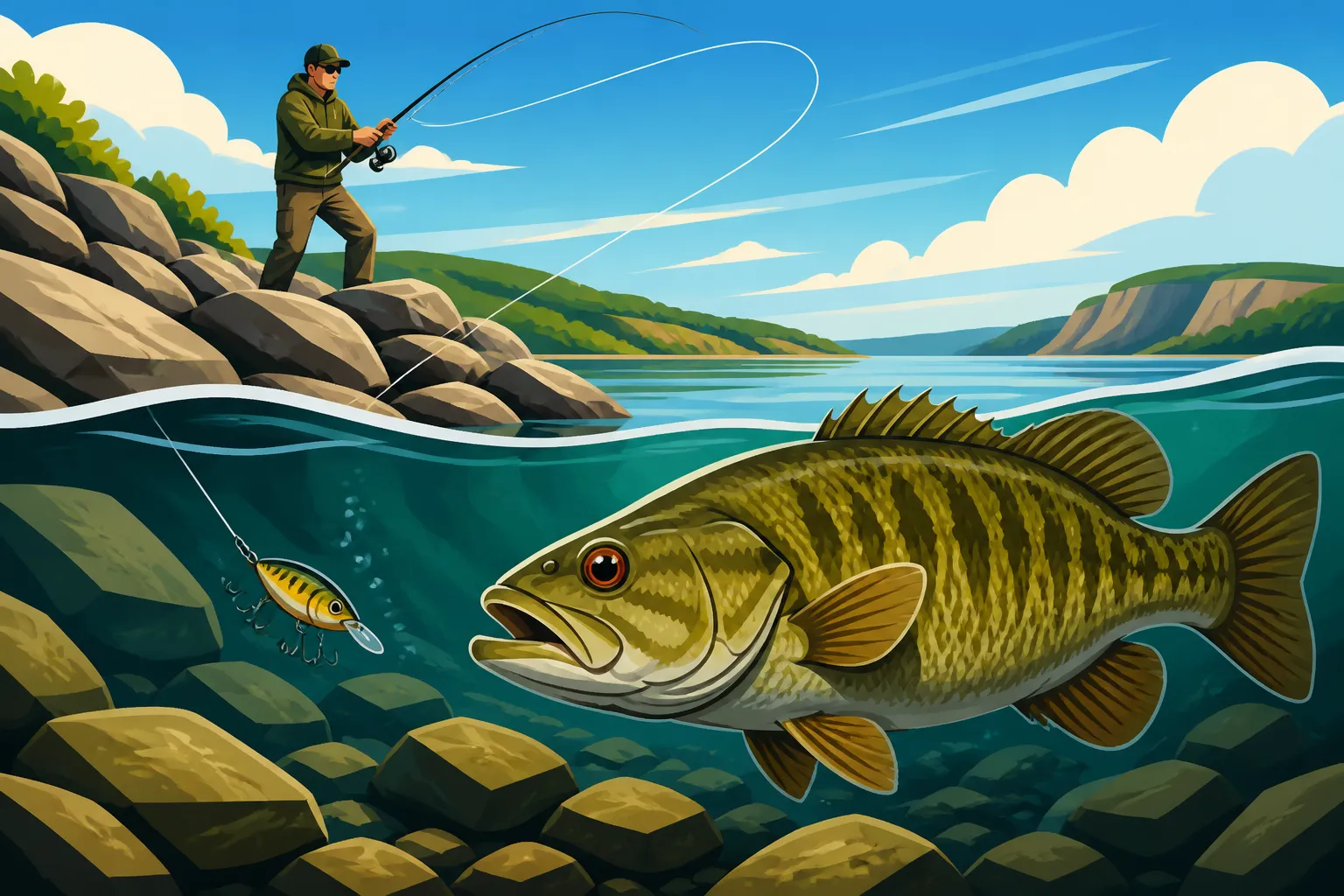
Smallmouth bass are quintessential "rock lovers." They prefer clear, cool water with ample rocky structure, gravel bottoms, and access to deeper water nearby. Think about those areas where the prairie meets the water, creating natural rock breaks, rip-rap along causeways, or even vast stretches of cobble and boulder fields. Unlike largemouth bass that often hide in dense weeds and fallen timber, smallmouth use rocks for cover, foraging, and ambush points. They'll hug the contours of submerged boulders, sit on ledges, or patrol rocky points, waiting for an unsuspecting baitfish or crayfish to swim by. Lakes like Sakakawea, Lake Audubon, and even sections of the Missouri River offer prime real estate for smallmouth bass because of their significant rocky features. If you're looking for prime locations, understanding Smallmouth Bass Habitat in North Dakota is crucial.
Their preference for rocky areas is also tied to their spawning habits. When spring arrives and water temperatures rise, smallmouth will often move into shallower, protected rocky coves and flats to build their nests. This makes these areas incredibly productive during the spawn, though responsible anglers will exercise caution to avoid disturbing bedding fish. Beyond spawning, these rocks provide a consistent food source, acting as homes for crayfish, insect larvae, and small baitfish that smallmouth absolutely love to gorge on.
Behavior and Feeding Habits
Smallmouth bass are sight feeders, meaning they rely heavily on their vision to hunt. This is why clear water is so important to them. They are incredibly opportunistic predators, and their diet primarily consists of crayfish, minnows, small perch, and various aquatic insects. You’ll often find them lurking near points, submerged humps, or distinct rock piles where they can dart out and ambush prey. Their aggressive nature means they're not shy about chasing down a fleeing bait, making them incredibly fun to catch on a variety of fast-moving lures.
Their behavior is also heavily influenced by light and weather conditions. On bright, sunny days, they might pull back into deeper, shadier pockets within the rocky structure, or even seek refuge under larger boulders. During overcast conditions or low light, like early morning or late evening, they tend to be more active in shallower water, moving closer to the surface to feed. Understanding these subtle shifts in their daily patterns can make all the difference in your success, especially when fishing specific locations like Smallmouth Bass on Lake Audubon.
Identifying Prime Rocky Shoreline Hotspots
Not all rocky shorelines are created equal for smallmouth bass. Some sections will hold fish consistently, while others might seem barren. Learning to "read the water" and identify key features is a skill that comes with practice, but knowing what to look for can drastically shorten your learning curve.
Submerged Rocks, Boulders, and Ledges
The obvious starting point for smallmouth on rocky shorelines is, well, rocks! But it's about which rocks. Look for variations in size and depth. A uniform stretch of small gravel might hold some fish, but large, isolated boulders, rock piles, or distinct ledges that drop off into deeper water are usually much more productive. These larger features create current breaks, ambush points, and offer better protection from predators and harsh sunlight. Using your fish finder to map out these underwater anomalies is absolutely essential. Side imaging technology, in particular, can be a game-changer for spotting these hidden gems well off to the side of your boat.
Consider also the type of rock. While smallmouth aren't overly picky, rougher, more jagged rock often provides better habitat for crayfish and small baitfish, which in turn attracts the bass. These areas can be found along the sprawling banks of Lake Sakakawea, where erosion has carved out incredible underwater landscapes. Pay attention to any visible rock faces along the shore; these often extend underwater, creating prime vertical structure that smallmouth love to patrol.
Transition Zones and Current Breaks
The most productive rocky shorelines often aren't purely rock. Smallmouth are particularly drawn to transition zones where rocky areas meet other types of cover, such as sand, mud, or sparse weed beds. These convergence points offer a diverse food source and different hiding options. Imagine a rocky point that gradually tapers off into a sandy flat – smallmouth will often patrol the edge where the rock transitions to sand, using the rocks as cover and ambushing prey that venture onto the flat.
Current breaks are another critical element, especially on larger lakes or river systems like the Missouri River. Smallmouth don't like to fight strong currents constantly, so they'll position themselves just out of the main flow, in an eddy or behind a large boulder, where they can ambush prey being swept past them. These areas offer the best of both worlds: easy access to a conveyor belt of food without expending too much energy. Keep an eye out for areas where a prominent point or a cluster of rocks disrupts the natural flow of water, creating those perfect calm pockets where bass can lurk.
Essential Gear for Rocky Shoreline Smallmouth
Having the right tools for the job can make a world of difference when you’re wrestling hard-fighting smallmouth around unforgiving rocks. You need gear that’s sensitive enough to detect subtle bites but robust enough to handle the powerful runs and potential snags.
Rods, Reels, and Line Choices
For rocky shoreline smallmouth, a versatile spinning rod and reel combo is often an excellent choice. Look for a medium-light to medium power rod, typically 6'6" to 7'2" in length, with a fast action tip. This combination provides enough sensitivity to feel those light taps but has plenty of backbone to set the hook and steer a fish away from snags. A quality graphite blank will maximize sensitivity. You can find some fantastic options when exploring Best Fishing Rods for North Dakota Anglers.
Pair this with a smooth-operating spinning reel in the 2500-3000 size range, spooled with 8-10 lb braided line. The braid offers incredible sensitivity and casting distance, which is a huge advantage when you need to make long casts to spooky fish or reach distant rock piles. Crucially, you'll want to add a 10-15 lb fluorocarbon leader, about 2-3 feet long. Fluorocarbon is nearly invisible underwater, which is vital in the clear waters smallmouth prefer, and its abrasion resistance is a lifesaver against sharp rocks. You can easily stock up on quality fluorocarbon leader material on Amazon before your next trip.
Lure Selection for Rocky Terrains
The beauty of smallmouth fishing on rocky shorelines is the sheer variety of lures you can use. Each has its time and place, depending on depth, water conditions, and fish activity.
- Crankbaits: Both shallow-diving and deep-diving crankbaits are phenomenal for covering water quickly and eliciting reaction strikes. Look for natural baitfish patterns or crawfish colors. Shallow divers are great for covering the tops of submerged rock piles, while deep divers are essential for exploring ledges and drop-offs. Brands like Rapala and Strike King offer excellent choices.
- Jigs: Jigs are incredibly versatile. Football jigs with crawfish-imitating trailers, swim jigs with paddletail plastics, or even small marabou jigs can be deadly. These are fantastic for probing deeper rock piles and ledges, offering a more vertical presentation. The jig allows you to maintain bottom contact, feeling every rock and detecting even the lightest bite.
- Soft Plastics: Tubes, grubs, and creature baits rigged on jig heads or Texas-rigged are exceptional for imitating crayfish or bottom-feeding minnows. The spiral fall of a tube bait is especially enticing to smallmouth. Drop shots are also deadly, allowing you to present a bait precisely at the fish's depth without lead. You can find a huge variety of soft plastics to experiment with on Amazon.
- Topwater Lures: When conditions are right (low light, calm water, active fish), topwater poppers, walk-the-dog baits, and prop baits can provide explosive, heart-stopping strikes. There's nothing quite like seeing a bronzeback blow up on your lure near a rocky point. Check out options from Heddon or Zoom for classic topwater action.
- Spinnerbaits & Chatterbaits: These lures are great for fishing through sparse rock and weeds, creating flash and vibration that can draw fish from a distance. They are particularly effective when smallmouth are slightly more scattered or in stained water conditions. For more detailed recommendations, you might want to look into Best Fishing Tackle for North Dakota Lakes.
Effective Techniques for Different Depths and Conditions
Smallmouth bass will move up and down the water column depending on the time of day, weather, and available forage. Being able to adapt your presentation to these changing depths is crucial for consistent success.
Shallow Water Strategies (0-10 feet)
In the shallower rocky areas, especially during low light, overcast days, or the spring and fall, smallmouth can be incredibly aggressive. This is where topwater lures shine. Cast a popper or a walking bait close to visible rocks or rocky points and work it back with erratic pauses and twitches. The visual aspect of a topwater strike is unmatched!
Shallow-diving crankbaits and spinnerbaits are also excellent for covering ground quickly. Fan-cast these lures across the rocky flats, bumping them off rocks to create deflective action that often triggers a strike. Pitching light jigs (1/8 to 1/4 oz) with a grub or tube trailer into specific rock pockets or along vertical rock faces can also be incredibly effective. Let the jig fall naturally, watching your line for any subtle twitch, and then work it with small hops and drags. Don't forget that Early Spring Walleye Techniques in North Dakota often share similarities with early-season bass fishing in terms of targeting shallow, warming water.
Mid-Depth Tactics (10-20 feet)
As the day progresses or water temperatures rise in summer, smallmouth often retreat to slightly deeper water, holding on ledges, humps, or the deep edges of rock piles. This mid-depth range calls for different presentations. Jerkbaits are fantastic here; cast them out, twitch them aggressively, and then pause, letting the bait suspend in the water column. Many smallmouth strikes happen on that pause.
Tube baits, rigged on internal jig heads or Texas-rigged, are another go-to. Cast them out, let them sink to the bottom, and then drag or hop them slowly along the contours of the rocks. The subtle action often mimics a crayfish perfectly. Drop-shot rigs also excel in this depth, allowing you to present a small plastic worm or minnow imitation precisely above the bottom, keeping it in the strike zone longer. You can actively feel the structure below while your bait hovers tantalizingly.
Deep Water Presentations (20+ feet)
During the heat of summer, or when fishing larger, deeper lakes like Lake Sakakawea, smallmouth might hold in much deeper water, often relating to significant rock structures, deep humps, or main lake points that drop into the abyss. Targeting these fish requires patience and specific techniques. Deep-diving crankbaits that can reach depths of 20 feet or more are excellent for trolling or long-casting to deep structure. Look for crankbaits with a wide wobble and natural colors.
Vertical jigging with heavier football jigs (3/8 to 1/2 oz) or blade baits is another highly effective method. Use your fish finder to locate schools of fish or prominent deep rock features, then drop your lure directly onto them. Work the jig with sharp lifts and drops, or a steady retrieve that allows the blade bait to vibrate. Carolina rigs are also fantastic for deep smallmouth; they allow you to present a soft plastic bait a foot or two off the bottom, just above the snags, while a heavy weight maintains bottom contact. You can always find excellent blade baits and deep-diving crankbaits on Amazon to add to your arsenal.
Seasonal Considerations for Rocky Shoreline Bass
North Dakota’s seasons are distinct, and smallmouth bass behavior changes dramatically with them. Understanding these shifts is key to being in the right place at the right time with the right presentation. Knowing the Best Time of Year to Fish in North Dakota will give you a significant edge.
Spring Pre-Spawn and Spawn
As ice recedes and water temperatures begin to climb in early spring (typically late April to May), smallmouth bass start to move from their deeper wintering grounds towards shallower rocky areas. These pre-spawn fish are often aggressively feeding to build energy for the upcoming spawn. Target rocky points, sun-exposed shallow flats, and areas where rock meets sand. Crankbaits, jerkbaits, and jigs are excellent choices during this period.
Once water temperatures consistently hit the mid-50s to low-60s Fahrenheit, smallmouth will begin to spawn. They'll construct nests on gravel or small rock bottoms in protected, shallower coves or flats, usually in 2-10 feet of water. During the spawn, sight fishing can be effective, but it's important to be respectful and avoid over-pressuring bedding fish. Instead, target the males guarding the nests or fish cruising the nearby deeper edges. Post-spawn, the fish will often disperse but remain relatively shallow, feeding heavily to recover.
Summer Patterns and Heat Strategies
Summer fishing for smallmouth in North Dakota can be fantastic, but it often requires adapting to warmer water and increased boat traffic. Smallmouth will typically move to deeper rocky structures, main lake points, submerged humps, and ledges. Look for them holding around the thermocline if one develops in deeper lakes. Early mornings and late evenings are prime times, as fish will often move shallower to feed under lower light conditions.
During the bright, hot parts of the day, focus on deep water presentations like deep-diving crankbaits, jigs, and Carolina rigs. On overcast days or during periods of stable weather, smallmouth might remain active in shallower rock piles longer. Remember that Best Wind Conditions for Walleye Fishing can also apply to smallmouth, as a good chop on the water can break up light penetration and make fish more active, even in shallower areas.
Fall Feeding Frenzy
Fall is a favorite time for many smallmouth anglers. As water temperatures begin to drop, smallmouth bass enter a "feeding frenzy" phase, aggressively bulking up for the long winter ahead. They often migrate back towards shallower and mid-depth rocky points, ledges, and transition zones, chasing schools of baitfish. This can be one of the most productive times to catch trophy-sized smallmouth.
Aggressive lures like spinnerbaits, crankbaits (both shallow and deep), and even larger topwater baits can be incredibly effective. Don't be afraid to experiment with faster retrieves and more erratic actions. Smallmouth are often willing to chase down a bait during the fall. Pay close attention to areas where baitfish are schooling, as the smallmouth won't be far behind.
| Lure Type | Recommended Depth | Ideal Conditions | Presentation Tips |
|---|---|---|---|
| Topwater | 0-5 ft | Low light, calm water, overcast | Walk-the-dog, pop, twitch with pauses |
| Shallow Crank | 3-8 ft | Covering flats, points, active fish | Cast & retrieve, bump off rocks, varying speeds |
| Jerkbait | 5-15 ft (suspending) | Mid-depth, clear water, slightly active fish | Twitch, twitch, pause; long pauses often trigger strikes |
| Tube Bait | 5-25 ft | Probing rock piles, ledges, slower bite | Drag, hop, shake on bottom; mimic crayfish |
| Drop Shot | 10-30+ ft | Deep structure, precise presentation, tough bite | Vertical presentation, minimal movement, shaking the bait |
| Deep Crank | 15-30+ ft | Deep ledges, humps, covering large areas | Cast/troll to desired depth, maintain contact with bottom structure |
| Football Jig | 10-30+ ft | Bottom contact, deeper rock piles, versatile | Drag, hop, lift-and-fall; use crawfish imitators |
Reading the Water and Adapting Your Approach
Successful smallmouth fishing on rocky shorelines isn't just about throwing the right lure; it's about understanding the subtle cues the environment provides and adjusting your strategy on the fly. This adaptability separates good anglers from truly great ones. For more general advice on locating fish, check out How to Read Water for Fish Structure.
Environmental Factors to Consider
Water temperature is a primary driver of smallmouth behavior. In spring, warming water brings them shallow; in summer, hot water pushes them deep; and in fall, cooling water triggers their feeding spree. Always pay attention to current water temperatures, which can often be found on your boat's electronics or through online reports.
Water clarity is another huge factor for these sight-feeding predators. In North Dakota, many of our lakes are quite clear, which is ideal. However, after heavy rains or strong winds, some areas might become stained or muddy. In stained water, consider using lures with more vibration or darker, more contrasting colors.
Wind can be both a blessing and a curse. A light chop on the water can make fish less wary and break up surface light, encouraging them to move shallower. However, heavy winds can make boat control difficult and make fishing less enjoyable. Learn to use the wind to your advantage, positioning your boat to drift along productive rocky banks or casting with the wind for longer presentations. Don't underestimate how much Fishing in North Dakota's Windy Conditions can affect your day.
Boat Positioning and Angling Angles
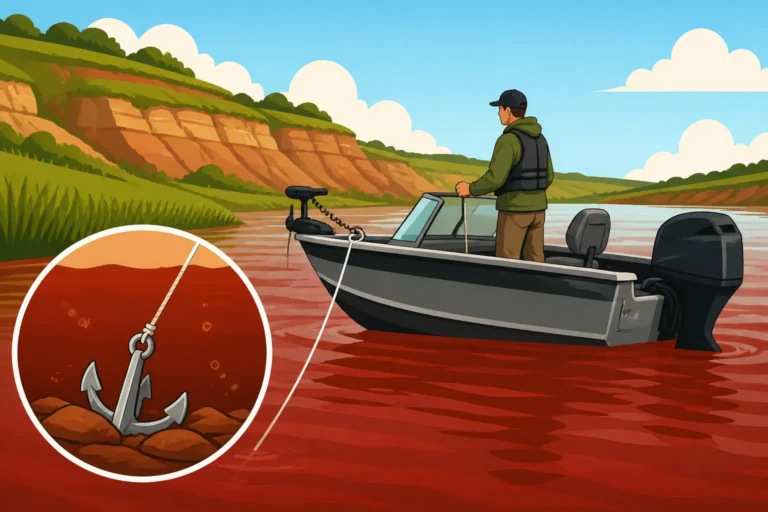
How you position your boat relative to the rocky shoreline is critical. Often, you want to stay far enough away so as not to spook shallow fish but close enough to make accurate casts. Using your trolling motor to slowly cruise parallel to the bank, casting ahead and into prominent features, is a common and effective strategy. If you don't have a boat, consider trying Shore Fishing Techniques for Beginners.
Experiment with different casting angles. Sometimes, a retrieve parallel to a rocky ledge will draw strikes, while other times, casting perpendicular to the bank and bringing the lure down a drop-off is the ticket. When fishing points, try casting across the tip, then down each side, covering all potential ambush points. Don't forget to use your fish finder or graph. Modern units, especially those with side imaging or down imaging, are invaluable for locating hidden rock piles, ledges, and even the fish themselves. Utilizing Best Fish Finders for North Dakota Lakes can drastically improve your ability to locate structure and smallmouth.
Remember, smallmouth are often stacked up in very specific areas, so once you catch one, it's worth slowing down and thoroughly working that spot. Make multiple casts from different angles, try different lures, and vary your retrieve speed. Sometimes, a small change is all it takes to unlock a flurry of bites.
Disclaimer
Fishing conditions, regulations, and fish behavior can change rapidly. Always consult the latest North Dakota Game and Fish Department regulations before heading out on the water. This guide is for informational purposes only and does not constitute professional fishing advice.