How to Find Perch Schools Under the Ice
There’s nothing quite as frustrating as stepping out onto that pristine sheet of North Dakota ice, full of hope for a bucket full of yellow perch, only to stare into a sonar screen that shows absolutely nothing but the bottom. We’ve all been there – drilling hole after hole, freezing our fingers, and wondering where on earth those schools of tasty panfish have decided to hide. This guide is here to walk you through the proven strategies and essential techniques for consistently locating those elusive perch schools under the ice, turning those frustrating blank screens into a flurry of bites.
Understanding Perch Behavior in Winter
To consistently find perch, you first need to understand what makes them tick once the lakes freeze over. They don't just randomly scatter; their movements are dictated by a few critical environmental factors, just like any other species.
Where Perch Go When the Ice Forms
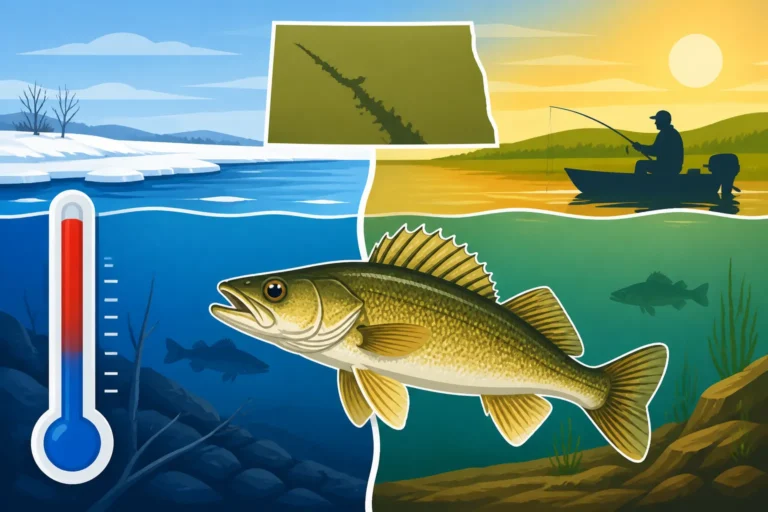
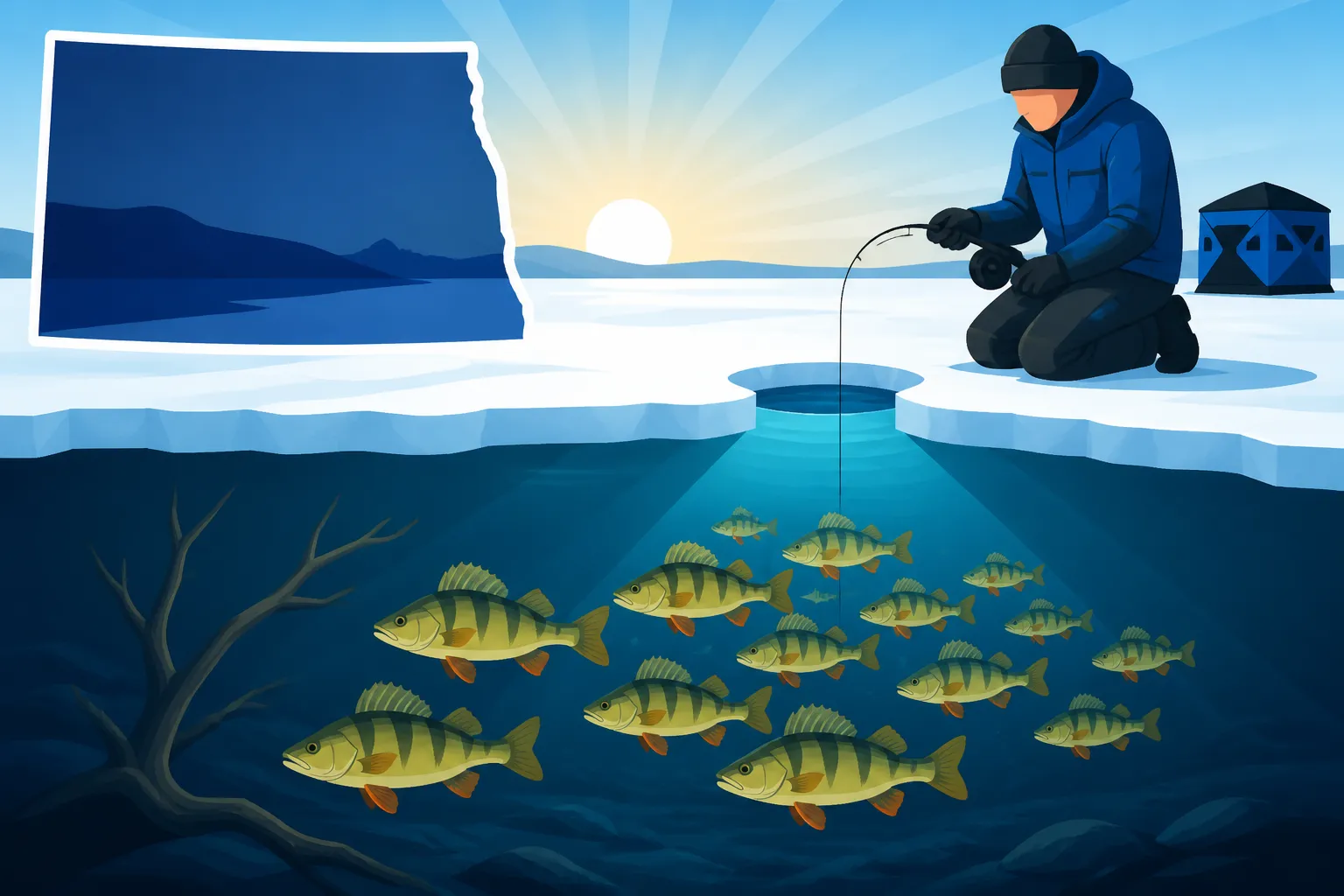
When the first skim of ice appears on our beloved North Dakota lakes, perch undergo a significant behavioral shift. They start congregating in larger schools, often moving out of the shallower, weedy areas they frequented in the late fall. Their primary drivers become food availability and safety from predators.
Early in the ice season, right after freeze-up, you might still find perch relating to residual green weed lines in shallower bays, especially if there's good oxygen. But as the ice thickens and winter deepens, many perch schools tend to transition to deeper basins. This doesn't mean they'll be sitting on the deepest flat; rather, they'll often be found near deeper structure like humps, submerged points, or sharp drop-offs leading into those basins. Think of areas where shallower feeding zones meet deeper water. These transition zones are highways for forage fish and invertebrates, which are the main diet for perch in winter. A great example of this is on a large lake like Devils Lake, where perch will frequently use the flooded timber and old roadbeds as travel corridors and ambush points before settling into deeper areas. Understanding the dynamics of Yellow Perch Habitat on Devils Lake is crucial for success there.
As winter progresses, perch become even more social, forming tight, nomadic schools that constantly cruise these deeper structures or the open water above them in search of food. They might hang out near the bottom, suspend 10-20 feet off the bottom, or even be found higher in the water column if there's an abundant baitfish school.
Key Factors Influencing Perch Location: Oxygen, Forage, Structure
Perch, like all fish, are slaves to their environment. Three main factors really dictate their whereabouts in winter: oxygen levels, forage availability, and underwater structure.
Firstly, oxygen is non-negotiable. While North Dakota lakes generally have good oxygen throughout the winter, some smaller, shallower sloughs, especially those with heavy vegetation that decays under the ice, can see oxygen levels drop significantly as winter progresses. Perch will avoid these areas like the plague. They'll gravitate towards areas with good water circulation or deeper sections of the lake where oxygen remains stable.
Secondly, forage is the ultimate magnet. Perch are constantly on the hunt for small minnows, insect larvae, zooplankton, and other invertebrates. If you can locate the primary food sources, you'll likely find the perch. This often means focusing on submerged humps where insect larvae might be abundant, or scouting areas where baitfish (like shiners or smelt) are schooling. Perch are opportunists, and if a good food source moves, they'll follow it. This is why knowing how to find perch schools under the ice often involves finding the bait.
Finally, structure provides sanctuary and ambush points. While perch might suspend in open water, they are almost always relating to some form of structure, even if it's just a subtle depth change. This could be a rocky point extending into deep water, a sharp breakline, a submerged island, or even flooded timber or old roadbeds in lakes like Devils Lake. Structure acts as a current break, a place for forage to hide, and a navigation aid for the perch themselves. These features offer contours and cover that concentrate food and provide safety.
Water clarity also plays a role. In clearer lakes, perch might be found deeper to avoid light, especially on bright, sunny days. In stained or murkier water, they might be shallower, taking advantage of lower light penetration throughout the water column. Barometric pressure can also influence their activity; stable or rising pressure often leads to more active feeding, while falling pressure can make them lethargic and harder to find.
Essential Gear for Locating Perch
Finding perch under the ice isn't just about luck; it's about having the right tools and knowing how to use them. Modern ice fishing gear has revolutionized the way we locate and catch fish.
The Role of Electronics: Flashers and Sonars
If you're serious about finding perch schools, a quality flasher or sonar unit is your absolute best friend. These devices allow you to see what's happening under the ice in real-time, displaying fish, your lure, and the bottom composition.
Flashers (like those from Vexilar, Marcum, or Hummingbird ICE units) provide an instant, color-coded display of what's below. You'll see your jig descending, and when a fish approaches, it'll show up as a distinct color band. The beauty of a flasher is its simplicity and real-time response, which is crucial when targeting nomadic perch schools. You can quickly tell if fish are responding to your jigging motion, how many fish are present, and at what depth they are holding. They are excellent for telling you right now if there are fish below you.
Graph sonars (like the Lowrance Elite FS, Humminbird Helix, or Garmin Echomap series) offer a more detailed, historical view of the water column. They can be set up to show traditional 2D sonar, down imaging, and even side imaging on some models, giving you a broader picture of structure and fish beyond just directly under your hole. While graph sonars might have a slight delay compared to a flasher, their ability to mark suspended fish, define bottom transitions, and even record waypoints on schools makes them invaluable for mapping out a bite. Understanding how to read a fish finder for ice fishing, whether it's a flasher or a graph, is a skill that will dramatically increase your success rate. Learning to differentiate between baitfish, individual perch, and perhaps even larger predators is key. Many anglers now opt for a combination, using a flasher for instant feedback in their primary hole and a graph sonar to scan nearby holes or map out areas.
You can find a wide range of these electronics on Amazon, often with competitive pricing and detailed reviews to help you choose the best unit for your needs.
Augers and Hole Hopping Strategy
Once you have your electronics, the next crucial piece of the puzzle is an efficient way to make holes and the willingness to use it. This is where your ice auger comes in, and the concept of "hole hopping" becomes paramount.
Perch schools are often on the move, and sitting in one spot waiting for them to come to you is a recipe for boredom. The most successful perch anglers are constantly drilling holes and moving, covering large areas until they connect with a school. This means you need an auger that's powerful, reliable, and easy to use.
Modern electric augers, such as those from Ion or StrikeMaster Lithium, have become incredibly popular in North Dakota. They are quiet, scent-free, and can drill dozens of holes on a single charge, making them perfect for aggressive hole hopping. Gas or propane augers also have their place, especially if you're drilling in very thick ice or plan on making hundreds of holes over a weekend. Regardless of the type, ensure your blades are sharp – dull blades make hole drilling a chore and waste precious fishing time. For a deeper dive into choosing the right tool, check out our guide on the Best Auger Size for North Dakota Ice Fishing.
When you start your search, don't just drill one hole and set up camp. Drill a series of holes in a pattern: a grid over a suspected hump, a line along a breakline, or fanning out from a point. Spend a few minutes at each hole, dropping your transducer and watching your electronics. If you don't see any activity within a few minutes, move on to the next hole. This disciplined approach maximizes your chances of intercepting a moving school of perch rather than waiting for them to stumble upon your stationary setup.
Proven Strategies for Pinpointing Perch Schools
Once you have your gear in hand, it's time to put some effective search strategies into practice. Finding perch schools is often a mix of planning, observation, and adaptability.
Mapping and Satellite Imagery Reconnaissance
Before you even step foot on the ice, you can dramatically increase your chances of finding fish by doing some homework. Modern mapping tools are incredibly powerful.
Bathymetric maps are your treasure maps. Apps like Navionics, Humminbird Basemaps, or Garmin LakeVü provide detailed contour lines, showing you the underwater topography of North Dakota lakes. Look for areas with structural features that would appeal to perch:
- Humps and sunken islands: Perch often gravitate to the tops and sides of these features, especially if there's a strong depth change.
- Points: Submerged points that extend into deeper water are classic ambush spots.
- Drop-offs and breaklines: The edges of flats, where the bottom quickly drops into deeper basins, are prime perch territory.
- Old creek channels or roadbeds: These can act as highways for fish and concentrate forage.
By studying these maps, you can identify potential holding areas and plan a strategic route for your hole-hopping expedition. Mark these spots as waypoints on your GPS unit, or even print out maps and highlight them. This proactive approach helps narrow down vast expanses of ice into manageable search zones. We've often covered similar strategies for other species, like using maps to learn how to find walleye structure with a map, and many of the principles apply directly to perch.
Satellite imagery (like Google Earth) can also offer unique insights. Look for anomalies in shoreline vegetation that might indicate underwater weed beds, or visible structures from past years that might still hold fish. Sometimes you can spot old road grades or foundations that aren't marked on bathymetric maps. Comparing historical satellite images can also reveal changes in water levels or submerged features that could be key.
Systematic Search Patterns and Hole Placement
Random drilling might eventually get you on fish, but a systematic approach is far more efficient. Once you've identified a promising area on your maps, apply a search pattern.
- Grid Search: If you suspect a school is in a relatively flat area or across a large hump, drill holes in a grid pattern, maybe 20-30 yards apart. This allows you to methodically cover the area.
- Fan Search: When fishing a point or a small hump, drill holes in a fan shape radiating out from the tip of the structure. This helps you determine what depth the fish are holding at and if they are relating to the tip or the sides.
- Contour Line Drilling: If you've identified a promising breakline, drill holes directly along that contour line, or just inside and outside of it. Perch will often patrol these depth transitions.
The key here is mobility. Don't be afraid to drill many holes. Think of it as mapping the fish presence rather than just trying to catch one fish. If you drill a dozen holes in an area and don't see anything on your electronics, it's time to move to the next promising spot identified on your map. This aggressive approach is especially effective when the perch are schooled up tight and moving. Don't be that angler who sits in one unproductive hole all day! Even a small change in depth or location can make a huge difference.
Interpreting Bites and Adjusting Your Approach
Connecting with a perch school isn't always a dramatic slam-dunk bite. Perch can be incredibly subtle, especially in cold water or during periods of negative pressure.
When you do drop your transducer and see marks on your flasher, pay close attention to how the fish react to your presentation.
- Aggressive fish: These will shoot up from the bottom, chase your lure, and hit it hard. You'll likely see strong, distinct marks on your electronics.
- Neutral fish: They might approach your lure slowly, hover below it, or just subtly nudge it without committing. Their marks on the flasher might be fainter or less active. This is where subtle jigging movements, like quivering your rod tip or barely lifting the bait, can coax a bite.
- Negative fish: They might appear on your screen but show no interest in your lure, or they might dart away when your lure gets too close. This is a sign to try a different presentation, a smaller bait, or a different color. Sometimes, simply changing your jigging cadence can trigger a bite.
If you're marking fish but not getting bites, don't be afraid to experiment. Change your lure size, color, or type. Try a different bait (like a wax worm, minnow head, or plastic larva on a small jig). Vary your jigging retrieve: aggressive rips, subtle quivers, dead sticking. Sometimes, a long pause is all it takes for a hesitant perch to commit. If you find yourself on Devils Lake and the perch are acting finicky, our guide on how to jig for perch on Devils Lake offers some excellent tactics to try.
Also, pay attention to the depth at which the fish are holding and adjust your presentation accordingly. Are they right on the bottom? Are they suspended 5 feet up? Sometimes, fish will only bite if the lure is presented at eye level or slightly above them.
| Structure Type | Perch Location | Target Depths (Winter) | Lure Presentation |
|---|---|---|---|
| Deep Basins | Suspended over bottom, near subtle humps/bumps | 20-40 feet | Small tungsten jigs tipped with wax worms or minnow heads, dead-sticked or jigged with subtle lifts. Aggressive flutter spoons for active fish. Focus on finding baitfish schools. |
| Hard Bottom Humps/Points | On top, around edges, relating to rock/gravel | 15-30 feet | Aggressive jigging with spoons or larger jigs to call in fish, then switch to lighter tungsten jigs for finicky biters. Work all sides of the structure. |
| Breaklines/Drop-offs | Along the contour lines, where depth changes | 10-35 feet | Start shallow and work your way deeper, or vice versa, to find the active depth. Try a jigging spoon dropped down the break, or a slip bobber rig if fish are suspending. |
| Green Weed Lines (Early Ice) | Edges of remaining healthy vegetation | 8-15 feet | Small jigs with soft plastics or live bait, worked slowly through the weeds. Focus on pockets and edges. Be mindful of fishing through weeds, which can be challenging but rewarding. |
| Flooded Timber/Brush (Devils Lake) | Around submerged trees and brush piles | Varies (10-25 feet) | Vertically jigging small jigs or spoons tight to the structure. Be prepared for snags. Often, perch will be tightly packed within the cover. Focus on the main trunks and branches, checking different depths. |
Advanced Tips for Consistent Perch Success
Becoming a consistent perch producer under the ice often comes down to refining your strategies and learning to adapt to the ever-changing conditions.
Leveraging Early and Late Ice Conditions
Perch behavior isn't static throughout the entire ice season. What works in December might not work in March.
Early Ice: This is often a fantastic time for perch. The fish are typically still active and haven't experienced heavy fishing pressure. They might still be found shallower, relating to the last vestiges of green weeds in bays, or congregating on transitional points leading to deeper water. During this period, perch are often more aggressive, and you can get away with slightly larger baits and more aggressive jigging. They are still adjusting to the colder water and often feeding heavily. Always remember to prioritize safety during this time, as ice can be unpredictable. You can find more specific guidance in our article on Early Ice Fishing Tips for North Dakota.
Late Ice: As the season nears its end, and the days grow longer and warmer, perch often make a move back towards shallower water, particularly areas with inflowing water or fresh oxygen. They might also be found closer to shorelines or shallower humps as they begin to think about spawning. This period can offer some of the fastest fishing of the year, as perch become very active. However, just like early ice, late ice conditions demand extreme caution regarding ice safety. Check out our guide on Late Ice Fishing Tips Before Ice-Out to stay safe and productive. The fish are often very hungry as they prepare for the spawn, so don't be afraid to use larger baits or more aggressive tactics.
Environmental Factors: Weather and Time of Day
Weather patterns and the time of day can have a profound impact on perch activity.
Bright, Sunny Days: On clear days with high pressure, perch can sometimes be found deeper, seeking refuge from the light penetration. They might also be more spread out or less active. In these conditions, subtle presentations and slower jigging can be more effective. Sunglasses, easily purchased on Amazon, are also vital on sunny days to reduce glare and protect your eyes.
Overcast Days: Often some of the best days for perch fishing! The reduced light allows perch to feel more comfortable in shallower water or higher in the water column, and they tend to be more active throughout the day.
Cloudy, Snowy Days: Similar to overcast conditions, but the added cover from falling snow can really turn on a perch bite. The low light and slightly warmer air can make perch very aggressive.
Time of Day: While perch can bite all day, they often have distinct peaks of activity. Dawn and dusk are prime feeding times, mirroring open-water habits. During these low-light periods, perch often become more aggressive and move into slightly shallower water to feed. Mid-day can be slower, but if you find a large, active school, the bite can last for hours. Understanding the Best Time of Day for Ice Fishing Perch can help you plan your trips more effectively and focus your efforts when the fish are most likely to be active. Don't underestimate the power of those "golden hours" right around sunrise and sunset.
When the Perch "Disappear"
It’s a common scenario: you were on a hot perch bite yesterday, and today, they're just gone. This happens to the best of us, and it's usually due to a few factors.
Firstly, perch are nomadic. A school of hundreds can move several hundred yards or even miles overnight. If your hot spot is suddenly dead, don't assume the fish are gone from the lake. They've likely just moved to a different piece of structure or followed a baitball. This is when your systematic search patterns and willingness to cover ground truly pay off.
Secondly, fishing pressure can move fish. If a spot gets hammered by dozens of anglers, the perch might become wary and relocate to quieter waters. Sometimes, simply moving a short distance away from the crowd, or trying a spot that sees less pressure, can make all the difference.
Thirdly, changes in environmental conditions can affect fish location. A sudden drop in barometric pressure, a cold front, or a significant shift in wind direction can cause perch to become lethargic or move deeper. When this happens, consider trying deeper water, slowing down your presentation, or targeting different areas entirely. On some of North Dakota's premier perch lakes, like Devils Lake, where perch schools are known for being large but also highly mobile, understanding these shifts is crucial. Don't be afraid to abandon a known "spot" and search out new Devils Lake Perch Fishing Spots if the old ones aren't producing. Keep an open mind and stay flexible, and those elusive perch schools will eventually reveal themselves to you.
Disclaimer
Fishing involves inherent risks, including but not limited to, changing weather conditions, personal injury, and property damage. Always exercise caution and good judgment. Ensure you comply with all local, state, and federal fishing regulations. This guide is for informational purposes only, and while we strive for accuracy, fishing conditions and regulations can change. It is your responsibility to stay informed and prioritize safety.