How to Fish a Weed Line for Northern Pike
There’s nothing quite like the thrill of a northern pike absolutely crushing your lure. But for many anglers, especially those new to pursuing these toothy critters, finding them can feel like searching for a needle in a haystack. The truth is, pike aren't just swimming around aimlessly; they have preferred hangouts, and few places are as consistently productive for pike as a good, healthy weed line. This guide is all about demystifying how to effectively target northern pike nestled in these submerged green jungles, giving you the knowledge to turn frustrating searches into exciting battles on the water.
Understanding Northern Pike and Their Weed Line Habits
Northern pike are ambush predators, and their entire existence revolves around finding the perfect hiding spot to surprise their prey. Weed lines provide that ideal combination of cover, cooler water, and a smorgasbord of baitfish, making them absolute magnets for these aggressive fish.
Why Weed Lines Are Pike Havens
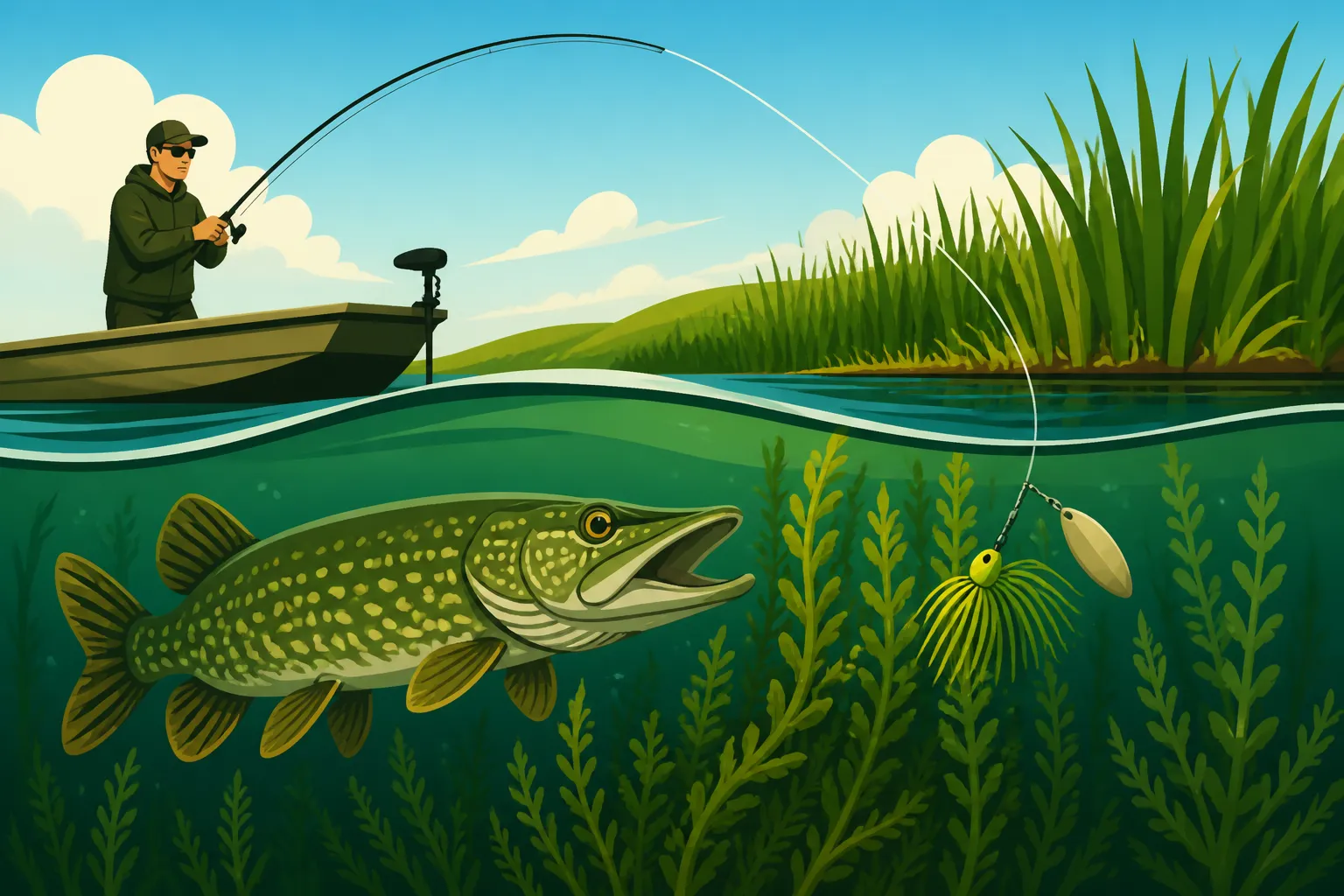
Imagine you're a pike. You're long, sleek, and built for explosive bursts of speed. Where would you set up shop to maximize your chances of a meal? Not in the middle of a barren lake! You'd want to be where you can blend in, wait patiently, and then erupt into action. Weed lines, whether they're submerged cabbage, coontail, or lily pads, offer exactly that. They create a distinct edge, a natural boundary between open water and dense vegetation. This edge is a superhighway for smaller baitfish, perch, and even young walleye, all looking for food or cover themselves. Pike position themselves strategically along these edges, using the dense growth as camouflage, ready to dart out and snatch an unsuspecting meal.
Not only do weeds provide cover, but they also regulate water temperature. During the heat of summer, dense weed beds offer shade and slightly cooler water, a welcome relief for pike. In the spring and fall, these areas can hold warmer water, attracting baitfish and, consequently, the pike that feed on them. The density of the weeds can vary, from sparse patches that allow easy access to thick, impenetrable mats. Learning to distinguish these different types of weed lines and how pike relate to them is crucial.
Identifying Productive Weed Line Structures
Not all weed lines are created equal. Some hold fish, and some seem barren. The key is to look for structure within the structure. Don't just cast blindly into a straight line of weeds. Instead, pay close attention to irregularities, points, pockets, and transitions.
Think of it like this: a straight wall of weeds might hold some pike, but a point that juts out into open water, a small pocket or cut-out in the weed edge, or an area where different types of weeds meet is often a prime ambush point. These irregularities create natural funnel points or deeper sections that pike find irresistible. Look for areas where a deeper drop-off meets the weed line, or where a hard bottom transitions into soft muck within the weeds. Often, areas with healthy green weeds are far more productive than those with dying, brown, or sparse vegetation. These healthy weeds produce more oxygen and support a more vibrant ecosystem, which in turn attracts more baitfish and, yes, more pike. Sometimes, subtle changes in depth right along the weed line, even just a foot or two, can be the sweet spot.
Essential Gear for Weed Line Pike Fishing
Tackling northern pike in and around weeds requires specific gear. You can't just throw out your ultralight panfish setup and expect to succeed. Pike are powerful, and weeds are abrasive; you need robust equipment designed to handle both.
Rods, Reels, and Line for Weedy Environments
When it comes to rods for weed line pike, you'll want something with a good backbone – a medium-heavy to heavy power rating. This isn't just for fighting the fish, but also for ripping lures free from snags and pulling pike out of dense cover. A fast action tip is beneficial for casting accuracy and feeling subtle bites, while the heavier power allows you to control the fish and prevent it from burying itself deeper into the weeds. Rod lengths typically range from 6'6" to 7'6", with longer rods offering better casting distance and leverage.
For reels, a sturdy spinning reel in the 3000-4000 size range or a reliable baitcasting reel with a robust drag system is ideal. Ensure your reel is spooled with a strong, abrasion-resistant line. This is where braided line truly shines. Unlike monofilament or fluorocarbon, braid has minimal stretch, superior strength-to-diameter ratio, and excellent abrasion resistance, which is vital when fishing around rough weeds. A 30 to 50-pound test braided line is a solid choice. You can find excellent options for these on Amazon, often with various color choices that can be helpful for visibility above water. While braid is great, pike have sharp teeth! Always, and I mean always, use a leader. A steel, fluorocarbon, or titanium leader of at least 12-18 inches (and 30-80 pound test) is non-negotiable to prevent bite-offs. Without a leader, you're just donating lures to the pike population.
Lure Selection for Weed Line Pike
The world of pike lures is vast, but for weed line fishing, you need baits that can either navigate through weeds without excessive snagging or are designed to be fished over the top of them.
- Spinnerbaits: These are pike magnets and incredibly weedless. The single hook often rides upright, deflecting off vegetation, and the flashing blades grab attention. Chartreuse, white, and firetiger patterns are perennial favorites.
- Spoons: Classic red-and-white or five-of-diamonds spoons are still incredibly effective. They wobble enticingly on the fall and can be retrieved with a jerking motion to clear weeds. Try a weedless spoon design for the densest cover.
- Jerkbaits/Glide Baits: For fishing along the edge of weed lines, suspending or floating jerkbaits can be deadly. Work them with a twitch-pause retrieve, allowing the bait to hang tantalizingly in the strike zone.
- Soft Plastics (Swimbaits/Flukes): Rigged weedless with a large EWG (Extra Wide Gap) hook, soft plastic swimbaits or flukes can be incredibly versatile. They imitate baitfish beautifully and can be worked right through lighter weed cover. Large paddle tail swimbaits retrieved steadily can trigger aggressive strikes.
- Topwater Lures: When pike are active and looking up, especially in warmer months or around lily pads, topwater frogs, buzzbaits, or large walking baits can provide exhilarating explosions. These are best for fishing over shallower, sparser weeds or open pockets.
- Bucktail Spinners: These are another fantastic option for covering water quickly along weed edges. Their large, flashy blades and pulsing bucktail are irresistible to aggressive pike.
- Inline Spinners: Simple yet effective, inline spinners like Mepps or Blue Fox are great for burning over weed tops or retrieving along edges.
When selecting lures, remember that pike are often not particular about color, but flash and vibration are key. Big, aggressive profiles tend to get their attention, especially in stained water.
Techniques for Successfully Fishing Weed Lines
Successfully fishing weed lines for northern pike isn't just about having the right gear; it's about understanding how to present your lures effectively and strategically approach these fishy strongholds.
Casting and Retrieval Strategies
Your approach to casting and retrieval will depend on the density of the weeds and the specific lure you're using. Generally, you want to make casts that parallel the weed line as much as possible. This keeps your lure in the "strike zone" – that productive edge where pike wait – for the longest duration. If the weed line has points or pockets, cast directly into those features, allowing your lure to pass through or over them. When casting over lighter weeds, a cast that lands just beyond the weeds and is retrieved quickly over the top can trigger reactive strikes.
For retrieval, varying your speed and adding pauses or jerks is often key. Pike are visual predators, and erratic movements can mimic injured baitfish, making your lure an easy target.
- Spinnerbaits and Spoons: A steady retrieve is often effective, but try a "stop-and-go" or "pump-and-drop" retrieve to trigger bites. Let a spoon flutter on the fall near a weed edge.
- Jerkbaits: The classic "twitch, twitch, pause" retrieve is paramount. The pause is often when the strike occurs. Experiment with different pause durations.
- Soft Plastics: A slow, steady retrieve mimicking a swimming baitfish, or a jigging motion to make it hop off the bottom and through vegetation, can be deadly.
- Topwater: A consistent "walk the dog" action for walking baits or a steady retrieve for buzzbaits over the top of weeds works wonders. Let a frog sit enticingly on a lily pad before twitching it off.
Remember, if you feel your lure snagging on weeds, a sharp snap of the rod tip can often rip it free without a full snag. Keep that line tight!
Working Different Types of Weed Cover
Weed lines aren't uniform, and adapting your technique to different types of cover is essential.
- Dense Submerged Cabbage/Coontail: For very thick, submerged weeds, highly weedless lures like spinnerbaits, spoons with weed guards, or soft plastics rigged Texas-style are your best bet. Cast along the edges or look for clear lanes within the weeds. Sometimes, a short, sharp rip can clear your lure, but repeated snags will only frustrate you.
- Lily Pads/Emergent Vegetation: These are classic topwater pike playgrounds. Frogs, buzzbaits, and weedless spoons are excellent here. Cast directly onto the pads and work your lure over them, or target the open water pockets between pads.
- Sparse Weeds/Transitional Zones: These areas often provide the perfect balance of cover and open water. Here, you can be more versatile with your lure choices, including jerkbaits, inline spinners, and even crankbaits that run just above the weed tops. This is a great place to parallel cast, working the edges meticulously.
- Deep Weed Lines: Sometimes pike will hold on weed lines that extend into deeper water, say 10-20 feet. In these scenarios, you might need to use heavier jigs tipped with large soft plastics or deep-diving crankbaits that can reach the top of these submerged weed beds. Electronics become very helpful here to identify these deeper weed edges.
Consider the time of year too. Early in the spring, pike will often be in shallower weed growth, particularly where the water warms up faster. As summer progresses, they might retreat to deeper, cooler weed lines. You can find more specific seasonal advice in articles like our North Dakota Fishing Season Dates and Limits guide or our North Dakota Fall Fishing Guide.
Positioning Your Boat or Yourself
Whether you're in a boat, kayak, or fishing from shore, your positioning significantly impacts your success.
- From a Boat: Position your boat parallel to the weed line, just outside of casting distance, or slightly deeper, allowing you to cast into and along the edge. Use your trolling motor to slowly cruise along, making multiple casts to cover the entire length of the weed line. If it's windy, you might need to use a drift sock or a spot-lock feature on your trolling motor to maintain control. For example, if you're fishing a long weed edge on Lake Sakakawea, a good boat positioning strategy can make all the difference.
- From a Kayak: Kayaks offer stealth and access to shallower, tighter weed pockets that larger boats can't reach. Paddle silently and use a small anchor or stake-out pole to hold your position. You can get really close to the cover, allowing for precise casts. A reliable anchor is crucial when dealing with wind or current, and you can find many options on Amazon that work well for kayaks.
- Shore Fishing: When fishing from shore, you're limited by your casting distance. Look for shorelines that have accessible weed lines within reach. Long casting rods and lures that can cover distance are advantageous. Try to find points or bends in the shoreline where weed lines are closer or more pronounced. Our guide on Best Bank Fishing Spots in North Dakota might offer some ideas.
Navigating Common Challenges and Safety Tips
Fishing for northern pike in weed lines presents its own set of challenges, from snagging to handling these formidable fish safely. Being prepared makes the experience much more enjoyable.
Dealing with Snags and Lost Lures
Snags are an inevitable part of weed line fishing. The key is to minimize them and know how to deal with them when they happen.
- Prevention: Use weedless or semi-weedless lures. Pay attention to your retrieve speed; often, slowing down slightly or speeding up can help deflect a lure from a snag. Keep your rod tip up when retrieving over shallow weeds.
- When You Snag: Don't just yank hard immediately. Often, a snag is just a clump of weeds. Try a sharp, quick snap of the rod tip to free it. If that doesn't work, try letting your line go slack for a moment, then reeling up tight and plucking the line like a banjo string. Sometimes, this can dislodge the lure. If you're in a boat, motor over to the snagged lure and gently try to pull it free from a different angle. A lure retriever can be a valuable tool to have on board, especially for more expensive baits.
- Lost Lures: Accept that you will lose some lures. It’s part of the game when targeting fish in heavy cover. That's why having a good supply of your favorite, productive weed line baits is smart.
Handling Northern Pike Safely
Pike have a mouth full of razor-sharp teeth. Handling them incorrectly can lead to serious injury for both you and the fish.
- Equipment: Always have a good set of long-nosed pliers (like these available on Amazon) or jaw spreaders handy for hook removal. A sturdy net with rubberized mesh is also invaluable for landing and controlling a fish, minimizing stress on both the fish and your hands. For really big pike, a release tool can be a game changer.
- Landing the Fish: Once a pike is alongside the boat or close to shore, use your net to scoop it headfirst. Avoid grabbing a pike by the gills unless you intend to keep it, as this can cause severe damage.
- Gripping the Fish: For a quick photo and release, the safest way to handle a pike is often the "gill plate" or "operculum" grasp. Slide your hand under the gill plate from the bottom, firmly grasping the bony plate. This immobilizes the fish and keeps your fingers away from its teeth. Always support the body of larger fish with your other hand. Our Best Net for Landing Big Pike guide might offer further insight.
- Hook Removal: Use your long-nosed pliers or jaw spreaders to carefully remove the hooks. If the hooks are deep, take your time. If it's a barbed hook and you intend to release the fish, consider crushing the barbs beforehand to make removal easier.
- Release: Get the fish back into the water as quickly and gently as possible. If it's sluggish, hold it upright by the tail and gently move it back and forth to force water over its gills until it swims away strongly.
Remember, fishing ethics and regulations are important. Make sure you're familiar with the current North Dakota Fishing Regulations Explained and specifically the North Dakota Northern Pike Daily Limit for the waters you're fishing.
| Lure Type | Best for Weed Density | Retrieval Style Examples | Best Pike Habitat | Key Benefit |
|---|---|---|---|---|
| Spinnerbait | Medium to Heavy | Steady, stop-and-go, occasional rip | Edges, pockets, over tops | Excellent weed deflection, flash, vibration |
| Weedless Spoon | Heavy | Slow, flutter on fall, short rips | Thick weeds, lily pads | Minimizes snags, mimics injured baitfish |
| Jerkbait/Glide | Light to Medium (edges) | Twitch-twitch-pause, erratic action | Clear edges, open pockets | Suspending action, triggers reaction strikes |
| Soft Plastic (W.R.) | Medium to Heavy | Steady swim, slow drag, jigging | Varied, through cover | Versatile, realistic, can be fished deep |
| Topwater | Light, over pads | Walk-the-dog, steady retrieve, splash | Shallow, lily pad fields | Exciting surface strikes |
| Bucktail Spinner | Medium | Fast, steady retrieve, cover water | Open edges, along drop-offs | High flash and vibration, covers ground |
By mastering the art of fishing weed lines, you'll unlock some of the most consistent and exciting northern pike action North Dakota has to offer. It takes patience, the right gear, and an understanding of pike behavior, but the rewards are well worth the effort.
Disclaimer
This article is for general informational purposes only and does not constitute professional advice. Laws, prices and regulations vary by location and change over time. Consult a qualified professional for guidance on your specific situation.