Best Depth for Summer Walleye on Sakakawea
Navigating the immense waters of Lake Sakakawea during the peak of summer to find those elusive walleye can feel like searching for a needle in a haystack. The lake’s vastness, combined with the changing habits of fish in warmer temperatures, often leaves anglers scratching their heads. This guide is here to demystify the summer walleye bite on Sakakawea, helping you pinpoint the best depths to target these sought-after fish.
Understanding Summer Walleye Behavior on Lake Sakakawea
As North Dakota's summer sun beats down, Lake Sakakawea undergoes a significant transformation, and with it, the walleye change their routines. What worked in the spring or fall often won't cut it when the water warms up. Understanding why walleye move to certain depths is the first step in consistently finding them.
Why Walleye Go Deep in Summer
When surface waters heat up, walleye, being cool-water fish, seek out more comfortable temperatures. This usually means retreating to deeper, cooler sections of the lake. It's not just about temperature, though; oxygen levels play a critical role, especially in deeper parts of the lake. Healthy walleye need a good balance of both. They're essentially looking for their comfort zone, a place where they don't have to work too hard to breathe or feel overly stressed by the heat. This often places them off main lake points, over submerged humps, or in the deeper channels of the old Missouri River bed.
Beyond comfort, predator-prey dynamics drive them deeper too. Many baitfish, like smelt and young perch, also gravitate to these cooler zones, creating prime feeding opportunities for walleye. If you can find the bait, you're usually not far from the walleye. Think of it as a natural cafeteria opening up in the cooler, deeper parts of the lake.
The Role of the Thermocline
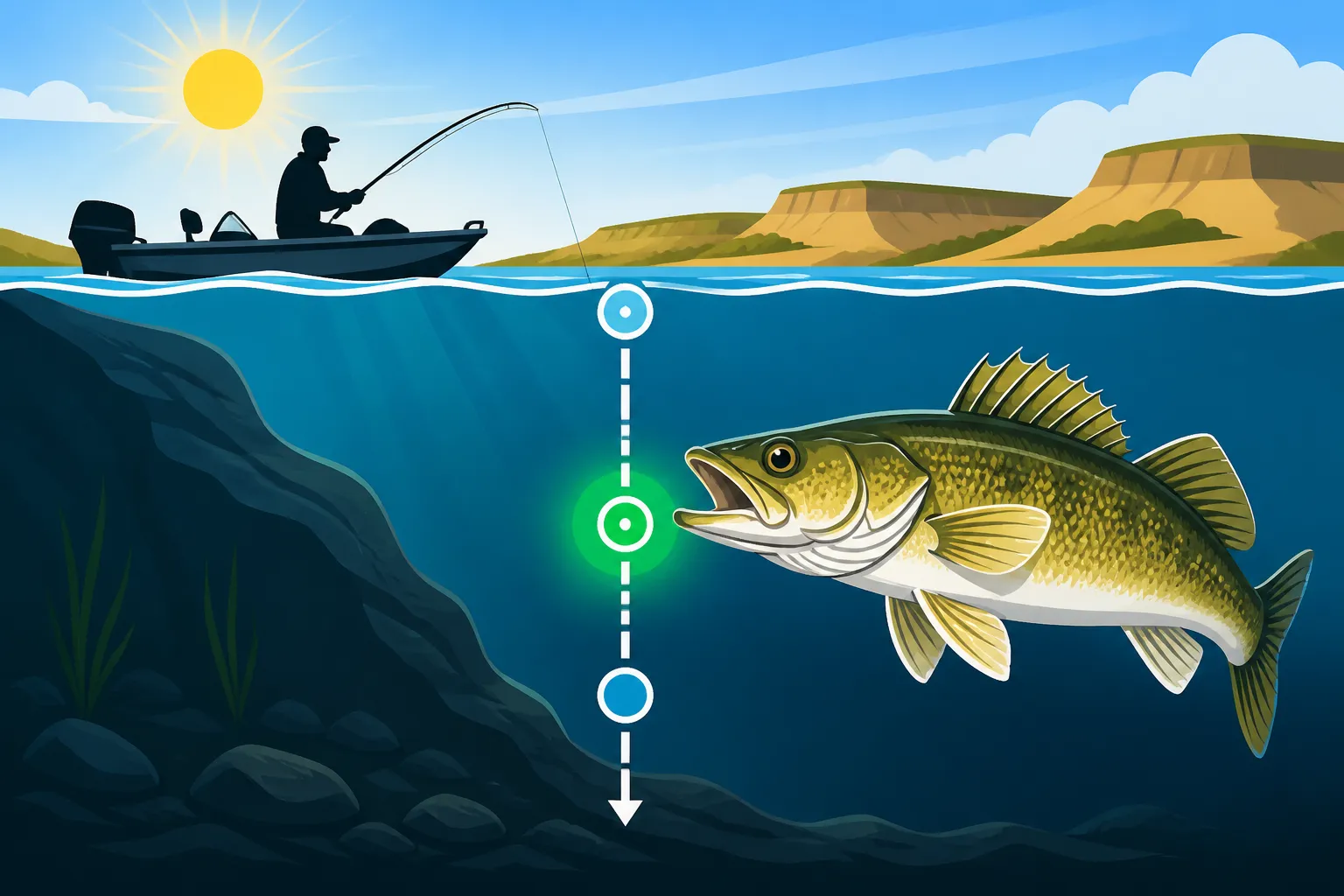
The thermocline is a critically important layer in Lake Sakakawea during summer. It's that distinct band of water where the temperature rapidly changes from warm surface water to cold deep water. Above it, the water might be too warm and oxygen-depleted for walleye comfort. Below it, while cooler, the oxygen levels can drop significantly, especially in very deep areas, making it uninhabitable. Walleye often stack up on or just above this thermocline because it provides the perfect balance of cooler water and sufficient oxygen.
Locating the thermocline with your fish finder is absolutely key to unlocking summer walleye success. It's like finding the "floor" of their living room. Once you know where it is, you can concentrate your efforts in that specific depth range, greatly increasing your efficiency. Modern fish finders, many of which you can find excellent options for on Amazon, are indispensable tools for identifying this crucial layer.
Baitfish Movement and Walleye Location
Walleye are opportunistic predators, and their location is almost always dictated by the presence of their food source. On Lake Sakakawea, the primary forage species include smelt, cisco, yellow perch, and various minnows. In summer, these baitfish also seek cooler, more stable water, often suspending themselves in large schools around the thermocline or over deep water structure.
If your electronics are showing massive schools of baitfish, chances are good that walleye are lurking nearby, either actively feeding or waiting for an opportunity. Pay attention to how the baitfish are positioned – are they tight to the bottom, suspended in open water, or relating to specific pieces of structure? This information gives you valuable clues about where the walleye will be positioned and what techniques might tempt them.
Key Depths to Target for Summer Walleye on Sakakawea
Lake Sakakawea is a vast and dynamic reservoir, and while walleye generally go deeper in summer, the exact best depth can fluctuate throughout the season. Breaking summer down into segments helps refine your search.
Early Summer Depths (June-July)
As June rolls in and July takes hold, the lake is transitioning from its post-spawn patterns. The surface waters are warming, but often haven't reached their peak temperatures yet. During this period, you'll frequently find walleye in depths ranging from 15 to 30 feet. They might still be relating to secondary points, submerged humps, or the edges of old creek channels. They haven't necessarily committed to the deep, main-lake basin yet.
Anglers often have success on these depths by working the edges of structure where baitfish are starting to gather. Look for slight breaks in the bottom contour, rock piles, or even areas with sparse weeds that haven't been choked out by the summer heat. These transition zones offer both food and comfort as the lake warms up.
Mid-Summer Depths (July-August)
This is when the North Dakota summer truly heats up, and Lake Sakakawea's surface temperatures soar. During July and August, walleye will push even deeper, often settling into depths of 25 to 45 feet, sometimes even deeper if oxygen levels allow. The thermocline is usually well-defined during this period, and walleye will orient themselves around it.
You'll often find them on main lake points, sharp breaks along the old river channel, or suspended over deep water following massive schools of smelt. This is a time when the fish can be spread out, making covering water efficiently crucial. Many anglers focus their efforts on Lake Sakakawea Walleye Fishing Spots that offer significant depth changes and underwater features.
Late Summer Depths (Late August-September)
As late August and September approach, subtle changes begin to occur. While temperatures are still warm, the sun's angle changes, and nights start to get cooler. Walleye may begin a slight shift in their patterns, though they'll often remain in the 20 to 40-foot range. They might start to move shallower during low-light conditions, especially if a good population of baitfish moves up onto shallower flats to feed.
This period can be a fantastic time for trophy walleye as they feed heavily in preparation for fall. While still deep during the day, pay close attention to dawn and dusk bite windows where walleye might temporarily push up to ambush baitfish on shallower structure before retreating to the comfort of deeper water as the sun climbs high.
Techniques for Locating and Catching Deep Walleye
Knowing where the walleye are is only half the battle; knowing how to catch them at these depths is the other. Summer walleye can be finicky, so a diverse set of tactics is essential.
Using Electronics Effectively
Your boat's fish finder is your best friend when targeting deep summer walleye. It's not just for seeing fish; it's for understanding the underwater world. Start by using your sonar to locate the thermocline and identify schools of baitfish. Look for humps, points, and channel edges that extend into deeper water. A good GPS chartplotter, often integrated with your fish finder, is invaluable for marking productive spots and navigating the vastness of Sakakawea. You can find robust Best Fish Finders for North Dakota Lakes with GPS capabilities easily online, including many excellent options on Amazon.
Once you identify potential holding areas, use your down imaging and side imaging (if equipped) to get a clearer picture of the structure and any fish relating to it. Pay close attention to arcs that appear near the bottom or suspended in the water column – these are often your target walleye. Don't be afraid to circle back over areas that show promise, studying every detail your electronics reveal.
Popular Deep Water Techniques
Several techniques excel at these deeper summer walleye depths:
- Bottom Bouncing with Spinner Rigs: This is a classic and highly effective method. Use heavier bottom bouncers (1-3 oz, depending on depth and current) to maintain bottom contact, trailed by a spinner rig tipped with a live minnow, nightcrawler, or leeches. Vary your blade size and color until you find what the walleye prefer. This method allows you to cover water and present bait naturally along contours.
- Trolling Crankbaits: Trolling Crankbaits for Walleye is another go-to for covering vast areas of Lake Sakakawea. Use deep-diving crankbaits that can reach your target depth. Experiment with different colors and sizes. Pay attention to your trolling speed – typically 1.5 to 2.5 mph – to get the lures running correctly. Consider using planer boards to spread out your lines and cover a wider swath of water, especially when walleye are suspended.
- Vertical Jigging: While often associated with ice fishing, vertical jigging can be incredibly effective for Jigging for Walleye on Lake Sakakawea on specific pieces of deep structure, like humps or distinct drops. Use heavier jigs (3/8 oz to 3/4 oz) tipped with a soft plastic, live minnow, or piece of a nightcrawler. The key is to keep your bait directly below the boat and feel for those subtle walleye bites. This is a great technique when you've pinpointed a tight school of fish.
Reading the Lake's Structure
Lake Sakakawea's underwater landscape is filled with incredible structure that holds walleye. The key is learning to read it, both visually and with your electronics. Look for obvious features like main lake points that drop sharply into deep water. These funnel baitfish and provide ambush points for walleye.
Submerged humps are also walleye magnets. These underwater islands, often overlooked by less experienced anglers, can hold massive schools of fish, especially their crowns or sharp edges. The old Missouri River channel and its numerous creek arm junctions provide natural highways and holding areas for walleye that follow contour changes. Don't forget about submerged timber, especially in the upper arms of the lake, which can hold surprising numbers of fish. Learning How to Fish Deep Water Humps for Walleye effectively will dramatically improve your summer success.
Factors Influencing Walleye Depth Daily
Even within the summer season, the best depth for walleye on Sakakawea isn't static. Daily conditions can cause significant shifts, making adaptability a core skill for any successful angler.
Weather and Light Conditions
The weather, particularly cloud cover and wind, dramatically influences walleye depth and activity. On bright, sunny days with calm winds, walleye will often hug the deeper, darker reaches of the thermocline or the very bottom to escape the intense light penetration. They become more light-sensitive, and the deeper water offers them a sense of security.
Conversely, on overcast days or days with a good chop on the water, walleye tend to be more active and might push slightly shallower, often suspending in the water column or moving up onto deeper flats. The diffused light and disturbed surface give them a comfort level to roam more freely. Pay attention to how the wind is hitting points and breaks; this can push baitfish, and thus walleye, to one side of the structure.
Time of Day
Like many fish, walleye exhibit distinct diurnal patterns. During the middle of a bright summer day, you'll almost always find them in their deepest haunts, holding tight to structure or suspending at the thermocline. This is when patience and precise deep-water presentations pay off.
However, during low-light periods – dawn, dusk, and even into the night – walleye often become more aggressive and will move shallower to feed. They might move up from 30 feet to 15-20 feet on a main lake point, or even shallower onto flats adjacent to deep water. This is a prime time for active presentations and can be a fantastic window for catching larger fish. Some anglers even find great success Catfishing at Night in North Dakota by extending their fishing into the darkest hours.
Water Levels and Clarity
Lake Sakakawea's water levels can fluctuate, and these changes significantly impact walleye behavior and preferred depths. When water levels are high, walleye might spread out more, exploring newly flooded terrestrial vegetation or structure. Conversely, when water levels are low, they tend to concentrate more tightly on remaining deep structure and the old river channel.
Water clarity also plays a role. In clear water conditions, walleye tend to be more light-sensitive and will often hold deeper or tighter to cover, especially during bright periods. If the water is more stained or turbid, they might be more comfortable moving shallower, as the reduced light penetration offers them more cover. Always consider these factors when deciding on your starting depth and presentation.
| Summer Period | Typical Depth Range (Daytime) | Key Factors Influencing Depth | Preferred Techniques |
|---|---|---|---|
| Early Summer | 15-30 feet | Warming water, post-spawn recovery, baitfish staging | Bottom bouncing, shallow crankbait trolling |
| Mid-Summer | 25-45 feet (or deeper) | Peak water temps, stable thermocline, smelt schools | Deep crankbait trolling, vertical jigging |
| Late Summer | 20-40 feet | Subtle cooling trends, baitfish pre-fall feed | Bottom bouncing, jigging structure |
| Overcast/Windy | Slightly shallower, suspended | Reduced light, baitfish dispersed | Trolling, casting crankbaits (near breaks) |
| Sunny/Calm | Deeper, tight to bottom | Intense light, seeking refuge | Vertical jigging, slow bottom bouncing |
Finding walleye in the vast waters of Lake Sakakawea during summer requires a blend of understanding their behavior, leveraging modern electronics, and being adaptable with your techniques. By focusing on the thermal layers, baitfish presence, and key structural elements in these deeper zones, you’ll dramatically increase your chances of a successful day on the water. Don't be afraid to experiment, use your fish finder constantly, and pay attention to every detail the lake gives you. Good luck out there!
Disclaimer
This article is for general informational purposes only and does not constitute professional advice. Laws, prices and regulations vary by location and change over time. Consult a qualified professional for guidance on your specific situation.