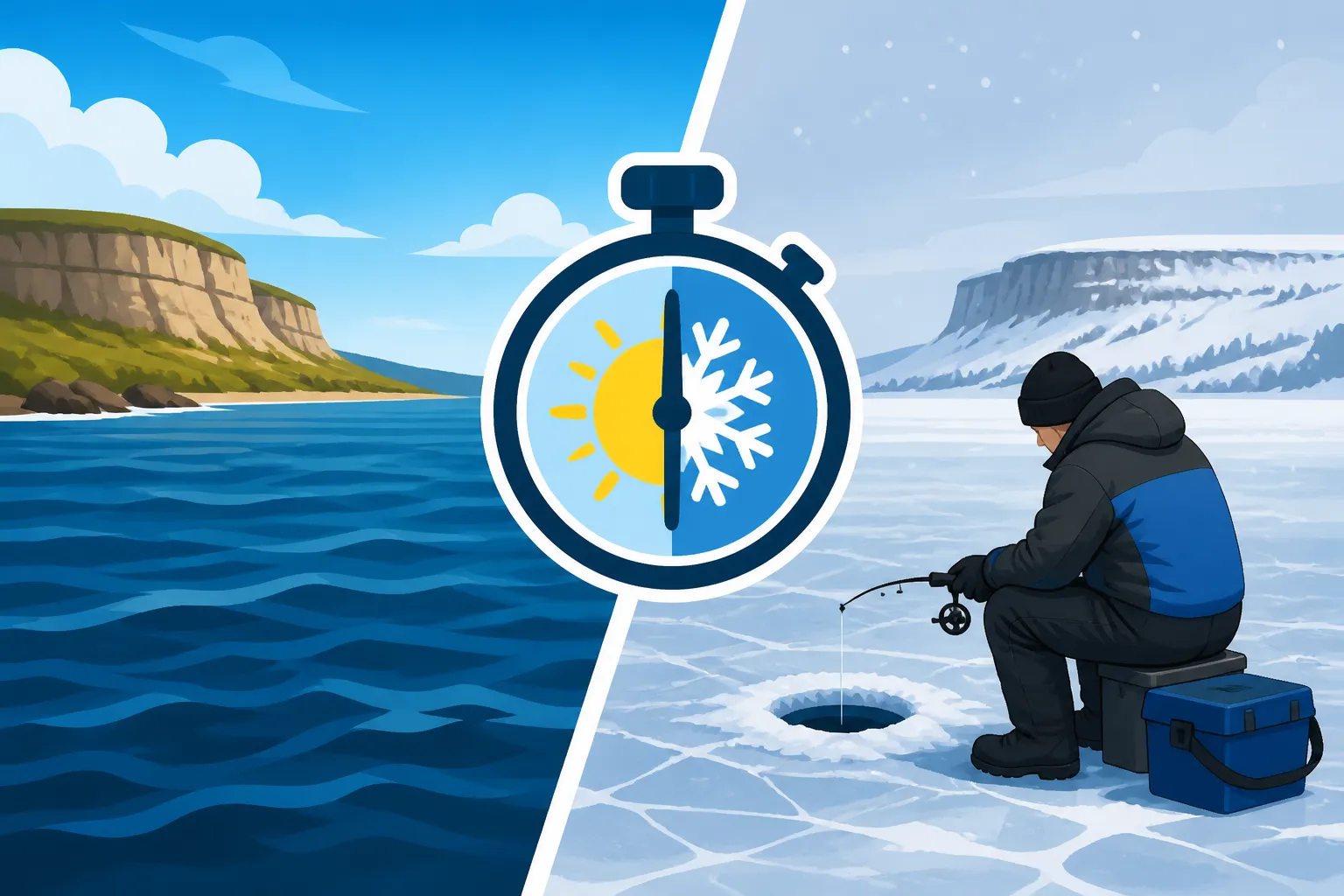
How Long Does Devils Lake Take to Freeze?
That gnawing impatience when you're staring at open water, rods cleaned and auger sharpened, just waiting for the ice to get safe on Devils Lake? It's a feeling every North Dakota ice angler knows all too well. It feels like an eternity sometimes, and the truth is, pinpointing exactly "how long" it takes for such a massive, dynamic body of water to freeze solid enough for safe ice fishing isn't as simple as checking a date on a calendar. This guide is here to unravel the mysteries of Devils Lake's freeze-up, shedding light on the critical factors at play and helping you understand what to realistically expect before you head out on the hardwater.
Understanding the Freeze-Up Process on Devils Lake
Devils Lake isn't just any old pond; it's a vast, shallow, and ever-changing inland sea in North Dakota. Its sheer size and unique characteristics mean that its freeze-up is a complex dance between plummeting temperatures, wind patterns, and the lake's own thermal properties. Unlike small, stagnant bodies of water that might cap over quickly, Devils Lake takes its sweet time, often freezing in stages and presenting varying conditions across its expansive bays and open stretches.
Initial Skim Ice Formation
Before you ever see real ice fishing action, Devils Lake starts with the formation of "skim ice." This is that thin, often transparent layer that first appears, usually in the sheltered bays and calmer areas of the lake when overnight temperatures consistently dip below freezing. You'll notice it first along shorelines, around cattails, or in shallow, protected sloughs. It's a beautiful sight for eager ice anglers, a hopeful sign of what's to come, but it's crucial to understand that skim ice is almost never safe for even foot traffic, let alone heavier equipment. It's fragile, easily broken by a light breeze or a passing duck, and typically only a fraction of an inch thick. While exciting, this initial formation is simply the lake beginning its cooling process, shedding heat to the colder air above, and it's a far cry from the several inches required for secure passage.
The Role of Lake Depth and Size
One of the biggest factors in how quickly Devils Lake freezes is its varying depth and immense size. Shallower areas, especially those protected from strong winds, will always freeze faster. Think about the smaller bays or the flooded timber areas that often have less water volume to cool down. These spots might show safe ice weeks before the main lake. However, the sheer volume of water in the vast, deeper sections of Devils Lake, like those near Minnewaukan or the deeper channels, retains heat much longer. It takes a significant, sustained period of cold weather to draw enough warmth out of that immense water column to allow for a solid, uniform freeze. This difference in thermal mass means that while some bays might offer safe early ice, the larger, deeper sections will remain open, or dangerously thin, for much longer. This also contributes to why certain areas become popular early ice fishing spots, while others are avoided until well into winter.
Key Factors Influencing Ice Formation Speed
The speed at which Devils Lake transitions from open water to a solid, fishable sheet of ice is a delicate balance influenced by several environmental variables. Understanding these can help you better predict when and where safe ice might form, rather than just waiting impatiently.
Air Temperature and Duration of Cold Snaps
This is, without a doubt, the most significant factor. Sustained periods of sub-freezing temperatures are absolutely essential for ice formation. We're not talking about a single cold night; we're talking about days, and often weeks, where the mercury consistently stays below 32°F (0°C). Ideal conditions for rapid ice growth involve overnight lows in the single digits or even below zero Fahrenheit, coupled with daytime highs that barely creep above freezing. If there are warm-ups or "thaws" where temperatures rise significantly above freezing, it can halt the ice formation process, or worse, degrade existing thin ice.
A persistent cold front without interruption allows the lake's surface to cool rapidly and ice crystals to grow steadily. Think of it like building a wall – consistent bricklaying gets the job done quickly, but if you keep knocking sections down, it takes much longer. For a lake the size of Devils Lake, you typically need at least a week to ten days of continuously cold weather, often colder than average, to even begin seeing widespread safe ice, and often more to ensure larger sections are safe for vehicle traffic. Without those sustained cold snaps, the lake simply can't shed enough heat to solidify.
Wind Conditions and Snowfall
While cold air is the primary driver, wind can be a major disruptor. Strong winds create waves and currents, constantly stirring the surface water and preventing the formation of a stable ice layer. Even if the air temperature is well below freezing, a persistent 15-20 mph wind can keep large sections of Devils Lake open indefinitely. Wind acts like a giant blender, mixing warmer water from below with the cold surface water, making it incredibly difficult for ice to set. This is why protected bays often freeze first; they are shielded from the wind's churning action.
Snowfall also plays a dual role. Early season snowfall, especially before thick ice has formed, can act as an insulating blanket, slowing down the freezing process. A thick layer of snow on thin ice prevents the bitterly cold air from directly cooling the water, effectively slowing further ice growth. Later in the season, once substantial ice has formed, snow can still present challenges by insulating the ice, making it grow slower, and by hiding potential cracks or weak spots, making travel more hazardous. It’s a double-edged sword that experienced anglers always factor into their decisions. You might be interested in our guide on Best Portable Ice Shelters for Wind when considering gear for blustery days on the ice.
Water Chemistry and Current
Devils Lake is known for its relatively high salinity compared to many freshwater lakes. While not as salty as an ocean, its unique water chemistry does slightly lower the freezing point compared to pure freshwater. However, for practical purposes, this effect is usually minimal and less impactful than air temperature or wind. A more significant factor can be subsurface currents or inflows. While Devils Lake is largely a terminal basin with no major outflows, subtle currents can exist, particularly in deeper channels or areas where water flows between different sections of the lake. These currents, even minor ones, can inhibit ice formation by constantly moving water, preventing it from remaining still long enough to freeze solidly. Areas with natural springs or groundwater seepage can also create localized weak spots in the ice, regardless of surface temperatures.
Realistic Timeline for Safe Ice on Devils Lake
Waiting for safe ice on Devils Lake is a lesson in patience. It's rarely a 'light switch' event where the entire lake suddenly locks up. Instead, it's a gradual process, often starting in late November and progressing into December, with variations year to year.
Early Season Expectations and Variability
Typically, the very first skim ice on Devils Lake might start appearing in late November, especially if North Dakota experiences an early cold snap. However, for fishable ice – meaning a minimum of 4 inches for foot traffic – you're usually looking at early to mid-December. This early ice will almost exclusively be found in the most protected, shallow bays like those around Grahams Island, or areas like Creel Bay and Minnewaukan Bay, which are somewhat sheltered.
It's vital to stress that "early season" means extreme caution. The timeline is highly variable depending on the specific weather patterns each fall and early winter. A mild December could push safe ice formation back into late December or even early January. Conversely, a sustained cold front in November could bring fishable ice to some areas sooner. There's no hard and fast date, which is why monitoring local conditions is paramount. For more on what defines safe conditions, check out our article on How Thick Ice Needs to Be for Ice Fishing.
Let's look at a general expectation table, understanding this is highly subject to annual weather:
| Ice Condition | Typical Timing (Highly Variable) | Minimum Thickness for Safety (General Guidelines) | Areas Likely to Freeze First |
|---|---|---|---|
| Skim Ice | Late November | Less than 2 inches (Unsafe) | Protected shallow bays, shoreline fringes |
| Foot Traffic (Single Angler) | Early to Mid-December | 4 inches | Sheltered bays (Creel, Grahams Island) |
| Small Groups / ATVs / Snowmobiles | Mid to Late December | 5-7 inches | Larger bays, some main lake points |
| Small Truck / SUV | Late December to Early January | 8-12 inches | Main lake areas, well-traveled ice roads |
| Heavy Equipment / Large Trucks | Mid-January to February | 13-15+ inches | Entire main lake, established ice roads |
Note: These are general guidelines. Always verify actual ice thickness before venturing out.
The Importance of Ice Thickness Progression
The key phrase here is "thickness progression." Ice doesn't form uniformly, and it doesn't strengthen at a consistent rate. A typical progression sees the shallow, protected areas freeze first, slowly expanding as the cold persists. The main lake body, with its greater depth and exposure to wind, takes much longer. It's common to have 8-10 inches of ice in a bay while a mere mile away on the main lake, there might only be 2-3 inches, or even open water.
Anglers often get excited by initial ice reports, but it's crucial to understand where those reports are coming from. The ice near a popular access point might be solid, but venturing further into an unproven area can be extremely dangerous. The safest approach is always to assume the ice is thin until proven otherwise. This means drilling test holes frequently, especially when moving into new areas, to constantly check and confirm the ice thickness. Our guide on Drilling Safe Ice Thickness Guide provides more detailed information on this critical practice.
Monitoring Resources and Local Insights
The best way to stay informed about ice conditions on Devils Lake is to tap into local resources. Here are a few ways veteran anglers keep tabs:
- Local Bait Shops: These are goldmines of information. Stores like Perch-Eyes or Grahams Island State Park bait shop will often have real-time, first-hand reports from anglers who have just come off the ice. They want their customers to be safe and successful, so they usually provide honest assessments.
- North Dakota Game and Fish Department (NDGFD): The NDGFD frequently issues ice condition warnings and updates, especially during early and late ice seasons. Their website and social media channels are excellent sources.
- Online Fishing Forums and Social Media Groups: There are numerous online communities dedicated to North Dakota fishing. Anglers often share ice reports, photos, and safety warnings. However, always exercise caution with unverified reports; cross-reference information whenever possible.
- Guides and Local Resorts: Professional fishing guides operating on Devils Lake make their living by knowing the lake's conditions intimately. Many offer updates or will share general safety advice. Resorts around Devils Lake often monitor conditions for their guests as well.
Remember, a good rule of thumb is to wait until local reports indicate at least 6-8 inches of good, clear ice before even considering taking an ATV or snowmobile out, and significantly more for larger vehicles.
Early Ice Fishing Considerations and Safety
The allure of early ice is powerful. Fish haven't seen much pressure, they're often aggressive, and the opportunity to be among the first out there is a badge of honor for some. However, it's also the most dangerous time to be on the ice. Prioritizing safety is non-negotiable.
Gear for Early Ice Conditions
When the ice is still forming and potentially inconsistent, your gear choices become even more critical. First and foremost, a reliable ice auger is essential. Whether you prefer a manual auger for lighter weight, a propane auger for power, or an electric auger for quiet efficiency (you can find great options on Amazon), being able to quickly and easily drill test holes is key. For more on augers, check out our guide on Ice Fishing Auger Techniques.
Beyond that, a good pair of ice picks, worn around your neck and easily accessible, could be a lifesaver if you do fall through. A throwable rope or rescue throw bag is also highly recommended, especially when fishing with others. Consider a lightweight, portable ice shelter if you're venturing out alone or in a small group, as these are easier to move quickly if conditions change. A good pair of insulated, waterproof boots and layered clothing are also crucial for staying warm in freezing conditions.
Essential Safety Practices
No fish is worth risking your life over. When fishing early ice on Devils Lake, or any body of water, adhere to these fundamental safety practices:
- Never Go Alone: Always fish with a buddy, especially on early ice. A second person can be critical in an emergency.
- Tell Someone Your Plan: Let a trusted person know where you're going, when you expect to return, and what vehicle you're driving.
- Check Ice Thickness Constantly: Drill test holes every 15-20 feet, especially when entering new areas or if you notice changes in ice appearance. Ice thickness can vary dramatically over short distances.
- Be Aware of Ice Color and Texture: Clear, blue ice is generally the strongest. White or opaque ice, often caused by refrozen slush or snow, is much weaker. Dark spots could indicate thin ice or open water.
- Avoid Pressure Ridges and Inflow/Outflow Areas: Pressure ridges, where ice sheets push against each other, are inherently unstable. Areas with currents, like inlets or outflows (even subtle ones on Devils Lake), will always have weaker ice.
- Carry Safety Gear: Ice picks, a throwable rope, and a fully charged cell phone (in a waterproof bag) are non-negotiable. Many anglers also wear a flotation suit, which offers warmth and buoyancy. Our detailed article on Early Ice Fishing Safety Tips expands on these crucial precautions.
- Know the Local Rules: Be familiar with North Dakota Ice Fishing Rules which include regulations on shelters, spacing, and more.
By understanding the science behind the freeze-up and exercising extreme caution, you can enjoy the magic of early ice fishing on Devils Lake responsibly. It might take longer than you'd like, but the reward of a hard-earned catch on safe ice is well worth the wait.
Disclaimer
The information provided in this guide is for general informational purposes only and does not constitute professional advice. Ice conditions are highly unpredictable and can change rapidly. Always exercise extreme caution when on or near ice. It is the responsibility of each individual to assess ice safety independently and to adhere to all local regulations and safety guidelines. Neither the author nor the publisher assume any liability for accidents or injuries sustained while attempting to ice fish.