Trolling Techniques for Big Water Lakes
Navigating the immense, beautiful waters of North Dakota's larger lakes for fishing can be incredibly rewarding, but it often feels like trying to find a needle in a haystack. You've got miles and miles of open water, constantly shifting winds, and fish that seem to disappear as soon as you find them. It's enough to make even seasoned anglers scratch their heads and wonder where to begin. This guide is all about equipping you with the knowledge and confidence to tackle those expansive lakes head-on, focusing on effective trolling techniques that help you cover water efficiently, locate fish, and, most importantly, bring them to the net. We'll delve into the strategies that transform those vast, intimidating stretches into productive fishing grounds.
Understanding the Dynamics of Big Water Lakes
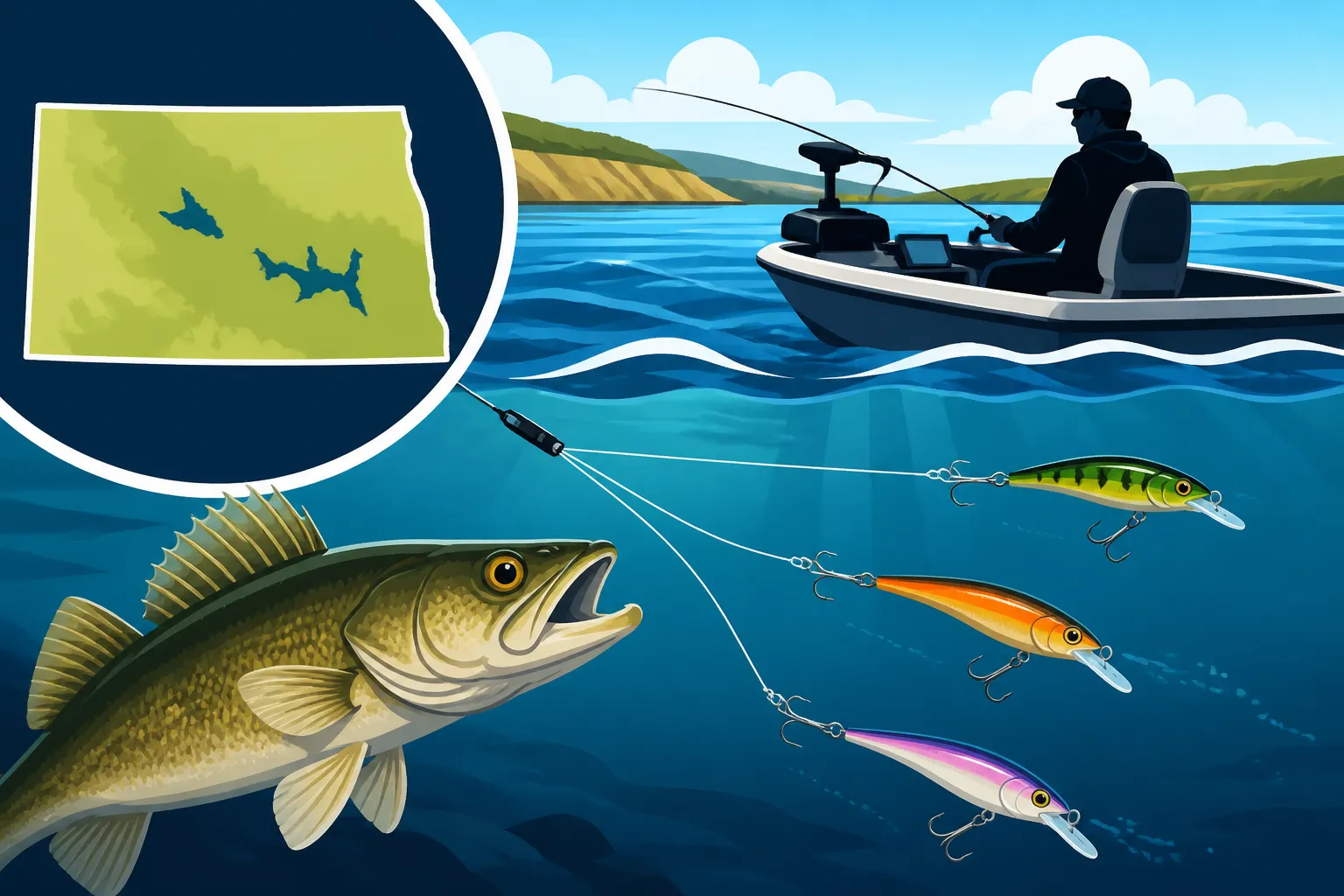
When we talk about "big water lakes" in North Dakota, we're really thinking about places like Lake Sakakawea and Devils Lake. These aren't your cozy little farm ponds; they are massive bodies of water, often stretching for miles, with complex underwater topography and a wide range of conditions that can change in an instant. Trolling on such waters isn't just about dragging a lure behind your boat; it's about understanding the environment, the fish, and how to adapt your approach to find success.
The Challenges of Trolling Expansive Waters
One of the most significant challenges on big lakes is simply covering enough water to encounter active fish. Unlike smaller lakes where fish might be concentrated in specific, easily identifiable areas, big lake fish can be widely dispersed across vast flats, along subtle breaks, or suspended in the middle of nowhere. This makes blindly casting or sitting in one spot less effective. The sheer scale of these lakes means you need a method that allows you to efficiently search for fish. The weather, particularly the wind, also plays a huge role. Big waves can make boat control difficult, affect your lure's presentation, and even push fish into different depths or structures. What was a perfect trolling run one hour can become a choppy, unproductive mess the next.
Another frustration is the varied depth. You might be trolling over 20 feet of water one minute and suddenly find yourself in 60 feet. Keeping your lure in the strike zone when the bottom contour is constantly changing requires active management of your lines and gear. Fish, particularly species like walleye, northern pike, and even Chinook salmon on Lake Sakakawea, often relate to specific depths, temperatures, or structures, and finding that sweet spot is key. Ignoring these factors will lead to a lot of wasted time and very few bites.
Species Commonly Targeted Through Trolling
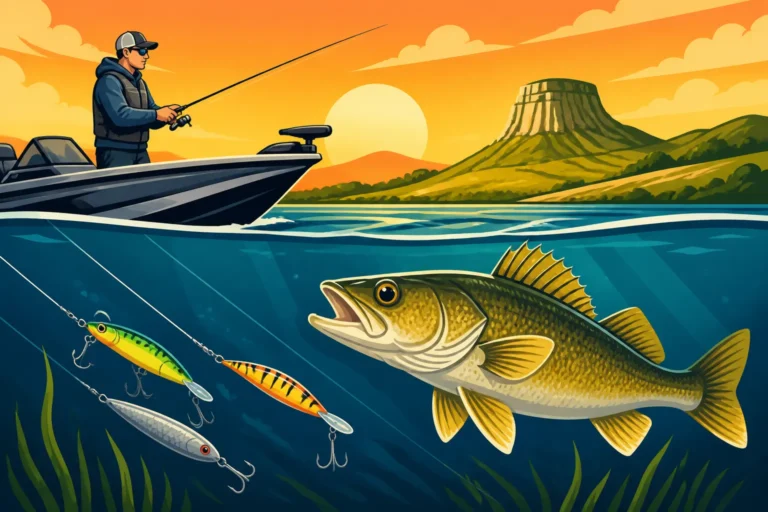
In North Dakota's big water lakes, trolling is a prime technique for several popular species. Walleye are undoubtedly the most sought-after, and they respond incredibly well to trolled crankbaits and spinner rigs. On Lake Sakakawea, you’ll find anglers dedicating entire trips to trolling for these delicious fish, often along structure or in deeper basins. Northern pike also readily strike trolled presentations, especially larger spoons and crankbaits, particularly when they are actively feeding or staging in summer and fall. They're aggressive predators and will chase down a fast-moving lure.
Then there's the unique thrill of Chinook salmon on Lake Sakakawea. These powerful fish are almost exclusively caught by trolling, often requiring specialized gear like downriggers to reach the precise depths they inhabit. Understanding their seasonal movements and preferred temperatures is critical. Finally, sauger, a close cousin to the walleye, are often caught incidentally while trolling for walleye, especially in the Missouri River system and lower end of Lake Sakakawea, and they can provide a fantastic bonus to your day. It’s all about matching the presentation to the predator, and trolling gives you the flexibility to do just that across a range of conditions and species.
Essential Trolling Gear for North Dakota's Vast Waters
When you’re heading out to troll on a massive lake, your gear setup becomes more critical than ever. It's not just about having a rod and reel; it's about having the right tools that allow you to cover water effectively, control your presentation precisely, and handle the fish you encounter. Skimping on the right equipment can lead to frustration and missed opportunities on these challenging waters.
Rods, Reels, and Line Selection
For trolling, you'll want rods that are a bit longer and more forgiving than your typical casting rods. A good trolling rod has a medium to moderate action, usually between 7 to 9 feet in length, which helps absorb the shock of a strike, keep your lure running true, and prevent hooks from pulling out when a big fish hits. Many anglers prefer fiberglass or composite rods for their durability and consistent bend. When considering what to buy, many excellent options are available from reputable fishing brands, and you can often find a great selection on platforms like Amazon.
Paired with these rods, level wind or baitcasting reels are often the preferred choice, especially those with line counters. A line counter reel is a game-changer for trolling, allowing you to precisely replicate your successful depths and presentations. Consistency is key when you find fish, and knowing exactly how much line you have out makes all the difference. For line, a good quality monofilament or fluorocarbon main line in the 10-14 pound test range is common for walleye and pike, providing a good balance of strength and stretch. However, many anglers are moving towards braided line (often 20-30 lb test) for its no-stretch properties, which provides excellent sensitivity and hook-setting power, especially when using planer boards or long leads. If you go with braid, consider a fluorocarbon leader for abrasion resistance and invisibility. For big fish like Chinook salmon, heavier line might be necessary. To learn more about specific lines, check out Best Fishing Line for North Dakota Lakes.
Depth Control Systems
This is where the magic of precise trolling truly happens on big water. Fish don't just swim anywhere; they hang out at specific depths, and your job is to get your lure right in front of them. There are several ways to achieve this:
- Lead Core Line: This colorful line has a lead core encased in a braided sheath. Each color segment (typically 10 yards) adds a specific amount of depth at a given speed. It’s effective for getting lures down without heavy weights attached to your main line, and you can vary the number of colors you let out to adjust depth. It requires a larger reel due to its bulk.
- Snap Weights: These are clip-on weights (often ½ oz to 3 oz) that you attach to your main line a certain distance in front of your lure. They allow you to use your regular fishing line and adjust weight on the fly. The "50/50 method" (50 feet of line out, attach weight, let out 50 more feet) is a popular starting point for many anglers.
- Bottom Bouncers: While not strictly for open water trolling, bottom bouncers are fantastic for contour trolling along edges and breaks for walleye. They keep your lure (often a spinner rig) just off the bottom, preventing snags, and their wire arm bounces over obstacles.
- Downriggers: These are essential for targeting deep-dwelling fish like Chinook salmon on Lake Sakakawea. A downrigger uses a heavy ball (cannonball) to take your line, with a release clip, down to a precise depth. When a fish strikes, the line releases from the clip, and you fight the fish directly on your rod. This is the most accurate way to present a lure at a specific depth, regardless of how much line you have out. To improve your chances, check out Chinook Salmon Trolling on Lake Sakakawea.
- Planer Boards: These devices clip to your line and "plane" out to the side of the boat, allowing you to spread out multiple lines and cover a wider swath of water. This is incredibly useful for covering expansive flats and presenting lures to fish that might be spooked by the boat's presence. They come in various sizes, from large boards that can handle heavy tackle and rough water to smaller inline boards for single lines.
Fish Finders and GPS Navigation
On big lakes, your electronics are your eyes underwater. A good fish finder (sonar unit) is non-negotiable. Look for units with clear, high-resolution screens and advanced sonar capabilities like Down Imaging and Side Imaging. These technologies help you not only see fish but also identify bait balls, structure, and changes in the bottom composition. Understanding how to read your fish finder is critical for success, helping you discern between clutter and actual fish. If you’re not sure how to make the most of your electronics, consider looking into resources that explain How to Read a Fish Finder for Ice Fishing or Best Fish Finder Settings for Walleye as many of the principles apply to open water as well.
Integrated GPS is equally important. On a big lake, landmarks can be few and far between, and navigating effectively means relying on your GPS. You'll want to use it to:
- Mark Waypoints: Every time you catch a fish or find a promising piece of structure, mark it as a waypoint.
- Create Tracks: Your GPS will record your trolling path, allowing you to repeat successful runs precisely.
- Identify Contours: Many modern units come with detailed mapping (chartplotters) that show underwater contours, helping you find those hidden humps, points, and breaks where fish congregate. Knowing How to Find Walleye Structure With a Map is an invaluable skill on these big waters.
A reliable trolling motor, particularly an electric bow-mount model with GPS Spot-Lock capabilities, is another invaluable tool. Spot-Lock allows you to hold your boat precisely on a waypoint or along a contour without having to constantly steer, freeing you up to focus on your lines. For more information on what to look for, you might review Best Trolling Motor Thrust for Big Lakes.
Mastering Trolling Speed and Depth for Success
Trolling effectively on North Dakota's big lakes isn't just about throwing a lure in the water; it's a careful dance between speed, depth, and lure presentation. Get any of these elements wrong, and you'll be spending a lot of time admiring the scenery rather than catching fish. The goal is always to present your lure at the right depth, with the right action, to trigger a strike.
Determining the Ideal Trolling Speed
Speed is paramount. Different fish species, different lures, and even different water temperatures or conditions will dictate your optimal trolling speed. There's no single magic number, and often, the fish will tell you what they prefer on any given day.
- Walleye: For walleye, a common starting point is often between 1.0 to 2.5 miles per hour (mph). When using crankbaits, you want to see the lure wobbling and diving correctly. If you're using spinner rigs with live bait, a slower speed (1.0-1.5 mph) is often more effective, allowing the spinner blades to rotate enticingly without overpowering the bait. Sometimes, a subtle speed change, a slight turn, or a brief acceleration or deceleration can trigger a follower into striking.
- Northern Pike: These aggressive predators often prefer a faster presentation. Trolling at speeds from 2.0 to 4.0 mph, or even higher at times, can provoke a reaction strike from pike. Larger spoons and crankbaits designed for faster retrieves work well here.
- Chinook Salmon: Salmon are pelagic fish that feed on smelt and other baitfish, and they often react well to higher trolling speeds, typically from 2.0 to 3.5 mph. The speed helps impart the right action to spoons and plugs, mimicking fleeing baitfish.
Wind and current, even subtle ones, will affect your boat's actual speed over ground (SOG) versus your speed through water (STW). Always pay attention to your GPS speed (SOG) and adjust your motor accordingly. Experimentation is crucial here. If you're not getting bites, try increasing or decreasing your speed in small increments. A change of just 0.2 mph can sometimes make all the difference.
Achieving Precise Lure Depth
Getting your lure to the exact depth where fish are holding is perhaps the most critical aspect of successful trolling. Fish often have a narrow comfort zone, whether it's related to water temperature, light penetration, or baitfish presence.
- Understanding Lure Dive Curves: Every crankbait has a "dive curve" – how deep it will run at a certain speed with a certain amount of line out. Many lure manufacturers provide this information, and it's invaluable. Keep a chart handy, or better yet, log your successes. This is where line counter reels truly shine, allowing you to consistently reproduce those productive depths. For more specific lure choices, consult Best Crankbaits for North Dakota Walleye.
- Using Lead Core and Snap Weights: As mentioned earlier, lead core lines and snap weights offer excellent depth control without the bulk of downriggers. For lead core, remember that each "color" (10 yards) adds approximately 5-7 feet of depth at typical walleye trolling speeds. So, if fish are at 20 feet, you might start with 3-4 colors out. With snap weights, the amount of weight and the distance from the lure will determine your depth. There are many online resources and apps that provide snap weight depth charts to help you dial it in.
- Downriggers for Deeper Depths: For species like Chinook salmon, downriggers are indispensable. They allow you to troll a light lure, like a small spoon, directly at 40, 50, or even 80 feet deep, keeping it in the exact strike zone. The key is to monitor your electronics for fish and bait schools and set your downrigger balls to that depth. This also means you need to be familiar with Chinook Salmon Life Cycle in Lake Sakakawea and how their behavior changes seasonally.
| Lure Type | Target Species | Typical Trolling Speed (MPH) | Depth Control Method | Common Depth Range (Feet) |
|---|---|---|---|---|
| Small Crankbaits | Walleye, Smaller Pike | 1.0 – 2.5 | Line Out, Snap Weights | 5 – 20 |
| Large Crankbaits | Northern Pike, Larger Walleye | 2.0 – 4.0 | Line Out, Snap Weights | 10 – 35 |
| Spinner Rigs | Walleye, Perch | 1.0 – 1.8 | Bottom Bouncers, Snap Weights | 5 – 25 (near bottom) |
| Spoons (small/medium) | Chinook Salmon, Pike, Walleye | 2.0 – 3.5 | Downriggers, Lead Core | 15 – 80+ |
| Stickbaits | Walleye, Pike (near surface/shalo) | 1.5 – 2.5 | Line Out | 0 – 10 |
Reading Your Electronics and Adjusting
Your fish finder is your best friend when it comes to depth. Watch for arcs (fish), bait balls, and sudden changes in the bottom contour. If you see fish at 25 feet, adjust your lure depth to 25 feet. If you stop seeing fish, but your depth changes, adjust again. It's a constant process of observation and adaptation. Pay attention to suspended fish; they might be feeding on baitfish in the middle of the water column, away from the bottom.
Advanced Trolling Strategies and Troubleshooting
Once you've got the basics down – the right gear, understanding speed, and depth control – it's time to elevate your trolling game. Big water lakes demand a more nuanced approach, and subtle changes in your strategy can significantly impact your success rate. Learning to "read the water" and your electronics, and making timely adjustments, is what separates a good troller from a great one.
Contour Trolling and Open Water Patterns
On large lakes, fish often relate to structure, even if it's subtle. Instead of just trolling in straight lines, try contour trolling. This involves following a specific depth contour (e.g., the 20-foot break line) using your GPS and trolling motor. Fish will often stack up on these edges, using them as ambush points or travel corridors. Your GPS's mapping capabilities are crucial here, allowing you to see the underwater terrain and trace its lines. A GPS-enabled trolling motor with "follow a contour" or "anchor" features can make this much easier, allowing you to keep your hands on your rod rather than constantly adjusting course.
Sometimes, though, fish, especially species like walleye and salmon, will be found in open water patterns, suspended over deep basins with no apparent structure. This often means they are following schools of baitfish. In these scenarios, watch your fish finder for bait balls and individual fish suspended at certain depths. You'll want to deploy multiple lines at varying depths using planer boards, lead core, and downriggers to cover the water column from top to bottom until you locate the active feeding depth. Once you find it, replicate that depth across all your lines. Trolling Crankbaits for Walleye can be especially effective in these situations.
S-Turns and Speed Adjustments
Straight-line trolling can be effective, but sometimes fish need a little extra encouragement. Introducing S-turns into your trolling path can be a secret weapon. As your boat turns, the lures on the inside of the turn will slow down and drop, while the lures on the outside of the turn will speed up and rise. This change in speed and action can be just enough to trigger a strike from a hesitant fish that was simply following your lure. Many anglers find that a fish often hits right when the boat completes an S-turn.
Similarly, don't be afraid to make subtle speed adjustments. A quick bump of the throttle, a brief pause, or a slight deceleration can often make a crankbait wobble erratically or a spinner rig flutter, mimicking an injured baitfish. These small, unpredictable movements can be irresistible to predatory fish. Keep a mental note or even a written log of when these adjustments lead to bites.
Troubleshooting Common Trolling Problems
Even with the best gear and intentions, trolling can present its challenges. Here are a few common problems and how to troubleshoot them:
- No Bites: This is the most frustrating, isn't it?
- Change Depth: Are you presenting your lure where the fish are? Check your electronics.
- Change Speed: Experiment with faster and slower speeds.
- Change Lure/Color: Sometimes a different profile or color makes all the difference. Don't be afraid to cycle through your tackle box.
- Move Locations: If nothing is working, it's time to try a new area or a different type of structure. The fish might have moved or simply aren't in a biting mood in that spot.
- Lures Not Running True: If your crankbait is constantly pulling to one side, it's probably "tuned" incorrectly. Most crankbaits have a small eyelet on the front. Gently bend it in the opposite direction the lure is pulling. A small adjustment can fix it. Also, check for debris on the hooks or line.
- Fouled Lines: On big lakes, especially with multiple lines out, tangles can happen. Using planer boards helps spread lines out, but sometimes currents or sharp turns can cause issues. Ensure your lines are spaced appropriately, and consider using different diving depths for adjacent lines to minimize crossing. Regular checks of your lures for weeds or debris are also vital. How to Troll Crankbaits Without Snagging Bottom goes into more depth on avoiding snags and fouls.
- Wind and Waves: North Dakota is known for its wind, and big waves can make trolling difficult.
- Troll into the Wind: This usually gives you better boat control, although it might require more motor power.
- Use a Sea Anchor/Drift Sock: For extreme wind, a drift sock deployed off the bow can help slow your boat down and maintain a straighter trolling path.
- Adjust Lure Choice: Some lures perform better in choppy water than others. Deeper diving crankbaits can be more stable.
Remember, every day on the water is a learning experience. Pay attention to what works, what doesn't, and why. Over time, you'll develop an intuition for trolling North Dakota's big water lakes that will make your trips more productive and enjoyable. Whether you're chasing walleye, pike, or salmon, the thrill of a rod bending under the immense power of a big lake fish is truly something special.
Disclaimer
This article is for general informational purposes only and does not constitute professional advice. Laws, prices and regulations vary by location and change over time. Consult a qualified professional for guidance on your specific situation.