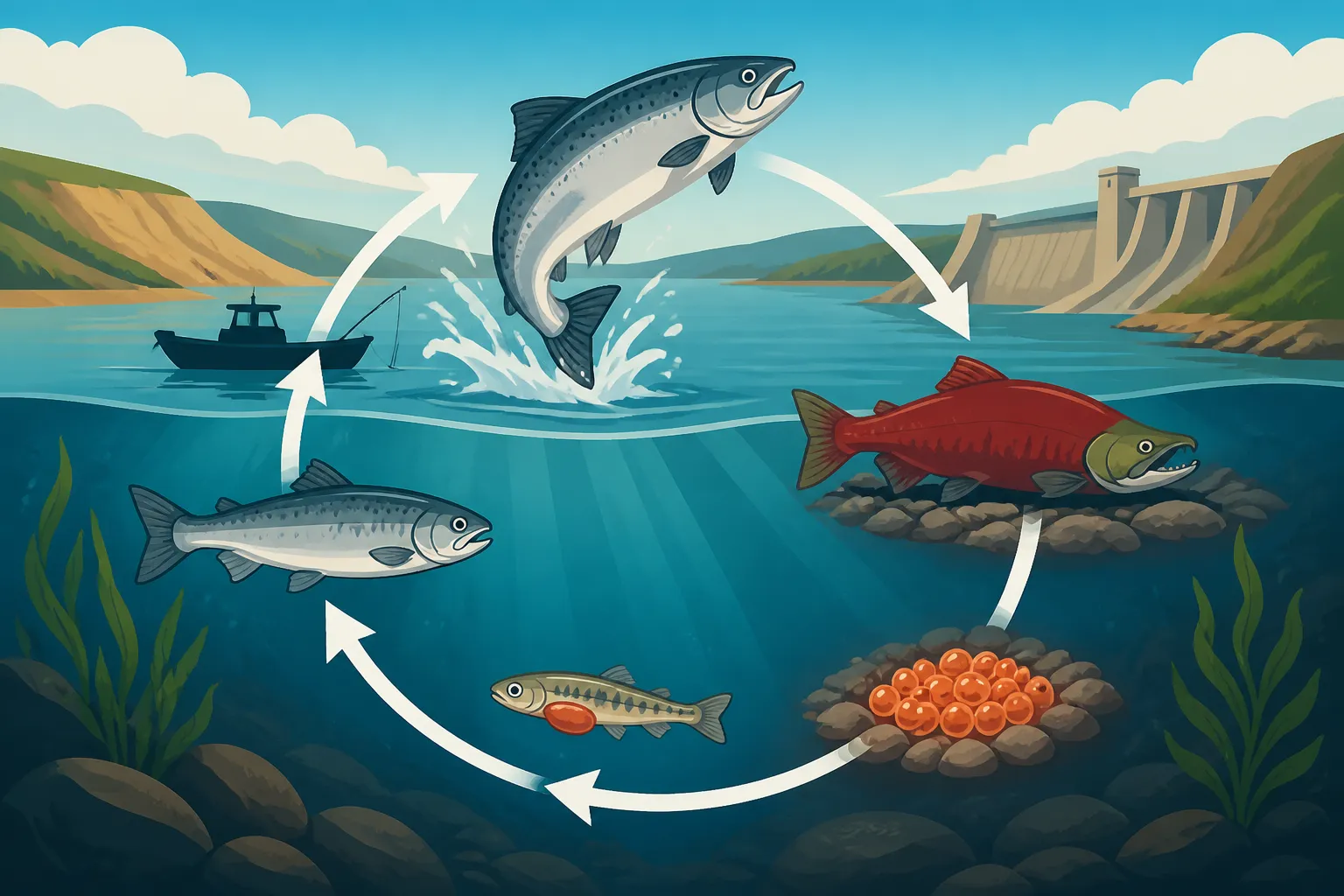
Chinook Salmon Life Cycle in Lake Sakakawea
For those of us who cherish the thrill of reeling in a powerful fighting fish in North Dakota, the Chinook salmon in Lake Sakakawea is nothing short of a marvel. But have you ever wondered about the incredible journey these fish undertake, from tiny fingerlings to the magnificent specimens we pursue? This guide dives deep into the unique life cycle of Chinook salmon in Lake Sakakawea, shedding light on how this landlocked fishery thrives thanks to careful management and the sheer adaptability of these impressive fish.
The Chinook's Journey: From Hatchery to Lake Sakakawea
Unlike their Pacific Ocean cousins, the Chinook salmon in Lake Sakakawea don't naturally spawn in the rivers and streams feeding into the reservoir. This entire fishery is a testament to dedicated fisheries management, starting with the crucial work done at hatcheries. It's an intricate dance between human effort and nature's incredible design, ensuring that anglers can continue to experience the excitement these fish bring to our waters.
The Role of North Dakota's Hatcheries
The story of Lake Sakakawea's Chinook salmon begins not in a wild riverbed, but in a controlled, nurturing environment: the fish hatchery. Specifically, the Garrison Dam National Fish Hatchery plays an absolutely vital role in sustaining this unique sport fishery. Without their tireless efforts, the dream of catching a Chinook in North Dakota would simply not exist. They are the backbone of this population, ensuring a steady supply of young salmon year after year.
These hatcheries act as a kind of lifeline for the Chinook population. Because Lake Sakakawea lacks the cold, gravel-bottomed tributary streams that wild Chinook salmon need to reproduce successfully, natural reproduction is almost nonexistent. The hatchery staff meticulously collect eggs from mature salmon, fertilize them, and nurture the resulting fry and fingerlings in specialized tanks and raceways. This controlled environment protects the vulnerable young fish from predators and provides optimal conditions for early growth, giving them the best possible start before they face the vastness of Lake Sakakawea.
Early Life and Stocking Strategies
Once the young Chinook salmon, typically referred to as fingerlings, reach a certain size and level of development, they are ready for their grand introduction to Lake Sakakawea. This stocking process is a highly strategic operation, carefully timed and executed to maximize the survival rates of these precious fish. It’s not just about dumping fish into the lake; it's about giving them the best chance to thrive in their new, vast home.
Generally, stocking occurs in the spring or early summer, when water temperatures are favorable and there's an abundance of small forage for the young salmon to feed on. These fingerlings are usually several inches long by this point, making them less susceptible to predation by smaller fish, though they still have a long way to go before becoming the powerful fish anglers seek. The location of stocking is also important, often chosen for its protected coves or areas with suitable cover where the young salmon can acclimate to the lake environment and begin their independent lives. This careful approach is a key part of the Chinook Salmon Stocking Numbers in North Dakota strategy.
Life in the Big Lake: Growth and Maturation
Once released into the sprawling waters of Lake Sakakawea, the Chinook salmon embark on the true adventure of their lives. This vast, deep reservoir becomes their world, a place where they must adapt, forage, and grow. It's a challenging environment, but one that, with the right conditions, allows them to reach impressive sizes and become formidable game fish.
Adapting to Lake Sakakawea's Environment
Lake Sakakawea is a huge body of water, and it presents a unique set of challenges and opportunities for the landlocked Chinook salmon. These fish are creatures of cold, deep water, and Sakakawea, being a deep, dammed reservoir, provides precisely that. They primarily inhabit the deeper, cooler parts of the lake, especially during the warmer summer months when the surface waters heat up. Their survival depends heavily on finding these thermal refuges and accessing their primary food source.
The vastness of Lake Sakakawea means the salmon have ample room to roam, seeking out optimal water temperatures and concentrations of prey. They are incredibly active predators, constantly on the move, and their ability to thrive is directly linked to the health of the lake's ecosystem. Anglers often find success targeting them in these deeper, open water areas, especially around pronounced underwater structures or sudden depth changes, as these spots often concentrate both the salmon and their food. If you're looking for Best Spots to Catch Chinook Salmon on Lake Sakakawea, you'll often be looking for these deep-water zones.
Growth Rates and Size
The growth rate of Chinook salmon in Lake Sakakawea is truly impressive, and it's largely dependent on one critical factor: the availability of their preferred forage fish, the rainbow smelt. When smelt populations are abundant, Chinook salmon can grow at an astonishing pace, putting on significant weight and length each year. This rapid growth is what allows them to become the trophy-sized fish that draw anglers from all over.
A healthy population of smelt provides the high-calorie diet necessary for the salmon to pack on muscle and fat. Without adequate forage, their growth can slow, and the overall health of the fishery can decline. Anglers can often tell if it's been a good year for smelt just by the condition and size of the salmon they catch. While not every salmon will become a state record, it's not uncommon to catch fish in the 10-20 pound range, with larger individuals pushing past that. The promise of these powerful, large fish is what makes North Dakota Chinook Salmon Fishing Guide such a popular read.
The Spawning Run: Nature's Urgent Call
For wild Chinook salmon, the spawning run is the culmination of their life, an epic journey back to their natal streams to reproduce. In Lake Sakakawea, however, this natural instinct meets a unique challenge: the absence of suitable spawning grounds. Yet, the biological urge remains, leading to a modified, but equally vital, "spawning run" that ensures the continuation of the fishery.
The Instinct to Return
Even though they are hatched in a facility and released into a reservoir, Lake Sakakawea's Chinook salmon still carry the powerful genetic programming to spawn. As autumn approaches and water temperatures begin to drop, mature salmon, typically in their third or fourth year of life, feel an undeniable urge to migrate. This instinct drives them to move towards the dam, seeking the upstream flow that their ancestors would have followed to reach spawning grounds. It's a fascinating display of nature's deep-seated blueprints, even when the environment doesn't quite match.
This migration isn't about reaching gravel beds to lay eggs naturally; rather, it's about concentrating the fish in areas where they can be effectively captured by fisheries staff. This movement marks the unofficial "Chinook run" that many anglers eagerly anticipate. They're drawn by the chance to intercept these powerful, mature fish as they gather, often in fantastic condition, before their final life stage. Knowing When Do Chinook Salmon Run on Lake Sakakawea? is key for many dedicated anglers.
The Capture and Spawning Process
Since natural spawning is not viable in Lake Sakakawea, human intervention becomes absolutely essential for the Chinook salmon's perpetuation. This is where the North Dakota Game and Fish Department, often in collaboration with the Garrison Dam National Fish Hatchery, steps in. They set up traps and nets near the Garrison Dam to intercept the migrating salmon, collecting them for their vital role in the artificial spawning program.
Once captured, the mature salmon are carefully handled by fisheries biologists. The eggs and milt (sperm) are gently extracted from the fish, and then combined to fertilize the eggs. This artificial spawning process mimics nature, but under controlled conditions that maximize successful fertilization and survival rates of the developing embryos. After the eggs are collected and fertilized, they are transported back to the hatchery, closing the loop and beginning a new generation's journey. This intensive management ensures a sustainable North Dakota Fishing Season Dates and Limits for Chinook salmon.
The Post-Spawn Period: The End of a Cycle
For Chinook salmon, reproduction is a monumental, energy-depleting event. In their natural, anadromous environment (migrating from ocean to freshwater to spawn), the spawning journey itself is incredibly arduous, and most Pacific Chinook salmon die shortly after spawning, their bodies providing nutrients back to the ecosystem. The landlocked Chinook in Lake Sakakawea follow a similar, albeit slightly different, fate.
The Fate of Spawning Salmon
In Lake Sakakawea, once the mature Chinook salmon have participated in the artificial spawning program and their eggs and milt have been collected, their life cycle comes to an end. These fish, having expended virtually all their energy reserves in preparation for and participation in reproduction, do not typically survive long afterward. They are essentially 'spent' and often succumb to the physiological stress of the process.
This post-spawning mortality is a natural biological consequence for Chinook salmon, whether they spawn naturally in a river or contribute to a hatchery program. Their bodies quickly break down, returning nutrients to the lake's ecosystem. While it might seem a stark end, it's a testament to the immense energy investment required for reproduction in this species. Anglers should understand that catching a pre-spawn, mature Chinook is a catch of a lifetime, and it's part of a cycle that relies entirely on human efforts to begin anew each year.
Impact on the Fishery
The post-spawn mortality of Chinook salmon has a significant impact on how the Lake Sakakawea fishery is managed. Since the adult fish are essentially a one-time resource for spawning, and they don't contribute to future wild reproduction, the emphasis remains heavily on the stocking program. This means that every year's angling success is directly tied to the previous year's stocking numbers and the survival rates of those stocked fish.
Because the fishery is entirely sustained by stocking, management efforts focus on ensuring a robust forage base, monitoring fish health, and setting appropriate harvest regulations. The goal is to allow enough fish to grow to trophy size for anglers, while also securing enough broodstock for the hatchery program each fall. It's a delicate balance, and it's why understanding the North Dakota Fishing Regulations Explained for Chinook is so important.
Factors Influencing Chinook Salmon Survival and Success
Maintaining a thriving Chinook salmon fishery in Lake Sakakawea is a complex undertaking, influenced by a myriad of environmental and ecological factors. It's a constant balancing act for fisheries managers, and knowing these factors helps us appreciate the efforts that go into making this unique fishing experience possible.
Water Levels and Habitat
The fluctuating water levels of Lake Sakakawea, primarily driven by upstream precipitation and dam operations, have a profound impact on the Chinook salmon fishery. As a reservoir, Sakakawea's depth and expanse can change significantly from year to year. When water levels are high, the lake expands, often creating new habitat and potentially increasing the overall productivity of the ecosystem, which can benefit forage fish and, subsequently, the salmon.
Conversely, extended periods of low water can reduce available habitat, concentrate fish, and potentially stress the ecosystem. Shallow bays that once served as nursery areas for forage fish might dry up, impacting the food chain. The health of the lake's coldwater zones, essential for Chinook survival, can also be affected by prolonged drought or changing water release patterns. Understanding how these macro-environmental shifts play out is crucial for predicting fishing success and for long-term fisheries planning.
Forage Base: The Key to Growth
Without a doubt, the single most critical factor influencing the success and size of Chinook salmon in Lake Sakakawea is the abundance of their primary food source: the rainbow smelt. These small, silvery fish are packed with calories and represent the perfect prey item for a growing Chinook. Think of smelt as the fuel for the salmon's growth engine; without enough fuel, the engine sputters.
When smelt populations are robust, Chinook salmon can grow at an incredible rate, reaching impressive sizes that thrill anglers. However, smelt populations can fluctuate due to various factors, including water temperatures, spawning success, and predation pressure. A dip in the smelt population can lead to slower salmon growth, smaller average sizes, and a tougher bite for anglers. Fisheries biologists constantly monitor the smelt population to gauge the health of the ecosystem and make stocking decisions, ensuring there are enough "groceries" for the hungry salmon.
Angler Harvest and Management
Anglers play a significant role in the overall health and management of the Chinook salmon fishery. While the population is sustained by stocking, responsible angling practices and adherence to regulations are crucial. The North Dakota Game and Fish Department carefully sets North Dakota Fishing Regulations Explained for Chinook salmon, including daily limits and possession limits, to ensure that the harvest by anglers remains sustainable and doesn't negatively impact the availability of fish for future generations or for the critical broodstock collection.
It's a balance: we want anglers to enjoy the fruits of this amazing fishery, but we also need to protect it. Every time you head out with your North Dakota Fishing License Guide, you're part of this management picture. By adhering to the rules and practicing ethical angling, you help ensure that Lake Sakakawea continues to be a premier destination for Chinook salmon fishing. For instance, knowing the Best Size Chinook Salmon to Keep helps maintain a healthy population structure. Many anglers use fish finders, often purchased through retailers like Amazon, to locate the deeper, cooler water where these salmon thrive, further enhancing their chances of a successful and responsible catch.
Table: Chinook Salmon Life Cycle in Lake Sakakawea
Here's a simplified overview of the unique life cycle of Chinook salmon in Lake Sakakawea:
| Stage | Description | Duration/Timing | Key Factors |
|---|---|---|---|
| Hatchery Incubation | Eggs collected from mature salmon are fertilized and incubated under controlled conditions. | Fall/Winter | Water quality, temperature, disease prevention. |
| Fry/Fingerling Rearing | Young salmon grow in hatchery tanks, fed specialized diets, protected from predators. | Spring | Nutrition, space, low stress environment. |
| Stocking | Fingerlings (typically 3-6 inches) are released into Lake Sakakawea, usually in spring/early summer. | Spring/Early Summer | Water temperature, predator avoidance, availability of small forage. |
| Lake Life & Growth | Salmon forage primarily on rainbow smelt, growing rapidly in the cold, deep waters of the lake. | 2-4 Years | Abundance of smelt, water levels, water temperature, disease, angler harvest. |
| Spawning Migration | Mature salmon (typically 3-4 years old) are driven by instinct to migrate towards Garrison Dam in fall. | Fall | Water temperature cues, genetic programming, fish health. |
| Broodstock Collection | Fisheries staff capture migrating salmon near the dam for egg and milt collection at the hatchery. | Fall | Staff efficiency, fish concentration, healthy broodstock availability. |
| Post-Spawn Mortality | After contributing to the hatchery program, adult salmon typically die, completing their life cycle. | Immediately Post-Spawn | Physiological exhaustion, natural biological process. |
Disclaimer
This article is for general informational purposes only and does not constitute professional advice. Laws, prices and regulations vary by location and change over time. Consult a qualified professional for guidance on your specific situation.