North Dakota Chinook Salmon Fishing Guide
Oh, the thrill of chasing Chinook salmon in North Dakota! If you've ever dreamt of battling a powerful, chrome-sided torpedo, then you know the unique allure of Lake Sakakawea's king salmon fishery. It's not every day you think of salmon in a landlocked state, and many anglers face the frustration of not knowing where to start or how to tackle these formidable fish. This comprehensive guide is here to unravel the mysteries of North Dakota's Chinook salmon, giving you the insider knowledge to find, hook, and successfully land these incredible game fish, turning those dreams into a reality on the water.
Understanding Chinook Salmon in North Dakota
It might surprise some folks to hear "Chinook salmon" and "North Dakota" in the same sentence. After all, isn't North Dakota known for walleye, pike, and perch? Absolutely, but thanks to dedicated efforts by the North Dakota Game and Fish Department, Lake Sakakawea has blossomed into a premier, albeit unique, salmon fishery. These aren't your typical ocean-run salmon; they're landlocked kings, thriving in the expansive, deep, and cold waters of Sakakawea, offering an unparalleled angling experience far from the coast.
A Brief History of Chinook Salmon in North Dakota
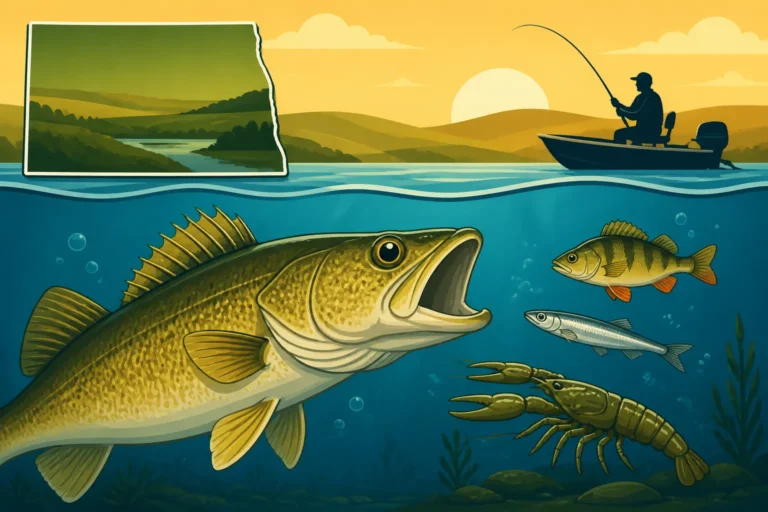
The story of Chinook salmon in North Dakota is one of innovation and adaptation. Introduced to Lake Sakakawea back in 1970, these fish were never meant to reproduce naturally in the reservoir. Instead, they are sustained entirely through annual stocking programs by the North Dakota Game and Fish Department. The goal was to create a trophy cold-water fishery that could utilize the enormous baitfish population, primarily smelt, that had also been introduced. Smelt thrive in the deep, cold waters of Sakakawea, providing the rich, oily forage that Chinook salmon need to grow to impressive sizes.
The challenges of maintaining this fishery are considerable. North Dakota's climate is notoriously harsh, with long, cold winters and often hot summers. However, Lake Sakakawea, as a massive reservoir on the Missouri River system, possesses the crucial cold, oxygenated water depths that salmon require to survive year-round. These depths, coupled with an abundant food source, have allowed Chinook to not only survive but truly flourish, providing a world-class fishing opportunity in a truly unexpected setting. The success of this program is a testament to careful management and understanding of the unique ecological niche Sakakawea offers.
Chinook Salmon Identification and Characteristics
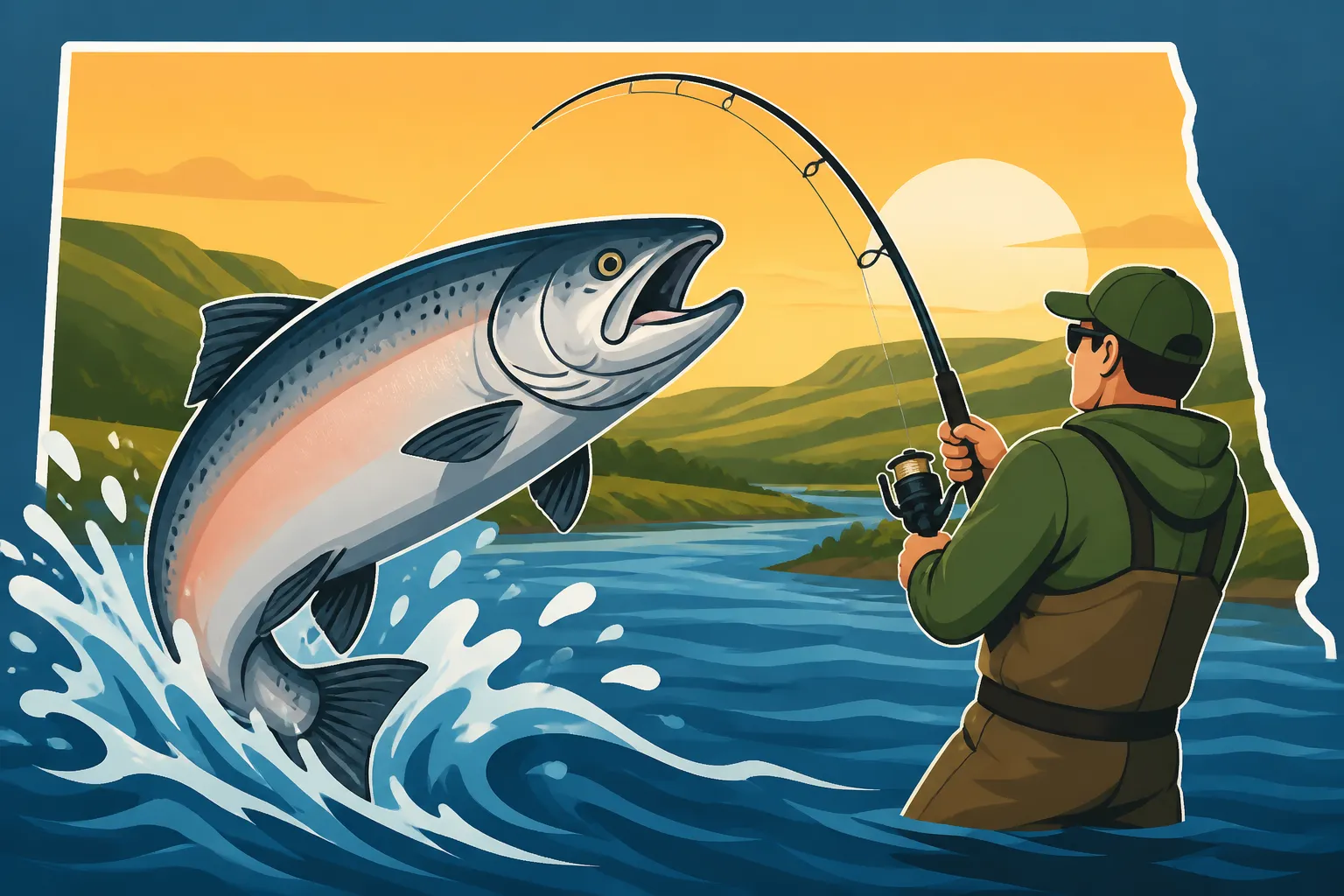
When you hook into a Chinook salmon in North Dakota, you'll know it. They are powerful, hard-fighting fish, often making spectacular runs and even aerial displays. Identifying them from other cold-water species, like various trout that might also inhabit Sakakawea, is usually pretty straightforward once you know what to look for.
Chinook salmon, often called "kings," typically have a dark body, sometimes with a purplish or greenish sheen, and numerous irregular black spots on their back and both lobes of their caudal (tail) fin. A key identifier is their mouth: the inside of their mouth and gums are entirely black. This contrasts with other salmon species or trout that might have white gums or mouths. They also have a very thick, muscular body, indicative of their powerful nature. While natural reproduction is limited, the fish grow large by feeding on the abundant smelt. Their average size can vary, but anglers often connect with fish in the 5 to 15-pound range, with true trophies exceeding 20 or even 30 pounds not uncommon. Imagine the fight a fish that size puts up in the wide-open expanse of Lake Sakakawea! It's a truly unforgettable experience that many anglers spend years chasing.
Where to Find Chinook Salmon in North Dakota
When it comes to Chinook salmon fishing in North Dakota, there's one body of water that reigns supreme: Lake Sakakawea. This massive reservoir, stretching over 178 miles long with a staggering 1,600 miles of shoreline, is the heart of the state's Chinook fishery. Its immense size and depth provide the perfect habitat for these cold-water giants, but knowing where on such a vast lake to focus your efforts is key to success.
Lake Sakakawea: The Primary Chinook Salmon Fishery
Lake Sakakawea is essentially a mini-ocean, a deep-water canyon carved out by the Missouri River, now impounded and filled. Its sheer volume of water ensures that even in the warmest North Dakota summers, there are ample cold, oxygen-rich depths for salmon and their primary prey, rainbow smelt. These conditions are paramount for Chinook survival, as they are highly sensitive to water temperature and dissolved oxygen levels.
While salmon can technically be found throughout the main lake basin, certain areas tend to be more productive. The lower end of the lake, particularly closer to the Garrison Dam and in the deep main lake channel, often holds a higher concentration of fish, especially as summer progresses and the fish seek out the coolest, deepest water. Areas with significant depth changes, submerged river channels, and points that drop off into deep water are prime real estate. You might hear seasoned anglers talk about the "dam area" or "the main lake trench." This isn't just lore; it's where the salmon literally school up following their food. Accessing these spots usually requires a capable boat, and there are numerous North Dakota Fishing Access Sites on Lake Sakakawea that can get you on the water.
Preferred Salmon Habitats and Structure
Chinook salmon are pelagic fish, meaning they typically inhabit the open water column rather than clinging to bottom structure like walleye often do. However, their movements are heavily dictated by two main factors: water temperature (specifically the thermocline) and the location of their food source, smelt.
The thermocline is a layer in the water column where the temperature changes rapidly. During the summer, this layer is crucial for salmon. They will often suspend themselves right in or just above the thermocline, as it offers the ideal balance of cold water and access to baitfish. Smelt, too, are sensitive to temperature and will move throughout the water column, often forming dense schools. Salmon will follow these schools. Anglers looking for Chinook should focus their efforts on finding these baitfish concentrations, particularly in areas where the deep main channel narrows or where currents might concentrate forage. Look for deep points, submerged islands, and areas where the old river channel runs close to steep bluffs. These topographical features can create subtle currents or upwellings that concentrate bait, in turn attracting the salmon. As seasons change, so do the salmon's preferences. In the fall, as the lake begins to cool and the thermocline breaks down, salmon might be found higher in the water column or even moving towards the dam area in preparation for their "false" spawning run, presenting an excellent opportunity for anglers.
When to Fish for Chinook Salmon in North Dakota
Timing is everything when it comes to Chinook salmon fishing on Lake Sakakawea. Unlike some other species that might offer consistent action year-round, salmon fishing has distinct peak seasons, largely dictated by water temperature and the fish's feeding patterns. Knowing when to hit the water can drastically improve your chances of hooking into one of these magnificent fish.
Seasonal Patterns and Best Times
- Spring (Ice-Out to Early June): As the ice recedes and Lake Sakakawea begins to warm, the salmon start to become more active after a long winter. Early spring can be productive, but it's often a transitional period. The salmon might be somewhat scattered, following early baitfish movements. The water is still very cold, and the fish might be found shallower than in peak summer. This can be a challenging but rewarding time for dedicated anglers willing to brave the chilly conditions.
- Summer (June to August): This is when the Chinook fishery really gets into full swing. As surface temperatures rise, the thermocline sets up, and the salmon retreat to the cooler, deeper waters, typically suspending themselves in or above this layer. The key during summer is to find the thermocline and the baitfish schools. This is prime time for trolling deep with downriggers and other specialized gear. The longer days mean more time on the water, but also require careful attention to boat traffic and weather patterns on the expansive lake. This is a fantastic time for Chinook Salmon Trolling on Lake Sakakawea.
- Fall (September to November): For many, fall is the time for trophy Chinook salmon. As water temperatures begin to cool, the thermocline starts to break down, and the salmon become much more aggressive. They'll often move higher in the water column, and towards the dam area, congregating in large schools. This pre-spawn aggregation (though they don't naturally reproduce in Sakakawea) is driven by instinct and a frantic feeding frenzy. The fall bite can be absolutely phenomenal, with larger fish often taken. However, North Dakota fall weather can be unpredictable, bringing high winds and cold snaps, so preparedness is crucial.
Understanding Water Temperatures and Salmon Behavior
Chinook salmon are a cold-water species, meaning they thrive in cooler temperatures. Their ideal range is typically in the low to mid-50s Fahrenheit (around 10-15°C). In a large reservoir like Lake Sakakawea, this means that as the surface water heats up in summer, the salmon are driven to deeper sections of the lake where these preferred temperatures persist.
Understanding the thermocline isn't just academic; it's a critical tool for salmon anglers. Your fish finder, when properly set, can often display this temperature break as a distinct line or area on the screen. Knowing the depth of the thermocline gives you a starting point for setting your lures. If the smelt (your target's food) are holding at 40 feet, and the thermocline is at 35 feet, you'll want your lures somewhere in that range, perhaps a little above, in, or below, to see where the salmon are actively feeding. Monitoring water temperature, both surface and at depth (if your electronics allow), allows you to anticipate salmon movements. A sudden drop in surface temp after a cold front might push fish deeper temporarily, while stable, cool weather in fall can keep them actively feeding in the upper water column for extended periods. Paying attention to these subtle changes is what separates a good salmon angler from a great one.
| Season | Typical Water Temperature Range (Target Zone) | Salmon Behavior | Key Considerations |
|---|---|---|---|
| Spring | 40-55°F (4-13°C) | Becoming active, shallower movements, often scattered. | Chilly weather, fluctuating conditions, searching for bait. |
| Summer | 50-65°F (10-18°C) | Seek cold water in/below thermocline, follow deep bait schools. | Locate thermocline, deep trolling, big water safety. |
| Fall | 45-55°F (7-13°C) | Highly aggressive, move higher in water column, congregate near dam. | Peak trophy season, unpredictable weather, can be very windy. |
| Winter | 35-40°F (1-4°C) | Slowed metabolism, deeper water, less active feeding. (Ice Fishing Limited) | Not typically targeted through ice; open water can be brutal and less productive. |
Essential Gear for Chinook Salmon Fishing
Chasing Chinook salmon on Lake Sakakawea isn't like casting for panfish from the shore. These are big, powerful fish in big, open water, and having the right gear is absolutely non-negotiable. Investing in quality equipment will not only make your experience more enjoyable but significantly increase your chances of success. Don't skimp here; your gear is your lifeline to these hard-fighting kings.
Rods, Reels, and Line for Trolling
When trolling for Chinook salmon, your setup needs to be robust enough to handle powerful runs and sustained pressure, especially when you're dealing with current and potentially rough water.
- Rods: Look for medium-heavy to heavy power rods, typically 8 to 10 feet in length. Longer rods help spread out lines when trolling and absorb the shock of a strike better. Downrigger rods are specifically designed to handle the heavy pull of the downrigger ball while having enough flex to cushion the fight once a fish hits. Many anglers opt for composite or fiberglass rods for their durability and parabolic bend.
- Reels: Line-counter trolling reels are the absolute standard. These reels allow you to precisely measure how much line you have out, which is critical for replicating successful depths and patterns. A quality level-wind system is also important for even line retrieve. Choose models with a smooth drag system and a decent line capacity, capable of holding at least 250-300 yards of 20-pound test monofilament or braided line. Brands like Daiwa and Okuma offer reliable options.
- Line: The choice of line is crucial. Many anglers prefer to spool their reels with 20 to 30-pound braided line (like PowerPro or Spiderwire, easily found on Amazon) for its no-stretch sensitivity and thin diameter. However, because braided line is so visible and has no stretch, it's almost always paired with a 15 to 25-foot leader of monofilament or fluorocarbon. Monofilament offers a bit of stretch, acting as a shock absorber during violent head shakes, while fluorocarbon is nearly invisible underwater and very abrasion-resistant. For a good all-around setup, a 20-pound mono mainline can also work well, offering good knot strength and shock absorption. For more insights on line, check out our guide on Best Fishing Line for North Dakota Lakes.
Must-Have Lures and Baits
Chinook salmon are aggressive predators, and a variety of lures can entice them. The key is offering something that imitates their primary food source: rainbow smelt.
- Spoons: Metal trolling spoons are incredibly effective. Their erratic, wobbling action perfectly mimics a wounded baitfish. Popular sizes range from 3 to 6 inches. Colors can vary widely, but metallic finishes (silver, gold, copper), bright colors (chartreuse, orange, pink), and combinations (blue/silver, green/silver, black/silver) are often productive. Experimentation is key, but having a selection of brands like Dreamweaver, Michigan Stinger, and Silver Streak is a good start.
- Crankbaits: Deep-diving crankbaits can also be very successful, especially when salmon are a bit higher in the water column or when trying to cover different depths without downriggers. Jointed models can offer an even more enticing action. Look for lures that run true at trolling speeds and can reach depths similar to where the bait is holding.
- Flasher/Fly Combos: This setup is a classic for salmon and extremely productive. A flasher (or dodger) is a large, rotating or oscillating blade that creates flash and vibration, attracting salmon from a distance. Trailing behind it, usually on a 12-24 inch leader, is a plastic fly or squid imitation. The fly doesn't have much inherent action; it's the flasher that makes it dance. Popular fly colors are often fluorescent green, blue, or white. This combo can be purchased pre-rigged or assembled yourself, with components widely available on Amazon.
Specialized Equipment: Downriggers, Planer Boards, and Electronics
These aren't optional extras for serious salmon anglers on Lake Sakakawea; they are fundamental tools.
- Downriggers: These devices are absolutely crucial for consistently presenting lures at precise depths in the deep-water column where salmon live. A downrigger uses a heavy cannonball weight to pull your fishing line down to a set depth. Your line is then released from a clip when a fish strikes, allowing you to fight the fish without the resistance of the weight. You'll want at least two, preferably four, downriggers for effective trolling spreads. Electric downriggers are a massive convenience, especially when frequently adjusting depths.
- Planer Boards: To spread your lines out horizontally from the boat, preventing tangles and covering a wider swath of water, planer boards are invaluable. Larger offshore boards or even smaller inline boards can be used. They allow you to present lures far to the sides of your boat, away from the boat's disturbance, which can be critical for wary salmon.
- Fish Finders and GPS: Modern marine electronics are your eyes and ears underwater. A quality fish finder (sonar) with good resolution is essential for identifying the thermocline, locating schools of smelt, and marking individual salmon arches. A GPS chartplotter allows you to navigate the vastness of Sakakawea, mark productive waypoints, and follow precise trolling passes. Many units combine both sonar and GPS capabilities. Brands like Humminbird and Garmin are popular choices, and you can find a huge selection of advanced models on Amazon with detailed reviews. For a deeper dive into these vital tools, check out our guide on Best Fish Finders for North Dakota Lakes.
Effective Chinook Salmon Fishing Techniques
Catching Chinook salmon on Lake Sakakawea is a rewarding endeavor that often involves a strategic approach. It's not just about putting a line in the water; it's about understanding their behavior, leveraging your gear, and constantly adapting to conditions. Mastering these techniques will significantly boost your success rate.
Mastering the Art of Trolling for Salmon
Trolling is, without a doubt, the most effective and widely used technique for Chinook salmon on Lake Sakakawea. This involves moving your boat at a controlled speed while deploying multiple lines with lures at various depths and distances.
- Trolling Speed: Salmon often prefer a relatively fast troll, typically between 1.8 to 3.5 miles per hour. However, this can vary day to day and even hour to hour. Watch your speed carefully on your GPS or boat's speedometer. Sometimes a slight increase or decrease can trigger strikes. Experimentation is key.
- Trolling Patterns: Don't just troll in a straight line! Salmon often react to changes in speed and lure action. Making wide, sweeping turns will cause your lures on the inside of the turn to slow down and sink slightly, while those on the outside will speed up and rise. This erratic action often triggers a strike from following fish. Zig-zag patterns, S-curves, and varying speeds throughout your pass are excellent strategies.
- Working the Thermocline and Bait Balls: As discussed, the thermocline is gold. Your fish finder will help you identify its depth and also mark baitfish schools (smelt) that the salmon are feeding on. The goal is to present your lures right in that zone. If you see a dense school of baitfish on your screen, don't just troll through it; try to troll around it, or through the edges, where salmon might be ambushing prey. Adjust your downrigger depths to keep your lures consistently in the strike zone. If you are marking salmon arches, adjust your lures to their depth.
- Adjusting for Current and Wind: Lake Sakakawea is a vast body of water, and it can have significant currents, especially in the main river channel, and strong winds are common. When trolling into the wind or current, your boat speed will be slower over ground, but your lures will have more action due to increased water flow. Conversely, with the wind/current, your lures might have less action, requiring a slight speed increase. Always pay attention to your "speed over ground" on your GPS, not just your prop speed.
Reading Your Electronics and Locating Fish
Your fish finder and GPS are not just fancy gadgets; they are your most important tools for salmon fishing. Learning to interpret what they're telling you is paramount.
- Interpreting Sonar Readings: Look for several key things on your fish finder. First, identify the "arch" or "hump" that often signifies the thermocline. Below this, look for dense clouds or amorphous shapes – these are often baitfish schools. Then, look for distinct, strong arches or lines, often larger than the baitfish, which indicate individual salmon. Pay attention to the depth at which you are seeing these.
- Using GPS for Mapping Productive Areas: Your GPS is vital for navigating Sakakawea's vastness and returning to productive spots. When you get a strike or see a concentration of fish on your sonar, mark a waypoint immediately! This allows you to return to that exact spot, troll the same contours, and re-present your lures to active fish. Over time, you'll build a map of productive areas, points, and humps that consistently hold salmon.
- Importance of Marking Waypoints: Don't underestimate this. A single strike could mean you've found a school of feeding salmon. Marking a waypoint and then trolling a precise line around that waypoint, perhaps from different directions, can help you dissect an area and maximize your chances. Modern chartplotters allow you to save tracks, which can be invaluable for recreating successful trolling passes.
Chinook Salmon Fighting Strategies
Once a Chinook hits your line, the real fun begins! These fish are known for their explosive power and often prolonged battles.
- The Initial Powerful Run: Be prepared! A salmon strike often feels like your rod is going to be ripped out of your hand. They'll peel line off your reel at an incredible rate. Resist the urge to crank down the drag. Let the fish run; your smooth drag system is designed to absorb this initial burst of energy.
- Keeping Constant Pressure: The most common mistake is letting the line go slack. Salmon will often shake their heads violently or make sudden direction changes. Maintain constant pressure on the fish, keeping the rod tip up. Use a steady "pump and reel" motion: lift the rod tip to gain line, then lower it while reeling in the slack. Avoid violent jerks that could tear the hook out.
- Landing a Big Salmon Safely: Bringing a large salmon to the boat requires patience. They often have one last burst of energy right at the boat. Have a large, sturdy landing net ready, with a long handle. Net the fish headfirst once it's tired and near the surface. Never try to grab a large salmon by the tail unless you know what you're doing; they have incredible power and can easily injure you or break free. Once in the net, get it quickly into the boat. Handling them carefully helps protect the fish if you plan to release it, or ensures the best quality meat if you are keeping it.
Regulations and Limits for Chinook Salmon
Fishing in North Dakota, especially for a managed species like Chinook salmon, comes with specific rules and regulations designed to protect the fishery and ensure its sustainability for future generations. Understanding these regulations is not just about avoiding fines; it's about being a responsible angler.
North Dakota Fishing License Requirements
Before you even think about dropping a line for Chinook salmon on Lake Sakakawea, you absolutely must have a valid North Dakota fishing license. This is non-negotiable for almost all anglers above a certain age, whether you're a long-time resident or just visiting.
- General License Requirements: Every angler aged 16 and older needs a fishing license. If you're a North Dakota resident, you'll need a resident license. If you're coming from out of state, a North Dakota Nonresident Fishing License Guide will show you the options, which often include season-long, 10-day, or 3-day licenses to suit your trip length. The funds from these licenses directly support the management, stocking, and conservation efforts that make fisheries like the Sakakawea Chinook program possible. You'll often also need to purchase a Fishing, Hunting, Furbearer Certificate, which is a foundational requirement for all licensed activities.
- Do You Need a Special Salmon Tag? Thankfully, for Chinook salmon in North Dakota, you typically do not need a separate, specific salmon tag in addition to your general fishing license. The general regulations and limits for Chinook salmon are covered under your standard license. However, regulations can change, so always double-check the current North Dakota Fishing Proclamation before heading out. Our North Dakota Fishing License Guide provides a comprehensive overview of how to get compliant.
- Where to Buy Licenses: Getting your license is easy these days. You can purchase them online through the North Dakota Game and Fish Department website, at various retail vendors across the state (like bait shops, sporting goods stores, and even some general stores), or at Game and Fish offices. For a detailed list and convenience, check out Where to Buy a North Dakota Fishing License.
Daily Limits, Size Restrictions, and Other Rules
Understanding the specific limits and rules for Chinook salmon is crucial to staying within the law and doing your part to conserve the fishery. These regulations are subject to change, so always refer to the official North Dakota Game and Fish Department's Fishing Proclamation.
- Daily and Possession Limits: Chinook salmon typically have a daily creel limit (how many you can keep in one day) and a possession limit (how many you can have in your possession, including those at home, in the freezer, or at camp). These numbers are put in place by biologists to ensure a healthy population. For example, you might be allowed to keep a certain number of salmon per day, with a slightly higher possession limit, but it's important not to exceed either. Always check the current North Dakota Fishing Regulations Explained for the precise figures, as these can be updated regularly to reflect the health of the fishery.
- Size Minimums: While not always in place for Chinook, some species have minimum size limits to allow younger fish to reach maturity and spawn. It's less common for Chinook in Sakakawea due to the nature of the stocking program, but if there were a size restriction, it would specify a minimum length your fish must be to legally keep. This is another item to confirm in the current proclamation. North Dakota Chinook Salmon Regulations will have the most up-to-date information.
- Other Relevant Rules:
- Number of Lines: The general rule for open water fishing in North Dakota is that you can fish with no more than two poles with a single line attached to each. This applies to salmon fishing as well. Each line must be under your immediate control.
- Snagging: Snagging is generally prohibited for game fish, including Chinook salmon. While special snagging seasons exist for species like paddlefish on certain rivers, this is not applicable to salmon in Lake Sakakawea. You must actively fish with legal methods.
- Aquatic Nuisance Species (ANS): This is paramount for all boating and fishing. You must clean, drain, and dry your boat and all fishing gear after leaving any body of water, and especially before moving to another. This prevents the spread of invasive species like zebra mussels. We'll dive into this more in the safety section, but it's a critical regulation.
Breaking these rules, even unknowingly, can lead to significant fines and penalties, including loss of fishing privileges. A responsible angler is always an informed angler.
Preparing and Enjoying Your Chinook Salmon Catch
So, you've battled a magnificent Chinook salmon from the depths of Lake Sakakawea and successfully brought it to the boat. Congratulations! Now comes the next crucial step: properly handling your catch to ensure the best possible eating experience. Chinook salmon from North Dakota's cold waters are renowned for their rich, flavorful meat, and a little care goes a long way in preserving that quality.
Handling Your Catch for Best Quality
The moment a salmon comes into the boat, its quality starts to degrade. Rapid and proper handling is essential to maintain that prized flavor and texture.
- Bleeding: This is arguably the most critical step for optimal flavor and preservation. When a fish is bled immediately after being caught, it removes the blood from the flesh, which can contain enzymes and impurities that contribute to a "fishy" taste. To bleed a salmon, make a sharp cut across the gills or sever the artery just below the gills. Allow the fish to bleed out thoroughly, ideally by placing it in a container of cold water or simply letting it hang over the side of the boat (if ethical and permitted by local regulations, be mindful of any chumming rules).
- Icing: After bleeding, get your salmon on ice as quickly as possible. A proper cooler filled with an ice-and-water slurry is ideal. The slurry surrounds the fish, rapidly dropping its core temperature and preventing bacterial growth. Don't just lay the fish on top of ice; bury it, ensuring maximum contact. The colder you keep it, the longer its quality will last. For larger fish, you might need a substantial cooler. Check out our guide on Best Coolers for Keeping Fish Fresh to find the right one for your Sakakawea adventures.
- Gutting Quickly: While bleeding and icing are excellent first steps, gutting the fish as soon as possible, especially if you're out for an extended period, is another major benefit. Removing the internal organs prevents digestive enzymes from breaking down the flesh. After gutting, rinse the cavity thoroughly with cold water to remove any remaining blood or viscera, then return the fish to the ice.
Filleting and Cooking North Dakota Chinook Salmon
Once your salmon is properly chilled, it's time to transform it into a delicious meal. Filleting a large salmon takes a bit of practice, but the result is beautiful, boneless portions.
- Step-by-Step Filleting Process:
- Lay the fish on a clean, sturdy cutting board.
- Make a cut behind the pectoral fin, down to the backbone. Don't cut through the backbone.
- Turn your knife flat and run it along the backbone, from head to tail, to separate the fillet. Use smooth, continuous strokes.
- Once the first fillet is removed, flip it skin-side down. Carefully slide your knife between the skin and the flesh, starting from the tail end, working towards the head. Use a gentle sawing motion, keeping the knife blade angled slightly towards the skin to maximize meat yield.
- Repeat on the other side of the fish.
- Inspect your fillets for any remaining pin bones (small bones along the lateral line). These can be easily removed with a pair of pliers or specialized fish bone tweezers.
- Basic Cooking Methods and Tips: Chinook salmon is incredibly versatile.
- Grilling: A simple preparation of olive oil, lemon, salt, and pepper on the grill (skin-side down first) is hard to beat. The high heat creates a lovely crust while keeping the inside moist.
- Baking/Roasting: Place fillets on a baking sheet, season, and bake at 375-400°F (190-200°C) until flaky. A little butter and fresh dill are always a winning combination.
- Pan-Searing: Get a cast-iron skillet hot with a bit of oil, sear skin-side down until crispy, then flip and finish.
- Flavor Profile: Sakakawea Chinook salmon, thanks to their smelt-rich diet, have a beautiful, rich, red-orange flesh with a high fat content. This makes them incredibly moist and flavorful, standing up well to various seasonings without being overpowering. Many consider them among the best-eating fish in North Dakota.
Preserving Your Salmon for Later
If you've had a successful day and have more salmon than you can eat fresh, proper preservation allows you to enjoy your catch for months to come.
- Freezing Techniques:
- Vacuum Sealing: This is the gold standard for freezing fish. Vacuum-sealed bags remove all air, preventing freezer burn and keeping the salmon fresh for six months to a year or even longer. Portion your fillets before sealing.
- Water Bath/Glazing: If you don't have a vacuum sealer, you can freeze fillets in a water bath. Place a fillet in a freezer bag, add enough water to cover it completely, and freeze. The ice layer protects the fish from air. Alternatively, you can glaze individual fillets by freezing them, then dipping them in cold water to form an ice layer, and repeating until a thick glaze forms, then wrapping tightly in plastic wrap before freezing.
- Smoking Salmon: Smoked salmon is a delicacy, and a smoker is an excellent investment for preserving your catch. Cold smoking imparts a delicate flavor, while hot smoking cooks the fish and gives it a flakier texture. Experiment with different brines and wood chips (hickory, alder, apple).
- Canning: For long-term, shelf-stable storage, canning salmon is another traditional method. This requires a pressure canner and careful adherence to canning safety guidelines, but canned salmon is incredibly versatile for meals like salmon cakes, salads, or sandwiches. No matter your chosen method, label and date your packages so you always know what you're reaching for.
Safety Considerations for Salmon Anglers
Fishing for Chinook salmon on Lake Sakakawea is an incredible experience, but it also demands respect for the immense body of water and North Dakota's often-unpredictable conditions. Safety should always be your top priority, ensuring your adventure is memorable for all the right reasons.
Navigating Large Bodies of Water Safely
Lake Sakakawea is massive, an inland sea that can change from calm to treacherous in a matter of minutes. Its size is both its allure and its primary safety challenge.
- Lake Sakakawea's Unpredictable Nature: Strong winds are a constant factor on Sakakawea. Even a moderate breeze can quickly whip up significant waves, making navigation difficult and dangerous, especially for smaller craft. What starts as a gentle ripple can quickly become 3-5 foot whitecaps. Always check the marine weather forecast before heading out, paying close attention to wind speed and direction, and be prepared to cut your trip short if conditions deteriorate.
- Appropriate Boat for Big Water: For serious salmon fishing on Sakakawea, a boat capable of handling large waves is essential. Deep-V hull boats, typically 18-20 feet or longer, are often preferred. They offer a smoother, safer ride in rough water compared to smaller aluminum boats or jon boats. Ensure your boat is well-maintained, with a reliable engine, sufficient fuel, and all necessary safety equipment. For guidance on suitable vessels, refer to Best Boats for Lake Sakakawea's Big Water.
- Awareness of Submerged Hazards and Changing Water Levels: While Sakakawea is deep, there are still submerged islands, old tree lines (especially in shallower arms), and rock piles that can pose hazards, particularly during periods of low water. Always consult up-to-date lake maps and maintain a keen eye on your depth sounder. Water levels on the Missouri River system can fluctuate throughout the season, revealing new obstacles or making old ones more dangerous.
Cold Water and Weather Preparedness
North Dakota's weather can be extreme. Even in summer, water temperatures in Sakakawea remain cold at depth, and spring and fall bring genuinely chilling conditions. Cold water immersion is a serious risk.
- Dress in Layers and Waterproof Outwear: Layering is key. Start with a moisture-wicking base layer, add insulating layers (fleece, wool), and finish with a waterproof and windproof outer shell. This allows you to adjust to changing temperatures throughout the day. Always bring extra dry clothes in a waterproof bag.
- Hypothermia Risks: Hypothermia is a real danger. Immersion in cold water can quickly lead to a dangerous drop in core body temperature. Even being drenched by a rogue wave on a windy day can lead to hypothermia if not properly dressed. Know the symptoms (shivering, confusion, slurred speech) and how to respond.
- Essential Safety Gear:
- Life Jackets (PFDs): Absolutely non-negotiable. Everyone on board should have a properly fitting life jacket. In cold weather or rough conditions, it's wise to wear it at all times, not just have it stowed. Modern inflatable PFDs are comfortable and don't impede movement. For more information on crucial safety wear, see Best Life Jackets for Cold Water Fishing.
- Communication Devices: Always carry a fully charged cell phone (in a waterproof case) and consider a VHF marine radio for emergencies, as cell service can be spotty in remote areas of the lake.
- First Aid Kit: A well-stocked kit is essential for cuts, scrapes, and other minor injuries.
- Flares, Air Horn, Whistle: Equipment to signal for help.
- Throwable Flotation Device: A cushion or ring buoy to assist someone who has fallen overboard.
Aquatic Nuisance Species (ANS) Prevention
Protecting North Dakota's waters from invasive species is a shared responsibility, and it's a critical safety measure for the health of the fishery.
- Clean, Drain, Dry Protocol: This three-step process is mandatory and effective.
- Clean: Inspect your boat, trailer, and all fishing gear. Remove any visible aquatic plants, animals, or mud. Pay close attention to anchor ropes, fishing lines, and anything that has been in the water.
- Drain: Completely drain all water from your boat, including the bilge, livewells, baitwells, and engine. Pull drain plugs.
- Dry: Allow your boat and all equipment to thoroughly dry for at least five days before launching into another body of water. If you can't dry it, wash it with high-pressure, hot water.
- Why It's Crucial: Invasive species like zebra mussels can wreak havoc on ecosystems, disrupting food webs, damaging boat engines, and altering water quality. They can be incredibly difficult to remove once established, and prevention is the most effective defense. By following ANS rules, you're not just complying with regulations; you're actively contributing to the long-term health and vitality of the Chinook salmon fishery and all other aquatic life in North Dakota. For a detailed breakdown of these vital measures, consult Aquatic Nuisance Species Rules for Boaters.
Disclaimer
This article is for general informational purposes only and does not constitute professional advice. Laws, prices and regulations vary by location and change over time. Consult a qualified professional for guidance on your specific situation.