Best Crankbait Diving Depth for Trolling
One of the most perplexing challenges for any angler hitting the vast waters of North Dakota is knowing exactly how deep your crankbait is running. You've bought a handful of lures, each promising a specific diving range, but when you're out on Lake Sakakawea or Devils Lake, you might feel like you're either dragging bottom or just skimming over the top of the fish. This guide is here to unravel the mystery of crankbait diving depths for trolling, helping you understand the variables so you can consistently put your lure right in the strike zone.
Why Understanding Crankbait Diving Depth Is Absolutely Crucial for Trolling Success
Let's face it, North Dakota waters, especially the big ones like the Missouri River System, are immense. Fish aren't evenly distributed throughout the water column; they orient to structure, temperature breaks, and baitfish at very specific depths. If your crankbait isn't running where the fish are, you might as well be trolling a bare hook. Trolling crankbaits is a highly effective way to cover a lot of water and locate active fish, but its effectiveness hinges entirely on presenting that lure at the correct depth. Ignoring this fundamental principle often leads to frustrating, fishless days on the water.
The Problem with "One Size Fits All" Diving Claims
You've seen it on the crankbait packaging: "Dives 8-12 feet." Sounds straightforward, right? The reality is, that number is often an approximation under very specific, controlled conditions. It's a starting point, not a guarantee. Factors like your retrieve speed, line diameter, line type, amount of line out, and even the current can drastically alter how deep that lure actually gets. If you're using a thicker line than the manufacturer tested with, or trolling faster, your lure might not reach its advertised depth. Conversely, if you're using a super-thin braided line and a slow troll, it might go even deeper. This discrepancy can be a real head-scratcher when you're trying to replicate a bite.
Finding the Strike Zone and Presenting Your Bait Effectively
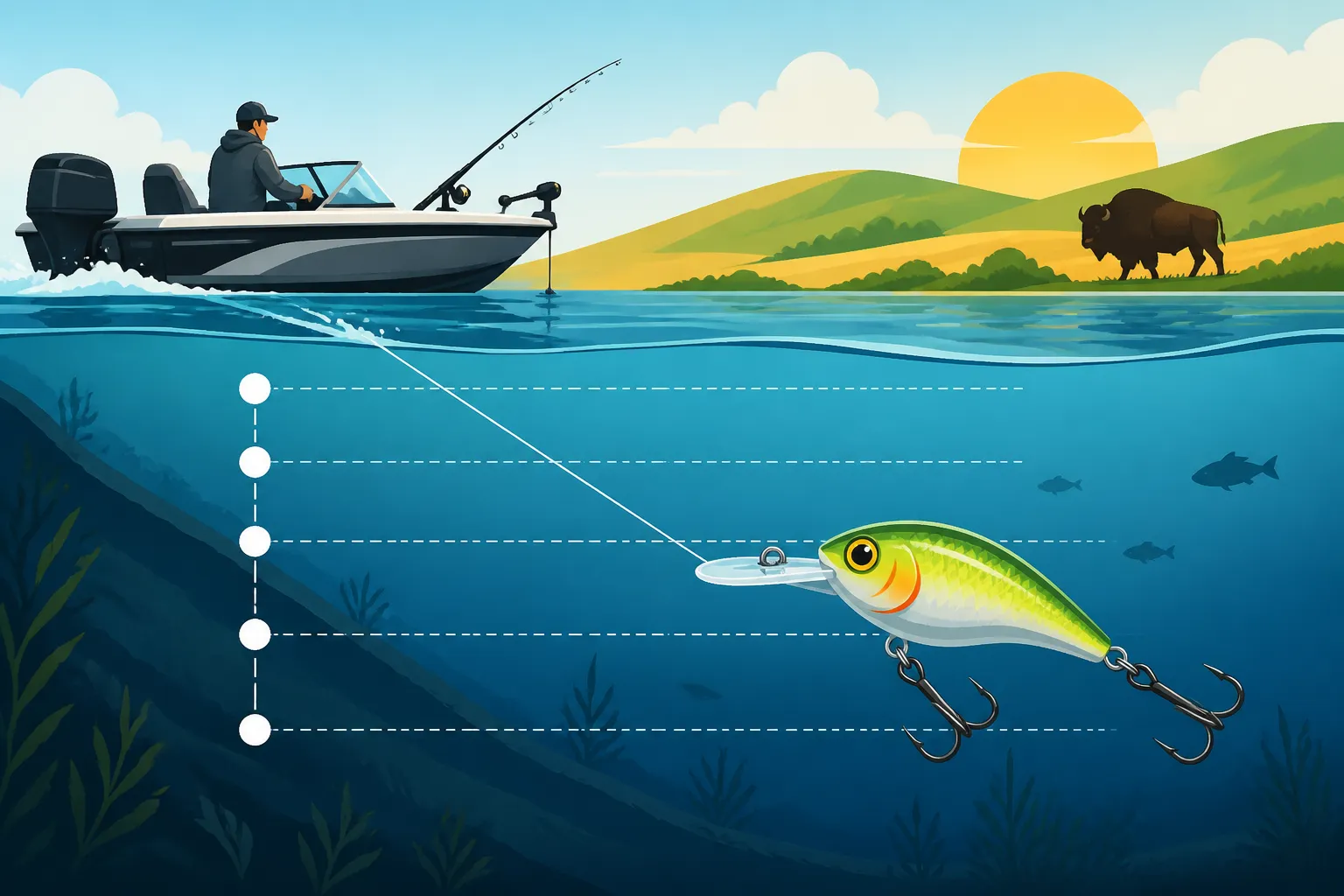
Fish are often very depth-oriented. Walleye, for instance, might be holding tight to a particular depth contour or suspended just above a thermocline. Northern pike could be cruising a weed line at a specific depth. If your crankbait is consistently running too high above them, they might never see it. If it's constantly grinding bottom, you're spooking fish and potentially snagging. The goal is to get your lure into that narrow "strike zone" – the depth where fish are actively feeding or resting. Mastering crankbait depth control allows you to methodically work different parts of the water column until you find where the fish are holding, turning guesswork into a strategic approach. It's all about putting your offering exactly where the fish are looking.
Key Factors That Influence Crankbait Diving Depth
It’s not just the lure itself that dictates how deep it goes. Think of it as a complex equation with several variables. Understanding these components is your first step towards becoming a master of crankbait depth control, especially in the varied conditions you find across North Dakota's diverse fisheries.
Line Type, Diameter, and Length Out
The fishing line you choose plays a massive role in how deep your crankbait will dive. This is often an overlooked aspect, but it's arguably one of the most critical.
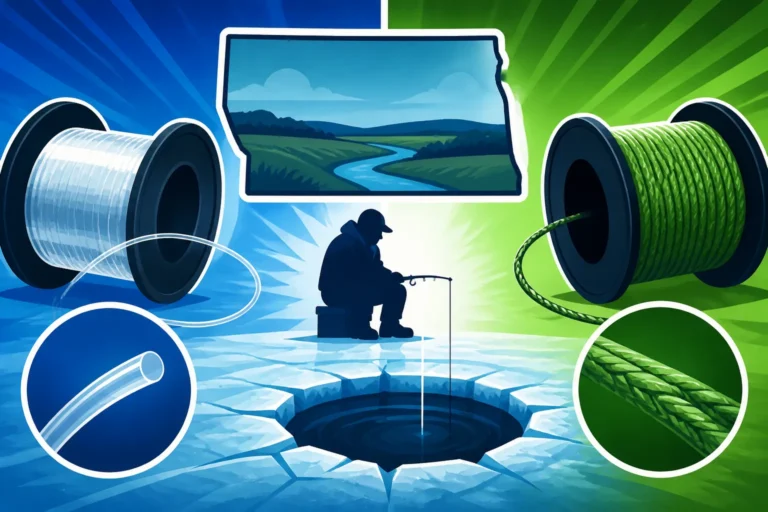
Monofilament vs. Fluorocarbon vs. Braided Line
Monofilament line, which is typically thicker for a given breaking strength and more buoyant, will cause your crankbait to run shallower. It creates more drag in the water and floats more, fighting against the lure's natural diving action. Fluorocarbon, on the other hand, is much denser and sinks, meaning your crankbait will achieve greater depths than with mono. It also has less stretch, which can transmit lure action more directly. Braided line, with its extremely thin diameter for its breaking strength and very little stretch, has the least resistance in the water, allowing your crankbait to dive the deepest. It’s a favorite for deep trolling for this very reason. Many anglers will experiment with a braided mainline and a fluorocarbon leader to get the best of both worlds – deep diving and stealth. For example, if you're targeting those deep walleye on Lake Sakakawea, a super-thin braid will let your crankbait reach its maximum potential depth.
The Role of Line Diameter
Even within the same line type, diameter makes a huge difference. A 10-pound test monofilament is much thicker than a 10-pound test braided line. The thicker the line, the more water resistance it encounters, and the shallower your crankbait will run. Conversely, a thinner line will allow your crankbait to get deeper. Many seasoned North Dakota anglers meticulously choose their line diameter based on the exact depth they're trying to achieve with a particular lure. You might hear folks talk about using "micro-braids" specifically for this reason, to squeeze every last foot of depth out of a diving crankbait. You can often find a good selection of various line types and diameters at sporting goods stores like Bass Pro Shops or online at Amazon, making it easy to fine-tune your setup.
Length of Line Deployed
This one is pretty intuitive: the more line you let out, the deeper your crankbait will dive, up to a certain point. Every crankbait has a maximum diving depth it can reach based on its lip design and the forces acting upon it. As you let out more line, the lure has more time and water resistance to push it down. However, there's a point of diminishing returns. After a certain amount of line, typically around 100-150 feet for most trolling crankbaits, adding more line won't make it dive significantly deeper. Instead, it will just increase the "belly" in your line, making it harder to detect bites and potentially impacting lure action. Best Fishing Line for North Dakota Lakes goes into more detail on how different lines perform.
Trolling Speed and Lure Design
These two factors are intrinsically linked and dictate the primary diving mechanics of your crankbait. Get them right, and you're halfway to success.
How Speed Impacts Dive Depth
Generally, the faster you troll, the deeper most crankbaits will dive, up to a point. The water pressure against the lip of the crankbait is what pushes it down. More speed means more pressure, which means a deeper dive. However, if you go too fast, some crankbaits can "blow out" – meaning they lose their proper swimming action and might even skip across the surface or run erratically, actually reducing their effective depth or making them totally ineffective. The sweet spot varies for each lure and species. For walleye, a common trolling speed might be around 1.5 to 2.5 mph, but for a speedy northern pike, you might be pushing 3 mph or more. Experimentation is key to finding the right speed that allows your chosen crankbait to perform optimally at the desired depth. Trolling Crankbaits for Walleye offers specific speed recommendations.
Lip Angle and Size
The design of the crankbait's lip is its primary depth-controlling mechanism. Lures with longer, wider, and flatter lips are designed to "dig" into the water more aggressively, pushing them to greater depths. Think of those deep-diving crankbaits that look like they have a shovel for a nose. Conversely, baits with shorter, smaller, or more vertical lips will run shallower. Some lures even have an adjustable tow point or lip angle to help you fine-tune their diving characteristics. When you're browsing for lures, pay close attention to that lip design; it's the biggest visual cue for how deep a bait is designed to go.
Water Temperature and Depth-Based Fish Behavior
Fish are cold-blooded creatures, and water temperature profoundly impacts their metabolism, activity levels, and where they choose to reside. Understanding this link is vital for depth selection.
Thermoclines and Fish Movement
In many North Dakota lakes during the summer, a thermocline forms – a distinct layer where water temperature rapidly changes. Often, game fish like walleye will position themselves just above, in, or directly below this thermocline because it offers optimal oxygen levels and cooler temperatures, or it's where baitfish are concentrated. If you know the depth of the thermocline (which you can often find with a good fish finder), that's a prime target depth for your crankbaits. Fishing above or below this crucial layer can mean missing active fish entirely. During cooler seasons, or in river systems like the Missouri, thermoclines may not be as pronounced, but fish will still seek out preferred temperature ranges or stable depths that offer comfort and access to food.
Seasonal Depth Changes
Fish aren't static. In spring, after ice-out, they're often shallow, seeking warmer water and spawning grounds. This means shallow-running crankbaits are the ticket. As summer progresses and water warms, they move deeper to cooler, oxygen-rich zones, necessitating deep divers. In fall, as temperatures drop again, they might move back shallower to feed aggressively before winter, or follow baitfish into deeper basins. Knowing the general seasonal patterns of your target species in a given North Dakota lake or river system is crucial. For instance, early spring walleye on Lake Sakakawea will be much shallower than those same fish in the dog days of August. North Dakota Fishing Season Calendar can help you understand these seasonal shifts.
Matching Crankbaits to Target Depths: Your Toolkit
Once you understand the variables, it's time to select the right tool for the job. Crankbaits come in a dazzling array of shapes, sizes, and diving capabilities, and knowing how to categorize them by their typical diving depth will simplify your selection process.
Shallow Divers (0-8 feet)
These are your topwater and shallow-running crankbaits, perfect for working shallower flats, emergent weed beds, rocky shorelines, or areas after ice-out when fish are still quite shallow.
Types and When to Use Them
Shallow divers typically have a small, almost vertical, or very short lip. Some have no lip at all and are designed for topwater action. Think of lures like Rapala's Shallow Shad Rap or a variety of lipless crankbaits that can be retrieved at different speeds to stay in that upper water column. These are excellent for early season walleye when they're cruising near shore or around submerged vegetation in places like Devils Lake. They're also fantastic for aggressive northern pike lurking in the shallows. When the fish are up in less than 8 feet of water, these are your go-to. They create a lot of disturbance on the surface or just below, drawing strikes from active fish.
Techniques for Shallow Water Trolling
For shallow divers, you'll often troll at slower speeds to keep them from digging too deep or blowing out. Shorter line lengths are usually sufficient. If you're encountering sparse weeds, a shallow diver can often "tick" the tops of the vegetation without getting bogged down, which can trigger reaction strikes. Pay close attention to your fish finder to confirm you're staying above any critical snags while still in the strike zone. Sometimes, a subtle flutter on the retrieve or even a quick stop-and-go can be more effective than a steady pull.
Medium Divers (8-15 feet)
This is a versatile category that covers a broad range of common fishing scenarios, hitting that mid-range depth where many game fish spend a significant portion of their time.
Popular Lures and Ideal Conditions
Medium divers are arguably the most versatile crankbaits in your tackle box. They feature a moderately sized lip that allows them to get down to those crucial 8-15 foot depths. Brands like Berkley's Flicker Shad or certain sizes of the Salmo Hornet are popular choices that fall into this range. These are fantastic for targeting walleye on humps, points, or the edges of drop-offs. They're also great for covering larger flats once the fish have moved slightly deeper than early spring. During summer, when fish are a bit deeper but not yet in the abyss, these lures excel. They provide enough depth to get to those cruising fish without constantly snagging if you're working over varied bottom contours.
Adjusting for Optimal Medium Depth
With medium divers, you have more flexibility with line length and speed. You can often vary your line out from 50 to 100 feet to fine-tune the depth. If you're on the shallower end of their range (8-10 feet), you might use a longer line or a slightly faster troll. For the deeper end (12-15 feet), consider a thinner line like fluorocarbon, a slightly slower troll, or let out more line. This category is where understanding the interaction between line type, speed, and length really shines. You're trying to hit specific contours, so precision is key.
Deep Divers (15+ feet)
When the fish go deep, you need a lure that can follow them. Deep divers are characterized by their long, often wide lips, designed to plummet quickly and stay down.
Best Choices for Deeper Water and Species
These are the heavy hitters for targeting fish in deep basins, along dramatic drop-offs, or suspended over open water. Lures like the Rapala Deep Husky Jerk or the Reef Runner 800 Series are classic examples that can reach impressive depths. These are essential for summer walleye on Lake Sakakawea, where fish might be holding in 20-30 feet of water, or even deeper. They're also effective for species like sauger in the Missouri River system, which often prefer deeper, cooler water. The aggressive diving angle helps them get to those depths efficiently. Best Crankbaits for North Dakota Walleye will give you more specific lure recommendations.
Considerations for Trolling Deep
Trolling deep requires patience and attention to detail. Using a thin braided mainline is almost a necessity to achieve maximum depth. Longer line lengths (100+ feet) are common. You also need to pay close attention to your electronics. A good fish finder is invaluable for identifying deep structure, baitfish schools, and most importantly, the depth at which your target fish are holding. When trolling deep, it's a constant dance between boat speed, line out, and understanding how your lure is interacting with the bottom or fish. For those massive North Dakota waters, having confidence in your deep-diving crankbaits is a game-changer.
Fine-Tuning Your Depth: Techniques for Precision
Getting a crankbait to the general depth is one thing; getting it to the exact depth where fish are biting is another. This is where precision techniques come into play, allowing you to make subtle adjustments that can turn a slow day into a stellar one.
The "Counting Back" Method for Consistent Depth
One of the most effective ways to replicate a successful trolling pass or get your lures to a specific depth is the "counting back" method. Once you've hooked a fish at a certain depth, note how much line you had out. For example, if you were 80 feet back and caught a walleye, you can then consistently deploy 80 feet of line for all your other rods. This ensures all your lures are running at approximately the same depth, increasing your chances of finding more fish in that strike zone. This is especially useful on big bodies of water where fish might be schooling at a very specific depth contour or suspended at a certain level.
Using Line Counter Reels and Precision Devices
For ultimate precision, line counter reels are indispensable. These reels have a built-in counter that tells you exactly how many feet of line you have deployed. This takes all the guesswork out of the "counting back" method. Simply reset the counter at zero, let out your desired amount of line, and you know precisely how far back your lure is. This consistency is crucial for replicating successful patterns. Beyond line counters, more advanced anglers might also use dive curves (charts that show a lure's depth at various line lengths and speeds) or even trolling specific apps that can help estimate depth based on all your variables. These tools are widely available at fishing specialty stores like Bass Pro Shops or online through Amazon, and can significantly elevate your trolling game.
Experimentation and Reading Your Electronics
There's no substitute for active experimentation on the water. Start with an educated guess based on water temperature, structure, and seasonal patterns, then adjust. Troll with multiple rods at different depths if possible (within North Dakota regulations for number of lines allowed). Vary your line length on different rods. Change up your trolling speed incrementally.
Simultaneously, pay close attention to your fish finder. Your electronics aren't just for finding fish; they're for understanding the underwater world. Look for baitfish schools, thermoclines, bottom contours, and even individual marks of game fish. If you see fish consistently at 22 feet, adjust your setup until you're confident your crankbait is running right at that 22-foot mark. Sometimes, a slight adjustment of just 5-10 feet in depth can be the difference between an empty livewell and a limit. The more you use your electronics to validate your crankbait's position relative to the fish, the faster you'll learn to dial in the perfect depth. Best Fish Finders for North Dakota Lakes can help you choose the right equipment.
Common Mistakes and How to Avoid Them
Even experienced anglers can fall into traps when it comes to crankbait depth. Being aware of these common pitfalls can save you a lot of frustration and wasted time on the water.
Not Accounting for Line Stretch and Water Resistance
Many anglers forget that fishing line, especially monofilament, has stretch. When you have a lot of line out, that stretch can absorb some of the diving action of your lure, causing it to run shallower than expected. Similarly, the friction of the line through the water creates resistance that can lift your lure, especially with thicker lines or faster trolling speeds. To counteract this, always assume your lure might run slightly shallower than advertised, especially with mono or heavier mono leaders. Consider shortening your line by a few feet, slightly increasing speed, or switching to a thinner diameter or less buoyant line to compensate. It's a subtle adjustment, but one that can make a difference in hitting a precise depth.
Ignoring Current and Wind Effects
North Dakota lakes and rivers can be notoriously windy, and strong currents are a constant factor on the Missouri River and the Red River. Both wind and current can significantly impact your trolling speed over ground, and thus your lure's diving depth.
Adjusting for River Current
When trolling with the current, your boat speed will need to be higher to achieve the same lure speed through the water. If you troll too slowly with the current, your lure might not dive as deep or have its proper action. Conversely, trolling against a strong current means your boat speed over ground might be very slow, but your lure is working hard against the water, potentially diving deeper than expected. Always pay attention to your GPS speed over ground and your transducer's reading of water speed if your unit has it. This will give you a clearer picture of how fast your lure is actually moving through the water column. Missouri River Fishing Guide highlights how critical current can be.
The Impact of Wind
Wind can create chop, making it harder for your boat to maintain a consistent speed. It also creates surface drag on your line, which can lift your lure and make it run shallower. If you're trolling into a strong headwind, your boat speed might need to be increased to get the same effective lure speed. If you're running with a tailwind, you might need to slow down your boat significantly. High winds can also make it difficult to feel subtle bites, making line counter reels and stiffer rods even more valuable. Always monitor your conditions and make small adjustments to maintain your target depth and lure action.
Underestimating the Importance of Regular Lure Tuning
Crankbaits are designed to run true, but they can easily get knocked out of tune, especially after hitting bottom or a snag. A crankbait that's running crooked won't dive as efficiently and won't have its intended action, potentially impacting its depth and certainly its fish-attracting ability. After every snag or if you notice your lure isn't swimming right (often indicated by an odd vibration in your rod tip), bring it in and check its tuning. Most crankbaits can be re-tuned by gently bending the eyelet on the nose of the lure. If it pulls to the left, bend the eyelet slightly to the right. If it pulls right, bend it left. A properly tuned crankbait will track straight and dive true, ensuring it reaches its maximum potential depth. This simple check can save you hours of frustration and improve your catch rate dramatically.
Conclusion
Mastering crankbait diving depth for trolling in North Dakota is a process of understanding the interaction of several key variables: your lure's design, your fishing line, your trolling speed, and the dynamic conditions of the water itself. It's rarely a static equation, and the "best" depth will change constantly throughout the day and the season. By paying attention to line type, diameter, and length, fine-tuning your speed, understanding fish behavior relative to temperature and structure, and utilizing tools like line counter reels and fish finders, you can take the guesswork out of depth control. Don't be afraid to experiment, observe, and make constant adjustments. The more you practice these techniques, the more confidently you'll present your crankbaits right in front of those North Dakota walleye and pike, leading to more successful and rewarding days on the water.
Disclaimer
This article is for general informational purposes only and does not constitute professional advice. Laws, prices and regulations vary by location and change over time. Consult a qualified professional for guidance on your specific situation.