Best Slip Sinker Rig for Catfish
It's incredibly frustrating when you're out on the water, targeting those monstrous North Dakota catfish, only to feel phantom bites or, worse, miss solid takes because your rig isn't presenting the bait naturally or allowing the fish to run. Many anglers struggle with rigs that hinder their ability to detect subtle movements, especially in current. This comprehensive guide will walk you through everything you need to know about setting up and effectively using the best slip sinker rig for catfish, ensuring you convert more of those elusive bites into memorable catches on North Dakota's renowned waters.
The Angler's Challenge: Why Catfish Demand a Specialized Approach in North Dakota
Fishing for catfish in North Dakota, particularly the hefty channel cats in the Red River or the powerful specimens in Lake Oahe, isn't always about brute force. It often requires a nuanced approach, especially when it comes to your tackle setup. Many seasoned anglers will tell you that the difference between a good day and a great day can come down to the subtlety of your presentation.
Common Frustrations with Feeling Bites
One of the most common complaints I hear from fellow anglers, especially those new to catfishing, is the difficulty in feeling the bite. With traditional fixed-sinker rigs, the weight is often directly connected to your hook. When a catfish, known for its often tentative initial takes, picks up your bait, it immediately feels the resistance of that sinker. This resistance can spook the fish, causing it to drop the bait before you even know it was there. Imagine a fish gently mouthing your bait, feeling a heavy anchor, and immediately spitting it out. It's a tale as old as time on our local waters, and it’s a big reason why a lot of folks get discouraged. You're left wondering if the fish just weren't biting, when in reality, they were, but your rig wasn't allowing you to detect it properly.
Impact of Current and Bottom Snags
North Dakota's prime catfishing spots, like the Missouri River or the winding Red River of the North, often feature significant current. This current can be a blessing, concentrating baitfish and catfish in certain areas, but it can also be a curse for your tackle. Fixed rigs tend to get rolled by the current, snagging on submerged logs, rocks, or other debris more frequently. Losing tackle is not just annoying; it cuts into your fishing time and your wallet. Moreover, when your bait is constantly tumbling unnaturally in the current, it doesn't look like an easy meal. A catfish, being an opportunistic scavenger, is looking for something that appears easy to grab, not something fighting a strong current due to a heavy, fixed sinker. This is where many struggle, trying to hold bottom in strong flows without constantly getting hung up. For more on specific rules, you might want to check out the guide on North Dakota Fishing Regulations Explained.
The Natural Presentation Dilemma
Catfish, while not always the pickiest eaters, still appreciate a natural-looking presentation. A bait that tumbles and rolls unnaturally, or one that sits completely motionless due to a heavy, fixed weight right above it, can sometimes be ignored. The goal is often to have your bait drift somewhat freely with the current, or rest subtly on the bottom, appearing as an easy, vulnerable meal. Many standard rigs don't allow for this freedom. The sinker's weight can pin the bait down rigidly, making it less enticing. Or, conversely, if the sinker is too light and fixed, the bait simply washes away. The trick is to find that sweet spot where the bait is held in the strike zone but can move enough to attract attention.
Deconstructing the Ideal Slip Sinker Rig for North Dakota Catfish: Components and Assembly
The slip sinker rig is a game-changer for North Dakota catfishing because it directly addresses these frustrations. Its genius lies in its simplicity and the freedom it provides to both the fish and your bait.
Choosing the Right Sinker, Swivel, and Hook
Every component of your slip sinker rig plays a crucial role in its effectiveness. Selecting the right ones for North Dakota's diverse fishing environments is paramount.
Sinkers: Weight, Shape, and Material
For a slip sinker rig, the goal is for the line to pass through the sinker freely, allowing the fish to pick up the bait without feeling the weight.
- Egg Sinkers: These are probably the most common choice. Their rounded shape allows them to roll smoothly over rocky or sandy bottoms, making them less prone to snagging. They're excellent for moderate current and still water. You can find a good variety on sites like Amazon.
- Walking Sinkers (No-Roll Sinkers): These are shaped with flat sides to prevent them from rolling too much in stronger currents. They are a fantastic choice for river fishing where you need your bait to stay put but still allow the line to slip.
- Bank Sinkers: While not strictly "slip" sinkers due to their pyramid shape, some anglers use them as a slip sinker in extremely heavy current to truly anchor the bait. However, they are more prone to snagging.
- Weight Selection: The weight depends heavily on the conditions. In calm lake waters or slow-moving channels, a 1/2 oz to 1 oz egg sinker might be sufficient. On the swiftly moving Red River, you might need 2-4 oz, or even more, to hold bottom, especially when targeting those trophy channel catfish described in the Red River Catfish Fishing Spots in North Dakota guide. Always bring a variety of weights.
Swivel and Stopper Options for Smooth Operation
These small pieces are critical to the rig's function.
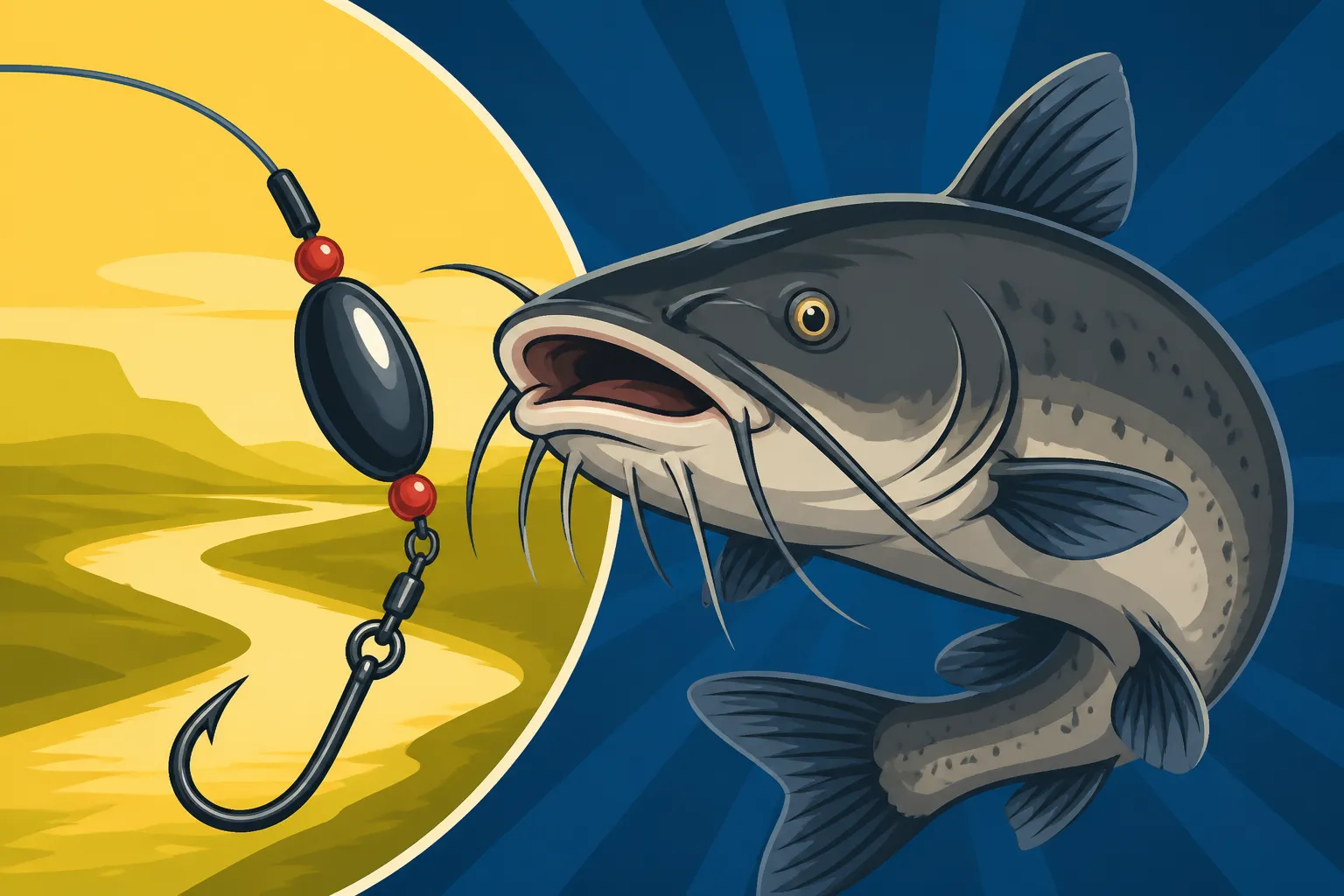
- Barrel Swivels: These are essential. They prevent line twist, which is a major headache, especially if you're using braided line or letting your bait tumble in current. The primary function in a slip sinker rig is to act as a stopper for your slip sinker, preventing it from sliding all the way down to your hook. This creates a buffer between the weight and the bait.
- Beads: Placing a small plastic bead between your slip sinker and the barrel swivel is a simple yet effective trick. The bead protects the knot on your swivel from being repeatedly hammered by the sinker during casting and retrieving, extending its life and preventing potential break-offs. You can also get rubber bobber stops from Amazon to act as a stopper before your sinker if you want to fish a specific depth off the bottom or want to allow the sinker to slide freely on your main line.
Hooks and Leader Material: Matching to Catfish and Bait
The hook is where the action happens, and your leader connects it all.
- Circle Hooks: For catfishing, especially with a slip sinker rig, circle hooks are hands-down the best choice. They are designed to hook the fish in the corner of the mouth when the fish swims away, making them much safer for the fish (fewer gut hooks) and often eliminating the need for a hard hookset. This is perfect for the slip sinker rig, as the fish can take the bait and swim off, and the hook will set itself. You simply lean into the rod once you feel steady pressure. For the average North Dakota channel cat, sizes 3/0 to 8/0 are good. Larger hooks for larger baits or trophy fish.
- J-Hooks: While effective, J-hooks require a more traditional, forceful hookset and are more prone to gut-hooking. If you use them, be vigilant and set the hook quickly.
- Leader Material: A strong monofilament or fluorocarbon leader is recommended. Monofilament offers a bit of stretch and abrasion resistance, while fluorocarbon is nearly invisible underwater and very abrasion-resistant. Leader strength should match or slightly exceed your main line, typically ranging from 15 to 40 lb test. The length of your leader can vary from 12 inches to 3 feet, depending on how natural you want your bait to drift from the sinker. A longer leader allows for more natural movement in current or a more subtle presentation in still water.
Step-by-Step Rigging Guide for North Dakota Waters
Putting it all together correctly is key. Here's a simple, actionable guide:
- Thread Your Main Line Through the Sinker: Start by taking your main fishing line (the one coming from your reel) and threading it through the hole in your chosen slip sinker.
- Add a Bead (Optional but Recommended): Slide a small plastic bead onto your main line after the sinker. This acts as a bumper, protecting the knot in the next step.
- Tie on Your Swivel: Now, tie your barrel swivel to the end of your main line. A Palomar knot or an improved clinch knot are excellent, strong choices for this connection. Ensure your knots are tight and trimmed.
- Tie Your Leader to the Swivel: Take a separate piece of leader material (monofilament or fluorocarbon) and tie one end to the other eye of the barrel swivel. Again, use a strong, reliable knot.
- Tie Your Hook to the Leader: Finally, tie your chosen catfish hook (preferably a circle hook) to the free end of your leader. Another Palomar or improved clinch knot will work perfectly here.
- Attach Bait: Now you're ready to add your bait, whether it's cut bait, stink bait, or a live minnow.
And there you have it! A perfectly constructed slip sinker rig, ready to tackle the channel catfish of North Dakota. For tips on managing multiple lines, see How Many Lines Can You Fish With in North Dakota?.
Mastering the Application: Fishing the Slip Sinker Rig in North Dakota's Diverse Waters
A rig is only as good as its application. Knowing how to adapt your slip sinker setup to different North Dakota fishing scenarios will significantly boost your success.
River Catfishing: Tackling Current with Your Slip Sinker Rig
Fishing the powerful currents of the Red River or the Missouri River requires a specific mindset and setup. The slip sinker rig truly shines here.
Sinker Weight Adjustments
As mentioned earlier, current is your biggest factor. You need enough weight to hold your sinker in place without it rolling excessively, yet not so much that it becomes cumbersome to cast or retrieve. Start with a weight you think will hold, like a 2 oz walking sinker, and increase or decrease as needed. If your line is constantly bowing severely, or your bait is drifting downstream too quickly, you need more weight. The beauty of the slip sinker is that even with heavy weight, the fish still only feels the bait. When fishing from a boat in current, anchoring effectively is crucial; look into How to Anchor a Boat on the Red River for stability tips.
Bait Presentation in Current
With the slip sinker rig, your bait can flutter and dance naturally downstream from where the sinker is holding bottom. This looks incredibly enticing to a catfish. Use a leader long enough (18-36 inches) to allow your bait this freedom. Cast slightly upstream and let the current carry your bait naturally into prime holding areas like current seams, eddies, or behind submerged structure. The goal isn't to drag the sinker, but to keep it relatively stationary, allowing the bait to work its magic.
Lake and Reservoir Catfishing: Still Water Adaptations
While rivers demand heavy weights, lakes and reservoirs like Lake Oahe, Jamestown Reservoir, or Lake Ashtabula present different challenges.
Subtler Presentations
In still or slow-moving waters, a lighter slip sinker (1/2 oz to 1 oz egg sinker) is often all you need. The goal here is less about holding bottom against current and more about casting distance and subtle presentation. A lighter sinker allows for longer casts to reach deeper holes or drop-offs where catfish might be lurking.
Longer Leaders for More Movement
In calm water, a longer leader (2-3 feet) can be highly effective. This allows your bait, whether it's a piece of cut bait or a nightcrawler, to waft gently with any subtle undertow or even just the natural movement of the water, making it appear more alive and appealing. If you're fishing soft bottoms, the longer leader also keeps your bait from getting buried in the mud, ensuring it remains visible and sniffable.
Reading the Bite and Setting the Hook with a Slip Sinker
This is where the slip sinker rig truly empowers the angler.
Waiting for the Take
Because the line slips freely through the sinker, when a catfish picks up your bait, you'll feel very little resistance. Your rod tip might twitch, or your line might start slowly peeling off your reel. This is often the signal that a fish has taken the bait and is moving away. Resist the urge to set the hook immediately! With a circle hook, you want the fish to move away and allow the hook to rotate into the corner of its mouth.
Importance of Circle Hooks for Self-Setting
When you feel that steady pull, simply reel down until your rod loads up, then gently lean into the fish. Do not rear back with a strong hookset like you might with a J-hook. The circle hook does the work for you. This often results in a perfectly placed hook in the corner of the jaw, minimizing harm to the fish and making release easier if you're not keeping your catch. For specific guidelines on your target species, consult the North Dakota Channel Catfish Fishing Guide.
Elevating Your Catfishing Game: Tips, Baits, and Troubleshooting for Success
Beyond the basic setup, a few extra tips and considerations can make a huge difference in your North Dakota catfishing adventures.
Bait Presentation: The Key to Catfish Attraction
No matter how perfect your rig, the right bait presented correctly is paramount.
Cut Bait, Stink Bait, Live Bait
North Dakota catfish love a variety of offerings.
- Cut Bait: This is a perennial favorite for channel cats. Use oily fish like suckers, goldeye, or shad, cut into strips or chunks. Hook them securely through the skin to allow for scent dispersal. You can find good quality bait knives on Amazon to prepare your cut bait efficiently.
- Stink Bait/Prepared Baits: These are formulated to attract catfish with strong odors. They come in various forms – dough balls, dip baits, or punch baits. Use specialized bait holders or treble hooks for these. Remember, catfish have an incredible sense of smell, so pungent baits often outcompete others.
- Live Bait: Smaller live minnows, shiners, or even large nightcrawlers can be incredibly effective, especially for larger catfish. Hook live bait lightly through the lips or dorsal fin to keep it lively.
The right bait choice can drastically improve your odds; for more details, check out Catfish Bait Techniques for the Red River.
Common Mistakes and How to Avoid Them
Even with the best intentions, anglers sometimes make mistakes that hinder their success with a slip sinker rig.
Tangles and Line Management
A common issue, especially when casting in windy conditions or with soft baits, is tangling. Ensure your leader is not excessively long for your casting style. After casting, keep a slight tension on your line as the sinker settles to prevent the leader from wrapping around the main line. Using a line conditioner can also help your line cast smoother and reduce memory.
Missed Bites or Dropped Fish
If you're still missing bites with a circle hook, you might be setting the hook too aggressively, or your hook size might be too small for the bait you're using. Ensure the hook point is exposed when the bait is on, and that the fish has enough room to get the hook into its mouth. If using J-hooks, be prepared to set the hook quickly and firmly. Another reason for missed fish could be not letting the fish take the bait long enough before reacting. Patience is a virtue in catfishing.
Incorrect Weight Selection
Using too little weight will result in your bait drifting too far downstream or not holding bottom in current, making it difficult for catfish to find or strike it effectively. Too much weight in calm water can feel clunky and hinder your casting distance. Always adjust your weight based on the conditions you encounter, keeping a range of sinkers on hand.
Gear Considerations Beyond the Rig Itself
While the rig is critical, your rod, reel, and line also play a vital role.
- Rod and Reel: A medium-heavy to heavy action rod, typically 7-9 feet long, paired with a stout baitcasting reel or a large spinning reel, is ideal for North Dakota catfish. This setup provides the power needed to cast heavy baits and weights, and to fight strong fish. You can often find suitable combos on Amazon. For specific advice, consider the Best Rod Setup for Red River Catfish guide.
- Line: Braided line (30-60 lb test) is a popular choice for catfishing due to its incredible strength, small diameter, and lack of stretch, which provides superior bite detection. A monofilament leader will add some forgiveness. If you prefer mono for your main line, choose a strong, abrasion-resistant one (15-30 lb test).
- Patience and Persistence: Catfishing is often a game of patience. Find a good spot, cast your slip sinker rig, and give it time. Catfish often feed in cycles, and staying put for a while can pay off handsomely.
Using the slip sinker rig effectively will undoubtedly enhance your North Dakota catfishing experience. It's a simple change that yields significant results, allowing you to feel more bites, land more fish, and truly connect with these powerful freshwater fighters.
Disclaimer
This article is for general informational purposes only and does not constitute professional advice. Laws, prices and regulations vary by location and change over time. Consult a qualified professional for guidance on your specific situation.