How to Read Water for Fish Structure
One of the biggest frustrations for any angler, whether you're new to North Dakota fishing or a seasoned veteran, is staring at a vast expanse of water and having no idea where the fish are hiding. It feels like a guessing game, casting blindly into the void. This guide is all about equipping you with the skills to "read the water," turning those educated guesses into confident casts by identifying prime fish-holding structures.
The Angler's Dilemma: Why Reading Water is So Crucial (And Challenging!)
You've probably been there: you pull up to a beautiful lake or river, the sun is shining, but you just can't seem to get a bite. You try every lure in your tackle box, move from one spot to another, and still nothing. It's incredibly disheartening and can make you feel like you're missing some secret handshake with the fish. The truth is, fish aren't just swimming around randomly; they're creatures of habit, always seeking out shelter, food, and optimal water conditions. Finding these preferred spots, often referred to as "structure" or "cover," is the key to consistent success. But how do you find what you can't see? That's the challenge, and that's where learning to read the water comes in.
Beyond Just Casting: What "Reading Water" Really Means
"Reading water" is a bit like being a detective. It's about taking all the visible and subtle clues the environment gives you – from the way the wind is blowing to the birds diving overhead, the ripple patterns on the surface, or the types of trees on the shoreline – and using them to piece together an understanding of what's happening beneath the surface. It's not just about seeing a fallen tree; it's about understanding why that fallen tree is a good spot, and what other hidden structures it might indicate. This skill is invaluable whether you're fly fishing a small trout stream, chasing walleye on a massive body of water like Lake Sakakawea, or battling channel catfish on the Red River. It allows you to anticipate where fish will be, saving you countless hours of unproductive casting. It's the difference between hoping for a bite and knowing where to find one.
The Frustration of Blind Casting: We've All Been There
We've all experienced the frustration of blind casting. You pick a spot that "looks good," maybe it's a scenic bend in the river or a nice open stretch of lake, and you cast and cast, feeling like you're just throwing your line into an empty swimming pool. It's easy to get discouraged, pack up your gear, and wonder if there are even any fish in that particular body of water. This is exactly why learning to read water is such a game-changer. Instead of relying on luck, you start to rely on observation and understanding. You develop a mental map of what lies beneath the surface, even when your eyes can't see it directly. This not only makes you a more effective angler but also a more confident and patient one, knowing that your efforts are guided by insight, not just guesswork.
Unlocking the Secrets: How to Spot Prime Fish Structure
Fish structure isn't always a massive rock pile or a sunken boat, though those are certainly prime spots! It can be much more subtle. Learning to identify these subtle cues is what truly elevates your fishing game.
Shoreline Clues: What the Land Tells You About the Water
Believe it or not, the land around the water's edge often holds crucial hints about what's going on below the surface. Think about it: the same geological forces that shape the shoreline also shape the lakebed or river bottom.
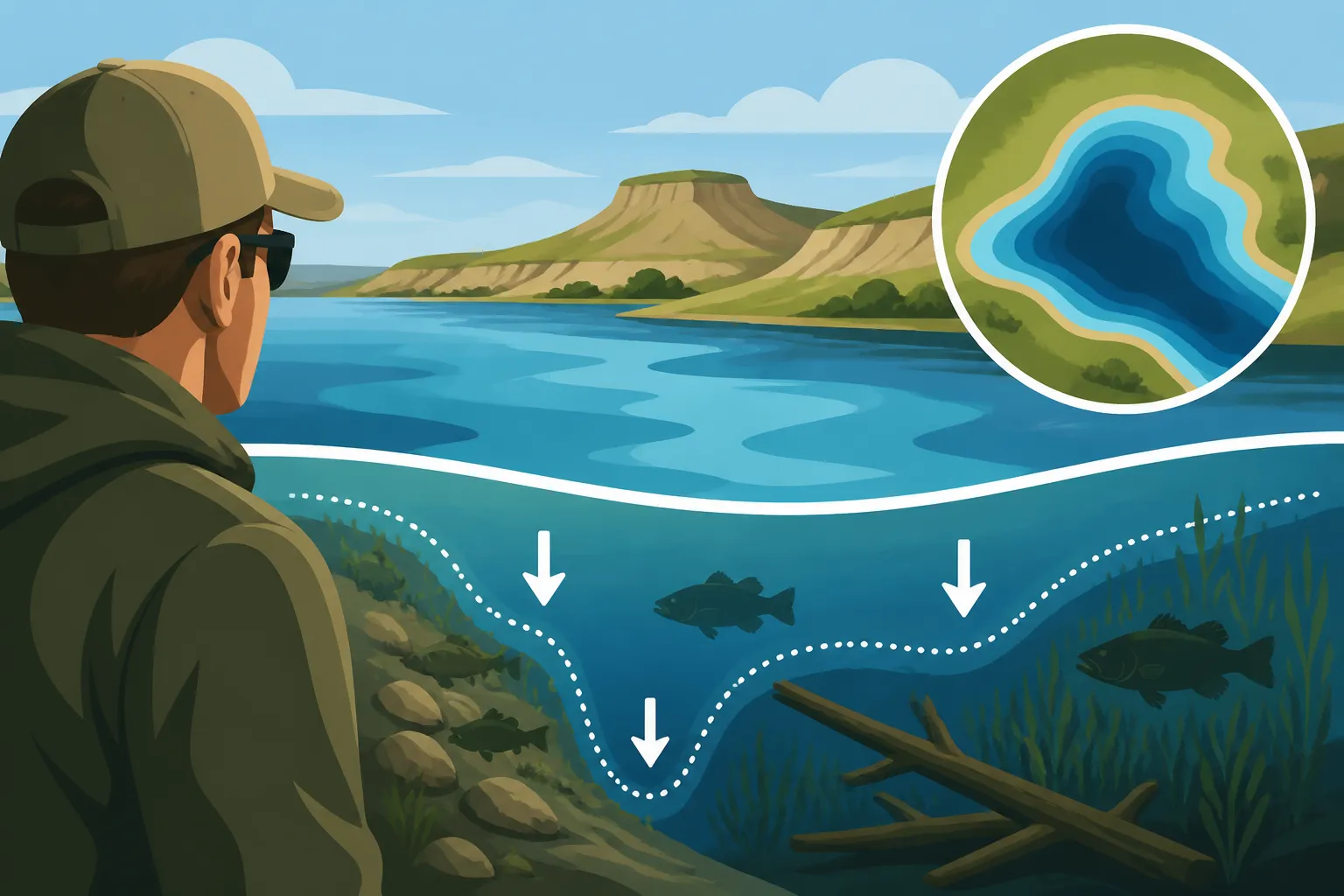
- Steep Bluffs and Cliffs: If you see a steep bluff or a rocky outcropping on the shore, there's a very good chance that the water directly below it is also deep and rocky. These areas often create sudden depth changes, ledges, and rocky reefs that are absolute magnets for species like walleye and smallmouth bass. When you're fishing on Lake Sakakawea, for instance, those dramatic bluffs mean dramatic drops underwater.
- Gradual Slopes and Grassy Banks: Conversely, a gently sloping, grassy bank usually indicates a gradual, sandy, or silty bottom that extends out into the water. These areas might be better for panfish or offer shallow feeding flats, especially during specific times of the year.
- Points and Bays: Shoreline points that jut out into the water are almost always worth exploring. They often have hard bottoms and act as fish highways, funneling baitfish and predators alike. Bays, on the other hand, offer calmer, often shallower water, making them great for spawning fish in the spring or for finding protection from heavy winds. Pay attention to how a point drops off; a sharp drop can be very different from a long, gradual taper.
- Visible Cover: Any visible cover along the shore is an obvious draw. Fallen trees, brush piles, old docks, or even large rocks provide shade, ambush points, and protection. If you see it on the bank, imagine what might be hidden just below the surface!
- Vegetation: Reeds, cattails, and submerged aquatic vegetation along the shoreline provide crucial habitat. These weed lines are nurseries for baitfish and offer excellent cover for northern pike and panfish. Understanding how to Fish Weed Lines for Northern Pike can greatly increase your success.
Current and Flow: Understanding Water Movement as a Fish Magnet
When you're fishing rivers or even areas of large lakes with noticeable current, understanding water movement is paramount. Current isn't just about moving water; it's about delivering food and creating comfortable resting spots for fish.
- Eddies and Slack Water: Fish rarely fight strong currents continuously. Instead, they position themselves in "slack water" or "eddies" – calm spots just out of the main current flow. Look for these behind rocks, fallen trees, bridge pilings, or even bends in the river. They can be subtle swirls on the surface. These spots are perfect ambush points where fish can wait for food to be swept past them with minimal effort. Think of it as a drive-thru for fish.
- Current Seams: The line where fast current meets slower current, known as a current seam, is a prime feeding zone. Fish will often sit in the slower water, darting out into the faster water to grab passing prey. These seams are often visible as distinct lines on the water's surface, sometimes with foam or debris accumulating along them. Learning how to Fish Current Seams on the Missouri River is a great way to target hungry fish.
- Riffles and Runs: In shallower river sections, riffles (fast, turbulent water over rocks) oxygenate the water and dislodge insects and baitfish. Below the riffles, you'll often find deeper "runs" where fish congregate to feed on what the current delivers.
- Confluence Areas: Where two bodies of water meet, such as a creek flowing into a larger river or lake, you often find excellent structure and concentrated fish activity. These areas combine different water temperatures, oxygen levels, and food sources.
Subsurface Signals: Ripples, Eddies, and Discoloration
Sometimes, the best clues are right on the surface, even if they're subtle. You just need to know what to look for.
- Surface Ripples and Breaks: A consistent, localized ripple pattern in otherwise calm water might indicate a submerged hump, rock pile, or current break just below the surface. Similarly, sudden "breaks" in the surface chop, especially on windy days, can mark an underwater obstacle.
- Water Discoloration and Clarity Changes: Lines of clearer water meeting murkier water can indicate a depth change, a thermal break, or a different bottom composition. Fish often hold along these transition zones. For example, if a feeder creek is dumping muddy water into a clear lake, fish might congregate at the seam where the two water types meet, enjoying the cover the turbid water provides.
- Bubbles and Blobs: While often just decaying vegetation, a consistent stream of bubbles rising from a specific spot could indicate a spring, which can be a fish attractor, especially in winter. Darker "blobs" on the surface in otherwise clear water might be shadows of submerged weed beds or other cover that you can't quite see through the glare.
- Bird Activity: This one is less about structure and more about food, but it's a great indicator. Diving birds like gulls or pelicans often signal schools of baitfish, and where there's bait, there are usually predatory fish like walleye or northern pike not far behind.
Gear That Helps You "See" Below the Surface
While your eyes and observational skills are paramount, modern fishing technology provides invaluable tools to confirm and discover hidden structures. These tools can turn vague surface clues into concrete underwater realities.
Fish Finders and Sonar: Your Underwater Eyes
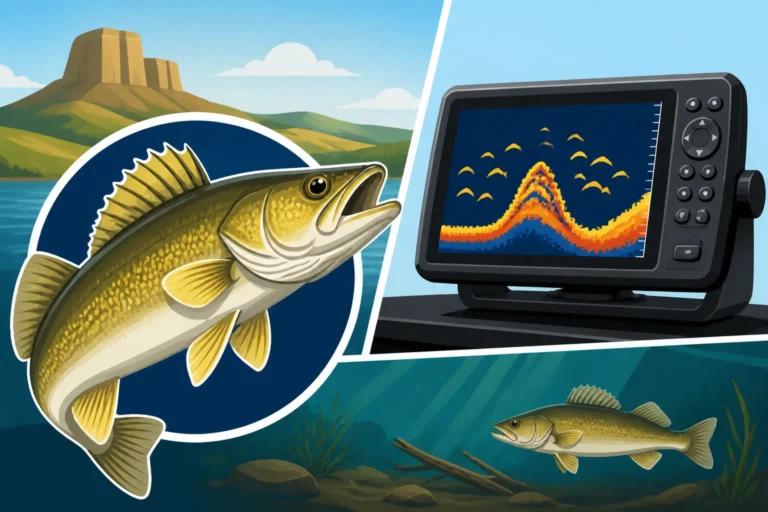
For boat anglers, a good fish finder is arguably the most important piece of gear for reading water. These devices literally give you an X-ray vision of the underwater world.
- Understanding the Display: A fish finder works by sending sound waves into the water and interpreting the echoes. The display will show you the bottom contour – whether it's flat, sloping, or has sharp drops. You'll see humps, ledges, and submerged trees. Learning the Best Fish Finder Settings for Walleye, for instance, can help differentiate fish from structure.
- Identifying Structure Types: Modern units with side imaging or down imaging can even show photo-like images of what's directly below or to the sides of your boat. This is crucial for identifying specific types of structure like brush piles, rock gardens, or old roadbeds that are otherwise invisible. You can find excellent units on Amazon that offer these advanced features.
- Locating Fish: Of course, fish finders also show you fish! By understanding how fish appear on your screen, you can pinpoint schools of baitfish or individual predatory fish relating to specific structures. This combination of seeing the fish and the structure is incredibly powerful. For ice fishing, specialized flashers are your best friend, showing you real-time activity under your hole.
Mapping and GPS: Navigating the Invisible Landscape
Before you even launch your boat or step onto the ice, mapping software and GPS units can give you a significant advantage in reading water.
- Contour Maps: Detailed lake and river maps show depth contours, much like topographic maps show elevations on land. By studying these maps, you can identify underwater points, humps, creek channels, and significant depth changes that you can then target on the water. Many fish finders come with pre-loaded high-definition maps, or you can purchase supplemental chips.
- Waypoint Management: Once you've found a promising structure with your fish finder or by observing surface clues, mark it with a GPS waypoint. This allows you to return to that exact spot again and again. Over time, you'll build a personal library of productive fishing spots. Learning how to Find Walleye Structure With a Map and then marking it with your GPS is a classic technique for experienced anglers.
- Navigating Large Waters: On expansive lakes like Lake Sakakawea, GPS is essential for safe navigation and finding your way back to specific spots, especially if you're exploring Deep Water Structure Fishing Techniques.
The Humble Polarized Sunglasses: A Game Changer
Don't underestimate the power of a good pair of polarized sunglasses. While they might seem simple, they are an essential tool for reading water, especially in shallower areas.
- Cutting Glare: Polarized lenses dramatically reduce glare from the water's surface, allowing you to see into the water instead of just seeing reflections. This can reveal submerged logs, rock beds, weed lines, and even cruising fish that would otherwise be hidden.
- Spotting Subtleties: With glare eliminated, you can spot subtle color changes in the water that indicate different bottom compositions (sand, rock, mud) or changes in depth. You can often see the outline of a weed bed or a dark patch that indicates deeper water. This is particularly useful for Shore Fishing Techniques for Beginners who might not have access to advanced electronics. You can find many affordable and effective polarized sunglasses options on Amazon.
Putting It All Together: Developing Your Water Reading Eye
Reading water isn't a skill you master overnight. It's an ongoing process of observation, analysis, and experience. But with dedicated practice, you'll start to see things that were once invisible.
Practice Makes Perfect: Starting Small and Expanding Your Horizons
The best way to develop your water reading skills is to get out there and practice!
- Start with Simpler Waters: Don't try to tackle Lake Sakakawea's vastness on your first few attempts. Begin with smaller lakes, ponds, or accessible river sections where features are more pronounced and easier to observe. Look for best fishing lakes for beginners in North Dakota to start.
- Active Observation: When you're fishing, don't just stare at your bobber or the tip of your rod. Actively look around. What do you see on the shoreline? How is the wind affecting the water? Are there any birds? Are there subtle ripples? Take mental notes, or even write them down.
- Relate to Catches: Every time you catch a fish, make a mental note of where it came from. Was it near a visible log? Along a current seam? On a sharp break shown on your fish finder? Over time, you'll start to recognize patterns. This is part of the learning process for any angler, from those targeting North Dakota Yellow Perch Fishing Guide advice to those focused on trophy walleye.
Here's a quick cheat sheet for common structures and where to look:
| Structure Type | What to Look For (Surface Clues) | Common Fish Species |
|---|---|---|
| Points/Reefs | Shoreline points, consistent ripple breaks, darker water colors | Walleye, Smallmouth Bass, Pike, Perch |
| Drop-offs/Ledges | Steep shorelines, sudden changes in surface chop, depth readings on sonar | Walleye, Sauger, Perch, Bass |
| Weed Beds | Visible weed lines, darker green patches, floating vegetation | Northern Pike, Panfish (Crappie, Bluegill), Bass |
| Fallen Trees/Brush | Visible logs, brush extending from shore, bird activity | Northern Pike, Panfish, Catfish, Bass |
| Current Seams | Lines where fast & slow water meet, foam lines, swirling eddies | Walleye, Catfish, Sauger, Smallmouth Bass, Trout |
| Humps/Islands | Subtle surface breaks, dark spots in clear water, sonar readings | Walleye, Perch, Smallmouth Bass |
| Rock Piles | Rocky shorelines, distinct ripple patterns, sonar rock arches | Walleye, Smallmouth Bass, Perch |
Learning from Others: Guides, Forums, and Local Knowledge
You don't have to learn everything on your own. Leverage the wisdom of others!
- Hire a Local Guide: If it's within your budget, spending a day with a reputable fishing guide can accelerate your learning immensely. They spend countless hours on the water and can point out subtle clues and explain why certain spots are productive.
- Online Forums and Social Media: Join North Dakota fishing groups online. Anglers often share tips, observations, and even photos of conditions. Be polite, ask specific questions, and you'll often find a wealth of knowledge.
- Local Bait Shops: The folks who run bait shops are usually passionate anglers themselves and are often the best source of current, hyper-local information. Ask them where fish are being caught and what structures are producing. They often know when How Water Temperature Affects Walleye Location or other species, based on recent reports.
Patience and Persistence: The Keys to Consistent Success
Remember, reading water is a skill that develops over time. There will be days when the fish just aren't biting, no matter how well you read the water. Don't let that discourage you. Every trip, every observation, every cast is a learning experience. The more you put in, the more intuitive it becomes. You'll begin to notice things you never saw before, and those blind casts will become a thing of the past. Keep at it, and you'll find that your success on the water will grow right alongside your ability to understand the silent language of the lake and river.
Disclaimer
This article is for general informational purposes only and does not constitute professional advice. Laws, prices and regulations vary by location and change over time. Consult a qualified professional for guidance on your specific situation.