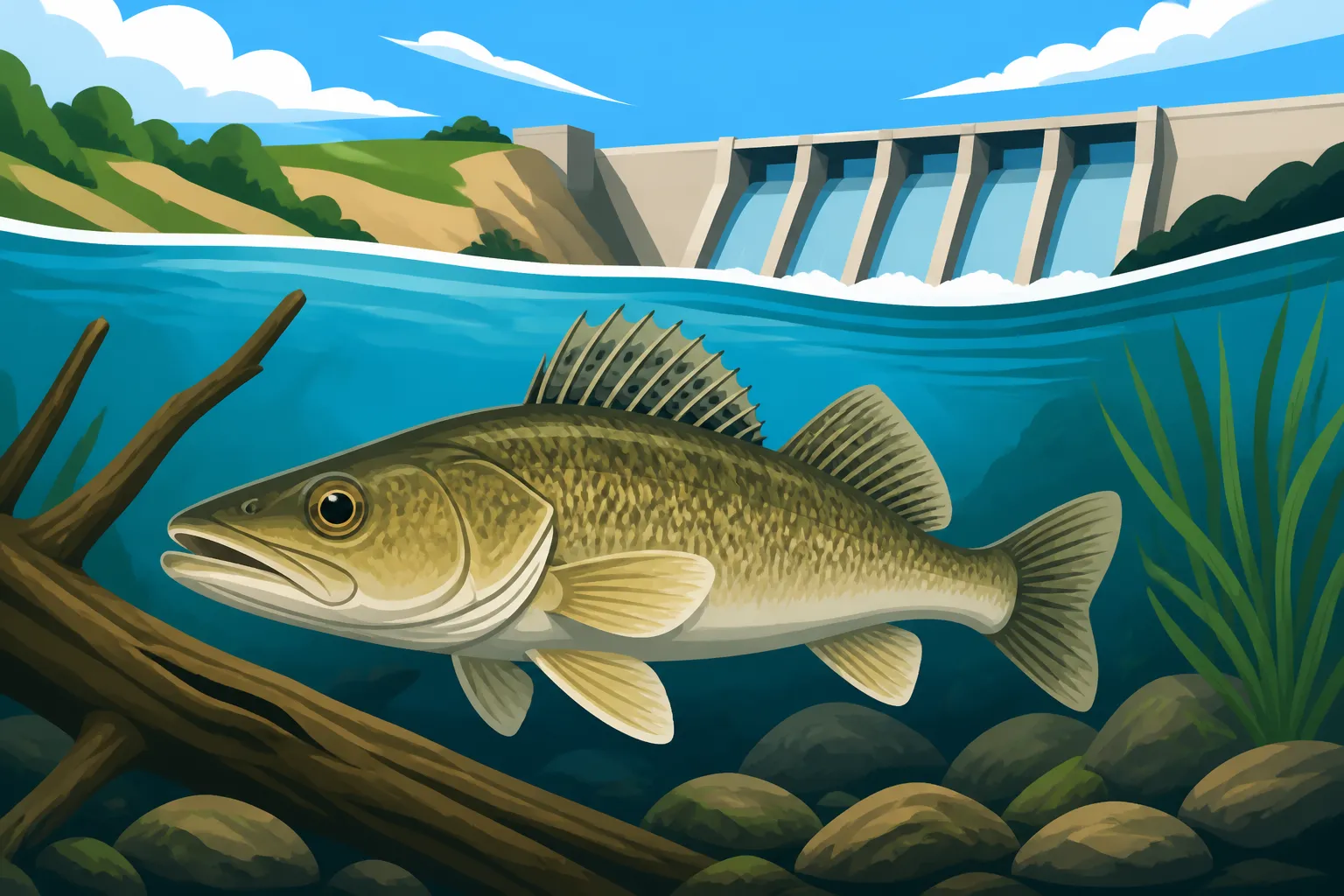
Sauger Habitat Below Garrison Dam
If you've ever cast a line below North Dakota's mighty Garrison Dam, you know it's a unique and sometimes challenging fishing environment. The powerful currents and often murky waters can feel intimidating, but for those who understand it, this stretch of the Missouri River is an absolute goldmine, especially for sauger. This guide is all about peeling back the layers of this fascinating ecosystem, helping you understand exactly where sauger thrive and why the tailrace below Garrison Dam is one of the best spots to target these incredible fish.
The Unique Dynamics of the Garrison Dam Tailrace Environment
The area immediately downstream from the Garrison Dam, often referred to as the tailrace, is far from a typical river stretch. It's a dynamic, powerful, and ever-changing environment shaped directly by the massive structure upstream. Understanding these core dynamics is the first step to truly appreciating why sauger call this place home and how you can successfully pursue them.
Powerful Currents and Water Release Patterns
The most defining characteristic of the tailrace is undoubtedly the strong, often turbulent current generated by the dam's power generation and water release. This isn't your lazy river float; this is a powerful flow that constantly sculpts the river bottom and dictates how fish position themselves. Water is released from the bottom of Lake Sakakawea, ensuring a consistent flow that might change in volume, but rarely in its fundamental direction. This constant movement is a double-edged sword for anglers. On one hand, it concentrates baitfish and brings nutrients, creating an incredibly rich feeding ground. On the other hand, it requires specialized techniques and equipment to effectively fish without constantly snagging or being swept away.
Anglers often face the frustration of trying to keep their lures in the strike zone when the current is ripping. It's a common challenge, but mastering it is key. You'll notice that sauger, unlike some other species, absolutely thrive in this constant push. They are built for it, using the current to their advantage to ambush prey rather than expending energy fighting it. Understanding when and how much water is being released can also give you an edge, as fish positioning can shift with these changes. This constant current also means that sediment is always moving, contributing to the slightly stained water that sauger seem to prefer.
Abundant Structure and Submerged Features
Beneath the powerful currents lies a wealth of diverse structure that provides sauger with everything they need for survival: ambush points, resting areas, and protection. The construction of the dam itself, along with the sheer force of the water over decades, has created an incredible underwater landscape. You'll find everything from rip-rap banks designed to prevent erosion, to submerged rock piles, sudden depth changes, and scour holes carved out by the relentless flow. These features aren't just random; they are critical elements of the sauger's habitat.
Sauger will often position themselves on the downstream side of these structures, out of the direct force of the current, allowing them to conserve energy while waiting for an easy meal to be swept by. Imagine a large boulder on the riverbed; a sauger might be tucked right behind it, only needing to dart out a short distance to grab a passing minnow. Understanding how current flows around and interacts with these structures is paramount. Drop-offs, ledges, and transition zones between different bottom compositions (like gravel transitioning to mud) are also hotbeds for activity. These areas provide vertical relief and diverse feeding opportunities, making them prime targets for anglers. If you're struggling to find fish, start mapping out these structural elements with your electronics.
Sauger Preferences: What Makes This Habitat Ideal
Sauger aren't just here by chance; the specific conditions below the Garrison Dam align perfectly with their biological preferences, making it an ideal environment for them to flourish. They've adapted over generations to thrive in conditions that many other fish might find challenging.
Cold, Well-Oxygenated Water from Lake Sakakawea
One of the primary reasons sauger do so well below Garrison Dam is the consistent flow of cold, oxygen-rich water released from the depths of Lake Sakakawea. Unlike surface water that can warm significantly during the summer months, the water coming through the dam remains relatively cool year-round. Sauger are a cold-water species, preferring temperatures that would send many other fish to warmer, shallower haunts. This cool water is also naturally well-oxygenated due to its depth and the turbulence created by its passage through the dam.
This preference for cooler water means that even during the dog days of summer, sauger will often remain active and accessible in the tailrace, whereas other species might become lethargic. It provides a stable thermal environment, which is crucial for their metabolism and overall health. For anglers, this means a more consistent bite, especially when the air temperatures climb. If you're fishing a hot summer day and struggling elsewhere, the tailrace's perpetually cool water might be your best bet. You'll often find sauger holding near the bottom, taking full advantage of the cooler, denser water that settles there.
Moderate to Heavy Current and Turbidity
While many anglers might shy away from heavy current, sauger actively seek it out. They are built for it, with streamlined bodies and powerful fins that allow them to hold their position without expending excessive energy. The moderate to heavy current below the dam serves multiple purposes for sauger. Firstly, it's a natural conveyor belt for food. Baitfish, insects, and other aquatic organisms are constantly being swept downstream, creating an easy buffet for sauger waiting in ambush. They don't have to chase their food far; the river brings it right to them. Secondly, the current creates eddies and current breaks, which are prime hunting grounds and resting spots.
Furthermore, the tailrace often has a moderate level of turbidity or stained water. This isn't necessarily muddy, but often a slight brownish tint that limits visibility. Unlike highly visual predators that prefer crystal clear water, sauger are perfectly adapted to these conditions. Their large eyes and superior lateral line system allow them to detect prey even in low light or murky conditions, giving them a distinct advantage over more sight-dependent fish. This turbidity can also make them feel more secure and less wary of predators, including human anglers. So, don't be discouraged by water that isn't perfectly clear; it might just be ideal sauger territory. For finding the right gear to penetrate those murky waters, remember that retailers like Amazon offer a vast selection of high-vibration lures and sensitive rods.
Deep Water Access and Bottom-Oriented Behavior
Sauger are typically a more bottom-oriented fish compared to their walleye cousins. While walleye might suspend or venture shallower, sauger often prefer to hug the riverbed, especially in areas with significant depth. The tailrace below Garrison Dam provides ample deep water, with depths easily reaching 20-40 feet or more in scour holes and channel swings. This deep-water access offers sauger several advantages: it keeps them in their preferred cooler temperatures, provides a sense of security from overhead predators, and positions them directly where many forage species are concentrated near the bottom.
Their bottom-oriented behavior means that your fishing techniques should almost always involve presenting baits and lures very close to or directly on the riverbed. Whether you're jigging, using a bottom bouncer, or drifting live bait, maintaining contact with the bottom is crucial. This is where a good fish finder really shines, allowing you to identify those subtle depth changes, scour holes, and rocky ledges where sauger will be holding. Understanding the contours of the riverbed and how fish relate to them in different current conditions is a skill that comes with time, but it's fundamentally important for success in this habitat. The deep-water habitat also means they often school tightly, so if you find one sauger, there's a good chance more are nearby. You might find some excellent Best Fish Finders for North Dakota Lakes to help with this on sites like Amazon.
Seasonal Movements and Where to Find Them
While the tailrace below Garrison Dam is consistently good for sauger, their exact positioning and activity levels can shift with the seasons, influenced by spawning cycles, water temperatures, and feeding patterns. Knowing these general trends will significantly improve your chances.
Spring Aggression and Post-Spawn Recovery
As winter loosens its grip and the ice melts upstream, spring marks a period of increased activity for sauger. This is especially true after they complete their spawning rituals, which typically occur in shallower, faster-moving waters upstream or in tributary streams. Post-spawn, sauger return to the tailrace habitat, often ravenously hungry as they seek to regain energy lost during spawning. They become more aggressive and less wary, making them excellent targets for anglers. During this time, you might find them in slightly shallower current breaks or along rip-rap banks as they chase schools of baitfish moving into the main river system.
The key during spring is often finding those transitional zones where the current meets slack water, or areas with rocky bottom that warm slightly faster. These spots become congregation points for both prey and predator. As the water flow from the dam can be quite strong in spring due to snowmelt, identifying current seams and eddies is particularly important. A well-placed jig or crankbait can be incredibly effective when sauger are in this post-spawn feeding frenzy. Keep an eye on water temperatures; a slight increase can trigger intense feeding activity. For more on spring fishing, check out our guide on North Dakota Open Water Fishing Season.
Summer Holds in Deeper, Cooler Waters
Once summer truly sets in and air temperatures climb, sauger in the tailrace below Garrison Dam maintain their preference for cooler water, often retreating to the deepest sections of the river. This means they'll be found in scour holes, deep troughs, and along the bottoms of significant drop-offs. The consistent cold water released from the dam provides a refuge from the warmer surface temperatures found elsewhere in the river system. While they might still move into shallower current breaks during low-light conditions or active feeding periods, their primary daytime haunts will be in the cooler depths.
Fishing in summer often requires heavier jigs, bottom bouncers, or deep-diving crankbaits to effectively reach their depths. Presentation becomes even more critical; you need to keep your bait directly in their strike zone, which is often very close to the bottom. Targeting current seams next to deep holes or along distinct ledges can be highly productive. Look for areas where baitfish are concentrated by the current and swept into deeper holding areas. Even in summer, sauger remain opportunistic feeders, and the abundance of forage in the tailrace keeps them active. Understanding North Dakota Sauger Fishing Guide will give you more insight into these patterns.
Fall Feeding Frenzy and Pre-Winter Preparation
As autumn arrives and water temperatures begin to drop across the state, sauger in the tailrace enter another period of intense feeding. This is their crucial time to bulk up for the lean winter months ahead. They become incredibly aggressive, often moving into shallower current breaks and along rip-rap shorelines with more confidence, especially during overcast days or active periods. The cooling water seems to energize them, and they are less hesitant to chase down prey.
During the fall, sauger can be found in a wider variety of depths, from deeper holes to moderate current breaks. This is often when anglers experience some of the most consistent and exciting sauger action. They will actively chase crankbaits, jigs, and live bait rigs. Pay close attention to prominent structural elements like points, submerged humps, and the edges of the main channel where baitfish are congregating. The colder the water gets, the more sauger will become concentrated in specific areas, making them easier to target. A North Dakota Fall Fishing Guide can provide more tips for this productive season.
Effective Fishing Techniques Tailored to Sauger Habitat
Successfully fishing for sauger below Garrison Dam isn't just about finding them; it's about presenting your lures or bait in a way that appeals to their bottom-hugging, current-loving nature. These techniques are tried and true for this challenging yet rewarding environment.
Jigging the Depths and Current Breaks
Jigging is arguably one of the most effective and classic techniques for sauger in the tailrace. It allows you to maintain direct contact with the bottom and impart enticing action to your lure, mimicking an injured baitfish. Given the strong currents and depths, heavier jigs (typically 3/8 ounce to 1 ounce, sometimes more, depending on current strength) are often necessary to get down quickly and stay in the strike zone. You'll want to use jigs tipped with soft plastics (like paddle tails or grubs), minnows, or even a combination.
The key to successful jigging here is understanding how to work the current. Instead of casting directly upstream and letting your jig fall, you'll often cast slightly upstream and across, allowing the current to sweep your jig along the bottom while you maintain a controlled drift. Focus on slowly lifting and dropping the jig, feeling for those subtle "thunks" or increased weight that indicate a bite. Sauger bites can be incredibly light, especially in cold water, often feeling like a slight mushiness or a tick rather than a hard strike. Target current breaks, the edges of deep holes, and the downstream sides of submerged structures. How to Fish for Sauger Below Garrison Dam is essential reading for mastering this.
Bottom Bouncing with Live Bait or Spinner Rigs
Bottom bouncing is another highly productive method, especially when covering larger areas or when fish are less aggressive. This technique utilizes a weighted wire arm (the bottom bouncer) that drags along the riverbed, keeping your bait or lure just above the bottom and preventing snags. Attached to the bottom bouncer is a leader with a hook, typically baited with a live minnow, nightcrawler, or a spinner rig. The spinner rig, often called a "crawler harness," creates flash and vibration that can attract sauger from a distance.
This technique is fantastic for drifting or slowly trolling with the current, allowing you to present your offering naturally while maintaining constant bottom contact. The beauty of bottom bouncing is its versatility; you can adapt it to various depths and current speeds by simply changing the weight of your bottom bouncer. For the Garrison Dam tailrace, you'll want heavier bouncers to fight the strong currents effectively. Look for prominent depth changes or structural elements where sauger might be congregated. When buying different weights and blade colors for your spinner rigs, checking out a wide selection on Amazon can be really helpful.
Trolling Deep-Diving Crankbaits
When sauger are spread out, actively feeding, or when you want to cover significant water, trolling deep-diving crankbaits can be incredibly effective. These lures are designed to dive to specific depths, allowing you to target fish holding in deeper water or along prominent ledges. In the tailrace, choosing crankbaits that can run 15-30 feet deep is common, and sometimes even deeper with longer lines or specialized techniques. Colors that mimic local baitfish (perch, ciscoes) or bright, contrasting patterns can be successful, especially in stained water.
Trolling requires precise boat control to follow contour lines and keep your lures in the strike zone. You'll often be trolling upstream slowly, or drifting downstream with a motor engaged for control, depending on current strength and fish location. The vibration and erratic action of crankbaits can trigger aggressive strikes from sauger, especially when they are actively feeding. Experiment with trolling speeds, as slight changes can dramatically affect the lure's action and draw in more fish. Pay attention to your fish finder to identify schools of fish or changes in bottom composition where sauger might be holding. For instance, Trolling Crankbaits for Walleye offers insights that can be adapted for sauger, given their similar behaviors.
Distinguishing Sauger from Walleye in the Tailrace
It's common to catch both sauger and walleye in the same waters below Garrison Dam. While they share some similarities, understanding their distinct characteristics and subtle behavioral differences is crucial for proper identification and can even help you refine your fishing strategy.
Key Visual and Behavioral Differences
At first glance, sauger and walleye can look quite similar, often leading to confusion for newer anglers. However, there are a few key visual distinctions to help you tell them apart. Sauger typically have distinct dark, blotchy spots or saddle patches along their sides, which walleye generally lack (walleye are usually more uniformly olive or golden brown). Perhaps the most reliable physical identifier is the dorsal fin: sauger have distinct rows of dark spots on their spiny dorsal fin, while walleye have a solid, dark blotch at the base of the last few spines of their spiny dorsal fin, with the rest of the fin being clear or faintly streaked. Additionally, sauger tend to have a more slender body profile and a rougher skin texture compared to walleye.
Behaviorally, sauger are generally more current-oriented and prefer stained, turbid waters, often holding tighter to the bottom in deeper holes and current breaks. Walleye, while also appreciating current, tend to be more adaptable to clearer water and might suspend more often or venture into shallower flats, especially during low-light conditions. These subtle differences in preference for habitat can often tell you whether you're targeting sauger or walleye, even before you see the fish. Understanding Sauger Identification vs Walleye is a must for any angler fishing these waters.
Regulations and Bag Limits Specific to Each Species
Beyond identification for personal knowledge, it's absolutely vital to distinguish between sauger and walleye due to different fishing regulations and bag limits set by the North Dakota Game and Fish Department. These regulations are in place to manage fish populations sustainably and can vary year by year, sometimes even by specific water body. Misidentifying your catch can lead to inadvertent violations, which nobody wants.
Typically, there might be different size limits or daily creel limits for sauger compared to walleye, or a combined limit that lumps them together but with specific stipulations. For example, you might have a combined walleye/sauger limit, but only a certain number within that limit can be sauger. Always consult the most current North Dakota Fishing Guide or proclamation before heading out, as these rules are subject to change. Understanding these nuances is part of being a responsible angler and helps ensure healthy fish populations for future generations.
Conservation and Responsible Angling Practices Below Garrison Dam
Fishing below Garrison Dam is a privilege, and it comes with the responsibility of practicing good stewardship. Conserving the sauger population and the overall health of the Missouri River ecosystem means adhering to regulations, minimizing your impact, and educating yourself on best practices.
Minimizing Stress and Handling Fish Safely
If you plan to release fish, especially larger sauger or those outside the legal slot limits, minimizing stress is paramount to their survival. Sauger, like many fish, can be delicate, and improper handling significantly reduces their chances of surviving after release. Always try to land fish quickly, avoid playing them to complete exhaustion. Use appropriate tackle that can handle the fish without undue strain. Once landed, handle the fish as little as possible. If you can, remove the hook while the fish is still in the water, or at least keep it submerged as much as possible.
When you must bring a fish into the boat, use wet hands or a wet glove to minimize the removal of their protective slime coat. Avoid squeezing them, especially around their internal organs. If a fish is deeply hooked, consider cutting the line as close to the hook as possible rather than attempting to rip the hook out, which can cause irreparable damage. Have a good pair of pliers or a dedicated hook remover easily accessible. Tools like a long-nosed hook remover, often found on Amazon, can be a game-changer for quick and safe hook extraction, particularly with toothy fish like sauger.
Adhering to Regulations and "Clean, Drain, Dry" Protocols
The regulations set by the North Dakota Game and Fish Department are not arbitrary; they are carefully crafted based on scientific data to ensure the sustainability of fish populations. It's every angler's responsibility to know and follow these rules. This includes understanding North Dakota Fishing Regulations Explained, respecting daily creel limits, size restrictions, and any seasonal closures. Always keep your fishing license current, and be prepared to present it to game wardens. North Dakota Fishing License Guide covers everything you need to know.
Beyond fish limits, remember the crucial "Clean, Drain, Dry" protocol to prevent the spread of Aquatic Nuisance Species (ANS). The Missouri River system is susceptible to invaders like zebra mussels, which can wreak havoc on ecosystems and infrastructure. Before leaving any boat launch, make sure to:
- Clean your boat, trailer, and all fishing gear of any visible mud, plants, or animals.
- Drain all water from your boat, including the bilge, livewells, and motor.
- Dry everything thoroughly before launching into another water body. If you can't dry it completely, consider a high-pressure wash with hot water. These steps are critical for protecting North Dakota's precious waters. Aquatic Nuisance Species Rules for Boaters further explains why this is so important.
| Feature | Sauger | Walleye |
|---|---|---|
| Dorsal Fin | Distinct dark spots in rows | Solid dark blotch at base, rest clear/streaked |
| Body Markings | Irregular dark blotches/saddle patches | More uniform, often olive/golden brown |
| Body Shape | Generally more slender, torpedo-like | Slightly thicker, deeper body |
| Preferred Current | Moderate to heavy current, actively seeks | Moderate current, can tolerate less |
| Preferred Water | Stained/turbid water | More adaptable, can be found in clearer water |
| Typical Depth | More bottom-oriented, often deeper | Can suspend, found shallower at times |
| Habitat Focus | Scour holes, current breaks, river bottom | Broader range, flats, reefs, structure |
The Thrill of Fishing the Garrison Dam Tailrace for Sauger
There's something uniquely satisfying about fishing the Garrison Dam tailrace. It's a place that demands respect for its power but rewards those who learn its secrets with incredible fishing opportunities. The sauger here are strong, feisty, and absolutely delicious, making them a prime target for many North Dakota anglers. The constant challenge of the current, the thrill of feeling that subtle bite in deep water, and the satisfaction of landing a beautiful sauger make every trip memorable.
This is a fishing experience that connects you directly to the raw power of the Missouri River. Whether you're a seasoned angler with years of experience or a newer enthusiast looking for a challenge, the sauger below Garrison Dam offer a fantastic opportunity to test your skills and fill your livewell. Just remember to come prepared, respect the water, and most importantly, enjoy the incredible fishing that this special stretch of river provides.
Disclaimer
This article is for general informational purposes only and does not constitute professional advice. Laws, prices and regulations vary by location and change over time. Consult a qualified professional for guidance on your specific situation.