What Does a Burbot Look Like?
There's nothing quite like the thrill of a tug on your line, but sometimes, what comes out of the water leaves you scratching your head. North Dakota's diverse waterways are home to some truly unique creatures, and if you've ever pulled up a fish that seems to defy easy classification – perhaps looking like a mix between an eel and a catfish – chances are you've met a burbot. This guide is dedicated to demystifying this intriguing fish, breaking down its distinctive features so you'll know exactly what you're looking at the next time one graces your hook.
Understanding the Burbot's Unique Profile
The burbot is one of those fish that truly stands out in North Dakota's aquatic lineup. They're often misunderstood, sometimes even mistaken for something more common, but once you know what to look for, their appearance is unmistakable. These fish are true cold-water specialists, and their physical characteristics reflect a life spent on the bottom, often in the deepest, chilliest parts of our lakes and rivers.
The Eely Body and Flat Head
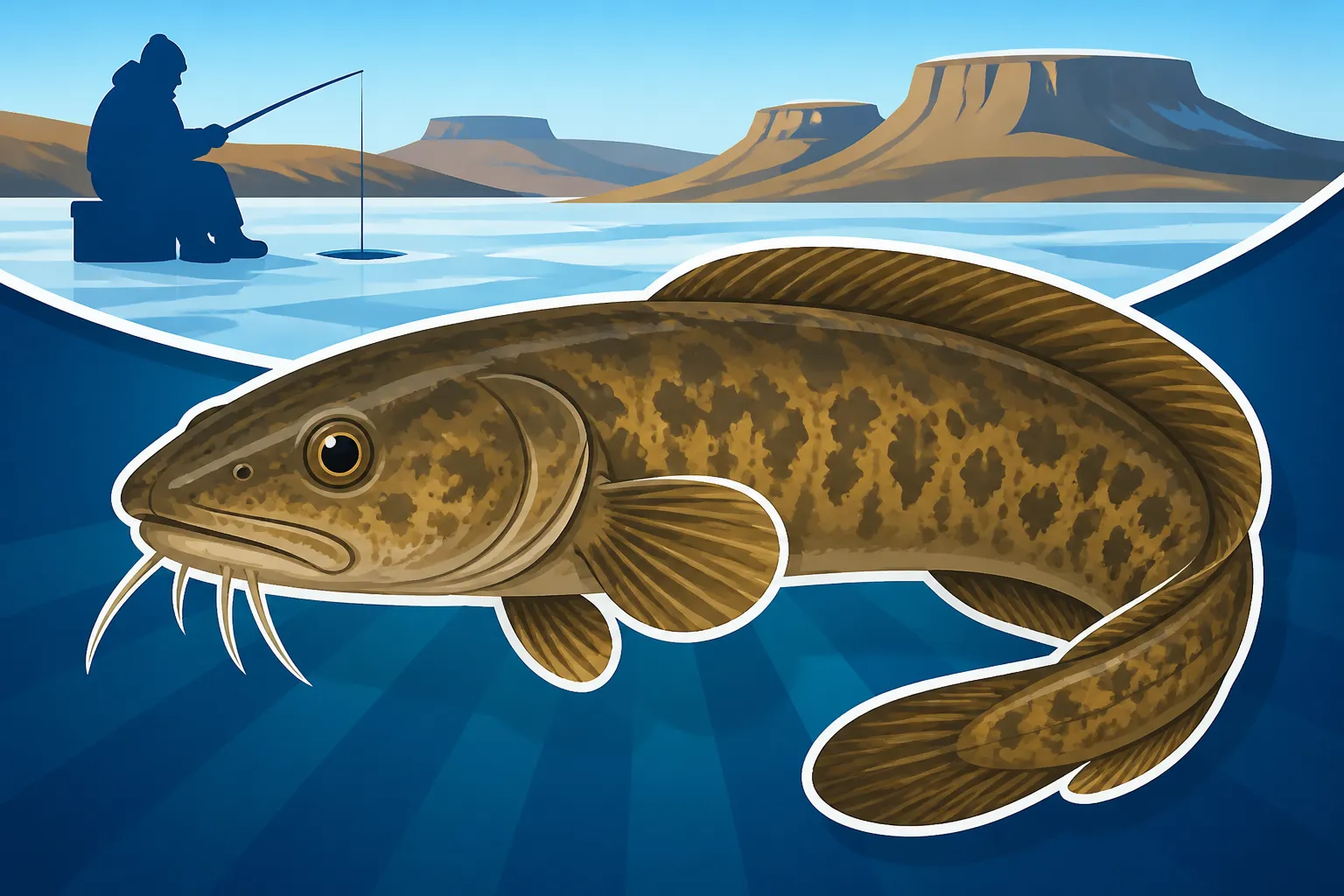
One of the first things you'll notice about a burbot, and often the source of much confusion, is its body shape. Unlike the sleek, torpedo-like bodies of a walleye or the broad, flat profile of some other species, the burbot has a very elongated, somewhat snakelike or "eely" body. It's not quite as round as a true eel, but it certainly doesn't have the typical fish shape you might expect. This body tapers back from a relatively broad, flattened head, giving it a somewhat top-heavy appearance. Imagine a fish that's been pressed down from above, particularly around the skull, and then stretched out. This unique shape allows them to navigate tight spaces and ambush prey from crevices along the bottom.
When you're out on the water, especially after a successful session ice fishing, seeing this distinct body come up through the hole is often your first clue that you've got a burbot. They're built for life in the deep, and that long, supple body helps them maneuver in cold, dark environments where many other fish wouldn't thrive. The head itself is robust, typically wider than its body, and contributes to its somewhat prehistoric appearance.
Distinctive Single Barbel
Perhaps the most defining feature of the burbot, and one that immediately sets it apart from almost any other game fish in North Dakota, is the single barbel on its chin. If you're looking for an instant identifier, this is it. While catfish have multiple barbels that resemble whiskers, and some other species might have small sensory organs, the burbot boasts one prominent, fleshy barbel directly under its lower jaw. This isn't just for show; this barbel is a crucial sensory organ, acting like a highly sensitive "finger" for the burbot to feel around in the dark, murky depths. It helps them locate food buried in the substrate or hiding among rocks.
This single chin barbel is a dead giveaway, even for a quick glance. Many anglers who are unfamiliar with burbot will often confuse them with a catfish initially because of the presence of barbels, but the "one whisker" rule instantly clarifies things. You won't find another common North Dakota fish with this exact arrangement. If you're comparing a picture on your phone to a fish in your hand, this singular facial appendage is the key.
Coloration and Camouflage Patterns
The burbot's skin is a masterclass in camouflage, perfectly adapted to blend in with rocky, silty, or woody lake and river bottoms. Their coloration isn't vibrant or flashy; instead, it's a palette of muted, earthy tones designed for concealment. Typically, burbot exhibit a base color that can range from olive green to dark brown or even black on their dorsal (top) side. This dark base is then overlaid with distinct, irregular blotches, spots, or worm-like patterns of lighter shades—think cream, pale yellow, or light brown.
These mottled patterns break up the fish's outline, making it incredibly difficult to spot against a varied bottom structure. It’s like looking at a granite countertop; the patterns are random and asymmetrical, providing excellent camouflage against the varied textures of sand, gravel, and submerged timber. The belly, in contrast, is usually a much lighter, often plain, creamy white or yellowish color. This countershading helps them disappear when viewed from above (blending with the dark bottom) or from below (blending with the lighter surface light). This natural artistry is a testament to their evolutionary success as bottom predators, patiently waiting for an unsuspecting meal to swim by. Understanding their appearance is just one piece of the puzzle; you can learn more about Burbot Fishing in North Dakota to understand how to target them.
Key Anatomical Features Up Close
To truly appreciate the burbot, it helps to dive into the specifics of its anatomy. Each fin, the structure of its mouth, and even its overall texture tell a story about how this fish survives and thrives in its cold, deep-water habitats. These details are what make a burbot a burbot, and they're crucial for accurate identification.
Dorsal and Anal Fins: A Closer Look
The fin structure of a burbot is another key identifier. They possess two distinct dorsal fins on their back. The first dorsal fin is quite small, low, and rounded, almost unassuming, located closer to the head. It's often barely noticeable compared to the second dorsal fin. The second dorsal fin, however, is significantly longer and extends nearly the entire length of the body, merging seamlessly into the caudal (tail) fin. This long, continuous dorsal fin is a distinguishing characteristic, especially when viewed from the side.
Similarly, the anal fin mirrors this length. It also starts further back on the belly, approximately below the first third of the second dorsal fin, and extends almost to the tail, also appearing to merge with the caudal fin. Both the second dorsal and anal fins are low-profile, long, and soft-rayed, allowing for subtle, undulating movements that help the burbot "swim" along the bottom or hold its position against currents. This fin arrangement is quite unique among North Dakota's most popular game fish, offering another clear sign you've caught a burbot.
Pelvic Fins and Their Placement
The pelvic fins on a burbot are particularly interesting due to their placement. Unlike many fish where the pelvic fins are located further back on the belly, often directly beneath or slightly behind the pectoral fins, the burbot's pelvic fins are jugular, meaning they are positioned far forward on the body, almost directly under the chin. These fins are also quite narrow and elongated, with an appearance that some describe as "feathery" or "whisker-like" themselves, though they are true fins and not barbels.
This forward placement isn't just a quirk; it's a functional adaptation. In many bottom-dwelling fish, jugular pelvic fins are used as props or supports, allowing the fish to rest on the substrate while maintaining an alert posture. For a fish that spends most of its life hugging the bottom, these fins act almost like little arms, helping it to maneuver and feel its way along the ground. If you're ever struggling to identify a fish, checking the position and shape of these pelvic fins can provide valuable clues.
The Mouth and Teeth of a Burbot
Take a closer look at the burbot's mouth, and you'll find more evidence of its predatory, bottom-dwelling lifestyle. The mouth is relatively large and wide, positioned terminally (at the very front of the head) or slightly subterminal (just under the snout), allowing it to easily engulf prey. It's not a tiny, delicate mouth; it's designed for gulping down smaller fish, crustaceans, and insects.
Inside, the mouth is armed with numerous small, needle-like teeth. These aren't the large, conical fangs you'd find on a northern pike, or the prominent canines of a walleye. Instead, they are fine, densely packed teeth on both jaws, as well as on the roof of the mouth (vomer and palatine bones). These teeth are perfectly suited for grasping and holding onto slippery prey, ensuring once a meal is caught, it doesn't escape. When handling a burbot, you'll feel the sandpaper-like texture of these teeth, which are more about grip than slashing. While you won't confuse it with the formidable jaws of a pike, the burbot's mouth is very effective for its feeding habits. If you're still curious about other species, you might be interested in exploring the Fish Species Found in North Dakota Lakes and Rivers to see the full spectrum.
How Burbot Compare to Other North Dakota Fish
Sometimes the easiest way to identify a fish is by ruling out what it isn't. North Dakota's waters host many species, and while the burbot is quite distinctive, it can sometimes be confused with others, especially by newer anglers. Let's compare the burbot to some of the other fish you might encounter to solidify your identification skills.
Burbot vs. Catfish: The Whisker Difference
This is probably the most common mix-up when it comes to burbot, and it’s entirely understandable. Both burbot and North Dakota's channel catfish are bottom-dwelling species that have barbels. However, the key difference, as mentioned earlier, is the number and arrangement of these sensory appendages. A burbot has one single, prominent barbel directly under its chin. It's a solitary whisker-like growth.
Contrast this with the channel catfish, which boasts eight distinct barbels arranged around its mouth – two on the upper jaw near the nostrils, two on the corners of the mouth, and four on the chin. Furthermore, catfish generally have a broader, flatter head and a more scaleless, sleek body, often darker on top and lighter below, but without the intricate mottled patterns of a burbot. Catfish also have a large, deeply forked tail, whereas the burbot's tail is rounded and appears to blend with its dorsal and anal fins. Their body shapes are also quite different; catfish are generally more robust and less "eely" in their body taper. Understanding Channel Catfish Identification in North Dakota can help prevent this common mix-up.
Burbot vs. Walleye and Northern Pike: No Mistaking These
While an experienced angler would never confuse a burbot with a walleye or northern pike, new anglers might just see "fish" and not immediately grasp the distinct differences. The reality is, burbot look absolutely nothing like walleye or northern pike.
- Walleye: Walleye have a classic fish shape – torpedo-like, with prominent spiny and soft-rayed dorsal fins that are distinctly separated. They have large, glassy eyes, and their coloration is typically olive green to golden brown with subtle blotches or bars, but nothing like the intricate mottling of a burbot. Most notably, walleye lack any barbels. Their mouths are armed with sharp, canine-like teeth. If you're wondering about Walleye Identification and Size Records in North Dakota, you'll see they are a world apart from burbot.
- Northern Pike: Northern pike are perhaps the most recognizable predators in North Dakota, known for their elongated, slender bodies, duckbill-shaped snouts, and rows of razor-sharp teeth. Their dorsal fin is set far back on their body, almost merging with their deeply forked tail. They have distinct bean-shaped spots or irregular bars of light coloration on a dark green background. Critically, pike have no barbels whatsoever. They are built for explosive, ambush attacks, a stark contrast to the burbot's bottom-dwelling stealth. The differences are so vast, it’s like comparing a snake to a wolf.
Avoiding Confusion: Other Bottom Dwellers
North Dakota waters are home to a few other bottom-dwelling fish, but none should be confused with the burbot if you know what to look for.
For instance, species like suckers (e.g., common carp, buffalo fish, white sucker) also spend their lives near the bottom and have subterminal mouths. However, suckers have fleshy, often protrusible lips adapted for sucking up detritus and small invertebrates, and they completely lack barbels. Their bodies are typically scaled and more uniformly colored, often with larger, more distinct scales than a burbot.
Another group might be drum (freshwater drum), which have deep bodies, large scales, and also lack barbels. They have a distinctive, low-set mouth and a silvery or bronzy coloration. Their overall body shape is much more compressed side-to-side than the rounded, eely body of a burbot.
The key is always to look for that single chin barbel combined with the eely body and mottled camouflage. These three features together create a unique signature that belongs only to the burbot in our waters.
| Feature | Burbot | Channel Catfish | Northern Pike | Walleye |
|---|---|---|---|---|
| Body Shape | Elongated, eely, tapering to a rounded tail | Robust, stocky, deeply forked tail | Very elongated, slender, duckbill snout | Torpedo-shaped, two distinct dorsal fins |
| Barbels | One single barbel on chin | Eight barbels around mouth (4 chin) | None | None |
| Dorsal Fins | One small, one very long, continuous to tail | One spiny, one adipose (small, fleshy) | One set far back, near tail | Two separate (spiny & soft-rayed) |
| Mouth & Teeth | Large mouth, small, fine teeth | Wide mouth, small, fine teeth | Large mouth, many sharp, conical teeth | Large mouth, prominent canine teeth |
| Coloration/Pattern | Mottled, blotchy (greens, browns, yellows) | Dark grey/olive back, silvery sides, white belly | Green with light bean-shaped spots | Olive/golden back, white belly, dark blotches |
| Skin/Scales | Very small scales, often slimy | Smooth, scaleless | Fine scales | Rough scales |
Size, Texture, and Habitat Clues
While identification largely comes down to visual cues, the feel of a burbot and the environment where you find it can also reinforce your identification. These are often the "aha!" moments that confirm your catch. Many anglers report the initial surprise of their first burbot capture, not just visually, but tactilely. When you're fishing and feel something different, these details become even more important.
Typical Size in North Dakota Waters
Burbot in North Dakota can reach respectable sizes, though they aren't typically monster fish compared to the state record northern pike or catfish. Most burbot caught by anglers will range from 1 to 5 pounds, with lengths from 15 to 25 inches. However, they do have the potential to grow larger. A truly exceptional burbot in North Dakota might tip the scales at over 10 pounds and exceed 30 inches in length. The state record burbot from Lake Sakakawea, for example, was quite a specimen.
Their growth rate is generally slower than many other game fish, as they are cold-water species and often found in deeper, less productive waters. The size of your catch, especially if it's longer and thinner than expected for its weight, can be another subtle hint that you're holding a burbot. If you're looking for gear sturdy enough for these tenacious fish, a quick search on Amazon for "heavy duty ice fishing rods" or "strong fishing line" will show you plenty of options that can handle them.
Slime Coat and Skin Texture
When you handle a burbot, you'll immediately notice its unique skin. They are incredibly slimy. This isn't just a little slickness; burbot have a thick, protective layer of mucus or slime that covers their bodies. This slime acts as a barrier against parasites and infections in their cold, often abrasive environments. It also makes them notoriously difficult to hold onto! Anglers often describe them as "slippery as an eel" for a reason.
Beneath that slime, the burbot does have very small, deeply embedded scales, which are cycloid in nature. However, these scales are so minute that they're almost imperceptible to the touch, making the fish feel essentially scaleless and smooth, rather than rough like a walleye or coarse like a pike. This smooth, slimy texture is a very distinct tactile identifier for the burbot. You might want to consider some sturdy, grip-friendly gloves, easily found on Amazon, if you plan to handle many of these slick fish!
Where They Are Found: Habitat as an Identifier
Knowing where burbot typically live in North Dakota also helps with identification, as encountering them in their preferred habitat makes their presence more expected. Burbot are predominantly cold-water, bottom-dwelling fish. This means you're most likely to find them in the deeper parts of large reservoirs like Lake Sakakawea, Lake Oahe, and even Devils Lake, especially during the warmer months when other fish move shallower. They thrive in water temperatures below 60 degrees Fahrenheit.
During winter, particularly during ice fishing season, they become more active and are often caught in depths ranging from 20 to 80 feet, preferring areas with rocky structure, submerged timber, or deep contours. They are less common in shallower, warmer, or very turbid rivers unless those rivers offer deep pools with cooler water. If you're pulling a fish from deep, cold water, especially when targeting other bottom species like walleye or perch, and it has these characteristic features, it's very likely a burbot. For more insights on the regulations around fishing in these spots, check out North Dakota Fishing Regulations Explained.
So, there you have it! The next time you're out fishing on a frigid winter day or dropping a line into the depths of Lake Sakakawea, and you reel in something long, mottled, with a single chin whisker and a whole lot of slime, you can confidently exclaim, "It's a burbot!" You might even find some specialized burbot lures on Amazon to try and target these unique fish specifically. Happy fishing, and may your burbot encounters be easy to identify!
Disclaimer
This article is for general informational purposes only and does not constitute professional advice. Laws, prices and regulations vary by location and change over time. Consult a qualified professional for guidance on your specific situation.