Channel Catfish Identification in North Dakota
For anglers venturing onto North Dakota's vast waters, identifying your catch is part of the thrill, but sometimes it can be a bit tricky, especially with similar-looking species. If you're targeting or just curious about channel catfish, understanding their distinct features is key to compliance with regulations and, frankly, just knowing what you've hooked! This guide will walk you through everything you need to confidently identify a channel catfish, from its whiskers to its fin rays, across the varied fishing grounds of North Dakota.
The Hallmarks of a North Dakota Channel Catfish
Channel catfish are one of North Dakota's most popular sport fish, renowned for their fighting spirit and delicious flavor. But before you admire that big whisker-face, let's nail down what truly makes it a channel cat.
Body Shape and Fin Structure
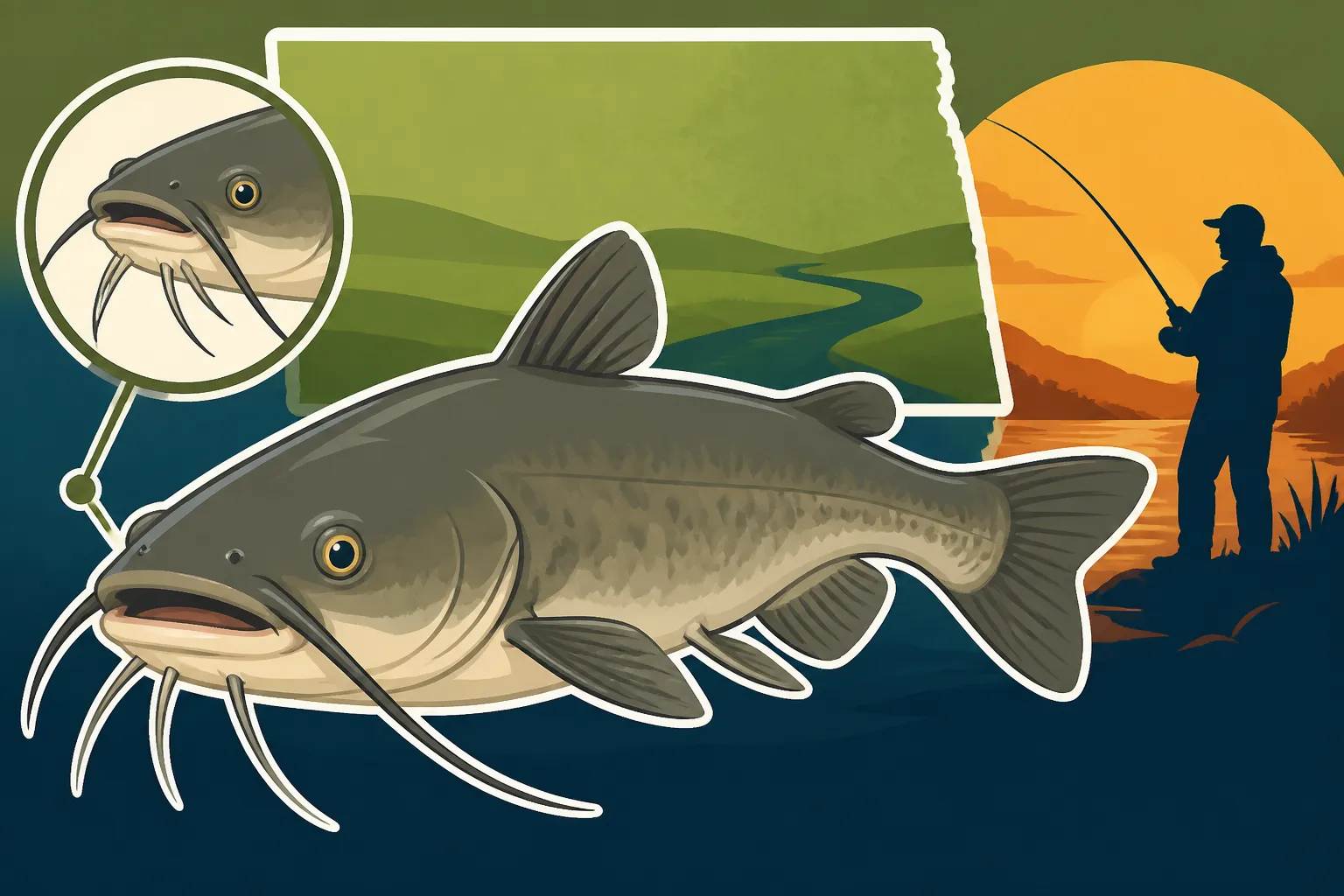
When you first pull a channel catfish out of the water, you'll immediately notice its sleek, streamlined body. Unlike some of its chunkier cousins, the channel cat has a distinctly slender, almost torpedo-shaped physique, which makes it a powerful swimmer in strong currents like those found in the Missouri River. Their dorsal side (back) is often slightly arched, sloping down to a more flattened belly.
The most distinctive feature, and a dead giveaway, is its deeply forked tail, or caudal fin. This isn't just a slight indent; it's a pronounced, V-shaped fork that looks almost like two separate lobes. This forked tail is a key identifier that sets it apart from many other catfish species you might encounter. Look closely at the fins, too. Channel catfish possess sharp, rigid spines on their dorsal fin (the one on their back) and their pectoral fins (the ones behind their gills). These spines are a natural defense mechanism, and any experienced catfisherman will tell you to handle them with care! These spines can be pretty intimidating, and they're another excellent characteristic to help you confirm your identification. North Dakota Channel Catfish Fishing Guide delves deeper into where and how these magnificent fish are typically caught, giving you a better idea of their usual haunts.
Coloration and Markings
The color of a channel catfish can vary quite a bit depending on the water clarity, depth, and even their diet in a specific North Dakota lake or river. Generally, they exhibit a greenish-gray to silver-gray color on their back, fading to lighter sides, and a white or cream-colored belly. However, in murkier waters, they might appear darker, almost black, while in clear lakes, they can have a more golden or even olive tint.
What often seals the deal for identification, especially on younger or smaller channel catfish, are the distinct dark spots scattered across their sides and back. These spots are like freckles and are particularly noticeable on fish up to about 18-20 inches. As channel cats grow larger and age, these spots tend to fade and sometimes disappear entirely, which can make identifying older, larger fish a bit more challenging. However, even if the spots aren't prominent, the overall body shape and that iconic forked tail will remain. Think of it like a human losing their childhood freckles—the underlying features are still there. When you're browsing fishing gear on platforms like Amazon, you might notice various lures and baits designed with channel catfish in mind, often reflecting their typical coloration.
Barbels and Mouth Configuration
Now, let's talk about the whiskers! Catfish are famous for their barbels, and channel catfish are no exception. They typically have eight barbels around their mouth, which act like super-sensitive feelers, helping them locate food in murky water or low-light conditions. You'll find four barbels on their chin (two on each side) and two longer ones extending from the corners of their mouth, almost like prominent mustaches, along with two shorter ones on their snout. These barbels are usually dark, matching their body color, though they can be lighter underneath.
Their mouth is another important identification feature. Channel catfish have a terminal mouth, meaning it's located at the very front of their head, rather than pointing upwards or downwards. This mouth is fairly small compared to the size of their head, and it's equipped with rows of fine, sandpaper-like teeth rather than sharp, individual fangs. This smaller mouth and tooth structure are indicative of their scavenging and opportunistic feeding habits, allowing them to suck up smaller prey items like insects, crustaceans, and small fish from the bottom, or even gobble up a strategically placed piece of cut bait. Understanding their mouth structure can even inform your bait choices; for example, smaller hooks are often more effective. Best Bait for North Dakota Fishing explores various options that appeal to the channel cat's unique feeding style.
Distinguishing Channel Cats from Their Cousins
North Dakota waters are home to a few different types of catfish, and sometimes it can be a little confusing to tell them apart, especially when they're not fully grown. Knowing the key differences will help you correctly identify your catch and understand the specific regulations that apply.
Channel Catfish vs. Flathead Catfish
The flathead catfish is another prized species in North Dakota, particularly in the larger rivers like the Red River and the Missouri River. While both are "catfish," they have very distinct features. The most immediate difference, as the name suggests, is the head. Flathead catfish have a noticeably broad, flat head, resembling a shovel, while the channel catfish has a more rounded, streamlined head.
Beyond the head, look at the tail. Remember that deeply forked tail on the channel cat? The flathead catfish has a squared-off or slightly rounded tail, with little to no fork. This is a crucial distinction. Their body shape is also different; flatheads are much stockier and more robust than the slender channel cat. Coloration also provides clues: flatheads tend to be mottled yellow, brown, or olive with dark blotches, giving them a camouflaged appearance often described as "calico," and they generally lack the distinct spots of juvenile channel cats. Their lower jaw usually protrudes past the upper jaw, giving them a somewhat "bulldog" appearance, and their eyes are relatively small. These differences are significant enough that once you've seen both, you'll rarely confuse them. Flathead Catfish in North Dakota provides even more specific details on this powerful species.
Channel Catfish vs. Bullheads Black, Yellow, Brown
Bullheads are the smaller, stouter cousins of the channel catfish, and North Dakota has healthy populations of black, yellow, and brown bullheads. While they are all "catfish" and share the common barbels, their overall appearance is quite different from a channel cat. The most glaring difference is the tail: bullheads, regardless of species, have a rounded or slightly emarginate (notched, but not deeply forked) tail, completely lacking the deep fork of a channel catfish. This is your number one identification clue.
Bullheads also have much chunkier, more robust bodies for their length, often appearing almost barrel-shaped. Their heads are proportionally larger and broader than a channel cat's, and their eyes are often more prominent. Coloration varies by species: black bullheads are typically dark brown to black on their backs, yellow bullheads are yellowish-brown, and brown bullheads are mottled brown. None of them typically exhibit the distinct dark spots found on younger channel cats. The barbels on bullheads are also typically dark, often matching the body color, but they don't have the same elegant, long "mustaches" of a channel cat. So, if you catch a small, dark, stout catfish with a rounded tail, it's almost certainly a bullhead. Bullhead Fishing in North Dakota offers more insight into these feisty, widespread fish.
Channel Catfish vs. Shovelnose Sturgeon
This might seem like an odd comparison at first glance, but for anglers new to North Dakota's big rivers, especially where shovelnose sturgeon are present, a quick glance might cause momentary confusion due to their bottom-dwelling nature and somewhat armored appearance. However, the differences are truly stark. Shovelnose sturgeon are characterized by their flattened, shovel-like snout (hence the name) and a body covered in five rows of bony plates called scutes, rather than smooth skin. They don't have barbels in the same way catfish do; instead, they have four fringed barbels located in front of their mouth on the underside of their snout.
Their mouth is protractile and located on the underside of their head, designed for sucking up food from the bottom. Most importantly, sturgeon have a deeply heterocercal tail, meaning the upper lobe of the tail fin is much longer than the lower lobe, a feature completely unlike any catfish. While both are bottom feeders, the "prehistoric" look of the shovelnose sturgeon with its bony plates and unique snout is unmistakable once you've seen one. You won't find spots, forked tails, or the typical barbels of a channel catfish on a shovelnose sturgeon. Remember, sturgeon species like the shovelnose also have specific regulations and are often catch-and-release only, so correct identification is crucial. Shovelnose Sturgeon in North Dakota details their unique characteristics and conservation status.
Habitat and Behavior Clues for Identification
Knowing where and how channel catfish typically behave can often be as helpful as visual cues when it comes to identifying them. Their preferred environments and feeding habits are quite distinct, guiding you to areas where you're most likely to encounter them.
Preferred North Dakota Waters and Structure
Channel catfish are incredibly adaptable and can be found in a wide variety of North Dakota's waters, from large reservoirs to smaller lakes and, especially, major rivers. However, they definitely have their preferences. They thrive in warm, slow-moving to moderately flowing waters. In rivers like the Missouri River and the Red River, you'll find them congregating in deeper holes, current breaks, log jams, undercuts, and along the outside bends where the current has scoured out deeper channels. They love structure that offers shelter and ambush points.
On large reservoirs like Lake Sakakawea or Lake Oahe, they'll often be found near the old river channels, submerged timber, rocky points, and areas with submerged brush. Even in some of the smaller, shallower lakes, if there are deeper holes or abundant natural structure, channel cats will likely call it home. They aren't typically found in very clear, cold, or fast-moving trout streams, for example. Their preference for these specific types of aquatic habitats is a strong indicator of their presence. If you're fishing a deep, slow-moving section of a river with plenty of snags, your chances of hooking a channel cat are significantly higher than catching a different species. This knowledge can really help narrow down your identification when you feel that tell-tale tug on your line. You might even use a fish finder, available on Amazon, to locate these underwater structures where catfish prefer to hide.
Seasonal Movements and Feeding Habits
Channel catfish are opportunistic feeders, meaning they'll eat just about anything they can get their mouths on, from insects and small fish to crayfish, worms, and even decaying organic matter. Their keen sense of smell, aided by those barbels, allows them to find food even in low visibility. This is why many anglers use smelly baits or "stink baits" for channel cats.
Their activity levels and locations change with the seasons. In spring, after ice-out, they'll often move into shallower, warmer waters to feed actively before spawning. Post-spawn, usually in early to mid-summer, they'll spread out and continue to feed aggressively, often holding in deeper pools during the heat of the day and moving shallower to feed at dawn, dusk, or even throughout the night. Night Fishing Techniques for Catfish highlights how productive these nighttime excursions can be, as channel cats are primarily nocturnal feeders. As fall approaches and water temperatures cool, they'll often concentrate in deeper holes as they prepare for winter. During winter, their metabolism slows down, and they become less active, often resting in deep slack water, though they can still be caught through the ice in some areas. Understanding these seasonal movements and feeding preferences can give you a solid behavioral "clue" to aid in identifying your catch before you even lay eyes on it.
Age, Size, and Identifying Maturity
Just like us, fish change their appearance as they grow from juveniles to mature adults. Channel catfish are no different, and these changes can sometimes impact how easily you identify them.
Juvenile vs. Mature Channel Catfish Appearance
One of the most notable changes in channel catfish as they mature is the fading and eventual disappearance of those characteristic dark spots. A young channel cat, often under 20 inches, will typically have very pronounced spots on its sides and back. These spots are a key identifier for smaller fish. Think of it like a child's distinct birthmarks that might fade with age.
As the channel catfish grows into a larger adult, perhaps 25 inches and beyond, these spots usually become less distinct, often disappearing entirely, especially on very large, old fish. The coloration of larger adults also tends to darken, becoming a deeper olive, slate gray, or even brownish-black on the back, with a less pronounced contrast to their lighter belly. While the spots may vanish, the deeply forked tail remains a consistent and reliable identifier throughout their life stages. Additionally, very old, large channel cats can develop a somewhat "pot-bellied" appearance, losing some of the sleekness of their younger years, but their head and fin structures remain consistent.
Average Sizes and State Record Considerations
In North Dakota, channel catfish can reach impressive sizes, making them a sought-after trophy fish. While the average channel cat caught by anglers might be in the 2-10 pound range, fish exceeding 20 pounds are not uncommon, especially in the Red River, which is renowned for its giant channel cats. The state record for channel catfish in North Dakota is quite substantial, a testament to the quality of the fishery. When you're reeling in a monster cat, its sheer size might make you question if it's truly a channel cat or something else.
However, even a record-breaking channel catfish will still possess that tell-tale deeply forked tail, a relatively small mouth, and the typical placement of eight barbels. The lack of spots on a massive fish is perfectly normal and should not deter your identification. It just means you've caught a seasoned veteran of the North Dakota waters! Always check the latest regulations for size and creel limits, which can be found in the North Dakota Fishing Regulations Explained guide. Knowing these typical size ranges helps you gauge what to expect and further aids in confirming your identification when you land that once-in-a-lifetime fish.
Here’s a quick comparison of key identification features for common North Dakota catfish and sturgeon:
| Feature | Channel Catfish | Flathead Catfish | Bullheads (Black/Brown/Yellow) | Shovelnose Sturgeon |
|---|---|---|---|---|
| Tail Shape | Deeply forked | Square or slightly rounded | Rounded or slightly notched | Heterocercal (upper lobe longer) |
| Body Shape | Streamlined, slender | Stocky, robust | Stout, almost barrel-shaped | Elongated, covered in bony scutes |
| Head Shape | Rounded, moderately sized | Broad, flat, "shovel-like" | Broad, large, rounded | Flattened, shovel-like snout |
| Spots | Dark spots on juveniles (fade) | Generally no spots, mottled | No distinct spots | No spots |
| Mouth Position | Terminal (front) | Terminal, lower jaw often protrudes | Terminal | Inferior (underside), protractile |
| Barbels | 8, long, dark | 8, short, often pale/yellowish | 8, usually dark, shorter | 4, fringed, on underside of snout |
| Skin/Scales | Smooth, scaleless | Smooth, scaleless | Smooth, scaleless | 5 rows of bony scutes |
| Typical Habitat | Rivers, reservoirs, lakes; structure | Deep holes in large rivers, structure | Shallow, weedy lakes & slow rivers | Bottom of large rivers, strong currents |
Disclaimer
This article is for general informational purposes only and does not constitute professional advice. Laws, prices and regulations vary by location and change over time. Consult a qualified professional for guidance on your specific situation.