How to Identify a Hybrid Muskie in North Dakota
Have you ever reeled in a fish in North Dakota that looked like a muskie, but had stripes? Or maybe a pike, but it seemed… different? That moment of doubt at the boat ramp or on the ice can be truly frustrating. This comprehensive guide is here to clear up the confusion, helping you accurately identify a hybrid muskie in North Dakota, so you can confidently know what you've caught.
What Exactly Is a Hybrid Muskie?
When we talk about a hybrid muskie, we're really discussing a fascinating blend of two distinct species. It's not a new species, but rather a crossbreed that occurs naturally in some waters but is also actively stocked in others. Think of it like a mule – a cross between a horse and a donkey. In the fishing world, these hybrids bring together characteristics from both parents, often resulting in a unique and sought-after game fish.
Understanding the "Tiger Muskie" Nickname
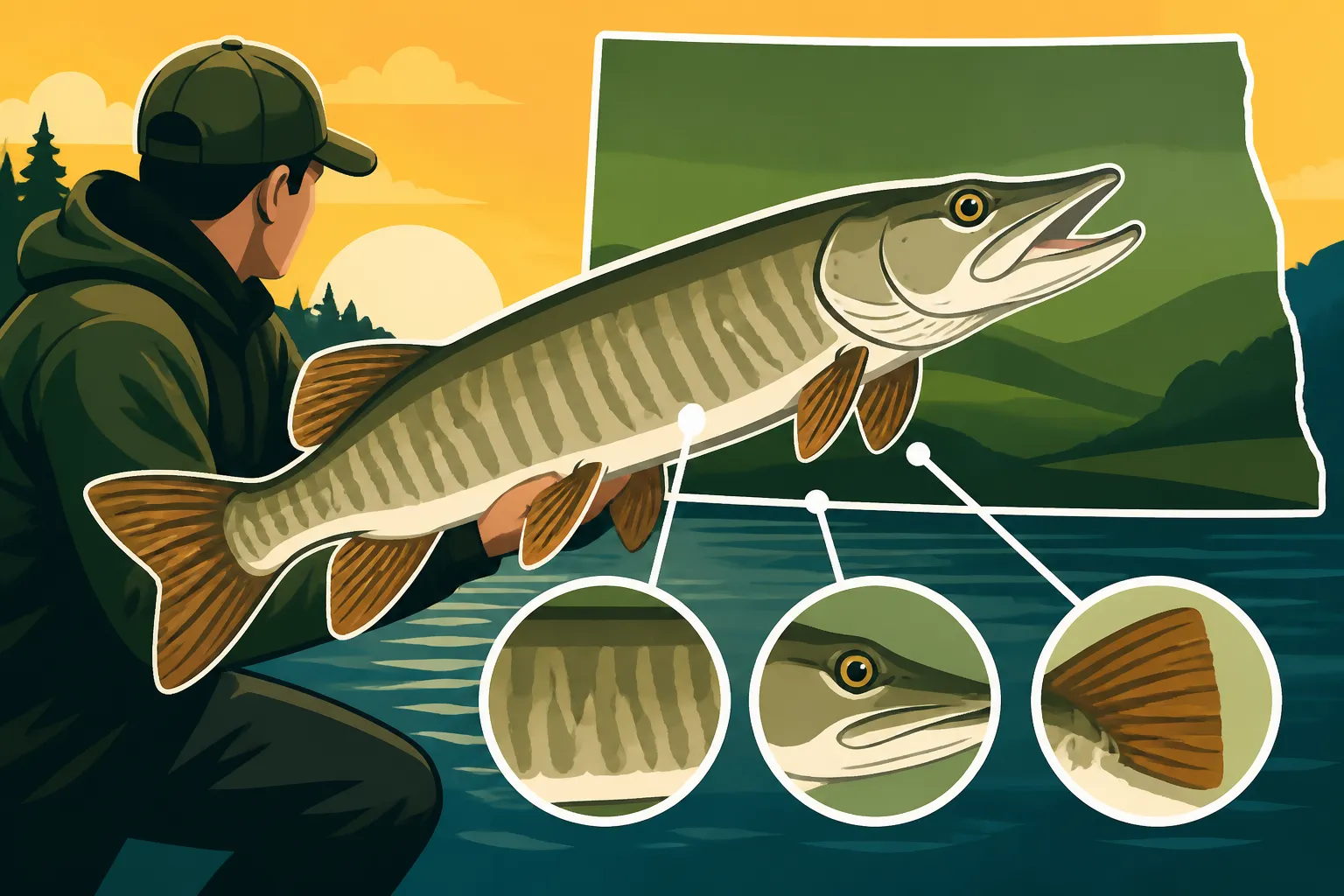
The term "hybrid muskie" is quite scientific, but you'll almost always hear anglers, guides, and even local bait shop owners refer to them by their much cooler nickname: "tiger muskie." This isn't just a catchy phrase; it perfectly describes their most striking visual characteristic – those dark, tiger-like stripes or bars running vertically or diagonally along their sides. These markings are usually quite distinct, contrasting sharply with their lighter, often greenish-gold or silver background. While purebred muskies can have spots, and northern pike have bean-shaped spots, the tiger muskie's pattern is usually unmistakable once you know what to look for.
How Hybrid Muskies Come to Be
Hybrid muskies are the offspring of a true muskellunge (often called a "muskie") and a northern pike. In North Dakota, these hybrids are often the result of intentional stocking programs by fisheries management agencies. They're typically sterile, meaning they can't reproduce, which has pros and cons. On the one hand, it means populations are entirely managed by stocking, preventing them from overpopulating. On the other, it means if a fishery is to have them, they must be continually stocked.
It's relatively rare for a muskie and a northern pike to successfully crossbreed in the wild due to differences in their spawning times and preferred habitats, though it can happen. However, in controlled hatchery environments, fisheries biologists can manually cross these two species to produce these unique fish for anglers to target. These hybrids often exhibit "hybrid vigor," meaning they can grow quite large and put up an incredible fight, making them a thrilling catch. You might find resources on Amazon that delve into the fascinating biology of various game fish, including how such hybrids are produced.
Key Identification Features of a Hybrid Muskie
Identifying a hybrid muskie can sometimes feel like solving a puzzle, especially if you're not intimately familiar with all three species (pike, muskie, hybrid). However, there are some very distinct clues that, once you know them, make the process much easier. It's all about looking at the right places on the fish.
Coloration and Pattern Differences
As mentioned, the most obvious tell-tale sign of a hybrid muskie is its distinctive pattern. Unlike the purebred muskie, which typically has spots, blotches, or clear sides, and the northern pike, which has lighter, horizontal, bean-shaped spots on a darker body, the hybrid muskie sports vertical or diagonal dark bars or stripes. These stripes are what give it the "tiger" moniker. The background color of a tiger muskie can vary from a light silver to a greenish-gold, but the dark stripes are usually quite pronounced and run from their back down towards their belly. However, coloration can sometimes vary with water clarity, diet, and even individual fish genetics, so it's wise not to rely solely on patterns. Always look for other key features.
Fins and Tail Characteristics
While not always definitive on their own, the fins and tail can offer supporting evidence when trying to identify your catch. All three fish—pike, muskie, and hybrid—have a dorsal fin and an anal fin set far back on their bodies, close to the tail, which is characteristic of the Esocidae family. This commonality makes them all powerful, ambush predators.
However, the shape of the caudal (tail) fin can sometimes be a subtle clue. Northern pike tend to have a slightly more rounded or truncated tail fin, while true muskies often have a more deeply forked or pointed tail. Hybrid muskies usually fall somewhere in the middle, displaying a moderately forked tail fin. This isn't a hard and fast rule, as tail shapes can vary slightly even within the same species, but it's another piece of the puzzle to consider.
Counting Pores: The Definitive Method
This is where the rubber meets the road for accurate identification. The most reliable way to distinguish between northern pike, purebred muskies, and hybrid muskies is to examine the pores on the underside of their lower jaw. These sensory pores, part of their lateral line system, are key.
Here’s the breakdown:
- Northern Pike: Will typically have 5 or fewer pores on each side of the lower jaw.
- Muskellunge (Purebred Muskie): Will typically have 6 or more pores on each side of the lower jaw.
- Hybrid Muskie (Tiger Muskie): This is where the "hybrid" part comes in – they usually exhibit a pore count that's intermediate, often 5 or 6 pores on each side. The key here is also to look at the scales on their cheek and gill cover, which we'll discuss next.
Counting these pores requires a keen eye and sometimes a small magnifying glass, which you can easily find on Amazon. Be gentle with the fish if you're performing this check while it's still in the water for release.
Distinguishing from Purebred Muskie and Northern Pike
The real challenge often comes down to differentiating between the three species. Many anglers have a story about thinking they caught a record pike, only to realize it was a smaller muskie, or vice versa! Understanding the subtle (and sometimes not-so-subtle) differences is crucial. I've often referred to the detailed descriptions in various guides, many of which are reviewed by anglers on Amazon, to hone my identification skills.
Muskie vs. Hybrid Muskie: Subtle Shades
Distinguishing a hybrid muskie from a purebred muskie can be the trickiest, as they share many characteristics. Both are long, predatory fish with sharp teeth.
The most reliable indicators are:
- Body Pattern: Purebred muskies tend to have dark spots, vertical bars, or blotches on a lighter background, or sometimes no distinct pattern at all (often described as "clear"). The hybrid muskie, as discussed, will have those distinctive dark, vertical or diagonal tiger stripes or bars on a lighter background.
- Cheek and Gill Cover Scalation: This is probably the most definitive way.
- Purebred Muskie: Both the upper half of the cheek and the upper half of the gill cover will be fully scaled. The lower halves will be bare.
- Hybrid Muskie: Typically has the upper half of the cheek fully scaled, but only the upper half of the gill cover is scaled, with the lower half being bare. It's often intermediate between a pike and a muskie.
Let's put this into a table for clarity:
| Feature | Northern Pike ( Esox lucius ) | Hybrid Muskie ( Esox masquinongy x lucius ) | Purebred Muskie ( Esox masquinongy ) |
|---|---|---|---|
| Body Pattern | Light spots on a dark background | Dark vertical/diagonal stripes on light background | Dark spots/bars/blotches on light background OR clear sides |
| Cheek Scalation | Fully scaled | Upper half scaled | Upper half scaled |
| Gill Cover Scalation | Fully scaled | Upper half scaled | Upper half scaled |
| Lower Jaw Pores | Typically 5 or fewer on each side | Typically 5 or 6 on each side | Typically 6 or more on each side |
| Tail Fin Shape | Slightly rounded to moderately forked | Moderately forked | Deeply forked or pointed |
Northern Pike vs. Hybrid Muskie: The Clearer Contrast
Distinguishing a hybrid muskie from a northern pike is generally a bit easier once you know what to look for. The differences are usually more pronounced.
- Body Pattern: Northern pike have light, bean-shaped or round spots on a darker green or olive background. Hybrid muskies, again, have those distinct dark, vertical stripes on a lighter background. This is often the first visual cue most anglers pick up on.
- Cheek and Gill Cover Scalation: This is another highly reliable indicator.
- Northern Pike: Both the entire cheek and the entire gill cover will be fully scaled. This is a major difference compared to hybrids and purebred muskies.
- Hybrid Muskie: As noted, they typically have the upper half of the cheek and the upper half of the gill cover scaled, with the lower halves being bare.
Remember that a fish's appearance can sometimes be misleading due to environmental factors, so always try to use multiple identification points rather than just one. This approach will give you the highest confidence in your identification. If you're really delving into identifying different fish, an actual North Dakota fishing regulations booklet, or specific fishing guidebooks, might be a worthwhile investment. Sometimes you can even find digital versions or detailed photos to assist with Northern Pike vs Muskie Identification.
Why Accurate Identification Matters
Knowing exactly what fish you’ve landed isn’t just about bragging rights (though those are nice!). It's vitally important for adhering to regulations, contributing to conservation efforts, and frankly, making your angling experience more informed and rewarding. North Dakota is home to some incredible fishing, and being a responsible angler starts with proper identification.
Compliance with North Dakota Regulations
This is probably the most critical reason for accurate identification. North Dakota has specific regulations for different fish species, covering everything from size limits to daily possession limits. For example, the daily limit for northern pike is often quite different from that for muskellunge (which includes hybrids). Keeping a fish you misidentified as a pike when it was a muskie (or vice-versa) could lead to legal trouble, including fines.
Understanding these distinctions is not just a suggestion; it's a requirement for every angler. Imagine landing what you think is a small northern pike, only to realize later it was an undersized muskie. The consequences could ruin your day, or even your fishing season. Always consult the most current North Dakota Fishing Proclamation, which outlines all the rules for species like northern pike and muskellunge. If you're specifically targeting pike, knowing the difference is especially important as you check the North Dakota Northern Pike Daily Limit or How Big Do Northern Pike Get in North Dakota?.
Contributing to Conservation Efforts
Beyond legal compliance, accurate identification plays a role in broader conservation efforts. Fisheries managers rely on accurate catch data, often collected through angler reports and surveys, to make informed decisions about stocking, habitat management, and regulation adjustments. If anglers consistently misidentify species, it can skew this data, potentially leading to less effective management strategies.
By correctly identifying and reporting your catches, especially rare or hybrid species, you provide valuable information that helps maintain healthy fish populations for future generations. It's a way for every angler to be a citizen scientist and contribute to the well-being of North Dakota's aquatic ecosystems. Learning about the Fish Species Found in North Dakota Lakes and Rivers helps foster this understanding.
Personal Angling Records and Stories
Finally, let's not forget the personal satisfaction that comes with knowing your catch. Whether you're tracking your personal bests, participating in a fishing club, or simply sharing your stories with friends and family, accurate identification makes your fishing tales more credible and enjoyable. It also adds a layer of depth to your understanding of the aquatic world.
Imagine telling the story of the massive "tiger muskie" you caught on Lake Sakakawea, proudly showing a photo that clearly displays its distinctive stripes and not the spots of a purebred muskie. That level of detail and confidence enhances the memory and allows you to truly appreciate the unique fish you encountered. From the moment you pick out your Best Fishing Rods for North Dakota Anglers to the moment you land a fish, the journey is all part of the story. Ultimately, understanding every fish on the Complete List of Game Fish Species in North Dakota adds to the richness of the North Dakota fishing experience.
Disclaimer
This article is for general informational purposes only and does not constitute professional advice. Laws, prices and regulations vary by location and change over time. Consult a qualified professional for guidance on your specific situation.