Shovelnose Sturgeon in North Dakota
It's easy to overlook some of the more unique fish species that swim in North Dakota's waters, especially when the walleye bite is hot or those giant Red River cats are calling. But for those who appreciate the ancient and the truly special, the shovelnose sturgeon presents an incredible opportunity and a fascinating story. This guide is dedicated to shedding light on this remarkable native fish, its habitat, and how anglers can respectfully interact with it in our great state.
Understanding the Shovelnose Sturgeon: North Dakota's Ancient River Dweller
When you think about fishing in North Dakota, your mind probably jumps to walleye, perch, or northern pike. But lurking in the depths of our major rivers are living fossils – the sturgeon. Among them, the shovelnose sturgeon is perhaps the most accessible and truly captivating. These aren't your average fish; they've been around for millions of years, largely unchanged, and they offer a glimpse into a primordial aquatic world.
A Living Fossil in Our Waters
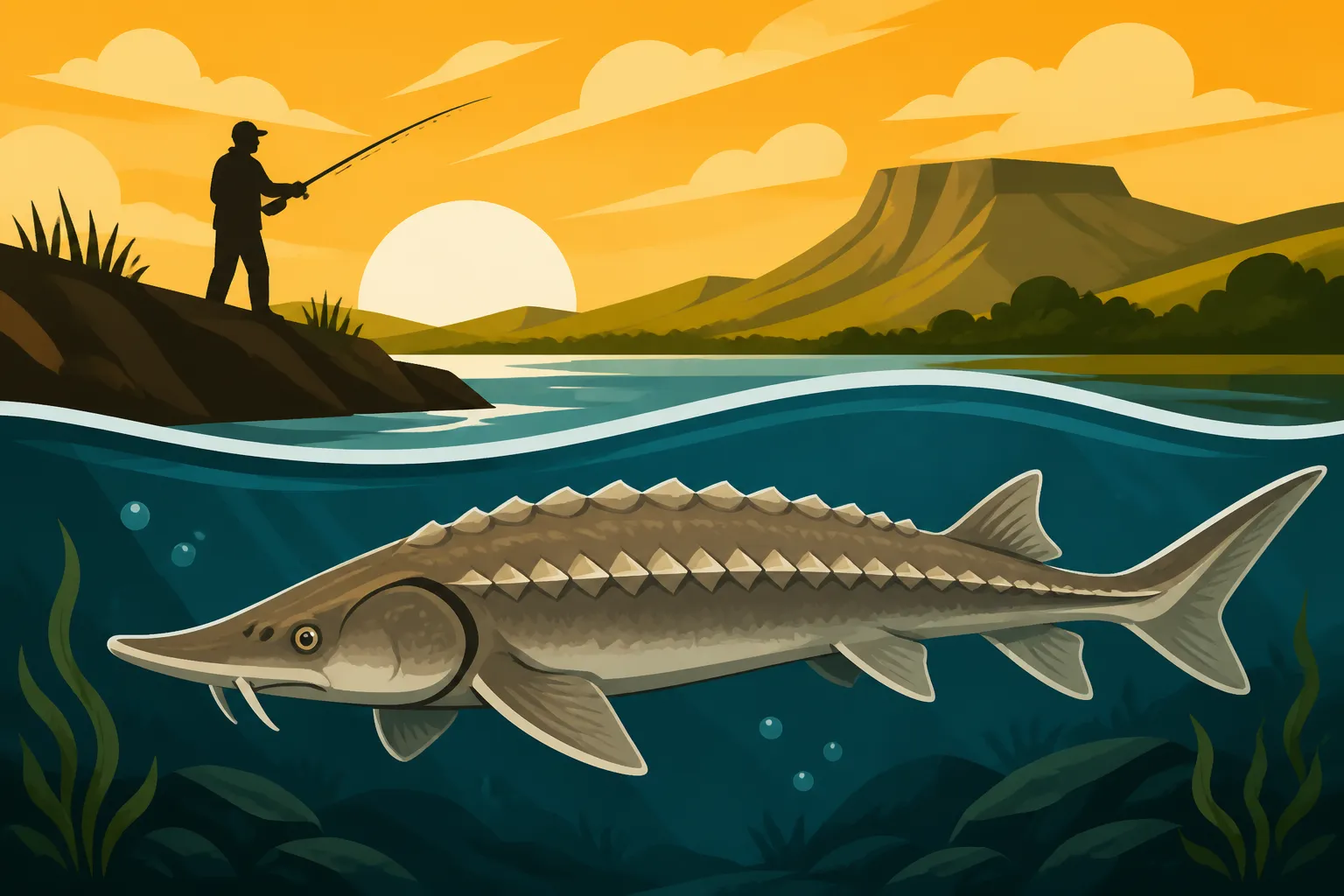
The shovelnose sturgeon is North Dakota's smallest and most abundant sturgeon species, but don't let "smallest" fool you; these fish are still substantial and incredibly powerful. They earned their name from their distinctive, flattened, shovel-like snout, which they use to root around the river bottom for food. Unlike many modern fish, their bodies aren't covered in scales but rather five rows of bony plates called scutes. It gives them a prehistoric, armored appearance, a true testament to their ancient lineage. Catching one feels like reeling in a piece of history, and it's an experience every North Dakota angler should try to have at least once.
Key Characteristics and Appearance
Identifying a shovelnose sturgeon is a lot of fun, and once you know what to look for, they really stand out. Beyond the shovel-like snout, one of their most telling features is the fringe of whiskers, or barbels, on the underside of their head. These four barbels are arranged in a straight line and are equal in length, acting like taste buds and feelers as they scour the riverbed. Their coloration is usually a sandy brown or olive green on top, fading to a lighter, often white or yellowish belly, which helps them blend in with the river bottom. Another important detail: the base of their tail fin is completely covered in bony plates, not smooth, which is a crucial differentiator from their larger, more imperiled cousin, the pallid sturgeon. We'll dive into that distinction more later, as it's vital for responsible angling.
Where to Find Shovelnose Sturgeon in North Dakota's Rivers
If you're looking to target shovelnose sturgeon, you'll need to head to North Dakota's major river systems. Unlike many game fish that thrive in lakes and reservoirs, shovelnose sturgeon are true river dwellers, preferring the flowing waters that mimic their ancestral homes. Knowing their preferred habitat is key to successfully finding these unique creatures.
The Mighty Missouri River and Its Tributaries
The Missouri River is undoubtedly the prime location for shovelnose sturgeon in North Dakota. From the Montana border all the way down to Lake Oahe, the river's main channel and its associated larger tributaries provide the ideal environment. These fish prefer areas with moderate to strong current, often congregating in deeper holes, scour areas, and along the edges of sandbars. They're bottom feeders, so they're always going to be where the current can bring them food, or where they can easily stir up invertebrates from the substrate. Focus your efforts in sections of the Missouri River Fishing Guide that describe deeper, channelized areas, especially those with sandy or gravelly bottoms. You might also find them in the lower stretches of significant tributaries like the Yellowstone River, which flows into the Missouri near Williston.
Habitat Preferences: Current, Depth, and Bottom Structure
Shovelnose sturgeon aren't picky about all aspects of their habitat, but they certainly have preferences. They thrive in turbid, fast-flowing waters, which means areas with a decent current are often productive. They're typically found in depths ranging from 5 to 25 feet, though they can certainly venture shallower or deeper depending on food availability and water temperatures. The key structural elements to look for are main channel runs, scour holes created by current, and the downstream sides of wing dams or sandbars where food tends to accumulate. These areas provide both refuge from the strongest currents and a buffet of their preferred diet of aquatic insects and small invertebrates. Using a detailed river map or a good fish finder to locate these specific bottom features will drastically improve your chances. You can often find excellent topographical maps for river sections on sites like Amazon.
Regulations and Conservation Efforts: Protecting North Dakota's Sturgeon
Fishing for shovelnose sturgeon is an exciting prospect, but it comes with a significant responsibility: understanding and adhering to the specific regulations designed to protect these ancient fish. This is especially critical because while shovelnose sturgeon are generally more common, they share their habitat with the federally endangered pallid sturgeon, and accidental encounters with the latter are a serious concern.
Shovelnose Sturgeon Fishing Regulations
In North Dakota, shovelnose sturgeon can be legally harvested, but strict rules are in place. These regulations cover things like length limits, daily limits, and possession limits. It's absolutely crucial to consult the most current North Dakota Fishing Regulations Explained booklet or the state Game and Fish Department website before you head out. These rules are designed to ensure sustainable populations and prevent overfishing. For example, there might be a slot limit, meaning you can only keep fish within a certain size range, or a minimum length that ensures younger fish have a chance to mature and spawn. Always measure your catch carefully, and if there's any doubt about its size or species, it's best to release it unharmed.
The Pallid Sturgeon: A Case of Mistaken Identity
This is where things get really important. The shovelnose sturgeon's close cousin, the pallid sturgeon, is a federally endangered species. Pallid sturgeon look very similar to shovelnose sturgeon, and differentiating them can be tricky, especially for an inexperienced angler. However, harvesting a pallid sturgeon, even accidentally, carries severe penalties. This is why the North Dakota Game and Fish Department urges anglers to immediately release all sturgeon that are not clearly identifiable as shovelnose sturgeon. The primary difference is often in size (pallids are typically much larger, growing over 5 feet), but also in the features we discussed: pallids have a longer, more slender snout, and their outer barbels are noticeably longer than their inner barbels, unlike the evenly spaced shovelnose barbels. Critically, pallids have a partially or completely scaleless (smooth) caudal peduncle (the narrow part of the body leading to the tail fin), whereas the shovelnose has bony plates covering this area. Anglers interested in sturgeon fishing should carry a copy of the official identification guide provided by the North Dakota Game and Fish Department, or at least have a clear image saved on their phone. This commitment to proper identification is a vital part of Pallid Sturgeon Recovery in the Missouri River. Knowing Is the Pallid Sturgeon Protected in North Dakota? will help you understand the gravity of the situation.
| Feature | Shovelnose Sturgeon (Legal to Harvest) | Pallid Sturgeon (Federally Endangered, Release Immediately) |
|---|---|---|
| Snout Shape | Shovel-like, broad, flattened | Longer, more slender, flattened |
| Barbels | 4, equal in length, in a straight line | 4, outer pair longer than inner pair, not in a straight line |
| Caudal Peduncle (tail base) | Covered in bony plates | Partially or completely scaleless/smooth |
| Size | Typically 18-30 inches, rarely over 3 feet | Typically 3-5 feet, can be larger, much thicker body |
| Coloration | Sandy brown/olive, lighter belly | Pale gray/white, often no blotches |
Fishing for Shovelnose Sturgeon: Techniques and Gear
Targeting shovelnose sturgeon isn't like casting for bass or trolling for walleye. These ancient bottom dwellers require specific approaches, but the good news is, they're generally not too finicky once you're in the right spot with the right bait. It's a surprisingly accessible form of fishing that many anglers find incredibly rewarding.
The Art of Bottom Fishing
Since shovelnose sturgeon are bottom feeders, your primary technique will be bottom fishing. This means using a rig designed to keep your bait anchored near the riverbed, where these fish are actively searching for food. A heavy pyramid or no-roll sinker, often between 2 to 6 ounces depending on the current, is essential to keep your bait from washing away. Attach this sinker to a Carolina rig or a three-way swivel setup. For the Carolina rig, slide your sinker directly onto your main line, then tie on a barrel swivel, followed by a fluorocarbon or monofilament leader (12-24 inches) and a strong hook. For the three-way swivel, tie your main line to one eye, a short leader (6-12 inches) with your sinker to another, and a longer leader (12-24 inches) with your hook to the third. This setup keeps your bait near the bottom but allows it to move somewhat naturally in the current, which can be very appealing to a hungry sturgeon.
Bait and Tackle Choices for Sturgeon
When it comes to bait, shovelnose sturgeon aren't usually gourmet eaters; they're scavengers. Their natural diet consists of aquatic insect larvae, worms, and small crustaceans. Therefore, tough, natural baits that stay on the hook well are your best bet. Nightcrawlers, especially a big wad of them, are a classic choice. Cut bait, such as pieces of sucker, smelt, or shad, can also be very effective, giving off scent that attracts sturgeon. Many anglers also have success with shrimp, particularly those that have been allowed to "stink" a bit. You can find many of these bait options at local bait shops, or even on Amazon for things like shrimp. For hooks, you'll want strong, sharp, circle hooks ranging from size 1/0 to 4/0. Circle hooks are fantastic for sturgeon because they tend to hook the fish in the corner of the mouth, reducing the chance of deep hooking, which is crucial for ethical catch-and-release, especially if you encounter a pallid sturgeon. A stout spinning or baitcasting rod in the medium-heavy to heavy power range, paired with a reel spooled with 20-30 pound monofilament or braided line, will give you the backbone needed to handle these powerful fish in current. Best Fishing Rods for North Dakota Anglers will provide more insight into suitable setups.
Identification and Similar Species: Avoiding Confusion on the River
Proper identification of fish is always important, but when dealing with sturgeon in North Dakota, it's absolutely paramount. As we've discussed, the presence of the endangered pallid sturgeon makes correctly identifying your catch a legal and ethical necessity. Beyond that, even telling a shovelnose from another type of river fish can be a fun challenge.
Distinguishing Shovelnose from Pallid Sturgeon
The differences between shovelnose and pallid sturgeon might seem subtle at first glance, but they are critical. Think of it as a checklist to run through when you land a sturgeon.
- Size: Shovelnose sturgeon are almost always smaller, typically under 30 inches, though larger ones are caught. Pallid sturgeon are always much larger, often over 3 feet and very thick-bodied. If it's a giant, it's most likely a pallid.
- Snout: The shovelnose has a blunt, wide, "shovel-like" snout. The pallid's snout is generally longer, narrower, and more pointed.
- Barbels: This is a key one. On a shovelnose, the four barbels underneath the snout are all roughly equal in length and arranged in a straight line. On a pallid, the two inner barbels are significantly shorter than the two outer barbels, and they are not always perfectly aligned.
- Caudal Peduncle (Tail Base): This is another definitive feature. The shovelnose will have bony plates covering the entire area between the dorsal fin and the tail fin. A pallid sturgeon will have a smooth, scaleless, or only partially plated caudal peduncle.
Always remember: when in doubt, let it out! If you're not 100% certain it's a shovelnose, quickly and gently release the fish. North Dakota Fishing Regulations Explained will always emphasize this point for species protection.
Other Bottom Dwellers: Distinguishing from Catfish or Carp
While it's highly unlikely you'd mistake a sturgeon for a channel catfish or carp once you see their distinctive bony plates, it's worth noting the differences. Channel catfish, a popular species in the Red River of the North Fishing Guide, have smooth skin, barbels around their mouth, and a deeply forked tail. Carp (like common carp or silver carp) have large scales, a single dorsal fin, and often have barbels near their mouth, but they lack the prominent scutes and elongated body shape of a sturgeon. The unique appearance of the shovelnose sturgeon, with its armored body and unique snout, truly sets it apart from all other Fish Species Found in North Dakota Lakes and Rivers.
The Importance of Shovelnose Sturgeon in North Dakota's Ecosystem
Beyond being a unique target for anglers, shovelnose sturgeon play a vital role in the ecological health of North Dakota's river systems. They are indicators of river health and an integral part of the food web, representing a connection to a much older, wilder time. Understanding their ecological contributions further solidifies the need for responsible angling and conservation.
Ecological Role in River Health
Shovelnose sturgeon are primarily bottom feeders, acting as natural "vacuum cleaners" of the riverbed. They consume a variety of benthic invertebrates, including insect larvae, worms, and mollusks. This feeding behavior helps to cycle nutrients within the river ecosystem and can even help control populations of certain bottom-dwelling organisms. As a native species, they have evolved over millennia to fit perfectly into the dynamic environment of the Missouri River and its tributaries, contributing to the overall biodiversity and stability of these crucial aquatic habitats. They are a significant part of what makes our river systems so rich and complex.
Conservation and Future Outlook
While shovelnose sturgeon are not federally endangered like their pallid cousins, they are still considered a species of conservation concern in various parts of their range due to habitat alteration, impoundments (dams), and water quality issues. In North Dakota, active management by the Game and Fish Department ensures that populations remain healthy and that angling opportunities can continue. This involves ongoing research, habitat protection, and, critically, those fishing regulations we discussed, which manage harvest levels and educate anglers about species identification. Every angler who takes the time to learn about and correctly identify sturgeon is contributing directly to the conservation efforts for both shovelnose and pallid sturgeon. Our collective responsibility helps ensure that these fascinating, ancient fish will continue to thrive in North Dakota for generations to come. Your fishing license and the associated fees also directly contribute to these vital programs, reinforcing the importance of obtaining your North Dakota Fishing License Guide.
Disclaimer
This article is for general informational purposes only and does not constitute professional advice. Laws, prices and regulations vary by location and change over time. Consult a qualified professional for guidance on your specific situation.