Best Size Chinook Salmon to Keep
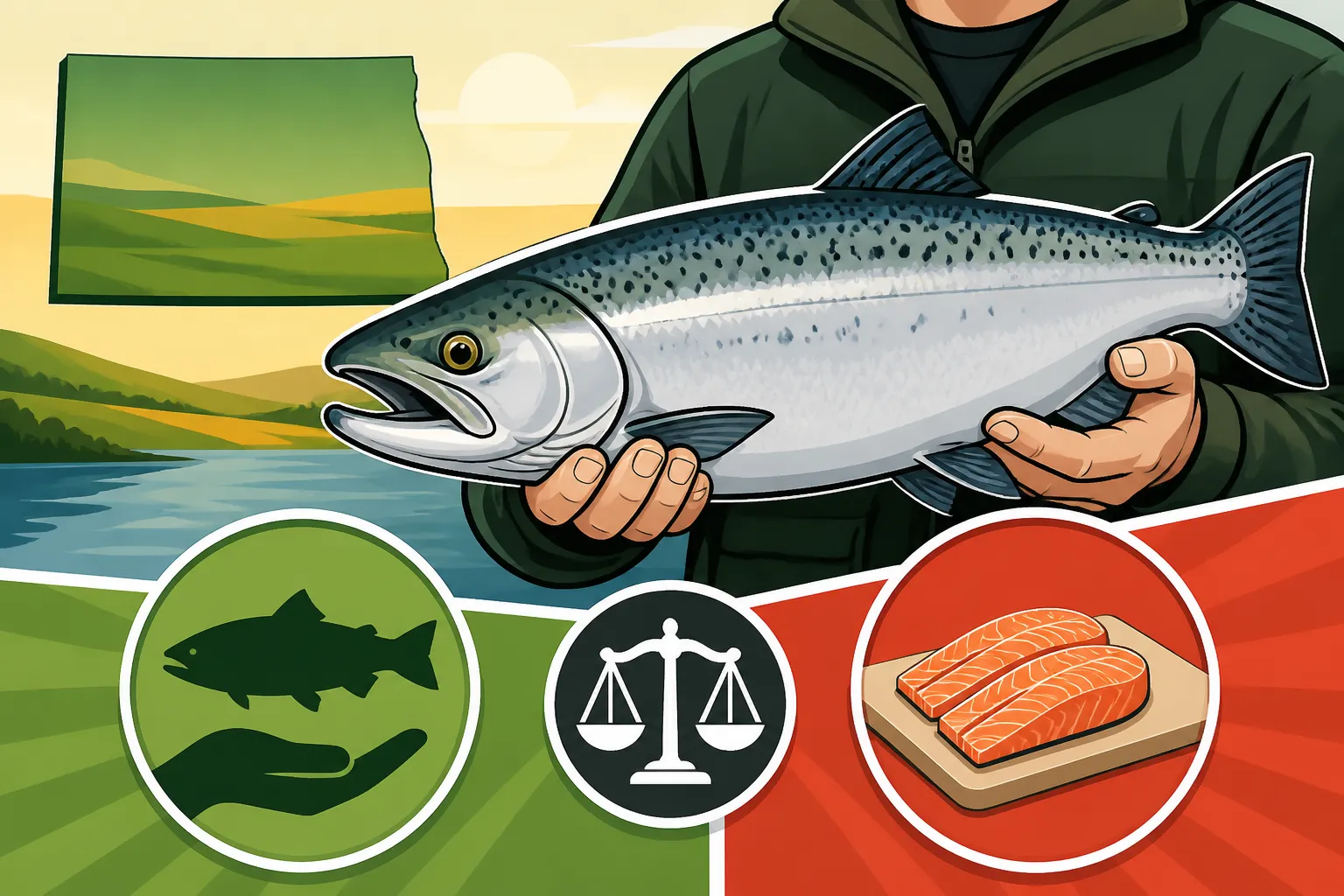
After a thrilling battle on Lake Sakakawea, you've finally landed a beautiful Chinook salmon. The adrenaline is pumping, but then the practical questions hit you: "Can I keep this one? Is it a good size to take home for dinner, or should I let it go?" It's a common dilemma, and one that every angler faces. This guide is here to walk you through everything you need to know about determining the best size Chinook salmon to keep in North Dakota, balancing legal requirements, eating quality, and the health of our amazing fishery.
Navigating North Dakota's Chinook Salmon Regulations
The first and most critical step in deciding whether to keep your Chinook salmon is understanding the current North Dakota fishing regulations. These rules are in place for a reason – to ensure the sustainability of the fishery for generations to come. It’s not always about just catching a fish; it’s about being a responsible steward of our natural resources.
Understanding Daily and Possession Limits
North Dakota, particularly the expansive waters of Lake Sakakawea, is home to a robust Chinook salmon fishery. These regulations can change periodically, so always, always, always check the most recent proclamation from the North Dakota Game and Fish Department before you head out. Don't rely on memory or what your buddy told you last year. What might have been legal then could be different now.
For Chinook salmon, there are usually specific daily limits, meaning the maximum number of fish you can harvest in a single day. There's also often a possession limit, which is the total number of fish you can have on hand, whether at home, in your vehicle, or at your cabin. This prevents anglers from accumulating large quantities over several days. The goal is to distribute the harvest fairly among all anglers and protect the overall population. You can dive deeper into all the rules with our North Dakota Fishing Regulations Explained guide.
Specific Size Restrictions for Chinook Salmon
While many species in North Dakota have length limits – some minimum, some maximum, and some slot limits – Chinook salmon regulations have historically focused more on daily and possession limits rather than specific length restrictions. This isn't to say there will never be a length restriction, but it's important to differentiate it from other species like walleye or pike that often have strict length rules.
Instead, the "best size" for Chinook salmon often comes down to individual angler preference, influenced by factors like desired eating quality or the pursuit of a true trophy. Always remember to review the North Dakota Chinook Salmon Regulations specifically before your trip to Lake Sakakawea, as these large water bodies are often subject to specific rules.
What Defines the "Best Size" Beyond Legalities?
Once you've confirmed that your Chinook salmon is legally catchable, the question of "best size" becomes a bit more personal. There are several factors to consider beyond just the regulations, influencing whether you decide to put that fish in the cooler or gently release it.
Eating Quality and Fillet Yield
Many anglers agree that there's a sweet spot for eating quality when it comes to Chinook salmon. Younger, smaller salmon often have a milder flavor and a more delicate texture, making them fantastic for grilling or baking. As salmon grow larger, their fat content can increase, leading to a richer flavor, but sometimes the texture can become coarser, especially in very large, older fish.
- Smaller Salmon (e.g., 20-25 inches): These are often considered prime eating fish. They have a good fat-to-meat ratio, cook beautifully, and provide nice, manageable fillets. If you're looking for a few delicious meals, these are fantastic to keep.
- Mid-Size Salmon (e.g., 25-30 inches): Still excellent eating. These fish provide substantial fillets and often retain that desirable texture and flavor. They're a favorite for many anglers who want both good eating and a decent amount of meat to take home.
- Larger Salmon (e.g., 30+ inches): While still edible, some anglers find that very large, older Chinook salmon can have a slightly different flavor profile or texture. However, the sheer volume of meat makes them attractive for smokers or for sharing with a big group. The decision here often comes down to how much meat you want and how you plan to prepare it.
Consider how much fish you actually need for your meals. Are you feeding a small family or hosting a large gathering? This will help you decide if keeping one larger fish or a couple of smaller ones makes more sense.
The Pursuit of a Trophy Fish
For many, the "best size" isn't about what tastes best, but what represents a significant angling achievement. Lake Sakakawea is known for producing some truly massive Chinook salmon, and landing a trophy-class fish is a dream for many. These are the fish that might end up on your wall or in your photo album, immortalizing a memorable catch.
A trophy Chinook salmon in North Dakota is typically one that pushes the upper limits of size for the species, often exceeding 30 pounds and well over 30 inches. If you're out specifically targeting a fish for a potential state record or just a personal best, then the "best size" is simply the biggest one you can legally land. It's a different mindset than just filling the cooler. You can learn more about these impressive fish in our North Dakota Chinook Salmon Fishing Guide.
Supporting the Fishery and Selective Harvest
Even without explicit size limits, responsible anglers practice selective harvest. This means choosing which fish to keep and which to release, with the health of the overall fishery in mind. If you've already kept a few fish for dinner, and you catch another mid-sized one, but then land a smaller, healthy fish, you might consider releasing the smaller one to grow larger, especially if you don't need the extra fillets.
The North Dakota Game and Fish Department does a fantastic job with Chinook Salmon Stocking Numbers in North Dakota to maintain this vibrant fishery. By practicing selective harvest, we all play a part in ensuring there are plenty of salmon for future generations of anglers. It's a long-term investment in our shared passion.
Practicalities of Measuring and Handling Your Catch
Once you've hooked a Chinook, knowing how to properly measure it and handle it, whether for release or retention, is vital. Quick and careful handling minimizes stress on the fish and ensures you stay within legal bounds.
Accurate Measurement Techniques
When you land a fish that's close to any potential size limit, or you're just curious about its dimensions, accurate measurement is key.
- Lay Flat and Straight: Always lay the fish flat on a measuring board or tape. Don't try to measure it while it's flopping around or held vertically, as this can lead to inaccurate readings and potentially injure the fish.
- Nose to Tail: For length, measure from the tip of the jaw (with the mouth closed) to the end of the tail, with the tail pinched to give the maximum measurement. A good, flexible measuring tape, often found on Amazon or at local sporting goods stores, is indispensable. Make sure it's clearly marked and easy to read.
- Wet Hands/Gloves: If you intend to release the fish, wet your hands thoroughly before handling it. Better yet, use wet cotton gloves. This protects the fish's delicate slime coat, which is its primary defense against infection.
- Minimize Out-of-Water Time: The less time a fish spends out of the water, the better its chances of survival upon release. Have your measuring device ready and work quickly.
Remember, if there's any doubt about whether a fish meets a minimum size limit, it's always best to err on the side of caution and release it.
Proper Care for Keepers
For those magnificent Chinook salmon you decide to keep, proper care immediately after the catch is essential to maintain the best eating quality. A mishandled fish can quickly degrade in flavor and texture.
- Ike Jime or Quick Kill: The most humane and quality-preserving method is to dispatch the fish quickly and cleanly. The Ike Jime technique, which involves spiking the brain, followed by bleeding, is highly recommended for preserving meat quality. If you're not familiar with Ike Jime, a firm blow to the head will stun the fish, followed by bleeding it out by cutting a gill arch.
- Bleeding: Bleeding your fish immediately helps to improve the flavor and extends its shelf life. Cut a gill arch or the throat latch and allow the fish to bleed out in cool water or a slushy ice bath. This removes blood from the flesh, which can otherwise contribute to a "fishy" taste.
- Ice, Ice Baby: Get your Chinook onto ice as quickly as possible. This stops bacterial growth and preserves the texture. Invest in a quality cooler, many excellent options are available on Amazon, to ensure your catch stays perfectly chilled, ideally in an ice-slush mixture which cools the fish down faster than just ice cubes. Avoid just tossing them on dry ice; direct contact can freezer burn the skin.
- Cleanliness: Keep your cooler clean and your fish separate from other items. This prevents cross-contamination and ensures the best quality fish for your table. For further reading, check out Best Coolers for Keeping Fish Fresh.
Catch and Release Best Practices
Sometimes, you'll catch a legal-sized Chinook, but for various reasons – maybe you've already filled your limit, you're targeting a bigger fish, or you simply want to contribute to the conservation efforts – you'll decide to release it.
- Barbless Hooks: Consider using barbless hooks, or crimping down the barbs on your hooks. This makes hook removal much easier and less damaging to the fish.
- Minimize Handling: Try to keep the fish in the water as much as possible. Use a rubber-coated net to cradle the fish gently.
- Tool Usage: Have long-nosed pliers or a hook remover readily available. These tools allow you to quickly and safely remove hooks, especially if the fish is deeply hooked, without putting your fingers too close to sharp teeth.
- Revive the Fish: If the fish seems sluggish after the fight, hold it gently in the water, facing into the current (if any), and allow water to flow over its gills until it regains strength and swims off on its own. Never throw a lethargic fish back; give it time to recover.
By following these practices, you ensure that the fish you release have the best chance of survival and can continue to contribute to the healthy Lake Sakakawea fishery. For those times you do keep a fish, having the right tools like a good fillet knife, often found with great reviews on Amazon, makes cleaning a breeze once you're back home.
The Lake Sakakawea Chinook Salmon Fishery
Lake Sakakawea is a truly remarkable body of water, and its Chinook salmon population is a testament to careful management and excellent habitat. Understanding a bit about this unique fishery helps put those size decisions into perspective.
Chinook Salmon's Role in Lake Sakakawea
Chinook salmon are not native to North Dakota; they were introduced to Lake Sakakawea to create a unique recreational fishing opportunity and to help manage the lake's abundant population of smelt, their primary food source. These salmon are cold-water fish, and Lake Sakakawea, being a deep, cold reservoir formed by the Missouri River, provides the perfect environment for them to thrive.
The lifecycle of these salmon in Lake Sakakawea is fascinating. They typically spend several years growing fat on smelt before maturing. Unlike Pacific salmon that return to rivers to spawn and then die, Lake Sakakawea Chinook often don't have natural spawning success in the lake's tributaries. Therefore, the North Dakota Game and Fish Department actively stocks the lake with young salmon each year to maintain the fishery. This continuous stocking is why anglers can enjoy such consistent opportunities to catch these powerful fish. If you're planning a trip, be sure to check out Lake Sakakawea Chinook Salmon Fishing for more insights.
General Guidance on Chinook Salmon Size
While there aren't specific size limits for Chinook salmon, the general consensus among experienced anglers tends to lean towards retaining fish that are mature enough to offer a good fight and provide a decent meal, without necessarily targeting the absolute largest "broodstock" fish if the goal is purely consumption.
Here's a general table that might help you consider your options:
| Size Category (Approx.) | Typical Weight (Approx.) | Eating Quality Assessment | Trophy Potential | Conservation Impact |
|---|---|---|---|---|
| Under 20 inches | Under 5 lbs | Delicate / Lean | Low | High (release to grow) |
| 20-25 inches | 5-10 lbs | Excellent, tender | Low-Medium | Moderate (good for harvest) |
| 25-30 inches | 10-20 lbs | Rich, firm flesh | Medium | Moderate (good for harvest) |
| 30-35 inches | 20-30 lbs | Very rich, large fillets | High | Lower (consider C&R for brood) |
| 35+ inches | 30+ lbs | Rich, large fillets | Very High | Lowest (prime broodstock) |
This table provides a general framework. Remember, personal preference plays a huge role. If you want a lot of fillets for a big smoker, a 30-inch fish is going to give you a great yield. If you just want a fresh dinner for two, a 22-inch salmon is perfect.
The "best size" Chinook salmon to keep is ultimately a balance. It's about respecting the regulations, considering your personal needs, and being a good steward of North Dakota's incredible fishing resources. Whether you're trolling for these beauties or looking for specific fishing techniques, our Chinook Salmon Trolling on Lake Sakakawea guide has more information. And don't forget to keep an eye out for any aquatic nuisance species, always cleaning your boat thoroughly, as explained in How to Clean Your Boat to Stop Zebra Mussels, after every outing to protect our waters.
Disclaimer
This article is for general informational purposes only and does not constitute professional advice. Laws, prices and regulations vary by location and change over time. Consult a qualified professional for guidance on your specific situation.