Best Reel Size for Walleye Jigging
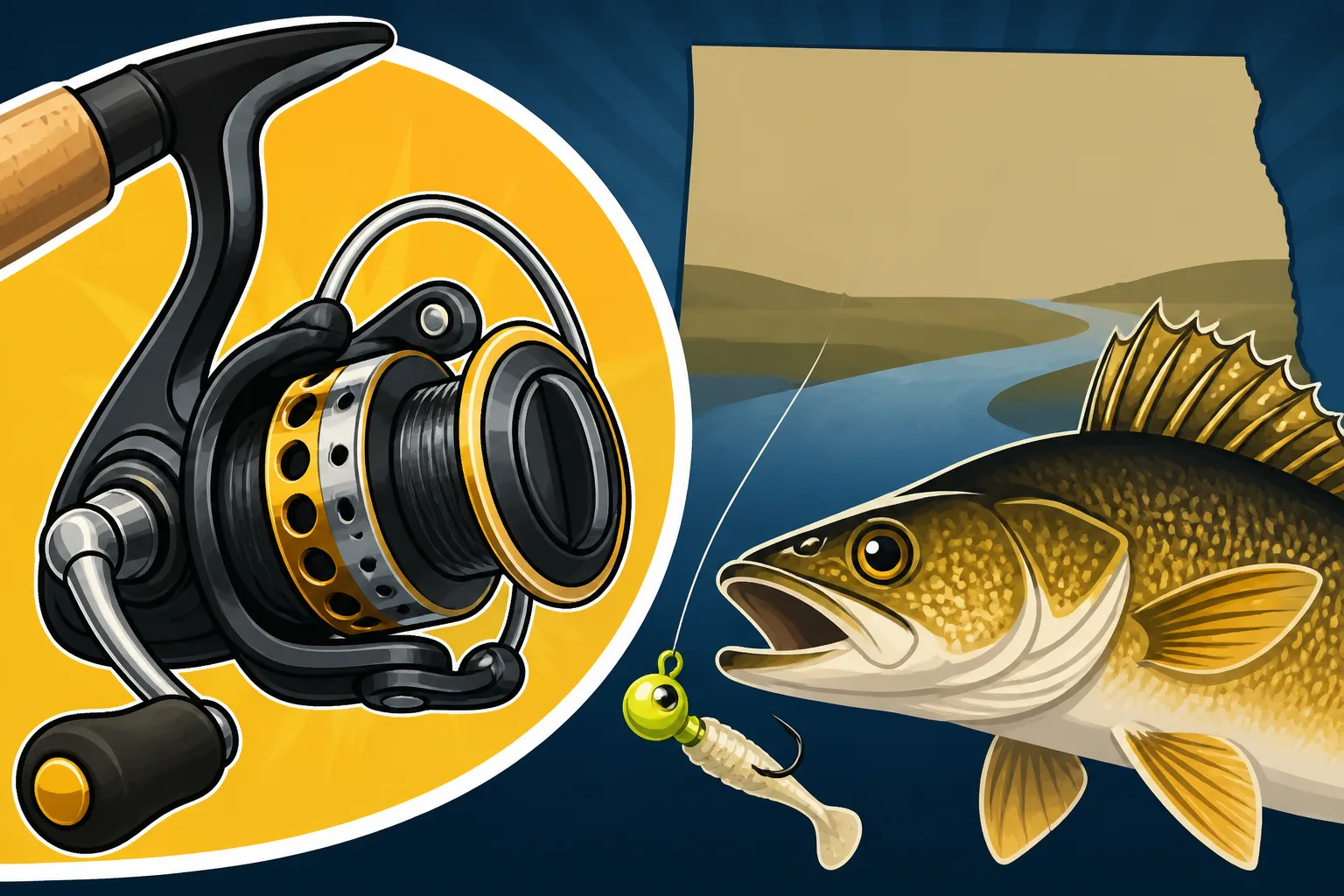
Choosing the right reel size for walleye jigging can feel like an endless puzzle, especially when you're staring at a wall of options at the tackle shop or scrolling through hundreds of listings online. Many anglers struggle with picking a reel that perfectly balances sensitivity, power, and comfort for those delicate walleye bites, often ending up with something too bulky or too flimsy. This comprehensive guide will break down everything you need to know about spinning reel sizes for walleye jigging, helping you find that sweet spot for optimal performance on North Dakota's legendary waters.
Understanding Reel Sizes: What Do the Numbers Mean?
Before we dive into the specifics of walleye jigging, it's really important to understand what those numbers on a reel actually mean. It's not just some random manufacturing code; these numbers give you a quick snapshot of the reel's general size, line capacity, and sometimes its intended use. Think of it like shoe sizes – you wouldn't try to cram your foot into a shoe three sizes too small, nor would you want to clomp around in something massive for a light jog.
Decoding Spinning Reel Numbers (1000, 2000, 2500, etc.)
For spinning reels, which are overwhelmingly popular for walleye jigging, the numbers typically range from 500 up to 10,000 or even higher. The most common sizes you'll see for freshwater applications usually fall between 1000 and 4000. Generally, the smaller the number, the smaller and lighter the reel.
- 1000-2000 Series: These are considered ultralight to light reels. They're compact, weigh very little, and are designed for lighter lines (like 2-6lb mono or thin braids) and smaller lures. While they might seem tiny, they offer incredible sensitivity, which is a huge advantage when walleyes are being finicky. They also reduce fatigue significantly when you're making hundreds of casts and retrieves in a day.
- 2500-3000 Series: This is often the sweet spot for many freshwater anglers, including those targeting walleye. These reels offer a good balance of line capacity, drag power, and retrieve speed without being overly heavy or bulky. You can comfortably spool them with 6-10lb mono or a wider range of braided lines, making them versatile for various jig weights and fishing conditions.
- 4000 Series and Up: Once you get into these larger sizes, you're looking at reels designed for heavier lines, larger fish, or situations where you need to cast much heavier lures over long distances. While they have more brute strength, they start to lose the finesse and balance crucial for effective walleye jigging. Trying to jig with a 4000 series reel all day would be like trying to write a delicate letter with a jumbo crayon – possible, but not ideal.
It's also worth noting that while manufacturers try to standardize these numbers, there can be slight variations. A "2500" from one brand might feel a little different than a "2500" from another, so it's always good to pick it up and feel it if you can, especially when pairing it with your rod.
Casting Reel Considerations (Low Profile vs. Round)
While spinning reels dominate the walleye jigging scene, especially for lighter presentations, some anglers do prefer baitcasting reels for specific jigging techniques. These are a different beast entirely when it comes to sizing.
- Low-Profile Baitcasters: These are compact and fit comfortably in your hand, designed for precise casting and comfortable palming. For jigging, especially with heavier jigs or when fishing in strong currents where you need more line control and power, a low-profile baitcaster can be effective. They don't typically use the same numerical sizing system as spinning reels, but instead are often categorized by their line capacity and the power they can handle. You're looking for something that can comfortably cast jigs in the 3/8 to 3/4 ounce range and handle 10-20lb braided line.
- Round Baitcasters: These are generally larger, older-style baitcasting reels, often associated with muskie or heavy catfishing. They offer immense line capacity and brute strength but are usually too heavy and lack the finesse required for typical walleye jigging. For the most part, you can leave these out of your walleye jigging considerations unless you're specifically targeting massive walleye with extremely heavy presentations in very deep water, and even then, a robust spinning setup often does the trick.
For the purpose of this guide, we'll focus primarily on spinning reels, as they are the go-to choice for the vast majority of walleye jigging scenarios in North Dakota.
The Goldilocks Zone: Ideal Reel Sizes for Walleye Jigging
Finding the "just right" reel size for walleye jigging is about achieving balance – balance in weight, balance in power, and balance in sensitivity. You want a reel that feels like an extension of your arm and rod, not a cumbersome weight or a fragile toy. In North Dakota, where walleye can be found in a variety of environments from the vastness of Lake Sakakawea Fishing Guide for North Dakota Anglers to the timbered depths of Devils Lake Fishing Guide for North Dakota Anglers, having the right setup makes all the difference.
Why Smaller Reels (1000-2000) Shine for Light Jigs
When walleyes are finicky, or you're fishing in shallower water with lighter jigs (1/8 to 1/4 ounce), a smaller reel in the 1000 or 2000 series can be an absolute game-changer. These reels are incredibly light, which significantly reduces arm fatigue over a long day of casting. This might sound minor, but after hundreds of casts and subtle twitches, a few ounces can feel like pounds.
The lighter weight also means increased sensitivity. You'll feel those subtle "ticks" or the almost imperceptible weight changes when a walleye inhales your jig. Imagine fishing on a calm morning on Lake Audubon, slowly working a light jig along a rocky shoreline. With a smaller reel, you'll be able to detect the slightest resistance, giving you a crucial edge in hooking those cautious fish. These reels typically hold plenty of 4-6 lb monofilament or 6-10 lb braided line, which is ample for most walleye. The smaller spool also helps to reduce line twist when using lighter lines.
Stepping Up to Mid-Size Reels (2500-3000) for Versatility
For many North Dakota walleye anglers, the 2500 to 3000 series spinning reel is the workhorse, offering a fantastic blend of versatility and power. This size range is often considered the most balanced for general walleye jigging, particularly when you're using jigs in the 1/4 to 1/2 ounce range or dealing with slightly larger fish.
- Increased Line Capacity and Drag: A 2500 or 3000 reel provides more line capacity, which can be reassuring when you hook into a larger walleye that decides to make a long run, especially in open water on bigger systems like the Missouri River Fishing Guide. They also offer a stronger, smoother drag system, which is vital for tiring out those bigger fish without snapping your line.
- Better for Heavier Jigs and Currents: If you're using heavier jigs (3/8 to 1/2 ounce) to get down in deeper water or to fight stronger currents, such as below the Garrison Dam, a mid-size reel provides the backbone you need. The slightly larger handle and rotor can also make retrieving heavier jigs feel less strenuous.
- Broader Line Options: These reels accommodate a wider range of lines, from 8-10 lb mono to 15-20 lb braided line, giving you flexibility depending on conditions and target species. For instance, if you're chasing walleye on the deeper breaks of Lake Sakakawea, you might opt for a 10-15 lb braid for better sensitivity and casting distance with heavier jigs, and a 2500-3000 reel handles this perfectly.
This reel size is truly the jack-of-all-trades for walleye jigging, capable of handling most situations you'll encounter. It's often what I recommend to friends who are looking for a single, reliable setup.
When Bigger Reels Are Too Much (and Why)
While it might seem logical to "overpower" your setup with a larger reel, sizes 4000 and up are generally overkill for walleye jigging and can actually hinder your performance.
- Loss of Sensitivity: Larger reels are inherently heavier. This added weight dulls the sensitivity of your entire rod and reel setup. When you're trying to feel the subtle "thump" of a walleye inhaling a jig, every ounce matters. A heavy reel will mask those faint signals, leading to missed bites, especially on slow days or when fish are light-biting.
- Increased Fatigue: Imagine holding a heavy reel and rod combination, casting and retrieving hundreds of times a day. Your arm and wrist will quickly tire out. Fatigue not only makes fishing less enjoyable but also leads to sloppier presentations and reduced focus, costing you fish.
- Poor Balance: A larger reel will throw off the balance of your fishing rod. A well-balanced setup has the pivot point just forward of the reel seat, meaning the rod doesn't feel tip-heavy or butt-heavy. An oversized reel will make the entire combo feel butt-heavy, forcing your wrist to compensate, which again, contributes to fatigue and makes precise jigging motions difficult. This is especially true when you're trying to perform intricate vertical jigging maneuvers where control is paramount.
- Unnecessary Power: Walleye, while strong, rarely require the brute force offered by a 4000 series reel, which is often designed for heavier saltwater applications or species like northern pike or salmon. The drag systems on smaller, quality reels are more than sufficient for even trophy walleye. You're better off relying on a smooth drag and proper fish-fighting technique than an oversized reel. For tackling those really big northern pike, you'd likely opt for a different setup entirely.
So, while more power sounds appealing, for walleye jigging, it's often a case where less is more when it comes to reel size.
Factors Influencing Your Reel Size Choice for Walleye Jigging
Choosing the best reel size isn't just about picking a number; it's about considering the entire ecosystem of your fishing experience. The location, the target fish, your jig presentation, and even your rod choice all play a crucial role. This interconnectedness is part of the fun (and frustration!) of fishing, but understanding it helps you make informed decisions.
Target Walleye Size and Location
North Dakota is blessed with incredible walleye fisheries, from the sprawling expanse of Lake Sakakawea to the unique flooded timber of Devils Lake. The characteristics of these bodies of water and the size of the walleye they hold can influence your reel choice.
- Bigger Water, Bigger Fish? On large, open waters like Lake Sakakawea or the Missouri River, walleye can grow to impressive sizes, and they have plenty of room to run once hooked. If you're specifically targeting these larger, more powerful fish, or if strong currents are a constant factor, a reel towards the upper end of the "mid-size" range (say, a 3000 series) might give you a bit more confidence. It offers that extra bit of line capacity and drag to handle powerful runs. However, even trophy walleye can be landed on a 2500 series reel with proper technique and a smooth drag.
- Smaller Lakes and Finesse: Conversely, if you're fishing smaller, calmer lakes or targeting average-sized walleye where a more delicate approach is needed, a 1000 or 2000 series reel might be perfect. Imagine fishing a smaller reservoir like Jamestown Reservoir where the walleyes aren't typically giants, but they can be incredibly cautious. Here, the ultralight feel and sensitivity of a smaller reel truly pay off. Understanding How Fishing Seasons Vary by Species in North Dakota can also inform your choices, as fish behavior and size expectations can change throughout the year.
Ultimately, while location can lean you one way or another, it rarely necessitates going beyond the 3000 series for walleye jigging unless you're truly in an extreme scenario.
Jig Weight and Line Type
The weight of the jigs you plan to use and the type of fishing line you prefer are perhaps the most direct influences on your reel size decision. The entire system needs to work in harmony.
- Ultralight Jigs (1/16 – 1/8 oz): If your primary technique involves tiny jigs for shallow water or exceptionally light bites, a 1000 or 2000 series reel is almost mandatory. These lighter jigs cast better on lighter line, and a smaller reel handles thin diameter lines (like 4-6 lb fluorocarbon or thin braid) more effectively, reducing coils and tangles. Trying to cast a 1/16 oz jig with a 3000 series reel and heavy line would be a frustrating exercise in futility.
- Standard Jigs (1/4 – 1/2 oz): This is the bread and butter for most walleye jigging. For these weights, the 2500-3000 series reels are ideal. They can comfortably spool 6-10 lb monofilament or fluorocarbon, or 10-20 lb braided line. Braided line, with its lack of stretch and thin diameter, is especially popular for jigging due to its incredible sensitivity. Best Fishing Line for North Dakota Lakes often involves braid, and these reels handle it well. The slightly larger spool diameter on these mid-size reels also allows for longer casts with these common jig weights and helps to manage braided line better than much smaller spools.
- Heavy Jigs (5/8 oz +): While less common for typical jigging, if you're fishing extremely deep water or battling very strong currents requiring jigs heavier than 1/2 oz, a 3000 series reel would be the minimum, perhaps pushing into a slightly larger frame for maximum power and line capacity. However, at this point, you might also consider if a baitcasting setup would be more efficient for these heavier presentations.
Matching your reel to your line and jig weight ensures smooth casting, efficient retrieval, and maximum feel.
Rod Pairing and Balance
A reel is only half of the equation; it needs to be perfectly matched with your fishing rod to create a balanced, effective system. This balance is critical for sensitivity and comfort when jigging.
- The Importance of Balance: When you pick up a rod and reel combo, it should feel well-balanced in your hand. Typically, the balance point should be just forward of where your hand grips the reel seat. If it feels too heavy towards the tip, your wrist will fatigue trying to hold it up. If it's too heavy towards the butt, you lose some of that crucial tip sensitivity. A light rod needs a light reel, and a slightly heavier rod can handle a slightly heavier reel.
- Common Rod Power and Lengths: Most walleye jigging rods are in the 6'6" to 7'6" range, with medium-light to medium power.
- For a medium-light power, fast action rod (ideal for lighter jigs and finesse presentations), a 1000 or 2000 series reel will typically provide the best balance. This light setup makes it incredibly easy to impart subtle action to your jig and feel those faint bites.
- For a medium power, fast action rod (a versatile choice for standard jigging), a 2500 or 3000 series reel will usually be the most balanced and effective. This combination handles a wider range of jig weights and can put more pressure on larger fish. Best Fishing Rods for North Dakota Anglers would often include these types of rods.
- The "Feel" Test: The absolute best way to determine if a rod and reel are balanced is to put them together in your hand. If possible, visit a tackle shop like Bass Pro Shops and try different reel sizes on your specific rod, or a similar model. If buying online from Amazon, read reviews that mention reel pairings for specific rods. This "feel" is subjective but incredibly important for your comfort and jigging effectiveness.
A perfectly paired rod and reel will minimize fatigue and maximize your ability to feel even the slightest tap, ultimately leading to more hooked walleyes.
Brands and Features to Look For
Once you've narrowed down the ideal reel size range for your walleye jigging adventures, it's time to consider the quality and features that will make the biggest difference on the water. Not all reels are created equal, and a few key components can significantly impact performance and durability, especially when you're out battling the elements and fish in North Dakota.
Key Features Beyond Size
Beyond the numerical size, several features define a spinning reel's quality and suitability for walleye jigging:
- Drag System: This is paramount. A smooth, consistent drag is non-negotiable for walleye fishing. You want a drag that engages without hesitation and releases line evenly under pressure, preventing line breaks when a big walleye makes a sudden run. Carbon fiber drag washers are often preferred for their smoothness and heat dissipation. Test the drag by pulling line off the spool – it should be consistent, not jerky.
- Gear Ratio and Retrieve Rate: The gear ratio tells you how many times the spool rotates for every single turn of the handle. For walleye jigging, a medium-to-fast gear ratio (e.g., 5.0:1 to 6.2:1) is generally preferred. This allows for quick line pickup, which is essential for staying in contact with your jig, setting the hook swiftly, and reeling in slack after a cast or when a fish swims towards you. A reel with a high retrieve rate is also great for rapidly moving between spots or retrieving your jig quickly to check bait.
- Bearings: More bearings can mean a smoother reel, but quality over quantity is key. Look for reels with stainless steel ball bearings, ideally 5+1 (five ball bearings and one anti-reverse bearing). The anti-reverse bearing is particularly important for jigging, as it eliminates back play in the handle, giving you instant hook sets and better feel for subtle bites.
- Construction Material: Reels made with lightweight, corrosion-resistant materials like graphite or aluminum are ideal. Aluminum frames offer rigidity and strength, while graphite can be lighter. For North Dakota fishing, especially if you're venturing out on Ice Fishing Lakes in North Dakota, durability and resistance to harsh conditions are big plusses.
- Line Management: Look for features like a "braid-ready" spool that prevents braided line from slipping, and a smooth line roller that reduces line twist. Good line lay on the spool ensures even casting and retrieval.
Quality vs. Cost: Finding Your Sweet Spot
Let's be real, fishing gear can get expensive, and it's easy to get caught up in the hype of top-tier reels. However, you don't always need to break the bank to get a high-performing reel for walleye jigging.
- Entry-Level Options: For beginners or those on a tighter budget, many reputable brands offer excellent entry-level reels in the 2000-3000 size range that perform admirably. These might have fewer bearings or use slightly less premium materials, but they're still perfectly capable of catching walleye. You can often find great deals on platforms like Amazon or check the specific brands offered at stores like Bass Pro Shops.
- Mid-Range Performers: This is where you'll find the best value for many anglers. Reels in the mid-range price point often incorporate many of the advanced features of their high-end counterparts without the hefty price tag. They offer excellent durability, smooth drags, and good sensitivity, making them a wise investment for a dedicated walleye angler.
- High-End Precision: If you're a serious angler who spends a lot of time on the water and demands the absolute best in sensitivity, durability, and lightest weight, then a high-end reel might be worth the investment. These reels are often packed with advanced technology, feather-light components, and incredibly refined drag systems. They are built to last and provide a noticeable difference in feel and performance.
The key is to prioritize the features that matter most for walleye jigging: a smooth drag, good anti-reverse, and a balanced feel with your rod. You can find excellent options across all price points if you focus on these core elements. Don't be afraid to read reviews and ask experienced anglers for their recommendations – you'll often find a consensus on reliable models that punch above their weight class.
Walleye Jigging Reel Size Comparison
To help you visualize the choices, here's a quick comparison of common spinning reel sizes and their ideal applications for walleye jigging in North Dakota. This table is a general guide, and personal preference always plays a role!
| Reel Size | Ideal Jig Weight Range | Typical Line Class (Braid/Mono) | Key Benefits | Best For | Considerations |
|---|---|---|---|---|---|
| 1000 | 1/16 oz – 1/4 oz | 6-10 lb Braid / 4-6 lb Mono | Maximum sensitivity, ultralight, minimal fatigue | Finesse jigging, calm waters, light bites, shallow water | Limited power for larger fish, smaller line capacity |
| 2000 | 1/8 oz – 3/8 oz | 8-12 lb Braid / 6-8 lb Mono | Excellent balance of sensitivity & power, light | Versatile light jigging, slightly heavier jigs, small-med walleye | Good all-rounder, but can feel underpowered for heavy current |
| 2500 | 1/4 oz – 1/2 oz | 10-15 lb Braid / 8-10 lb Mono | All-around versatility, good power & capacity | Most common walleye jigging, various conditions, mid-size-trophy walleye | Can feel a bit heavy for ultra-finesse, less sensitive than 1000/2000 |
| 3000 | 3/8 oz – 5/8 oz | 15-20 lb Braid / 10-12 lb Mono | More power, greater line capacity, stronger drag | Deeper water, heavier jigs, strong currents, larger walleye on bigger water | Can be heavy, sacrifices some finesse for power |
Remember, this isn't a strict rulebook but a guide to help you find the reel that feels "just right" for your specific jigging style and the conditions you'll face on North Dakota's incredible fishing grounds. A well-chosen reel, perfectly paired with your rod, can elevate your walleye jigging success and make every bite, from a subtle tap to an aggressive strike, an unforgettable experience.
Disclaimer
This article is for general informational purposes only and does not constitute professional advice. Laws, prices and regulations vary by location and change over time. Consult a qualified professional for guidance on your specific situation.