Monofilament vs Braided Line for Ice Fishing
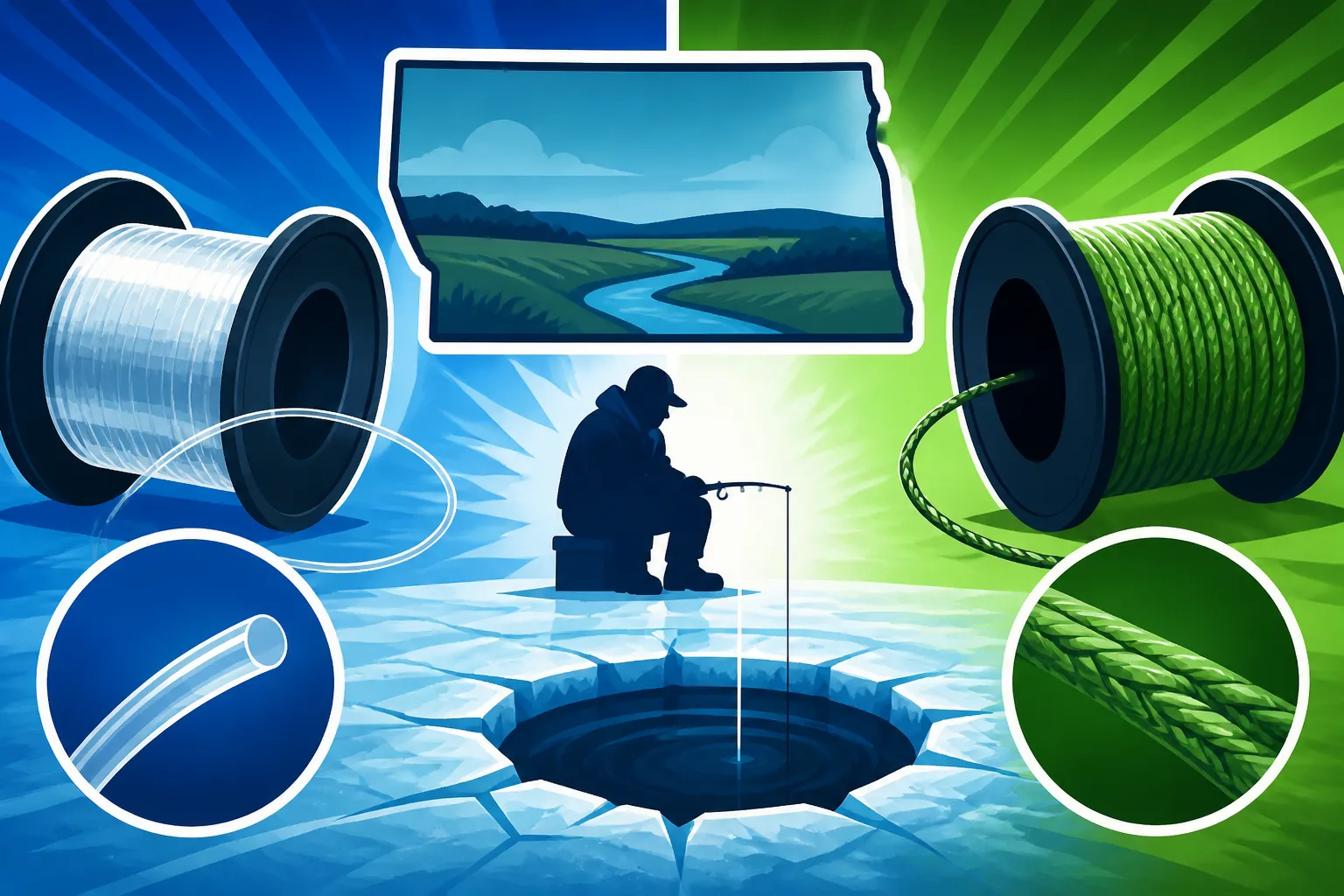
There’s nothing quite like the crisp air and serene solitude of a North Dakota winter day, especially when you're out on the ice, waiting for that subtle twitch that signals a bite. But let's be real, many of us have stood there, shivering, wondering if our line choice is costing us those precious fish. The eternal debate of monofilament versus braided line for ice fishing can feel like a mind-bender, especially when conditions are tough. This guide is here to break down the nuances, advantages, and drawbacks of both options, helping you make an informed decision so you can spend less time second-guessing and more time reeling in your next catch.
Understanding Monofilament Line for Ice Fishing
Monofilament, often just called "mono," has been the old faithful for anglers for generations, and for good reason. It’s essentially a single strand of nylon, extruded and stretched to create a strong, flexible line. For ice fishing, where you're often dealing with specific challenges like cold, clear water, and often finicky fish, mono offers some distinct benefits.
The Benefits of Monofilament in Cold Conditions
One of the biggest advantages of monofilament line in freezing temperatures is its handling. Unlike some other line types, mono tends to remain more supple and manageable in the cold. It doesn't absorb water, which means it's far less prone to freezing solid on your reel spool or collecting ice on your rod guides. Imagine trying to jig with a stiff, ice-laden line – it’s not just frustrating, it severely impacts your presentation and sensitivity. This smooth handling makes for effortless deployment and retrieval, which is key when your fingers are already numb.
Beyond handling, monofilament offers a good degree of stretch. While this might seem like a disadvantage at first glance, especially when trying to detect light bites, it actually acts as a fantastic shock absorber. When a feisty walleye or a big northern pike decides to make a sudden run or thrash its head at the hole, that stretch helps cushion the blow, preventing hooks from tearing out of soft mouths and reducing the chance of breaking off. It's like having a little extra give in your system, which can save a lot of heartbreak, especially if you're using light tackle for species like perch.
Drawbacks and Considerations for Monofilament
Of course, mono isn't without its quirks, particularly when fishing through a small hole in the ice. The primary drawback often cited is its stretch. While beneficial for cushioning, it can significantly reduce sensitivity, making it harder to feel those incredibly light "ghost" bites that are so common on slow ice fishing days. Imagine a tiny perch just barely mouthing your bait; with a stretchy mono, that subtle tap might never translate up to your hand. This is why many experienced anglers choose to use lighter, faster rods when fishing with mono to try and compensate for some of that lost feel.
Another factor is memory. Monofilament tends to retain the shape of the spool, especially when it's been spooled on for a while or left in cold conditions. This can lead to annoying coils and twists, making it harder to get a perfectly straight presentation, which is crucial for enticing wary fish in clear ice water. These coils can also make it tangle more easily, turning a potentially productive bite window into a frustrating knot-tying session. Regular line changes or using a high-quality, low-memory mono specifically designed for cold weather can help mitigate this issue. For a deep dive into keeping your gear ready, check out How to Winterize Fishing Gear After the Season.
Exploring Braided Line for Ice Fishing
Braided line, woven from multiple strands of synthetic fibers like Spectra or Dyneema, has revolutionized many forms of fishing, and ice fishing is no exception. Its properties are almost the polar opposite of monofilament, offering a completely different set of advantages and challenges when fishing through the ice.
The Power of Braided Line: Sensitivity and Strength
The absolute standout feature of braided line is its near-zero stretch. This means unparalleled sensitivity. Every subtle tick, every delicate take, every bump on the bottom is transmitted directly up your line and through your rod to your hand. For anglers targeting finicky panfish like perch or crappie, or those who want to feel every nuance of their jigging rap, braid is a game-changer. You'll often detect bites you never would have felt with monofilament, leading to more hooksets and, hopefully, more fish on the ice. This increased sensitivity is a huge advantage, particularly when trying to locate fish schools using electronics, as it helps you discern between a snag and an actual bite.
Beyond sensitivity, braided line boasts incredible strength-to-diameter ratio. This means you can use a much thinner line for the same breaking strength as monofilament. A thinner line cuts through the water with less resistance, allowing your lures to sink faster and providing a more natural presentation. It also means you can spool more line onto your reel, which can be useful if you hook into a really big fish in deep water. The lack of stretch, combined with its robust construction, also gives braided line exceptional knot strength, provided you use the right knots, which can be a learning curve for some. Many anglers rely on braided line for its cutting power against thick weed lines, making it easier to pull through heavy cover, although this is less common directly under the ice hole.
Challenges and Solutions with Braided Line on Ice
While braid's advantages are compelling, it comes with a couple of significant hurdles for ice anglers. The first, and often most frustrating, is its tendency to freeze. Because braided line is made of multiple fibers, it absorbs water, and that water freezes solid in cold temperatures. This can lead to a stiff, unmanageable line that sticks to your spool, makes casting or dropping difficult, and can even cause issues with your reel's drag system. It can also collect ice on your rod guides, hindering line flow and sensitivity. This is especially true on extreme cold days or when there's a lot of slush around your hole.
To combat freezing, many ice anglers employ a few strategies. One common method is to use a monofilament or fluorocarbon leader, typically 3-5 feet long, tied to the braided main line. The mono/fluoro leader doesn't absorb water and helps keep ice off your lure and the immediate line near the hole. Another popular trick is to apply a silicone-based line conditioner or even a small amount of Vaseline to the braided line on your spool and the first few feet of line you'll be fishing. This creates a barrier against water absorption. You can find specialty line conditioners at most outdoor retailers or even on Amazon.
Another challenge is visibility. Braided lines are often brightly colored (though some come in muted tones), and in clear ice water, fish can be wary of highly visible line. This is where the fluorocarbon or monofilament leader really shines. Fluorocarbon, in particular, is nearly invisible underwater, providing a stealthy presentation that won't spook finicky fish. When fishing for species like walleye or panfish that are known to be line-shy, a clear leader is almost essential when using braid. Consider reading Best Fishing Line for North Dakota Lakes to understand more about overall line choices.
Factors to Consider When Choosing Your Ice Fishing Line
The decision between monofilament and braided line isn't a one-size-fits-all answer; it truly depends on what and how you're fishing. North Dakota's diverse fisheries, from the sprawling Lake Sakakawea Fishing Guide for North Dakota Anglers to the famous Devils Lake Fishing Guide for North Dakota Anglers, present different scenarios that might favor one line type over the other.
Target Species and Fishing Style
The type of fish you're after plays a huge role. If you're primarily targeting jumbo yellow perch on Devils Lake, where bites can be incredibly subtle and often occur in deep water, the sensitivity of braided line with a fluorocarbon leader is often preferred. You need to feel that faintest "tick" to be successful. Similarly, for crappie or bluegill, braid's sensitivity can dramatically increase your catch rates.
However, if you're chasing large northern pike or walleye, particularly with heavier baits or tip-ups, monofilament might be a perfectly suitable, even preferred, choice. For tip-ups, where the flag does the bite detection, line stretch isn't a concern, and mono's resistance to freezing and abrasion against the ice can be an advantage. For active jigging for walleye, some anglers still prefer mono for its shock absorption, especially when using lighter jigs where a quick head shake from a good walleye could break a less forgiving braided setup. North Dakota Walleye Fishing Techniques discusses jigging in more detail.
| Feature | Monofilament (Mono) | Braided Line (Braid) |
|---|---|---|
| Stretch | High (15-25%) – acts as a shock absorber | Near Zero (3-5%) – high sensitivity |
| Sensitivity | Low – harder to feel subtle bites | High – transmits every bump and bite |
| Visibility | Clear or colored – generally low visibility in clear | Visible (often colored) – requires a leader in clear water |
| Freezing | Low water absorption, less prone to freezing on reel/guides | High water absorption, prone to freezing on reel/guides |
| Abrasion Res. | Moderate – can fray on sharp ice | High – very tough against rough edges |
| Knot Strength | Good, easy to tie many knots | Excellent, but requires specific knots (e.g., Palomar, Uni) |
| Memory | High – prone to coiling, especially in cold | Low – lays flat, less prone to coiling |
| Diameter | Thicker for given strength | Thinner for given strength |
| Cost | Generally less expensive | Generally more expensive |
Water Clarity and Depth
North Dakota's ice fishing lakes can vary wildly in clarity. Lakes like parts of Lake Sakakawea can be quite clear, while others might be more turbid. In clear water, line visibility is a crucial factor. If you're using braid, a long, clear fluorocarbon leader becomes almost non-negotiable to prevent spooking fish. Fluorocarbon's refractive index is very close to water, making it virtually invisible. For options, you can often find a good selection of specialized fluorocarbon leader material at any Bass Pro Shops or similar outdoor outfitter.
Depth also plays a role. In very deep water, the stretch of monofilament can become excessive, further reducing sensitivity and making it even harder to detect bites or get a solid hookset. This is where the lack of stretch in braid truly shines, ensuring a direct connection to your lure, even when fishing 40 or 50 feet down. However, in shallower water, say 5-15 feet, the stretch of mono is less of a factor, and its overall ease of use might make it a perfectly fine choice for many anglers.
Environmental Conditions
The bitter cold of a North Dakota winter day can be unforgiving, and your line choice needs to stand up to it. As discussed, mono generally handles extreme cold better in terms of not freezing to itself or your guides. However, a properly treated braided line with a good leader can perform very well, even in sub-zero temperatures. It often comes down to personal preference and how much effort you're willing to put into line maintenance. For specific ice fishing gear to brave the elements, refer to Best Ice Fishing Gear for North Dakota.
Wind can also be a factor. While both lines are affected, braided line's thinner diameter can sometimes be an advantage in heavy winds, as it presents less surface area for the wind to catch, potentially reducing line bow and improving control, especially when jigging small lures. This is also why many anglers appreciate the control it offers when using electronics to pinpoint fish.
Hybrid Approaches and Best Practices for North Dakota Ice Anglers
Given the strengths and weaknesses of both monofilament and braided line, many North Dakota ice anglers have adopted hybrid approaches that try to combine the best of both worlds. It's all about tailoring your setup to the conditions and the specific species you're chasing.
The Braided Mainline with a Fluorocarbon Leader Setup
This is arguably the most popular and versatile setup for serious ice anglers using spinning reels. The braided mainline provides superior sensitivity and strength, allowing you to detect the lightest bites and set the hook effectively, even in deep water. The fluorocarbon leader (typically 3-10 lb test, depending on your target and main line strength) offers invisibility to line-shy fish and also prevents the braid from freezing up in the first few feet of water near your hole and rod guides. This combination gives you the best of both worlds: extreme sensitivity and stealth.
When tying your leader, consistency is key. Popular knots for connecting braid to fluorocarbon include the FG knot, the Double Uni knot, or an Albright knot. Practice these knots at home, perhaps by watching some online tutorials, because a weak knot can be the undoing of a trophy fish. Make sure your leader length is appropriate; a shorter leader (1-2 feet) might be better if you're fishing very shallow or frequently reeling your lure all the way into the hole, while a longer leader (3-5 feet) offers maximum stealth in clear, deep water. How to Tie a Fishing Knot for Beginners offers a good starting point for knot tying skills.
When to Stick with Straight Monofilament
Despite the rise of braid, there are still situations where straight monofilament shines on the ice. For instance, if you're primarily fishing with tip-ups for northern pike or walleye, particularly if you're using heavier baits, monofilament is an excellent choice. Its stretch provides excellent shock absorption for powerful runs, and since you're not holding the rod, sensitivity isn't a primary concern. Its resistance to freezing and good abrasion resistance against the ice edge also makes it a robust choice for tip-ups. You might find great deals on bulk spools of reliable mono for tip-ups from online retailers like Amazon.
Mono is also a good choice for beginners or those on a budget. It's generally less expensive than braid, easier to tie common knots, and less prone to the frustrating tangles that can occur with braid if not handled carefully. For kids or casual family outings, particularly for species like panfish that aren't overly line-shy, monofilament can provide a hassle-free and enjoyable experience. Just remember to use a low-memory, cold-weather specific mono if possible. For tips on fishing with the family, see North Dakota Fishing Rules for Kids and Families.
Pro Tips for Line Maintenance and Performance
Regardless of whether you choose mono, braid, or a hybrid setup, proper line maintenance is crucial for maximizing your success on the ice.
- Regular Inspection: Always check your line, especially the first few feet near your lure, for nicks, abrasions, or kinks. The edge of an ice hole can be surprisingly sharp and can quickly damage any line. If you see any damage, re-tie your leader or cut back a few feet of mainline.
- Line Conditioners: For braided line, consider using a specialized line conditioner before and during your trip. These products help repel water, significantly reducing ice buildup. For monofilament, conditioners can help reduce memory and keep the line supple.
- Spool Care: Avoid overfilling your reel spool, which can lead to tangles and loops. When storing reels, especially in the cold, ensure the line is not under extreme tension, which can exacerbate memory issues for mono.
- Knot Selection: Learn and practice strong, reliable knots for your chosen line type. For braid, knots like the Palomar, San Diego Jam, or Uni knot are excellent. For monofilament, an Improved Clinch or Palomar works wonders. A good knot is the foundation of your fishing success.
Ultimately, the best ice fishing line for you in North Dakota is the one that gives you the most confidence and allows you to feel connected to your lure and the fish. Experiment with different setups, pay attention to the conditions, and don't be afraid to switch things up until you find what works best for your specific style and target species.
Disclaimer
This article is for general informational purposes only and does not constitute professional advice. Laws, prices and regulations vary by location and change over time. Consult a qualified professional for guidance on your specific situation.