Best Landing Net for Kayak Fishing
Trying to land a feisty walleye or a thrashing northern pike from the confined space of a kayak can be a real balancing act, often resulting in lost fish or even a lost paddle if you're not careful. This guide will dive deep into why having the right landing net is absolutely essential for kayak anglers in North Dakota, and what specific features you should prioritize to make those crucial moments on the water smooth and successful.
Why a Specialized Landing Net is Crucial for Kayak Anglers in North Dakota
Kayak fishing offers an incredible sense of intimacy with the water, bringing you closer to the action than almost any other vessel. But that closeness comes with its own set of challenges, especially when it's time to bring a fish into the boat. A standard boat net simply won't cut it, and trying to hand-land a toothy pike from a wobbly sit-on-top can turn a great day into a trip to the emergency room. That's why a net designed specifically for the unique demands of kayak angling is not just a luxury, but a necessity for safety, efficiency, and responsible fish handling.
The Unique Challenges of Kayak Fishing
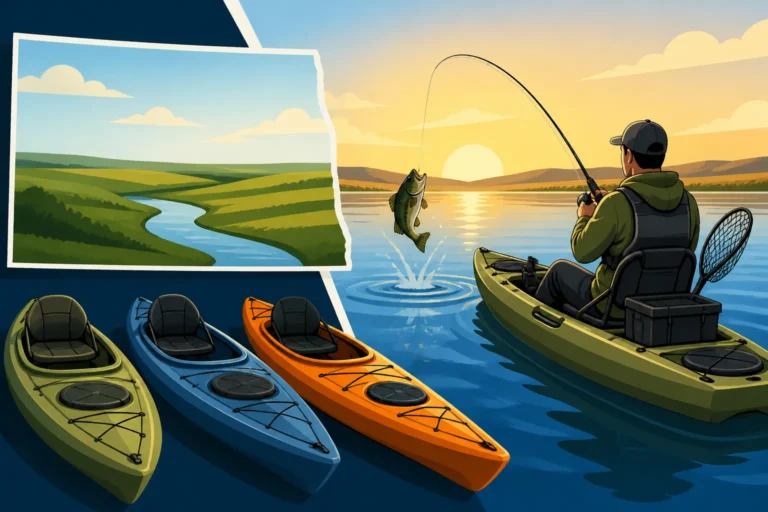
Picture this: you've been paddling along the shoreline of Devils Lake, casting for walleye, and suddenly, you feel that unmistakable thump. Line peels off your reel, and after a thrilling fight, you've got a beautiful walleye boat-side. Now what? You're sitting low to the water, your center of gravity is different, and you have limited space for maneuvering. Trying to reach over the side with a big, bulky net designed for a bass boat is awkward, at best. The fish might dart under the kayak, wrap around your anchor line, or simply get spooked and spit the hook at the last second. This is a common frustration, and one that often leads to anglers losing what could have been a trophy catch.
Another challenge is the constant movement. Even on a calm day, a kayak is rarely perfectly still. A strong breeze on Lake Sakakawea can make holding your position and managing a fish simultaneously a Herculean task. If your net isn't easily accessible or can't be deployed quickly with one hand, those precious seconds can slip away. Furthermore, if you're targeting larger species like the big northern pike found in many North Dakota lakes, wrestling them into a kayak without a proper net risks not only the fish escaping but also hooks getting tangled in your gear, or worse, in your hands. Fishing From a Kayak in North Dakota provides more insights into mastering the unique aspects of this sport.
Safety and Fish Care: More Than Just Landing
Beyond simply getting the fish into the kayak, a specialized net plays a vital role in both angler safety and fish welfare, particularly if you practice catch-and-release. Imagine landing a thrashing pike with multiple treble hooks on a crankbait. Trying to control that fish with your hands in a small kayak is an invitation for a painful encounter with sharp teeth and even sharper hooks. A net allows you to subdue the fish quickly and safely, containing it while you unhook it.
For the fish, especially those intended for release, the right net significantly reduces stress and injury. Nets made of traditional knotted nylon can strip away a fish's protective slime coat, leaving it vulnerable to disease. They can also damage fins and gills, particularly if the fish thrashes violently. A fish-friendly net, often rubberized or knotless, minimizes this damage. It helps keep the fish calm, allowing for quicker unhooking and release, increasing its chances of survival. This careful handling is especially important for species like walleye, which can be delicate. Many anglers adhere to these responsible practices, understanding that healthy fisheries depend on them. You can learn more about specific regulations in our guide to North Dakota Fishing Regulations Explained.
Key Features to Look for in a Kayak Fishing Net
When you're outfitting your kayak for North Dakota's diverse fisheries, don't overlook the landing net. It's not just a hoop with mesh; it's a tool with specific design elements that can make or break your fishing experience. Choosing the right one means considering handle length, net material, hoop shape, and how easily it integrates with your kayak setup.
Handle Length and Design for Kayak Use
One of the first things you'll notice about kayak-specific nets is their handle. Unlike boat nets that often have very long handles, kayak nets need to strike a balance. A handle that's too long will be cumbersome in your limited cockpit space and might get tangled in your feet or other gear. A handle that's too short, however, won't give you enough reach to net a fish without leaning precariously over the side of your kayak, risking a capsize.
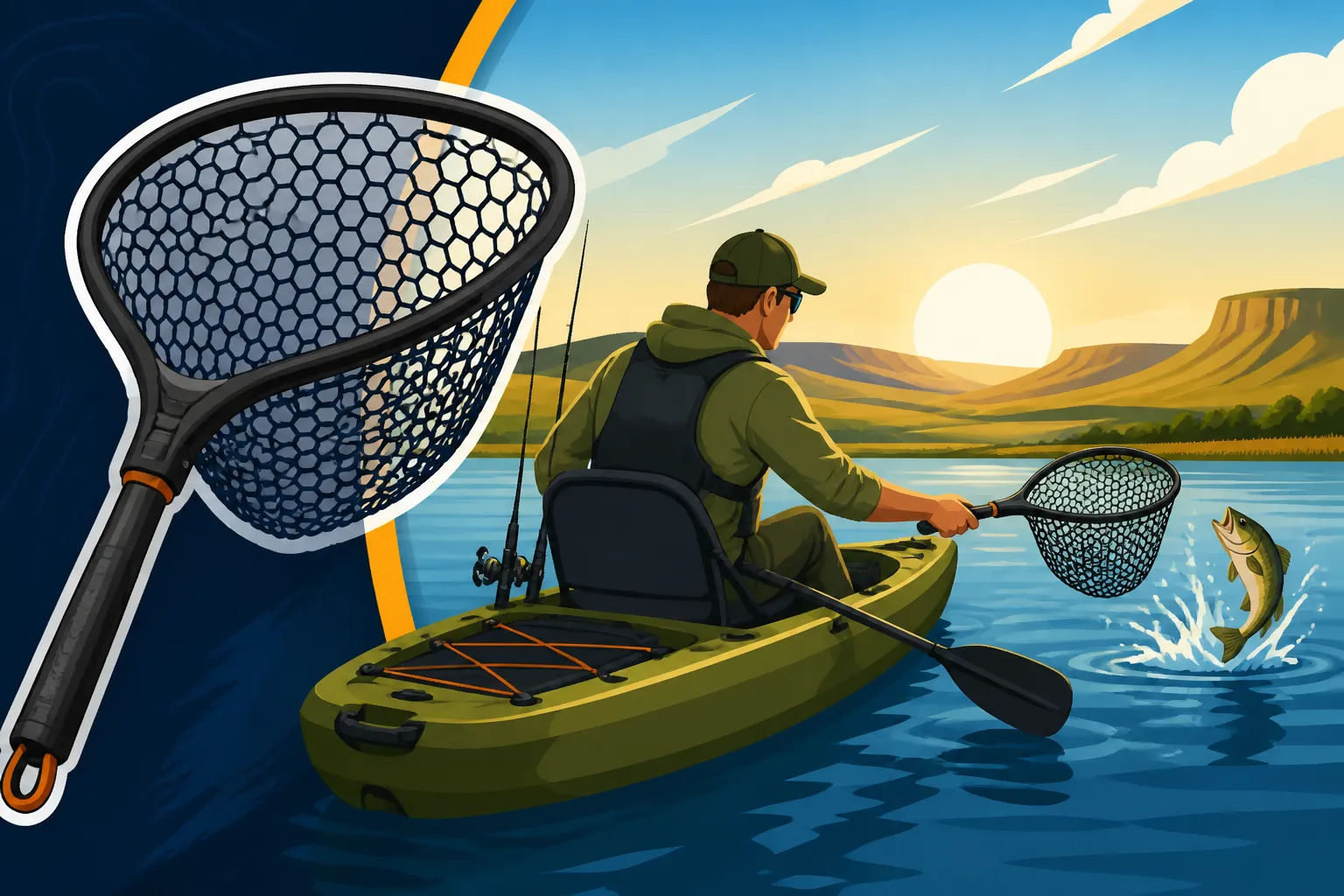
Many kayak nets feature a shorter, fixed handle – typically between 12 and 24 inches – or a compact telescoping handle. A telescoping handle offers versatility, allowing you to extend it for better reach when needed and then retract it for compact storage. Look for a handle with a comfortable, non-slip grip that can be easily operated with one hand. Lanyard attachment points are also critical; securing your net to your kayak with a coiled lanyard means you won't lose it if it slips overboard during a hectic landing. This quick accessibility and secure attachment are paramount, especially when fishing for hard-fighting fish in the varied conditions of North Dakota's lakes and rivers.
Net Material and Hoop Shape
The material of the net mesh and the shape of the hoop are perhaps the most critical features for kayak fishing, influencing both fish welfare and hook management.
-
Net Material: The gold standard for kayak fishing nets, especially if you practice catch-and-release, is rubberized or rubber-coated mesh. This material is incredibly fish-friendly because it doesn't remove the protective slime coat from the fish's skin, which is vital for disease resistance. Crucially, rubberized nets are also much less prone to snagging hooks, a huge benefit when you're trying to unhook a treble-hooked crankbait from a thrashing walleye in a small boat. Knotless nylon nets are a step up from traditional knotted nylon, offering some of the same benefits for fish care and reduced snagging, though not quite to the extent of full rubber. Traditional knotted nylon nets, while often cheaper, are generally discouraged for serious kayak anglers due to their tendency to damage fish and tangle hooks.
-
Hoop Shape and Size: The hoop of the net needs to be large enough to accommodate the fish you expect to catch but not so large that it becomes unwieldy in your kayak. An overly large hoop will just get in the way. For common North Dakota species like walleye, northern pike, smallmouth bass, and yellow perch, a hoop size ranging from 18 to 24 inches wide is usually sufficient. A deeper net basket is also beneficial to keep the fish contained once it's in the net, preventing it from flopping out. Many kayak nets feature a flat-bottomed hoop design, which helps support the fish's body evenly, further reducing stress, and can also make it easier to lay the netted fish across your lap for unhooking and photography before release. If you're targeting big walleye on Lake Sakakawea, a slightly larger, deeper hoop might be worthwhile. Our guide to North Dakota Walleye Size Limit Rules can help you understand what size fish you might encounter.
Storage and Portability on a Kayak
Space on a kayak is always at a premium, so how your net stores and deploys is a major consideration. You need a net that can be securely stowed out of the way but instantly accessible when you need it.
Folding nets are a popular choice for kayak anglers. These nets often have a mechanism that allows the hoop to fold down against the handle, significantly reducing their footprint. This makes them much easier to store in a rod holder, bungee corded to the deck, or even in a designated storage well. Some nets even break down into multiple pieces for ultra-compact storage.
Another excellent feature for portability is a magnetic net release or a built-in clip system. These allow you to attach the net directly to your life vest, seat, or the side of your kayak, keeping it within arm's reach. When a fish bites, a quick tug releases the net, ready for action. Without such a system, your net might be sliding around on the deck, getting tangled in your lines, or worse, acting as a sail in windy conditions. Think about the rougher days on a vast water body like Lake Sakakawea; a secure and unobtrusive storage method is key. Best Kayaks for North Dakota Fishing offers insights into optimizing your setup.
Top Considerations for North Dakota's Waters and Species
North Dakota presents a unique set of challenges and opportunities for kayak anglers. From the massive reservoirs like Lake Sakakawea to the winding rivers and countless smaller lakes, the conditions and the fish species you'll encounter vary widely. Your landing net needs to be versatile enough to handle it all, from the teeth of a pike to the slime of a walleye, and durable enough to withstand the elements.
Handling North Dakota's Diverse Fish Species
The variety of fish you might hook in North Dakota means your net needs to be a multi-talented tool.
-
Walleye: These are probably the most sought-after game fish in North Dakota, known for their sharp dorsal fins and often vigorous head shakes. A rubberized, knotless net is crucial for walleye to protect their delicate slime coat and prevent their spines from getting tangled in the mesh. A net with a slightly larger hoop and a flat bottom will allow you to quickly scoop a walleye and lay it flat for unhooking, minimizing its time out of the water. Many anglers choose specific techniques like jigging for walleye, which means you might be bringing them up from deeper water, necessitating a quick and secure netting. Our guide on North Dakota Walleye Fishing Techniques has more details on how to hook these elusive fish.
-
Northern Pike: The "water wolves" of North Dakota, pike are aggressive, powerful, and come equipped with a mouth full of razor-sharp teeth. Trying to land a big pike without a net is incredibly risky for both the angler and the fish. A robust net with a deep, rubberized basket is essential. The rubber helps to prevent treble hooks from getting hopelessly snagged in the net, which can be a nightmare to untangle from a kayak, and protects the fish from excessive handling. You’ll want a net that can contain a thrashing pike long enough to get a grip on it and safely remove hooks. If you're specifically targeting pike, our How to Fish for Northern Pike in North Dakota guide offers tips for success.
-
Smallmouth Bass: Found in many lakes, including Lake Audubon and parts of the Missouri River, smallmouth bass are known for their acrobatic jumps and hard fights. While not as toothy as a pike, they can still be a handful. A medium-sized, quick-drying net with a rubberized mesh is ideal to quickly scoop them when they make that last jump boat-side. The smaller hoop on some kayak nets can be perfect for these feisty fighters.
-
Yellow Perch: Devils Lake is famous for its jumbo yellow perch. While smaller than walleye or pike, if you hit a school, you'll be netting fish rapidly. A lightweight, quick-deploying net is a huge asset for these panfish. The rubberized mesh again helps protect their scales and fins, especially if you're releasing the smaller ones.
Durability and Conditions on North Dakota Lakes and Rivers
North Dakota's weather can be unpredictable, ranging from scorching summer days to frigid fall winds. Your fishing gear, including your net, needs to be built to last through it all.
-
Weather Resistance: Look for nets made with corrosion-resistant materials, especially if you fish frequently in the large, sometimes brackish waters of Devils Lake or the currents of the Missouri River. Aluminum frames are common and generally hold up well, but check for stainless steel hardware where possible. The mesh itself should be UV-resistant to prevent degradation from prolonged sun exposure, which is important during those long summer days on Lake Sakakawea.
-
Robust Construction: Kayak fishing can be rough on gear. Your net will likely be bumped, dragged, and generally put through its paces. A sturdy frame that won't bend under the weight of a decent fish, and a strong connection between the handle and the hoop, are crucial. Avoid nets that feel flimsy; the last thing you want is your net failing when you have a trophy fish in it. Many anglers prefer solid construction over intricate folding mechanisms if durability is their top concern.
-
Cold Tolerance: If you venture out in early spring or late fall, when temperatures can drop significantly, consider how the net materials will react to the cold. Some plastics can become brittle in freezing temperatures. Rubberized mesh tends to remain flexible, which is a big advantage when dealing with ice and cold hands. You can find more advice on seasonal changes in our North Dakota Fishing Season Calendar.
Where to Find Your Perfect Kayak Fishing Net
Finding the right landing net might seem like a small detail, but it can profoundly impact your kayak fishing success and enjoyment. Thankfully, there are many options available, both online and in physical stores, to suit every angler's needs and budget.
Exploring Retailers and Online Options
When it comes to purchasing fishing gear, you generally have two main avenues: local sporting goods stores or large online retailers. Each has its advantages.
-
Local and Big Box Sporting Goods Stores: Places like Bass Pro Shops often have a wide array of fishing nets, and the huge benefit here is that you can actually hold the net, feel its weight, test the grip, and see how the folding mechanism works. This "hands-on" experience is invaluable for kayak specific gear, as ergonomics and ease of use are paramount in a confined space. You can gauge the handle length against your arm reach and envision how it would fit into your kayak. Plus, you can often get advice from knowledgeable staff who might even be kayak anglers themselves, offering local insights into what works best for North Dakota conditions.
-
Online Retailers: Websites like Amazon offer an unparalleled selection of nets, often at competitive prices, with endless reviews from other kayak anglers. This allows you to compare dozens of models side-by-side, read about real-world experiences, and often find specialized nets that might not be stocked in every physical store. When buying online, pay very close attention to dimensions – handle length, hoop size, and folded length – to ensure it will fit your kayak and your fishing style. Look for high-resolution images that show the mesh type and attachment points. While you can't physically touch the net, the sheer volume of choices and customer feedback can guide you to an excellent option. Consider reading reviews that mention durability or performance in challenging conditions, similar to what you might encounter on North Dakota's waters.
Budgeting for a Quality Kayak Net
Like most fishing gear, landing nets come in a range of price points. While it might be tempting to opt for the cheapest option, remember that a quality net is an investment in your safety, your catch, and the longevity of your gear.
-
Entry-Level Nets: You can find basic nets at a lower cost, often with nylon mesh and a fixed handle. These might work for casual fishing for smaller species, but they may lack the durability and fish-friendly features of higher-end models. If you're just starting out in kayak fishing and mostly target panfish, an entry-level option might be okay, but be prepared for potential snags and quicker wear and tear.
-
Mid-Range Nets: This is where you'll find the sweet spot for many kayak anglers. Nets in this category often feature robust aluminum frames, comfortable grips, and most importantly, rubberized or knotless mesh. Many also incorporate folding or telescoping handles, magnetic releases, or other convenient storage solutions. These nets offer a great balance of durability, fish care, and functionality for tackling North Dakota's walleye, pike, and bass. You might find excellent options at Bass Pro Shops or online at Amazon in this range.
-
High-End/Specialized Nets: At the top end, you'll find nets made from premium materials, often lighter, stronger, and with advanced features like carbon fiber handles, fully integrated measuring boards, or highly specialized folding designs. These are typically for serious anglers who spend a lot of time on the water and demand the absolute best performance and durability. While the initial cost is higher, the longevity and superior performance often justify the investment over many seasons of fishing. Remember, a broken net means a lost fish, and potentially a lost memory. Investing a bit more upfront can save you frustration (and fish) down the line.
| Feature | Description | Ideal for North Dakota Kayak Fishing |
|---|---|---|
| Handle Type | Fixed, Telescoping, or Folding | Telescoping (18-30") or short fixed (12-24") with lanyard point |
| Net Material | Knotted Nylon, Knotless Nylon, Rubberized Mesh | Rubberized Mesh (best for fish care, hook prevention) |
| Hoop Shape/Size | Round, Teardrop, Flat-Bottom; Diameter & Depth | Flat-Bottomed Teardrop/Oval (18-24" wide, deep for containment) |
| Portability | Folding frame, Magnetic release, Bungee attachment | Folding frame or magnetic release for quick, secure access and storage |
| Durability | Frame material, Joint strength, UV resistance | Corrosion-resistant aluminum frame, robust joints, UV-resistant mesh |
| Target Species ND | Walleye, Pike, Bass, Perch, Catfish | Versatile for walleye/bass, extra deep/strong for pike & catfish |
Disclaimer
This article is for general informational purposes only and does not constitute professional advice. Laws, prices and regulations vary by location and change over time. Consult a qualified professional for guidance on your specific situation.