How to Fish for Northern Pike in North Dakota
Fishing for northern pike in North Dakota can be an incredibly rewarding experience, but let's be honest, these toothy predators can be frustratingly elusive or, when you do hook into one, intimidating to handle without the right knowledge. Many anglers struggle with knowing what gear to use, where to find them throughout the year, or even how to safely unhook a feisty pike. This comprehensive guide is here to demystify the art of chasing these aggressive fish, providing you with the seasonal strategies, essential gear, and local insights you need to confidently target and land northern pike across our great state.
Understanding North Dakota Northern Pike: The Apex Predator
Northern pike, with their sleek, torpedo-shaped bodies and formidable rows of teeth, are true apex predators in North Dakota's freshwater ecosystems. They're known for their explosive strikes and powerful fights, making them a thrilling target for anglers of all skill levels. But to consistently catch them, you first need to understand a bit about who they are and where they like to hang out.
Pike Biology and Behavior in North Dakota Waters
Northern pike (Esox lucius) are members of the Esocidae family, often referred to as the "pikes." They're characterized by their elongated bodies, a single dorsal fin set far back on the body, and a large mouth packed with razor-sharp teeth. Their coloration is usually dark green to olive, fading to white on the belly, with distinctive bean-shaped spots or irregular bars along their sides. In North Dakota, pike can grow to impressive sizes, with the state record currently sitting at a whopping 37 pounds, 8 ounces, caught on Lake Sakakawea. While not every pike you catch will be a monster, even a 5-pounder offers a fantastic fight.
Their behavior is largely dictated by water temperature and the availability of prey. Pike are ambush predators, meaning they prefer to lie in wait, concealed by weeds or submerged structures, before launching a lightning-fast attack on unsuspecting fish. This makes understanding their habitat crucial. They have a remarkable tolerance for various water conditions, thriving in both clear and turbid lakes and rivers, though they tend to prefer cooler water during the hottest parts of summer. Knowing their feeding habits – they're opportunistic and will eat almost anything they can fit in their mouth, from minnows and perch to small ducks – will help you select the right lures and baits. They're particularly aggressive during certain times of the year, like immediately after the ice-out or during the fall feeding frenzy, which we'll dive into later.
Where Northern Pike Thrive: Habitat and Structure
If you want to find northern pike, you need to think like an ambush predator. They aren't usually cruising open water aimlessly; they're hiding, waiting for a meal. This means focusing your efforts on specific types of cover and structure. In North Dakota, this typically includes expansive weed beds, submerged timber, rocky points, sharp drop-offs, and even bridge pilings or culverts in river systems. Shallow bays with dense vegetation are classic pike territory, especially during spring and early summer. As the summer progresses and water temperatures rise, larger pike may retreat to deeper, cooler waters, often congregating around submerged humps, deep weed lines, or the edges of river channels.
On massive bodies of water like Lake Sakakawea or Devils Lake, finding these key structures can feel like looking for a needle in a haystack. However, focusing on bays, points, and coves that offer a mix of shallow and deeper water, especially those with good weed growth or rocky transitions, will significantly increase your chances. Even smaller lakes and reservoirs across the state often have robust pike populations in their weed-choked shallows. Remember, pike will often position themselves on the edge of cover, facing out towards open water, ready to strike. Understanding these nuances of their habitat is the first step to becoming a successful pike angler in North Dakota.
Identifying Northern Pike vs. Other Species
While most anglers can easily spot a northern pike, there are a couple of fish in North Dakota that can sometimes cause a moment of confusion, particularly the muskellunge (muskie) and even, to a lesser extent, a walleye or sauger at a quick glance. Knowing the key differences is important for adhering to regulations and accurately identifying your catch.
The most common mix-up is between a northern pike and a muskie. Both are long, slender, and toothy. However, there are distinct features:
- Cheek and Gill Cover Scales: This is the most reliable identifier. A northern pike has scales completely covering its cheek and the upper half of its gill cover. A muskie, on the other hand, has scales only on the upper half of its cheek and no scales on its lower gill cover.
- Tail Fin: Pike usually have somewhat rounded tail fins, while muskie tails are often more pointed.
- Coloration: Pike typically have light, bean-shaped spots or bars on a darker background. Muskie usually have darker spots or vertical bars on a lighter background, though their patterns can vary greatly.
- Jaw Pores: Count the sensory pores on the underside of the lower jaw. Pike typically have 5 or fewer on each side, while muskie usually have 6 or more.
While walleye and sauger look very different, their elongated bodies can sometimes lead to momentary confusion, especially for new anglers. Remember that walleye and sauger belong to the perch family and have distinct spiny dorsal fins and completely different mouth structures (smaller, with canine teeth but not the rows of razor blades like a pike). They also lack the elongated, duck-bill snout of a pike. Always take a moment to confirm your catch, especially when daily limits and size restrictions vary significantly between species.
Essential Gear for North Dakota Pike Fishing
Chasing northern pike means preparing for an aggressive fight and dealing with a mouth full of teeth. You can't just show up with your ultralight walleye setup and expect success. Having the right gear isn't just about catching more fish; it's about doing so safely and efficiently, ensuring both you and the fish have a good outcome. Investing in quality, robust equipment will save you frustration in the long run.
Rods, Reels, and Line for Landing Big Pike
When it comes to rods and reels for northern pike, think strength and durability. These fish are powerful, and they hit hard.
- Rods: A medium-heavy to heavy power rod, typically 6'6" to 7'6" long, is ideal. This gives you the backbone to cast larger, heavier lures and the leverage to muscle a strong fish away from snags. A fast action tip is usually preferred as it provides sensitivity for detecting subtle bites (though pike bites are often anything but subtle!) and enough give for accurate casting, while the stiffer midsection handles the heavy lifting. You'll find a wide array of options on platforms like Amazon from brands like St. Croix or Fenwick that are perfectly suited for this kind of fishing.
- Reels: For spinning setups, a 3000 to 4000 series reel is a good starting point, capable of holding enough heavy line and providing sufficient drag. If you prefer baitcasting, a robust, low-profile or round-profile baitcaster with a good drag system is excellent for casting larger lures and handling big fish. Make sure it has a smooth retrieve and a strong gear ratio for quick line pickup.
- Line: This is where many anglers make mistakes. You need tough line. Braided line in the 30-50 lb test range is highly recommended. Its zero stretch provides excellent sensitivity for detecting strikes and tremendous power for setting hooks and pulling fish out of thick cover. Monofilament or fluorocarbon in the 15-25 lb test range can also work, especially if you're fishing in clearer water where visibility is a concern, but braided line offers superior abrasion resistance against those sharp pike teeth when combined with a proper leader.
Remember, the goal is to have a balanced setup that can handle the fish you're targeting. Don't skimp on quality here; a snapped line or a broken rod during a fight with a trophy pike is a memory you don't want to make.
Must-Have Lures and Baits for Aggressive Bites
Pike are not picky eaters, which is great news for anglers! However, certain lures and baits are consistently more effective. Their aggressive nature means they often respond well to flashy, noisy, or erratic presentations.
Here's a breakdown of common pike-catching artillery:
- Spoons: Classic metal spoons like the Daredevle or Five of Diamonds are pike magnets. Their wobbling action and flash mimic injured baitfish perfectly. Sizes from 3/4 oz to 1.5 oz are common. Experiment with retrieve speeds – sometimes a slow, deliberate wobble is best, other times a faster retrieve triggers a reaction strike.
- Spinnerbaits: These are fantastic for fishing around weeds and cover, as they are relatively weedless. The flash and vibration of the blades, combined with a skirted body, are irresistible to pike. Sizes from 1/2 oz to 1 oz are standard. Brands like Strike King or Booyah offer excellent pike-specific spinnerbaits.
- Crankbaits and Jerkbaits: Large lipped crankbaits that dive to different depths can be trolled or cast to cover a lot of water. Look for those with rattles for added attraction. Jerkbaits, with their erratic, darting action, are especially effective in cooler water or when pike are a bit more sluggish. suspending jerkbaits that hang in the water column during pauses can be deadly.
- Soft Plastics/Swimbaits: Large paddle-tail swimbaits rigged on heavy jig heads (1/2 oz to 1 oz+) can be incredibly effective, especially when worked along deep weed lines or structure. Brands like Keitech or Storm make excellent large swimbaits that pike can't resist.
- Live/Dead Bait: For a more passive approach, or for targeting truly massive pike, dead bait like large smelt, suckers, or even cut bait can be incredibly effective, particularly when ice fishing or still fishing with a slip bobber in open water. Live suckers or large shiners, when legal, are also a top choice.
Always have a variety of colors and sizes. Natural baitfish colors (silver, perch patterns) are always a good starting point, but don't shy away from bright, obnoxious colors like chartreuse, orange, or firetiger, especially in stained water.
Necessary Terminal Tackle and Safety Gear
Beyond your rod, reel, and lures, having the right terminal tackle and safety gear is paramount when fishing for northern pike. Their teeth are no joke, and being unprepared can lead to lost fish, lost lures, or worse, injured hands.
- Leaders: This is non-negotiable. Pike will shred monofilament or fluorocarbon main lines in an instant. You need a leader made of steel, heavy fluorocarbon (80-100 lb test), or titanium. Steel leaders are the most common and widely available, often pre-made with snaps and swivels. Look for leaders in the 9-12 inch range to prevent bite-offs, especially from larger fish that might engulf a lure.
- Pliers/Forceps: Long-nosed pliers or specialized hook removal tools are absolutely essential. Never, ever stick your hand into a pike's mouth to remove a hook. These tools allow you to safely grasp the hook and extract it, protecting your fingers from those rows of teeth.
- Jaw Spreader: A jaw spreader can be a lifesaver, literally. It allows you to prop open the pike's mouth safely, giving you ample room to work with your pliers without fear of the fish snapping down. This is particularly useful for deeply hooked fish or when practicing catch and release to minimize harm to the fish.
- Gloves: Heavy-duty fishing gloves (often made of Kevlar or thick rubber) can offer an extra layer of protection when handling the fish, especially if you plan to hold it for a quick photo.
- Landing Net: A large, rubberized landing net is ideal for pike. Rubberized nets are much gentler on the fish's slime coat if you plan to release it, and they prevent hooks from getting tangled in the mesh, making hook removal easier. Avoid small nets or string nets, as pike will trash them.
- Scale and Measuring Tape: If you're hoping to record a personal best or need to adhere to North Dakota's Northern Pike Daily Limit rules, a reliable scale and measuring tape are crucial for accurate measurements.
Having these items readily accessible in your boat or tackle bag isn't just a suggestion; it's a requirement for responsible and successful northern pike fishing.
Prime Seasons and Times to Target Northern Pike
Northern pike are active year-round in North Dakota, but their behavior, location, and the best techniques to catch them change dramatically with the seasons. Understanding these seasonal shifts is key to consistent success. Instead of just "going fishing," you'll be strategically targeting pike when they're most vulnerable or active.
Spring Pike Spawning and Post-Spawn Blitz
Spring in North Dakota, right after the ice melts, is a magical time for pike anglers. As soon as the ice-out occurs, often in March or April depending on the year and specific water body, pike become incredibly active. They are among the earliest fish to spawn, typically doing so in very shallow, often flooded, vegetated areas once water temperatures reach the low 40s to low 50s Fahrenheit. During this time, they move into these shallow bays, marshes, and ditches that might be completely dry later in the year.
The pre-spawn period sees pike gorging themselves to build energy for spawning, making them very aggressive and susceptible to large, flashy lures. After spawning, they enter a "post-spawn funk" for a short period, where they might be less active as they recover. However, this is quickly followed by the "post-spawn blitz," when hungry pike, depleted from spawning, begin feeding heavily again. They'll often remain in or near these shallow spawning grounds, slowly moving out to the edges of deeper water or nearby cover as water temperatures continue to rise. Focus on areas with emergent vegetation, reeds, or cattails, and cast spinnerbaits, spoons, or shallow-diving crankbaits. This is an excellent time for Northern Pike Casting Techniques as they are often cruising and reacting to moving baits.
Summer's Weed Line Ambush and Deep Water Tactics
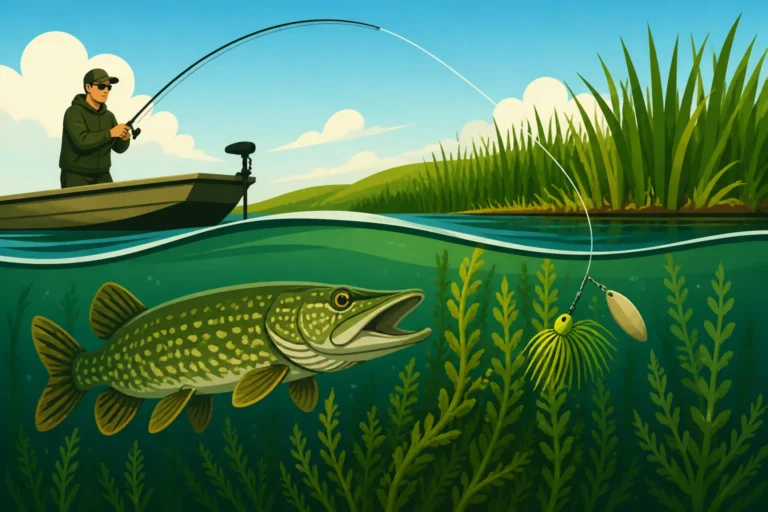
As North Dakota summer heats up, pike behavior shifts. Early summer still sees many pike in shallower weed beds, especially in the mornings and evenings when water temperatures are cooler. This is prime time for Fishing Weed Lines for Northern Pike. Look for dense vegetation in 5-15 feet of water, and cast weedless lures like spinnerbaits, large soft plastic frogs, or topwater baits over the weed tops or along their edges. The shade and cover of the weeds provide an ideal ambush point.
However, as July and August bring the warmest water temperatures, larger pike, particularly the trophy specimens, will often retreat to deeper, cooler water. They'll relate to submerged humps, deep rock piles, main lake points, or the edges of river channels in 20-40 feet of water, especially in large reservoirs like Lake Sakakawea. Here, trolling large crankbaits that reach these depths or vertical jigging with heavy spoons and large plastics can be effective. They may still move shallow during low light conditions or after a cold front pushes baitfish into shallower areas. Pay attention to your fish finder; if you see schools of baitfish in deeper water, larger pike are likely not far behind.
Fall Feeding Frenzy: Bulking Up for Winter
Few times of the year rival fall for consistent, aggressive northern pike action in North Dakota. As water temperatures begin to drop in September and October, pike sense the approaching winter and enter a frantic feeding frenzy. They're trying to pack on as much weight as possible, and this means they become incredibly active and less finicky.
Pike will often return to shallower areas, especially large bays and flats that still hold dense weed beds, as baitfish also migrate to these areas. They become less particular about cover and will aggressively chase down large lures in open water or along prominent points. This is a fantastic time for casting large spoons, spinnerbaits, and big jerkbaits or trolling massive crankbaits in areas where you've marked bait. Many anglers consider this the best time to catch a true trophy northern pike, as the fish are at their heaviest and most aggressive. The cooler water also means they fight even harder. The fish are often concentrated, so once you find one, you're likely to find more.
Ice Fishing for Northern Pike: Tip-Ups and Deadsticks
North Dakota's long winters offer fantastic opportunities for How to Ice Fish in North Dakota, and northern pike are a prime target. Once safe ice forms, typically from December through March, anglers brave the cold to pursue these predators. Ice fishing for pike is often a more relaxed, but equally rewarding, endeavor.
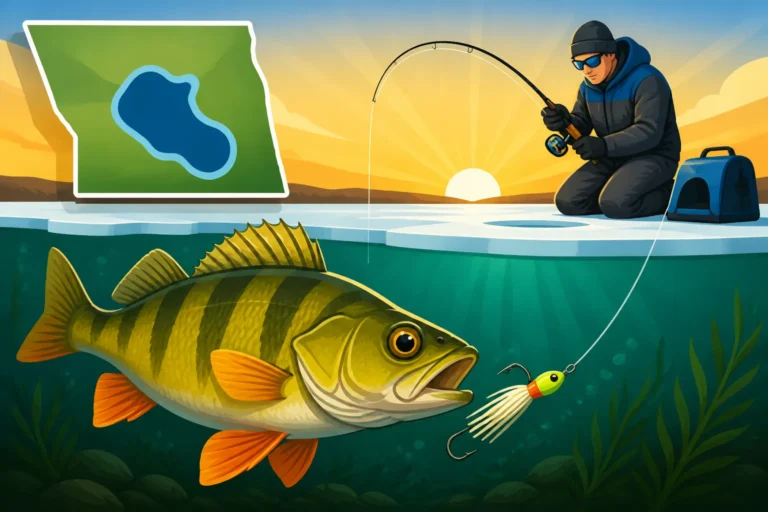
The most popular and effective method for ice fishing pike is using tip-ups. A tip-up is a device that spans an ice hole and suspends your bait at a set depth. When a fish takes the bait, a flag springs up, signaling a bite. This allows you to spread out multiple lines (up to four per angler are typically allowed in North Dakota, but always check current regulations) and cover a wider area. Large dead bait, such as smelt, frozen suckers, or large shiners, are typically used, fished just off the bottom or suspended midway in the water column. Setting tip-ups along deep weed edges, points, or sudden drop-offs where pike funnel baitfish is a classic strategy. You can also fish with a deadstick (a rod in a holder with static bait) while jigging in a nearby hole for other species.
Jigging with large spoons or tube jigs tipped with a minnow can also catch active pike, especially in shallower water. Electronics like flashers or fish finders are invaluable for locating structure and baitfish under the ice, which, in turn, helps you find pike. Remember to use heavy leaders even when ice fishing; those teeth don't get dull in the cold! Ice fishing for northern pike can be a social affair, waiting for the flags to fly, or a solitary pursuit for those dedicated to hunting a true winter giant.
Effective Northern Pike Fishing Techniques and Strategies
Beyond knowing where and when to fish, understanding how to present your lure or bait is crucial for consistent success. Northern pike are aggressive, but they can also be finicky. Mastering a few key techniques will allow you to adapt to different conditions and trigger more strikes.
Casting and Retrieving: Covering Water for Active Pike
Casting and retrieving is arguably the most common and versatile method for targeting northern pike, allowing you to cover vast amounts of water and search for active fish. This technique is particularly effective during spring and fall when pike are often cruising shallower areas, as well as in summer around weed lines and points.
The key is to use lures that mimic fleeing or injured baitfish, and to vary your retrieve to find what the pike prefer on any given day.
- Spoons and Spinnerbaits: Cast these lures out and retrieve them with a steady, moderate speed. You can add pauses, subtle twitches, or speed bursts to make the lure appear more erratic. If fishing around weeds, try to keep your spinnerbait just above the vegetation to avoid snags, allowing the blades to flash and attract attention.
- Crankbaits and Jerkbaits: For crankbaits, simply cast them out and retrieve them at a steady pace, allowing the bill to dive to its intended depth. Some crankbaits are designed for stop-and-go retrieves. Jerkbaits are a different beast: cast them out, then use a series of sharp rod tip jerks followed by pauses. This makes the lure dart erratically, then suspend, often triggering a strike during the pause. The duration of the pause can be critical – sometimes a quick twitch-twitch-pause works, other times a long, 5-second pause is what they want.
- Soft Plastics/Swimbaits: Rigged on a heavy jig head, soft plastic swimbaits can be cast and retrieved with a steady swim, or hopped and bounced along the bottom. They are excellent for working deeper weed edges or submerged structures. A slow, steady retrieve with occasional twitches often fools wary pike.
Experimentation is key. Some days, pike want a fast-moving, flashy lure; other days, a slow, methodical presentation is more effective. Always be prepared to switch lures or techniques until you find what's working.
Trolling for Trophy Pike in Open Water
When targeting large, open-water northern pike, especially on immense reservoirs like Lake Sakakawea, trolling can be an incredibly effective strategy. This technique allows you to cover vast distances, explore different depths, and present large lures to pike that might be spread out or holding in deeper water.
- Gear for Trolling: You'll want sturdy rods and reels capable of handling the drag of large lures and the power of big fish. Line counter reels are a huge asset, as they allow you to precisely replicate the amount of line you have out once you find a productive depth. Large crankbaits are the go-to for trolling pike. Look for those designed to dive to specific depths, from 10 feet all the way down to 40+ feet, depending on where the fish are holding. Many anglers also use planer boards to spread out their lines, covering an even wider swath of water and preventing tangles.
- Speed and Depth: Trolling speed is critical. A good starting point is usually 2.0 to 3.5 miles per hour, but again, experiment. Sometimes a slower speed with more lure wobble is better, other times a faster pace triggers reaction strikes. Pay close attention to your fish finder and GPS. Look for significant depth changes, submerged humps, points, and areas where baitfish are congregating. If you mark fish at a certain depth, select crankbaits that will run at or just above that depth.
- Location: While casting targets active fish around visible cover, trolling helps you find those less-obvious concentrations of pike. Focus on main lake basins, large bays, significant points, and the edges of old river channels. During mid-summer, when pike move deeper, trolling becomes particularly valuable for reaching those cooler, darker waters where big fish lurk. Remember to check the North Dakota Fishing Regulations Explained for rules on how many lines you can run while trolling.
Still Fishing with Live or Dead Bait: Patience Pays Off
While pike are aggressive, sometimes a more patient, natural presentation is what it takes, especially for larger, more cautious fish or when conditions are tough. Still fishing with live or dead bait is a highly effective method, particularly during colder water periods or for ice fishing.
- Slip Bobber Rigs: In open water, a slip bobber rig is an excellent way to present live or dead bait naturally. A slip bobber allows you to easily cast your bait to a desired location and then slide the bobber up or down your line to set your bait at a precise depth, from just a few feet under the surface to deep water. Use large, lively minnows (like suckers or large shiners, where legal) or a whole dead smelt or sucker. Hook the bait through the back, just behind the dorsal fin, or through both lips, ensuring it can swim freely or suspend horizontally. Target the edges of weed beds, submerged timber, or near deep structure.
- Bottom Rigs (Carolina or Three-Way): When fishing deeper water or in current, a Carolina rig (bullet sinker, bead, swivel, leader, hook) or a three-way swivel rig can keep your bait near the bottom. These rigs are great for presenting dead bait, like a whole frozen cisco or smelt, allowing the natural scent to attract pike. This is often used when fishing river systems or very deep lakes.
- Patience is Key: Still fishing requires patience. Pike will often "mouth" a bait before fully committing. Watch your bobber carefully for any dips or movement. When a pike takes the bait, let it run for a few seconds before setting the hook. This allows the fish to fully ingest the bait, increasing your hook-up ratio. This method is exceptionally popular and highly effective for Ice Fishing for Northern Pike With Tip-Ups, where dead baits are standard. The natural presentation is often irresistible to a hungry pike lying in wait.
Specialized Ice Fishing Techniques for Pike
Ice fishing for northern pike in North Dakota offers a unique set of challenges and rewards. The stillness of winter, combined with the anticipation of a flag flying, makes it a favorite pursuit for many. As discussed earlier, tip-ups are the primary tool, but there are nuances to maximizing their effectiveness and other techniques to consider.
- Tip-Up Strategy: When setting up your tip-ups, consider the terrain beneath the ice. Fan them out along a breakline, a point extending into deeper water, or the edge of a large weed bed. Pike often cruise these transition zones. Vary your bait depths; some pike might be suspended, while others are hugging the bottom. Use large dead baits – frozen smelt, suckers, or ciscoes are excellent. Ensure your bait is presented naturally. For example, hook a dead bait through the back to give it a horizontal, natural look, or through the head if you want it to hang vertically. Don't be afraid to leave your dead bait out for extended periods; pike are often triggered by scent.
- Jigging for Active Pike: While tip-ups are passive, active jigging can also catch pike, especially smaller, more aggressive ones. Use heavy jigging spoons (1/2 oz to 1 oz+) or large tube jigs tipped with a minnow head or scent. Work these lures with aggressive rips and pauses. Pike are attracted to the flash and vibration. If you have a fish finder, watch for pike approaching your lure. Often, they'll follow it up, and a sudden drop or a long pause will trigger a strike.
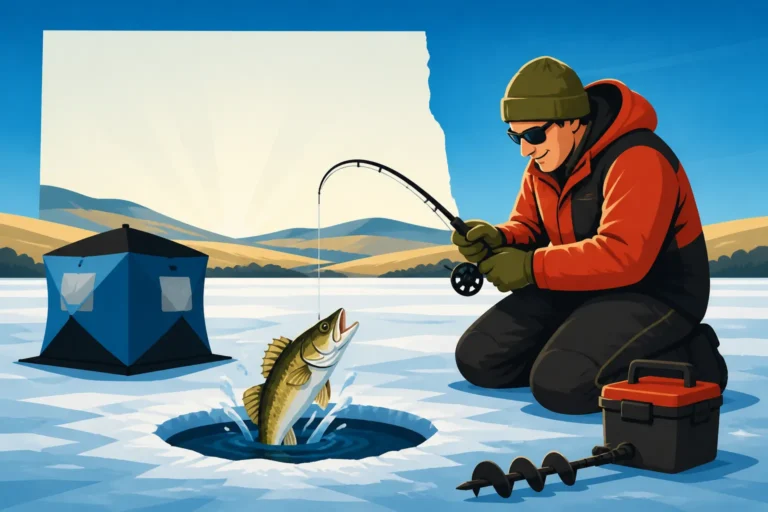
- Shelter and Comfort: North Dakota winters can be brutal. Having a comfortable, heated ice fishing shelter, like those you can find on Amazon, makes a huge difference in your endurance and enjoyment. A good shelter allows you to stay warm and focused, waiting for those flags to fly. Remember to keep your holes clear of slush and ice buildup, especially on very cold days, to ensure your line runs freely. When a flag goes up, approach your tip-up cautiously to avoid spooking the fish before it has fully committed to the bait. The thrill of a pike bending your line through an ice hole is an experience every North Dakota angler should try.
Top North Dakota Lakes and Rivers for Northern Pike
North Dakota is blessed with a variety of waters that hold impressive populations of northern pike. From vast reservoirs to smaller natural lakes and winding rivers, there's a pike fishing destination for every angler. Knowing where to go and what to expect from each body of water can drastically improve your success.
Trophy Pike Waters: Lake Sakakawea and Beyond
When anglers talk about trophy northern pike in North Dakota, the conversation inevitably starts with Lake Sakakawea. This massive reservoir, formed by the Garrison Dam on the Missouri River, spans over 178 miles and boasts a shoreline longer than California's Pacific coast. Its sheer size and diverse habitat create an ideal environment for pike to grow to immense proportions, including the current state record.
- Lake Sakakawea: The key to success on Sakakawea is understanding its vastness. Early in the season, focus on the shallow, vegetated bays and coves, particularly in the upper reaches of the lake (near Williston) or in the countless arms and tributaries, like the Van Hook Arm. As summer progresses, target deeper points, submerged humps, and the edges of the main river channel. Trolling large crankbaits is a prime technique here for covering water and finding those big, deep-holding pike. During the fall, pike will again push into shallower bays, feeding aggressively. The sheer abundance of baitfish (smelt, ciscoes, perch) fuels the growth of these large predators.
- Devils Lake: Known primarily for its walleye and perch fishing, Devils Lake is also a phenomenal northern pike fishery. Its unique flooded timber and vast weed beds create perfect ambush habitat. Pike here also grow to impressive sizes, offering challenging fights in the timber. Focus on the shallow, flooded areas with standing trees or dense cattail edges. Spinnerbaits and weedless spoons are excellent here. In deeper areas, trolling or casting large crankbaits can be productive. The constantly changing water levels of Devils Lake mean that productive spots can shift, so staying updated on local reports is always a good idea. For a deeper dive, check out the Devils Lake Fishing Guide for North Dakota Anglers.
- Lake Oahe: The portion of Lake Oahe in North Dakota, downstream from the Oahe Dam near Bismarck, also holds a good population of northern pike, particularly in its northern reaches and bays. Similar to Sakakawea, it's a large reservoir where deeper trolling and working structure can be effective.
These larger lakes often require bigger boats and more advanced electronics to navigate and locate fish, but the potential for a true monster pike makes the effort worthwhile. For a broader overview of the state's prime fishing locations, refer to our Best Places to Fish in North Dakota guide.
Accessible Pike Fishing Spots Across the State
You don't need a massive boat to enjoy fantastic northern pike fishing in North Dakota. Many smaller lakes, reservoirs, and river stretches offer excellent, more accessible opportunities, often from shore, a kayak, or a smaller fishing boat.
- Missouri River: Below Garrison Dam, and in various stretches downriver through Bismarck and beyond, the Missouri River can hold good numbers of pike, especially in slower-moving backwaters, oxbows, and eddies that feature some vegetation or fallen timber. These spots provide a break from the current and offer ambush points. Casting spoons, spinnerbaits, or large swimbaits into these areas can be very productive.
- Smaller Reservoirs: Many of North Dakota's smaller man-made reservoirs are excellent pike fisheries. Lakes like Jamestown Reservoir, Lake Ashtabula, Pipestem Reservoir, and Heart Butte Dam often have extensive weed beds and shallow flats that are ideal pike habitat. These lakes are typically easier to navigate and can be fished effectively from smaller boats or even kayaks. Shore fishing can also be productive in many areas, particularly near culverts or points with access to deeper water.
- Natural Lakes and Potholes: Scattered across the state are numerous natural lakes and "potholes" that are often shallow and weed-choked, providing perfect habitat for a healthy pike population. While they might not produce as many trophy-sized fish as Sakakawea, they offer fantastic action for smaller, aggressive pike. These are great places to practice your casting techniques and introduce new anglers to the thrill of pike fishing. Always check local access and regulations before heading out.
These accessible spots are perfect for a day trip and often provide consistent action, even if the fish aren't always state record contenders.
Seasonal Hotspots and Local Intelligence
The best pike fishing spots in North Dakota can shift not just by season, but also year to year, and even week to week, depending on factors like water levels, forage availability, and weather patterns. Staying updated with local intelligence is critical.
- Baitfish Movement: Pike follow their food. If the perch or smelt are concentrated in a particular bay, you can bet the pike will be there too. Pay attention to reports of baitfish activity.
- Water Levels and Vegetation: High water years can flood new vegetation, creating new pike habitat that wasn't there before. Conversely, low water can expose old weed lines and concentrate fish in remaining cover. Observe how current water levels affect the available cover.
- Fishing Reports and Local Shops: One of the best resources for up-to-date information is your local bait and tackle shop. Shop owners and staff are often on the water themselves or talk to countless anglers every day, giving them an unparalleled pulse on what's biting and where. Online fishing forums and social media groups dedicated to North Dakota fishing can also provide valuable real-time insights and reports.
- Experimentation: Never be afraid to explore new areas. Sometimes the "secret spot" is simply a piece of structure or cover that other anglers overlook. Use mapping apps on your phone or fish finder to identify potential pike hideouts, like isolated weed beds, points, or humps away from the main boat traffic, and then go check them out.
Remember that North Dakota Fishing Season Dates and Limits can vary, so always consult the latest proclamation from the North Dakota Game and Fish Department before heading out. Local knowledge, combined with your own observation and experimentation, is the most powerful tool in your pike fishing arsenal.
Navigating North Dakota's Northern Pike Regulations
Understanding and adhering to North Dakota's fishing regulations isn't just about avoiding a fine; it's about protecting our valuable fisheries for future generations. Regulations for northern pike can include daily limits, possession limits, and sometimes even size restrictions, all designed to manage fish populations sustainably. Ignorance of the law is never an excuse, so taking the time to review the current proclamation is essential.
Understanding Daily Limits and Possession Rules
Every angler fishing in North Dakota must be aware of the daily limits and possession limits for northern pike. These numbers are carefully set by the North Dakota Game and Fish Department to ensure the long-term health and sustainability of the pike population.
- Daily Limit: This refers to the maximum number of fish of a particular species that an individual angler can keep in a single day. For northern pike, this might be a set number, for example, a daily limit of 3 or 5 fish. Once you reach your daily limit, you must stop fishing for that species for the remainder of the day, even if you continue fishing for other species.
- Possession Limit: This refers to the maximum number of fish of a particular species that an individual can have in their possession at any given time, regardless of when or where they were caught. This includes fish at your home, in your cooler, or in your vehicle. The possession limit is often higher than the daily limit (e.g., twice the daily limit), allowing anglers to accumulate fish over multiple days, especially if traveling. However, you can never exceed your possession limit.
- Special Regulations: Be aware that some specific water bodies might have special regulations that differ from the statewide rules. For example, a particular lake might have a more restrictive daily limit or a slot limit (which we'll discuss next) designed to manage its unique fishery. Always check the specific regulations for the lake or river you plan to fish. You can usually find the most current rules in the annual North Dakota Fishing Guide, available online or at bait shops. It's also critical to ensure you have a valid North Dakota Fishing License Guide before you even cast a line.
Size Restrictions and Slot Limits to Protect the Fishery
Beyond just the number of fish, size restrictions play a crucial role in managing northern pike populations in North Dakota. These often come in the form of minimum length limits or slot limits.
- Minimum Length Limit: This is straightforward: any fish caught that measures below a specified minimum length must be immediately released unharmed. This protects young fish, allowing them to grow to maturity and reproduce, contributing to a healthy population.
- Slot Limit: This is a more nuanced regulation designed to protect a specific size range of fish, usually the larger, reproductive "brood stock." A common slot limit might state that all pike between, for example, 24 and 34 inches must be immediately released. This means you can keep fish smaller than 24 inches (up to your daily limit) and fish larger than 34 inches (often only one per day or per possession limit). The goal is to remove smaller, more numerous fish while protecting the larger, more valuable breeding fish, which helps produce more quality fish in the future.
- Measuring Fish: When a size restriction is in place, you must measure your fish accurately. Lay the fish flat on a measuring board or tape, with its mouth closed and touching the stop, and measure to the tip of the tail. If it doesn't meet the legal requirements, release it quickly and gently. Familiarize yourself with the North Dakota Northern Pike Daily Limit and any specific size regulations for your target water. This knowledge is not just about compliance; it's about being a responsible steward of our natural resources.
Important Licensing and Aquatic Nuisance Species (ANS) Concerns
Beyond daily limits and size restrictions, there are other critical regulations and concerns that every angler needs to be aware of when fishing for northern pike in North Dakota.
- Fishing License: This might seem obvious, but you absolutely need a valid North Dakota fishing license to fish for northern pike, or any other fish, in the state, unless you fall under specific exemptions (like free fishing days or age exemptions for very young children). The types of licenses available vary for residents and nonresidents, and there are options like annual licenses or shorter-term licenses for those visiting. For detailed information, consult our guide on How to Get a North Dakota Fishing License. Penalties for fishing without a license can be severe, including significant fines.
- Fishing, Hunting, Furbearer Certificate: In North Dakota, most adult resident and nonresident anglers also need to purchase a Fishing, Hunting, Furbearer Certificate in addition to their regular fishing license. This certificate is essentially a prerequisite for purchasing various licenses and helps fund conservation efforts.
- Aquatic Nuisance Species (ANS): This is a critical concern for protecting North Dakota's waters. Aquatic Nuisance Species, like zebra mussels or Eurasian watermilfoil, can devastate native ecosystems and fisheries. The North Dakota Game and Fish Department has strict regulations to prevent their spread. Before leaving any body of water, you must "Clean, Drain, Dry" your boat, trailer, and all fishing equipment. This means removing all weeds and debris, draining all water from your boat (including livewells, bilge, and bait buckets), and allowing everything to dry thoroughly. Never transport live bait out of a water body in water from that water body; either use certified bait or drain the water and refill with municipal water. Violating ANS rules carries substantial penalties and is a serious threat to our fisheries. Be diligent – it protects everyone's fishing future.
Advanced Tips and Common Challenges in Pike Fishing
Northern pike fishing can be incredibly rewarding, but it comes with its own set of challenges. From dealing with their formidable teeth to understanding how external factors influence their behavior, becoming a truly successful pike angler means learning to anticipate and overcome these hurdles.
Dealing with Pike Teeth and Proper Fish Handling
The most distinctive and often intimidating feature of a northern pike is its mouth, packed with hundreds of razor-sharp teeth. While these teeth make them efficient predators, they pose a significant challenge for anglers when it comes to safe hook removal and fish handling.
- Safety First: Always assume a pike will bite. Even a "docile" fish can thrash violently and snap its jaws unexpectedly. Never reach your bare hand into a pike's mouth. This is where your long-nosed pliers, jaw spreader, and heavy-duty gloves become indispensable.
- Jaw Spreader Use: For deeply hooked fish, or simply for safer handling, a jaw spreader is your best friend. Gently insert it into the pike's mouth and open it to keep the jaws apart. This creates a safe working space for you to remove the hook with your pliers.
- Pliers and Hook Removal: With the mouth safely open, use your long-nosed pliers to grasp the hook firmly. Twist and push it out in the opposite direction it went in. If the lure has multiple treble hooks, you may need to clip one or two of them, especially if the fish is deeply hooked and you intend to release it. Consider replacing treble hooks with single, barbless hooks for easier and safer release.
- Handling for Release: If you plan to release the pike, minimize its time out of the water. Support its body horizontally, especially larger fish, to avoid damaging internal organs. Avoid holding a large pike vertically by the jaw, as this can dislocate its jaw. A firm grasp behind the gill plate (avoiding the actual gills) and under the belly provides good support. Get your photos quickly and then gently release the fish headfirst back into the water, allowing it to swim off on its own. Proper handling significantly increases the chances of post-release survival. For information on the North Dakota Northern Pike Fishing Guide, always review handling practices.
Avoiding Pike-Related Lure Loss and Line Breakage
Pike are notorious for destroying gear. Their powerful strikes, head shakes, and, of course, their teeth can lead to frustrating and expensive lure loss and line breakage. However, with the right precautions, you can minimize these occurrences.
- Leaders, Leaders, Leaders: As emphasized before, a heavy-duty leader is your first line of defense against bite-offs. Steel, titanium, or heavy fluorocarbon (80-100 lb test) are essential. Don't cheap out on leaders; a few dollars saved can cost you a valuable lure and a trophy fish. Inspect your leader frequently for kinks, fraying, or tooth marks. If you see any damage, replace it immediately.
- Strong Knots: Make sure you're tying strong, reliable knots. The Palomar knot and the improved clinch knot are excellent choices for connecting your main line to your leader and your leader to your lure. Always moisten your knots before cinching them down to ensure maximum strength.
- Quality Snaps and Swivels: Pike can put immense pressure on all components of your tackle. Use heavy-duty, ball-bearing swivels and strong snap-swivels to prevent line twist and ensure your lure runs true. Cheap snaps can bend or break under the strain of a powerful pike. Products from reputable brands, often found on Amazon, are worth the investment here.
- Sharp Hooks: Keep your hooks razor-sharp. A sharp hook penetrates quickly and securely, reducing the chance of a pike shaking it loose during a fight. Carry a hook sharpener and touch up your hooks frequently. If hooks become bent or rusted, replace them.
- Check Drag Settings: Ensure your reel's drag is set properly. Too tight, and your line can snap; too loose, and the fish can run into snags or wear itself out. The drag should be smooth and consistent, allowing the fish to pull line when it runs, but still applying enough pressure to fight it effectively. Test your drag before each outing.
Reading the Water and Adjusting Tactics
Northern pike are creatures of habit, but their habits are constantly influenced by environmental factors. Becoming a more consistent pike angler means learning to "read the water" and adjust your tactics accordingly.
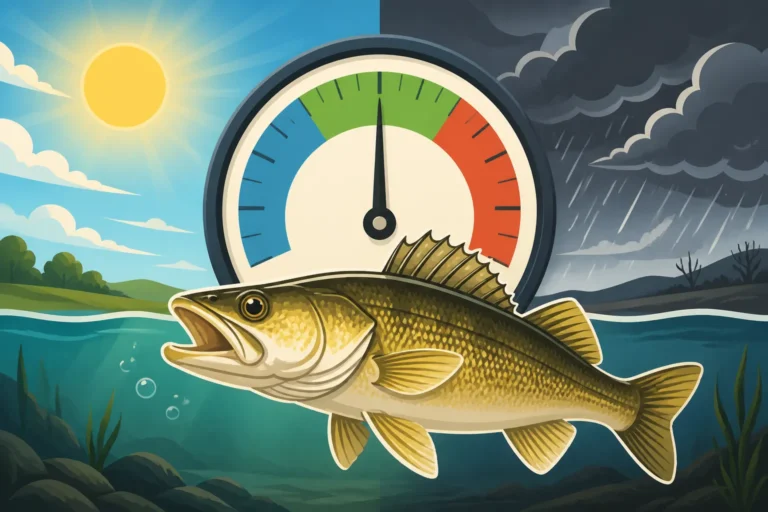
- Weather and Pressure Systems: Pike, like many fish, can be affected by changes in weather and barometric pressure. Before a cold front, pike often feed aggressively. During and immediately after a cold front, they might become more sluggish and move to deeper water or denser cover. On sunny, high-pressure days, they might seek shade or deeper water. Overcast, low-pressure days can often trigger good feeding activity. Adjust your retrieve speed and lure choice based on these conditions – slower and more subtle during tough conditions, faster and more aggressive when they're biting.
- Water Clarity and Temperature: In clear water, pike rely heavily on sight, so natural-colored lures and a more stealthy approach might be best. In murky or stained water, noisy lures with strong vibrations and bright colors (chartreuse, orange) are more effective at attracting attention. Water temperature dictates their depth preferences and activity levels; use a thermometer to gauge where the comfortable temperature range for pike might be.
- Current and Wind: In river systems like the Missouri River or the Red River, current lines and eddies are prime locations for pike to ambush baitfish. Learn to identify these areas and present your lure accordingly. Wind can also be your friend; a moderate chop on the water surface can break up the light, making pike less wary, and can push baitfish into certain areas. Fishing the "wind-blown side" of a lake or point can often be very productive.
- Observation and Adaptation: Pay attention to everything around you: baitfish jumping, birds diving, changes in water color, or subtle movements in vegetation. These are clues. If your current technique isn't working, don't be afraid to change it up. Switch lure color, size, depth, or retrieve speed. Persistence and a willingness to adapt are hallmarks of a successful pike angler.
Disclaimer
The information provided in this guide is for general informational purposes only and is subject to change. Fishing regulations, season dates, and limits are determined by the North Dakota Game and Fish Department and can be updated annually or even mid-season. It is the sole responsibility of every angler to consult the most current North Dakota Fishing Guide or visit the official North Dakota Game and Fish Department website before engaging in any fishing activity. Always prioritize safety, responsible angling practices, and adherence to all local, state, and federal laws.