Jigging for Walleye on Lake Sakakawea
There's nothing quite like the thrill of a walleye thumping your jig, especially on a vast, magnificent body of water like Lake Sakakawea. Many of us know the frustration of searching for these elusive fish, trying countless techniques only to come up empty-handed. This guide is dedicated to unraveling the mysteries of jigging for walleye on Lake Sakakawea, providing you with detailed strategies, essential gear advice, and seasonal insights to consistently improve your catch rate.
Understanding Lake Sakakawea's Walleye Habitat and Behavior
Lake Sakakawea is a behemoth, a reservoir stretching over 170 miles with more shoreline than the entire state of California. Its sheer size and diverse underwater landscape can be intimidating, but understanding where walleye live and how they react to their environment is your first step to jigging success. These fish are masters of their domain, constantly adapting to changes in depth, current, and available food.
Key Structures and Depths for Walleye
Walleye on Lake Sakakawea are structure-oriented fish, meaning they gravitate towards distinct underwater features that offer ambush points, cover, and proximity to baitfish. During the open water season, you'll often find them lurking around a variety of these elements. Look for prominent points that jut out into the lake, especially those with a hard bottom composition like rock or gravel, as these can act as highways for migrating baitfish. Humps and submerged islands, particularly those rising significantly from the main lake basin, are classic walleye magnets. These elevated structures create current breaks and attract schools of bait, making them prime feeding grounds.
Don't overlook the original Missouri River channel that winds its way through the lake. While difficult to pinpoint without good electronics, the edges of this old channel often hold deeper, cooler water and provide excellent deep-water ambush points, especially during the warmer months. Submerged timber, a legacy from the lake's formation, also offers crucial cover, though fishing it with jigs requires a delicate touch to avoid snags. Depths will vary wildly depending on the season and time of day, but typically, walleye might be found anywhere from 10 to 40 feet, constantly adjusting based on light penetration, water temperature, and baitfish location. Learning the nuances of these structures is key to consistently finding fish.
Reading the Water and Interpreting Conditions
Successful walleye anglers are adept at reading the "signs" the lake provides. Wind, for instance, is a major factor on Sakakawea. A consistent breeze pushing across a point or shoreline can create a "walleye chop," concentrating baitfish and in turn, walleye, on the windy side. The turbulence also breaks up light penetration, making walleye feel more comfortable feeding in shallower water. However, too much wind can make boat control and jig presentation nearly impossible, forcing you to seek more sheltered areas.
Current, particularly near the Garrison Dam or in narrowing sections of the lake, also plays a critical role. Walleye are opportunistic feeders and will often position themselves in current seams or behind obstructions, waiting for food to be swept past them. Water clarity also dictates walleye behavior. In clearer waters, fish tend to be deeper and more light-sensitive, often preferring natural-colored jigs. In stained or turbid water, they might move shallower and respond better to brighter, more contrasting colors. Keeping track of water temperature is another crucial piece of the puzzle, as it heavily influences their metabolism and where they'll be found throughout the year, dictating Seasonal Fish Movement Patterns in North Dakota Lakes. Observing these conditions and adapting your approach accordingly will significantly increase your odds.
Essential Gear for Jigging Walleye on Lake Sakakawea
The right tools can make all the difference when you're trying to feel that subtle walleye bite hundreds of miles from shore. Investing in quality gear tailored for jigging will not only enhance your fishing experience but also directly contribute to your success on the water.
Rod and Reel Combinations
For jigging walleye on Lake Sakakawea, a medium-light to medium power spinning rod, typically in the 6'3" to 7'0" range, is often the preferred choice. The fast or extra-fast action tip is critical because it allows you to feel those incredibly light bites that walleye are famous for, yet it still provides enough backbone to set the hook firmly and fight a good-sized fish. Brands like St. Croix, Fenwick, or G. Loomis are popular choices among serious walleye anglers for their sensitivity and durability, but there are many excellent options available for every budget. When choosing your rod, hold it, feel its balance, and imagine yourself jigging for hours – comfort is key.
Pairing that rod with a high-quality spinning reel in the 2000 or 2500 series size is ideal. A smooth drag system is paramount, especially when battling a strong walleye near structure. Look for reels with a high gear ratio (6.0:1 or higher) to quickly take up slack line and efficiently reel in fish or re-position your jig. Shimano and Daiwa are renowned for their smooth operation and reliability, offering various models that excel in jigging applications. While baitcasting setups can be used for heavier jigs or specific techniques, spinning gear generally offers superior sensitivity and ease of use for the diverse jigging presentations you'll employ on Lake Sakakawea. For more specific recommendations, check out our guide on Best Walleye Rods for Lake Sakakawea.
Line Choices and Their Impact
Your fishing line is the direct connection between you and the fish, and selecting the right type can significantly impact your jigging success. Most seasoned walleye anglers on Sakakawea opt for a main line of braided superline, typically in the 8 to 15-pound test range. Braided line offers minimal stretch, which translates to incredible sensitivity, allowing you to feel every tick and subtle weight change on your jig. It also provides superior strength-to-diameter ratio, letting you use a lighter line for better presentation without sacrificing breaking strength.
Because braided line is visible and lacks abrasion resistance, it's almost always paired with a fluorocarbon leader. A 6 to 10-pound test fluorocarbon leader, usually 3 to 6 feet long, is tied to the braid using a strong knot like an FG or Albright. Fluorocarbon is nearly invisible underwater, extremely abrasion resistant, and offers a bit more stretch than braid, acting as a shock absorber. This combination gives you the best of both worlds: sensitivity from the braid and stealth from the fluorocarbon. Monofilament line, while offering good knot strength and shock absorption, is generally less sensitive due to its stretch and thicker diameter, making it less ideal for detecting the subtle bites often associated with jigging. For a deeper dive into line selection, consider our article on Best Fishing Line Pound Test for Walleye.
The Right Jigs: Styles, Weights, and Colors
The world of walleye jigs is vast, but on Lake Sakakawea, a few core styles will cover most situations. Round head jigs are a staple, versatile for many presentations. Stand-up jigs, like the Northland Gum-Ball or VMC Moon Tail, are excellent for soft bottoms as they keep the bait upright and visible. Football head jigs are great for dragging or hopping along rocky bottoms without snagging as much. Weight selection is critical and depends heavily on depth, wind, and current. You want the lightest jig possible that still allows you to maintain bottom contact and feel the bite. In shallower water (10-20 feet) with minimal current, 1/8 to 1/4 ounce might suffice. Deeper water (20-40 feet) or strong wind/current will require 3/8 to 1/2 ounce, or even heavier.
Color choices can be subjective, but general rules apply. In clear water, natural colors like greens, browns, and whites often work well. In stained or murky water, brighter colors like chartreuse, orange, or hot pink can provide better visibility. Metallic finishes like gold and silver can imitate baitfish flash. It's always a good idea to have a variety on hand and experiment until the fish tell you what they prefer on any given day. Remember, presentation often trumps color, but the right color can certainly seal the deal. You'll find a massive selection of high-quality jigs and soft plastics, often at competitive prices, on Amazon, making it easy to stock up before a trip. For even more specific recommendations, our guide on Best Jigs for North Dakota Walleye is an excellent resource.
Mastering Jigging Techniques for Sakakawea Walleye
Jigging isn't just dropping a lure over the side; it's an art form that involves precise boat control, careful presentation, and the ability to detect even the slightest tap. On Lake Sakakawea, success often hinges on mastering both vertical and casting presentations.
Vertical Jigging: Precision and Presentation
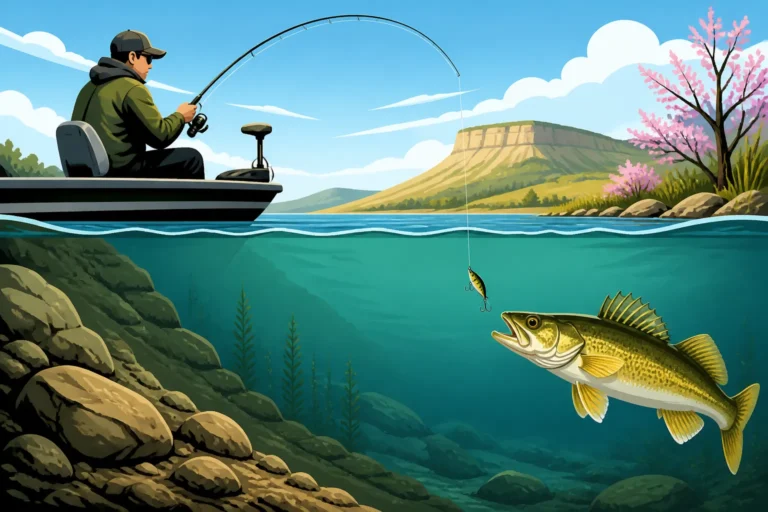
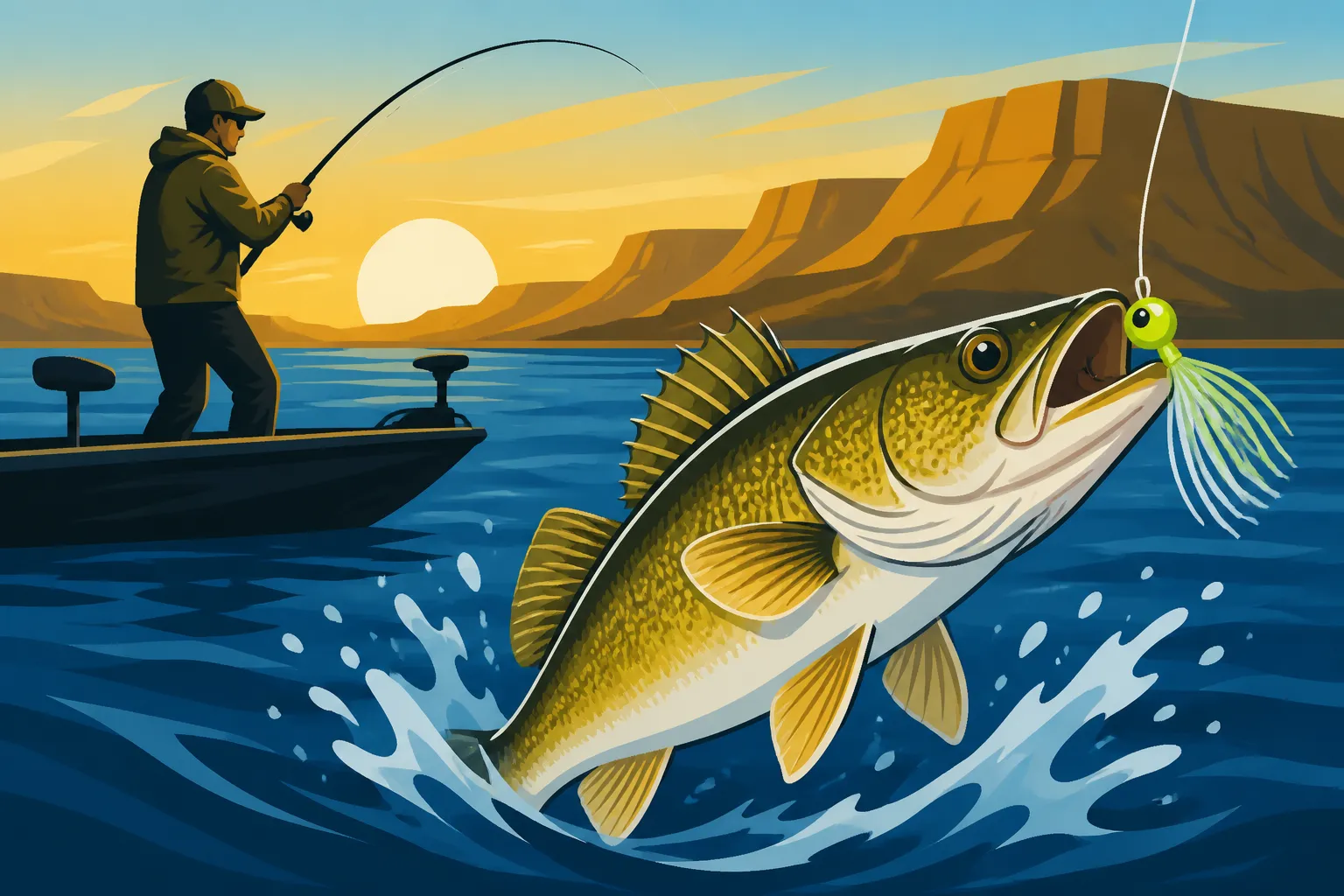
Vertical jigging is perhaps the most fundamental and effective jigging technique, especially when walleye are schooled tightly on specific structures or when conditions demand pinpoint accuracy. The goal is simple: keep your jig directly below your boat, parallel to the bottom. This requires impeccable boat control, often achieved with a bow-mounted electric trolling motor featuring GPS spot-lock capabilities. Spot-lock is an absolute game-changer on a big lake like Sakakawea, allowing you to hold precisely over a hump, point, or submerged timber, even in windy conditions.
Your presentation should be subtle. Start with short, sharp snaps or lifts of your rod tip, anywhere from 6 inches to 2 feet, letting the jig fall back to the bottom on a semi-slack line. Most bites occur on the fall, so paying attention to your line and feeling for any "thump" or unnatural slack is critical. Sometimes, a dead-sticking approach, where you hold the jig perfectly still just off the bottom, or a subtle quiver of the rod tip, is what triggers a bite from finicky walleye. Experiment with different lift heights, fall rates, and pauses until you find what the fish want. The more vertical you keep your line, the more direct contact you'll have with your jig and, consequently, the fish.
Pitching and Casting Jigs: Covering Water
While vertical jigging is excellent for precision, pitching and casting jigs allows you to cover more water and target structures from a distance, which can be crucial when walleye are scattered or when you want to avoid spooking shallow fish with your boat. This technique is particularly effective when fishing points, submerged rock piles, or along breaks where walleye might be spread out rather than tightly grouped. You'll cast your jig out, typically upwind or upcurrent of your target area, and allow it to sink to the bottom.
Once on the bottom, retrieve the jig with a series of short hops, drags, or snaps of the rod. The key is to keep the jig moving in a natural way that mimics a fleeing baitfish or a crawling critter. Pay close attention to the feel of your line and the rod tip as the jig falls after each lift – this is often when a walleye will strike. Fan casting, where you make casts in a wide arc around your boat, is an effective way to thoroughly prospect an area. This method is also highly productive when you're fishing breaklines, allowing you to cast up onto the shallow side and work your jig down the slope, imitating baitfish moving into deeper water. Learning to effectively cast and retrieve a jig can significantly expand your walleye fishing repertoire. For related techniques, see our guide on How to Jig a Minnow Combo.
Tipping Your Jigs: Live Bait vs. Plastics
Tipping your jig can be the secret sauce that turns a so-so day into a stellar one. The choice between live bait and soft plastics often depends on fish mood, water temperature, and personal preference. Live bait, such as minnows, leeches, or nightcrawlers, offers natural scent, action, and taste that is incredibly hard for walleye to resist. A shiner or fathead minnow hooked through the mouth or eye socket on a jig head is a classic presentation, especially effective in cooler waters. Leeches, hooked through the sucker, provide a squirming, enticing action, particularly in late spring and early summer. Nightcrawlers, often half-hooked to allow for movement, are fantastic for drawing strikes from active fish.
However, soft plastics have come a long way and often outperform live bait in specific situations, especially for active fish or when you need durability. Paddle tails, grubs, and stick baits in various sizes and colors can imitate baitfish or crayfish. The advantage of plastics is their durability (no re-baiting after every fish), their vibrant colors, and their ability to be fished more aggressively without tearing off. Experiment with different plastic profiles and sizes on your jig to find what's working. Sometimes, a subtle 2-inch grub is deadly, while other times a larger 4-inch paddle tail is what triggers the bite. Many anglers even combine the two, adding a piece of live bait to a soft plastic for an irresistible scent and action combination. For more detailed advice on bait, check out Best Live Bait for North Dakota Walleye.
Seasonal Strategies for Jigging Success
Walleye behavior on Lake Sakakawea changes dramatically with the seasons, driven primarily by water temperature and spawning cycles. Understanding these shifts is crucial for knowing where to find them and how to present your jigs effectively.
Spring and Early Summer: Shallow Water Patterns
As the ice recedes and spring progresses, walleye on Lake Sakakawea begin their migration into shallower waters for spawning. After the spawn, typically in late April through May, they remain relatively shallow, often found in 8 to 20 feet of water, recovering and actively feeding. Key locations during this period include sandy or rocky points, shallow bays with emerging weeds, and areas near creek mouths where warmer water and baitfish concentrate. The fish are often aggressive as they replenish their energy reserves.
Your jigging strategy during this time should focus on covering water along these shallow breaks and structure. Pitching jigs (1/8 to 1/4 ounce) tipped with minnows or soft plastics into these areas and working them back to the boat can be highly effective. Look for subtle changes in bottom composition, small rock piles, or the edges of developing weed beds – these are classic ambush points. The bite can be particularly strong during low-light conditions or on cloudy, windy days. As water temperatures continue to climb into early summer, walleye will start to transition, moving towards slightly deeper staging areas before settling into their summer patterns. For a deeper dive into early season tactics, read our article on Early Spring Walleye Techniques in North Dakota.
Mid-Summer: Deep Water and Thermocline Tactics
By mid-summer, when the sun is high and water temperatures are at their peak, Lake Sakakawea walleye typically move to deeper, cooler waters. This is when main lake structures like deep humps, extensive points that drop into the main basin, and the edges of the original river channel become prime targets. Walleye will often suspend in or near the thermocline – the layer of water where temperature changes rapidly – as this is where baitfish and oxygen levels are often optimal.
Vertical jigging becomes exceptionally effective in these deeper scenarios. Using 3/8 to 1/2 ounce jigs, or even heavier if there's significant wind or current, is necessary to maintain bottom contact and feel those deep bites. Your electronics are your best friend during this period. Utilize your sonar to identify bait balls, suspended walleye, and the depth of the thermocline. Once you locate a school of fish or promising structure, use your trolling motor's spot-lock to hold directly over them and meticulously work your jig. Slower, more deliberate jigging motions, often with a live minnow or a subtle plastic, can entice lethargic summer walleye. Pay attention to how the fish are relating to the structure – are they on top, along the edges, or suspended just off the bottom? Adjust your presentation to match their position.
Fall: Aggressive Feeding and Schooling
As autumn descends upon North Dakota and water temperatures begin to drop, Lake Sakakawea's walleye enter a period of aggressive feeding in preparation for winter. This is often considered one of the best times of year for trophy walleye. Fish will migrate back to major structures, deep breaklines, and main lake points, often schooling up in significant numbers. Their metabolism is high, and they are actively chasing baitfish like smelt and gizzard shad.
Jigging during the fall can be incredibly productive. Walleye are often more willing to strike a moving lure, so slightly more aggressive jigging presentations with plastics can be very effective. However, don't rule out traditional jig and minnow combinations, especially as the water gets colder. Focus your efforts on the steepest breaks and the deepest parts of points where walleye will stack up. As the season progresses and temperatures continue to fall, walleye will move even deeper, often settling into wintering holes in the deepest parts of the main lake basin. This is a fantastic time to use your electronics to locate these dense schools and vertically jig larger profile jigs or even blade baits. Understanding these patterns is key to a successful fall bite. Delve into more fall techniques with our Fall Walleye Fishing Patterns in North Dakota guide.
Advanced Tips and Troubleshooting
Even with the right gear and knowledge, walleye fishing on Lake Sakakawea can present its challenges. Learning to use your tools effectively and adapting to changing conditions are hallmarks of a truly skilled angler.
Utilizing Electronics for Maximum Efficiency
Modern marine electronics are indispensable for jigging walleye on Lake Sakakawea. Your fish finder isn't just for showing you depth; it's a window into the underwater world. Two-dimensional sonar is excellent for marking bottom structure, identifying fish arches, and seeing your jig in the water column. This allows you to precisely present your lure at the depth where fish are holding. Down Imaging and Side Imaging, found on units from brands like Humminbird or Lowrance, take it a step further. Down Imaging provides a photographic-like view directly below your boat, showing intricate details of submerged timber or rock piles. Side Imaging scans out to the sides, allowing you to quickly locate structure, baitfish schools, and even individual walleye far from your boat, reducing the amount of time you spend fishing unproductive water.
GPS is equally critical. Use it to mark promising waypoints – those humps, points, or timber patches you've found. When you locate a productive school of fish, immediately drop a waypoint so you can return to that exact spot. The spot-lock feature on your trolling motor, as mentioned earlier, integrates with GPS to hold you precisely in position, which is paramount for vertical jigging. Regularly review your sonar screens, looking for subtle changes in bottom contour, baitfish presence, and anything that looks like a walleye mark. When you're ready to upgrade your electronics, reliable brands can be found on Amazon, offering models with advanced features like Side Imaging or Down Imaging. For a comprehensive overview, see our guide on Best Fish Finders for North Dakota Lakes.
Adapting to Changing Conditions
Lake Sakakawea is notorious for its rapidly changing weather and water conditions, and the best walleye anglers are those who can quickly adapt. A strong wind can turn calm waters into a confused chop in minutes, making boat control difficult. On such days, consider seeking sheltered bays or the lee side of large points, or use heavier jigs to maintain bottom contact. Sometimes, fish will move to the windy side of a structure due to baitfish concentration, so if you can manage the boat, it can be worth the effort.
Water clarity changes can also affect the bite. After heavy rains, parts of the lake might become stained. This often means walleye move shallower and respond better to brighter, more contrasting jig colors or baits that create more vibration. On the other hand, in very clear water, a more natural presentation with subtler jig colors and longer fluorocarbon leaders may be required. The "bite" itself can vary from aggressive strikes to incredibly light taps, or even just a feeling of added weight. It's crucial to pay attention to these nuances and adjust your jigging retrieve, speed, and even the size of your jig or bait to match the fish's mood. Flexibility is your friend on Sakakawea, especially when Fishing During a Cold Front in North Dakota.
Common Mistakes and How to Avoid Them
Even experienced anglers fall victim to common pitfalls when jigging for walleye. One of the biggest mistakes is fishing too fast or too slow. There's a fine line between covering water and letting the fish examine your bait. Start with a moderate cadence and adjust based on fish response. If you're getting short strikes or no bites, slow down, lengthen your pauses, or try a more aggressive snap. Another common error is using a jig that's too light for the conditions, leading to poor bottom contact and difficulty feeling bites. Conversely, a jig that's too heavy can feel unnatural and spook fish. Always use the lightest jig you can confidently feel hitting the bottom.
Poor boat control is another major factor that leads to frustration. If you can't keep your jig vertical, or if you're drifting too quickly over structure, your presentation will be compromised, and you'll miss bites. Invest time in learning to use your trolling motor effectively. Finally, many anglers miss subtle walleye bites because they're not focused enough. Walleye bites are rarely aggressive tugs; more often, it's a soft "tick," a feeling of spongy weight, or just your line going slack. Keep your eyes glued to your rod tip and your line where it enters the water, and be ready to set the hook at the slightest indication. Make sure you have a reliable tackle box or bag, and Amazon has countless options that are perfect for keeping your jigs organized and accessible on the water.
| Jig Type | Ideal Conditions | Typical Weight Range | Tipping Options | Key Advantage |
|---|---|---|---|---|
| Round Head | All-around versatile, various depths/bottoms | 1/8 oz – 1/2 oz | Minnows, plastics | Simple, effective, widely available |
| Stand-Up | Soft/muddy bottoms, light current | 1/8 oz – 3/8 oz | Minnows, leeches, plastics | Keeps bait upright, good visibility |
| Football Head | Rocky bottoms, dragging, moderate current | 1/4 oz – 5/8 oz | Crawlers, plastics | Resists snags, good bottom feel |
| Banana/Fin | Vertical jigging, current, precise presentation | 1/4 oz – 1/2 oz | Minnows, plastics | Excellent vertical tracking, subtle action |
| Blade Baits | Aggressive fish, deep water, vertical presentation | 1/4 oz – 3/4 oz (metal lure) | N/A (built-in action) | High vibration, attracts from a distance |
Disclaimer
Fishing conditions, regulations, and fish behavior can change rapidly. Always consult the latest North Dakota Game and Fish Department regulations before heading out. This guide provides general information and recommendations, and personal safety should always be your top priority on the water.