How Deep to Troll for Walleye in Spring
One of the biggest head-scratchers for any angler hitting the water in North Dakota during spring is trying to figure out just how deep those elusive walleye are holding. It's incredibly frustrating when you know they're out there, but every cast, every troll pass, feels like you're fishing in a completely different zip code. This guide is all about peeling back the layers of spring walleye behavior, helping you pinpoint those productive depths, and getting your presentation right where it needs to be for a successful trip.
Understanding Spring Walleye Behavior and Depth
Spring in North Dakota is a time of transition, and for walleye, it's all about recovering from the spawn and finding their next meal. Their depth preferences during this season are incredibly dynamic, influenced by a cocktail of factors, with water temperature often being the secret ingredient.
Post-Spawn Recovery and Food Sources
After the arduous task of spawning, usually from late April through early May in North Dakota, walleye are often exhausted and hungry. They typically spawn in shallow, rocky areas, rivers, or tributaries where there's good current and suitable substrate for egg deposition. Once the deed is done, they don't just vanish into the abyss. Instead, they’re often looking for easy access to food and warmer water to recuperate.
Initially, many walleye will linger near their spawning grounds for a short period, taking advantage of any baitfish that might also be drawn to these areas. As the days warm, they’ll start migrating towards structure that offers both cover and feeding opportunities. Think about those shallow bays that absorb the sun's warmth first, or rocky points and reefs near deeper water. These spots become critical staging areas because they attract schools of shiners, smelt, and other small baitfish that the walleye are keen to gorge on. Learning the intricacies of their movements can really put you ahead, as discussed in our comprehensive North Dakota Walleye Fishing Guide.
Water Temperature's Role in Depth Selection
If there's one thing that dictates a walleye's location in spring more than any other, it's water temperature. Walleye are cold-blooded creatures, and their metabolism, activity level, and comfort zone are directly tied to the water around them. In early spring, just after ice-out, the water might still be in the low 40s Fahrenheit. At these temperatures, walleye are often lethargic, preferring slightly warmer pockets of water they can find.
As spring progresses and the sun's intensity increases, surface waters in shallow bays and along dark, rocky shorelines will warm up first. Walleye will follow this thermal advantage, often positioning themselves in the 45-55°F range if possible. This means they might be surprisingly shallow, sometimes just 5-10 feet deep, especially on sunny days or during late afternoons. Conversely, if a cold front blows through, dropping air and water temperatures, these fish might retreat to slightly deeper, more stable thermal zones, even if only by a few feet. It's a constant game of hide-and-seek with the sun, and understanding these subtle shifts in How Water Temperature Affects Walleye Location is key to consistent success.
Forage Location Dictates Walleye Depth
Ultimately, walleye are predators, and they will go wherever their food goes. In spring, young-of-the-year baitfish or larger schools of mature shiners and smelt are often concentrated in specific areas. These baitfish themselves are also influenced by water temperature, available cover, and currents. For instance, after a strong wind, baitfish might be pushed to a particular shoreline or concentrated in a calm bay, and the walleye will be right there with them.
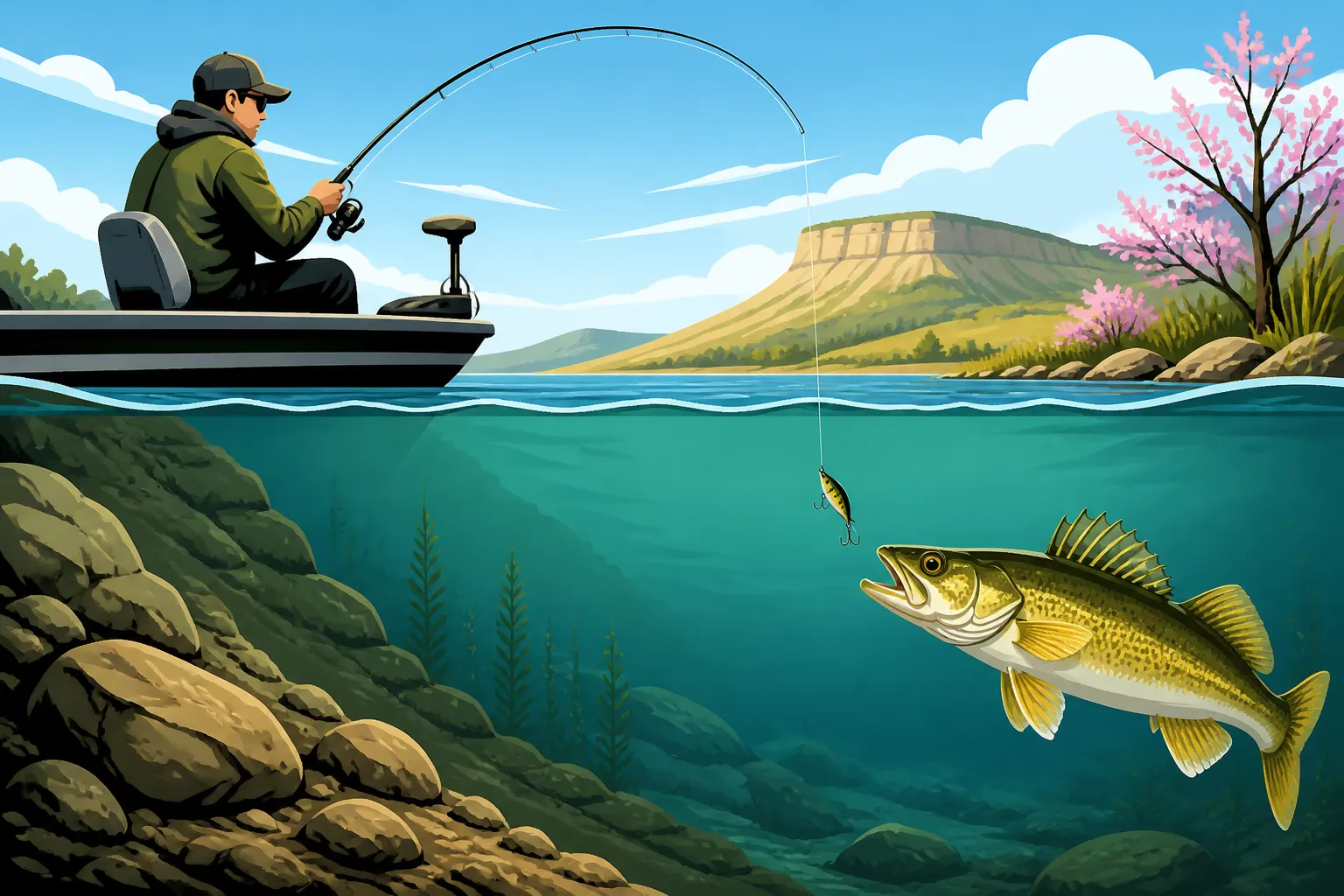
When trolling, your depth isn't just about finding the walleye; it's about presenting your lure where the baitfish should be, and by extension, where the walleye are. If your fish finder shows dense schools of bait suspended at 15 feet, that's your starting point. If they're hugging the bottom in 20 feet, that’s where you need to be. In large North Dakota reservoirs like Lake Sakakawea, baitfish can be scattered or tightly schooled, making your electronics invaluable for locating these crucial feeding zones.
Trolling Strategies for Spring Walleye Depth
Once you have a handle on the "why" behind spring walleye depth, it’s time to focus on the "how." Trolling is an incredibly effective method for covering water and systematically figuring out the active depth range. It allows you to present lures at consistent depths, making it easier to replicate success once you find it.
Reading the Lake and Identifying Productive Zones
Before you even drop a line, take some time to "read" the lake. Look for areas that will warm up first: north-facing bays, dark-bottomed flats, rocky points, and sheltered coves. Use your boat's electronics and mapping software to identify underwater structure like points, humps, breaklines, and submerged weed beds. These are natural congregating points for both baitfish and walleye. For detailed insights on this, you might find our guide on Best Fish Finders for Boat Fishing incredibly helpful.
When you're out on the water, pay close attention to what your fish finder is telling you. Are there bait balls? Are you seeing arches (which could be walleye) at a particular depth? Are they suspended or bottom-oriented? Make mental notes or even drop waypoints on your GPS. Don't be afraid to make wide, sweeping turns while trolling to cover varying depths. Often, walleye will be concentrated along a specific depth contour, and a slight S-turn might just bring your lure into the strike zone. If you're fishing a specific area like the Missouri River, understanding its unique currents and depths is vital.
Crankbait Selection for Specific Depths
Choosing the right crankbait is paramount when you're trying to hit a precise depth. Not all crankbaits are created equal, and their diving capabilities vary significantly based on their lip design, body shape, and buoyancy.
- Shallow Divers: Lures like a Rapala Shad Rap or a Berkley Flicker Shad in smaller sizes (5-7cm) might dive to 5-10 feet on their own, making them perfect for those early spring, super shallow walleye.
- Medium Divers: Many standard crankbaits will hit the 10-15 foot range. These are often excellent choices for mid-spring when walleye start to transition slightly deeper or are found on the edges of structure.
- Deep Divers: Lures with larger, steeper diving lips, such as a Reef Runner 800 Series or a larger Rapala Deep Husky Jerk, can reach depths of 15-25 feet or more, depending on line type and trolling speed. These become more relevant as spring progresses and water temperatures stabilize.
It's crucial to understand the dive curve of your specific lures. Many manufacturers provide charts, or you can find them online (a quick search on Amazon or tackle shop websites can often yield this info). These charts tell you how deep a lure will run at a given trolling speed with a certain amount of line out. Experimentation is key; a lure rated for 10 feet might only hit 8 feet if you're trolling too slow, or 12 feet if you're pulling it faster. For more specific lure advice, check out Best Crankbaits for North Dakota Walleye.
Mastering Trolling Speed and Line Length
Once you have your crankbait selected, fine-tuning your trolling speed and the amount of line you let out are your primary controls for depth.
- Trolling Speed: Generally, slower speeds (1.0-1.8 mph) are effective in colder spring waters, as walleye might be less inclined to chase a fast-moving bait. At these slower speeds, your lures will typically run shallower than their maximum rated depth. As water warms up, you can often bump up your speed (1.8-2.5 mph) which will usually make your lures dive deeper and trigger more aggressive bites. The "sweet spot" will vary day-to-day, so experiment until you find what the fish prefer.
- Line Length: This is your direct control for getting deeper. The more line you let out, the deeper your lure will run. However, there's a point of diminishing returns. After a certain length (often 75-125 feet, depending on the lure), the lure won't dive much deeper, and you'll just be increasing slack and making it harder to detect bites. Using line counter reels is almost essential for precise trolling, as they allow you to duplicate successful presentations with exact line lengths. Consider using braided line as your main line, as its thinner diameter and lack of stretch allow lures to run deeper and provide better bite detection. Then, attach a fluorocarbon leader for stealth and abrasion resistance. Using the right line can make a huge difference in Best Fishing Line for North Dakota Lakes.
A methodical approach involves letting out varying amounts of line on different rods until one starts producing. If you're running multiple lines, try setting one at 50 feet out, another at 75, and a third at 100 feet. Once you get a bite, you'll know roughly what depth range is working, and you can adjust the other lines accordingly.
Adjusting to North Dakota's Spring Conditions
North Dakota's spring weather can be notoriously fickle, throwing everything from snow squalls to warm, sunny days at you, often within the same week. Being able to adapt your trolling depth to these rapidly changing conditions is what separates the consistently successful anglers from the rest.
Early Spring Ice-Out to Mid-May Depths
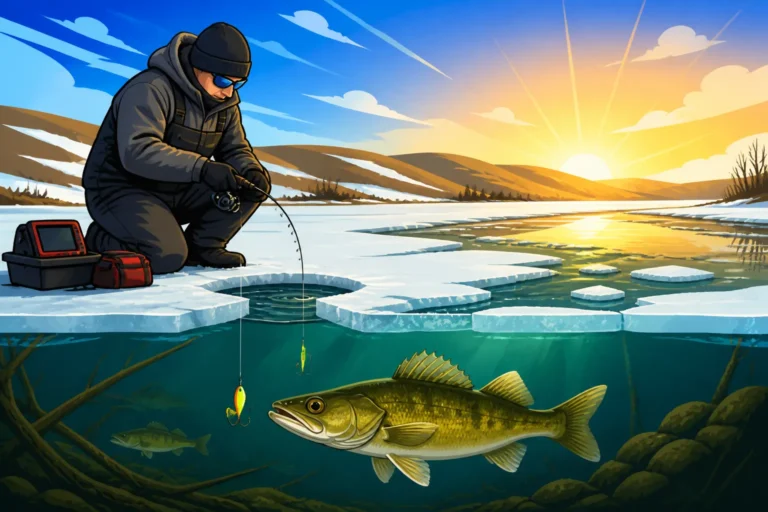
Right after ice-out, especially in lakes like Devils Lake or smaller reservoirs, walleye are very cold and often found in surprisingly shallow water. We're talking 5-15 feet, sometimes even shallower if there's a dark bottom absorbing sunlight. These early fish might be concentrated in bays or creek mouths that receive warming runoff. They're often staging for the spawn or just recovering from it in these areas.
During this period, focus your trolling efforts on the shallow flats, submerged points, and the very edges of emergent weed beds. Small, shallow-diving crankbaits or even spinner rigs with live bait (like a minnow) can be deadly. Troll slowly, perhaps 1.0-1.5 mph, and use your electronics to watch for any structure or baitfish concentrations. This is a crucial time to be patient and observe the subtle nuances of fish behavior, as detailed in our guide to Early Spring Walleye Techniques in North Dakota. The walleye season usually opens in North Dakota on April 1st, so you can target these fish right from the start.
Late Spring Mid-May to Early June Depths
As we move deeper into May and into early June, North Dakota's waters continue to warm significantly. This is when walleye generally start to disperse from their immediate post-spawn locations and spread out across the lake, moving into more classic summer patterns. You'll often find them transitioning to slightly deeper water, typically 10-25 feet, though they can certainly still move shallower during low-light conditions or aggressive feeding periods.
During this time, walleye will relate more to main lake structure: prominent points that extend into deeper water, offshore humps, rock reefs, and distinct breaklines. They're actively feeding and chasing baitfish. This is when medium to deep-diving crankbaits become highly effective for trolling. Increase your trolling speed slightly (1.5-2.5 mph) to cover more water and trigger reaction strikes. Pay attention to suspended fish over deeper water, as they might be chasing schools of pelagic baitfish. For those who enjoy a bit of competitive fishing, ensure you're aware of the North Dakota Fishing Regulations Explained before heading out.
Dealing with Wind and Water Clarity
North Dakota is famous for its wind, and this can be both a blessing and a curse for walleye anglers.
- Wind: A steady breeze often pushes warmer surface water and baitfish to the downwind side of a lake. This "wind-blown" side can be a walleye magnet. The chop on the water also breaks up light penetration, often making walleye feel more comfortable moving shallower to feed. When trolling into or with the wind, you might need to adjust your speed to maintain proper lure action and depth. On very windy days, it's often more productive to troll parallel to the wind-blown shorelines or points.
- Water Clarity: This factor plays a huge role in how deep walleye will hold. In clearer lakes, walleye tend to be more light-sensitive and will often hold deeper, especially during bright sunny days, to avoid intense light. In stained or turbid waters, such as those sometimes found on the Red River, walleye can be found much shallower, even in bright conditions, because the murky water offers them natural camouflage. Adjust your lure colors accordingly too – brighter, more contrasting colors for stained water, and more natural patterns for clear water.
Here's a quick reference table for crankbait types and their typical trolling depths in North Dakota spring conditions:
| Crankbait Type | Typical Trolling Depth (Feet) | Key Features & Conditions | Example Lures (brands may vary) |
|---|---|---|---|
| Shallow Runner | 5 – 10 | Small lip, buoyant. Ideal for early spring, shallow bays, low light. | Rapala Shad Rap 5/7, Berkley Flicker Shad 5, Cotton Cordell Wally Diver 100 |
| Medium Runner | 10 – 15 | Moderate lip, good all-around diver. Versatile for mid-spring structure. | Rapala Original Floater 11, Berkley Flicker Shad 7, Storm Original Wiggle Wart |
| Deep Runner | 15 – 25+ | Large, aggressive lip. For late spring, deeper breaks, offshore humps. | Reef Runner 800 Series, Rapala Deep Husky Jerk 12/14, Bandit Walleye Deep |
Note: Actual depths depend on line type, line length, trolling speed, and current.
Final Thoughts on Spring Walleye Depths
Pinpointing the exact depth for spring walleye in North Dakota is never a static target. It's a dynamic puzzle that requires constant attention to water temperature, baitfish activity, weather conditions, and lure selection. Don't be afraid to experiment with different depths, even within a few feet, until you hit that sweet spot. Remember that walleye often occupy a very specific depth range, and being even a few feet off can mean the difference between a successful day and a frustrating one. Embrace the challenge, learn from every pass, and you'll be well on your way to consistent spring walleye success. For more information, consider reading our full North Dakota Fishing Season Calendar to help plan your trips.
Disclaimer
The information provided in this guide is for general informational purposes only and is subject to change. Always consult the most current North Dakota Game and Fish Department regulations before fishing, as rules and limits can vary by species, water body, and season. Safety should always be your top priority when on the water.