Beginner Casting Tips for New Anglers
Oh, the sheer frustration of a botched cast! If you're new to fishing in North Dakota, you've likely experienced that agonizing moment when your lure goes nowhere, or worse, tangles itself into a bird's nest of line right off the reel. It's enough to make anyone want to throw their rod (and not in a good way!). But don't you worry, because mastering a smooth, accurate cast is absolutely achievable, and this guide is here to walk you through the essential tips and techniques to get your bait where the fish are, not just where the snags are.
Understanding Your Basic Setup for Casting Success
Before you even think about swinging that rod, it's vital to understand the tools you're working with. A solid foundation with your gear makes all the difference in how easily you'll pick up casting. Trying to learn with equipment that's fighting you is like trying to learn to ride a bike with square wheels – it’s just not going to happen gracefully.
The Right Rod and Reel Combo for Beginners
For new anglers, especially those looking to fish North Dakota's diverse waters for everything from walleye to northern pike, a spinning rod and reel combo is almost always the way to go. Forget the baitcasters for now; they have a steeper learning curve that can lead to more frustrating backlashes than actual fishing. Spinning reels are designed for ease of use, making them incredibly forgiving as you learn the ropes.
When choosing your first setup, look for a medium-action rod, typically seven to eight feet long. This length gives you good casting distance without being too unwieldy, and the medium action means it's flexible enough to cast lighter lures but still has enough backbone to handle a decent-sized fish. Paired with a spinning reel in the 2500-3000 series size, you’ve got a versatile combo. You might find a great starter kit on a site like Amazon, often bundled as a ready-to-go package. This kind of setup is often recommended as the Best Rod and Reel Combo for Beginners in North Dakota because it’s so adaptable.
For line, a 6 to 10-pound monofilament or fluorocarbon is usually perfect for general purpose fishing. Monofilament is a bit more forgiving for beginners, as it has more stretch and is less prone to tangling than braided line, which can be fantastic for sensitivity but a bit trickier to manage when you're just starting out. Many anglers find that a simple monofilament on their Best Fishing Rods for North Dakota Anglers is all they need.
Spooling Your Line Correctly
This might sound like a minor detail, but incorrect line spooling is a silent killer of good casts. If your line isn't spooled on your reel correctly, it will come off in coils, tangle on itself, and cause endless headaches. For spinning reels, the key is to ensure the line goes on in the same direction it comes off the filler spool.
Here’s a simple trick:
- Attach the Line: Tie the end of your new fishing line to the reel spool using an Arbor knot, or a simple overhand knot around the spool, securing it tightly.
- Close the Bail: Flip the bail arm on your spinning reel shut.
- Submerge the Spool (Optional but Recommended): Place the bulk spool of new line in a bucket of water. This helps the line feed onto your reel smoothly and prevents it from twisting. If you can't submerge it, have someone hold the spool with a pencil through the middle, allowing it to spin freely.
- Wind It On: Start reeling slowly, maintaining light tension on the line with your non-reeling hand. Watch the line as it goes onto the reel. If it's twisting badly (you'll see the line spinning around itself), flip the bulk spool over. One direction will add twists, the other will remove them. You want to avoid introducing twists.
- Fill to the Lip: Fill your spool to about 1/8 inch from the lip. Overfilling will cause line to jump off the reel during casts, creating tangles. Underfilling will reduce your casting distance. A properly spooled Best Spinning Reels for Walleye can significantly improve your experience. If you want a deeper dive, there’s a whole guide on How to Spool a Spinning Reel for Walleye.
Attaching Your Lure or Bait
Once your line is spooled, you'll need to attach your chosen bait or lure. For beginners, simple, reliable knots are your best friends. Don't get caught up in trying to learn every complex knot out there right away. Two knots will get you through almost any situation: the Improved Clinch Knot and the Palomar Knot.
- Improved Clinch Knot: This is an excellent all-around knot for tying hooks, swivels, and lures directly to your fishing line. It’s relatively easy to learn and offers good strength. It's especially useful when you're attaching a jig or a small crankbait. You can find many visual guides online, or even on a site like Amazon that sells fishing gear, to help you master it.
- Palomar Knot: While slightly more challenging for absolute beginners, the Palomar knot is renowned for its strength and reliability, particularly with braided lines or when you're attaching a Best Jigs for North Dakota Walleye. It's a great knot to graduate to once you're comfortable with the basics.
The key is to practice these knots at home until you can tie them quickly and correctly without looking. A strong knot is what keeps your fish on the line, and a weak one means lost fish and lost lures. You might find this resource helpful: How to Tie a Fishing Knot for Beginners.
Mastering the Overhead Cast for Spinning Reels
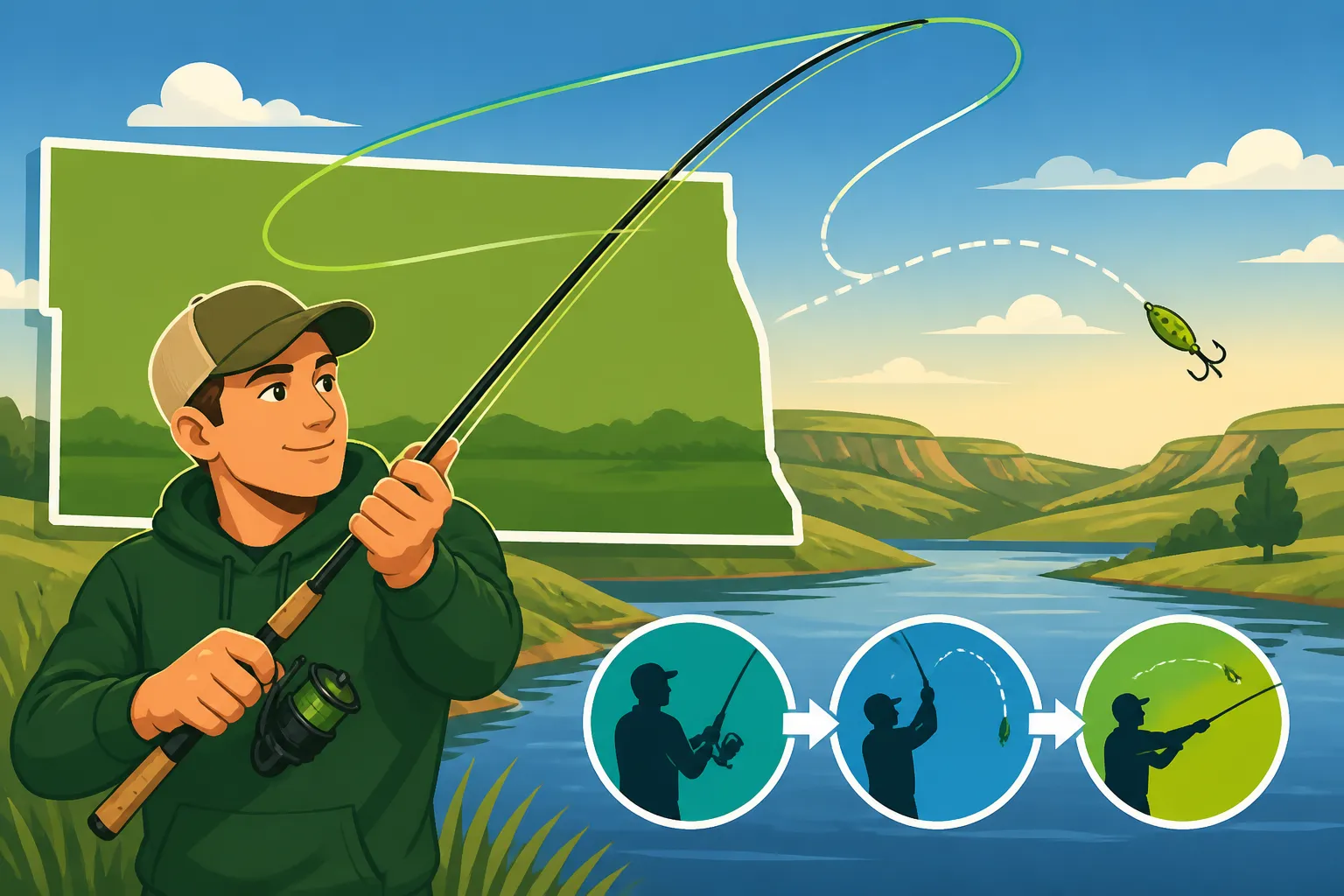
Now for the fun part: the actual cast! The overhead cast is the most fundamental and versatile cast for spinning gear. It's what you'll use 90% of the time, whether you're shore fishing or casting from a boat on Lake Sakakawea. It provides accuracy and distance, and once you get the rhythm down, it feels incredibly natural.
The Fundamental Steps to a Smooth Cast
Think of casting as a gentle, controlled swing, not a violent heave. Power comes from technique, not brute force.
- Grip the Rod: Hold the rod with your dominant hand, just above the reel. Your index finger should be positioned to easily reach the line coming off the spool.
- Reel and Lure Position: Reel in your lure until it's hanging about 6-12 inches from the rod tip. This length gives you enough leverage for a good cast without the lure flopping around too much.
- Open the Bail: With your index finger, reach down and pick up the fishing line. Hold it firmly against the rod handle. Now, flip open the bail arm on your spinning reel. This is critical; if you forget this step, you'll snap your line or send your lure plummeting directly in front of you.
- Identify Your Target: Look at where you want your lure to land. Don't just stare at the tip of your rod. Your eyes should be fixed on your target.
- The Backswing: Bring the rod up and slightly behind you, stopping around the 10 or 11 o'clock position (if your rod tip was a clock hand). The weight of the lure should load, or bend, the rod tip. This "loading" is what gives you power. It's a smooth, controlled motion, not a sudden jerk.
- The Forward Cast and Release: Without pausing, smoothly bring the rod forward, aiming towards your target. As the rod passes the 12 o'clock position (or slightly before), release your index finger from the line. This is the trickiest part – timing is everything!
- Guide the Line (Optional): As the lure flies, gently guide the line coming off the spool with your index finger. This helps control the line and prevent tangles.
- Close the Bail and Retrieve: Once the lure hits the water, or just before, flip the bail arm back down with your free hand. Immediately take up any slack line by reeling a few turns. This prepares you for a bite and prevents excess slack from tangling. If you're Shore Fishing Techniques for Beginners, practicing this sequence is key.
Common Casting Mistakes and How to Fix Them
Everyone makes mistakes when learning to cast – it's part of the process! Recognizing them is the first step to fixing them.
- The "Overpowering" Cast: You might be tempted to put all your strength into the cast, but this often results in a jerky motion, reduced accuracy, and more tangles.
- Fix: Focus on smoothness and rhythm. Let the rod do the work. Imagine you're cracking a whip, not throwing a baseball. It's all about a smooth acceleration, not a sudden burst.
- Releasing Too Early (The "Sky Cast"): Your lure sails high into the sky and lands way short of your target, sometimes even behind you.
- Fix: You're releasing the line when the rod tip is too far back. Try to release a little later, as the rod comes over your shoulder and begins to point more towards your target (think 1 or 2 o'clock on the imaginary clock face).
- Releasing Too Late (The "Plow Cast"): Your lure slams into the water just a few feet in front of you, or maybe even hits the bank if you're standing on it.
- Fix: You're holding onto the line too long. Release earlier, as the rod tip is moving forward, before it gets too low. Practice seeing the arc you want the lure to take and timing your release accordingly.
- "Wind Knots" or Bird's Nests: These nasty tangles seem to appear out of nowhere, often right after your cast. They're usually caused by too much slack line coming off the reel, often from overfilling or incorrect spooling, or a sudden stop in the lure's flight.
- Fix: Ensure your spool isn't overfilled. When you close the bail, always reel in any slack immediately. Sometimes, if you're casting very light lures into the wind, it can also cause issues. Consider a slightly heavier lure or casting with the wind more.
Practicing Your Cast Safely and Effectively
Practice, practice, practice! You wouldn't expect to hit a bullseye on your first try with a dartboard, and casting is no different.
- Backyard (or Park) Practice: The safest and least frustrating way to start is in your backyard or a local park. Critically, remove any hooks from your lures or use a practice weight. You don't want to hook yourself, a pet, or a curious neighbor.
- Set Up Targets: Place hula hoops, buckets, or even just brightly colored towels at varying distances. Start close, then gradually increase the distance as your accuracy improves. This helps you develop muscle memory and eye-hand coordination for precise casting.
- Repetition is Key: Spend 15-20 minutes a few times a week just casting. Focus on smooth motions, consistent timing, and hitting your targets. Don't worry about catching fish during this stage; just get comfortable with the motion.
- Vary Your Practice: Try casting from different angles or positions, mimicking how you might fish from a boat or from a cramped shoreline spot. This will build versatility. When you're ready for the water, having the Best Tackle for Beginners in North Dakota will help you feel prepared.
Advancing Your Casting Skills on North Dakota Waters
Once you've got the basic overhead cast down, North Dakota's diverse fishing environments will present new challenges and opportunities to refine your technique. From the open expanses of Lake Sakakawea to the narrower rivers, adapting your cast is crucial.
Adjusting for Wind and Different Lure Weights
North Dakota is known for its winds, and they can play havoc with your casting! Learning to adjust for wind is a critical skill.
- Casting into the Wind: This is often the trickiest. You'll need a bit more power and a lower trajectory. Try to cast under the wind rather than into it. Use a slightly heavier lure if possible, as it will cut through the wind better. A direct overhead cast might be less effective; a slightly sidearm cast can sometimes help keep the lure lower.
- Casting with the Wind: This is your friend! The wind will add distance to your cast. You'll need less power, and you can achieve incredible distances with minimal effort. Just be mindful of overshooting your target.
- Crosswind Casting: This requires compensation. If the wind is blowing from your right, aim slightly to the right of your target to account for the lure drifting left, and vice-versa.
- Lure Weight Adaptation: Lighter lures (like small jigs or unweighted plastics) require a more delicate, smooth, and often faster rod action to load the rod properly. Heavier lures (like large spoons or heavier crankbaits) require less power, and you'll primarily use the weight of the lure to bend the rod for you. The type of Best Fishing Line for North Dakota Lakes you use can also affect how well certain lures cast in windy conditions.
Casting on a windy day is tough, but it's a fantastic way to develop your feel for the rod and line. You'll quickly learn how much (or how little) effort is needed for different conditions.
Target Practice and Accuracy
Beyond just getting the lure out there, true casting skill comes from accuracy. The ability to place your lure exactly where you want it – next to that submerged log, in that small pocket of weeds, or right on the edge of a drop-off – is what separates consistent anglers from those just hoping for a bite.
- Visualize the Landing Zone: Before you even start your backswing, picture your lure landing exactly where you want it. This mental preparation is incredibly effective.
- Use Shoreline Features: When fishing from a boat, identify landmarks on the shore or structures in the water (like a lone tree, a dock, or a rock pile) to use as aiming points. This helps you calibrate your cast.
- Short, Accurate Pitches: Often, you don't need a huge, long cast. Learning to make short, accurate pitches to nearby cover can be more productive than bombarding the entire lake. This is especially true when exploring different spots as covered in a North Dakota Walleye Fishing Guide.
- Practice Under Pressure (Simulated): Imagine a fish is rising just outside that weed line. Can you hit it? This kind of mental simulation can help sharpen your focus and reduce anxiety when it counts. Don't forget, when fishing on North Dakota waters, you need to be aware of how many lines you can fish with in North Dakota, so casting accuracy for each line counts!
When to Consider Other Casting Techniques
While the overhead cast is your bread and butter, there are other casting techniques that can be incredibly useful in specific situations. As a beginner, focus on the overhead first, but keep these in mind for when you're ready to expand your repertoire.
- Sidearm Cast: Useful for casting under overhanging trees, docks, or other obstructions. It keeps the lure low to the water. This involves swinging the rod horizontally or at a slight angle to the side of your body.
- Roll Cast: Perfect for situations where there isn't enough room behind you for a full backswing (e.g., dense brush behind you, steep bank). The roll cast essentially uses the water's surface to load the rod, "rolling" the line out in front of you.
- Flipping and Pitching: These are short-distance, highly accurate casts used for presenting lures silently into heavy cover. They involve extending line by hand and using the rod tip to "flip" or "pitch" the lure. These are more advanced but incredibly effective for close-quarters fishing.
Don't feel rushed to learn these immediately. The overhead cast will serve you well for 90% of your North Dakota fishing adventures, especially with a good all-around Best Bait for North Dakota Fishing tied on. Focus on making that one cast consistently smooth and accurate, and you'll be well on your way to becoming a confident angler.
Learning to cast well takes time and patience, but it's one of the most rewarding skills in fishing. So grab your rod, head out to an open space (without hooks!), and start practicing. You'll be dropping lures right into the sweet spot before you know it, and those frustrating bird's nests will become a distant memory. Happy casting!
Disclaimer
This article is for general informational purposes only and does not constitute professional advice. Laws, prices and regulations vary by location and change over time. Consult a qualified professional for guidance on your specific situation.