Best Flip-Over Ice Shelters
One of the biggest challenges for ice anglers in North Dakota isn't just finding the fish, it's staying comfortable and mobile in our famously brutal winter conditions. You've experienced those bone-chilling winds whipping across the frozen expanses of Devils Lake or Lake Sakakawea, making a simple bucket an exercise in misery. This guide is all about finding refuge and staying nimble on the ice, focusing specifically on flip-over ice shelters – those clever, portable homes that can make or break your winter fishing adventure.
The Appeal of Flip-Over Ice Shelters for North Dakota Anglers
When you picture ice fishing, many folks might still think of a bucket on the ice, maybe a small folding chair, and a lot of shivering. But for us North Dakota anglers, especially those who love chasing walleye or perch across vast, windswept lakes, that's just not practical for long. We need something that offers protection from the elements, but also allows us to move, to be where the fish are, and that's where flip-over ice shelters really shine. They're a game-changer for active ice fishermen and women who aren't content to sit in one spot all day.
What Makes Flip-Overs So Popular in the Dakotas?
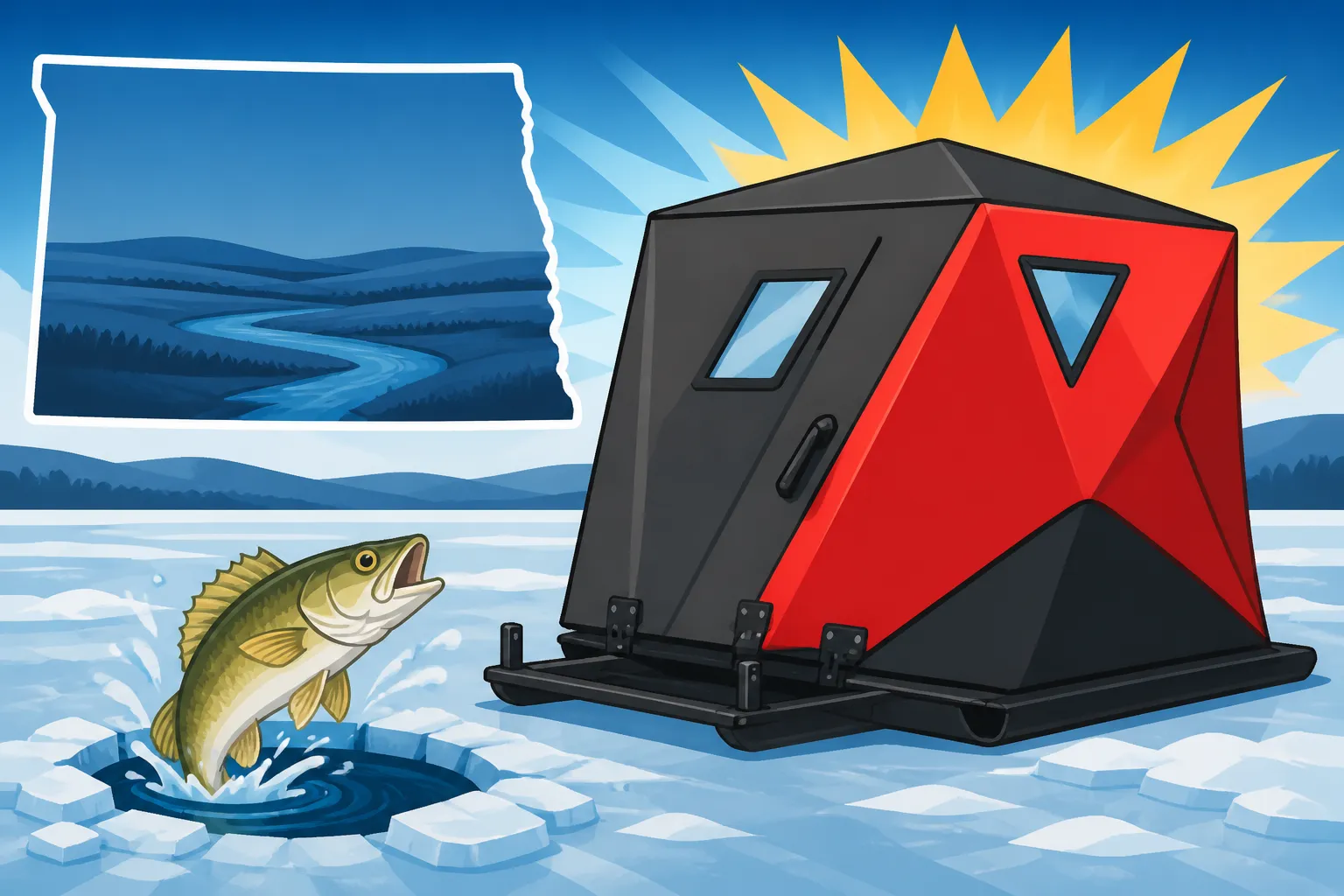
The simple truth is, North Dakota winters are no joke. We're talking about sustained sub-zero temperatures, often accompanied by winds that can make it feel even colder. A static, permanent fish house is great if you plan to stay put for days, but most of us are scouting, drilling, and moving until we hit the bite. Flip-over shelters, often mounted on a sturdy sled, embody mobility and protection in one neat package. You can pull them by hand, attach them to an ATV or snowmobile, and practically be fishing within minutes of stopping. This versatility is crucial when fish are on the move or when you need to follow a hot bite.
Think about those days when you're out on the ice, the wind is howling, and your buddies in their pop-up shelters are struggling to keep them from tumbling across the lake. A flip-over, with its rigid frame and integrated sled base, offers a level of stability that makes those conditions bearable, if not downright comfortable. You can anchor it down, fire up your heater, and truly focus on what matters: catching fish. They represent a blend of protection and freedom that's perfectly suited to our wide-open, often-harsh ice fishing landscape.
Key Advantages Over Other Shelter Types
Compared to other options, flip-overs offer some distinct advantages. For starters, ease of deployment is huge. Imagine pulling up to your chosen spot, unclipping a few buckles, and in literally seconds, you've "flipped" the canvas over a robust frame, and your shelter is ready. No fumbling with poles, no battling with a giant piece of fabric in the wind – it's almost instantaneous. This is a massive plus when your fingers are numb, or the weather turns quickly. Pop-up shelters, while more spacious for their weight, require more setup time and can be a real pain in high winds.
Another significant advantage is their integrated sled base. This isn't just for pulling; it doubles as storage for all your gear. Your auger, propane tank, tackle box, and even your catch can all ride neatly within the sled, protected from snow and ice. When you're moving between spots, everything stays contained and accessible. This eliminates the need for a separate sled or carrying multiple bags, streamlining your entire ice fishing experience. Plus, the hard shell of the sled provides a solid, dry floor that keeps your feet out of the snow and slush, which is a small but mighty comfort on a long day. If you're looking for general advice on how to get started, checking out How to Ice Fish in North Dakota can provide a solid foundation.
The Trade-Offs: Understanding the Disadvantages
Now, it wouldn't be fair to only sing their praises. Flip-over shelters do come with a few trade-offs. The most noticeable is their weight and bulk. Because they have a rigid frame and a heavy-duty sled, they are inherently heavier than a comparable pop-up shelter. This means they can be more challenging to pull long distances by hand, especially through deep snow. While they excel with an ATV or snowmobile, if you're primarily a walk-on angler, you'll feel that extra weight.
Another potential drawback is the cost. Generally, flip-overs tend to be more expensive upfront than pop-up shelters of similar capacity. This is due to the more complex construction, materials, and integrated sled. You're paying for the convenience, durability, and features they offer. Finally, while they set up incredibly fast, the actual interior space can sometimes feel a bit more confined compared to the wide-open floor plan of a hub-style pop-up. The seating is often built-in, which is great for comfort but less flexible if you like to rearrange your space or bring different chairs. For a comprehensive look at what you need to hit the ice, refer to Best Ice Fishing Gear for North Dakota.
Essential Features to Look For in a Flip-Over Shelter
When you're outfitting yourself for North Dakota's demanding ice fishing season, your flip-over shelter isn't just a convenience; it's a vital piece of survival gear. Choosing the right one means digging into the details, because not all shelters are created equal. You want a shelter that can stand up to the relentless wind, keep you warm when the mercury drops, and generally make your time on the ice as enjoyable as possible.
Insulation and Fabric Durability
The fabric of your flip-over shelter is your first line of defense against the cold. Many modern flip-overs now come with insulated fabric, which is a massive improvement over older, single-layer canvas models. This insulation, often multiple layers stitched together, dramatically reduces heat loss and condensation buildup inside the shelter. Imagine setting up your heater and actually feeling the warmth stay inside, rather than escaping through thin walls. This also means you can often get by with a smaller heater, saving on propane and carrying less weight. Look for shelters with higher denier fabrics (e.g., 600D, 900D, or even 1200D), as this indicates a thicker, more tear-resistant material. A higher denier generally translates to greater durability against rips, abrasions, and general wear and tear from dragging it across the ice.
Beyond just the thickness and insulation, consider the quality of the stitching and zippers. These are often overlooked but critical failure points. Double-stitched seams and heavy-duty, oversized zippers will last much longer under the stress of repeated use in cold conditions. A good quality fabric will also have a dark interior coating to block out light, which is excellent for sight fishing or simply for taking a quick nap without being bothered by glare. Brands like Clam and Eskimo are well-known for their robust fabric and insulation technologies, which makes them popular choices among serious North Dakota ice anglers.
Frame Construction and Stability
The frame is the skeleton of your flip-over shelter, and its construction dictates how well it will hold up to North Dakota's notorious winds. Most flip-overs use aluminum poles for their frames, which offer an excellent balance of strength and weight savings. However, the thickness and gauge of these aluminum poles can vary. Thicker, more robust poles will naturally provide greater stability and resistance to bending or breaking under stress. Look for frames that have strong pivot points and secure locking mechanisms when extended, ensuring the shelter stays rigid once deployed.
Stability isn't just about the poles; it's also about the overall design. Some shelters incorporate a wider base or a more elaborate frame structure to minimize sway in high winds. The attachment points of the fabric to the frame are also important; reinforced corners and sturdy grommets prevent the fabric from tearing away from the frame during high winds or when flipping the shelter open and closed. A stable frame means you won't be constantly battling your shelter, allowing you to focus on the fishing. For tips on how to properly anchor your shelter, check out Setting Up an Ice Fishing Shelter.
Seating and Interior Layout
The interior layout and seating can greatly impact your comfort and efficiency on the ice. Many flip-overs come with integrated bench seats or swiveling boat-style seats. Bench seats are great for maximizing space, allowing multiple anglers to sit side-by-side, and often provide storage underneath. Swiveling seats, while taking up a bit more room, offer superior comfort and mobility, letting you turn to access gear or tend to multiple holes without having to stand up. Consider whether the seating is removable or adjustable if you have specific preferences or need to convert the space for different types of trips.
Beyond seating, think about overall interior design. Are there convenient mesh pockets for stashing small items like your phone, keys, or extra tackle? Does it have easily accessible windows, and can they be opened or covered? Are there enough access points to the sled for your gear? Some shelters even include features like overhead lighting or integrated rod holders, adding to the convenience. A well-thought-out interior makes a huge difference in how comfortable and organized you'll feel, especially during those long stretches on the hard water.
Sizing Your Flip-Over Shelter: How to Choose the Right Capacity
Selecting the right size flip-over shelter is a crucial decision that goes beyond just how many people you plan to fish with. It's about balancing comfort, portability, and the kind of fishing you typically do in North Dakota. A massive shelter might seem appealing for its space, but if you're always fishing solo and hauling it by hand, you'll quickly regret the extra weight. Conversely, trying to squeeze three people and all their gear into a one-person shelter is a recipe for frustration.
Solo Anglers and Portable Needs
If you're primarily a lone wolf on the ice, chasing perch or scouting new walleye spots, a compact, single-person flip-over is likely your best bet. These shelters are designed for ultimate portability and quick deployment. They are significantly lighter and narrower than their larger counterparts, making them much easier to pull by hand across the snow, even for longer distances. The smaller footprint also means less surface area for the wind to catch, making them surprisingly stable.
While "single-person" sounds small, many of these models offer enough room for you, a heater, a couple of holes, and your essential tackle. The key here is efficiency: you can drill a few holes, fish for a bit, and if the bite dies, you can flip it up and be moving to the next spot in a matter of minutes. This agility is priceless when you're actively searching for fish. Brands like Clam and Eskimo offer excellent one-person models that are perfect for North Dakota's active, mobile angler. Remember, the less you have to struggle with your gear, the more energy you'll have for fishing.
Duo and Small Group Comfort
For those who frequently hit the ice with a buddy, a two-person flip-over shelter strikes an excellent balance between space and portability. These are by far the most popular size among many North Dakota anglers, and for good reason. They provide enough room for two people to fish comfortably, run a heater, and have their necessary gear without feeling overly cramped. Most two-person models feature a bench seat or two individual swivel seats, giving each angler their own space.
When considering a two-person model, pay attention to the actual fishable area. Some designs are more efficient than others. You want enough space between anglers and between your holes so you're not constantly bumping elbows or getting lines tangled. These shelters are still relatively manageable to pull with an ATV or snowmobile, and even by hand for shorter distances or over packed snow. They're ideal for a parent and child, two friends, or even one angler who simply wants a bit more elbow room for their spread of gear. Many of these shelters also come equipped with features that make them suitable for the windier conditions we often experience here; if you’re concerned about stability, refer to Best Portable Ice Shelters for Wind.
Family-Sized and Expedition-Ready Shelters
If your ice fishing trips involve the whole family, a larger group of friends, or if you simply prefer a palatial amount of space for long days on the ice, then a three-person or even four-person flip-over shelter is what you'll be looking at. These are truly "expedition-ready" shelters, designed for maximum comfort and the ability to hold a substantial amount of gear, multiple holes, and a bigger heater. They typically feature longer sleds and wider dimensions, providing ample room to spread out.
While the space is fantastic, it's important to acknowledge the trade-off in portability. These larger shelters are significantly heavier and bulkier. Pulling them by hand for any distance can be a serious workout, even for two strong individuals, especially in deep snow. They are almost exclusively designed to be towed behind an ATV, snowmobile, or truck. The advantage, however, is being able to create a warm, comfortable hub on the ice, perfect for cooking a meal, taking a break from the elements, or introducing new anglers to the sport in a comfortable setting. Before you take the whole family out, it's wise to review North Dakota Ice Fishing Rules to ensure everyone understands the regulations.
Practical Considerations for North Dakota's Harsh Conditions
North Dakota ice fishing isn't for the faint of heart. Our winters demand equipment that can not only perform but endure. When investing in a flip-over ice shelter, it's vital to think about how it will stand up to the specific challenges of our environment, from relentless winds to extreme cold and treacherous snow conditions.
Wind Resistance and Anchoring Systems
Wind is arguably the biggest adversary for North Dakota ice anglers. A stiff breeze can turn a pleasant day into a nightmare if your shelter isn't secure. This is where the inherent design of a flip-over shelter often outperforms other portable options. Their rigid frames and lower profile, especially when hunkered down, offer a natural advantage. However, even the best flip-over needs a good anchoring system. Most shelters come with ice anchors that screw into the ice. You'll want sturdy, sharp anchors that can bite into hard ice and hold fast. Look for shelters that provide plenty of anchor points, allowing you to really pin it down from multiple angles.
Beyond the standard anchors, consider the overall aerodynamic design. Shelters with smoother, less angular shapes tend to shed wind better. Some anglers even use additional ratchet straps over the top of their shelter in extreme conditions for extra security. Never underestimate the power of a North Dakota gust; what starts as a gentle breeze can escalate into a gale in minutes. Learning to set up your shelter firmly is critical for safety and comfort. For more detailed instructions, refer to Setting Up an Ice Fishing Shelter.
Skis, Runners, and Portability on Snow
While the sled base of a flip-over is fantastic for storage, its ability to glide over snow and ice is equally important. The design of the sled's bottom significantly impacts how easy or difficult it is to pull. Many manufacturers offer molded-in runners, which help the sled track straight and reduce friction. For even better performance, especially in deep, powdery snow, consider aftermarket wear bars or skis. These attach to the bottom of the sled, elevating it slightly and providing a smoother glide. This small upgrade can make a monumental difference in how much effort it takes to move your shelter, whether you're pulling it by hand or behind a machine.
The tow bar or rope system is another key component. A rigid tow bar is often preferred over a simple rope, as it prevents the sled from swinging wildly behind your snowmobile or ATV, especially over uneven terrain or when stopping quickly. If you're frequently venturing into areas with heavy snow, investing in a shelter with a well-designed sled bottom and perhaps adding aftermarket runners or a robust tow bar will save you a lot of grief and energy. It's not just about getting to your spot; it's about being able to comfortably move once you're there.
Heating Your Flip-Over Shelter Effectively
Staying warm is non-negotiable for North Dakota ice fishing. A good portable heater is a must-have for any flip-over shelter. Propane heaters are the most common choice, with options ranging from compact Mr. Heater Buddy models to larger, more powerful units. The size of your heater should match the size of your shelter and the insulation of its fabric. A well-insulated shelter will retain heat better, allowing a smaller heater to do the job.
Always ensure proper ventilation when using a propane heater inside your shelter to prevent carbon monoxide buildup. Most flip-overs are designed with ventilation flaps or openings, but it's crucial to use them. Carrying a battery-powered carbon monoxide detector is a smart, life-saving addition to your gear. Beyond the heater, consider the type of propane tank you use. Smaller 1lb disposable canisters are convenient for short trips, but a larger 20lb tank (with an adapter hose) is far more economical and lasts much longer for extended outings. You can even find insulating covers for these tanks to prevent them from freezing up in extreme cold. For peace of mind about heater safety, read Is It Safe to Use a Propane Heater in an Ice Shelter?.
Popular Flip-Over Ice Shelter Brands and Where to Find Them
The world of ice fishing shelters has grown by leaps and bounds, with several reputable brands offering fantastic flip-over options designed to withstand the rigors of a North Dakota winter. Knowing who the major players are and where to find their products can make your purchasing decision much easier.
Exploring Leading Manufacturers
When it comes to flip-over ice shelters, a few names consistently rise to the top, known for their innovation, quality, and angler-focused designs.
Clam Outdoors: Clam is a powerhouse in the ice fishing world, practically synonymous with flip-over shelters. They offer a vast range of models, from lightweight one-person scouts to sprawling expedition-style shelters. Clam is known for its durable fabrics, sturdy frames, and features like their Rapid Pole Slide (RPS) system for quick setup. They often incorporate good insulation and angler-friendly layouts. Their portable series, like the Yukon or Nanook, are incredibly popular choices for those seeking reliable performance in harsh conditions. You can often find a wide selection of Clam shelters at outdoor retailers and online.
Eskimo: Another major player, Eskimo offers a strong lineup of flip-over shelters that are highly regarded for their robust construction and features. They often emphasize durable, heavy-duty fabrics and strong frames that stand up to abuse. Eskimo's FatFish series, while primarily pop-ups, has influenced some of their flip-over designs, focusing on maximizing interior space. Their sleds are often known for their strength and smooth gliding capabilities. Eskimo shelters are a common sight on North Dakota lakes and can be found at various sporting goods stores.
Shappell: While perhaps not as flashy as Clam or Eskimo, Shappell has a loyal following for producing solid, no-frills flip-over shelters that are often more budget-friendly. Their shelters are known for their practicality and durability, offering reliable performance without a lot of extra bells and whistles. If you're looking for a dependable workhorse that won't break the bank, Shappell is definitely worth considering.
Frabill: Frabill also produces a range of flip-over shelters, often incorporating their well-known expertise in fishing gear into their shelter designs. They focus on features that enhance the fishing experience, such as integrated rod holders, comfortable seating, and smart storage solutions. Frabill shelters are another excellent option to explore for quality and functionality.
Shopping for Your Shelter: Online vs. In-Store Options
Deciding where to buy your flip-over shelter often comes down to personal preference and what kind of shopping experience you're looking for.
In-Store: Visiting a physical store like Bass Pro Shops or other local sporting goods retailers has distinct advantages. You can actually see and touch the shelters, often set up on the showroom floor. This allows you to get a real feel for the size, the quality of the fabric, the ease of flipping it over, and the comfort of the seating. You can sit inside, visualize your gear, and truly assess if it meets your needs. Plus, store associates can often provide expert advice and answer specific questions about different models. This hands-on approach is invaluable for such a significant purchase.
Online: Buying online, particularly from large retailers like Amazon or the direct websites of manufacturers, offers an unparalleled selection and often competitive pricing. You can easily compare features, read user reviews, and have the shelter shipped directly to your door. This is especially convenient if you live in a rural area without many local sporting goods stores. However, the downside is you can't physically inspect the product beforehand. It's crucial to rely heavily on detailed descriptions, photos, and customer feedback to make an informed decision. Always check the return policy before purchasing, just in case the shelter isn't quite what you expected.
Maintenance and Care for Longevity
A flip-over ice shelter is an investment, and like any good piece of gear, it needs proper care to last for many seasons. After each use, especially if you've been in wet snow or slush, make sure to completely dry out the fabric before storing it. Folding or rolling up a damp shelter is a surefire way to encourage mold and mildew growth, which can quickly degrade the fabric and create unpleasant odors. If you can, set it up in your garage or a warm, dry area until it's thoroughly aired out.
Periodically inspect the frame poles for any signs of bending or damage, and check all zippers to ensure they're moving freely. A little silicone spray on the zippers can keep them operating smoothly in cold weather. Clean the sled of any debris, sand, or gravel that could abrade the bottom. At the end of the season, give the entire shelter a thorough cleaning with mild soap and water, ensure it's completely dry, and store it in a cool, dry place away from direct sunlight. This kind of diligent care will ensure your flip-over shelter is ready for action year after year, protecting you from North Dakota's elements and letting you focus on catching those fish. Learning how to properly put away all your gear after the season can be found in How to Winterize Fishing Gear After the Season.
Here's a comparison table of common flip-over shelter features:
| Feature | Basic/Entry-Level Flip-Over | Mid-Range Flip-Over | Premium/Expedition Flip-Over |
|---|---|---|---|
| Capacity | 1-2 person | 1-3 person | 2-4+ person |
| Fabric | Uninsulated or minimal insulation, 300-600D | Insulated (600-900D), often thermal | Fully insulated (900-1200D+), heavy-duty thermal |
| Frame Material | Lighter gauge aluminum or fiberglass | Sturdy aluminum | Heavy-duty aluminum, reinforced junctions |
| Sled Durability | Standard polyethylene, less robust | High-density polyethylene, molded runners | Heavy-duty Roto-molded sled, aggressive runners, wear bars |
| Seating | Basic padded bench or small folding seats | Comfortable bench or 1-2 swivel seats, often removable | Multiple comfortable swivel seats, extra padded |
| Set-Up Speed | Fast | Very Fast (often with assist systems) | Very Fast (designed for rapid deployment) |
| Wind Resistance | Good, requires strong anchoring | Very Good, designed for windy conditions | Excellent, heavy-duty anchors, low profile |
| Weight | Lighter for portability | Moderate, manageable for one or two people | Heavier, usually requires ATV/snowmobile |
| Interior Features | Minimal pockets, basic windows | Storage pockets, optional lighting/rod holders | Extensive storage, integrated lighting, rod holders, vents |
| Typical Use | Mobile solo fishing, short trips | General purpose, small groups, moderate trips | Long trips, large groups, extreme weather, base camp |
This table provides a general overview, and features can vary widely between specific models and brands. Always check the manufacturer's specifications for the most accurate information.
Disclaimer
This article is for general informational purposes only and does not constitute professional advice. Laws, prices and regulations vary by location and change over time. Consult a qualified professional for guidance on your specific situation.