How to Tell a Walleye From a Sauger
It's a common scenario on North Dakota's vast lakes and flowing rivers: you reel in a fish, and as it breaks the surface, you immediately think "walleye!" But then you notice subtle differences, and a seed of doubt begins to sprout. Is it a walleye, or is it its close cousin, the sauger? This confusion is perfectly normal, as these two species often share habitats and look remarkably similar at first glance. This comprehensive guide will arm you with the distinct identification markers to confidently tell a walleye from a sauger, ensuring you stay compliant with regulations and truly appreciate the unique fish you've caught.
The Obvious Visual Cues: Spotting the Differences in Hand
When you've got a fish out of the water and in your hands (or in your net, if you're practicing catch and release!), there are a few key visual indicators that are usually your best bet for a quick and accurate identification. These involve looking closely at specific fins and the overall body pattern.
Dorsal Fin Distinctions – Spiny vs. Spotted
This is often the go-to distinguishing feature for seasoned anglers, and for good reason—it's remarkably consistent. Both walleye and sauger have two dorsal fins; a spiny one towards the front and a softer, rayed one behind it. Pay close attention to that front, spiny dorsal fin.
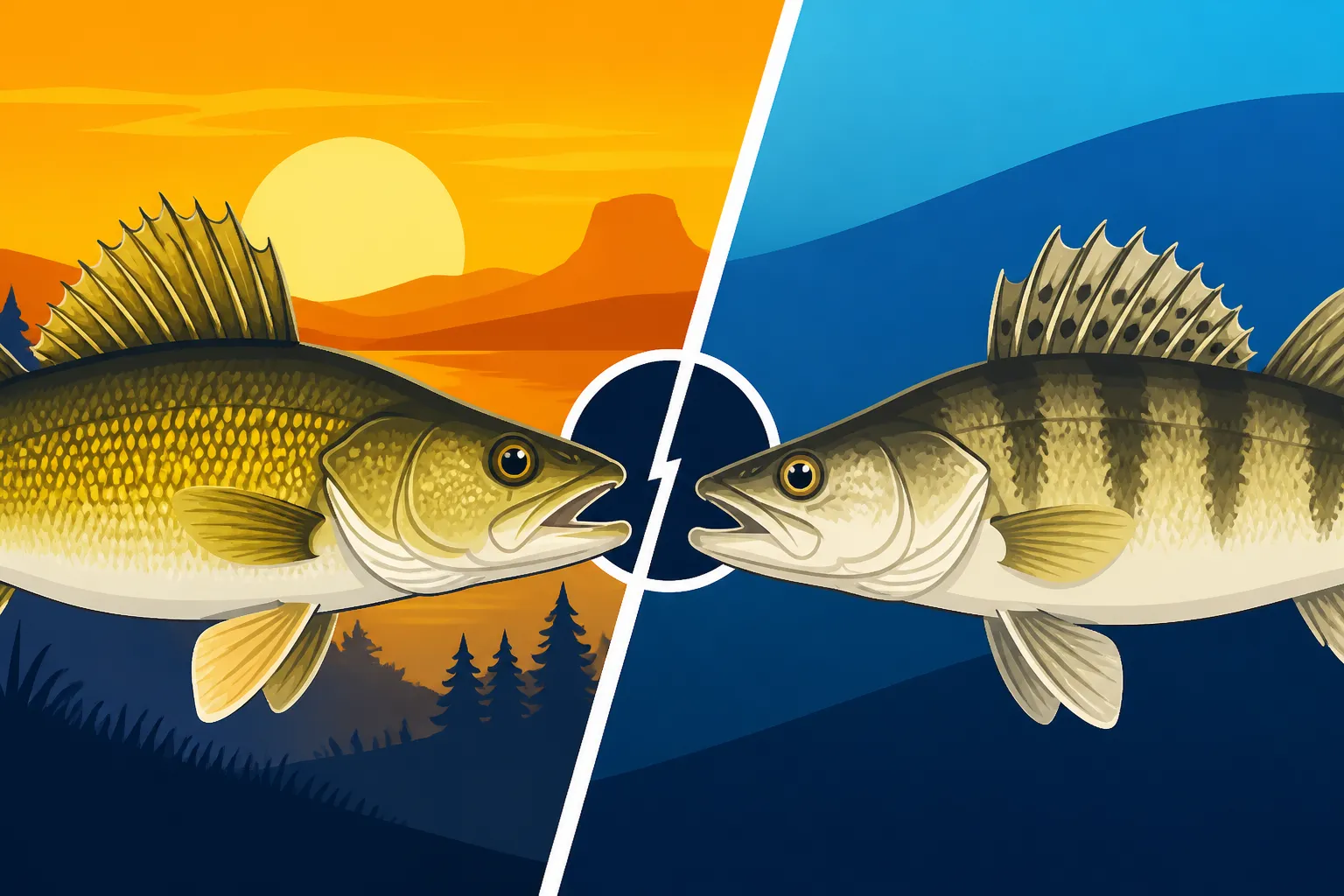
With a walleye, you'll typically notice a distinct, dark blotch at the very base of the last few rays on this spiny dorsal fin. It looks almost like an ink stain or thumbprint. However, the membranes between the spines are generally clear or opaque, without any prominent spots. It's that dark, concentrated blotch at the back of the spiny dorsal that gives it away. Imagine holding the fish, and running your gaze along the top. When you get to the spiny fin, look for that "period" at the end of the sentence, so to speak. This singular dark area is a hallmark of the walleye, and it's a feature that rarely lies. It's a key identifier you'll quickly learn to spot, even from a slight distance, once you know what you're looking for.
Now, shift your focus to the sauger. Its spiny dorsal fin tells a very different story. Instead of a single blotch, a sauger's spiny dorsal fin membrane will be distinctly spotted with dark, often brownish-black spots. These spots are usually arranged in neat rows or a somewhat irregular pattern across the entire membrane of the fin. There's no dark blotch at the base; instead, it's a scattered, polka-dot appearance. Think of it like a leopard print versus a single dark mark. This pattern is incredibly consistent and provides a clear visual separation between the two species. Even if the fish is thrashing a bit, those distinct spots on the sauger's dorsal fin are hard to miss, making this the primary identifier for many anglers trying to decide if they've caught a North Dakota Walleye Fishing Guide or a North Dakota Sauger Fishing Guide.
Tail Fin Markings – White Tip or Not?
After checking the dorsal fin, the tail fin, or caudal fin, is your next best spot for identification. This is another relatively easy visual cue that helps differentiate between the two, though it can sometimes be a little less pronounced depending on the individual fish.
A true walleye will often, though not always, display a prominent white tip on the lower lobe of its tail fin. It’s usually a crisp, clean band of white, standing out against the darker, mottled coloration of the rest of the tail. This white tip is particularly noticeable on larger walleye and can be quite striking. Think of it as a little flag on the bottom of the tail. It’s one of those classic "walleye features" that anglers talk about, and it's something you learn to look for almost instinctively once you’ve seen a few. If you’re ever unsure about the dorsal fin, checking the tail can provide that extra confirmation you need.
The sauger, on the other hand, typically lacks this distinct white tip on the lower lobe of its tail. Its tail fin will generally be more uniformly mottled or dusky, blending in with the body's coloration, without that sharp contrasting white band. The coloration of the sauger’s tail tends to be more consistent, reflecting the overall brassy and spotted pattern of its body. While not every walleye will have a blazing white tip, and some sauger might have a slightly lighter edge to their tail, the absence of that prominent white band is a strong indicator of a sauger. This, combined with the dorsal fin spotting, paints a much clearer picture of your catch.
Body Markings and Overall Coloration
While fin patterns are usually the most definitive, the overall body coloration and markings can also offer strong clues, especially once you've seen a number of both species. This is where the fish's natural camouflage truly comes into play, influenced by its habitat.
Walleye tend to have a more uniform, streamlined appearance. Their bodies are typically an elegant gold-green or olive-brown, often with faint, almost ghost-like vertical bars along their sides. These bars can be quite subtle, sometimes only visible when the light hits the fish just right, or after it's been out of the water for a moment. They generally have a sleek, iridescent sheen. The overall impression is one of smooth, unbroken color, designed to blend into deeper, clearer waters or rocky structures. When you see a classic walleye, you appreciate its understated beauty and efficient design, perfectly adapted for its preferred hunting grounds.
Sauger, in contrast, are often described as having a more "busy" or "camouflaged" look. Their body coloration is usually more mottled, a brassy or olive-brown, with very distinct dark blotches or saddle markings running along their back and sides. These markings are much more pronounced and irregular than the faint bars on a walleye, often creating a somewhat worm-like or blotchy pattern. These bold markings help them blend into the murkier, rockier, or more debris-filled environments they often inhabit. The sauger's pattern is like a distinct topographical map on its sides, making it stand out more visually than its walleye cousin. When you compare them side-by-side, the sauger's pattern is often the feature that catches your eye first, giving it a rougher, more rugged look.
Beyond the Looks: Habitat and Behavioral Clues
Fish don't just sit around waiting to be caught; they have preferred hangouts and habits. Understanding where walleye and sauger like to spend their time can give you a pretty good idea of what you've hooked even before it's in sight. These preferences are driven by their biology and how they hunt and survive.
Preferred Water Clarity and Depth
One of the most significant behavioral differences between walleye and sauger lies in their preference for water conditions, particularly clarity and depth. This directly impacts where you'll typically encounter them on a given body of water.
Walleye are renowned for their sensitivity to light. Their large, reflective eyes are incredibly efficient at gathering light in dim conditions, giving them a significant advantage during dawn, dusk, or in deeper, darker waters. Consequently, you'll often find walleye in clearer, deeper sections of lakes and reservoirs during the brightest parts of the day, seeking refuge from direct sunlight. They love to hug structure like deep breaks, humps, or sunken islands where they can ambush prey from the shadows. Think of the expansive, relatively clear waters of Lake Sakakawea; walleye will gravitate towards those deeper ledges and points. Anglers targeting them often look for areas where light penetration is limited, or they fish during low-light periods. If you're consistently pulling fish from significant depths in crystal-clear water, chances are good you're on a walleye bite, aligning with insights found in articles like Best Depth to Find Walleye in Summer.
Sauger, conversely, tend to be much more tolerant of, and often prefer, murkier or more turbid waters. Their eyes are still excellent for low light, but they don't seem to be as adversely affected by cloudier conditions. You'll frequently find them in systems with higher sediment loads, such as the Missouri River or the Red River. They also have a stronger affinity for current, which often goes hand-in-hand with turbid waters. While they can be found in lakes, they often concentrate in areas with some flow or where water clarity is reduced. This preference means that if you're fishing a section of a river known for its cloudy water and strong current, you're more likely to encounter a sauger. Their ability to thrive in these conditions allows them to exploit different niches than their walleye cousins, leading to Difference Between Walleye and Sauger Fishing Techniques in various North Dakota waters.
Current Preference
The presence and strength of current is another major factor that helps distinguish the typical haunts of walleye and sauger. Their body shapes and feeding strategies are subtly adapted to these different conditions.
Walleye can certainly be found in areas with current, especially near dams, river bends, or constricted lake channels. However, when they are in current, they often prefer to position themselves in eddies, behind current breaks, or in slightly slower seams where they can conserve energy while still ambushing prey swept past them. They are good at holding in moderate current, but they don't typically seek out the strongest flows for extended periods. Their streamlined body allows them to move through water efficiently, but they are not built for constant battling against heavy currents. This is why you'll find them on the edges of river channels or just off the main flow in a lake, picking off baitfish that struggle against the moving water.
Sauger have a much stronger and more pronounced preference for current. They are built for it, with a slightly more elongated body shape that helps them hold their position in flowing water. You'll often find sauger directly in the main flow of rivers, in riprap, below rapids, or in the tailwaters of dams. They actively use the current to their advantage, positioning themselves to snatch prey that is disoriented or carried along by the flow. For instance, in the powerful flows below the Garrison Dam on the Missouri River, sauger will be a much more common catch in the strongest current zones compared to walleye, although both can be present. Understanding this strong current preference is crucial when targeting sauger, as detailed in discussions about Sauger Habitat Below Garrison Dam. If your fishing spot is characterized by strong, consistent flow, mentally prepare for a higher chance of a sauger on your line.
Why Identification Matters: Regulations and Conservation
Beyond the simple satisfaction of knowing what you've caught, accurately distinguishing between a walleye and a sauger in North Dakota isn't just a matter of academic interest—it's a critical aspect of responsible angling. Misidentification can lead to serious regulatory infractions, and it also plays a role in the broader conservation efforts of our precious fisheries.
Distinct Bag and Size Limits
This is perhaps the most immediate and impactful reason why knowing your fish is paramount. In North Dakota, walleye and sauger are often treated as separate species when it comes to fishing regulations. This means they can have distinct bag limits (the number of fish you can keep) and sometimes even different size limits (minimum or maximum lengths). It's not uncommon for anglers to assume they have a combined "walleye/sauger" limit, but this is rarely the case and can land you in hot water.
Imagine you've had a fantastic day out on Lake Sakakawea, and you've kept your legal limit of what you thought were all walleye. You head back to shore, proud of your catch, only to have a game warden check your cooler. If, upon inspection, it turns out that several of your fish are actually sauger, and you've already filled your walleye limit, you could be cited for exceeding the walleye bag limit, even if you hadn't technically exceeded a combined limit that doesn't exist. This is a common pitfall for new or uninformed anglers. It’s absolutely vital to consult the current North Dakota Fishing Proclamation, which you can usually find at the Where to Find the North Dakota Fishing Proclamation, before you head out. These regulations are meticulously crafted to manage specific fish populations, and they clearly delineate between species. You'll find sections dedicated to North Dakota Walleye Size Limit Rules and other specific species, emphasizing their distinct management. Knowing that Can You Keep Sauger and Walleye Together in North Dakota? under their separate limits is key to avoiding penalties.
Conservation and Management
The North Dakota Game and Fish Department (NDGFD) works tirelessly to monitor and manage the state's diverse fish populations. Their ability to do this effectively relies heavily on accurate data, and that data often comes from angler harvest reports, creel surveys, and scientific studies. When anglers consistently misidentify their catch, it skews the data, making it harder for biologists to understand the health and trends of individual species.
For example, if anglers are over-reporting sauger as walleye (or vice-versa) in certain areas, it could lead to inaccurate assessments of population numbers, spawning success, or harvest pressure for each species. This misinformation could, in turn, lead to management decisions that aren't truly beneficial for the long-term health of the fishery. Perhaps a particular body of water needs more walleye stocking, but if sauger numbers are artificially inflated in harvest reports, that need might be masked. By correctly identifying and reporting your catches, you become an active participant in conservation. You're contributing to the scientific understanding that ensures healthy fish populations for not just next year, but for future generations of anglers. It’s a responsibility that comes with the privilege of fishing these beautiful waters, and it underscores why understanding even subtle differences, like those between a walleye and a sauger, truly matters.
Mastering On-the-Water Identification
While the visual cues are strong, sometimes you need a little more confidence, or you're just starting out and need some extra tools in your identification belt. There are tactile methods and learning resources that can help solidify your understanding and ensure you're always making the right call.
The Gill Plate Test – A Feel for Roughness
This is a fantastic tactile test that many experienced anglers use to confirm their suspicions, especially if the light is poor or the fish is a bit slimy. It involves gently feeling the gill plate, or operculum, which is the hard, bony flap covering the gills.
On a walleye, if you gently run your finger forward over the gill plate, you will find it feels smooth. It's streamlined and generally lacks any significant roughness or scales extending onto its surface. This smooth texture is a consistent characteristic, providing a stark contrast to its cousin. It's a subtle but very reliable indicator that complements the visual cues. Many anglers will hold the fish gently and perform this quick touch test as a final confirmation, especially if they are borderline on the dorsal fin spots or tail tip.
For a sauger, perform the same gentle touch test on its gill plate. What you'll discover is a distinctly rougher texture. Sauger often have scales that extend further back onto their operculum, making it feel abrasive, almost like sandpaper, when you run your finger across it. This roughness is a key differentiator that is often overlooked but incredibly effective. It's a hands-on way to tell the difference that doesn't rely on perfect lighting or the fish holding still. This tactile clue, combined with the visual indicators of dorsal fin spots and lack of a white tail tip, leaves little room for doubt. It's a secret handshake among those who truly know their North Dakota fish.
Pyloric Caeca – An Internal Clue (Less Practical for Anglers)
While not a practical field identification method for the vast majority of catch-and-release or even typical harvest anglers, understanding the internal differences can offer a deeper appreciation for the distinct biology of these two fish. This anatomical feature, called the pyloric caeca, refers to finger-like projections found near the junction of the stomach and intestine.
A walleye typically possesses three long, distinct pyloric caeca. These are relatively straightforward and easy to count when examining the internal organs. They are quite prominent and unbranched, a clear set of three extensions. This characteristic is a very reliable biological marker for species identification.
In contrast, a sauger has many, typically 7-9, shorter, and often branched pyloric caeca. Instead of three distinct "fingers," you'd see a more complex cluster of smaller, sometimes forked projections. This difference is largely for scientific study or for extremely curious anglers who are cleaning their catch and want to delve into the finer points of fish anatomy. However, it's generally not recommended to gut a fish solely for identification purposes on the water, especially if you intend to release it. Stick to the external and tactile cues for on-the-spot decisions, but know that these internal differences reinforce the fact that while similar, they are indeed distinct species.
Practice and Resources
Like any skill, identifying fish accurately takes practice. The more walleye and sauger you see and handle, the more intuitive the distinctions will become. Don't be afraid to take your time and observe the fish closely before making a decision, especially if you're keeping it.
A great way to learn is to carry a waterproof field guide or a laminated fish identification card. These often highlight the key differences with clear illustrations. Many anglers rely on these handy references, and you can find a good selection of them, sometimes even regional-specific ones, on Amazon. If you're out fishing and you catch a fish you're unsure about, and regulations allow, take a clear photo before releasing it. You can then compare it to reliable sources later, like the North Dakota Game and Fish Department's official website or publications. These resources are invaluable and provide precise information on everything from North Dakota Fishing Regulations Explained to North Dakota Walleye State Record Weight and North Dakota Sauger State Record. Engaging with experienced anglers at boat ramps or bait shops can also provide a wealth of practical knowledge; many are happy to share their wisdom. Investing in a quality pair of polarized sunglasses, easily found on Amazon, can also help you spot subtle coloration and fin details in the water before the fish is even in your boat. And for those who like to keep their gear organized, a tackle box with separate compartments, available on Amazon, helps manage different lures for different species, preparing you for whatever bites.
By combining visual checks, the gill plate test, and continuous learning, you'll soon become an expert at telling a walleye from a sauger, enhancing both your fishing enjoyment and your adherence to North Dakota's vital fishing rules.
Walleye vs. Sauger: A Quick Comparison
To help you quickly differentiate, here's a table summarizing the key characteristics:
| Feature | Walleye | Sauger |
|---|---|---|
| Dorsal Fin | Dark blotch at base of spiny dorsal | Distinct dark spots on spiny dorsal in rows |
| Tail Fin | Prominent white tip on lower lobe (often) | Lacks distinct white tip, generally mottled |
| Body Color | More uniform gold/green, faint bars | Mottled, brassy with distinct dark blotches/saddles |
| Gill Plate | Smooth to the touch | Rough to the touch, often scaled |
| Preferred Water | Clearer, deeper lakes/reservoirs | Murkier, often current-rich rivers/tailwaters |
| Regulations | Separate bag/size limits (check NDGFD) | Separate bag/size limits (check NDGFD) |
| Pyloric Caeca | 3 long, unbranched | Many (7-9), shorter, often branched |
Disclaimer
This article is for general informational purposes only and does not constitute professional advice. Laws, prices and regulations vary by location and change over time. Consult a qualified professional for guidance on your specific situation.