Best Depth to Find Walleye in Summer
Ah, summer fishing in North Dakota! There's nothing quite like it, is there? The sun beating down, the wide-open spaces, and the promise of a delicious walleye dinner. But let's be real, finding those elusive walleye once the water warms up can feel like searching for a needle in a haystack. Many anglers get frustrated when their spring hot spots suddenly go cold, leaving them scratching their heads. This guide is here to unravel the mystery of where walleye disappear to in the summer months, helping you pinpoint their deep-water havens and put more fish in your boat.
Understanding the Summer Walleye Shuffle: Why They Go Deep
When the long, warm days of a North Dakota summer arrive, the entire aquatic ecosystem shifts, and walleye are no exception. Their behavior changes dramatically from the shallower, aggressive bites of spring. If you're still casting into the same bays you did in May, you're likely going to come up empty-handed. It's not that the walleye are gone; they've simply moved, adapting to the conditions of the season. Understanding these fundamental shifts is the first step to becoming a successful summer walleye angler.
The Impact of Water Temperature on Walleye
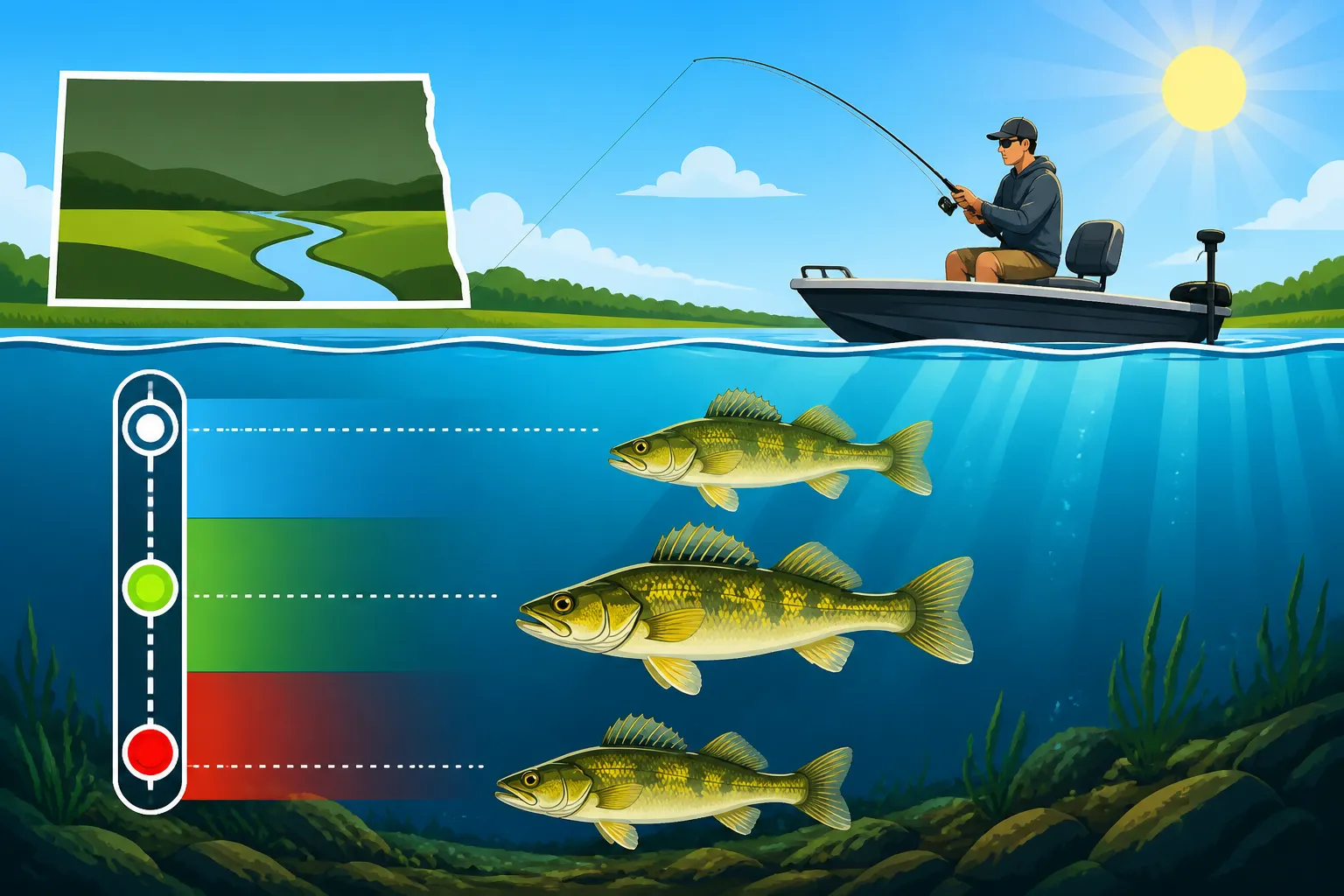
Walleye are cold-blooded creatures, which means their body temperature is directly influenced by the surrounding water. As surface waters warm up, they seek out cooler, more comfortable temperatures. Think about it: on a scorching day, you probably don't want to stand directly in the sun all afternoon; you look for shade or air conditioning. Walleye do something very similar underwater. They have an optimal temperature range where they are most active and comfortable, typically in the low to mid-60s Fahrenheit. When the shallows become bathwater-warm, usually hitting the 70s or even 80s in North Dakota's major lakes like Lake Sakakawea Fishing Guide for North Dakota Anglers, they'll move to deeper water where the temperature is more stable and cooler.
This movement isn't just about comfort; it's about metabolism. Warmer water increases their metabolism, meaning they burn energy faster. While this might make them more active for short bursts, sustained high temperatures can stress them out and make them lethargic. By moving deeper, they conserve energy and maintain a more consistent activity level. This is especially true on large reservoirs and lakes, where a distinct thermocline often forms. The thermocline is that layer of water where the temperature changes rapidly with depth, creating a comfortable "comfort zone" for walleye just above or within it, where cooler water meets warmer oxygenated water. They're not going to dive into cold, oxygen-deprived depths, so finding that sweet spot is key.
Why Walleye Go Deeper as Summer Progresses
It's not just temperature driving them deeper; light penetration plays a huge role, too. Walleye have large, sensitive eyes that are highly adapted for low-light conditions. This is why they're often most active during dawn, dusk, or cloudy days, and it's also why they're such popular targets for night fishing. In summer, with longer daylight hours and clearer water conditions (especially after spring runoff has settled), sunlight penetrates deeper into the water column. This intense light can bother their sensitive eyes, pushing them into darker, deeper environments. They're not just seeking cooler temperatures; they're looking for shady retreats.
As summer progresses from early June into the dog days of July and August, this effect becomes even more pronounced. The sun's angle is higher, and the water typically becomes clearer. This combination sends walleye packing for deeper structures, often relating to significant breaks, humps, and submerged points. They're following their food sources, too. Baitfish like smelt and cisco, which walleye prey upon, also seek out these cooler, darker areas, creating a subsurface ecosystem that supports the deep-water walleye bite. Understanding this predator-prey relationship in relation to depth is crucial for predicting where they'll be.
Reading the Water: Identifying Prime Summer Walleye Depths Seasonally
The "best depth" for walleye isn't a fixed number you can write down and use all season. It's a dynamic range that shifts as the summer unfolds. What works in early June probably won't be effective in mid-August. You have to adapt your strategy to the specific stage of summer and the conditions of the lake or river you're fishing. Being able to "read the water" and understand these seasonal depth transitions is what separates the consistently successful anglers from those who only catch fish sporadically.
Early Summer (June) Walleye Depths
When June rolls around in North Dakota, the water has warmed significantly from spring, but it hasn't usually reached its peak warmth. This is often a transition period. Walleye are moving off their spawning grounds and starting to spread out. You'll still find some fish relating to shallower areas, especially those with good cover like submerged weeds or rocky points near deeper water, but the majority will begin to slide into slightly deeper breaks.
In early June, a good starting point is often the 15 to 25-foot range. You'll find walleye actively feeding along contour breaks, submerged islands, and the edges of expansive flats that drop into deeper basins. They might be shallower early or late in the day, or on overcast days, but during bright midday hours, they'll likely be hunkered down in that slightly deeper comfort zone. For example, on the big bays of Lake Sakakawea, you might find them transitioning from the 10-15 foot range where they gorged after the spawn, to those 20-foot breaks leading into the main channel. Keep an eye on your Best Fish Finders for North Dakota Lakes to spot baitfish schools in these zones, as walleye are rarely far from their food.
Mid-Summer (July-Early August) Deep Water Tactics
This is typically when North Dakota's lakes reach their warmest temperatures, and the sun is at its most intense. This period demands a dedicated deep-water approach. Walleye will move to their deepest haunts, often congregating around prominent underwater structures in 25 to 40 feet of water, and sometimes even deeper in exceptionally large, clear lakes like parts of Lake Sakakawea or Lake Oahe. This is where you really need to employ specific deep-water Summer Walleye Trolling Techniques.
Look for deep humps, main lake points that drop sharply, old river channels, and distinct breaks in the main basin. The thermocline, if present, will be a key factor. Walleye will often suspend just above or within this layer, seeking optimal temperature and oxygen. They might also be tight to the bottom along the deepest edges of structure. Jigging spoons, heavy bottom bouncers with spinner rigs, or deep-diving crankbaits are your best friends here. Don't be afraid to experiment with depths; sometimes a slight adjustment of a few feet can make all the difference. This is also when understanding How Deep to Troll for Walleye in Spring will give you an idea of how much deeper you need to go now.
Late Summer (Late August-September) Transitional Depths
As late August rolls into September, the days start to shorten, and the overnight temperatures begin to dip. While the water is still warm, you'll often see the beginning of a subtle transition. The deepest spots might still hold fish, but walleye can start to spread out and become a bit more aggressive, sometimes moving into slightly shallower depths again, especially during low-light periods. The intense light penetration starts to lessen, and the thermocline might begin to break down in some areas.
You might find walleye still relating to those 25-35 foot humps and points, but they could also start to venture up to 15-20 feet during prime feeding windows. This is a great time for anglers to switch up their tactics, mixing deep trolling with casting crankbaits or even slip bobber fishing around structural elements. On Devils Lake, for instance, you might find walleye still deep on the main lake points, but also starting to show up on flooded timber edges in 15 feet of water. It's a period of opportunity as fish become more active and less solely reliant on the deepest water. North Dakota Fall Fishing Guide will cover what to expect as the season progresses even further into autumn.
Here's a quick reference table for general summer walleye depth ranges in North Dakota:
| Summer Period | Typical Depth Range (Feet) | Key Factors | Common Tactics |
|---|---|---|---|
| Early Summer | 15-25 | Post-spawn recovery, warming water | Jigs, bottom bouncers, shallow-to-medium crankbaits |
| Mid-Summer | 25-40+ | Peak water temp, strong light, thermocline | Deep trolling, jigging spoons, heavy bottom bouncers |
| Late Summer | 20-35 (with shallower excursions) | Cooling nights, shifting baitfish | Trolling, jigging, slip bobbers on breaks |
Navigating the Depths: Tools and Tactics for Pinpointing Walleye
Knowing that walleye go deep in summer is one thing; actually finding them is another. This is where modern electronics and a keen understanding of underwater topography become absolutely indispensable. Gone are the days of just blindly dragging a lure; precision is the name of the game when you're targeting fish that might be holding to a specific depth contour or the tip of a submerged hump.
Identifying Underwater Features
Walleye are highly structure-oriented fish, meaning they like to relate to changes in the lake bottom. In summer, these structures are often found in deeper water. We're talking about humps, which are underwater hills or mounds, sometimes rising significantly from the surrounding bottom. Points, especially those that extend far out into a lake and drop off sharply, are also prime real estate. Think about how a point concentrates baitfish as they move along the shore, and then imagine the walleye waiting in ambush just off that drop-off. Submerged islands, old river channels (especially prevalent in reservoirs like Lake Sakakawea), and rock reefs are all key features.
To identify these, you absolutely need good contour maps of your chosen lake. Many modern GPS units or apps provide incredibly detailed bathymetry, showing depth contours, breaks, and even specific rock piles. Spend time studying these maps before you even launch your boat. Look for areas where multiple contours are tightly packed together, indicating a sharp drop-off, or where contours form distinct shapes like humps or points. Then, combine this map knowledge with your sonar readings to paint a complete picture of the underwater world. Understanding How to Find Walleye Structure With a Map is a foundational skill for summer fishing.
Using Electronics for Precision Depth Finding
Once you've identified potential deep-water structures on your map, your boat's electronics become your eyes underwater. A good fish finder is arguably the most crucial piece of gear for summer walleye fishing.
Modern units with capabilities like Side Imaging, Down Imaging, and CHIRP sonar can show you not just fish, but the exact composition of the bottom, baitfish schools, and even individual rocks or logs that walleye might be hiding near. When you're cruising over a potential spot, watch for:
- Schools of Baitfish: Walleye follow their food. If you see dense clouds of baitfish at a certain depth, walleye are likely nearby, often just below or to the sides of the school.
- Arches: Classic fish arches on your 2D sonar indicate individual fish. The size of the arch can give you a clue about the size of the fish.
- Relating to Structure: See if the arches or schools are tight to the bottom, suspended just above a hump, or lurking along a sharp break. This tells you how the fish are orienting to the structure.
- The Thermocline: Many fish finders can display the thermocline as a distinct band on your screen. This is a critical depth to pay attention to, as walleye will often hold just above it.
Don't just drive over a spot once; make multiple passes from different angles to get a complete understanding of the structure and where the fish are holding. Mark waypoints on your GPS for productive areas. This precision will allow you to present your lure at the exact depth and location where walleye are active. Whether you're using a top-of-the-line Humminbird or a reliable Lowrance unit, learning to interpret what your screen is telling you will drastically improve your summer walleye success.
Equipping for the Deep: Essential Gear for Summer Walleye Success
You can know all about walleye behavior and pinpoint their deep-water haunts with perfect precision, but if you don't have the right tools in your hand, you'll still struggle. Fishing deep for walleye in North Dakota requires a specific setup that allows you to effectively present baits and fight fish from considerable depths. It's not just about getting your lure down there; it's about control, sensitivity, and power.
Rods, Reels, and Line for Deeper Water
When you're targeting walleye in 25-40 feet of water, your typical shallow-water spinning setup might not cut it.
- Rods: For trolling deep-diving crankbaits or bottom bouncers, a longer rod (7-9 feet) with a medium-heavy action is often preferred. This length helps spread out multiple lines and provides a deeper flex when fighting a fish, absorbing the shock better. For vertical jigging or working heavier spoons, a shorter, more sensitive rod (6'6" to 7'6") with a fast tip and good backbone is ideal. You need to feel those subtle bites at depth, but also have the power to drive a hook home. Brands like St. Croix or Fenwick offer excellent options that you can often find on Amazon.
- Reels: For trolling, baitcasting reels are generally favored because they offer better line capacity for long leads and more precise depth control with a line counter feature. Look for models with a smooth drag system. For jigging, a high-quality spinning reel with a smooth retrieve and strong drag is perfect.
- Line: This is perhaps the most critical component for deep-water walleye. Monofilament line stretches, making it harder to feel bites and set hooks at depth. Fluorocarbon has less stretch but is still quite visible. Braided line is often the top choice for deep-water walleye. Its near-zero stretch provides incredible sensitivity, allowing you to feel even the lightest tap, and its thin diameter for its breaking strength helps your lures reach depth more easily. A 10-20 lb test braided line is common, often with a 6-10 lb fluorocarbon leader for abrasion resistance and stealth. Using a high-visibility braid like PowerPro or Sufix makes it easier to manage multiple lines. Remember, Best Fishing Line for North Dakota Lakes might vary by season, but braid shines in summer.
Lures and Bait for Summer Depths
The lures and baits you choose also need to be optimized for deep-water presentation.
- Deep-Diving Crankbaits: These are a staple for summer trolling. Look for crankbaits with large bills designed to dive 15-30+ feet. Colors can vary, but natural baitfish patterns, perch, and bright colors like firetiger or chartreuse often produce well in North Dakota waters. Brands like Rapala, Berkley, and Salmo make excellent deep divers that are readily available. Best Walleye Crankbait Colors for Lake Sakakawea are often debated, but having a variety is smart.
- Bottom Bouncers and Spinner Rigs: This is a classic North Dakota tactic. Pair a heavy bottom bouncer (1-3 ounces, depending on depth and speed) with a snelled spinner rig tipped with a live minnow, nightcrawler, or even a plastic bait. The bottom bouncer keeps your bait near the bottom, while the spinner blade creates flash and vibration to attract walleye.
- Jigging Spoons and Lipless Crankbaits: For vertical jigging over deep structure, heavier spoons (like Northland Tackle's Buck-Shot Rattle Spoon) or lipless crankbaits (such as those from Rapala or Berkley) are excellent choices. They drop quickly, emit vibrations, and can trigger aggressive strikes.
- Live Bait: Don't discount live bait, even when fishing deep. Large shiner minnows, fathead minnows, or juicy nightcrawlers presented on a simple jig or Lindy Rig can be irresistible to deep-water walleye. Keep your bait fresh, perhaps in an aerated bucket you picked up from Amazon.
Experimentation is key. Start with proven deep-water techniques, but pay close attention to what the fish are telling you. Sometimes a slight change in lure color, size, or presentation speed can make a huge difference in cracking the summer walleye code. Remember that catching walleye in summer isn't just about luck; it's about understanding their behavior, using the right tools, and adapting to the challenging but rewarding conditions of North Dakota's warm waters.
Disclaimer
This article is for general informational purposes only and does not constitute professional advice. Laws, prices and regulations vary by location and change over time. Consult a qualified professional for guidance on your specific situation.