North Dakota Flathead Catfish State Record
For many North Dakota anglers, the idea of hooking into a monstrous flathead catfish is the stuff of dreams. These powerful, enigmatic fish lurk in the state's deeper, slower waters, challenging even seasoned veterans with their sheer size and brute strength. This guide will dive deep into the world of North Dakota flathead catfish, exploring the state record, understanding their habits, and giving you the best chance to land your own giant.
Understanding Flathead Catfish in North Dakota
Flathead catfish are truly impressive creatures, a stark contrast to their more common channel catfish cousins. While channel cats are abundant and widespread, flatheads are a bit more selective about their habitat and present a different kind of angling challenge. They're often called "loners" or "solitary hunters," preferring to stake out a territory and wait for prey, rather than schooling like channels. This behavior, coupled with their sheer size potential, makes them a sought-after trophy fish.
Identifying North Dakota Flathead Catfish
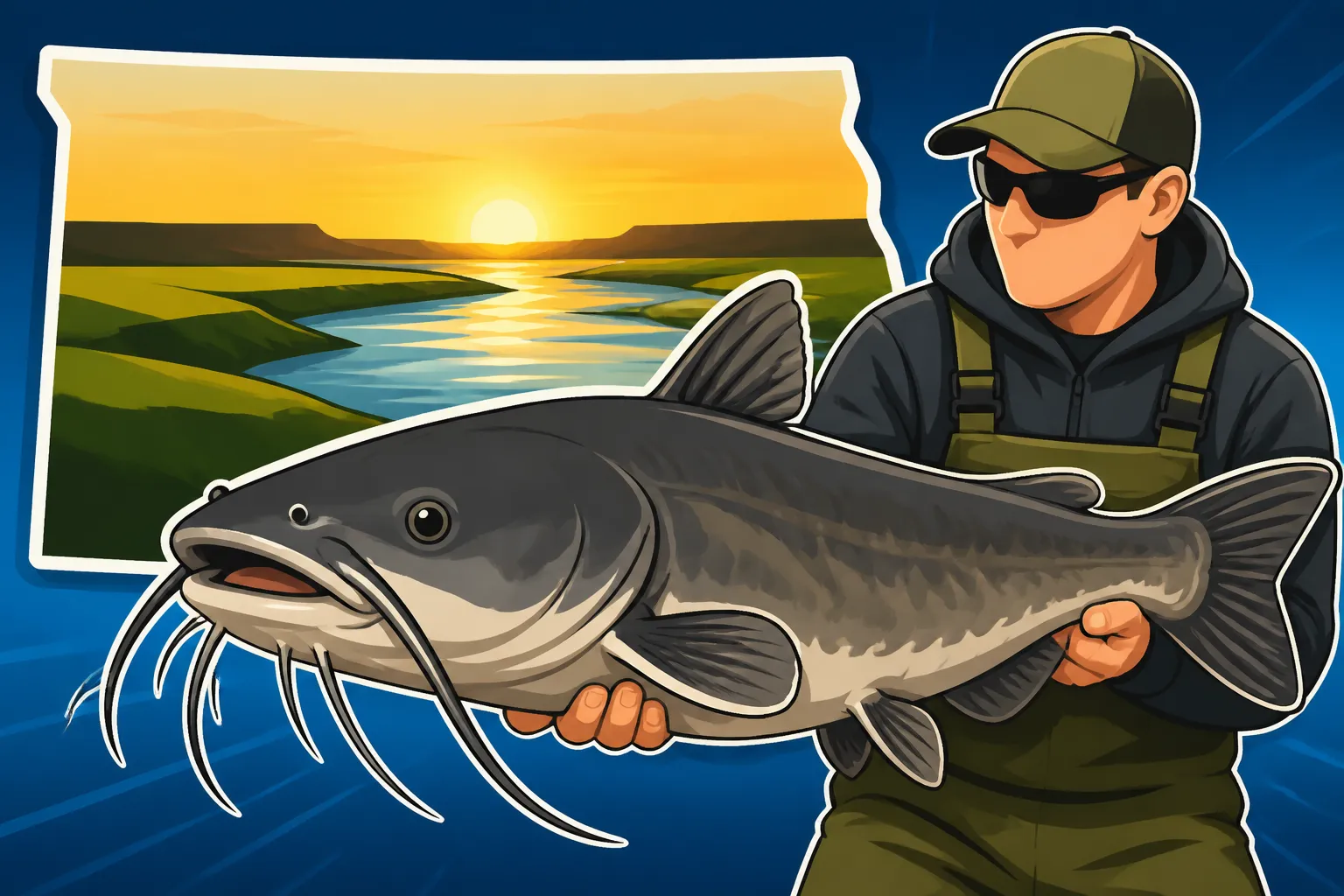
It's crucial to be able to tell a flathead from other catfish species, especially if you're aiming for a record. Flathead catfish have a distinct appearance that sets them apart. Their head is, as the name suggests, noticeably flattened and broader than that of a channel catfish. They also have a lower jaw that protrudes beyond the upper jaw, giving them a bit of an underbite. Their eyes are relatively small. Unlike the spotted or mottled pattern often seen on channel cats, flatheads typically have a more uniform, often mottled brown or yellowish-brown coloration, sometimes with darker blotches, and they lack the deeply forked tail of a channel cat. Instead, their tail is more rounded or slightly notched, though it can appear almost square on very large specimens. Channel Catfish Identification in North Dakota provides more detail on species identification, but remember, flatheads have their own unique characteristics.
The absence of spots is a key identifier. If you catch a big catfish with a deeply forked tail and spots, it's almost certainly a large channel catfish. If it has that distinctly flat, wide head, a protruding lower jaw, and a squarish tail, you've likely found yourself a flathead. Knowing these visual cues is vital for proper identification, especially if you think you've caught something truly special.
Where Flathead Catfish Live in North Dakota
Flathead catfish aren't found in every North Dakota water body, making their pursuit a bit more specialized than other species. They thrive in large river systems with slow to moderate current, deep holes, abundant cover, and plenty of large forage fish. Think about places where there are submerged logs, rock piles, undercut banks, or even old bridge pilings – these are prime flathead hangouts. They are ambush predators and use these structures to hide and wait for an unsuspecting meal to swim by.
In North Dakota, the primary stronghold for flathead catfish is the Missouri River system, including parts of the river itself and Lake Oahe, particularly the southern stretches. The Red River of the North, while known for its immense channel catfish population, also harbors some flatheads in its deeper, woodier sections, though they are less common there. These big river environments offer the perfect combination of food, cover, and current that flatheads prefer. Anglers often focus their efforts on these specific areas, understanding that flathead fishing is more about location and presentation than simply casting anywhere. If you're looking for where Red River Catfish Fishing Spots in North Dakota are, you might find some flathead potential there too, especially in the more sluggish, structure-filled bends.
The Elusive North Dakota Flathead Catfish State Record
Every angler dreams of catching a state record, and for flathead catfish, that dream is a truly monumental one. These fish grow to incredible sizes, pushing the limits of what many imagine a freshwater fish can be. The story of the North Dakota flathead catfish state record is one of patience, dedication, and a bit of luck, reminding us that these behemoths are indeed swimming in our waters.
Details of the Current State Record
The North Dakota state record for flathead catfish stands as a testament to the immense size these fish can attain. Caught by Lynn R. Johnson in 2012, this incredible fish weighed a staggering 62 pounds and measured 47.5 inches in length. It was caught from the Heart River, a tributary of the Missouri River. This record-breaking catch highlights not only the potential for trophy flatheads in North Dakota but also the fact that they can be found in a variety of riverine environments within the larger Missouri River system. Imagine pulling a fish that weighs as much as a small child out of the water! It’s a truly humbling experience.
Such a record is a huge source of pride for the state's angling community and certainly inspires many to target these giants. The sheer power required to land a fish of that magnitude, particularly from a river, speaks volumes about the challenge and excitement of flathead fishing. It's not just about the weight; the length of nearly four feet means this fish had decades of growth and survival under its belt, making it a true river monarch.
How Does This Compare to Other States?
While 62 pounds is an absolutely colossal fish, it's interesting to see how North Dakota's record stacks up against those in other states. Flathead catfish are native to many river systems across the central and eastern United States, and some states boast even larger records. For instance, states like Kansas, Missouri, and Texas, with their massive river systems, have reported flatheads well into the 80s and even over 100 pounds. The current world record for flathead catfish is significantly higher than North Dakota's, showcasing the incredible growth potential of this species.
However, comparing state records isn't just about size; it's about the unique challenges and opportunities within each state's waters. North Dakota's rivers, particularly the Missouri, are certainly capable of producing flatheads even larger than the current state record. The colder winters and shorter growing seasons might temper the absolute maximum size compared to more southern states, but a 62-pound fish in North Dakota is still a rare and magnificent catch that demands respect. It tells us that our waters are healthy enough to support such large, long-lived fish, and that's something to celebrate. You can find more general information about what size these fish reach in How Big Do Flathead Catfish Get in North Dakota?.
| State | Flathead Catfish Record (lbs) | Year Caught | Location (General) |
|---|---|---|---|
| North Dakota | 62 | 2012 | Heart River |
| Kansas | 123 | 1998 | Elk City Reservoir |
| Missouri | 100 | 2010 | Missouri River |
| Texas | 104 | 1999 | Lake Palestine |
| Iowa | 101 | 1958 | Lake Ellis |
(Note: Records can change; always check official state wildlife agency websites for the most current information.)
How to Target and Catch Flathead Catfish in North Dakota
Catching a flathead, let alone a record-breaker, requires a specific approach. These aren't your typical casting-and-reeling fish. Flatheads are patient predators, and you need to be even more patient if you want to fool one. Their diet consists almost exclusively of live fish, making live bait the undisputed champion for flathead anglers.
Essential Gear for Trophy Flatheads
When you're chasing fish that can reach 60+ pounds, you can't skimp on your gear. This isn't the time for your lightweight walleye setup. You need heavy-duty equipment that can withstand immense pressure and violent runs.
First and foremost, a stout rod is essential. Look for heavy to extra-heavy power casting or spinning rods, typically 7 to 9 feet in length, with a fast or moderate-fast action. This provides the backbone needed to leverage a large fish away from snags and the sensitivity to detect subtle bites. Pair that with a high-quality, large-capacity baitcasting reel or a robust spinning reel designed for big game. Line capacity is crucial, as a big flathead can strip line in a hurry. You’ll want to spool it with strong braided line, often 50 to 80-pound test, or heavy monofilament in the 25 to 40-pound range. Many serious flathead anglers prefer braid for its sensitivity and incredible strength-to-diameter ratio. For terminal tackle, use heavy-duty circle hooks (8/0 to 12/0 are common) that are designed to hook fish in the corner of the mouth, minimizing harm and making release easier. Heavy sinkers (2-6 ounces, or even more in strong current) are necessary to hold your bait in place on the bottom. Swivels, leaders, and snaps should all be rated for heavy pound test. If you're serious about your gear, a quick search on Amazon for "heavy duty catfish tackle" will show you a plethora of options designed to handle these river monsters.
Best Baits and Techniques
As mentioned, flatheads are primarily piscivores, meaning they eat other fish. Therefore, live bait is almost always the best choice. Common and effective live baits include suckers, carp, bullheads, large minnows, or even bluegills (check local regulations to ensure legal use of specific species as bait). The key is to use a bait fish that is lively and of a substantial size—don't be afraid to use bait fish that are 6-10 inches long for trophy flatheads. The livelier the bait, the more attractive it is to a lurking flathead.
When it comes to techniques, bottom fishing is the name of the game. Flatheads prefer to stay near structure on the river bottom. A common setup involves a heavy sinker on a Carolina rig or a three-way swivel rig, which allows your live bait to swim naturally just off the bottom. Cast your bait near submerged timber, rock piles, deep holes, or current breaks. Patience is paramount; flatheads aren't always quick biters. They'll often grab the bait and swim off slowly before truly engulfing it. Many anglers prefer to use rod holders and wait for a steady, deliberate pull rather than a quick tap. Night fishing is often considered prime time for flatheads, as they become more active hunters under the cover of darkness. Best Time of Year for Catfish on the Red River can offer seasonal insights that are applicable to flatheads as well.
Locating Productive Flathead Waters
Finding flatheads isn't as simple as finding a good walleye chop or a perch school. These fish are masters of ambush and concealment. Focus your efforts on large, deep river bends, areas with significant amounts of submerged woody debris (snags, log jams), deep scour holes below dams or bridge pilings, and the edges of strong currents where fish can find a break. A good depth finder can help you locate these deep pockets and structures. Look for areas with a mix of current and slack water, allowing them to conserve energy while waiting for prey.
Mapping tools and local knowledge are invaluable. Spend time studying river maps, looking for sharp turns, deep cuts, and areas marked with obstructions. Talking to local bait shops or experienced river anglers can also provide crucial insights. Remember, flatheads are territorial, so if you find one good spot, chances are it will consistently hold fish, or at least new ones will move in. Exploring the Missouri River Fishing Guide can give you a head start on finding potential flathead hotspots in North Dakota's premier river system.
Reporting a Potential State Record
Imagine the scenario: you're out on the water, battling a fish that feels impossibly heavy, and when you finally get it to the boat, you realize it's larger than anything you've ever seen, maybe even larger than anything you thought possible. What do you do if you think you've caught the next North Dakota state record flathead catfish?
Immediate Steps After a Potential Record Catch
The moment you land a truly enormous fish, the excitement can be overwhelming, but it's crucial to act quickly and methodically to ensure your catch qualifies for state record consideration. First, keep the fish alive and healthy if at all possible. This means handling it minimally and, if you plan to release it after verification, having a large livewell or a secure holding net in the water. For a flathead of record size, this might be challenging. If keeping it alive isn't feasible, ensure it is properly stored on ice to preserve its condition until it can be weighed.
Second, avoid gutting or cleaning the fish until it has been officially weighed and identified. Any alteration to the fish's natural state can disqualify it. Third, and most importantly, contact the North Dakota Game and Fish Department (NDGFD) as soon as possible. They have specific protocols for record fish verification. Don't just show up at a bait shop with a huge fish and expect it to be recorded. You'll need an official weigh-in.
Official Weigh-in and Verification Process
To be considered for a state record, your fish must be weighed on a certified scale, usually at a grocery store, meat locker, or a fishing lodge that has a scale inspected by the state for trade. This ensures accuracy and removes any doubt about the weight. The weigh-in must be witnessed by at least one, and often two, individuals who are not part of your immediate fishing party. The NDGFD will also require specific measurements (length and girth) and clear photographs of the fish, often with a recognizable object for scale. They may also ask for details about the tackle used, the location, and the date of the catch.
An NDGFD official, or a designated representative, will need to positively identify the species of the fish. This is where knowing the difference between a flathead and a channel catfish is crucial. The official will confirm that all regulations were followed, including having a valid North Dakota Fishing License Guide and adhering to any specific species limits or seasons (though flathead limits are generally quite liberal, it's always good to double-check North Dakota Fishing Regulations Explained). Following these steps meticulously will give your incredible catch the best chance of being recognized as a true North Dakota state record.
Disclaimer
This article is for general informational purposes only and does not constitute professional advice. Laws, prices and regulations vary by location and change over time. Consult a qualified professional for guidance on your specific situation.