How to Tell Male and Female Walleye Apart
If you've ever found yourself holding a beautiful walleye on a North Dakota lake, admiring its golden flanks and sharp teeth, you might have paused and wondered: "Is this a male or a female?" It's a common question, and honestly, it's one of the trickiest things to determine accurately without getting really up close and personal, which isn't always practical or responsible when you're trying to quickly release a fish. This guide is here to shed some light on the subtle clues and tell-tale signs that might help you distinguish between a male and a female walleye, and why it's often more challenging than you'd think.
Why Distinguishing Walleye Sex Matters Or Why It's So Tough!
Let's be real, most of the time when you're out fishing, you're focused on the bite, the fight, and safely landing your catch. Determining its sex often feels like a secondary, almost impossible, thought. But understanding the nuances between male and female walleye can actually deepen your appreciation for these incredible fish and even inform your fishing strategies, especially if you're targeting big spawners or trying to understand fish behavior. The main reason it's so tough? Walleye aren't like some bird species where the male is brilliantly colored and the female is drab. Their differences are much, much more subtle.
The Biological Reality: Subtleties, Not Obvious Signs
Unlike many other animal species where sexual dimorphism (distinct differences between males and females) is immediately apparent, walleye aren't designed to make it easy for us anglers. Both sexes sport that iconic golden-green hue, the reflective eyes, and the dorsal fin spines that make them a formidable predator. There are no bold color changes, no prominent fins that only one sex possesses, and certainly no name tags! Their primary goal is survival and reproduction, and blending in is key for both.
Think about it: in the murky waters where walleye often hunt, or under a thick sheet of ice, visual cues would be pretty useless for identification. Instead, their sex is largely determined by internal organs and subtle external variations that become most apparent during very specific times of the year, usually during the spawning season. The rest of the time, they are masters of disguise, even from each other, when it comes to visual gender cues. This is why even experienced anglers struggle with this question.
Practical Implications for Anglers: Spawning Season and Beyond
So, why bother trying to figure it out? Well, primarily, it comes down to understanding the lifecycle of the fish you're targeting. During the spawning season, knowing if you've caught a male or female can provide valuable insight into the fish's role in the reproduction cycle. For instance, females are typically larger and carry the eggs, making them prime targets for trophy hunters, but also critically important for the future of the fishery. Catching a large, egg-laden female can be an ethical dilemma for some, leading to an immediate catch-and-release decision. You can learn more about this in our guide on When Do Walleye Spawn in North Dakota?.
Beyond spawning, understanding general tendencies can help too. For example, males might be more aggressive protectors of spawning grounds or certain territories. While not a hard-and-fast rule, if you're consistently catching smaller walleye in a specific area during the spawn, there's a good chance you're wading into male territory. For the casual angler, it might just be a point of curiosity, but for those who truly want to understand the fish they pursue, these subtle differences offer a deeper connection to the ecosystem.
Physical Characteristics: Clues That Might Point to Gender
While there's no single, foolproof external feature that screams "male!" or "female!" on a walleye, there are a few general tendencies and observations that can provide clues. It’s like trying to guess someone's age based on their handwriting – you might get close, but there are always exceptions.
Body Shape and Size: General Tendencies, Not Hard Rules
Generally speaking, female walleye tend to be larger than males of the same age class. This is especially true as they mature. The females need to be able to carry a significant amount of eggs, so they develop a larger, often more robust body cavity. If you catch a truly massive walleye, say a 30-inch behemoth from Lake Sakakawea, there's a very high probability it's a female. These larger fish are the big breeders, crucial for replenishing the population. You might find it interesting to read about How Old Is a 30-Inch Walleye?.
Males, on the other hand, often appear more slender or streamlined, especially when they're not actively involved in spawning. They might be longer for their weight compared to a female, or just seem less "bulky." During the spawning season, a female will be noticeably distended with eggs, her belly feeling soft and swollen. Males, while also feeling different during the spawn, won't have this pronounced egg-filled belly. However, outside of the spawning period, distinguishing purely by body shape becomes incredibly difficult as factors like recent feeding, genetic variation, and overall health can significantly impact a fish's appearance. A fat male that just had a big meal could look just as robust as a female that hasn't spawned in a while.
Head and Mouth: More Subtle Indicators
Some anglers swear by looking at the head and mouth, claiming subtle differences. The theory goes that males might have slightly larger heads in proportion to their bodies, or perhaps a more angular jawline. Females, due to their larger overall body size, might have a head that appears somewhat smaller in proportion, or a slightly more rounded profile.
However, this is extremely subjective and unreliable. Walleye vary so much from one lake to another, and even within the same body of water, based on genetics and diet. A walleye from the clearer waters of a small, productive lake might have a different head shape than one from the massive, wind-swept expanses of Lake Sakakawea or the Red River. Trying to use head shape as a definitive identifier is often a frustrating exercise in futility. It's truly a "maybe, sometimes, if you squint right" kind of clue.
Vent Area Examination: The Most Reliable (But Still Tricky) Method
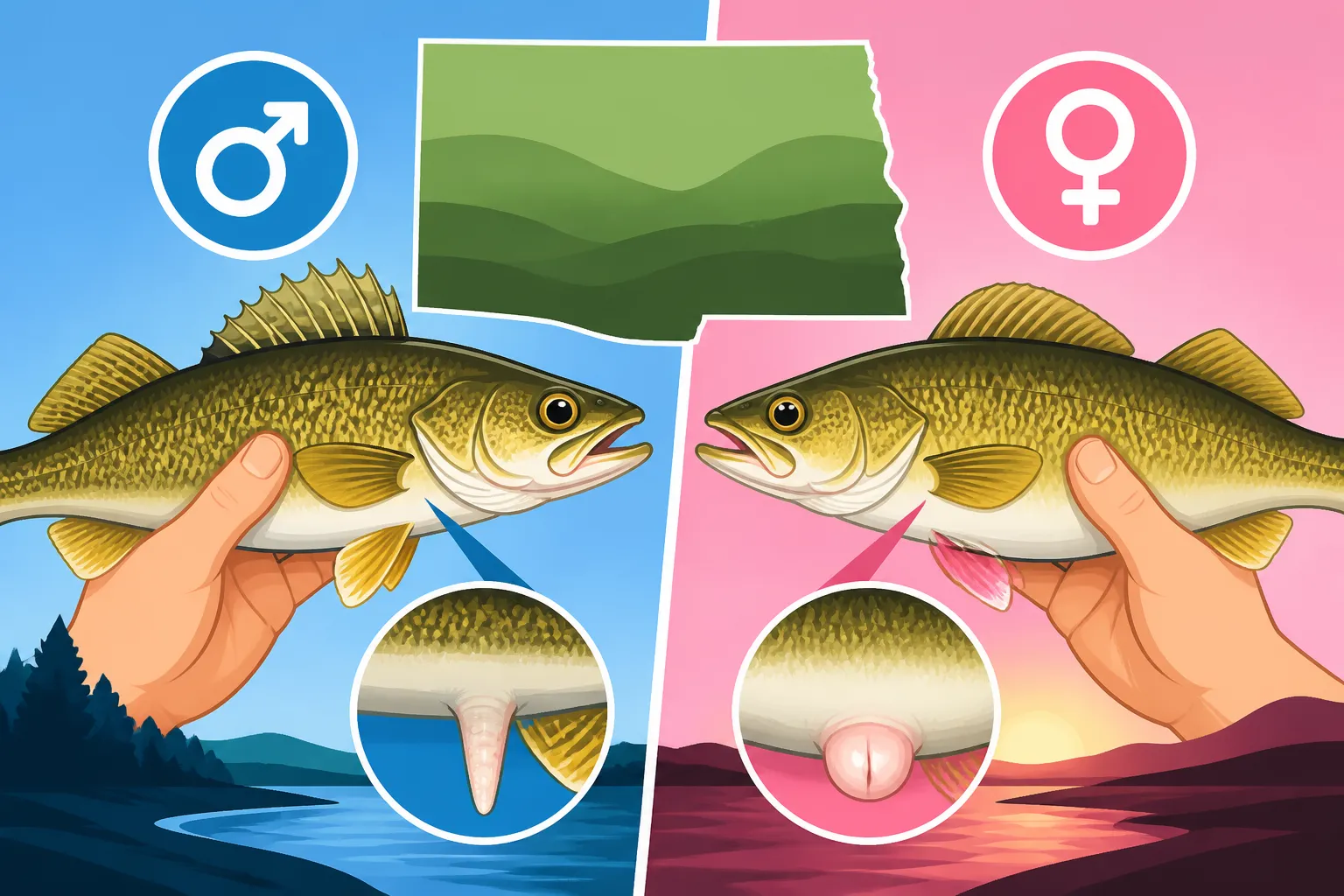
If you're truly determined to try and sex a walleye, examining the vent area is your best bet, though it still requires a keen eye and a bit of practice. This is the area just in front of the anal fin, where both waste and reproductive products exit.
-
During Spawning Season: This is when the differences are most pronounced.
- Female Walleye: A spawning female will have a noticeably swollen, reddish, and often protruding vent. This is the opening through which her eggs will be expelled. It will feel soft and somewhat fleshy. If you gently press on her belly towards the vent, you might even see a few eggs or milky fluid if she's ripe. This is the clearest indicator you'll get without dissecting the fish.
- Male Walleye: A spawning male's vent will also be slightly swollen, but less so than a female's, and it will be more elongated and slit-like. If you gently apply pressure, you might see a small amount of white, milky fluid (milt), which contains sperm.
-
Outside Spawning Season: This is where it gets incredibly difficult. The vents of both sexes will be much less pronounced and will look very similar. A female's vent might appear slightly larger or more rounded than a male's even when not spawning, but the difference is minimal and requires a lot of experience to discern accurately. It's often just a small, subtle difference in tissue texture or elasticity.
Remember, when you are examining the vent area, always handle the fish with extreme care, especially if you intend to release it. Keep it wet, minimize handling time, and support its body fully. A soft, wet glove can help protect the fish's slime coat while allowing you to get a feel for the vent. You can find excellent quality fishing gloves and other gear on platforms like Amazon if you're looking to equip yourself for safe handling.
Behavioral Differences: What You Might Observe But Can't Guarantee
Fish behavior is complex and influenced by countless factors beyond just sex. Water temperature, barometric pressure, available forage, time of day, and even moon phase can all play a role. So, while there are some general behavioral patterns linked to gender, they are far from definitive identifiers for an individual fish you've just caught.
Spawning Season Behavior: A Clearer Picture
During the spawning season, which typically occurs in the spring when water temperatures are just right (usually in the mid-40s to low 50s Fahrenheit), walleye exhibit the most pronounced sex-linked behaviors. This is when the drive to reproduce takes over, and their actions become more predictable.
- Males: Males often arrive at the spawning grounds (rocky shoals, gravel beds, river currents) before the females. They're usually smaller and tend to stay in the spawning areas longer, waiting for females and often "cleaning" or guarding the prime egg-laying spots. If you're consistently catching smaller, slimmer walleye in traditional spawning zones early in the season, you're likely encountering males. They might be more aggressive in striking lures as they defend their territory or compete for mates. This is also when males might feel rougher to the touch due to "spawning tubercles" – small, sandpaper-like bumps that develop on their skin, particularly on their heads and fins, which help them grip the female during spawning. This is one of the most reliable (though still seasonal) external cues.
- Females: Females typically arrive at the spawning grounds later, lay their eggs, and then depart relatively quickly to recover and feed. They're often heavier, carrying thousands of eggs, and their priority is to deposit those eggs and then seek deeper, cooler water or areas with abundant food. If you hook a really large, heavy walleye with a swollen belly during the peak or slightly after peak spawn, it's almost certainly a female. These are the fish often targeted by those looking for Best Time of Year for Trophy Walleye. After spawning, females will focus heavily on feeding to regain lost energy, sometimes making them easier to catch.
Outside of the spawning season, trying to determine sex based on behavior is largely a lost cause. Both male and female walleye exhibit similar feeding patterns, schooling behaviors, and reactions to environmental stimuli throughout the rest of the year.
Feeding Habits and Location: Minor Variations
There's a common misconception that males and females have drastically different feeding habits or preferred locations outside of spawning. While females might require more substantial meals after expelling their eggs to regain condition, both sexes are opportunistic predators that will feed on whatever is available, be it minnows, perch, or even insects. You can read about What Do Walleye Eat in North Dakota Lakes?.
Similarly, their preferred locations – whether it's deep structure, weed lines, or current seams – are generally dictated by factors like water temperature, available cover, and baitfish presence, not primarily by gender. A big male might hold on the same deep breakline as a large female during the summer months. Any observed differences are usually anecdotal or temporary, rather than consistent, reliable indicators of sex. Therefore, trying to determine the sex of a walleye based on where it bites or what it bites on is simply not a practical or accurate method.
The Angler's Challenge and Best Practices
Ultimately, trying to tell male and female walleye apart is a fascinating challenge, but one that often ends in educated guesses rather than definitive answers for the average angler. It speaks to the subtle wonders of nature and the adaptive capabilities of these incredible fish. For most fishing situations, correctly identifying the sex of your catch isn't critical, but for those passionate about conservation and understanding the ecosystem, it's a valuable pursuit.
Catch and Release Considerations
When dealing with walleye, especially during the spawning season, responsible catch and release practices are paramount. Large females, in particular, are vital for future generations of fish. If you suspect you've caught a large, egg-laden female, the best practice is to handle her gently, get a quick measurement and photo if desired, and release her as quickly as possible. This minimizes stress and maximizes her chances of successful spawning or recovery. Always ensure your hands are wet when touching the fish, and avoid touching the gills or eyes. Keep the fish in the water as much as possible, or at least keep it over the water. Investing in a good quality fishing net with rubberized mesh can also help protect the fish's slime coat. These are widely available on sites like Amazon.
For more information on walleye regulations, check out What Is the Walleye Size Limit in North Dakota Right Now? and North Dakota Walleye Fishing Guide. Adhering to these regulations and practicing ethical angling ensures that North Dakota's walleye populations remain healthy for years to come.
Tools and Techniques for Closer Examination
If you're truly dedicated to trying to identify gender, especially for research or personal interest with responsible catch-and-release, a few tools can help:
- Magnifying Glass: A small, waterproof magnifying glass can help you examine the vent area more closely, highlighting subtle differences in size and shape that might otherwise be missed.
- Headlamp: For early morning or late evening fishing, a good headlamp will illuminate the vent area without needing to hold the fish under a bright, potentially hot, flashlight beam.
- Gloves: Soft, wet cotton or rubberized gloves protect the fish's slime coat while allowing for a more secure and gentle grip as you inspect the vent.
- Reference Charts: While general, having a mental or printed reference chart of typical male/female characteristics can guide your observation, but always remember the caveats – these are tendencies, not guarantees.
The key is patience and gentle handling. Remember, the fish's well-being always comes first. Even if you're not 100% sure of the sex, making an effort to observe and understand these creatures adds a rich layer to your fishing experience.
When in Doubt: Assume and Release
Given the inherent difficulty in distinguishing male from female walleye by external characteristics alone, especially outside of the spawning season, the best approach for conservation-minded anglers is often to simply appreciate the fish for what it is. If you're practicing catch and release, the gender matters less than the proper handling and quick return to the water.
During the spawning season, however, if you catch a particularly large walleye with a noticeably distended, soft belly, it's safe to assume it's a female carrying eggs. These fish are invaluable to the fishery. By understanding the general biology and being mindful of the clues, even if they're not definitive, you become a more informed and responsible angler. And that, my friends, is what truly matters on the water.
| Characteristic | General Tendency for Female Walleye | General Tendency for Male Walleye | Reliability (Outside Spawning) |
|---|---|---|---|
| Overall Size | Often larger and heavier, especially older fish | Generally smaller and more slender | Low to Moderate |
| Body Shape | More robust, particularly during spawning (egg-laden) | More streamlined, less bulky | Moderate (during spawn only) |
| Head Size | May appear proportionally smaller to body | May appear proportionally larger to body | Very Low |
| Vent Area | Swollen, reddish, protruding during spawn; slightly larger/rounder outside spawn | Less swollen, more slit-like during spawn; subtle outside spawn | High (during spawn), Low (outside spawn) |
| Spawning Tubercles | Generally absent | Present (rough, sandpaper feel) on head/fins during spawn | High (during spawn only) |
| Behavior | Arrive later at spawn, leave sooner, focus on feeding after spawn | Arrive earlier, stay longer, more aggressive during spawn | Low (outside spawn) |
Disclaimer
This article is for general informational purposes only and does not constitute professional advice. Laws, prices and regulations vary by location and change over time. Consult a qualified professional for guidance on your specific situation.