Do Northern Pike Bite Other Fish on the Line?
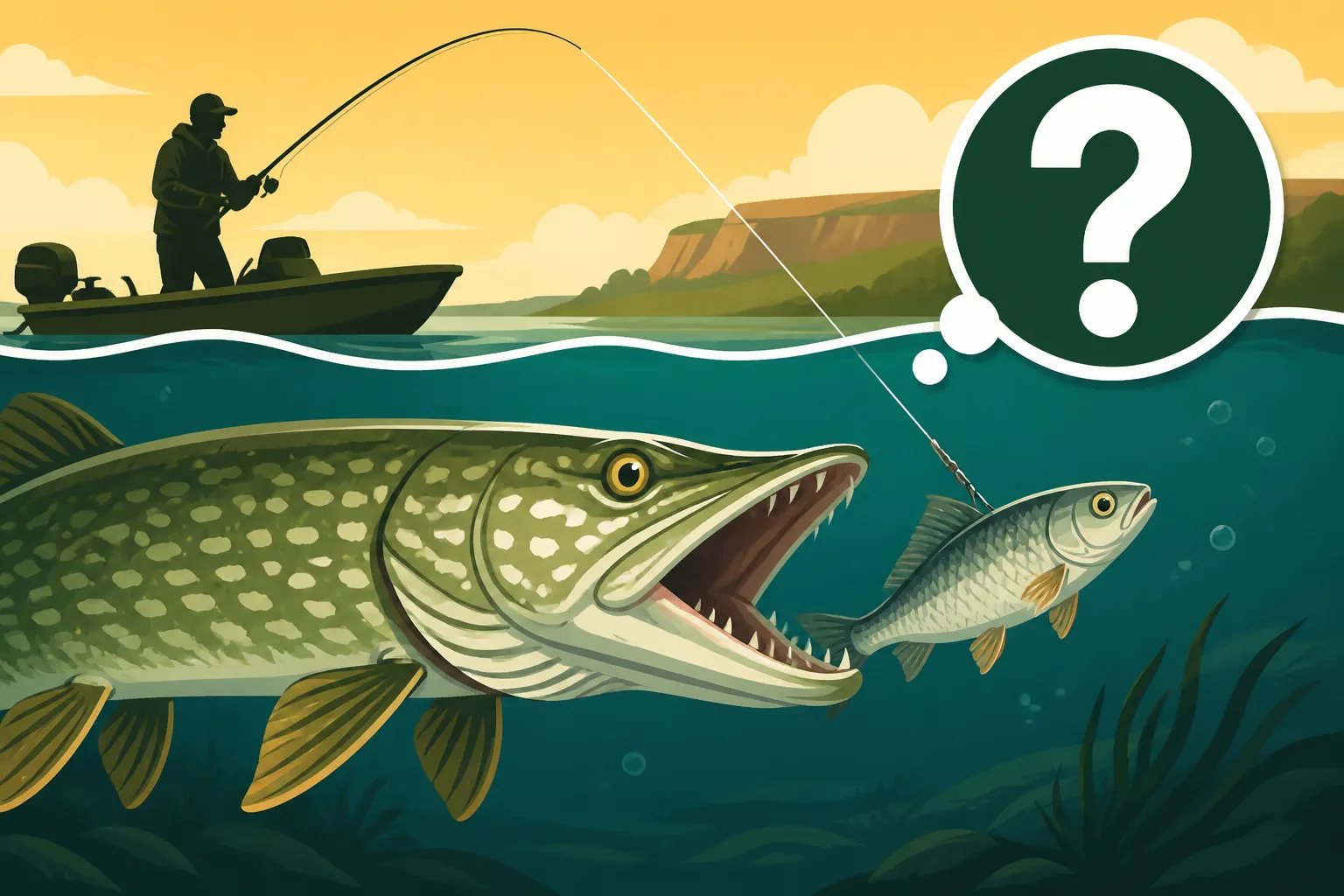
It's a question that's probably haunted every angler reeling in a prized catch in North Dakota: that sudden, violent strike that isn't your original fish, but a toothy torpedo looking for an easy meal. Many of us have felt that heart-stopping moment when a struggling walleye or perch suddenly becomes lunch for a lurking Northern Pike. This guide is here to unravel the mystery and offer practical advice on how to handle these often-frustrating, sometimes exciting, encounters.
The Opportunistic Nature of Northern Pike
Northern Pike are truly impressive predators, rulers of their watery domains across North Dakota's diverse fisheries. They are built for speed and aggression, and their entire existence revolves around finding and consuming prey. When you understand their fundamental nature, it becomes clear why a fish on your line is often a tempting target.
Why Pike Are Apex Predators
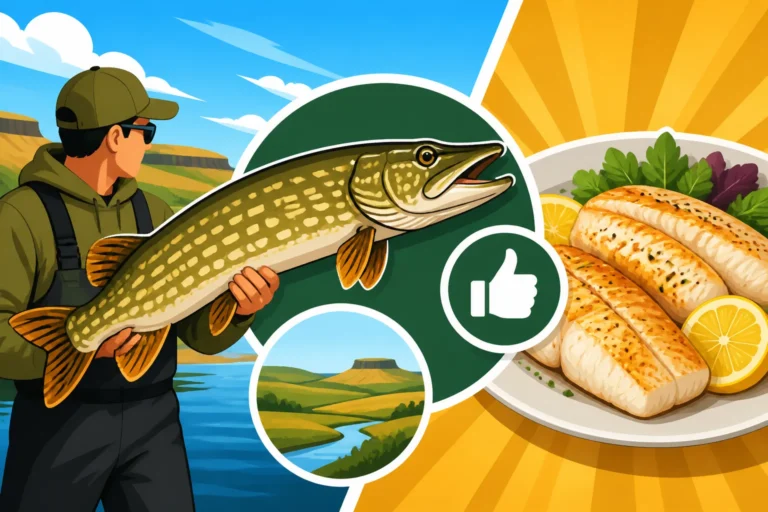
Think about the physiology of a Northern Pike: a long, muscular body, a duck-billed snout packed with hundreds of razor-sharp teeth, and fins positioned for explosive bursts of speed. These aren't creatures that slowly browse for algae; they are designed to hunt. Their diet consists primarily of other fish, often anything they can fit into their mouths, along with frogs, ducklings, and even small mammals that venture too close to the water's edge. They are highly visual predators, often lurking in cover like weed beds, submerged timber, or drop-offs, patiently waiting for an unsuspecting meal to swim by. This means they are constantly assessing their environment for opportunities. If you want to learn more about these fascinating creatures, check out our North Dakota Northern Pike Fishing Guide.
This predatory instinct is hardwired. A pike sees a struggling fish, and its brain immediately registers "weak, injured, easy meal." It's not personal; it's just pure, unadulterated instinct. They don't differentiate between a fish swimming freely and one that's hooked to your line and fighting for its life. In fact, a hooked fish's erratic movements, vibrations, and visible distress signals can act like a dinner bell, drawing pike in from surprisingly far distances. You might be targeting walleye in a specific area, but if pike are present, they are keenly aware of every commotion in their territory.
The "Easy Meal" Mentality
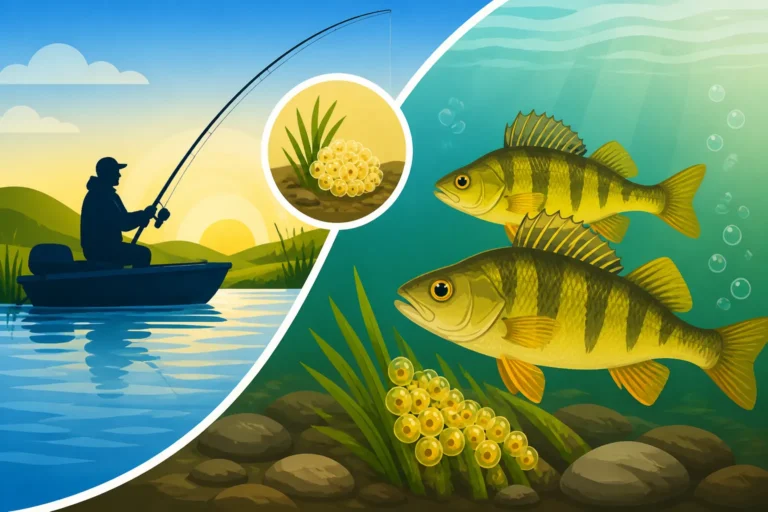
Imagine you're a pike, patiently holding your position in a dense patch of weeds on Lake Sakakawea. Hours might pass with no suitable prey. Then, suddenly, a juicy yellow perch, perhaps a nice fat one you've just hooked, starts thrashing wildly at the edge of the weed line. It's struggling, making noise, and clearly vulnerable. From a pike's perspective, this is a much easier target than chasing down a healthy, agile fish. It's the equivalent of finding a perfectly cooked meal dropped right in front of you.
This "easy meal" mentality is a huge factor in why pike will strike your line. They've expended minimal energy to locate this distressed fish, and its compromised state makes for a guaranteed catch. This isn't just theory; it's something many anglers witness firsthand. The pike doesn't care about your fishing line or the fact that the fish is already "caught" by you. It only sees a meal that needs to be eaten, and it will seize that opportunity with incredible ferocity. Understanding this helps you predict their behavior and adapt your own fishing strategies.
Real-World Scenarios: When Pike Strike Your Catch
It’s one thing to talk about pike behavior in theory, and quite another to experience it mid-fight. These encounters can range from frustrating line breaks to exhilarating double-hookups. Knowing what to expect, and where to expect it, can help you prepare mentally and practically.
The Shallow Water Ambush
Picture this: you're casting crankbaits or spinnerbaits into the shallower bays of Devils Lake, targeting some early season walleye or perch. You feel a solid thump, set the hook, and immediately feel the head shakes of a good fish. As you reel it in, the water is relatively clear, and suddenly, a green blur rockets out from a weed bed that you thought was too sparse for anything significant. Before you can react, there's a violent splash, a jerk on your rod, and your line goes slack. You're left with a mangled bait, or worse, a clean break, and your original fish is gone, now a snack for a lurking pike. This scenario plays out constantly, especially in areas with abundant cover where pike love to hide.
These shallow water ambushes are often the most jarring because they happen so fast and so close to the boat or shore. Pike use the weeds, reeds, or submerged timber as perfect camouflage, waiting to explode on anything that looks like an easy meal. If you're fishing areas known for both your target species and pike, like many of North Dakota's excellent multi-species lakes, you should always be on guard. Even if you're only seeing small panfish being reeled in, a bigger pike could be watching, calculating its strike from the shadows. Learning more about Northern Pike Identification in North Dakota can help you recognize the signs of a good pike spot.
Open Water Attacks
It’s easy to imagine a pike ambushing from cover, but they’re not confined to the shallows. Pike are also perfectly capable of tracking and striking in open water, even over deeper basins or along contours. You might be trolling a deep-diving crankbait for walleye on Lake Sakakawea, hundreds of yards from any visible structure. Suddenly, you get a bite, and your rod bends over. You start the steady retrieve, feeling the strong pull of a decent walleye. As it gets closer to the boat, you might notice an unusual amount of resistance, or perhaps the fight changes character entirely. Then, just as you get a glimpse of your walleye, a monstrous pike appears from the depths, clamps down, and shakes its head, often leaving you with nothing but a mangled fish head or a completely severed line.
These open water attacks can be even more surprising because there's no visible cover for the pike to hide in. They might have been following your lure or your boat, drawn by the commotion or the visual signature of your bait. A struggling hooked fish acts as an undeniable beacon. Sometimes, the pike will completely engulf your hooked fish, leading to a massive struggle. Other times, they simply shear off a portion, leaving you with a half-eaten prize and a story of "the one that got away…and then got eaten." This shows just how committed and opportunistic these fish are, regardless of their immediate surroundings.
The "Double Hook-Up" Nightmare (or Dream?)
Every now and then, the universe aligns, and what could be a nightmare turns into an incredible fishing story – the double hook-up. This happens when a pike strikes the fish already on your line, and in the ensuing chaos, it actually gets hooked itself. You're reeling in a respectable bass, for example, and suddenly your rod is nearly ripped from your hands. The fight intensifies dramatically, and for a moment, you’re not sure what’s going on. Then, as you finally get them closer, you see it: a big Northern Pike with your bass in its mouth, and somehow, your hook has found purchase in the pike’s jaw.
This scenario is both thrilling and challenging. On one hand, you've got two fish on one line, which is an amazing feat. On the other, you now have a potentially large, extremely toothy pike to contend with, along with your original catch, which might be thoroughly chewed up. It requires quick thinking and some serious line strength. It's also a testament to the pike's aggressive nature; they don't just nip at prey, they commit to the strike. Many anglers have incredible tales from Trophy Northern Pike Waters in North Dakota where such an event has actually happened.
Strategies to Minimize Pike Interference
While you can't completely prevent an aggressive pike from trying to snatch your catch, there are definitely things you can do to reduce the likelihood and mitigate the damage. A little preparedness goes a long way when you're fishing North Dakota waters known for these toothy critters.
Reel 'Em In Fast
This might sound like common sense, but it’s probably the single most effective strategy against pike strikes. Once you've hooked a fish, particularly in an area where pike are known to roam, your primary goal should be to get that fish out of the water as quickly and efficiently as possible. A slow, tentative retrieve gives a pike more time to notice the struggling fish, track it, and make its move. Think of it like a cat stalking a bird: the longer the bird is exposed and vulnerable, the higher the chance of a strike.
When you feel that bite, set the hook firmly and then maintain steady, continuous pressure while reeling. Don't pump and pause excessively, as this can give the pike an opening. Keep your rod tip up to maintain tension and guide the fish towards you. If you're fishing with kids or less experienced anglers, emphasize the importance of a quick retrieve. It reduces the window of opportunity for any lurking predator and can often mean the difference between landing your target fish intact and reeling in half a meal. This is especially true when using Best Live Bait for Early Season Walleye, as a live, struggling minnow is an irresistible target.
Beef Up Your Gear
Using heavier line and a leader can significantly increase your chances of landing a fish that's been targeted by a pike, or even landing the pike itself if it gets hooked. Standard monofilament or fluorocarbon line, while excellent for many species, is no match for a pike's teeth. They can slice through it like butter. This is where a proper leader comes into play. A steel, fluorocarbon (heavy test), or titanium leader attached to the end of your main line provides a barrier against those sharp chompers. While it might feel like overkill if you're specifically targeting panfish or walleye, it's a small concession for the protection it offers.
Consider upgrading your main line if you're consistently encountering pike. Braided lines, for instance, offer superior strength-to-diameter ratios and are more abrasion-resistant, though still not pike-proof without a leader. If you're buying leaders or line, reputable brands can be found on platforms like Amazon, offering a wide array of options for different fishing conditions. Having a sturdy rod and reel combo also helps. A medium-heavy or heavy action rod with a robust reel will give you the backbone needed to quickly pull a fish away from a chasing pike, or to handle a surprise double hook-up. For more guidance on choosing the right tackle, consult our guide on Best Fishing Line for North Dakota Lakes.
Strategic Landing
How you land your fish also plays a critical role in minimizing pike interference. Once your hooked fish is close to the boat or shore, don't let it flounder on the surface for too long. This creates a highly visible, easy target. Instead, prepare your net or gripper, and when the fish is within reach, make a swift, decisive motion to scoop it out of the water. Speed and efficiency here are paramount.
If you're fishing with a partner, communicate clearly: "Net ready!" or "Get the fish!" so they can be prepared. For larger fish, especially those you plan to release, a good quality rubberized net minimizes harm to the fish while keeping it secure. For species like walleye, a lip gripper can also be very effective for a quick grab. The less time your hooked fish spends thrashing near the surface, the less chance a lurking pike has to take advantage. And remember, a good, wide net will also come in handy if you happen to hook a pike yourself while pursuing other species, as detailed in Best Landing Net for Landing Big Pike.
What to Do If a Pike Strikes Your Catch
So, despite your best efforts, a pike has latched onto your hooked fish. It’s a moment of frantic energy and mixed emotions. Do you fight it? Cut the line? Here's how to navigate this chaotic but exciting situation.
Holding On vs. Letting Go
This is the split-second decision that defines many pike-on-pike-on-your-fish encounters. If the pike is simply grabbing your fish and hasn't actually been hooked itself, you generally have two choices. The first is to maintain tension and try to muscle both fish towards you. Sometimes, a pike will let go once it feels the resistance of your line and rod, especially if it realizes the fish isn't as "easy" as it first appeared. However, this also carries the risk of the pike completely severing your line, or at least severely damaging your leader, and potentially injuring your original catch.
The second option, especially if you're using light tackle and fear a complete loss, is to try and loosen the drag slightly or even momentarily drop your rod tip. This can sometimes convince the pike that it has "won" the struggle, causing it to swim off with your catch. It's a tough call, as nobody wants to lose a fish, but sometimes it's better to sacrifice the smaller fish than to lose an expensive lure and a substantial amount of line. If you're concerned about your gear, especially if you have an expensive lure on, sometimes letting go is the less painful option in the long run. If you're using cheaper tackle, perhaps trying to hold on is worth the risk.
Landing Both (Carefully!)
If you're lucky, or perhaps unlucky depending on your perspective, the pike might actually get hooked while it’s attacking your original fish. This is the fabled "double hook-up," and it requires extreme caution and a good understanding of How to Fish for Northern Pike in North Dakota. First, acknowledge that you now have a powerful, unpredictable predator on your line, often with its mouth full of another fish. Do not try to swing both into the boat or onto shore. That’s a recipe for disaster, broken gear, and potential injury.
Your best bet is to carefully tire out the pike, using your drag effectively. Work it close to the boat or shore. Once it's subdued, use a large landing net. If you have a partner, have them ready to net both fish at once, if possible. Once in the net, you'll need a long pair of pliers or a jaw spreader and a sturdy pair of cutters to remove the hooks safely. Pike have hundreds of teeth, and their thrashing can be dangerous. A good quality set of pliers, easily found on Amazon, is an absolute must. Check out Best Pliers for Removing Pike Hooks for specific recommendations. Handling a pike requires respect for its sharp teeth and powerful jaw, so proceed with extreme care.
Inspecting Your Catch and Gear
After a pike encounter, whether you landed both fish, lost one, or just had a close call, it's crucial to inspect both your gear and any fish you managed to land. First, look at your line and leader. Even if it didn't break, a pike's teeth can leave nicks and abrasions that severely weaken your line, making it prone to breaking on the next fish. It's always a good idea to cut off any suspect sections of line and re-tie, or replace your leader entirely if it shows signs of wear.
Next, examine your lure or bait. Pike can crush hard baits, bend hooks, and shred soft plastics. If your lure is damaged, especially the hooks, replace or repair them. A bent hook is a lost fish waiting to happen. Finally, if you managed to land your original catch, inspect it for injuries. If it's severely damaged and you plan to release it, it might be more humane to keep it if it meets legal size and bag limits. If it’s only minor scrapes, release it gently, giving it time to recover before swimming away. Understanding What Do Northern Pike Eat? can help you predict how severely a pike might damage your catch.
| Strategy | Description | Benefit |
|---|---|---|
| Reel Fast | Maintain continuous pressure and retrieve hooked fish quickly. | Reduces exposure time for pike to strike. |
| Use a Leader | Attach a steel, heavy fluorocarbon, or titanium leader. | Prevents pike from biting through your line. |
| Sturdy Gear | Use medium-heavy to heavy action rods and strong lines/reels. | Provides leverage to control fish and pike. |
| Quick Landing | Be ready with a net or gripper to swiftly scoop fish from water. | Minimizes surface thrashing, a major pike attractant. |
| Inspect Gear | Check line, leader, and lure for damage after any pike interaction. | Prevents future line breaks and lost fish. |
| Observe & Adapt | Pay attention to pike activity and adjust tactics/locations if needed. | Helps avoid repeated encounters and target species more effectively. |
Conclusion
So, do Northern Pike bite other fish on the line? The resounding answer is yes, absolutely! It's a common occurrence in North Dakota's rich fishing waters, a testament to the pike's nature as an opportunistic and aggressive predator. While it can be frustrating to lose a fish or have your gear mangled, it's also a fundamental part of the North Dakota fishing experience.
By understanding why pike act this way, and by implementing simple strategies like reeling in fast, using appropriate leaders, and having the right gear on hand (easily sourced from retailers like Amazon), you can minimize these encounters and even turn them into exciting stories. It’s all part of the wild charm of fishing in our beautiful state. Embrace the challenge, stay prepared, and you'll find that even a pike trying to steal your dinner can add a memorable chapter to your angling adventures.
Disclaimer
This article is for general informational purposes only and does not constitute professional advice. Laws, prices and regulations vary by location and change over time. Consult a qualified professional for guidance on your specific situation.