How Many Eggs Does a Female Walleye Lay?
One of the most fascinating aspects of angling, beyond the thrill of the catch itself, is understanding the incredible life cycle of the fish we pursue. If you’ve ever wondered about the sheer numbers involved in creating the next generation of North Dakota's beloved walleye, you're not alone. It's truly mind-boggling how many eggs a single female walleye can lay, a process crucial for sustaining the vibrant fisheries we all enjoy. This guide will dive deep into the reproductive prowess of female walleye, explaining the factors that influence their egg production and how this impacts fishing across the state.
The Incredible Reproductive Capacity of North Dakota Walleye
When you think about the vast waters of Lake Sakakawea or Devils Lake, teeming with walleye, it's easy to take for granted how those populations maintain themselves year after year. The secret lies in the astonishing reproductive capacity of healthy female walleye. These fish are prolific spawners, ensuring that despite natural predation and angling pressure, there are always new generations ready to take their place.
Why Egg Production Matters to Anglers
Understanding how many eggs a female walleye lays isn't just a fun fact for trivia night; it's fundamental to appreciating the health and sustainability of our fisheries. Every year, fisheries managers in North Dakota study spawning success and egg viability because it directly correlates to the number of young fish, or "recruits," that will grow up to become the next generation of keepers. A strong spawning season means good fishing for years to come. Conversely, poor spawning can lead to leaner years down the line, highlighting why careful management and angler conservation practices are so vital. When we adhere to limits and practice catch and release for larger, older females, we're directly contributing to the reproductive powerhouse that sustains our angling passion. This also ties into the broader topic of North Dakota Fishing Regulations Explained, which often aims to protect spawning populations.
The General Range of Walleye Egg Counts
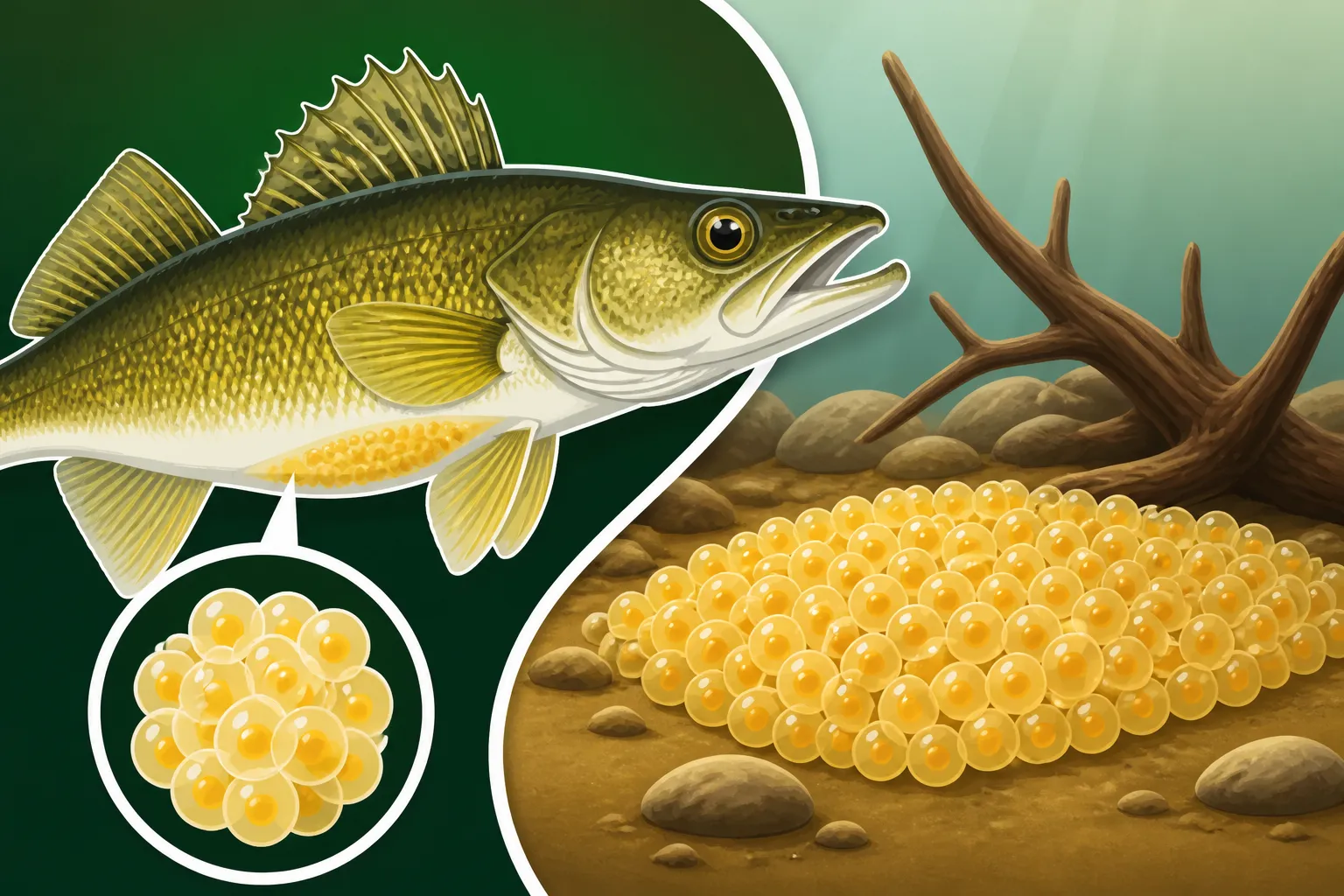
So, what are we talking about here in terms of actual numbers? The general range for walleye egg production is incredibly broad, from as few as 20,000 eggs for smaller, younger females to well over 500,000 for exceptionally large and mature specimens. Imagine a single fish carrying half a million potential offspring! This wide variance is due to a multitude of factors, but the primary drivers are the female's size, age, and overall health. It's not just about quantity, either; healthy females tend to produce higher quality eggs that have a better chance of developing and surviving.
Factors Influencing Walleye Egg Production
It's not a one-size-fits-all situation when it comes to walleye egg production. Several critical factors come into play, each contributing to the quantity and quality of eggs a female can produce in a given spawning season. These variables highlight the delicate balance of nature and how environmental conditions directly impact our beloved fish populations.
Size and Age of the Female Walleye
This is perhaps the most significant factor. Simply put, larger, older female walleye lay exponentially more eggs than their younger, smaller counterparts. A 15-inch walleye might produce around 50,000 to 70,000 eggs, but a magnificent 28-inch female could easily carry 300,000 to 400,000 eggs, or even more. These larger, mature females are the backbone of a healthy walleye fishery. They've survived multiple seasons, grown to an impressive size, and have the biological capacity to contribute heavily to the population. This is why many anglers, especially those focused on conservation, advocate for releasing these larger "brood stock" fish, recognizing their irreplaceable role in ensuring future generations. For more on these amazing fish, check out our Walleye Identification and Size Records in North Dakota guide.
Environmental Conditions and Water Quality
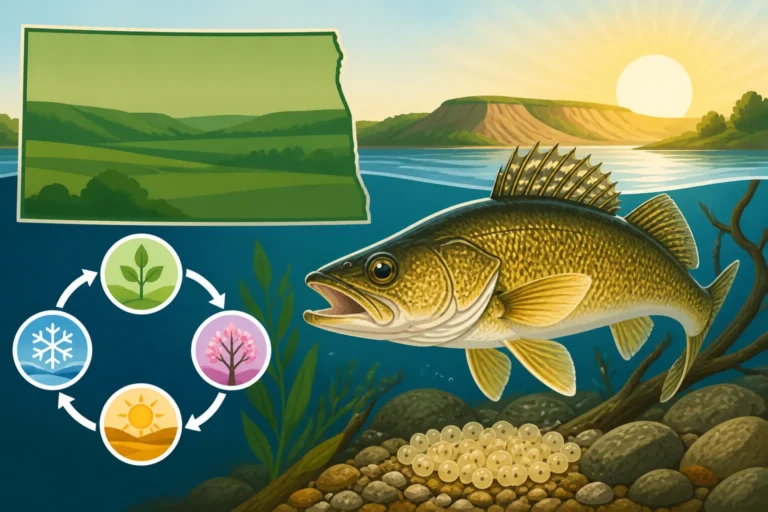
Just like any living creature, walleye thrive in optimal conditions. During the months leading up to spawning, environmental factors like water temperature, oxygen levels, and the availability of suitable spawning habitat play a crucial role in egg development. North Dakota’s lakes and rivers can experience significant fluctuations in these conditions. Consistent, stable water temperatures that gradually warm to the ideal spawning range (typically 42-50°F) promote healthy egg maturation. Good water quality, free from excessive siltation or pollution, ensures that spawning beds remain viable for eggs to settle and develop without being smothered. Think about how much clearer the water is in certain areas, providing ideal conditions for these fish.
Health and Nutrition of the Female
A walleye doesn't just magically produce hundreds of thousands of eggs; it requires immense energy. The overall health and nutritional status of the female walleye directly impact her reproductive output. A female that has had a plentiful food supply throughout the year, accumulating robust fat reserves, will be able to dedicate more energy to producing a larger quantity of high-quality eggs. Conversely, a stressed or undernourished female may produce fewer eggs, and those eggs might have lower viability. This highlights the importance of a healthy forage base in our lakes, ensuring that walleye have ample opportunity to feed and grow strong. Understanding what these fish eat is key to this, which you can read more about in What Do Walleye Eat in North Dakota Lakes?. Anglers can often tell a healthy fish by its vibrant color and robust girth, especially when examining a specimen caught on a fishing trip. Even casual anglers can contribute by purchasing products like an accurate fish scale or measuring tape (available on platforms like Amazon) to keep track of their catches and contribute to data if requested by fisheries departments.
The Walleye Spawning Process in North Dakota
The act of spawning is a truly incredible natural phenomenon, a frantic yet essential ritual that ensures the continuation of the walleye species. In North Dakota, this process is a key annual event that marks the changing seasons and sets the stage for future fishing opportunities.
Timing and Location of Spawning
Walleye in North Dakota typically begin their spawning run shortly after the ice clears from the lakes and rivers, usually in late April to early May, though it can vary depending on the year's specific weather patterns. The key trigger is water temperature, usually when it reaches that sweet spot of 42 to 50 degrees Fahrenheit. They seek out specific spawning grounds, preferring areas with hard, rocky bottoms, gravel, or rubble, often in relatively shallow water. These locations can be found in rivers, along shorelines, on reefs, or shoals in larger lakes like Lake Sakakawea or Devils Lake. They need clean, well-oxygenated water where their eggs can settle into the crevices of the substrate, protected from current and siltation. If you're curious about the specific timing, our article When Do Walleye Spawn in North Dakota? offers a deeper dive.
The Act of Laying and Fertilizing Eggs
Unlike some fish species that build elaborate nests or exhibit parental care, walleye are "broadcast spawners." This means the female simply releases her eggs into the water column, often over those preferred rocky or gravelly areas. Multiple males then move in, releasing their milt (sperm) to fertilize the eggs. It's a rather chaotic affair, with many fish participating, ensuring a high rate of fertilization. There's no guarding of the nest or tending to the eggs after this initial release. The eggs are left to drift and settle into the substrate, relying on the natural environment for their survival and development. This process ensures genetic diversity and maximizes the chance of some eggs surviving to hatch. For anglers keen on observing this, or simply understanding fish behavior, learning How to Tell Male and Female Walleye Apart can be quite useful.
Egg Survival and Hatching Success
While a female walleye lays an enormous number of eggs, the reality is that only a tiny fraction will survive to adulthood. This is a common strategy in nature for species that don't provide parental care. The eggs face numerous challenges from the moment they are laid. Predation by other fish, insects, and even waterfowl is a major threat. Environmental factors like sudden drops in water temperature, severe storms that stir up silt and smother the eggs, or fluctuating water levels that can leave eggs high and dry, also take a heavy toll. Despite these challenges, enough eggs survive and hatch, drifting as tiny fry, to replenish the populations year after year. The success of this hatching is vital for our North Dakota Walleye Fishing Guide. Many states even have specific stocking programs to help supplement natural reproduction when conditions aren't ideal, showcasing how critical every stage of this life cycle is.
Average Egg Counts for North Dakota Walleye
Understanding the general range is helpful, but let's break down what anglers might typically expect from different sizes of walleye commonly found in North Dakota waters. These numbers are always estimates, as individual fish can vary, but they give us a good benchmark.
Relating Walleye Size to Egg Output
As we've discussed, the larger the female, the more eggs she's likely to produce. This isn't just a linear relationship; the increase can be quite dramatic as a walleye gains significant length and girth. For instance, a walleye that grows from 20 inches to 25 inches won't just add a few thousand eggs; it might double or even triple its egg production. This is because larger fish not only have more internal space for eggs but also typically possess greater energy reserves from years of successful feeding. This reproductive strength is a core reason why respecting slot limits and practicing selective harvest, especially for those larger, older females, is a good idea for any angler passionate about the long-term health of their local fishery. It’s also why fisheries managers pay close attention to the Life Span of a Walleye in North Dakota and how it impacts overall population health.
Factors for High Success Rates
While a large number of eggs is important, the overall success of a spawning season depends on many factors that lead to high survival rates for those eggs and subsequent fry. Ideal spawning conditions include stable water levels throughout the incubation period (which usually lasts 10-18 days), consistent water temperatures without drastic cold snaps, and minimal siltation on spawning beds. A robust forage base in the lake or river is also critical, ensuring that the newly hatched fry have plenty of plankton to feed on, allowing them to grow quickly past their most vulnerable stages. Without these conditions, even a massive egg lay might not translate into a strong year class of walleye. Anglers often discuss these factors when talking about "the bite" and predicting future fishing trends, especially around Best Time of Year to Fish in North Dakota and Early Spring Walleye Techniques in North Dakota.
Here’s a general estimation of walleye egg counts based on common sizes you might encounter in North Dakota:
| Walleye Length (inches) | Estimated Weight (lbs) | Estimated Egg Count (approximate) |
|---|---|---|
| 15-18 | 1.0 – 2.0 | 20,000 – 80,000 |
| 19-22 | 2.0 – 3.5 | 80,000 – 150,000 |
| 23-26 | 3.5 – 6.0 | 150,000 – 300,000 |
| 27-30+ | 6.0 – 10.0+ | 300,000 – 500,000+ |
Keep in mind that these are rough estimates, and factors like the fish's overall health, genetics, and environmental conditions can cause individual variations. A particularly fat, healthy 25-inch walleye might lay more eggs than a skinny 26-inch one. However, this table clearly illustrates the exponential increase in reproductive potential as walleye grow larger. Understanding the importance of spawning habitat, like the Walleye Habitat on Lake Sakakawea, is also crucial for appreciating these numbers.
Disclaimer
This article is for general informational purposes only and does not constitute professional advice. Laws, prices and regulations vary by location and change over time. Consult a qualified professional for guidance on your specific situation.