When Do Yellow Perch Spawn in North Dakota?
There's nothing quite like the thrill of reeling in a feisty yellow perch, especially when those golden-sided beauties are really biting. But if you've ever found yourself scratching your head, wondering why the perch bite suddenly dropped off or shifted, chances are you've bumped right up against their spawning season. It's a pivotal time in their annual cycle, dictating where they are, what they're eating (or not eating), and how you, as an angler, need to adjust your approach. This guide is going to walk you through the ins and outs of when yellow perch typically spawn in North Dakota, helping you understand their behavior so you can plan your fishing trips for maximum success and enjoyment.
Understanding the Yellow Perch Spawning Cycle in North Dakota
Yellow perch are a cornerstone of North Dakota's fishing scene, especially popular with ice anglers and families. Their annual spawning ritual is a critical event, setting the stage for the next generation of these delicious fish. Understanding when and how they spawn is key to anticipating their movements and feeding patterns throughout the year.
The Critical Role of Water Temperature
When it comes to yellow perch spawning, water temperature isn't just a factor; it's the factor. Unlike some species that rely heavily on daylight hours or lunar cycles, perch are incredibly temperature-sensitive during this time. As the ice melts and the sun begins to warm the shallow waters of our North Dakota lakes and reservoirs, the perch start to feel the urge.
Typically, yellow perch in North Dakota begin their spawning activities when water temperatures consistently reach the range of about 45 to 52 degrees Fahrenheit (7 to 11 degrees Celsius). This usually happens shortly after ice-out, as the shallow bays and points warm up faster than the main lake body. If we have an early spring with quick ice-out and rapidly rising temperatures, the spawn can kick off earlier. Conversely, a prolonged cold spring can delay it significantly. Imagine waiting impatiently for spring, and then suddenly, the switch flips. That's a bit how it is for the perch, too! They're not going to rush into it if the water is still too chilly for their eggs to develop properly. This is why paying attention to local water temperature readings, often available through fishing reports or on fish finders, can give you a significant advantage. Early Spring Walleye Techniques in North Dakota can often coincide with pre-spawn perch movements, as both species are reacting to warming waters.
Prime Spawning Locations and Habitat
You won't find yellow perch spawning in the deepest parts of Lake Sakakawea or Devils Lake. No, these fish prefer a more intimate, sheltered setting for their reproductive efforts. They gravitate towards shallower areas, typically less than 10 feet deep, where they can find suitable structure to deposit their eggs. Think about those areas that are among the first to be free of ice: shallow bays, protected coves, and points with abundant submerged vegetation.
Key habitats include:
- Submerged Vegetation: Old weed beds, rushes, and lily pads from the previous year provide excellent attachment points for their unique egg masses and offer some protection for the developing eggs.
- Brush Piles and Downed Trees: Any woody debris that offers a place for eggs to cling and offers cover for the spawning fish is a prime location.
- Rocky Shoals and Gravel Beds: While not as common as vegetation, rocky or gravelly bottoms can also be used, particularly if other preferred habitat is scarce.
These shallow, protected areas warm up quickly, which is why they become perch hot spots during the spawn. If you've ever fished Devils Lake Perch Fishing Spots, you know how important submerged structure can be for finding these fish. It's a frantic time for them, and they're looking for safety and stability for their offspring.
The "Egg Ribbon" Phenomenon
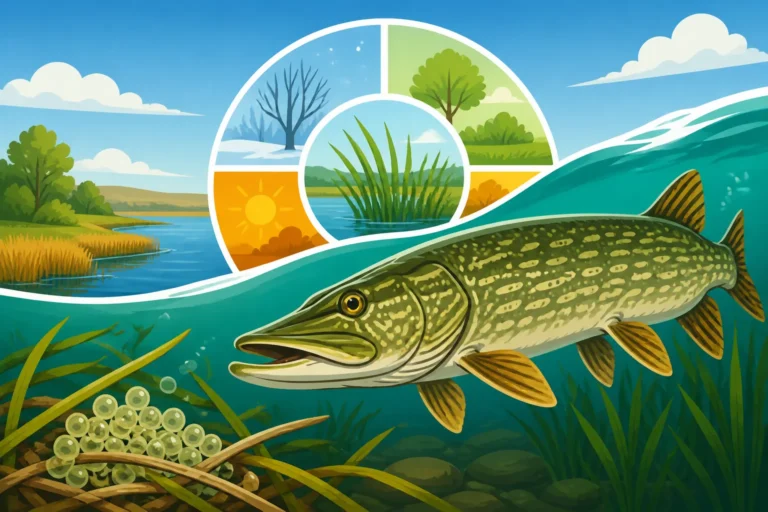
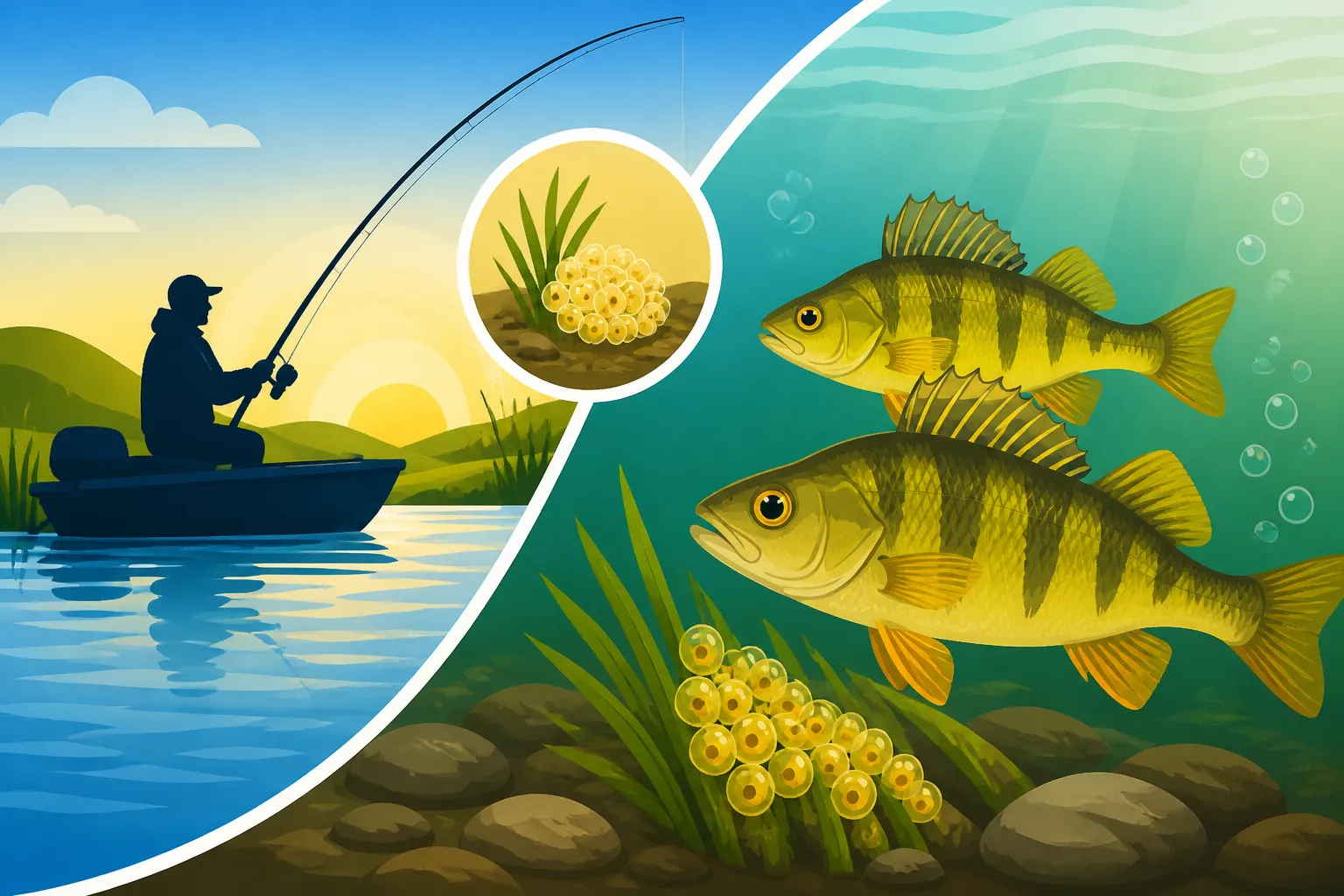
One of the most fascinating aspects of yellow perch spawning is their unique method of egg deposition. Unlike many fish that scatter individual eggs, female yellow perch lay their eggs in long, gelatinous, accordion-like strands or "ribbons." These ribbons can be quite lengthy, sometimes extending several feet, and contain thousands upon thousands of eggs.
These egg ribbons are typically draped over submerged vegetation, branches, or other underwater structures. The sticky nature of the ribbon allows it to adhere securely, preventing the eggs from being washed away by currents or sinking into the murky bottom. This strategy provides a larger surface area for oxygen exchange and helps protect the eggs from silt and some predators. It's a pretty remarkable sight if you ever happen to see one while snorkeling or diving! From an angler's perspective, knowing that these ribbons are present can confirm that you're in a spawning area, and it helps you understand why perch might be focused on these specific locations.
Timing Your Fishing Around the Spawning Season
Understanding when yellow perch spawn is only half the battle; knowing how their behavior changes before, during, and after this critical period is where you really dial in your angling strategy. It's not just about finding them; it's about understanding their mood and motivations.
Pre-Spawn: The Feeding Frenzy
The pre-spawn period is arguably one of the most exciting times to target yellow perch in North Dakota. As water temperatures begin to rise and the perch sense the impending spawn, their bodies signal an urgent need to bulk up. They need energy for the demanding act of reproduction, and that means one thing for us anglers: they're on the hunt, aggressively feeding.
During this phase, which typically begins right after ice-out and lasts for a couple of weeks before the actual spawning begins, perch will often congregate in deeper staging areas adjacent to their shallower spawning grounds. They're still active, cruising shallower flats and channel edges, gorging on anything that moves. Small minnows, insect larvae, and crustaceans become prime targets. This is when you can often find large schools of fat, healthy perch. They're looking for an easy meal, and they're not shy about it. Think of it as their last big supper before they get busy! This can be a fantastic time for jigging with small spoons or soft plastics, or even using a classic minnow under a bobber.
During Spawn: A Different Approach
Once the water temperature hits that sweet spot (around 45-52°F) and the perch move into their chosen shallow spawning grounds, their behavior shifts dramatically. While it's a common misconception that perch stop biting altogether during the spawn, their priorities definitely change. They become less focused on feeding and more absorbed in the act of reproduction.
During the actual spawn, males are typically more aggressive and active, guarding the spawning areas and vying for females. Females are focused on depositing their egg ribbons. While they might still strike a bait out of aggression or instinct, they are generally less interested in actively feeding. Fishing directly on spawning beds can be challenging and, for many anglers, raises ethical concerns about disturbing the fish during such a vulnerable time. If you do fish during this period, consider using smaller, more subtle presentations, and be prepared for a slower bite. Often, the best strategy is to look for transitional areas just outside the densest spawning grounds, where some fish might be moving in or out, or taking a brief break from the activity. When ice fishing, understanding How to Catch Perch Through the Ice in North Dakota involves knowing these seasonal movements.
Post-Spawn: Recovery and Relocation
After the intense energy expenditure of spawning, yellow perch enter a recovery phase. Both males and females are often exhausted and somewhat lethargic. Their initial instinct is to recuperate, and during this immediate post-spawn period, the bite can remain slow.
However, as they regain their strength, they'll once again start to spread out from the shallow spawning areas. They don't typically go straight to the deepest water immediately. Instead, they'll often move to slightly deeper edges of those same bays or transition areas, often seeking out deeper weed lines or submerged structure where they can find consistent food sources without expending too much energy. This period can still offer good fishing, but you'll need to adapt your search patterns. Look for them slightly deeper than where they spawned, but still relatively shallow compared to their summer haunts. They'll slowly regain their aggressive feeding tendencies as their energy levels return. Consider how Yellow Perch and Panfish Daily Limits Explained might influence your decisions on what to keep during this recovery period.
| Spawning Phase | Typical Water Temperature | Perch Behavior | Angling Strategy |
|---|---|---|---|
| Pre-Spawn | 38-45°F (3-7°C) rising | Aggressively feeding, schooling in staging areas near future spawning grounds. High energy. | Target transition areas, use active presentations like small spoons, jigs with minnows or soft plastics. Focus on finding schools. |
| During Spawn | 45-52°F (7-11°C) stable | Focused on reproduction, males aggressive, females depositing eggs. Less active feeding. | More challenging. Target edges of spawning areas, subtle presentations, ethical catch-and-release encouraged. |
| Post-Spawn | 50-60°F (10-15°C) rising | Recovering from spawn, somewhat lethargic, dispersing from beds, gradually resuming feeding. | Look for slightly deeper structure near spawning areas (weed lines, drop-offs). Use a mix of active and slower presentations as they recover. |
Practical Tips for Anglers During Perch Spawning Season
Knowing the science behind the spawn is great, but applying that knowledge on the water is what truly makes a difference. Here are some practical tips to help you navigate perch fishing during this dynamic time in North Dakota.
Adjusting Your Baits and Lures
Your go-to winter ice fishing jig might not be the most effective choice once the spawn is in full swing. This is a time when subtlety can often outperform flash.
- Pre-Spawn: During this high-energy feeding phase, perch are often willing to chase. Small spoons, like those from popular brands you can find on Amazon, worked aggressively can be very effective. Jigs tipped with a live minnow, maggots, or wax worms are always a reliable choice. Small crankbaits or lipless crankbaits can also draw strikes if perch are actively chasing baitfish. You might find a good selection of Best Bait for North Dakota Fishing that works well in this period.
- During Spawn: When perch are focused on reproduction, they might hit a bait more out of annoyance or a territorial instinct than hunger. Downsize your presentation. Tiny jigs, small soft plastics resembling insect larvae, or a simple hook with a piece of crawler or a single maggot fished slowly can entice a reluctant bite. Light line is crucial for detecting these subtle takes.
- Post-Spawn: As perch recover, they'll start to feed more consistently. A mix of pre-spawn tactics will work, but you might need to experiment with retrieval speeds. Sometimes a slower, more methodical presentation is better as they conserve energy. Small jigs, grubs, and live bait combinations are usually productive.
Remember, clear water during the spawn can make perch wary, so natural colors are often a good starting point. In stained water, brighter colors or those with UV properties might be more visible.
Ethical Considerations and Conservation
It's tempting to try and capitalize on large concentrations of fish, especially when they're in shallow, accessible areas during the spawn. However, as responsible anglers, we have a role to play in conservation.
- Minimize Disturbance: Try to avoid driving or wading directly onto known spawning beds if possible. Repeated disturbance can disrupt the spawning process and potentially harm the delicate egg ribbons.
- Catch and Release: If you're fishing during the peak of the spawn, consider practicing catch and release, especially for the larger, egg-laden females. Releasing them allows them to complete their spawning duties and contribute to future generations.
- Handle Fish Gently: Always handle fish with wet hands to protect their slime coat, and try to release them quickly and carefully. This is important year-round, but especially crucial during the vulnerable spawning period.
- Know the Regulations: Always be aware of the current North Dakota Fishing Regulations Explained for yellow perch, including daily limits and possession limits. These regulations are in place to help manage fish populations sustainably.
Being mindful of the perch during this vital time ensures that future generations of anglers will have plenty of opportunities to enjoy North Dakota's fantastic perch fishery.
Monitoring Local Conditions
Perch don't read calendars. Their internal clock is reset by environmental cues, primarily water temperature. So, while we can give general guidelines for when they spawn, the exact timing will vary year to year and even lake to lake.
- Follow Ice-Out Reports: Keep a close eye on local ice-out reports. The yellow perch spawn typically kicks off within a couple of weeks after the ice leaves a given body of water. Websites, local bait shops (many of which also carry gear, maybe even a fishing rod and reel combo that you could have bought from Amazon previously), and online fishing forums are great resources.
- Water Temperature Readings: If you have a boat with a fish finder that reads water temperature, pay close attention to the surface temps in shallow bays. This is your most direct indicator. Even simple thermometers can be used for shore-based observations.
- Connect with Local Anglers: There's no substitute for local knowledge. Chat with fellow anglers at boat ramps or bait shops. They often have the most up-to-date information on what the fish are doing in specific areas.
- Check Official Resources: The North Dakota Game and Fish Department often publishes fishing reports that can give you clues about fish activity and water conditions. This information is invaluable for planning your trips, whether you're interested in North Dakota Walleye Fishing Guide or simply chasing perch.
By actively monitoring these conditions, you can be proactive in adjusting your fishing plans to coincide with the best yellow perch action.
Common Misconceptions About Perch Spawning
Like with any natural event, there are a few myths and misunderstandings floating around about yellow perch spawning. Let's clear up some of the most common ones to help you become an even more informed angler.
"Perch Don't Bite During the Spawn"
This is perhaps the most common misconception. While it's true that the bite can slow down significantly during the peak of the spawn, and perch become less interested in actively feeding, they don't necessarily stop biting altogether. Their motivations simply change.
During the spawn, perch (especially males) can become very territorial. They might strike a lure or bait not because they're hungry, but because they see it as an intruder threatening their spawning area or their potential mates. This is often referred to as a "reaction strike" or an "aggression bite." Females, while more focused on laying eggs, might still strike if a bait presents itself directly in their path with minimal effort required.
The key takeaway here is that you might need to adjust your expectations and techniques. Don't expect a fast and furious bite, but don't assume they've completely shut down either. Downsizing your presentation, slowing down your retrieve, and focusing on those subtle takes can still lead to success. If you're struggling to get a bite, remember, perch are still around; you just need to crack the code of their spawning-induced mood.
Impact of Ice-Out Timing
Many anglers associate the perch spawn with a specific calendar date, but as we discussed, it's primarily a temperature-driven event. This means the timing of ice-out in North Dakota plays a huge role.
If North Dakota experiences a late, prolonged winter, with ice lingering on lakes well into April or even early May, the yellow perch spawn will be delayed. The fish simply won't initiate spawning until those critical water temperatures are met. Conversely, an unusually warm winter and early ice-out can push the spawn significantly earlier in the spring. This variability means you can't just mark "April 20th" on your calendar and expect the spawn to happen exactly then every year.
This can be frustrating for anglers who plan their trips far in advance. However, understanding this direct link to ice-out and water temperature empowers you to be more flexible and responsive. Instead of a fixed date, think of the spawn as a window of opportunity that opens and closes based on Mother Nature's schedule. This variability is also why fishing reports often emphasize North Dakota Ice-Out Fishing Guide conditions, as they're a precursor to the open water spawn.
Differences Across North Dakota Lakes
North Dakota is a big state with many diverse fishing opportunities, and not all lakes warm up or experience ice-out at the same time. This leads to variations in spawning timing.
For instance, a shallow, smaller lake in southern North Dakota might warm up and see its ice disappear much earlier than a deeper, larger lake like Lake Sakakawea or a geographically different lake like Devils Lake, even if they are relatively close. The deeper the lake, the longer it generally takes for the overall water column to warm to that critical spawning temperature. Lakes with extensive shallow bays will also typically see spawning begin there before the main lake body.
This means that if you're keen on targeting spawning or pre-spawning perch, you might find different stages of the spawn happening across different bodies of water at the same time. An angler willing to travel a bit could potentially chase the pre-spawn bite from one lake to another as the spring progresses. It's not a uniform event across the entire state, but a staggered process influenced by local conditions and the unique characteristics of each body of water. This variation means your North Dakota Fishing Season Calendar for perch isn't a single event but a series of interconnected opportunities.
Disclaimer
This article is for general informational purposes only and does not constitute professional advice. Laws, prices and regulations vary by location and change over time. Consult a qualified professional for guidance on your specific situation.