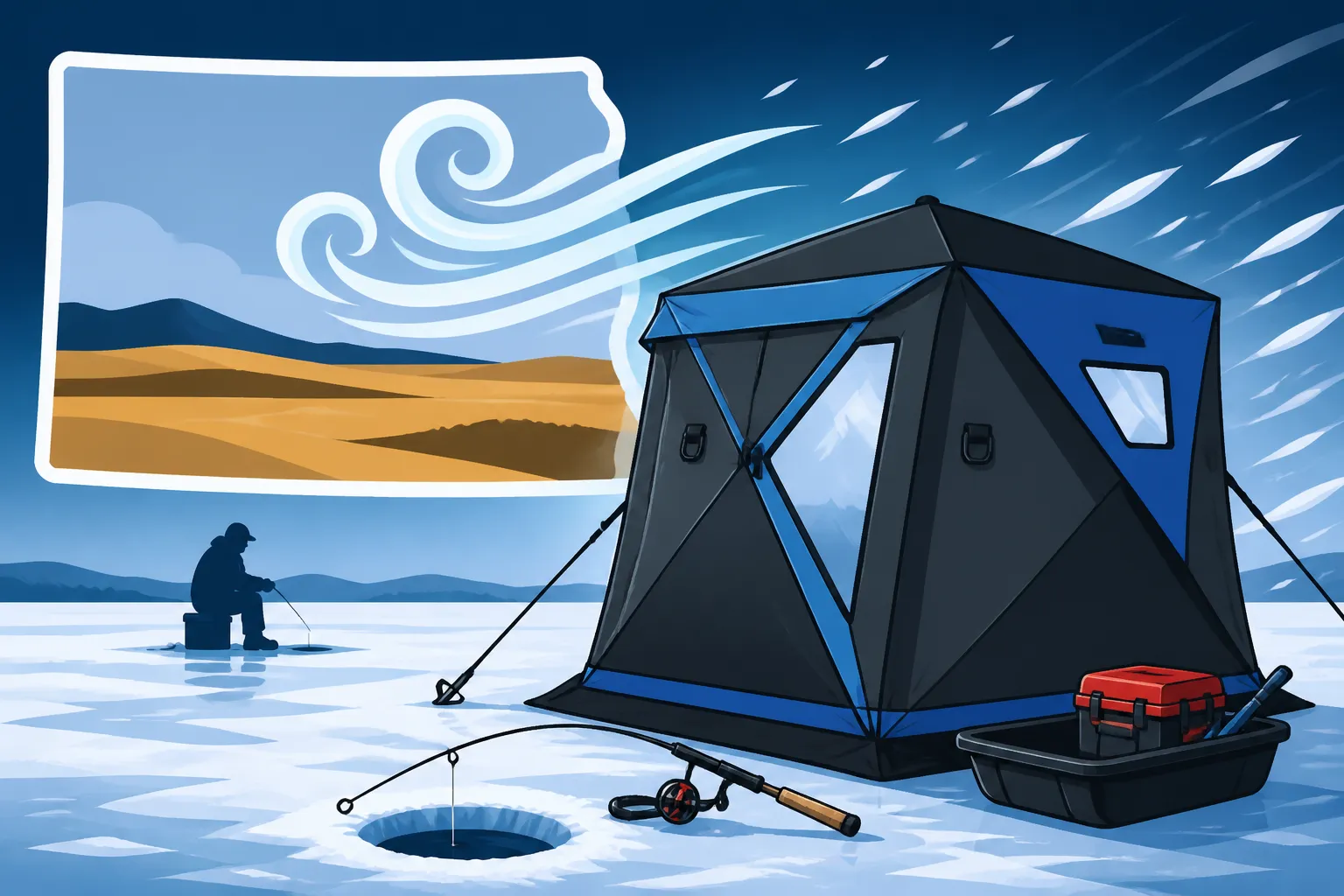
Best Portable Ice Shelters for Wind
Oh, the North Dakota wind! If you've spent any time on the ice here, you know it's not just a breeze; it's a relentless, biting force that can turn a peaceful fishing trip into an absolute nightmare. Trying to enjoy a day of ice fishing when your shelter is flapping like a distressed kite or threatening to take flight can completely ruin the experience, leaving you shivering and frustrated. This guide is all about helping you conquer those gusty conditions by finding and utilizing the best portable ice shelters specifically designed to stand strong against North Dakota's infamous winds.
The Relentless North Dakota Wind: Why It's Your Biggest Ice Fishing Challenge
Let's be real, the wind on a frozen North Dakota lake is a beast. It's not just about feeling chilly; it's about the sheer physical challenge it presents to anglers. Anyone who’s tried to fish in anything less than a sturdy, well-anchored shelter when the wind really picks up knows exactly what I’m talking about. You spend more time holding down your gear, fighting with flapping fabric, and wrestling your shelter than you do actually fishing. It drains your energy, saps your morale, and makes you question why you even bothered leaving the warmth of home.
Understanding Wind's Impact on Your Comfort and Safety
The wind isn't just an inconvenience; it can actively compromise your comfort and safety. Imagine the scenario: you're out on Lake Sakakawea, the walleye are biting, and suddenly a squall rolls in. If your shelter isn't built for it, that steady 20 mph wind with gusts to 35 mph can make the internal temperature plummet, even with a heater blasting. It can push your shelter across the ice, snagging your lines and potentially damaging your gear. Worse, if anchors pull out, a runaway shelter becomes a legitimate hazard, not just to you but to anyone else on the ice. Early Ice Fishing Safety Tips definitely includes checking the weather, but having the right gear is just as crucial.
Beyond the immediate physical discomfort, there's the mental toll. The constant noise of flapping fabric, the feeling of instability, and the worry that your shelter might collapse or blow away can make it impossible to relax and enjoy the solitude of the ice. You're constantly on edge, which is the exact opposite of what most of us seek in a day of ice fishing. It's truly disheartening to pack up early because your shelter simply can't handle the conditions, especially after you’ve put in all the effort to get out there.
Common Frustrations with Flimsy Shelters
Many of us have started with a basic, entry-level portable ice shelter. And while those might be fine on a perfectly calm day, they quickly become a source of profound frustration when the wind whips up. The most common complaints I hear, and have experienced myself, involve flimsy poles snapping under pressure, fabric tearing at stress points, zippers jamming from being stretched taut, and, of course, anchors that refuse to hold. It’s like trying to build a sandcastle in a hurricane with those less robust models.
Think about trying to set up a lightweight hub-style shelter by yourself when the wind is already howling. It becomes a sail, trying to fly away before you even get the first anchor in. Or a flip-over model that rattles and shifts with every gust, letting cold air seep in through every seam and crevice. These experiences aren't just annoying; they teach you a harsh lesson about the importance of investing in gear that can truly stand up to North Dakota's unique challenges. We all want to feel secure and warm, not like we’re fighting a losing battle against the elements.
Key Features of a Wind-Resistant Ice Shelter
When you're outfitting yourself for ice fishing in North Dakota, thinking about a shelter that can take a beating from the wind isn't a luxury; it's a necessity. It’s about more than just keeping warm; it’s about stability, durability, and peace of mind. So, what exactly should you be looking for in a shelter that can truly stand its ground when those prairie winds start to sing?
Robust Frame and Fabric Construction
The backbone of any wind-resistant shelter is its frame. You need poles that are not just strong but also flexible enough to absorb some of the wind's force without snapping. Many quality shelters use heavy-gauge fiberglass or aluminum poles, which offer a great balance of strength and weight. Cheap plastic poles simply won't cut it. Look for reinforced corners and hubs where the poles connect, as these are critical stress points. A solid framework prevents the shelter from collapsing inward or twisting under extreme gusts.
Equally important is the fabric. A thin, single-layer fabric might save on cost and weight, but it's often the first thing to fail in high winds. Thicker, durable fabrics like 600-denier polyester are much more resistant to tearing and abrasion. You'll also want to consider insulation – a fully insulated shelter, typically with a multi-layer fabric, not only keeps you warmer but also provides a thicker, more rigid wall that doesn't flap as much in the wind. This reduces noise and stress on the fabric. When you feel the material, it should feel substantial, not like a flimsy tent. Many anglers will tell you that the extra insulation is worth it, not just for warmth, but for that added structural integrity. Best Insulated Ice Shelter for Extreme Cold can make a huge difference in comfort and how a shelter handles wind.
Strategic Design for Wind Deflection
A well-designed shelter isn't just strong; it's smart. Look for features that help deflect or shed wind rather than catching it like a sail. This often includes a lower profile or a more aerodynamic shape, especially in flip-over models. While hub shelters might seem like big boxes, good ones incorporate internal bracing or stronger, shorter wall sections that create a more rigid structure. Some shelters also feature skirted bottoms, which, when banked with snow or ice, create a seal that prevents wind from getting underneath and lifting the shelter. This also helps keep the heat in!
Another design element that helps with wind is the number and placement of windows and doors. While you need access, minimizing unnecessary openings means fewer potential points of failure and less air infiltration. Zippers should be heavy-duty and easy to operate, even when the fabric is pulled taut by the wind. Draft flaps over zippers are also a huge plus, as they prevent those annoying cold air leaks that can make you shiver even in a heated shelter. Little details, like how the corners are stitched and reinforced, really add up when the wind is testing every seam.
Superior Anchoring Systems
Even the strongest shelter will go nowhere without a top-notch anchoring system. This is where many anglers cut corners, but it's absolutely vital in North Dakota. You need robust ice anchors that bite deep and hold firm. Many shelters come with screw-in ice anchors, but the quality varies wildly. Look for anchors made of durable steel with sharp, aggressive threads that can be screwed in easily, even in hard ice. Some anglers even upgrade to specialized drill-adapter anchors that can be driven in with a cordless drill, making setup in strong winds much faster and more secure.
The points where the anchors attach to the shelter are just as important. Look for reinforced tie-down points, often with heavy-duty grommets or fabric loops, that are securely stitched to the shelter's frame. Multiple anchor points are essential; don't rely on just one or two. A good wind-resistant shelter will have anchor points on all four corners and sometimes in the middle of each wall or even on the roof in extreme models. Learning How to Anchor an Ice Shelter in Wind properly is a skill every North Dakota ice angler needs to master. It’s not just about getting them in; it’s about getting them in right, so they don’t pull out when a gust hits.
Types of Portable Ice Shelters and Their Wind Performance
When you're out on the ice, especially during those notoriously blustery North Dakota days, your portable ice shelter becomes your sanctuary. But not all sanctuaries are created equal, especially when it comes to battling the wind. Each style of portable shelter offers different advantages and disadvantages in windy conditions, and understanding these can help you choose the best fit for your fishing adventures.
Hub-Style Shelters in Windy Conditions
Hub-style shelters, often referred to simply as "hubs," are popular for their spacious interiors and relatively light weight. They essentially pop up like a tent, with fiberglass poles extending from a central hub to create walls and a roof. In mild to moderate wind, they perform quite well, offering a comfortable fishing experience. However, when the North Dakota wind truly picks up, hub shelters can present some challenges. Their large, flat wall surfaces can act like sails, catching the wind and making them harder to set up and more susceptible to bowing or shifting if not properly anchored.
The key to a hub shelter's wind performance lies in its construction and anchoring. Higher-quality hubs will feature stronger poles, reinforced fabric, and more robust hub mechanisms that prevent the poles from collapsing. Crucially, they need to be fully anchored at every available tie-down point – often eight to twelve points – to distribute the wind load evenly. Without diligent anchoring, you might find yourself chasing your shelter across the ice. Many anglers who prefer hubs for their space opt for models with insulated fabric, which provides extra rigidity against the wind's force, making them feel much more stable.
Flip-Over Shelters: A Strong Contender for Wind
Flip-over shelters, sometimes called "flip-shacks" or "sled shelters," are often considered the workhorses of North Dakota ice fishing, especially for their wind resistance. These shelters consist of a durable sled base with a fabric tent that "flips over" and attaches to a frame, creating an instant enclosure. Their primary advantage in wind is their lower profile and heavier, more stable base. The sled itself provides significant weight and helps keep the shelter grounded, making it less prone to being lifted or pushed by gusts.
Setting up a flip-over shelter is generally quicker and less arduous in wind because you're working with a more contained structure. The heavier, often insulated fabric on many flip-overs also contributes to their stability, reducing flapping and minimizing cold air infiltration. When properly set up, with the sled positioned to break the wind and additional ice anchors securing the skirted edges, a flip-over can create a surprisingly calm and warm interior, even on a truly brutal day. Brands like Eskimo and Clam are well-known for producing robust flip-over models that serious anglers rely on when battling the elements. Best Boats for North Dakota Lakes and Best Kayaks for North Dakota Fishing are all about adapting to the water, and flip-overs are about adapting to the ice.
Comparing Portability vs. Wind Resistance
It's often a trade-off: maximum portability typically means lighter weight, which can be a disadvantage in heavy wind. Conversely, the most wind-resistant shelters tend to be heavier and bulkier, sacrificing a bit on the ease of transport.
| Feature | Hub-Style Shelter (Typical) | Flip-Over Shelter (Typical) |
|---|---|---|
| Wind Resistance | Moderate to Good (requires excellent anchoring) | Excellent (heavy sled, lower profile, robust frame) |
| Setup in Wind | Can be challenging; acts like a sail until anchored | Easier; sled provides initial stability |
| Portability | Very good; folds into a compact bag, often lighter | Good; sled can be pulled or towed, heavier |
| Weight | Lighter | Heavier (due to sled and frame) |
| Interior Space | Often more open floor space for its footprint | Can feel more confined, but organized with bench seating |
| Insulation Options | Available, highly recommended for wind/cold | Common and very effective for warmth/stability |
| Cost | Varies widely, generally good value | Can be higher, but reflects durability and features |
Ultimately, your choice depends on your priorities. If you mostly fish smaller bodies of water or prefer to move around frequently and prioritize minimal weight, a well-built, insulated hub might work, provided you master your anchoring technique. If you're tackling big, exposed lakes like Devils Lake or Lake Sakakawea, and prioritize unwavering stability and warmth in the face of howling winds, a robust flip-over shelter is often the superior choice. You can often find a good selection of both types online through retailers like Amazon or at specialty stores such as Bass Pro Shops, allowing you to compare features and read reviews before making your decision.
Setting Up and Securing Your Shelter Against the Gusts
You can have the best, most wind-resistant shelter on the market, but if you don't set it up correctly, it's just an expensive piece of flapping fabric. Proper setup and meticulous anchoring are absolutely non-negotiable when dealing with North Dakota's unpredictable winds. This isn't just about comfort; it's about safety for yourself and everyone else on the ice.
Site Selection and Orientation
Before you even think about popping up your shelter, take a moment to observe your surroundings and the wind direction. This simple step can make a huge difference. Look for any natural windbreaks, even small ones like snowdrifts, a stand of cattails along the shore, or the edge of a timber stand on a shallower bay. These can significantly reduce the direct force hitting your shelter. While sometimes you have to go where the fish are, if you have options, pick a spot that offers a bit of protection.
Once you’ve picked your general area, position your shelter intelligently. For flip-over shelters, always try to orient the sled so its long side faces directly into the prevailing wind. The sled's low profile will act as a natural windbreak, deflecting the initial brunt of the wind and creating a calmer "lee" side where your shelter pops up. For hub shelters, try to orient one of the narrower sides into the wind, rather than a broad, flat wall. This reduces the surface area directly exposed to the strongest gusts, making it easier to manage during setup and more stable once anchored. Thinking strategically about how the wind will hit your shelter before you even unfold it is a critical skill for any North Dakota ice angler.
Mastering the Art of Anchoring in North Dakota
Anchoring is not a suggestion; it's a command when the wind is blowing. And I mean all available anchor points. Don't skip any. For hub shelters, this usually means four corners and the middle of each wall, plus any additional guy lines or roof anchor points your shelter might have. For flip-overs, you'll want to secure the skirted edges to the ice in multiple places around the perimeter, especially on the windward side.
Here's the trick: don't just screw anchors into the ice and hope for the best. First, clear any loose snow where you plan to place your anchor. This ensures a solid bite. Next, start screwing in your anchors, but don't tighten them all the way down until the shelter is fully erected and tensioned. Once the shelter is up, go around and slowly tighten each anchor, creating even tension on all sides. This prevents excessive stress on one point and helps the shelter maintain its shape. If the ice is particularly soft or slushy, consider using longer anchors or "deadman" anchors (like a log or piece of rebar buried under the snow) for extra holding power. And don’t forget to pack some extra anchors – they can sometimes get lost or bent. Best Ice Fishing Gear for North Dakota includes a good set of reliable ice anchors!
Maintenance and Longevity in Harsh Conditions
Taking care of your wind-resistant shelter extends its life and ensures it performs when you need it most. After each trip, especially when fishing in slushy or wet conditions, make sure to completely dry out your shelter before packing it away. Moisture left in the fabric can lead to mold and mildew, which not only smells terrible but also degrades the material, weakening it against future wind battles. Pay special attention to zippers and hubs – a quick spray of a silicone lubricant can keep them moving smoothly and prevent ice buildup.
Regularly inspect your poles, fabric, and anchor points for any signs of wear and tear. Small tears in the fabric can quickly become large rips in the wind, so patching them promptly is key. Check for bent poles or cracks in the hub mechanisms. Addressing minor issues quickly prevents them from becoming major problems on a windy day when you’re miles from shore. Proper maintenance not only ensures your shelter's longevity but also ensures it's always ready to provide that secure, warm haven you crave on the blustery North Dakota ice.
Essential Accessories for Ultimate Wind Protection
Having a great wind-resistant shelter is a fantastic start, but it's often the complementary gear that truly makes the difference between a comfortable, successful day and a miserable, cut-short outing. These accessories aren't just "nice-to-haves"; they're crucial components of your wind-beating strategy on the North Dakota ice.
Augers and Anchors: Your First Line of Defense
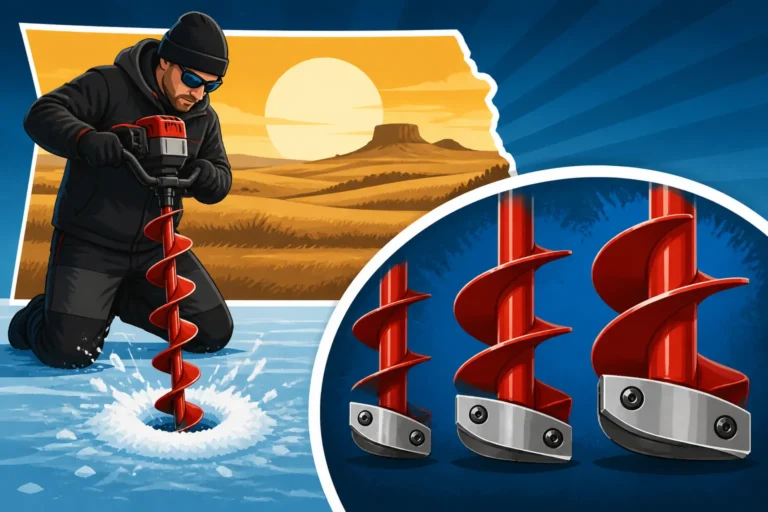
You might think an auger is just for drilling holes for fish, but it plays a vital role in wind protection too. A good auger helps you quickly and efficiently drill pilot holes for your ice anchors, especially in hard, thick North Dakota ice. Trying to screw in anchors by hand into rock-solid ice is not only exhausting but can also be dangerously slow when the wind is already trying to tear your shelter from your grasp. An electric auger or a powerful gas auger can save you precious minutes and a lot of frustration during setup. Best Ice Fishing Auger Brands for North Dakota outlines some great options.
Beyond the auger, having the right anchors is paramount. As we discussed, the anchors that come with your shelter might be adequate for calm days, but upgrading to more robust, longer, or specialized anchors is a wise investment for North Dakota conditions. Many experienced anglers carry a set of heavy-duty screw-in anchors, and some even prefer using a drill-adapter anchor system for rapid, secure deployment. Don't forget a sturdy anchor puller tool – trying to unscrew frozen anchors by hand after a long day in sub-zero temperatures can be a real struggle, and a good tool makes all the difference.
Heaters and Insulation: Beating the Chill Inside
Even with a wind-resistant shelter, the biting North Dakota cold will eventually seep in without a reliable heat source. A portable propane heater is an absolute necessity for maintaining comfort and even drying out wet gear. Brands like Mr. Heater are incredibly popular for their efficiency and safety features, offering warmth for hours on a single tank of propane. Make sure your heater is rated for indoor use and has an oxygen depletion sensor for safety. Always ensure proper ventilation, even on the coldest days. Is It Safe to Use a Propane Heater in an Ice Shelter? is a question many ask, and the answer is yes, with precautions.
Coupled with a heater, insulation in your shelter is key. Many shelters, particularly flip-overs and higher-end hubs, come with insulated fabric walls and roofs. This multi-layer construction not only helps retain heat but also creates a much quieter environment by dampening the sound of the wind. If your shelter isn't insulated, consider adding a thermal liner if available for your model, or even using a reflective Mylar blanket on the ceiling to help trap radiant heat. The better insulated your shelter, the less propane you'll burn, and the more comfortable you'll be, no matter how much the wind howls.
Gear Management and Organization
When the wind is whipping around outside, the last thing you want is a disorganized mess inside your shelter. Loose gear can become tripping hazards, or worse, get blown out of your shelter if a door isn't properly secured. Investing in some simple organization tools can make a huge difference. Rod holders that attach to the shelter frame keep your rods safe and out of the way. Small gear bags or tackle boxes with secure latches prevent baits and lures from spilling.
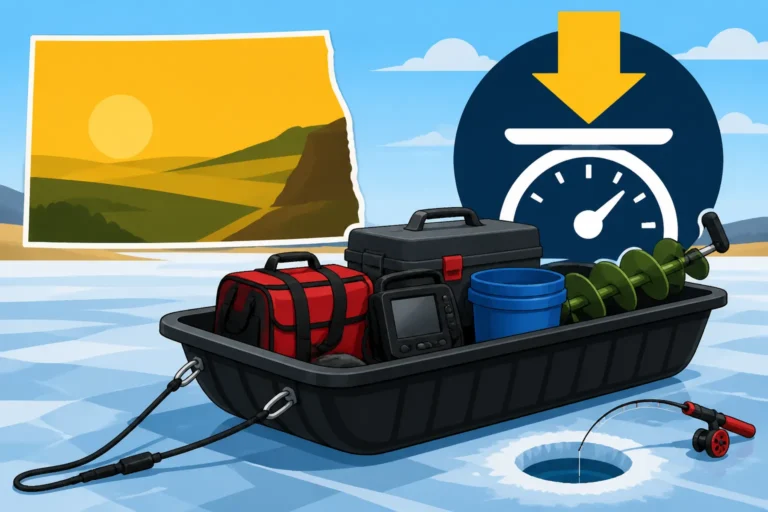
A sturdy ice fishing sled or portable caddy for your gear ensures that everything has its place and is easily accessible. Many flip-over shelters integrate storage into their design, often with under-seat compartments or side pockets. For hub shelters, consider hanging organizers that attach to the poles. The goal is to create an efficient, clutter-free space where you can focus on fishing, not on managing your stuff. When you're dealing with gloves, hats, and layers in What to Wear Ice Fishing in North Dakota, an organized space keeps everything from flying away. A well-managed interior not only enhances comfort but also improves safety and efficiency, allowing you to quickly react to a bite or adjust your setup without fumbling around in the chaos.
Making Your Purchase: What to Look For
So, you're convinced that a wind-resistant ice shelter is the way to go for your North Dakota fishing adventures. Fantastic! But with so many options out there, how do you narrow down the field and pick the perfect one? It's about combining your needs with smart research to ensure you get a shelter that stands the test of time and the tenacity of the wind.
Researching Brands and Models
Before you commit to a purchase, dive into some serious research. Start by looking at reputable brands known for quality ice fishing gear. Clam, Eskimo, and Otter are often at the top of many anglers' lists when it comes to durable, wind-resistant shelters. These companies have built their reputations on creating products that can withstand the rigors of harsh winter conditions, and their shelters often feature heavy-duty fabrics, robust frames, and well-designed anchoring systems.
Don't just look at the brand name, though. Dig into specific models. Read user reviews on retail sites like Amazon and Bass Pro Shops. Pay close attention to what other North Dakota anglers are saying about a particular model's performance in windy conditions. Are the zippers holding up? Do the poles flex or snap? How easy is it to set up and take down solo when the wind is blowing? Look for videos on setup and breakdown, especially in windy environments, to get a real-world sense of what you're getting into. A shelter might look great on paper, but real-world testimonials from folks facing similar conditions are invaluable.
Considering Your Fishing Style and Budget
Your personal fishing style and budget will heavily influence your final decision. Do you primarily fish alone, or do you always go with a buddy or your whole family? This will dictate the size of the shelter you need. A larger shelter, while offering more space, will also present a larger surface area to the wind, requiring even more robust construction and anchoring. Are you a "run-and-gun" angler who moves frequently, drilling many holes throughout the day, or do you prefer to set up in one spot and stay put for hours? If you're constantly on the move, portability and quick setup will be more important, possibly steering you towards a lighter, faster-deploying flip-over or a compact hub.
Of course, budget plays a significant role. Quality wind-resistant shelters are an investment, and they often come with a higher price tag than basic models. However, consider it an investment in your comfort, safety, and enjoyment of the sport. A cheap shelter that fails in the wind will end up costing you more in frustration, lost fishing time, and potential damage to your gear in the long run. Set a realistic budget, but be prepared to stretch it a little for the features that truly matter for North Dakota conditions – namely, durable construction, insulation, and a reliable anchoring system. Sometimes, saving a few dollars upfront can lead to bigger headaches later, especially when that famous North Dakota wind decides to pay a visit.
Disclaimer
This article is for general informational purposes only and does not constitute professional advice. Laws, prices and regulations vary by location and change over time. Consult a qualified professional for guidance on your specific situation.