How Much Weight an Ice Fishing Sled Can Hold
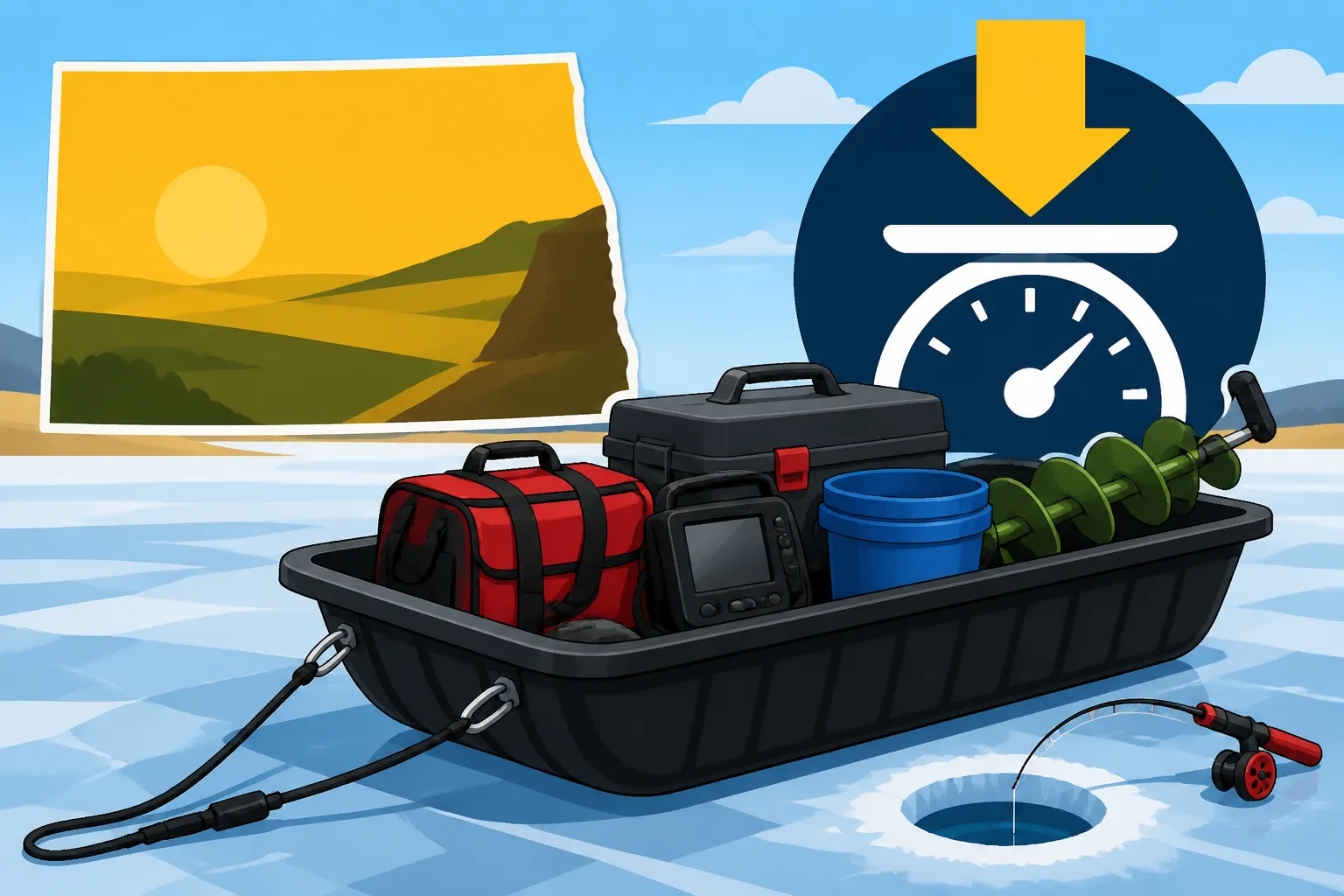
Many of us have been there: standing on the edge of the ice, staring at a mountain of gear, and wondering if our trusty ice fishing sled can actually haul it all without breaking a sweat—or worse, breaking a runner. It's a common struggle to balance bringing everything you need for a comfortable and productive day on the ice with the physical limitations of your gear. This guide is here to shed some light on how much weight an ice fishing sled can realistically hold, helping you make smarter choices for your next frozen adventure.
Understanding Ice Fishing Sled Capacity: More Than Just Dimensions
It's easy to look at an ice fishing sled and assume its capacity is simply about how much volume it can hold. You know, "If it fits, it ships!" But experienced ice anglers quickly learn that weight is an entirely different beast. The actual weight capacity of your sled isn't just about its physical size; it's a complex interplay of material strength, design, and even how you distribute your load. Ignoring these factors can lead to a frustrating day, damaged gear, or an unexpectedly heavy slog across the ice.
Why Weight Capacity Matters and What Happens When You Overload
Think about dragging a sled packed with soaking wet gear and a heavy-duty ice fishing shelter across a mile of slushy ice. If that sled isn't designed to handle the combined weight, you're going to feel it in your back, your shoulders, and maybe even your wallet if something cracks. Overloading a sled, even a seemingly robust one, can lead to several problems. First, there's the immediate risk of structural failure: cracked tubs, bent tow bars, or snapped ropes. Imagine having a crack develop in your sled halfway to your prime fishing spot; that's a nightmare scenario that many of us try to avoid.
Beyond outright breakage, an overloaded sled becomes incredibly difficult to pull, especially in challenging snow conditions. It digs in deeper, creates more friction, and makes every step an Herculean effort. This isn't just about physical strain; it impacts your energy levels, your enthusiasm, and ultimately, how much you enjoy your time on the ice. Plus, if you're pulling with an ATV or snowmobile, excessive weight can strain your vehicle's engine and potentially damage the sled's hitch points. It's truly a balance between convenience and capability, making it vital to understand your sled's limits.
Factors Influencing a Sled's True Hauling Power
So, what makes one sled capable of hauling significantly more than another, even if they appear similar in size? Several key factors come into play. The material is paramount: most ice fishing sleds are made from high-density polyethylene (HDPE), known for its durability and flexibility in cold temperatures. However, the thickness and grade of this material vary widely between manufacturers and models. A thicker, more robust tub will naturally handle more weight without deforming or cracking under pressure.
The design of the sled's runners and overall shape also plays a huge role. Sleds with wider, deeper runners distribute weight more effectively and glide better over snow and ice, reducing drag. Integrated runners, as opposed to simply a flat bottom, offer better tracking and reduce wear and tear. Finally, the attachment points for ropes or tow bars are critical. Reinforced grommets or molded attachment points are far superior to simple holes in the plastic, especially when subjected to heavy loads and the jarring movements of towing. A well-designed sled considers all these elements to give you a reliable workhorse for your gear, ensuring it lasts for many seasons of How to Ice Fish in North Dakota.
Types of Ice Fishing Sleds and Their Typical Capacities
Just like there are different types of fish, there are different types of ice fishing sleds, each designed with a specific angler and load in mind. Knowing the general categories can help you choose the right tool for the job, rather than trying to fit a square peg into a round hole. What works for a solo angler walking out to a close spot definitely won't cut it for a group bringing a full shelter and power auger across a large lake like Lake Sakakawea Fishing Guide for North Dakota Anglers.
Small, Portable Sleds for Solo Anglers and Light Loads
These are often the most common entry-level sleds you'll see, perfect for those quick trips or when you're just bringing the bare essentials. Think of them as your personal gear caddy. They're typically 3 to 4 feet long and might have a weight capacity ranging from around 50 to 100 pounds. While that might not sound like a lot, it's perfect for a couple of rods, a small tackle box, a manual auger, a five-gallon bucket, and maybe a small portable heater.
Their lightweight nature means they're easy to pull by hand, even across varied snow conditions. You can often find these at places like Bass Pro Shops or even general retailers like Amazon. They're ideal for anglers who prefer to keep things simple, don't have a lot of heavy electronics, or are targeting easily accessible spots. If your typical setup involves a North Dakota Ice Fishing Rules refresher and a short walk, these smaller sleds are efficient and effective.
Medium-Sized Sleds for Weekend Warriors and Family Trips
Stepping up from the small models, medium-sized sleds are the workhorses for many recreational ice anglers. These usually measure between 5 to 6 feet in length and can comfortably handle 150 to 250 pounds of gear. This category is where you start seeing more robust features like wider runners, thicker plastic, and sometimes even integrated tow hitches designed for ATV or snowmobile attachment, making them more suitable for hauling a Best Portable Ice Shelters for Wind.
With this kind of capacity, you can pack a good-sized portable ice fishing shelter, a power auger, a couple of fishing buddies' worth of gear, a cooler full of snacks and drinks, and all your electronics. They strike a great balance between portability and carrying power, making them popular for longer days on the ice or when you're bringing along the family or a few friends. If you're planning a trip to Devils Lake Ice Fishing Access Points and need enough gear for a solid day, a medium sled is often the sweet spot.
Heavy-Duty Sleds for the Serious Ice Angler
For the dedicated ice angler who brings everything but the kitchen sink, or for those who need to transport large, heavy pop-up shelters or permanent fish houses, heavy-duty sleds are the only way to go. These behemoths can be 7 feet or longer and are built to handle serious weight—often 300 to 500 pounds, or even more for specialized models. They feature exceptionally thick, rigid tubs, often with molded-in seating areas, and heavy-duty tow bars that can withstand the rigors of mechanical towing.
These are the sleds you see pulling those large hub-style shelters or even entire flip-over shelters that seat multiple people. They often come with covers to protect your gear from snow and wind during transport. While they are much heavier and more cumbersome to pull by hand, their sheer capacity makes them indispensable for extended trips, remote locations, or group outings. If your gear list includes things like Ice Fishing Auger Techniques and multiple Ice Fishing Electronics and Fish Finders, you'll definitely want to invest in a heavy-duty model that can handle the sheer volume and mass.
| Sled Size Category | Typical Length (approx.) | Approximate Weight Capacity | Common Use Cases |
|---|---|---|---|
| Small Portable | 3-4 feet | 50-100 lbs | Solo anglers, short walks, basic gear (rods, manual auger, tackle box, bucket) |
| Medium-Sized | 5-6 feet | 150-250 lbs | Weekend warriors, small groups, portable shelter, power auger, cooler, electronics |
| Heavy-Duty | 7+ feet | 300-500+ lbs | Serious anglers, large groups, hub/flip-over shelters, multiple power augers, extensive gear, long hauls (often ATV/snowmobile towed) |
Calculating Your Ice Fishing Gear Weight
One of the biggest mistakes anglers make is underestimating the combined weight of their gear. Each item, on its own, might feel light, but when you start adding it all up, it can quickly become a formidable load. Taking a moment to actually inventory and estimate the weight of your essential items can save you a lot of grief on the ice. It's not about being obsessive, but about being realistic about what you're actually hauling.
Breaking Down the Essentials: Rods, Augers, and Electronics
Let's start with the basics. Your ice fishing rods and reels are relatively light, perhaps a few pounds for a handful. But an auger is a different story. A manual hand auger might only be 5-10 pounds, but a modern battery-powered electric auger can easily weigh 20-30 pounds, and a gas-powered auger can be 30-40 pounds or even more once fueled up. That's a significant chunk of your sled's capacity right there. Knowing this helps you choose the Best Auger Size for North Dakota Ice Fishing.
Then come the electronics. Your fish finder, especially if it's a high-end unit with a large battery, can add another 5-15 pounds. Don't forget the transducer, cables, and any mounting hardware. Tackle boxes, especially those fully stocked with jigs, spoons, and tip-ups, can be surprisingly heavy. A loaded medium-sized tackle box could easily hit 10-20 pounds. When you think about bringing a few Best Jigs for North Dakota Walleye and other lures for various species, it adds up quickly. Even something as simple as a fully stocked minnow bucket with an aerator can contribute a few extra pounds.
Accounting for the "Hidden" Weight: Heaters, Shelters, and Snacks
Now for the items that often catch people by surprise. An ice fishing shelter, particularly a large hub-style or flip-over model, is one of the heaviest pieces of gear. Even a modest two-person flip-over can weigh 70-100 pounds, while larger ones can exceed 150 pounds. Hub shelters are generally lighter, but a decent four-person model might still be in the 30-50 pound range. Don't forget the anchors and ropes for your shelter, which add a little extra weight.
Heaters, especially the popular propane models, are substantial. The heater unit itself might be 5-10 pounds, but then you add the propane tank(s). A 20-pound propane tank, when full, weighs about 37 pounds! Even smaller 1-pound canisters add up if you bring several. And what about your cooler? An empty, rotomolded cooler is heavy enough on its own, but then you fill it with ice, drinks, and food. That easily adds 20-40 pounds. Spare batteries for your auger or fish finder, extra clothing layers, a comfortable chair, even a large bag of potato chips—these seemingly small items pile on the pounds. It's smart to weigh these items at home if you're truly pushing your sled's limits, especially before embarking on a long haul for Best Ice Fishing Lakes in North Dakota.
Tips for Maximizing Your Sled's Carrying Potential
Knowing your sled's limits and your gear's weight is only half the battle. The other half is learning how to pack and utilize your sled efficiently to make the most of its capacity. A poorly packed sled, even if under its weight limit, can be more difficult to pull and more prone to tipping than a heavier, well-organized one. Strategic packing is just as important as the sled itself.
Smart Packing Strategies for Balance and Efficiency
The golden rule of packing an ice fishing sled is to distribute weight evenly and keep the center of gravity as low as possible. Heavy items, like your auger, propane tank, or a large cooler, should be placed directly on the bottom of the sled, centered between the runners. Avoid stacking all the heavy stuff on one end, as this can make the sled nose-dive or fishtail when pulled, especially over uneven terrain or if you're towing it with a snowmobile or ATV.
Use lighter, bulkier items, like your ice fishing shelter (if it's a hub-style that can be folded), to fill in gaps and cushion more fragile equipment. Soft bags of clothing or blankets can also serve this purpose. Make sure everything is secured to prevent shifting during transit. Bungee cords, cargo nets, or even ratchet straps are your best friends here. A shifting load is not only annoying but can also throw off the sled's balance and potentially damage gear. Consider how you might get to your chosen spot on Lake Sakakawea—will you be crossing bumpy terrain? Secure everything!
Utilizing Accessories and Hauling Aids
Sometimes, even the best packing won't fully compensate for an extremely heavy load. This is where accessories and hauling aids come into play. A good quality tow bar, especially one with a spring-loaded hitch, can significantly reduce the strain on your body (or your machine) and make the sled track much better. These attach directly to the sled and provide a rigid connection, preventing the sled from slamming into your legs if you stop suddenly.
For manual pulling, a padded harness that distributes the weight across your shoulders and waist is a game-changer compared to just a rope in your hand. This allows you to use your body's larger muscle groups, saving your arms and hands for fishing. Additionally, consider using smaller, separate sleds for specific gear if your main sled is truly maxed out. For example, a dedicated auger carrier or a smaller utility sled for just your electronics and snacks could lighten the main load. Don't forget the importance of things like Best Ice Fishing Sleds and Best Portable Ice Shelters for Wind that are designed to make your life easier when hauling. Also, if you’re purchasing new gear, check out reviews and product descriptions on sites like Amazon or Bass Pro Shops for details on overall weight and sled compatibility. Investing in the right tools can truly transform your ice fishing experience, making those long treks across the ice much more manageable.
Disclaimer
This article is for general informational purposes only and does not constitute professional advice. Laws, prices and regulations vary by location and change over time. Consult a qualified professional for guidance on your specific situation.