Best Rod Length for Trolling on Lake Sakakawea
For many anglers, the thought of tackling the vast waters of Lake Sakakawea for a day of trolling brings both excitement and a touch of apprehension. One of the biggest dilemmas often revolves around selecting the right gear, and specifically, the best rod length for effective trolling. This guide will dive deep into why rod length is a critical factor for success on North Dakota's big water and help you make informed decisions for your next outing.
Understanding the Unique Challenges of Trolling Lake Sakakawea
Lake Sakakawea isn't just any body of water; it's a massive reservoir, often referred to as an inland ocean. Its sheer size and the unpredictable nature of its conditions make specific gear choices, like trolling rod length, incredibly important. Ignoring these factors can lead to tangled lines, missed bites, and a frustrating day on the water.
The Sheer Size and Variability of Lake Sakakawea
Imagine trying to cover hundreds of square miles of water with just a few lines out. That's the challenge Lake Sakakawea presents. This sprawling body of water, formed by the Garrison Dam, can stretch over 170 miles long, with a shoreline that rivals some coastal areas. When you're trolling here, you're not just fishing a pond; you're working a dynamic ecosystem with ever-changing depths, structures, and currents, especially near the dam or in deeper channels.
The vastness means you often need to cover a lot of ground to find active fish. This dictates a trolling strategy that prioritizes lure spread and efficiency. Furthermore, the lake is notorious for its quick-changing weather. A calm morning can turn into a windy afternoon with significant chop, creating waves that can make line management a nightmare if your rod setup isn't optimized. These wave conditions directly impact how your rod absorbs shock and maintains lure presentation, making the length and action of your rod even more critical. Longer rods, for instance, can often handle the boat's pitching and rolling motion better, keeping your lure at a more consistent depth and speed through the water column. This subtle stability can make all the difference when targeting wary fish like walleye or the powerful Chinook salmon.
Why Rod Length Matters More Than You Think for Trolling
It might seem like a small detail, but the length of your trolling rod plays a huge role in your overall effectiveness and enjoyment on Lake Sakakawea. Think of it like this: a longer rod acts as a longer lever, offering several distinct advantages. Primarily, it helps in spreading out multiple lines, preventing tangles when you have several rods deployed from your boat. If you're running two rods per side, having a 9-foot rod paired with a 7-foot rod creates a natural separation, allowing each lure to work its magic without interfering with another. This spread is vital for presenting a wider "net" of lures to passing fish, increasing your chances of a strike.
Beyond line separation, a longer rod offers better shock absorption. When a big walleye or a hard-fighting Chinook salmon hits your lure at trolling speed, the sudden impact can be considerable. A longer rod has more flex and can distribute that force more effectively, cushioning the strike and reducing the likelihood of a hook pulling out or your line snapping. This forgiveness also comes into play when navigating boat turns or sudden changes in current, where shorter rods might transmit too much jerky motion to your lure. Moreover, when fighting a fish, a longer rod gives you more leverage and control, especially when trying to steer a feisty fish away from the prop or other lines. It provides a smoother, more parabolic bend that tires the fish out without putting excessive strain on your leader or main line.
Optimal Rod Lengths for Different Trolling Setups
Choosing the "best" rod length isn't a one-size-fits-all answer. It truly depends on your specific trolling technique, the number of lines you're running, and the species you're targeting on Lake Sakakawea. Each setup has its own advantages and corresponding ideal rod lengths.
Trolling with Planer Boards and Multiple Lines
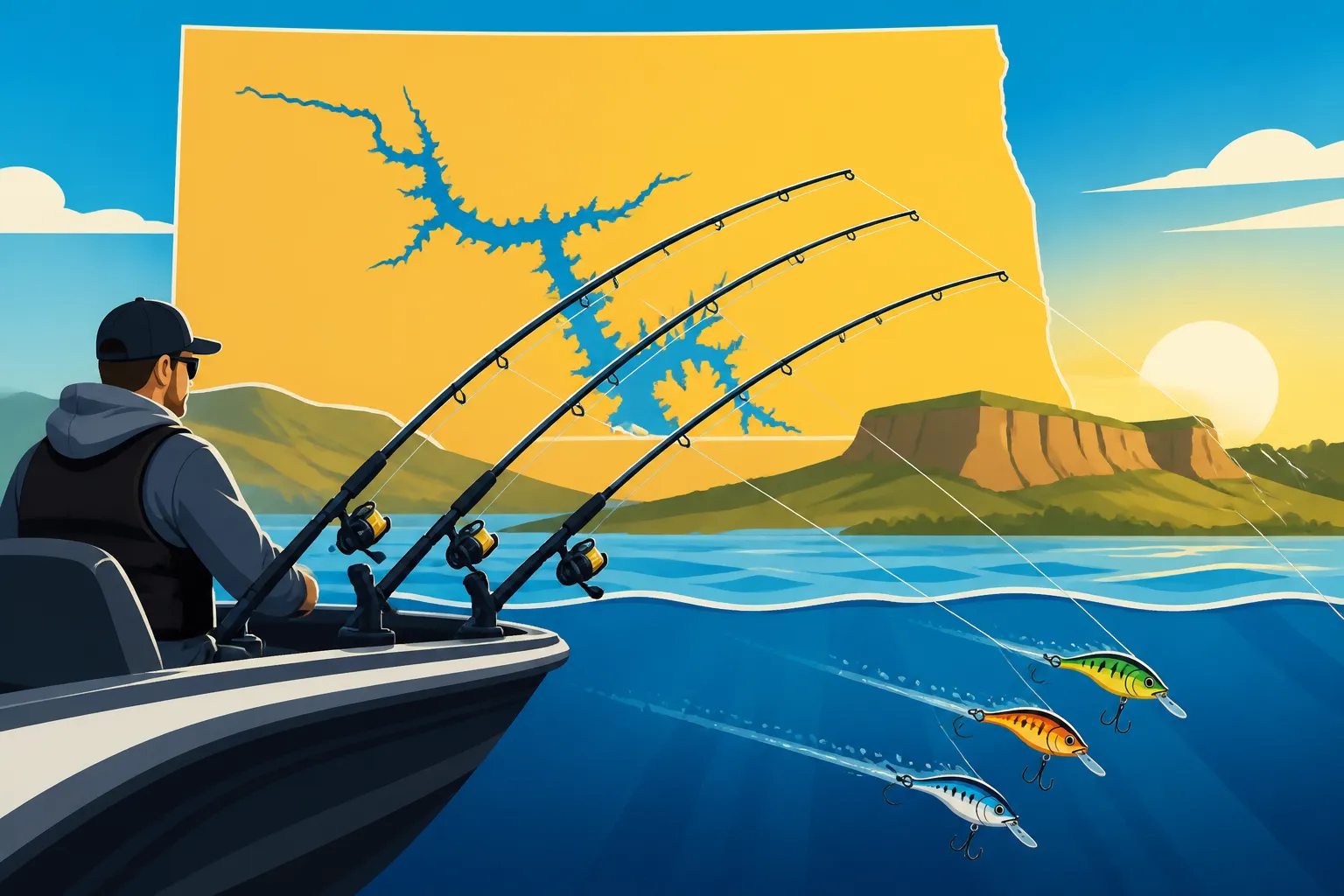
When you're serious about covering water and presenting a broad spread of lures, planer boards are your best friend. These devices allow you to run lines far out to the side of your boat, effectively widening your trolling path. This is especially useful on Lake Sakakawea, where fish can be scattered over vast areas. For this setup, longer rods are absolutely essential.
Imagine trying to run three or four lines off each side of your boat using only 7-foot rods; you'd have a tangled mess within minutes. This is where rods in the 8 to 10-foot range really shine. They provide the necessary distance between your rod tips and the boat, allowing the planer boards to run cleanly without hitting other lines or the side of your boat. The extra length also gives you a greater angle to the water, which helps in detecting subtle bites on a long line. When a fish hits, the long rod tip provides a clear visual signal, and its forgiving bend helps absorb the initial shock without ripping the lure from the fish's mouth. When setting up multiple lines, be mindful of North Dakota Fishing Regulations Explained concerning the maximum number of lines you can legally use. Many anglers find that a mix of rod lengths, with the longest rods furthest out to the sides, creates an efficient and tangle-free spread. For instance, you might use 10-foot rods for your outside planer boards, 9-foot rods for inside boards, and then shorter 7 or 8-foot rods for direct lines off the transom if needed.
Direct Trolling and Downrigging Techniques
Not every trolling scenario on Lake Sakakawea calls for planer boards. Sometimes, you're targeting specific depths directly under the boat, or working tighter contours. This is where direct trolling with crankbaits or spinners, and especially downrigging, comes into play. For these techniques, your rod length considerations shift a bit.
For direct trolling, where you're holding the rod or keeping it in a close rod holder, rods in the 6.5 to 8-foot range are often preferred. A slightly shorter rod offers more control and sensitivity, allowing you to feel the lure's action and any subtle changes in resistance. If you're working structure or trying to tick the bottom, this immediate feedback is invaluable. For downrigging, which involves using a heavy weight to send your lure down to a precise depth, shorter, sturdier rods are typically the go-to. Rods from 7 to 8.5 feet are common. These rods need to have enough backbone to handle the pressure of the downrigger release clip without excessive bending, yet still possess a sensitive tip to telegraph a strike once the line is released. A moderate-fast action is often ideal, providing enough give to absorb the initial strike while still having the power to fight a large fish like a Lake Sakakawea Chinook salmon. The rod should load up nicely when a fish hits, providing a smooth arc without feeling flimsy or overly stiff.
Specific Considerations for Walleye and Chinook Salmon
Lake Sakakawea is a prime destination for both walleye and Chinook salmon, and these two species often require slightly different approaches when it comes to rod length for trolling.
For walleye, which are often targeted with crankbabaits, bottom bouncers, or spinner rigs, versatility is key. When fishing for walleye, especially in the shallower bays or along the main lake's vast flats, a longer rod (8-10 feet) is excellent for running planer boards to cover maximum water. This helps get your lures away from the boat, which can be crucial for enticing wary walleye. The longer rod also allows for a wider spread of various lure types and colors, helping you find what the fish are keying in on. For instance, if you're Trolling Crankbaits for Walleye, a long rod helps keep your lure running true even in choppy conditions. If you're working deeper contours or relying more on vertical jigging or even slower, more precise presentations, a slightly shorter rod in the 7 to 8-foot range might offer better feel and control. North Dakota Walleye Fishing Techniques often involve adapting to various depths and structures, making a diverse rod arsenal beneficial.
Chinook salmon are a different beast altogether. These powerful, hard-fighting fish are typically found in the deeper, cooler waters of Lake Sakakawea, often requiring downriggers or leadcore lines to reach them. When Chinook Salmon Trolling on Lake Sakakawea, you'll want rods that can handle significant strain. While some anglers prefer stout, medium-heavy rods in the 8-foot range for downrigging, others will opt for even longer rods, up to 10 feet, especially for leadcore or copper line trolling, to manage the heavy lines and absorb the head shakes of a large salmon. The added length provides excellent shock absorption, which is critical when a large salmon makes a blistering run. Salmon also often bite aggressively, and a rod with a good bend prevents them from tearing free. The longer rod helps to keep the line taut during these explosive runs and acts as a shock absorber during violent headshakes, protecting your terminal tackle and giving you a better chance of landing that trophy fish.
Balancing Rod Length with Rod Power and Action
Once you've considered the ideal length, you can't ignore rod power and action. These three characteristics work in concert to define how a rod performs. Understanding their interplay is crucial for assembling an effective trolling setup for Lake Sakakawea.
The Relationship Between Length, Power, and Action
Rod Power refers to the rod's lifting strength or backbone, typically categorized as Ultra-Light, Light, Medium-Light, Medium, Medium-Heavy, Heavy, and Ultra-Heavy. For trolling on Lake Sakakawea, you'll generally be looking at medium-light to medium-heavy power rods, depending on your target species and lure weight.
- A medium-light power rod (often 8-10 feet long) might be excellent for smaller crankbaits or spinner rigs for walleye, offering a good blend of sensitivity and enough backbone for a decent fight.
- A medium power rod (7-9 feet) is a versatile choice for a wider range of walleye lures and could handle smaller Chinook salmon or northern pike. It offers a good compromise between sensitivity and fighting power.
- A medium-heavy power rod (7-8.5 feet) is often preferred for downrigging for large Chinook salmon or for heavier trolling setups targeting bigger fish. This extra power allows you to put more pressure on a fish and prevent it from heading for deep water or snags.
Rod Action describes where along the blank the rod bends when pressure is applied.
- Fast action rods bend mostly in the tip. They are sensitive and excel at detecting subtle bites. While great for jigging, they can sometimes be too stiff for trolling, potentially pulling hooks out during a strike or allowing too much slack on a big run.
- Moderate action rods bend through the upper half or third of the blank. This "parabolic" bend provides excellent shock absorption, which is exactly what you want for trolling. It helps keep a consistent load on the line, preventing hooks from tearing out during a fight and ensuring your lure maintains a steady presentation in choppy water. Many dedicated trolling rods fall into this category.
- Slow action rods bend nearly from the handle. While useful for specific applications, they generally lack the responsiveness needed for effective trolling on a large body of water like Sakakawea.
For most Lake Sakakawea trolling, a moderate to moderate-fast action rod with a medium to medium-heavy power provides the optimal combination, especially in lengths from 7 to 10 feet. This combination allows for great lure presentation, good hook sets, and the ability to effectively fight the powerful fish of the lake without excessive stress on your gear or yourself.
Material and Construction: Graphite vs. Fiberglass
The materials used to construct your trolling rod also play a significant role in its performance, especially when paired with the chosen length, power, and action. The two primary materials you'll encounter are graphite and fiberglass, often with hybrid options that combine the best of both.
Graphite rods are known for their sensitivity and light weight. They transmit vibrations exceptionally well, allowing you to feel even the slightest bump on your lure or subtle changes in water current. For trolling, this can be advantageous for detecting light bites, especially from finicky walleye. Graphite rods also tend to be stiffer for their weight, allowing for quicker hook sets. However, pure graphite rods can be more brittle and prone to breakage under extreme stress or impact, which can be a concern when dealing with powerful fish or accidental bumps in a busy boat. While you might find specific graphite trolling rods, many anglers prefer a blend for durability.
Fiberglass rods, on the other hand, are celebrated for their durability, flexibility, and parabolic bend. They are heavier than graphite but incredibly tough, making them much more resistant to breakage from sudden jolts or heavy loads. The slower action inherent in many fiberglass rods makes them ideal for trolling applications, providing that smooth, consistent bend that absorbs shock and keeps constant pressure on a fish. They are often more affordable and make excellent "workhorse" rods for general trolling. The trade-off is often a reduction in sensitivity, meaning you might not feel the most subtle bites as readily.
Many modern trolling rods for applications like those on Lake Sakakawea are actually composite rods, blending graphite and fiberglass. These hybrid designs aim to capture the best attributes of both materials: the durability and shock-absorbing qualities of fiberglass with some of the sensitivity and lighter weight of graphite. This often results in a robust, forgiving rod that can handle the rigors of big-water trolling while still providing enough feel to be effective. When you're browsing options at a Bass Pro Shops or online at Amazon, you'll find plenty of these composite rods specifically designed for trolling. They strike a great balance for the varied conditions and powerful fish found in North Dakota.
Practical Tips for Choosing and Using Your Trolling Rods
Selecting the right trolling rod length for Lake Sakakawea is a big step, but it's also about how that rod fits into your overall fishing strategy and your specific boat setup. Thinking through these practical considerations will ensure your investment pays off in enjoyable and successful fishing trips.
Assessing Your Boat and Trolling Setup
Before you start adding 10-foot rods to your arsenal, take a good look at your boat. The size and configuration of your vessel heavily influence what rod lengths are practical.
- Rod Holder Placement: Where are your rod holders located? If they're close together, very long rods might become cumbersome or lead to tangles at the rod tips, even with planer boards. If you have rail-mounted or gunwale-mounted holders that are widely spaced, you have more flexibility for longer rods.
- Number of Anglers: Are you typically fishing solo, or do you often have a few buddies in the boat? More people mean less space, and shorter rods might be less intrusive. However, if you're working as a team, longer rods can help maintain an efficient spread.
- Boat Size: On smaller boats, exceptionally long rods (over 9 feet) can be difficult to maneuver when launching, docking, or even just moving around the deck. For bigger boats common on Sakakawea, like a 20-foot multi-species rig, those longer rods fit right in. If you're using a Best Boats for Lake Sakakawea's Big Water, you probably have plenty of space, but it's still worth considering how the rods will be stored and deployed.
- Storage: Can you safely store longer rods when not in use? Many boats have rod lockers, but a 9 or 10-foot rod might not fit, requiring you to break it down or secure it on deck, which can be inconvenient or even risky in rough water.
Taking these factors into account will help you select rod lengths that not only perform well but also integrate smoothly with your existing setup, ensuring a more comfortable and efficient day on the water.
The Importance of a Balanced System
A trolling rod, no matter its length, is only as good as the rest of the components it's paired with. A balanced system means matching your rod length, power, and action with the right reel, line, and lure weight. This synergy maximizes performance and minimizes fatigue.
- Reel Choice: For trolling, baitcasting reels (often line-counter models) are almost universally preferred for their durability, power, and ability to precisely measure line out. Ensure your reel is sized appropriately for your rod's power rating. A heavy-duty reel on a light rod will feel unbalanced and vice-versa.
- Line Selection: The type and pound-test of your fishing line should match your target species and trolling technique. For walleye, 10-15 lb monofilament or fluorocarbon is common, while salmon anglers might opt for heavier braid or lead core. Your line needs to be compatible with your rod's guides and its ability to handle sudden surges. For instance, a rod with a soft, moderate action pairs well with less stretchy lines like braid, as the rod itself provides the necessary shock absorption.
- Lure Weight: The lures you plan to troll should fall within your rod's recommended lure weight range. Overloading a rod with too heavy a lure can cause it to "dead-stick" or lose its action, while too light a lure won't properly load the rod, making bite detection difficult. This is especially true when you're looking at How Deep to Troll for Walleye in Spring with different crankbaits or Best Trolling Speed for Chinook Salmon with larger spoons. The rod should load comfortably with the chosen lure at your typical trolling speed, exhibiting a nice bend in the tip that shows the lure is working properly.
A balanced system feels natural in your hand or in the rod holder, allowing the rod to do its job of presenting the lure and absorbing the fight without feeling awkward or prone to failure.
Where to Find the Right Trolling Rods
When you're ready to invest in the right trolling rods for your Lake Sakakawea adventures, you've got a few excellent avenues to explore. Both physical retailers and online stores offer a vast selection, each with its own benefits.
Local tackle shops can be a treasure trove, providing expert advice from seasoned anglers who know the specific demands of North Dakota waters. They can often provide hands-on demonstrations and help you compare different models. Larger sporting goods chains like Bass Pro Shops are another fantastic option. They typically have a wide variety of dedicated trolling rods, from popular brands to more specialized options, often with knowledgeable staff who can guide you through the features of different lengths, powers, and actions. You can physically hold the rods, pair them with reels, and get a feel for their balance before making a purchase. This is crucial for trolling rods, as the feel of the rod under load and during a simulated fight is hard to replicate online.
Online retailers like Amazon offer an unparalleled selection and competitive pricing, making it easy to compare various models and read countless reviews from other anglers. This can be particularly useful if you have a specific brand or model in mind. Just be sure to cross-reference specifications and consider how the rod's characteristics will translate to your specific needs on Lake Sakakawea. While you can't physically test the rod, detailed product descriptions and customer photos can give you a good idea. Regardless of where you choose to shop, look for reputable brands known for quality trolling gear. Researching Best Fishing Rods for North Dakota Anglers can give you a head start on what's available and what other successful anglers are using. Taking your time and choosing wisely will ensure your trolling setup is ready to handle whatever Lake Sakakawea throws at it.
Disclaimer
This article is for general informational purposes only and does not constitute professional advice. Laws, prices and regulations vary by location and change over time. Consult a qualified professional for guidance on your specific situation.