Best Boat Trailer Tires for Gravel Roads
There’s nothing quite like the excitement of loading up the boat for a fishing trip to one of North Dakota’s incredible lakes or rivers, but that excitement can quickly turn to frustration when a flat tire leaves you stranded on a dusty, remote gravel road. It's a common nightmare for anglers who venture off the pavement to reach those prime fishing spots. This guide is all about helping you understand what makes a boat trailer tire truly gravel-road-worthy, so you can make informed choices and spend more time fishing and less time worrying about roadside emergencies.
The Unique Challenges of North Dakota Gravel Roads for Boat Trailers
North Dakota is a state of stunning natural beauty, and many of our best fishing lakes and river access points are found at the end of long stretches of gravel roads. While these roads offer access to incredible angling, they also pose significant threats to your boat trailer tires. It's not just a matter of wear and tear; it's about avoiding that dreaded flat that brings your adventure to a screeching halt.
Why Gravel Roads Are Tire Killers
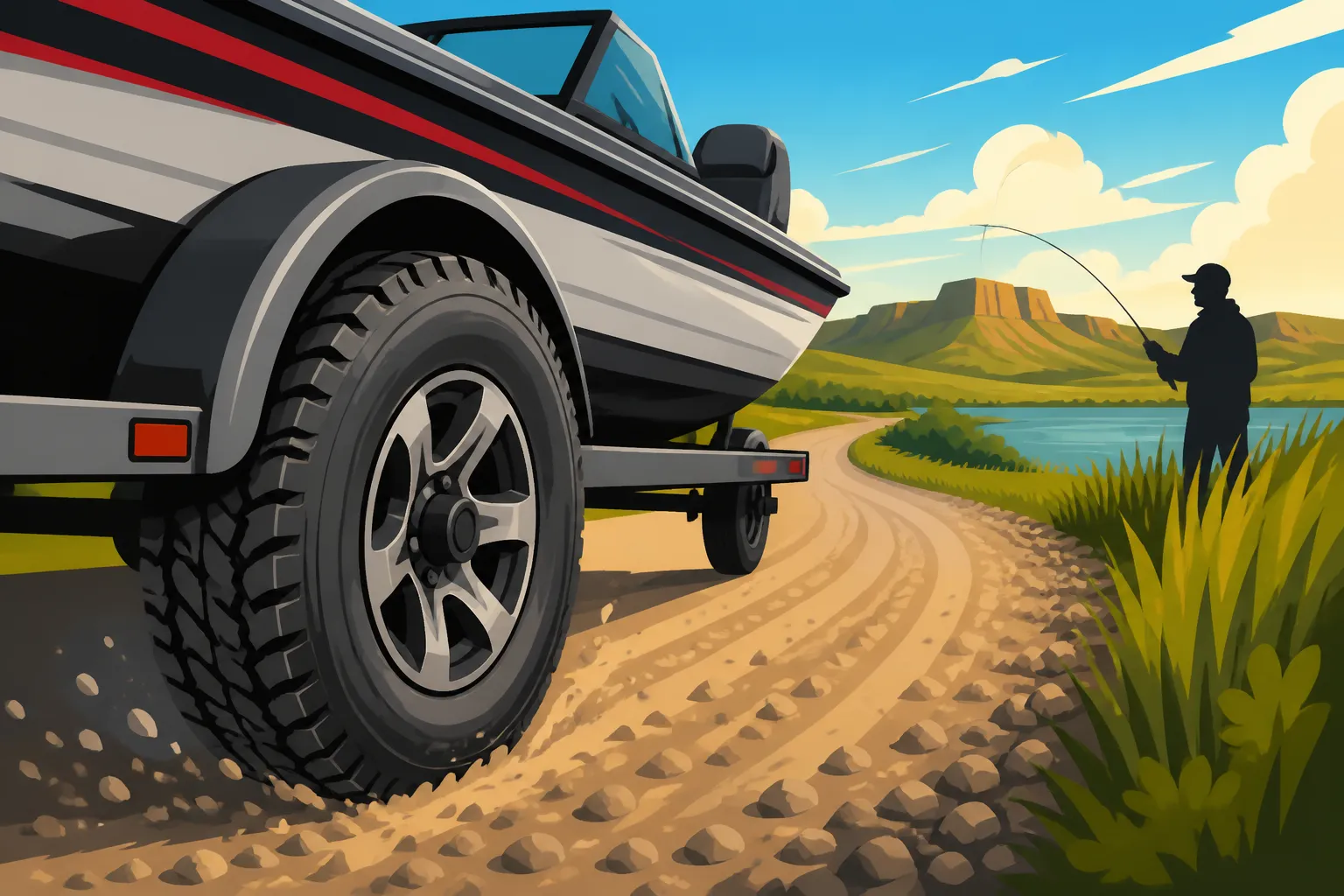
Gravel roads are inherently aggressive environments for tires. Unlike smooth asphalt, they're a constantly shifting landscape of sharp, angular rocks, loose stones, and often a layer of abrasive dust. These conditions create a perfect storm for tire damage.
- Puncture Hazards: The most obvious threat comes from sharp rocks. A small, seemingly innocuous stone can wedge itself into a tire groove or be kicked up and driven directly into the tread or sidewall, leading to punctures. These aren't always immediate blowouts; sometimes they're slow leaks that become a bigger problem miles down the road.
- Increased Friction and Heat: Driving on loose gravel creates more rolling resistance and friction compared to pavement. This increased friction generates a lot of heat within the tire, which can weaken the rubber compounds and the internal structure over time. Excessive heat is a major contributor to tread separation and blowouts, especially on long hauls.
- Abrasive Wear: The constant grinding of gravel against the tire tread accelerates wear. It acts like sandpaper, slowly but surely stripping away rubber. This is particularly true for tires not designed with robust, abrasion-resistant compounds.
- Sidewall Damage: When navigating potholes or washboards on gravel roads, the sidewall of the tire can be pinched or scraped against sharp rocks at the road's edge. Standard highway trailer tires often have thinner, less protected sidewalls, making them highly vulnerable to these kinds of impacts.
The Impact on Your Fishing Trips
A tire failure on a gravel road isn't just an inconvenience; it can be a significant disruption to your entire fishing plan. Imagine finally reaching that remote ramp at Lake Sakakawea, only to discover a soft tire, or worse, having a blowout miles from cell service on your way to Devils Lake.
- Lost Fishing Time: Every minute spent changing a tire is a minute not spent fishing. If you're on a multi-day trip, a tire issue can throw off your entire schedule, forcing you to find repairs instead of chasing walleye.
- Costly Repairs or Replacements: Replacing a trailer tire on the fly, especially in a rural area, can be expensive. Towing services from remote locations can add significantly to the bill. Plus, if one tire fails due to structural fatigue from gravel, its mate might not be far behind, leading to unexpected additional costs.
- Safety Concerns: Changing a tire on the side of a gravel road, especially with a boat in tow, can be precarious. Loose gravel provides an unstable surface for a jack, and passing vehicles can pose a risk. It’s a stressful situation that no one wants to encounter. Ensuring you have the right gear, like a sturdy jack and a properly inflated spare, is paramount. Essential Gear Checklist for North Dakota Fishing can help you get ready.
Standard Trailer Tires vs. Gravel Road Demands
Most boat trailers come equipped with what are known as "ST" (Special Trailer) tires, which are designed for highway use. These tires are built for carrying heavy loads and maintaining stability at highway speeds. However, their construction often prioritizes smooth-road performance over rugged durability.
- Tread Design: Standard ST tires typically have shallower, less aggressive tread patterns optimized for pavement traction and lower rolling resistance. On gravel, these treads struggle for grip, wear down quickly, and are more susceptible to puncture from sharp stones getting embedded.
- Rubber Compound: The rubber compounds in highway ST tires are formulated for longevity on pavement and efficient heat dissipation at consistent speeds. They may not be as cut-resistant or as robust against abrasion as tires designed for off-road or heavy-duty use.
- Sidewall Strength: As mentioned, sidewalls on standard ST tires are often thinner. While this might be fine for highway flex, it's a critical weakness when encountering sharp-edged rocks or deep ruts on gravel. You need something that can take a beating.
When you consistently hit the gravel roads, you're asking a lot more from your tires than they were originally designed to give. It’s like bringing a paring knife to a wood-chopping contest – it might work for a little bit, but it’s going to struggle, and eventually, it’s going to fail. For specific regulations about what you can tow, check out North Dakota Boat Registration Requirements.
Key Features to Look for in Gravel-Ready Boat Trailer Tires
Choosing the right tire for gravel roads means looking beyond the basic highway-rated options. You need tires built to withstand the unique abuses of rocky, uneven terrain. Think of it as gearing up your trailer for battle against the elements, just as you'd gear yourself up for a challenging fishing trip with Best Cold Weather Gear for Ice Fishing.
Durable Sidewalls and Aggressive Treads
These two features are absolutely critical when you frequently navigate North Dakota’s gravel backroads. They provide the first line of defense against the harsh conditions.
- Reinforced Sidewalls: Look for tires with multi-ply sidewall construction or specific "tough sidewall" technologies. Some heavy-duty truck or off-road tires are built with extra rubber and reinforcing cords in the sidewalls to resist cuts, snags, and punctures. This reinforcement prevents the tire from flexing too much when encountering sharp objects, drastically reducing the chance of a critical failure. The ply rating is a good indicator here; a higher ply rating generally means a stronger, more puncture-resistant tire, though it can also mean a stiffer ride.
- Aggressive Tread Patterns: Forget smooth, shallow treads. For gravel, you want a tire with a deeper, more open, and aggressive tread pattern. These chunky blocks and wider grooves do several things:
- Enhanced Grip: They dig into loose gravel, providing better traction and stability, especially when starting on inclines or navigating uneven terrain.
- Self-Cleaning: The wider spacing helps shed small rocks and debris, preventing them from becoming embedded and causing punctures.
- Cut Resistance: The robust tread blocks are designed to resist chipping and tearing when encountering sharp edges.
- Abrasion Resistance: The rubber compound used in these treads is often specifically formulated to stand up to the abrasive nature of gravel, ensuring a longer lifespan.
Construction Materials and Heat Dissipation
The unseen elements of a tire's construction are just as important as what you can see on the surface. How a tire is built, and what it’s built from, determines its overall resilience and ability to handle the demands of gravel.
- Heavy-Duty Rubber Compounds: Tires designed for rugged applications use tougher, more durable rubber compounds that are highly resistant to cuts, chips, and abrasion. These aren't just cosmetic differences; they are fundamental material science choices that make a huge impact. This specialized rubber can better absorb impacts and deflect sharp objects without immediate damage.
- Steel Belted Construction: Many high-quality trailer tires feature steel belts under the tread. These steel cords provide superior puncture resistance and help maintain the tire's shape, even under stress. For gravel roads, extra steel belts or a more robust steel belt package can be a game-changer, acting as an additional protective layer.
- Enhanced Heat Dissipation: As mentioned, gravel roads generate a lot of heat. Tires designed for these conditions often have features that help dissipate heat more efficiently. This might include specific internal construction, venting, or rubber compounds that run cooler. Proper heat management prevents the internal components from breaking down, which is a common cause of catastrophic tire failure. Running cooler means your tires are less likely to experience tread separation or blowouts on those long summer drives to the lake.
Proper Load Range and Speed Rating
It's tempting to think all trailer tires are the same, but they absolutely are not, especially when considering what they can safely carry and how fast they can go. Ignoring these ratings can be dangerous and costly.
- Load Range/Ply Rating: This is probably the most crucial specification for a trailer tire. The load range indicates the maximum weight a tire can safely support at its maximum inflation pressure. Trailer tires are categorized by letters (e.g., Load Range C, D, E), with higher letters indicating a higher load capacity and typically a stronger construction (more plies). For a boat trailer, especially one frequently on gravel, you should always choose a tire with a load range that exceeds the actual weight of your loaded boat and trailer. Overloading a tire, even slightly, increases heat buildup, wear, and the risk of failure. A robust North Dakota Boat Registration Requirements includes knowing your boat's weight and capabilities.
- Speed Rating: While you might not be speeding down gravel roads, the speed rating is still important. It indicates the maximum safe operating speed for the tire. Most ST tires have a lower speed rating than passenger vehicle tires, often around 65-75 mph. While this might be sufficient for most highway travel, driving at or near the tire's maximum speed rating, especially on gravel, can lead to excessive heat and premature failure. Always adhere to the tire's speed rating and, more importantly, drive at speeds appropriate for the road conditions. Gravel roads often demand significantly slower speeds than pavement, regardless of the tire's rating.
Top Tire Types and Brands for North Dakota's Rough Terrain
When it comes to outfitting your boat trailer for North Dakota’s diverse roads, understanding the fundamental differences between tire construction types is key. This knowledge empowers you to make a choice that aligns with your fishing adventures, whether you’re heading to the vastness of Lake Sakakawea Fishing Guide for North Dakota Anglers or a smaller, more remote pond.
Bias-Ply vs. Radial Tires for Gravel
This is a classic debate in the tire world, and each type has its merits and drawbacks, particularly when gravel roads enter the picture.
- Bias-Ply Tires: These tires are constructed with multiple plies of fabric laid in a crisscross pattern from bead to bead, forming a thick, rigid casing.
- Pros for Gravel: Bias-ply tires often boast very strong sidewalls due to their overlapping construction, making them quite resistant to punctures and cuts from sharp objects on gravel. Their stiffer sidewall can handle lateral impacts well. They can also be a more economical option upfront.
- Cons for Gravel: The rigid construction means they tend to run hotter than radials, which can be an issue on long gravel stretches where friction already generates significant heat. They also tend to have a harsher ride, can flat-spot when sitting for long periods, and might not track as smoothly at highway speeds. For someone driving long distances to Best Places to Fish in North Dakota, the heat build-up is a concern.
- Radial Tires: In radial tires, the plies run perpendicularly across the tire, from bead to bead, and are stabilized by steel belts under the tread.
- Pros for Gravel: Radials generally run cooler than bias-ply tires, which is a major advantage for longevity and preventing heat-related failures on extended drives, especially on hot gravel. They offer a smoother ride, better fuel economy, and generally longer tread life on pavement. Many modern heavy-duty radial trailer tires also incorporate reinforced sidewalls to improve gravel road performance.
- Cons for Gravel: Historically, radial sidewalls were considered more vulnerable to punctures than bias-ply. While modern advancements have significantly improved this, it's still a consideration if you're frequently encountering extremely sharp, jagged rocks. They are typically more expensive than bias-ply tires.
For gravel, many anglers lean towards well-constructed radial trailer tires that incorporate reinforced sidewalls and aggressive tread patterns. The cooler running temperature and overall better ride quality often outweigh the historical sidewall vulnerability, especially with improved designs.
Brands Known for Off-Road or Heavy-Duty Trailer Tires
While I can't name specific models or make direct endorsements, it's worth noting that several reputable tire manufacturers offer heavy-duty or all-terrain options that cross over well into the demands of boat trailer use on gravel. When you're searching, look for brands that emphasize:
- Light Truck (LT) Tires: Some anglers successfully adapt certain light truck tires for their trailers, especially those with higher load ranges and all-terrain tread patterns. These tires are designed for tougher conditions and often feature stronger sidewalls and more aggressive treads than standard ST tires. However, always ensure they meet or exceed the load capacity of your trailer and are rated for trailer use if possible, as the lateral forces on a trailer are different than on a truck.
- Specialized Heavy-Duty Trailer Tires: There are manufacturers who produce ST-rated tires specifically designed with enhanced durability for rougher roads or heavier loads. These often feature thicker rubber, reinforced casings, and sometimes even more aggressive tread patterns than typical highway trailer tires.
When you're researching options, check out resources from major retailers like Bass Pro Shops, which often carry a range of trailer tire options, or online marketplaces like Amazon, where you can read reviews from other users who might have similar needs. Always prioritize the tire's specifications (load range, ply rating, construction) over just brand recognition. For example, if you're dealing with a large boat heading to Lake Sakakawea Chinook Salmon Fishing, you'll need tires that can handle that substantial weight and the potentially long, rough access roads.
Essential Maintenance for Gravel Road Tires
Even the toughest tires won't last if they aren't properly maintained. When gravel roads are a regular part of your fishing routine, your maintenance schedule needs to be more vigilant.
- Correct Air Pressure: This is probably the single most important maintenance item. Always inflate your trailer tires to the maximum cold inflation pressure recommended on the tire's sidewall, not the vehicle's door jamb. Underinflated tires flex excessively, generate dangerous heat, and are highly susceptible to punctures and sidewall damage, especially on gravel. Overinflation can make the tire too rigid and prone to impact damage. Check pressure before every trip, before the tires have heated up from driving.
- Regular Inspection: After every trip, especially those involving gravel, meticulously inspect your tires. Look for:
- Embedded Rocks: Carefully pry out any small stones or debris wedged in the tread grooves. These can work their way deeper and cause punctures over time.
- Cuts, Cracks, or Bulges: Inspect the tread and sidewalls for any signs of damage. Even a small cut can compromise the tire's integrity. Bulges indicate internal structural damage and mean the tire is unsafe.
- Uneven Wear: While harder to spot after just one trip, routinely check for uneven tread wear, which could indicate alignment issues or improper inflation.
- Rotation: While not always as critical for trailer tires as vehicle tires, rotating your trailer tires periodically can help promote even wear, especially if one side of your trailer tends to experience more stress (e.g., if you frequently turn heavily in one direction on rough terrain).
- Spare Tire and Repair Kit: Always, always carry a fully inflated spare tire that is in good condition, along with a jack capable of lifting your loaded trailer, a lug wrench, and perhaps a tire plug kit for minor punctures. On remote North Dakota gravel roads, a spare isn't a luxury; it's a necessity. Don't let a flat ruin your trip when you're trying to reach Devils Lake Fishing Guide for North Dakota Anglers.
| Feature | Bias-Ply Tires (Good for Gravel) | Radial Tires (Good for Gravel) |
|---|---|---|
| Sidewall Strength | Generally very strong due to overlapping plies; high puncture resistance. | Can be reinforced for gravel; good resistance, but historically less than bias-ply. |
| Puncture Resistance | Excellent against sharp objects on tread and sidewall. | Very good, especially with steel belts under tread. |
| Heat Dissipation | Tend to run hotter due to internal friction. | Run cooler, reducing risk of heat-related failures. |
| Tread Life | Shorter tread life, especially on pavement; can flat-spot. | Longer tread life; good on pavement and suitable radials handle gravel. |
| Ride Quality | Stiffer, harsher ride; less forgiving over bumps. | Smoother ride; better shock absorption. |
| Cost | Generally more economical upfront. | Typically more expensive. |
| Common Use | Older trailers, utility trailers, some heavy-duty applications. | Most modern boat trailers, highway use, heavy-duty radials for mixed terrain. |
Practical Tips for Maximizing Tire Life on North Dakota Gravel
Having the right tires is a fantastic start, but how you use and care for them on those bumpy North Dakota roads makes a world of difference. Think of it like knowing your fishing techniques for different species; North Dakota Walleye Fishing Techniques are different from How to Fish for Northern Pike in North Dakota, and gravel road driving needs its own set of skills.
Driving Techniques on Gravel Roads
The way you drive on gravel can significantly extend the life of your trailer tires and prevent damage. It's not just about speed; it's about control and awareness.
- Reduce Speed Significantly: This is the golden rule. Driving too fast on gravel is the quickest way to damage your tires, shake your trailer apart, and lose control. Slower speeds reduce the impact force when hitting bumps or potholes, minimize the chance of sharp rocks kicking up and causing punctures, and lessen heat buildup. Aim for a speed that feels comfortable and safe, often much lower than you think. This also applies when navigating to more remote fishing spots that might be on unpaved roads.
- Avoid Sudden Braking or Acceleration: Aggressive maneuvers cause tires to scuff and slide, generating heat and accelerating tread wear. It also increases the likelihood of kicking up sharp debris that could puncture a tire. Smooth, gradual inputs are key. Feather the brakes gently and accelerate slowly to maintain traction and protect your tires.
- Maintain Ample Distance: When following other vehicles on gravel, keep a much greater distance than you would on pavement. This reduces the chance of being hit by rocks flung from their tires. It also gives you more time to react to dust clouds, washboards, or unexpected obstacles in the road.
- Choose Your Path Wisely: On some gravel roads, there might be a "sweet spot" that is less rutted or has fewer large, sharp rocks. Pay attention to the road surface and try to navigate around obvious hazards. Sometimes, it's better to drive slightly slower and pick a clear line than to barrel through rough patches.
Pre-Trip and Post-Trip Inspections
Making these inspections a habit will save you a lot of grief and money in the long run. They are simple steps that provide invaluable peace of mind before and after you hit the fishing grounds.
- Before You Leave:
- Check Tire Pressure (Cold): As emphasized, always check the pressure when the tires are cold, before any driving. This ensures an accurate reading.
- Visual Inspection: Give each tire a quick once-over. Look for any obvious signs of low pressure, cuts, cracks, or foreign objects embedded in the tread. Don't forget the spare tire! Ensure it's properly inflated and accessible.
- Lug Nuts: Briefly check that all lug nuts are present and appear tight. Loose lug nuts can lead to wheel wobble and potential failure.
- After You Return (or at the boat ramp):
- Immediate Visual Scan: As soon as you park, take a moment to look at the tires. Are any visibly low? Do you see any fresh damage or a rock stuck in the tread that wasn't there before?
- Feel for Heat: Carefully touch the tires and hubs. Excessive heat in a tire could indicate underinflation, overloading, or bearing issues. Hot hubs might mean your wheel bearings need attention.
- Remove Debris: Take a minute to carefully pick out any rocks, sticks, or other debris lodged in the tire tread. The longer they stay there, the more likely they are to work their way into the tire casing.
These quick checks are your best defense against unexpected tire issues. They become especially important if you’re fishing in areas like Missouri River Fishing Guide where you might be trailering through varied terrain.
Carrying the Right Spare and Repair Kit
A properly equipped emergency kit is non-negotiable for any angler venturing onto North Dakota's gravel roads. You never know when you might need it, and being prepared means the difference between a minor inconvenience and a ruined trip.
- A Full-Size, Fully Inflated Spare Tire: Don't rely on a "donut" or a spare that's been sitting flat for years. Your spare tire should be the same size and load rating as your trailer's other tires, and it must be correctly inflated. Regularly check its pressure, just like your other tires. Store it securely to prevent it from rattling loose.
- Heavy-Duty Jack: The small jack that came with your tow vehicle might not be sufficient or stable enough for a loaded boat trailer on uneven gravel. Invest in a sturdy bottle jack or a specific trailer jack that can safely lift your trailer's weight on soft or uneven surfaces. Consider carrying a small block of wood or a leveling pad to provide a stable base for the jack.
- Proper Lug Wrench: Ensure you have a lug wrench that fits your trailer's lug nuts. Sometimes, aftermarket wheels use different sized lug nuts than the original equipment. A breaker bar can also be a lifesaver for stubborn nuts.
- Tire Plug Kit and Portable Air Compressor: For minor punctures, a tire plug kit can offer a temporary roadside repair to get you to the nearest service station. Pair this with a portable 12V air compressor that plugs into your vehicle's power outlet to reinflate the tire after plugging it. These tools can sometimes save you from having to change the entire tire, especially if you're in a tricky spot. You can find these kinds of kits at automotive stores or online retailers like Amazon, making it easy to keep your trailer ready for anything from a smooth highway run to a bumpy ride to Red River Catfish Fishing Spots in North Dakota.
Being prepared doesn't just mean having your fishing gear in order; it means your entire setup, including your boat trailer and its tires, is ready for whatever North Dakota throws your way.
Disclaimer
This article is for general informational purposes only and does not constitute professional advice. Laws, prices and regulations vary by location and change over time. Consult a qualified professional for guidance on your specific situation.