Best Underwater Cameras for Ice Fishing
Ice fishing in North Dakota often feels like a guessing game – you're staring at a hole in the ice, wondering what's happening beneath your feet. The frustration of not knowing if fish are even present, let alone interested in your bait, can be immense. This guide will walk you through everything you need to know about choosing, using, and maximizing the potential of underwater cameras to transform your hard water angling experience from a blind venture into a clear-cut advantage.
Why an Underwater Camera is a Game Changer for North Dakota Ice Fishing
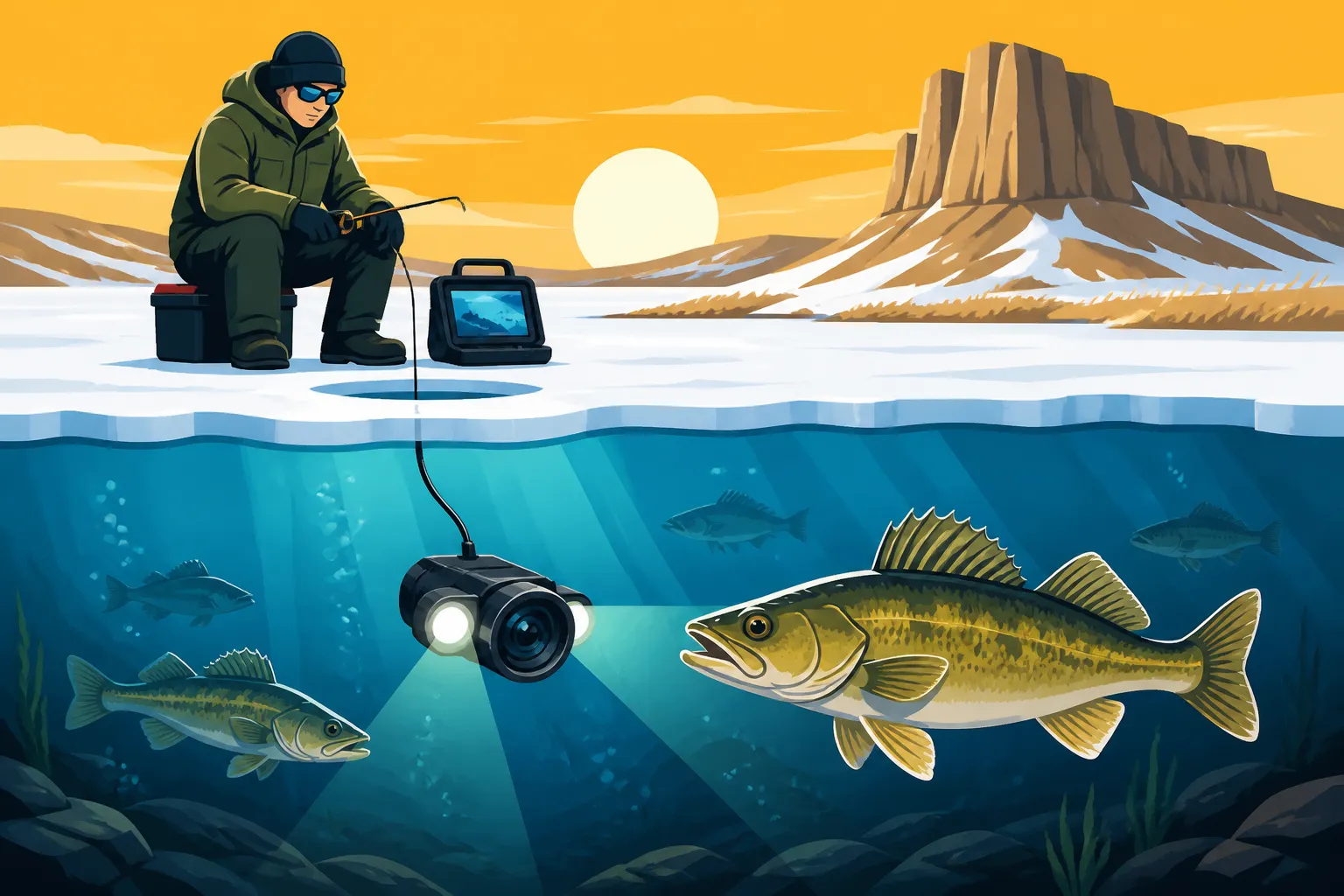
When you're out on a frozen North Dakota lake, whether it's the vast expanse of Lake Sakakawea or the legendary Devils Lake, ice fishing can sometimes feel like fishing blindfolded. You've drilled your holes, set up your shelter, and dropped your lines, but there's always that nagging question: "Are there any fish down there?" This is where an underwater camera steps in, acting as your eyes beneath the surface, completely revolutionizing how you approach hard water angling. It's not just a gadget; it's a window into an otherwise hidden world.
Seeing is Believing: How Cameras Enhance Your Experience
Imagine the scene: you're jigging away, and suddenly, a shadowy figure glides into view on your camera screen. It might be a curious walleye, a school of perch, or even a massive northern pike. Seeing this action unfold in real-time is not only incredibly exciting but also profoundly educational. You no longer have to wonder if your bait presentation is appealing; you can actually watch fish react to it. This immediate feedback loop is invaluable. You might discover that the flashy spoon you thought was irresistible is being completely ignored, while a subtle tungsten jig gets instant attention.
This visual confirmation builds confidence. Instead of constantly moving holes or switching baits out of sheer desperation, you can make informed decisions. If fish are present but not biting, you can experiment with subtle changes to your jigging cadence, retrieve speed, or even bait color, all while observing their reactions. It truly transforms the passive act of waiting into an active, engaging hunt. Plus, for those days when the bite is slow, watching the underwater world can be entertainment in itself, providing glimpses of aquatic life you'd never otherwise see, making the day worthwhile even without a full bucket.
Understanding Fish Behavior in Real-Time
One of the most powerful aspects of using an underwater camera is the ability to observe and understand fish behavior in their natural environment. Are they aggressive and hitting baits hard? Or are they lethargic, slowly cruising by with barely a glance? You can see if they are approaching from above, below, or from the side. This insight allows you to adjust your strategy on the fly. For instance, if you see a walleye approach your bait but then turn away, you might try raising your lure a foot or two, or giving it a gentle twitch instead of a vigorous jig. This level of finesse is only possible when you can actually see the fish's reaction.
Moreover, cameras help you identify specific species. Sometimes, what you thought was a big walleye turning its nose at your lure might actually be a white bass, or a bullhead. Knowing what fish are down there helps you target effectively. You can learn how different species relate to structure, how they react to noise on the ice, or even how they interact with each other. This real-time education deepens your understanding of fish ecology and ultimately makes you a more skilled and adaptable angler, far beyond just catching a few fish through the ice. It’s like getting a private lesson from the fish themselves, teaching you tricks you'd never learn otherwise. You might also want to consult a guide on How to Read a Fish Finder for Ice Fishing to get a dual perspective on what's happening beneath the surface.
Key Features to Look For in an Ice Fishing Camera
Choosing the right underwater camera for North Dakota's demanding ice fishing conditions requires a bit of thoughtful consideration. It's not just about getting the clearest picture; it's about finding a robust, reliable tool that can withstand the cold, the wind, and the sometimes brutal elements of a long day on the ice. Skimping on features here can lead to frustration and missed opportunities. You want something that will enhance your day, not complicate it with technical glitches in freezing temperatures.
Camera Resolution and Display Quality
When you're trying to identify a subtle bite or differentiate between a rock and a fish, screen clarity is paramount. Look for cameras with high-resolution monitors – often measured in pixels – that can render crisp, clear images. A larger screen size is generally a plus, especially if you're fishing with a buddy and want to share the view, or if your eyesight isn't quite what it used to be. Many modern cameras now feature LCD displays that perform well even in bright sunlight, which is crucial on those dazzling, reflective winter days in North Dakota.
Beyond raw resolution, consider the type of display. Some cameras offer anti-glare screens, which can be a lifesaver when the sun is reflecting off the snow and ice. Adjustable brightness and contrast settings are also incredibly useful, allowing you to fine-tune the image for varying light conditions and water clarity. After all, what good is seeing the fish if you're constantly squinting at a washed-out screen? A clear, vibrant display ensures you don't miss any of the critical underwater action, making your investment truly pay off.
Battery Life and Cold Weather Performance
This is a non-negotiable for North Dakota ice fishing. The cold saps battery life like nothing else, and the last thing you want is your camera dying just as the bite turns on. Prioritize cameras with extended battery life, ideally offering 8-10 hours or more on a single charge. Many units come with robust lead-acid or lithium-ion batteries specifically designed for cold-weather performance. It's also wise to check if the battery is easily replaceable or if carrying an extra power bank is a viable option to extend your time on the ice.
Furthermore, the entire unit, from the camera itself to the monitor, needs to be built for the cold. Look for claims of cold-weather rating or robust construction materials that won't become brittle in sub-zero temperatures. Some units even feature heated displays to prevent fogging or freezing. Remember, North Dakota winters are no joke, and your gear needs to be just as tough as you are to perform reliably through an entire day of How to Ice Fish in North Dakota, allowing you to focus on the fishing, not on your equipment failing.
Cable Length, Durability, and Portability
The depth of many North Dakota lakes means you'll need a camera with a sufficiently long cable. While some smaller ponds might be shallow, spots on Lake Sakakawea or Devils Lake can run quite deep, and you'll want at least 50-75 feet of cable, if not more, to explore different depths effectively. Ensure the cable is sturdy, kink-resistant, and won't easily fray from being deployed and retrieved repeatedly in icy conditions. A flimsy cable can quickly become a major headache.
Durability extends to the camera housing itself. It needs to withstand bumps, drops, and the general rigors of being hauled across the ice. Look for waterproof and impact-resistant designs that can take a beating. Finally, portability is key. You'll be drilling holes and moving around, especially if you're chasing active fish, so a compact, lightweight unit that's easy to pack in a sled or your Best Ice Fishing Gear for North Dakota is ideal. Some come with convenient carrying cases or integrated spools for neatly managing the cable, which makes setup and tear-down a breeze when the weather isn't cooperating.
Types of Underwater Cameras for Anglers
Just like there are different types of anglers and fishing styles, there are various configurations of underwater cameras designed to suit different needs and preferences on the ice. Understanding these distinctions can help you pinpoint the perfect system that aligns with your approach to chasing fish through the hard water. It's not a one-size-fits-all world out there, and what works for one angler might not be the best fit for another.
Fixed-Position vs. Pan/Tilt Cameras
The most common type of underwater camera for ice fishing is a fixed-position unit. This means the camera lens points in a single direction, typically achieved by stabilizing it with a fin or by orienting it with the cable. These are generally simpler, more affordable, and robust. You drop them down the hole, and they provide a constant view of a specific area. If you want to change the view, you physically rotate the cable or move the camera to a different hole. This is perfectly adequate for many anglers who just want to see if fish are present and how they react to their bait directly below them.
However, for those who crave more dynamic control, pan/tilt cameras offer a significant upgrade. These units feature a camera head that can be remotely rotated 360 degrees and often tilted up or down, all from the comfort of your ice shelter. This allows you to scan a much wider area around your hole, actively search for fish, or follow a fish as it swims past. While these systems tend to be more expensive and might have more components that could potentially freeze or malfunction in extreme cold, the ability to "look around" without moving your body can be a huge advantage, especially when you're Setting Up an Ice Fishing Shelter and settled in for the day.
Wireless and Wi-Fi Enabled Options
In recent years, technology has brought wireless and Wi-Fi enabled cameras to the ice fishing scene. Instead of a dedicated monitor, these systems transmit the camera feed directly to your smartphone or tablet via a Wi-Fi signal. This offers several benefits: you leverage a device you already own, often with a high-resolution screen, and you can reduce the amount of gear you need to carry. Sharing the view with friends is also incredibly easy, as multiple devices can often connect to the same camera feed, making it a social experience.
However, there are a few considerations. Your phone or tablet's battery life can be severely impacted by cold, so a robust power bank is almost essential. The Wi-Fi signal range can also be limited, typically to about 50-100 feet, which means you need to keep your viewing device relatively close to the camera unit. Also, while convenient, smartphone screens might not be as robust or weather-resistant as dedicated outdoor monitors, and touchscreens can be tricky with gloves. Still, for tech-savvy anglers who value versatility and minimal equipment, these wireless options, often found at retailers like Amazon, can provide a streamlined and modern ice fishing experience. Just be sure to keep your devices warm!
| Feature | Fixed-Position Camera | Pan/Tilt Camera |
|---|---|---|
| View Control | Manual rotation/repositioning of cable/camera | Remote 360-degree rotation, often with vertical tilt |
| Scanning Area | Limited, view in one direction | Wider area scanned without moving the unit/hole |
| Complexity | Simpler design, fewer moving parts | More complex, more potential points of failure in extreme cold |
| Cost | Generally more affordable | Typically higher price point |
| Ease of Use | Very straightforward, drop and view | Requires remote control operation, takes some getting used to |
| Best For | Anglers on a budget, specific spot monitoring | Anglers wanting to actively search, high-tech enthusiasts |
Setting Up and Using Your Underwater Camera on the Ice
Getting your underwater camera up and running smoothly on the ice is more than just dropping it down a hole. A few strategic considerations can significantly impact the quality of your view and your overall success. North Dakota's diverse water bodies, from the clear waters of some smaller lakes to the more stained conditions of places like the Red River, present unique challenges that can be overcome with a bit of know-how.
Optimizing Camera Placement and Angle
Where you position your camera relative to your fishing hole and bait is critical. A common technique is to drill a second hole a few feet away from your fishing hole, dropping the camera into this separate hole. This prevents your fishing line from constantly tangling with the camera cable and gives you a clearer view without obstruction. Aim to position the camera so it's looking at your bait, allowing you to observe how fish approach and react. You might experiment with pointing the camera down directly at your lure, or angling it horizontally to scan for cruising fish, depending on what you're trying to achieve.
Many cameras come with various fins or weights to help orient them correctly in the water. Pay attention to any current, which can sometimes be surprisingly strong even under the ice, especially in areas like river systems or below dams. If you're struggling to keep the camera steady, a heavier weight or a specialized camera stabilizer might be necessary. Some anglers even use a simple clothes hanger or a custom PVC pipe setup to get the perfect angle and keep the camera perfectly still. Remember, the goal is a stable, unobstructed view of the action, so take the time to get it right. Also, always prioritize safety, especially during Early Ice Fishing Safety Tips, before you even think about setting up your gear.
Managing Lighting and Water Clarity Challenges
North Dakota's lakes offer a spectrum of water clarity. On clear lakes, your camera will provide stunning, detailed views. However, in more stained or turbid waters, visibility can be severely reduced. Don't despair! Most underwater cameras come equipped with infrared (IR) lights or white LED lights to illuminate the area directly in front of the lens. IR lights are invisible to fish, offering a stealthy way to light up the scene, while white LEDs provide a full-color view but can sometimes spook shallower fish, particularly in very clear water.
Experiment with these light settings. In very dark or murky conditions, turning on the lights can be the only way to see anything at all. In clearer water, you might find that ambient light filtering through the ice is sufficient, and turning off the lights can prevent startling wary fish. Overcast days or early morning/late evening hours typically offer the best natural light conditions. When fishing in shallow, extremely clear water, try positioning the camera slightly to the side and angling it towards your bait rather than pointing directly at it, to minimize its profile to the fish. Understanding these nuances will significantly improve your success when using Ice Fishing Electronics and Fish Finders to observe the fish.
Maximizing Your Catch with Camera Insights
An underwater camera isn't just a fancy toy; it's a powerful tool that, when used strategically, can dramatically improve your ice fishing success. It transforms guesswork into informed decisions, allowing you to adapt your techniques based on real-time observations of the underwater world. This is where the true value of an underwater camera shines, helping you go from seeing fish to actually catching them, often with much greater consistency.
Identifying Structure and Cover
Beneath the ice, fish still relate to structure and cover just as they do in open water. Your camera can help you pinpoint these critical elements. You might drop your camera down a hole and discover a hidden rock pile, a submerged brush pile, or even a transition line where weeds meet open bottom. These are all prime spots where fish, especially species like walleye, perch, and northern pike, often ambush prey or seek refuge. Identifying these features allows you to precisely position your bait for maximum effectiveness, dropping it right into their living room.
For example, if you see a school of perch hugging the bottom near a clump of weeds, you know exactly where to drop your jig. If a walleye cruises by a particular rock, you can target that exact spot with repeated presentations. This level of precision is virtually impossible with a traditional sonar unit alone, which often shows you "fish arches" but doesn't always reveal the exact nature of the habitat they're relating to. By understanding the underwater landscape through your camera, you're better equipped to consistently find and stay on fish. This is crucial for successful North Dakota Walleye Fishing Techniques and even for mastering How to Catch Perch Through the Ice in North Dakota. For those windy days, having a good Best Portable Ice Shelters for Wind can help keep your viewing clear.
Finessing Your Presentations
Perhaps the biggest advantage of an underwater camera is the immediate feedback it provides on your bait presentation. Are you jigging too aggressively? Is your minnow swimming naturally? Is your lure spinning incorrectly? You can literally watch how fish respond to every twitch, pause, and retrieve. If a fish approaches your bait but doesn't commit, you can immediately change your jigging cadence, try a different bait profile, or even just hold it perfectly still to tempt a strike.
Consider a scenario where you're targeting finicky walleye. You drop a jig and minnow, and on your screen, you see a walleye approach slowly, eye it, then turn away. Instead of blindly trying another bait, you might try a much subtler lift-and-drop, or just let the minnow sit completely motionless for a longer period. This direct observation helps you fine-tune your technique to match the mood of the fish that day. It's an invaluable learning tool that helps you develop a more nuanced understanding of how to trigger bites, whether you're using a tiny Best Jig Size for Perch Through the Ice or a larger offering for pike, like the Best Bait for Northern Pike Through the Ice. Knowing How to Find Perch Schools Under the Ice in conjunction with your camera will further boost your chances.
Popular Brands and Where to Find Your Camera
When you're ready to invest in an underwater camera for your North Dakota ice fishing adventures, you'll find a range of reputable brands that have earned their stripes on the hard water. Knowing where to look for these cameras and what to expect from different manufacturers can make your purchasing decision much easier. You want gear that stands up to the challenge, not something that will fail you when the fish are biting and you're miles from home.
Reputable Manufacturers in the Market
Several companies have established themselves as leaders in the ice fishing camera market, offering reliable and feature-rich options. Brands like Aqua-Vu are often considered pioneers in the field, known for their durable designs and clear optics. They offer a range of models, from compact, portable units perfect for hole-hopping to more advanced systems with larger screens and longer cables. Another strong contender is MarCum, which is also well-regarded for its flashers and sonar units, and brings that expertise to its camera systems, often integrating features that complement their other electronics.
Other notable brands include Vexilar, another stalwart in ice fishing electronics, and Eyoyo, which offers some more budget-friendly options that still provide decent performance for the casual angler. When researching, pay attention to user reviews specifically from ice anglers, as cold weather performance is a unique consideration. Each brand might have its own proprietary features or display technologies, so it's worth comparing what's most important to your fishing style and budget. You'll want something that can withstand the cold, even if you're in a cozy Best Insulated Ice Shelter for Extreme Cold.
Shopping for Your Ideal Camera
Once you've narrowed down your brand and feature preferences, the next step is finding where to purchase your camera. Large outdoor retailers are excellent places to start. Stores like Bass Pro Shops typically have a dedicated fishing electronics section where you can often see models displayed, compare screen sizes, and even get advice from knowledgeable staff. They frequently carry a wide range of popular brands and accessories. This gives you the advantage of hands-on experience and expert guidance, which can be particularly helpful if you're new to underwater cameras and want to see them in action before committing.
Online retailers also offer a vast selection, often with competitive pricing and the convenience of home delivery. Amazon is a go-to for many anglers, providing an extensive inventory of most major brands, along with customer reviews that can offer valuable insights into real-world performance. When purchasing online, be sure to check return policies and warranty information, especially for electronics. While a local tackle shop might have a more limited selection, supporting smaller, specialized stores can also be a great way to tap into local knowledge and get personalized recommendations specific to North Dakota fishing conditions. Regardless of where you buy, investing in a quality camera will pay dividends in making your ice fishing trips more productive and enjoyable for years to come.
Disclaimer
This article is for general informational purposes only and does not constitute professional advice. Laws, prices and regulations vary by location and change over time. Consult a qualified professional for guidance on your specific situation.