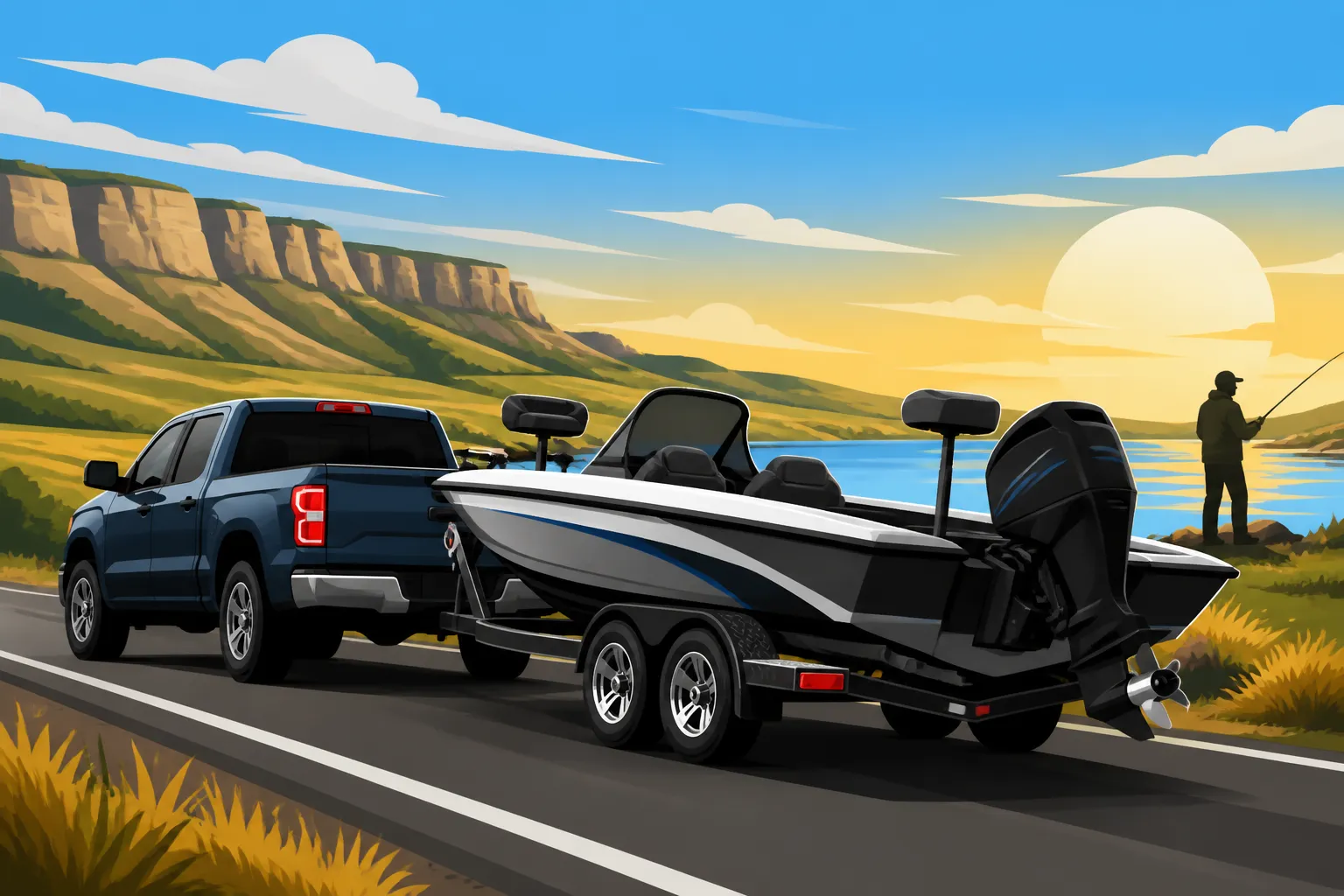
Best Boat Trailers for North Dakota Roads
If you've spent any time hauling your boat across North Dakota, you know our roads can be… well, a real challenge. From endless stretches of gravel that seem to go on forever to unexpected potholes and frost heaves that can jar your teeth loose, finding a boat trailer that can truly stand up to these conditions is paramount. This guide is all about helping you navigate the complexities of choosing the best boat trailers for North Dakota's unique and often unforgiving driving environment, ensuring your precious cargo arrives safely and your investment lasts.
Understanding North Dakota's Unique Road Challenges for Trailers
North Dakota's landscape offers incredible fishing opportunities, but getting to those prime spots often means traversing some less-than-ideal roads. It's not just about the distance; it's about the very nature of the terrain that can take a serious toll on your boat trailer. Ignoring these factors when choosing a trailer is like forgetting your sunscreen on a bright summer day out on Lake Sakakawea – you'll regret it later.
Gravel Roads and Their Impact
Ah, the gravel road. It's a rite of passage for many North Dakota anglers, leading to those secluded boat ramps or hidden honey holes. While beautiful, these roads are notorious for kicking up dust, rocks, and debris. This constant barrage can quickly chew away at trailer finishes, damage wiring, and even chip paint on your boat. Beyond the cosmetic, the continuous vibrations can loosen bolts, stress welds, and accelerate wear on suspension components. It's not just a bumpy ride; it's a slow, persistent assault on your trailer's integrity.
Think about those drives out to a remote access point on Devils Lake or a quiet stretch of the Missouri River. You're often going slower than on paved roads, yes, but the constant jostling and the gritty, abrasive environment demand a trailer built with resilience in mind. Standard trailers might get you there a few times, but they won't hold up to the long-term abuse that our gravel roads dish out. You need features that specifically mitigate these issues, from robust fenders to protected undercarriages.
Potholes, Frost Heaves, and Pavement Degradation
Even our paved roads aren't immune to the elements. North Dakota's extreme temperature swings, especially the freeze-thaw cycles, are brutal on asphalt and concrete. This leads to what we affectionately call "pothole season" and the year-round surprise of frost heaves. Hitting one of these at highway speed with a boat trailer in tow isn't just uncomfortable; it can be downright dangerous and incredibly damaging. Imagine the impact forces transmitted through your trailer frame, suspension, and ultimately, your boat.
These sudden, sharp impacts are where the real structural integrity of a trailer is tested. A weak frame can bend, axles can be misaligned, and even tires can blow out under extreme stress. It's not enough for a trailer to simply carry your boat; it needs to be engineered to absorb and distribute these shocks effectively. This is where investing in a quality suspension system and a robust frame truly pays dividends, preventing costly repairs and ensuring the safety of your vessel.
Extreme Weather Conditions and Corrosion
North Dakota weather doesn't just impact the roads; it directly attacks your trailer. Winter brings road salt, slush, and sand, all highly corrosive agents that cling to every nook and cranny. Summer humidity, combined with frequent dips in and out of our lakes and rivers, means constant exposure to moisture. This creates a perfect storm for rust and corrosion, especially on steel trailers if they aren't properly protected.
Beyond rust, extreme cold can make materials brittle, and hot summers can bake wiring and tires. A trailer designed for milder climates simply won't last here. You need materials and coatings that are specifically chosen for their anti-corrosive properties and ability to withstand wide temperature fluctuations. Thinking about How to Winterize a Boat Trailer isn't just about storage; it's about protecting your investment from the elements year-round.
Key Trailer Features for North Dakota Durability
When you're looking at boat trailers in North Dakota, you need to think beyond just size and price. The devil truly is in the details when it comes to durability on our roads. Focusing on specific construction, suspension, and wheel components will make a world of difference in how long your trailer lasts and how well it protects your boat.
Frame Construction and Materials
The backbone of any good boat trailer is its frame. In North Dakota, you essentially have two main options when it comes to materials: galvanized steel and aluminum. Each has its pros and cons, but for our challenging environment, one often shines brighter. Galvanized steel trailers are made by dipping steel in molten zinc, creating a thick, corrosion-resistant coating that holds up incredibly well to road salt and constant water exposure. They are generally heavier and can be more budget-friendly upfront. However, if that galvanization is ever compromised, rust can set in.
Aluminum trailers, on the other hand, are lighter and naturally resistant to rust, making them a fantastic choice for saltwater environments (though we don't have those in North Dakota, the general resistance to corrosion is still a huge plus). They often come with a higher price tag. The key consideration for North Dakota's rough roads is the strength of the aluminum welds and the overall structural design. A well-built aluminum frame, often with a C-channel or I-beam design, can flex more efficiently than steel, absorbing some of the shocks from potholes without compromising integrity. For the sheer abuse of gravel roads and corrosive winter conditions, many North Dakota anglers lean towards fully galvanized steel or a robust, thick-walled aluminum frame.
Here's a quick comparison of the common materials:
| Feature | Galvanized Steel Trailer | Aluminum Trailer |
|---|---|---|
| Corrosion Resist. | Excellent, due to zinc coating | Excellent, natural resistance |
| Weight | Heavier | Lighter |
| Strength | Very strong, rigid | Strong, often more flexible |
| Cost | Generally lower | Generally higher |
| Maintenance | Inspect coating for chips; grease often | Less rust maintenance; check welds for fatigue |
| Ideal For ND | Very good, especially for heavy boats | Excellent, particularly for lighter boats |
Suspension Systems Built for Rough Terrain
The suspension system is your trailer's first line of defense against North Dakota's bumpy roads. You'll typically find two main types: leaf spring and torsion axles. Leaf spring suspensions are common, more traditional, and generally less expensive to repair. They consist of layers of spring steel that flex to absorb shocks, similar to what you'd find on many trucks. While effective, they can transmit more road shock to the boat, and over time, the springs can sag or rust, especially in our climate.
Torsion axles are a more modern design, where each wheel is independently suspended by a rubber-cushioned torsion arm. This provides a much smoother ride, better shock absorption, and reduces stress on the boat. They also tend to have fewer moving parts exposed to the elements, meaning less maintenance and better resistance to corrosion. For the constant jostling of gravel roads and the impact of potholes, a torsion axle system is often the superior choice for comfort and longevity. It helps to isolate each wheel from the others, so one wheel hitting a pothole doesn't send the same jolt through the entire trailer frame. This can be especially important for protecting your boat's hull and electronics from excessive vibration.
Axle and Tire Considerations
Don't underestimate the importance of your axles and tires. The type of tire and the number of axles can significantly affect your trailer's performance and safety. For tires, you'll usually choose between radial and bias-ply. Radial tires, like those on your car, offer a smoother ride, better fuel economy, and longer tread life. Bias-ply tires are stiffer, often cheaper, and can be more prone to heat buildup, but some argue their stiffer sidewalls are better for resisting punctures on rocky gravel. For long hauls across North Dakota, especially on varied terrain, radial tires are generally preferred for their superior performance and durability. Always ensure your tires are properly inflated; underinflated tires are a leading cause of blowouts.
Regarding axles, a single-axle trailer is suitable for smaller, lighter boats, generally under 2,500 pounds gross weight. They are more maneuverable but less stable at high speeds and offer no redundancy if a tire blows. Tandem-axle trailers, with two axles, are the workhorses for heavier boats. They provide much greater stability, distribute the load more evenly, and offer a crucial safety net: if one tire blows, you can often still limp to a safe location on the remaining three. Given the long distances and variable road quality in North Dakota, a tandem axle is often the smarter choice for anything but the smallest fishing boats. Always carry a spare tire, or even two, especially when venturing to remote fishing spots that might not have immediate roadside assistance. Consider checking out specific advice on Best Boat Trailer Tires for Gravel Roads.
Components That Withstand the Elements
It's not just the big structural pieces of a trailer that matter; the smaller, often overlooked components are just as critical, especially when exposed to North Dakota's harsh environment. These parts need to be robust, protected, and designed for longevity if you want to avoid frustrating breakdowns and costly repairs.
Lighting and Wiring Protection
Trailer lights are a legal requirement and a critical safety feature, especially when you're hauling your boat home after a successful day on the water as dusk settles. Unfortunately, they are also incredibly vulnerable to corrosion and damage. Standard wiring bundles on many trailers are exposed, leading to frayed wires, shorts, and unreliable lights after repeated exposure to water, road salt, and gravel spray. The frustration of trying to troubleshoot a blinker or brake light issue on the side of a highway is something no one wants.
Look for trailers with sealed, submersible LED lights. These units are far more resistant to water intrusion and last significantly longer than traditional incandescent bulbs. More importantly, inspect the wiring harness itself. The best trailers for North Dakota conditions will feature a fully enclosed or marine-grade wiring harness, often run inside the trailer frame, protecting it from physical damage and corrosion. Some manufacturers use heat-shrink connectors and dielectric grease at every junction, further enhancing reliability. This proactive protection means less time fiddling with electrical issues and more time enjoying best fishing lakes in North Dakota.
Brakes and Bearings for Longevity
Trailer brakes are non-negotiable for safety, particularly when hauling heavier boats or navigating our varied terrain. Most boat trailers utilize surge brakes, which engage automatically as your tow vehicle slows down. Disc brakes generally offer superior stopping power and better resistance to fade compared to drum brakes, especially after being submerged in water. However, the critical factor for North Dakota is corrosion resistance. Look for stainless steel or "dacromet" coated brake components, which offer far better protection against rust caused by frequent submersion and road salt than standard steel parts.
Wheel bearings are arguably the most critical maintenance item on any boat trailer. They allow your wheels to spin freely, but they are constantly exposed to water and grime. Failure of a wheel bearing can leave you stranded, or worse, cause a wheel to seize or detach. For North Dakota, opt for trailers equipped with "Bearing Buddy" type protectors or, even better, a fully sealed, oil-bath hub system. These systems help keep water and contaminants out and ensure constant lubrication. Regular maintenance, including re-greasing your bearings, is absolutely essential. Many anglers make it a habit to check their bearings before any long trip, especially those heading to remote areas of Lake Sakakawea.
Tongue Jacks, Winches, and Rollers/Bunks
Even these seemingly minor components contribute significantly to the overall user experience and longevity of your trailer. A sturdy tongue jack, preferably a swivel jack with a robust wheel, makes moving your trailer around your driveway or leveling it at the ramp much easier. Avoid flimsy jacks that can bend or rust quickly. A good quality jack will have a strong finish, like galvanization or powder coating, and a solid wheel that won't seize up with dirt and rust.
The winch, used for pulling your boat onto the trailer, should be appropriately rated for your boat's weight and feature a strong strap or cable. Look for a heavy-duty model with a solid gear mechanism, again, ideally with corrosion-resistant finishes. The rollers or bunks that support your boat are crucial too. Bunks, typically carpeted wood, provide excellent support for the hull, especially for fiberglass boats. Rollers are great for easier loading and unloading, particularly at shallower ramps. Ensure they are made from non-marking material and that all hardware is stainless steel to prevent rust streaks on your boat's hull. The quality of these components directly impacts how easy and safe it is to launch and retrieve your boat, which can make or break a day out on Devils Lake Fishing Guide for North Dakota Anglers.
Sizing Your Trailer to Your Boat and Tow Vehicle
Choosing the right boat trailer isn't just about finding one that looks good or fits your budget. It's a precise balance of matching the trailer's capabilities to your boat's needs and your tow vehicle's capacity. Getting this wrong can lead to unsafe towing conditions, premature wear on your equipment, and even legal issues.
Matching Trailer Capacity to Boat Weight
This is perhaps the most critical consideration. Every trailer has a Gross Vehicle Weight Rating (GVWR), which is the maximum amount of weight the trailer can safely carry, including its own weight and the cargo (your boat, motor, fuel, and gear). You need to know the loaded weight of your boat – not just the dry hull weight. This means factoring in your outboard motor, a full tank of gas (which can be hundreds of pounds), batteries, trolling motor, anchor, safety gear, and all the tackle you bring along. A good rule of thumb is to weigh your boat fully loaded at a local truck stop or public scale to get an accurate number.
Once you have that, choose a trailer with a GVWR that exceeds your boat's loaded weight by at least 15-20%. This buffer is crucial for safety and to prevent overloading, which stresses every component of the trailer, from the frame and axles to the tires and bearings. An overloaded trailer will wear out much faster, especially on North Dakota's rough roads, and can become unstable, leading to dangerous sway. Always buy a trailer that comfortably handles your boat's real-world weight, not just its advertised dry weight.
Single vs. Tandem Axles for Stability and Load Distribution
We briefly touched on this, but it bears repeating with more depth. The choice between a single-axle and tandem-axle trailer is a significant one, directly impacting stability, tire wear, and safety. Single-axle trailers are perfectly fine for lighter boats, often 18 feet and under, where the total loaded weight is well within the capacity of one axle and two tires. They are easier to maneuver, lighter to pull, and generally less expensive to purchase and maintain (fewer tires, fewer bearings). However, if you have a tire blowout on a single axle, you're immediately dealing with a significant emergency on the side of the road.
Tandem-axle trailers, on the other hand, are the standard for most boats over 18-20 feet or those that are particularly heavy. Their primary advantages are superior stability at highway speeds, better load distribution, and a built-in safety net. With four tires, the trailer is much less prone to sway, making it feel more secure behind your tow vehicle, especially in crosswinds or when passing semi-trucks on I-94. If one tire goes flat, the other three can usually get you to a safe spot, greatly reducing the risk of a dangerous roadside incident. While they are heavier, more expensive, and slightly harder to maneuver in tight spots, the added peace of mind and safety for hauling on North Dakota's long, unpredictable roads is often well worth the investment.
Tow Vehicle Requirements and Compatibility
Finally, your tow vehicle needs to be up to the task. It's not just about having a hitch; it's about matching your vehicle's towing capacity to the loaded weight of your trailer. Your vehicle's owner's manual will state its maximum towing capacity, tongue weight capacity, and often, gross combined weight rating (GCWR). The tongue weight (the downward force the trailer's tongue exerts on your hitch) should typically be 10-15% of the total loaded trailer weight. Too little tongue weight can cause trailer sway; too much can overload your tow vehicle's rear axle.
Always ensure your hitch receiver and hitch ball are rated for the weight you're towing. Using an undersized hitch can lead to catastrophic failure. Consider transmission coolers for automatic transmissions, especially if you're frequently towing heavy loads in North Dakota's summer heat. Proper mirrors, brake controllers (if your trailer has electric brakes), and a pre-trip checklist are also essential. Remember that towing significantly impacts your vehicle's braking distance and acceleration. Don't push your vehicle to its absolute maximum towing capacity; give yourself a comfortable margin of safety. This compatibility ensures a smooth, safe journey to Lake Sakakawea Fishing Guide for North Dakota Anglers and back.
Maintenance Tips for North Dakota Trailer Longevity
Even the best boat trailer, designed specifically for North Dakota's tough conditions, won't last without proper care. Maintenance isn't just about fixing things when they break; it's about preventative measures that extend the life of your investment and ensure safe travels. Overlooking simple steps can lead to costly repairs and ruined fishing trips.
Post-Trip Inspections and Cleaning
This is where the real work of preventing problems begins. After every trip, especially if you've been on gravel roads or launched in saltwater (though rare, some boundary waters can have unique mineral compositions that mimic it), take a few minutes for a thorough inspection. Start by visually checking all tires for punctures, low pressure, or uneven wear. Look under the trailer for any hanging wires, loose bolts, or signs of impact damage to the frame. Check your lights – do they all work? Wiggle your boat on its bunks or rollers to see if anything feels loose.
More critically, cleaning is paramount for corrosion prevention. Immediately rinse your trailer thoroughly with fresh water after retrieving your boat, especially if you've been in murky or salty-tinged water (like parts of the Red River) or driven on salted winter roads. Pay special attention to the brake components, wheel hubs, and anywhere road grime tends to accumulate. A good spray with a pressure washer can dislodge stubborn dirt. Allowing mud, dirt, and road salt to sit on your trailer is an open invitation for rust to set in, even on galvanized or aluminum frames. This routine cleaning and inspection can save you from a major headache down the road.
Bearing Care and Greasing Schedules
Your wheel bearings are the most vulnerable parts of your trailer. They bear the entire weight of your boat and trailer, spin at high speeds, and are constantly exposed to water. Even with bearing protectors or oil-bath hubs, regular inspection and lubrication are critical. For standard grease bearings, a good rule of thumb is to repack them annually or every 10,000 miles, whichever comes first. If your trailer frequently gets submerged, consider checking and regreasing more often. Overheating is a major sign of bearing failure, so always touch your hubs (carefully!) after a long tow to check for excessive heat. If one hub is significantly hotter than the others, it's time for an immediate inspection.
Even "maintenance-free" sealed bearings or oil-bath hubs aren't truly set-it-and-forget-it. You should still periodically check the lubricant levels and inspect the seals for any signs of leakage. Preventing water intrusion is the name of the game. If you notice milky grease or oil, it means water has gotten in, and your bearings need immediate attention to avoid catastrophic failure. Investing in a good quality marine-grade grease is also important, as it's designed to repel water better than standard automotive grease. Neglecting bearing maintenance is one of the quickest ways to ruin a fishing trip.
Tire Pressure and Rotation
Just like with your tow vehicle, proper tire care is crucial for your boat trailer. Underinflated tires can lead to excessive heat buildup, increased rolling resistance, premature wear, and even blowouts. Overinflated tires can reduce the tire's contact patch with the road, leading to uneven wear, reduced traction, and a harsher ride, which transfers more shock to your boat. Always check your tire pressure before each trip, when the tires are cold, and inflate them to the manufacturer's recommended PSI, which is usually stamped on the tire's sidewall or on a placard on the trailer frame.
Tire rotation, while less common on trailers than vehicles, can still help extend their life, especially on tandem-axle trailers where front and rear axles might experience different wear patterns. At minimum, inspect for uneven wear regularly. Also, be mindful of tire age. Trailer tires, even if they have good tread, can degrade from UV exposure and simply sitting. Many experts recommend replacing trailer tires every 3-5 years, regardless of tread depth, due to internal dry rot. Don't forget your spare tire, either! Ensure it's properly inflated and in good condition, ready for action when you need it most. For more detailed advice, refer to Best Boat Trailer Tires for Gravel Roads.
Where to Find and What to Look For When Buying
Once you've done your homework on what makes a durable trailer, the next step is actually finding one that meets your needs. Whether you're in the market for new or used, knowing where to look and what questions to ask can save you a lot of grief and ensure you get the right rig for your North Dakota adventures.
New vs. Used Trailers
The decision between a new and used trailer often comes down to budget versus peace of mind. A brand-new trailer from a reputable manufacturer offers the latest features, warranties, and the certainty that it hasn't been abused. You can often customize it to your exact specifications, choosing galvanized steel or aluminum, torsion axles, and specific bunk or roller configurations. While the upfront cost is higher, the long-term reliability and lower initial maintenance needs can be a significant advantage, especially if you plan on keeping it for many years and frequently travel long distances to places like Lake Sakakawea Chinook Salmon Fishing. Many boat dealerships will offer packages that include a matched trailer, which can simplify the buying process.
Buying a used trailer can be a great way to save money, but it comes with a higher degree of risk. You're inheriting someone else's maintenance habits, and corrosion might be lurking under the surface. If you go this route, a meticulous inspection is absolutely essential. Check the frame for rust, cracks, or bends. Look at the tires for age and wear, inspect the bearings for play, and test all the lights. Don't be afraid to crawl underneath and examine welds and wiring. A used trailer can be a fantastic value if it's been well-maintained, but a neglected one can quickly become a money pit. Consider having a trusted mechanic or experienced boater inspect it if you're not confident in your own assessment.
Reputable Dealers and Online Resources
When buying new, working with a reputable boat dealer is often the best option. They typically sell trailers that are matched to the boats they carry and often have service departments that can assist with maintenance and repairs. Dealers like those you might find partnered with brands like Bass Pro Shops often have a wide selection and staff who understand the specific needs of North Dakota boaters. They can help you with financing, registration (like understanding North Dakota Boat Registration Requirements), and ensure all components are properly set up for your boat. Don't hesitate to ask questions about the trailer's construction, warranty, and recommended maintenance schedule.
For both new and used, online resources can be incredibly helpful for research and finding options. Manufacturer websites provide detailed specifications. Online marketplaces are excellent for finding used trailers, but always exercise caution and insist on an in-person inspection. You might even find specialized trailer shops that offer custom builds or a wider variety of heavy-duty options than a general boat dealer. Sites like Amazon also offer a range of trailer accessories and parts, from new tires to LED lights and bearing kits, allowing you to upgrade or maintain your existing trailer with specific, durable components. Remember to research reviews and compare specifications to ensure you're getting a quality product that can withstand North Dakota's roads.
Essential Checks Before Purchase
Before you hand over any money, whether for a new or used trailer, a comprehensive checklist is your best friend. For any trailer, new or used, always verify the GVWR and compare it against your loaded boat weight. Ensure the trailer is equipped with the correct size hitch coupler for your tow vehicle. Check the condition of all tires, including the spare, for tread depth, sidewall cracks, and proper inflation. Examine the frame for any visible damage, rust, or weak points. Pay close attention to welds, especially on used trailers.
Then, inspect all lights and wiring. Test brake lights, turn signals, and running lights to ensure they are fully functional. If it has brakes, confirm they engage properly. Check the condition of the bunks or rollers; they should be securely mounted and in good shape. Test the winch and tongue jack for smooth operation. For a used trailer, specifically ask about bearing maintenance history. If the seller can't provide details or it looks neglected, factor in the cost of a full bearing service. A thorough pre-purchase inspection is a small investment of time that can save you from major headaches and unexpected costs later on.
Disclaimer
This article is for general informational purposes only and does not constitute professional advice. Laws, prices and regulations vary by location and change over time. Consult a qualified professional for guidance on your specific situation.