Best Ice Cleats for Walking on Frozen Lakes
There’s nothing quite like the crisp air and the anticipation of a bite on a North Dakota frozen lake, but the journey to and from your favorite fishing spot can be treacherous. Slipping on slick ice or hidden black ice isn't just a minor inconvenience; it can lead to serious injuries, broken gear, or worse, especially when you're hauling a sled full of ice fishing equipment. This comprehensive guide will walk you through everything you need to know about choosing and using the best ice cleats, ensuring your steps are secure and your ice fishing adventures are safe and enjoyable.
Why Ice Cleats Are a Must-Have for North Dakota Ice Anglers
Here in North Dakota, our winters are no joke, and neither is the ice we fish on. While a fresh blanket of snow can seem forgiving, what lies beneath is often a slick, unpredictable surface. Ignoring the need for proper traction devices is a gamble no angler should take.
Navigating North Dakota's Icy Terrain
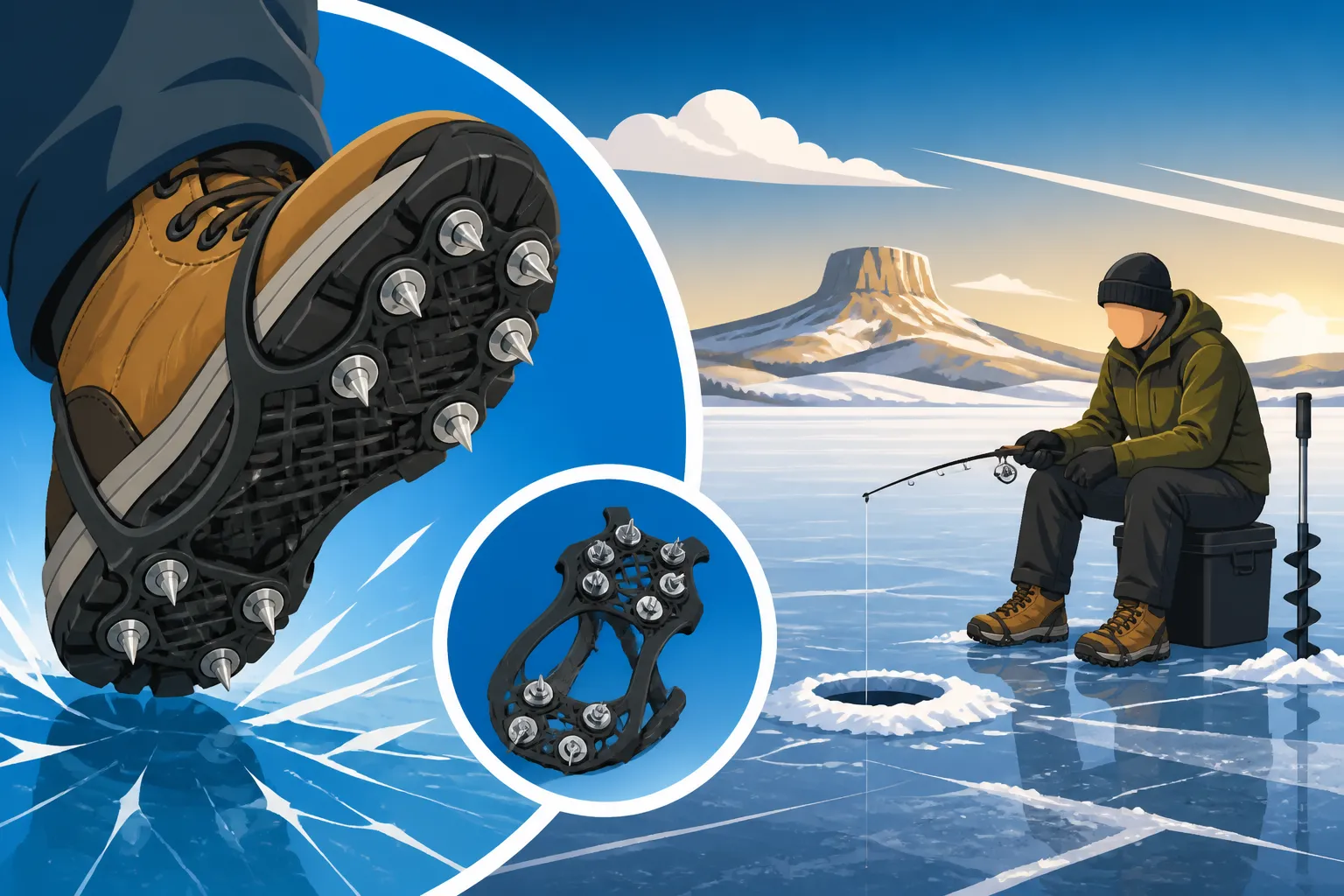
North Dakota's frozen lakes and rivers present a unique challenge. You might encounter clear, glare ice that offers zero traction, or compacted snow that's been polished smooth by wind and foot traffic. Then there's the slush layer that freezes solid overnight, creating an uneven, bumpy minefield. Without something providing extra grip, you're constantly fighting for balance, which wastes energy and distracts from your primary goal: catching fish. Imagine walking out on Devils Lake Ice Fishing Access Points in early morning before the sun softens the surface – it's a sheet of glass, and ice cleats become your absolute best friend.
It's not just about falling. Think about the energy expenditure. Every step you take, trying to maintain your balance on slippery ground, forces your muscles to work harder. By the time you reach your fishing spot, you're already tired. With ice cleats, your steps are confident and stable, allowing you to conserve energy for drilling holes, setting tip-ups, and battling those hard-fighting North Dakota walleye. This becomes especially evident when you're loaded down with a portable shelter, an auger, and a tackle box.
Safety First: Preventing Costly Accidents
The most critical reason for wearing ice cleats is safety. A fall on ice can result in sprains, fractures, concussions, or worse, especially if you hit your head on the hard ice or jagged equipment. Far from shore, a serious injury could turn a fun day into a life-threatening emergency. Beyond personal injury, consider the damage to your valuable gear. A dropped Best Ice Fishing Auger Brands for North Dakota or a cracked fish finder from a sudden fall could put a premature end to your season.
It's not just the big, dramatic falls we're talking about. Even minor slips and recoveries can lead to muscle strains, bumps, and bruises that make the rest of your day uncomfortable. Many seasoned anglers will tell you stories of someone who thought they didn't need cleats, only to end up with a bruised ego and a sore tailbone. When you're considering Early Ice Fishing Safety Tips or even Late Ice Fishing Safety Tips, proper footwear with aggressive traction should be at the very top of your list. It provides a peace of mind that allows you to focus on the fishing, not on your footing.
Choosing the Right Bite: Different Types of Ice Cleats for Every Scenario
Just like fishing lures, ice cleats aren't one-size-fits-all. Different designs offer varying levels of traction and are suited for different icy conditions. Knowing the distinctions can help you pick the perfect pair for your North Dakota adventures.
Spike Cleats: Maximum Grip for Glare Ice
Spike cleats, often featuring aggressive steel spikes or carbide tips, are designed for maximum penetration into hard, clear ice. Think of them as miniature crampons for your boots. They're fantastic when you're walking across a vast expanse of exposed, slick lake ice, providing an unparalleled sense of security. Many serious ice anglers rely on these for their uncompromising grip.
However, their aggressiveness also means they can be less comfortable on mixed terrain, such as patches of bare ground, concrete, or inside your Best Insulated Ice Shelter for Extreme Cold. The spikes don't flex well and can be noisy or even cause damage to delicate surfaces. They're also not ideal for deep, powdery snow, as the snow can pack around the spikes, reducing their effectiveness. If your primary concern is absolute grip on hard ice, especially on big, exposed lakes like Lake Sakakawea, then heavy-duty spike cleats are a top contender. You can often find a good selection of these robust options at outdoor specialists like Bass Pro Shops.
Coil and Chain Cleats: Versatility for Mixed Conditions
Coil and chain cleats offer a more versatile solution. These usually feature a network of steel coils or small chains woven across the sole of your boot, sometimes supplemented with small studs. They provide a good balance of grip on ice and comfort on transitional surfaces like packed snow or small patches of pavement. They excel in situations where you might encounter a mix of ice, snow, and slush, which is a common scenario when you're moving between different spots or accessing the lake from a plowed lot.
The smaller profile of these cleats means they're less likely to get clogged with snow compared to some spike designs, and they offer a more natural walking experience. They're also generally lighter and more compact, making them easier to pack away when not in use. While they might not offer the sheer "bite" of aggressive spikes on perfectly clear ice, their adaptability makes them a favorite for many recreational anglers who want reliable traction without the bulk or specialized feel of spike cleats. Many popular brands offer excellent coil or chain-style cleats that are readily available online through Amazon.
Studded Cleats: Enhanced Traction with Comfort
Studded cleats typically feature small, embedded metal studs or abrasive particles integrated into a rubberized tread pattern. These are often built into boots directly or come as over-the-shoe accessories. They offer enhanced traction over regular rubber soles without the extreme aggressiveness of spikes or the jingling of chains. These are particularly good for slightly less demanding icy conditions, like slippery sidewalks, packed snow trails, or thin layers of ice.
They strike a good balance between grip and wearability. You can often wear them into a gas station or a bait shop without feeling like you're damaging the floor or walking like a robot. While they might not be the go-to for crossing a wind-swept, glare-ice lake with heavy gear, they provide a significant safety upgrade for general winter activities, including casual ice fishing trips where the ice isn't purely clear or the distance to travel isn't extreme. For those who prioritize comfort and ease of use for everyday winter fishing, these are a great choice.
What to Look for: Key Features for Durable and Effective Ice Cleats
Once you've decided on the general type of ice cleat that suits your North Dakota fishing style, it's time to dive into the specifics. Not all cleats are created equal, and paying attention to certain features will ensure you get a durable, effective, and comfortable product.
Material Quality and Construction
The materials used in your ice cleats directly impact their durability and performance. Look for high-quality components, especially in the traction elements. Steel spikes or carbide tips are generally more durable and provide better long-term grip than softer metals. The rubber or silicone harness that secures the cleats to your boot should be flexible enough to stretch over various boot sizes, but also robust enough to withstand freezing temperatures without becoming brittle. Inferior materials can crack or break in the brutal North Dakota cold, leaving you without traction when you need it most.
Examine the attachment points where the traction elements connect to the harness. Are they riveted, welded, or molded seamlessly? Strong, reinforced connections prevent individual spikes or coils from detaching and getting lost on the ice. Also, consider the thickness of the rubber in the harness; a thicker, more substantial band will typically last longer and hold up better against snags and everyday wear and tear. You'll want something that can handle the constant flexing and abuse of a long ice fishing season.
Secure Attachment System
A good pair of ice cleats is only effective if it stays securely on your boots. A poorly designed attachment system can lead to the cleats slipping off, rotating on your foot, or simply feeling unstable. Look for designs that feature a full-foot coverage, often with a heel and toe section, and straps or webbing that go over the top of your boot. Many designs rely on stretchy rubber or silicone slings that cup the front and back of your boot. These work well for most standard winter boots.
For more aggressive use or larger boots (like heavy-duty ice fishing boots), some cleats incorporate additional Velcro straps or buckles over the instep to really cinch them down. This added security prevents rotation, especially when traversing uneven ice or lifting your foot out of deep snow. It's crucial that the cleat fits snugly without being so tight it restricts circulation. A test fit with your actual ice fishing boots is always recommended, as different boot shapes and sizes can impact how well a cleat conforms.
Coverage and Traction Pattern
The coverage area and the pattern of the traction elements on the sole are vital for stability. Cleats that only cover the ball of your foot might be okay for light use, but for serious ice fishing, you want something that extends from the heel to the toe. This provides full-foot traction, crucial for ascending or descending slippery banks, or simply walking confidently across varied ice conditions.
The pattern of the spikes, coils, or studs should be thoughtfully distributed to provide grip in multiple directions. Some cleats focus heavily on forward traction, but you also need lateral stability to prevent sideways slips, especially when stepping around gear or uneven ice. A good design will have traction elements near the edges of the sole, not just concentrated in the middle. Remember, you'll be wearing these on heavy, insulated Best Cold Weather Boots for Ice Fishing, so ensuring they can wrap around and grip the entire sole is paramount for a confident stride on any North Dakota lake.
Maintaining and Storing Your Ice Cleats
Investing in a good pair of ice cleats is just the first step. To ensure they last for many North Dakota fishing seasons and remain effective, proper care and storage are essential.
Cleaning and Drying After Use
It might seem like a small thing, but taking a few minutes to clean your ice cleats after each use can significantly extend their lifespan. Salt, slush, mud, and ice melt can all accumulate on the metal components and the rubber harness. If left on, these substances can accelerate corrosion on metal parts and degrade the elasticity of rubber over time.
Once you're off the ice and back home, rinse your cleats with fresh water to remove any grime. Pay close attention to the nooks and crannies where salt or dirt might hide. After rinsing, it's absolutely crucial to thoroughly dry them. Metal components, even stainless steel, can rust if left wet, especially in the humid environment often found in a heated garage or basement after being out in the cold. You can hang them up or lay them flat in a warm, dry area until every part is completely dry. This simple step prevents rust, preserves the sharpness of spikes, and maintains the integrity of the harness material, ensuring they're ready for your next trip to Lake Sakakawea Fishing Guide for North Dakota Anglers.
Inspecting for Wear and Damage
Before and after each ice fishing season, or even periodically throughout, give your ice cleats a thorough inspection. Look for any signs of wear or damage. Check the metal spikes or coils: Are any bent, dull, or missing? Are any chain links stretched or broken? The effectiveness of your cleats relies on sharp, intact traction elements. If you notice significant dulling, it might be time to consider a replacement, as dull spikes won't bite into hard ice effectively.
Also, inspect the rubber or silicone harness. Look for cracks, tears, or excessive stretching, particularly around the attachment points where they connect to the metal. Over time, UV exposure and cold temperatures can cause rubber to lose its elasticity and become brittle. A damaged harness can lead to the cleat coming off your boot unexpectedly, which defeats the entire purpose of wearing them for safety. If you find any significant damage, it's safer to replace the cleats rather than risk a fall. Proactive inspection ensures your gear is always up to the task of keeping you safe on the frozen landscape.
Proper Storage for Longevity
When the North Dakota ice finally gives way to open water, and it’s time to store your ice fishing gear for the summer, remember your cleats. Don't just toss them into a bin with other gear where they can get tangled or damaged. Proper storage is key to their longevity. After cleaning and thoroughly drying them, store your cleats in a cool, dry place away from direct sunlight and extreme temperatures. Heat and UV light are particular enemies of rubber and silicone, causing them to degrade and lose flexibility over time.
Many cleats come with a small storage bag or pouch; if not, a simple mesh bag or even a sturdy resealable plastic bag can work. This prevents the cleats from snagging on other items, keeps them together as a pair, and protects them from dust. By keeping them organized and protected, you avoid the frustration of finding a damaged or missing cleat when the ice returns next winter. Remember to keep them separate from anything that could be punctured by the spikes, like your Best Ice Fishing Rods for Perch or your Best Ice Fishing Sleds.
Ice Cleat Comparison Table
| Cleat Type | Primary Traction Element | Best For | Pros | Cons | Common Brands/Where to Find (Examples) |
|---|---|---|---|---|---|
| Spike Cleats | Aggressive steel/carbide spikes | Hard, clear, glare ice; steep, icy terrain | Superior grip, maximum penetration into ice, very secure | Less comfortable on mixed terrain, can be noisy, can damage floors | Yaktrax Pro, Kahtoola Microspikes |
| Coil/Chain Cleats | Steel coils or small chains | Mixed ice/snow conditions, packed snow | Versatile, good balance of grip and comfort, less bulky | May not offer maximum bite on pure glare ice | Yaktrax Walk, Stabilicers |
| Studded Cleats | Embedded metal studs in rubber | Light ice, packed snow, slippery surfaces | Comfortable for casual use, easy to walk on mixed surfaces, lightweight | Less aggressive grip than spikes/coils for heavy ice | Often integrated into winter boots |
Disclaimer
This article is for general informational purposes only and does not constitute professional advice. Laws, prices and regulations vary by location and change over time. Consult a qualified professional for guidance on your specific situation.