Do Canoes Need to Be Registered in North Dakota?
Oh, the humble canoe! It seems like such a simple vessel, doesn't it? Just you, your paddle, and the serene waters of a North Dakota lake or river. You're out there for the peace, the quiet, maybe a little fishing, and certainly not thinking about paperwork. But then, a question might pop into your head, especially if you've been eyeing those tiny electric motors that promise to make paddling a breeze: "Do canoes need to be registered in North Dakota?" It's a common point of confusion, and frankly, the rules can feel a bit murky. This comprehensive guide is here to clear up that confusion once and for all, ensuring your paddling adventures are always on the right side of the law.
Understanding North Dakota Boat Registration Basics
Before we dive specifically into canoes, let's lay a foundational understanding of how North Dakota views watercraft when it comes to registration. The state, through the North Dakota Game and Fish Department (NDGFD), has pretty clear guidelines, but sometimes the devil is in the details, especially for smaller vessels.
What Constitutes a "Vessel" in North Dakota?
When the NDGFD talks about "vessels" for registration purposes, they're generally referring to any watercraft used or capable of being used as a means of transportation on water. This broad definition includes everything from a massive pontoon boat to a small fishing dinghy. The key here is the capability of transportation. It’s not just about what you do with it, but what it can do.
Now, you might be thinking, "Well, my canoe is just a hollow shell, how can that be compared to a motorboat?" And you're right to feel that distinction! However, the state's concern extends beyond just the size or construction of the craft. They're looking at how it moves, its potential impact on other water users, and its identification in case of emergencies or regulations enforcement. Historically, people often assumed that if it wasn't a "powerboat" in the traditional sense, it was exempt. But with evolving technology and diverse recreational uses, those assumptions don't always hold up.
The Key Factor: Propulsion
Here's where the rubber meets the road, or rather, where the hull meets the water. In North Dakota, the absolute most critical factor in determining if a vessel needs to be registered is its method of propulsion. This single detail often makes or breaks the registration requirement.
If your watercraft is propelled solely by human power – think paddles, oars, or even pedal power – it generally falls into an exempt category. This is true for kayaks, paddleboards, and, yes, canoes, as long as they are operated under their own muscle power. This is because these types of vessels typically don't have the same speed capabilities or potential environmental impact (like fuel spills or noise pollution) as motorized craft.
However, the moment you introduce any form of mechanical power, no matter how small or seemingly insignificant, the registration requirement kicks in. This includes internal combustion engines, of course, but it also, crucially, includes electric trolling motors. Yes, even that tiny battery-powered motor you picked up from a place like Amazon to give your arms a break on Lake Sakakawea suddenly changes the game. This distinction is vital for understanding when and if your canoe needs to be officially registered.
Do Canoes Really Need to Be Registered? The Clear Answer
Let's cut right to the chase, because this is often the burning question for many canoe enthusiasts. The answer, like many things in life, isn't a simple yes or no; it depends entirely on how you plan to power your canoe.
When a Canoe Does Not Need Registration
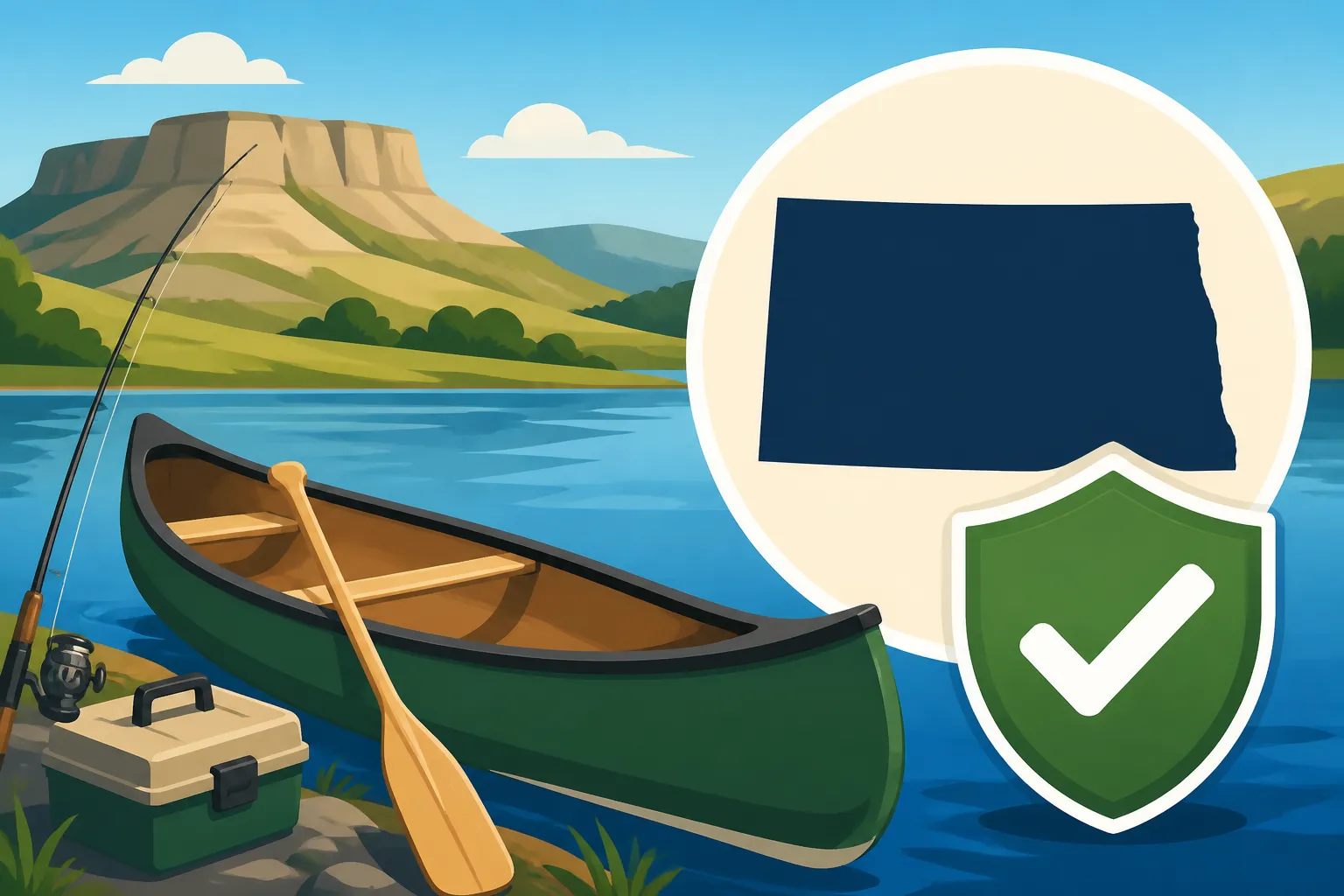
For those who cherish the traditional canoe experience, paddling across the water with nothing but a paddle and elbow grease, you're in luck! If your canoe is propelled exclusively by human power, it does not need to be registered with the North Dakota Game and Fish Department. This applies whether you're using a single-blade paddle, a double-bladed kayak-style paddle (if you've adapted it for your canoe), or even if you're rowing with oars.
This exemption is designed for those truly minimalist experiences on the water. Imagine yourself exploring the quiet backwaters of the Sheyenne River or gently navigating a calm morning on Lake Audubon. As long as the only engine at work is your own muscle, you are free from the registration requirement. This is the common scenario for many recreational paddlers, families enjoying a day on a local pond, or even serious canoeists taking on multi-day trips where portability and self-sufficiency are key. You can glide along, focusing on your stroke and the scenery, without worrying about registration numbers or decals.
When a Canoe Does Require Registration
Now, here's the critical point that often surprises people and leads to unexpected citations: if your canoe has any form of mechanical propulsion attached or capable of being attached and used, it absolutely does require registration in North Dakota. This isn't just for big, roaring outboard motors; this includes electric trolling motors of any size.
Let's break that down with some real-world examples. Say you’ve got a sturdy canoe and you think, "I'll just add a small 30-pound thrust electric trolling motor to help me get across Jamestown Reservoir on a windy day." The moment that motor is mounted and powered, your canoe crosses the line into requiring registration. It doesn't matter if you only use it for five minutes, or if it's just for "assistance," or if you mostly paddle. The presence and capability of mechanical propulsion is the trigger.
The rationale behind this rule is multi-faceted. Motorized vessels, even those with small electric motors, introduce different dynamics to the waterway. They can cover more ground, potentially create more wake (even small ones), and they require identification for safety reasons, environmental oversight, and law enforcement. The North Dakota Game and Fish Department needs a way to identify vessels on the water, especially if there's an accident, a violation of fishing regulations, or if you're transporting your boat and need to comply with Aquatic Nuisance Species Rules for Boaters. So, if you're contemplating adding a motor to your canoe, even if it's just a tiny one, plan on heading over to the NDGFD website or a designated vendor to get it registered. This is a common point of confusion for those who might think, "Do Kayaks Need to Be Registered in North Dakota?" – the answer is very similar.
The Process for Registering a Motorized Canoe in North Dakota
So, you've decided to motorize your canoe, perhaps with a small electric trolling motor for those long retrieves after chasing walleye on Devils Lake. Now what? The registration process in North Dakota isn't overly complicated, but it does require attention to detail and specific documentation.
Gathering Your Documents
The first step in registering any motorized vessel, including a canoe with a motor, is to have all your paperwork in order. This is crucial because without proper proof of ownership, the NDGFD can't process your registration.
Typically, you'll need one of the following as proof of ownership:
- Manufacturer’s Statement of Origin (MSO) or Manufacturer’s Certificate of Origin (MCO): This is for brand-new canoes purchased from a dealer. It's essentially the birth certificate of your boat.
- Bill of Sale: If you purchased your canoe from a private party, a detailed bill of sale is essential. It needs to include the names and addresses of both the buyer and seller, the date of sale, the purchase price, and a clear description of the canoe (make, model, serial number if available). If the canoe was previously registered in North Dakota, the prior registration number should also be included.
- Title or Previous Registration: If the canoe was previously titled or registered in another state, you'll need to provide those documents.
It's common for older canoes, or those acquired through non-traditional means, to lack an MSO or a formal bill of sale. If you find yourself in this situation, don't despair, but be prepared for a few extra steps. You might need to contact the NDGFD directly to see what alternative forms of proof they will accept, such as a notarized affidavit of ownership, especially if the canoe has never been registered before. Having your documentation lined up smoothly will make the rest of the process much quicker and less stressful.
Where and How to Apply
Once you have your documents ready, you have a few convenient options for actually applying for your canoe's registration in North Dakota. The North Dakota Game and Fish Department aims to make this as accessible as possible for anglers and boaters.
- Online: This is often the quickest and most preferred method for many people. The NDGFD offers an online portal where you can submit your application, upload necessary documents (like a scanned bill of sale), and pay your fees. It's available 24/7, meaning you can do it from the comfort of your home, even after a long day of fishing. Make sure to have digital copies of your documents ready to upload.
- By Mail: You can print out the registration form from the NDGFD website, fill it out, attach copies of your proof of ownership, and mail it in with a check or money order for the fees. This is a good option if you prefer traditional paperwork, but it will take longer for processing and receiving your decals.
- In Person: If you prefer face-to-face interaction or need assistance with your application, you can visit the main North Dakota Game and Fish Department office in Bismarck, or one of their district offices. Additionally, many authorized vendors, which might also be places where you can get a North Dakota Fishing License Guide, handle boat registrations. These vendors are often sporting goods stores or bait shops across the state. They can help you with the paperwork and often issue temporary permits on the spot, allowing you to get on the water faster while your official registration and decals are mailed to you.
Regardless of the method you choose, you'll need to provide details about your canoe, including its length, make, model, and any hull identification number (HIN) if it has one. After processing, you'll receive your registration card and official decals to display on your canoe.
Understanding Fees and Renewals
Like any official registration, there are fees involved, and these contribute to the administration of boating laws, safety programs, and vital conservation efforts across the state. The specific costs for North Dakota Boat Registration Fees by Size generally depend on the length of your vessel. For a canoe, which is typically on the smaller end of the spectrum, the fees will be at the lower tier.
As of recent regulations, the base registration fees for vessels under 16 feet (which most canoes fall into) are quite reasonable. On top of the registration fee, you'll also pay an North Dakota Aquatic Nuisance Species Fee Amount. This fee is mandatory for all registered motorized vessels and helps fund programs designed to prevent the spread of invasive species like zebra mussels and curly-leaf pondweed, which are a real threat to North Dakota's precious waterways.
Boat registrations in North Dakota are valid for a three-year period, with renewals occurring on specific cycles. For example, current registrations might be valid from January 1, 2026, through December 31, 2028. You'll want to keep an eye on your expiration date to ensure continuous compliance. The NDGFD usually sends out renewal reminders, but it's ultimately your responsibility to ensure your registration is current. You can learn more about the renewal process in the North Dakota Boat Registration Renewal Period 2026 to 2028. Failing to renew on time can result in penalties, just like fishing without a proper license.
Displaying Your Registration and Other Important Rules
Getting your canoe registered is one thing; making sure you're properly displaying that registration and adhering to other vital safety regulations is another. These rules are in place not just for law enforcement, but primarily for your safety and the safety of everyone else on the water.
Proper Display of Registration Numbers and Decals
Once your canoe is registered and you receive your unique registration numbers and decals, there are specific rules about how and where they must be displayed. This isn't just an aesthetic choice; it's a legal requirement that helps identify your vessel quickly.
For motorized canoes, your registration numbers (usually a "ND" followed by four digits and two letters, like ND 1234 AB) must be:
- Painted or permanently attached to each side of the forward half of the hull.
- In block characters at least three inches high.
- In a color that contrasts sharply with the background color of your canoe's hull. This means if you have a light-colored canoe, use dark numbers, and vice-versa.
- Separated by a space or hyphen between the letters and numbers (e.g., ND 1234 AB or ND-1234-AB).
- Read from left to right.
The validation decals, which indicate the current registration period, must be displayed on each side of the canoe, usually within six inches of the registration numbers. They're typically placed towards the stern (back) of the numbers. It's a small detail, but getting it right ensures that if a Game Warden or other enforcement officer spots you on the water, they can easily identify your registered vessel without confusion. Improper display could lead to a stop and a request to correct the issue, or even a citation.
Safety Equipment Requirements for Canoes
Beyond just registration, even canoes—especially motorized ones—have safety equipment requirements that every boater needs to know. These are universal safety guidelines under North Dakota Fishing Regulations Explained and national boating laws.
Here are the critical items you must have onboard:
- Personal Flotation Devices (PFDs): You must have at least one wearable PFD (life jacket) of the appropriate size for each person on board your canoe. Additionally, any child 12 years of age or younger must wear a PFD whenever the vessel is underway. Even for adults, wearing it is always safer than just having it on board. Accidents happen fast, and trying to don a PFD in an emergency is often too late.
- Sound-Producing Device: A whistle, horn, or other sound-producing device is required to signal distress or warn other boats. A simple marine-grade whistle attached to your PFD is a perfect solution.
- Navigation Lights: If you operate your canoe between sunset and sunrise, or during periods of restricted visibility (like fog), you must have appropriate navigation lights. For canoes, this usually means a white light visible 360 degrees around the boat, or, more simply, a flashlight or lantern ready to be shown to avoid collision. While not typically mandatory for small canoes, if your motorized canoe has an enclosed motor area or substantial fuel tank, a fire extinguisher might also be required. Always check the latest North Dakota Boat Registration Requirements for comprehensive details.
These safety requirements are not merely suggestions; they are federal and state laws designed to protect lives. Ignoring them can lead to fines, but more importantly, it puts you and your passengers at significant risk. Always think safety first, especially on North Dakota's vast and sometimes unpredictable waters like Lake Sakakawea. A comprehensive overview can be found in the North Dakota Boat Registration Guide.
Common Misconceptions and FAQs About Canoe Registration
It's completely understandable to have questions and even some lingering confusion about boat registration rules, especially when it comes to smaller, traditionally un-motorized craft like canoes. Let's tackle some of those common thoughts head-on.
"It's Just a Small Motor, Does It Really Count?"
This is perhaps the most frequent misconception we encounter. Many canoeists, after a particularly grueling paddle against the wind or current, might decide to add a small electric trolling motor. They often reason, "It's just for a little boost," or "It's not even a gas motor, so it can't count."
However, in North Dakota, the rule is unequivocally clear: any mechanical propulsion – regardless of size, power, or whether it's electric or gas – triggers the registration requirement. That tiny 12-volt, 30-pound thrust electric trolling motor you found on Amazon for a great price? It absolutely counts. The North Dakota Game and Fish Department doesn't differentiate based on horsepower or battery size when it comes to the fundamental requirement for registration. The moment that motor is on your canoe and capable of propelling it, you need to be registered.
Why such a strict interpretation? It goes back to the core purposes of boat registration: identification, accountability, and the management of water resources. Even a small electric motor changes the operational characteristics of a canoe, allowing it to cover more distance, potentially interact differently with other watercraft, and requiring the same level of oversight as any other motorized vessel. Trying to argue that your "assistive" motor doesn't count in a roadside check or on the water will likely lead to a citation.
Out-of-State Canoes and Reciprocity
What if you're visiting North Dakota from another state, perhaps bringing your motorized canoe to explore Devils Lake or the Missouri River? Do you immediately need a North Dakota registration?
Thankfully, North Dakota has reciprocity agreements for out-of-state boat registrations. Generally, if your motorized canoe is properly registered in another state and you are simply visiting North Dakota, your out-of-state registration is valid for up to 90 consecutive days. This is commonly referred to as the North Dakota 90-Day Rule for Out-of-State Boats.
This means you can enjoy North Dakota's waters with your motorized canoe without immediately needing to re-register it in North Dakota, as long as your home state registration is current and properly displayed. However, if you plan to reside in North Dakota for more than 90 consecutive days, or if you establish North Dakota as your primary boating location, you will need to register your motorized canoe with the NDGFD. For more detailed information on this, check out our guide on Can You Use an Out-of-State Boat Registration in North Dakota?. Always carry your out-of-state registration card with you while boating in North Dakota, just in case a Game Warden asks to see it.
Penalties for Non-Compliance
Nobody wants to find themselves on the wrong side of the law, especially when you're just trying to enjoy a peaceful day on the water. However, if you operate a motorized canoe (or any motorized vessel) without proper registration in North Dakota, you are subject to penalties.
Operating an unregistered motorized vessel is a violation of state law. The consequences can include:
- Fines: You will likely receive a monetary fine, the amount of which can vary depending on the specifics of the violation and whether it's a first offense. These fines can quickly add up and certainly ruin your fishing trip budget.
- Citations: Beyond a fine, you'll receive a citation that goes on your record.
- Interruption of Your Trip: At the very least, a Game Warden will stop you, ask you to produce your registration, and if you don't have it, your day on the water might be cut short. They may require you to remove your boat from the water until it's properly registered.
It's important to remember that Game Wardens and other law enforcement officials are regularly patrolling North Dakota's lakes and rivers. They are specifically trained to identify vessels, check for proper registration and safety equipment, and enforce all boating and fishing regulations. Yes, a Can a Game Warden Check Your License in North Dakota? and your boat registration too! The proactive approach is always the best: if you plan to put a motor on your canoe, get it registered before you launch. It's a small step that prevents a big headache. The penalties are similar in principle to those for Penalties for Fishing Without a License in North Dakota.
Canoe Registration in North Dakota: A Quick Reference Guide
To help you quickly determine if your canoe needs to be registered, here's a handy table summarizing the key points:
| Factor | Canoe Needs Registration? | Explanation |
|---|---|---|
| Propulsion: Human-powered ONLY (paddles, oars, pedals) | NO | If your canoe moves solely by your own muscle power, it is exempt from registration. Enjoy the serene paddle! |
| Propulsion: ANY Motor Attached (gas or electric trolling) | YES | The moment a mechanical motor of any kind is on your canoe and capable of propelling it, it must be registered with the NDGFD. No exceptions for small motors. |
| Vessel Type | Depends on Propulsion | The type of vessel (canoe, kayak, etc.) is less important than its propulsion method. All motorized vessels (unless explicitly exempt) require registration. |
| Usage | Depends on Propulsion | Whether you use it for fishing, recreation, or transportation, if it's motorized, it needs registration. Non-motorized use means no registration. |
| Out-of-State Registration | NO (for 90 days) | If your motorized canoe is properly registered in another state, it's valid for up to 90 consecutive days of visitation in North Dakota. After 90 days, ND registration is required. |
Disclaimer
The information provided in this guide is intended for general informational purposes only and does not constitute legal advice. While we strive to ensure accuracy, boating laws and regulations can change. It is always the angler's responsibility to consult the most current North Dakota Game and Fish Department regulations or a legal professional to ensure full compliance with all applicable laws before engaging in any fishing or boating activities.