Shore Fishing Techniques for Beginners
Many aspiring anglers in North Dakota dream of casting a line, but the thought of needing a fancy boat or expensive gear can feel like a huge barrier, making them think fishing isn't for them. But what if I told you that some of the most rewarding fishing experiences can be had right from the bank? This guide is all about demystifying shore fishing, giving you the practical techniques and confidence to start catching fish without ever needing to launch a boat.
The Underrated Joys of Shore Fishing in North Dakota
Shore fishing often gets overlooked in a state famous for its massive reservoirs and big-water walleye boats, but it offers a unique, accessible, and incredibly rewarding experience. There's a certain magic to feeling the dirt beneath your boots, taking in the serene landscape, and still pulling in fantastic fish. It's not just a fallback; it's a legitimate, enjoyable way to fish that connects you deeply with nature and your surroundings.
Accessibility and Cost Savings
Let's be real, investing in a boat, a powerful motor, and all the associated electronics can be a significant financial hurdle for many. It's a dream for some, but for others, it's simply not feasible, and that's perfectly okay! Shore fishing removes that barrier entirely. All you truly need is a rod, a reel, some basic tackle, and a little curiosity. Public access points, state parks, and even many city-run ponds and rivers offer abundant opportunities for bank anglers, meaning you don't need a boat ramp or a trailer. You can simply walk or drive to a promising spot, set up your gear, and start fishing.
This also means less gear to load and unload, fewer headaches with maintenance, and more time actually fishing. Think about it: no gas costs for the boat, no slip fees, no winterization worries. Just grab your gear, maybe a cooler for snacks, and go. It opens up the sport to everyone, making it perfect for families with kids or anyone looking for a budget-friendly outdoor activity. Plus, you can often reach prime fishing spots from the bank that boats might struggle to access due to shallow water, submerged obstacles, or restrictive regulations.
Stealth and Observing Nature
When you're out on the water in a boat, there's a constant hum of the motor, the splashing of waves, and the general commotion that can sometimes disrupt the peacefulness of the experience. Shore fishing, however, puts you right into the landscape. You become part of the shoreline, blending in with the trees and reeds, making you less conspicuous to the fish below and the wildlife around you.
This natural stealth allows you to observe wildlife more closely—the beaver swimming by, the eagles soaring overhead, the deer coming down for a drink. You get a much more intimate connection with the environment, noticing the subtle shifts in wind, the specific insect hatches, or the patterns of baitfish activity near the bank. Plus, being quiet and unobtrusive can sometimes lead to more success, as fish closer to the bank are less likely to be spooked by your presence compared to a noisy boat motoring over them. You can really pay attention to the subtle cues of nature, which can give you valuable insights into where the fish might be, their feeding patterns, and what might entice them to bite.
Gearing Up for Your First Shore Fishing Adventure
You don't need to empty your wallet at the nearest sporting goods store to start shore fishing, but having the right basic gear can make all the difference in your comfort and success. It’s about choosing smart, not spending big. We're talking practical, durable items that will serve you well without weighing you down, ensuring your initial experiences are enjoyable and productive.
Rod, Reel, and Line Selection
For most beginner shore fishing scenarios in North Dakota, a medium-light to medium-action spinning rod between 6 to 7 feet long is a fantastic all-around choice. This length gives you enough casting distance to reach promising spots without being unwieldy, and the action provides versatility for various species, from panfish to walleye and even smaller northern pike. Longer rods (8-9 feet) can offer even more casting distance, which can be an advantage on larger bodies of water where fish might be further from shore, but they can be harder to manage for beginners.
Paired with a matching spinning reel in the 2000-3000 series size, you’ll have a balanced setup that’s easy to cast and retrieve, making it less fatiguing over a long day of fishing. For line, 6-10 lb monofilament or braided line is ideal. Monofilament is more forgiving with knots, stretches to absorb sudden shocks, and can prevent hooks from tearing out of a fish's mouth. Braided line, on the other hand, offers incredible sensitivity and casting distance with a thinner diameter, but it requires a bit more care with knot tying. Many anglers using braid will tie on a fluorocarbon leader (6-10 lb test) for better stealth in clear water, as fluorocarbon is nearly invisible underwater. Many excellent beginner combos are available on platforms like Amazon that include a rod and reel, making your initial purchase straightforward and cost-effective. For more in-depth advice, consider checking out our guides on Best Fishing Rods for North Dakota Anglers and Best Spinning Reels for Walleye.
Tackle Box Essentials for Shore Fishing
Your tackle box doesn't need to be huge; in fact, a small, organized tackle bag or backpack is often preferable for shore fishing, keeping your hands free for walking along the bank. Here's what you'll want to have as a starting point:
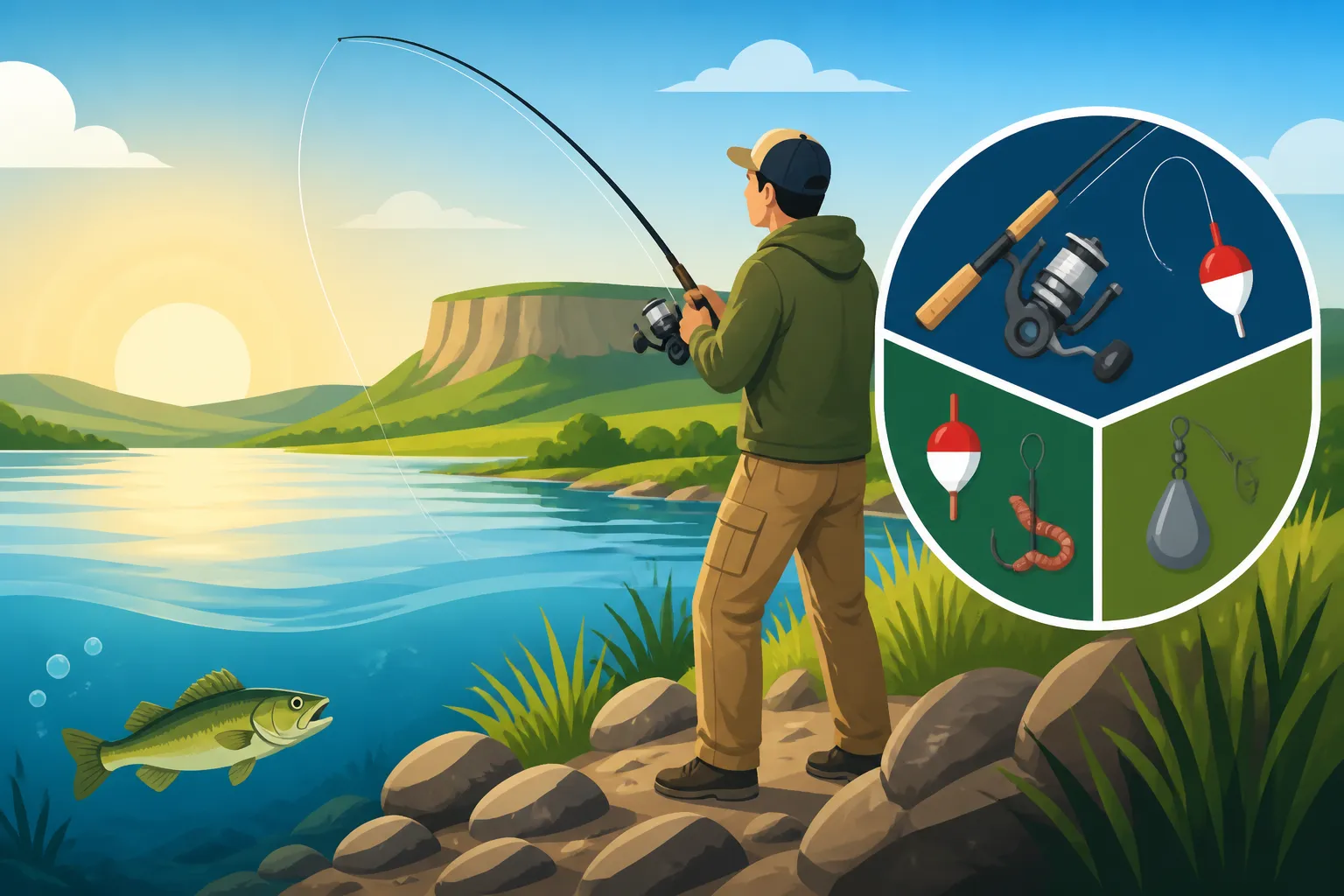
- Hooks: A variety of sizes (e.g., #4, #2, #1, 1/0, 2/0) for different bait sizes and fish species. Think Aberdeen hooks for live bait, and circle hooks for catfish as they promote jaw hooking.
- Sinkers: Split shots (for light presentations), bell sinkers, and egg sinkers (for bottom rigs) in various weights to get your bait down to the desired depth and hold it in current.
- Bobbers/Floats: Clip-on bobbers for shallower, calmer water and slip bobbers for deeper presentations, allowing you to fish at a precise depth without adjusting your line every cast.
- Swivels and Snaps: Essential for preventing line twist, especially when using inline spinners, and for quickly changing lures without re-tying.
- Lures: Start with versatile options. Small inline spinners (like Mepps or Rooster Tail), jig heads (1/8 oz to 1/4 oz) with soft plastic grubs or curly tails, and a few small crankbaits that imitate baitfish are excellent choices. Don't forget some spoons, particularly brightly colored ones, which are fantastic for northern pike.
- Bait: Live bait like worms (nightcrawlers) or minnows are often irresistible to many North Dakota fish. PowerBait or Gulp! products are also highly effective artificial options that mimic natural scents and textures. For more ideas and specific recommendations, check out our guide on Best Bait for North Dakota Fishing.
- Tools: A pair of needle-nose pliers for safe hook removal, line clippers, and a small stringer or cooler to keep your catch fresh if you plan to keep fish. A small measuring tape is also handy for checking regulations.
Comfort and Safety Gear
Being comfortable and safe makes the experience so much better. North Dakota weather can be unpredictable, so dressing in layers is always a good idea, allowing you to adapt to changing temperatures throughout the day. A wide-brimmed hat and polarized sunglasses will protect you from the sun's glare and help you spot fish or underwater structure by cutting through surface reflection. Don't forget bug spray, especially during spring and summer months near water where mosquitoes and gnats can be plentiful.
A small first-aid kit is always smart to have for minor cuts, scrapes, or hook punctures. If you're fishing near moving water, slippery banks, or uneven terrain, sturdy, waterproof footwear with good traction is a must. And always, always tell someone where you're going and when you expect to be back, especially if you're venturing to more remote areas. Staying hydrated is also crucial, so a water bottle or a small hydration pack should be a standard part of your kit. Consider carrying a small, bright flashlight or headlamp if there's any chance you'll be out around dawn or dusk.
Decoding North Dakota's Shorelines for Better Fishing
Fish aren't just randomly swimming around; they hold to specific areas for food, cover, and protection. Understanding these "fishy" spots from the bank is a crucial skill for any shore angler. It's like solving a puzzle, and North Dakota's diverse waters offer plenty of clues if you know how to look. Learning to "read the water" is perhaps the most important skill you can develop as a bank angler.
Reading the Water: Structure and Cover
When you look at a shoreline, don't just see water and land. Train your eyes to identify structure and cover.
- Structure: This refers to changes in the bottom contour, like drop-offs, humps, points, or old creek channels. From shore, you might not see these directly, but you can infer them. A point of land extending into the water often continues underwater, creating a current break or a deeper channel. Look for areas where the bank steepens quickly, as this usually indicates deeper water close to shore. Also, look for visible rocks, boulders, or gravel beds on the bank, which often extend into the water and provide excellent habitat. Changes in water color can also indicate changes in depth or bottom composition.
- Cover: This is anything that provides shelter for fish, whether it's for ambush, protection from predators, or shade from the sun. Think submerged timber, rock piles, weed beds (especially cattails or lily pads), docks, or even bridges and culverts. These are prime ambush points for predatory fish like northern pike and walleye, and safe zones for panfish like yellow perch. Cast parallel to weed lines, close to fallen trees, or near bridge pilings. Even a shady spot under an overhanging tree can hold fish on a bright, sunny day, particularly during the hot summer months. Observing the visible signs on shore often gives clues to what lies beneath the surface.
Identifying Fish Holding Areas
Once you start seeing structure and cover, you can better predict where fish might be.
- Eddies and Current Breaks: On rivers like the Missouri River or the Red River, fish will often sit just out of the main current in calmer water (eddies) to conserve energy, waiting for food to drift by. Look for slower water behind large rocks, bridge pilings, submerged logs, or points of land that disrupt the flow. These spots offer a buffet line for fish without them having to work hard.
- Transition Zones: Fish love where two different types of habitat meet, such as where a rocky bottom transitions to sand or mud, or a dense weed bed meets open water. These are often productive areas because they offer diverse food sources and cover options. A walleye might sit on the edge of a rock pile next to a weed line, darting into the weeds to ambush a baitfish, then retreating to the rocks. Similarly, the seam where clear water meets murky water can be a hotspot.
- Inflows and Outflows: Any culvert, small stream, ditch, or even a drainage pipe emptying into the main body of water can concentrate baitfish and, subsequently, larger game fish. These inflows bring in fresh nutrients, often cooler or more oxygenated water, and sometimes small invertebrates, making them attractive spots, especially after a rain. Similarly, outflows from dams or spillways can create current and highly oxygenated water that fish, particularly walleye and sauger, gravitate towards to feed. Fish can often stack up in these areas, offering excellent opportunities for shore anglers.
Seasonal Considerations for Shore Angling
The time of year dramatically impacts where fish are and how they behave. Understanding these seasonal shifts is key to consistent shore fishing success.
- Spring: As the ice melts (the "ice out" period), fish become very active and move shallow to spawn. This is an excellent time for shore anglers, as walleye, pike, and perch can be found in bays, creek mouths, and shallow flats that warm up quickly with sunlight. Focus on northern shorelines that get more direct sun exposure. These fish are often hungry after a long winter and aggressively feeding before or after spawning. You'll find a lot of useful tips in our North Dakota Ice Out Fishing Guide.
- Summer: Fish often move to deeper, cooler water during the heat of summer to escape warm surface temperatures and bright light. However, they will still visit shallower areas during low-light conditions (dawn, dusk) or on overcast days to feed. Focus your efforts on those early morning and late evening bites, or target shaded areas and deeper drop-offs if accessible from shore. Oxygen levels can also drop in shallow, warm water, pushing fish deeper.
- Fall: As water temperatures cool, fish feed aggressively to prepare for winter. This can be a fantastic time for shore fishing, with many species moving back into shallower feeding grounds. Walleye especially can be found gorging on baitfish in predictable patterns along points, submerged humps, and rip-rap. The fall bite can be one of the most productive periods for larger fish from shore.
- Winter (Ice Fishing): While this guide focuses on open water, it's worth noting that ice fishing is essentially shore fishing on frozen water! Many of the same principles of finding structure and cover apply. Always ensure ice is safe before venturing out, and know When Must Ice Shelters Be Removed From North Dakota Lakes? as rules apply to ice structures.
Mastering Shore Fishing Techniques and Presentations
It's not enough to just cast and hope for the best. Effective shore fishing involves thoughtful technique, careful bait presentation, and knowing how to adapt. These skills, honed over time, are what separate the casual caster from the consistently successful angler. The better you can mimic natural prey or present your bait enticingly, the higher your chances of getting a bite.
Casting and Retrieval Methods
Your casting technique needs to be accurate to hit those fish-holding spots you've identified, and your retrieval should mimic natural prey while enticing a strike.
- Overhead Cast: The most common and effective cast for distance and accuracy. Practice smooth, controlled motions, releasing the line as the rod loads to propel the lure forward. This avoids tangles and maximizes your reach, allowing you to hit those distant features.
- Roll Cast/Flip Cast: Useful for situations with limited backcasting room, such as brushy shorelines, overhanging trees, or crowded areas. It's a subtle cast that uses the rod's flex to propel the lure forward with minimal effort, keeping the lure close to the water throughout the cast.
- Fan Casting: Instead of casting to the same spot repeatedly, make a series of casts in a fan-like pattern, covering a wide area of water from left to right (or right to left) and varying your retrieve speeds and depths. This helps you locate fish if they're spread out and allows you to thoroughly work a section of shoreline, increasing your odds of encountering active fish.
- Retrieval Speed and Action: Vary your retrieve. Sometimes a fast, erratic retrieve triggers a reaction strike from an aggressive pike, while a slow, steady retrieve is better for a cautious walleye or panfish. Experiment with pauses, twitches, and jerks to make your lure look more lifelike and injured, which can be irresistible to predatory fish. For jigs and soft plastics, a "lift and drop" or "hop and retrieve" technique can be deadly, imitating a struggling baitfish or crawfish along the bottom.
Bait and Lure Presentation
How you present your bait or lure is often more important than the bait itself. It needs to look natural and appealing to the fish.
- Live Bait Rigs:
- Bottom Rig (e.g., Carolina Rig or Slip Sinker Rig): For catfish, walleye, and carp, a simple slip-sinker rig with a worm, minnow, or cut bait allows the fish to pick up the bait without feeling the weight of the sinker. This is excellent for fishing deeper channels, current seams, or areas with a soft bottom. The sinker holds the bait in place, while a leader allows the bait to drift naturally.
- Bobber Rig (Clip-on or Slip Bobber): For panfish, trout, and sometimes walleye or pike in shallower, calmer water, a slip bobber rig allows you to suspend your live bait (like a minnow or nightcrawler) at a precise depth above cover or structure. This is particularly effective over weed beds or submerged brush, allowing your bait to float enticingly in the strike zone. Ensure your bait is presented naturally, not just a blob of worm on a hook.
- Artificial Lure Techniques:
- Jigging: Cast a jig with a soft plastic grub, curly tail, or minnow imitation, let it sink to the desired depth, and then impart action with short rod lifts and pauses, allowing the jig to flutter down. This is incredibly versatile for walleye, perch, and smallmouth bass. Different jig head weights and body styles can adapt to various depths and currents. Check out Jigging for Walleye on Lake Sakakawea for more advanced tactics.
- Crankbaits/Spoons: These are great for covering water quickly and effectively. Cast them out and retrieve steadily, letting the lure's natural action (wobble, flash) do the work. Varying your retrieve speed and adding occasional twitches can make them even more enticing. Spoons are fantastic for northern pike, while crankbaits come in various diving depths for walleye and bass.
- Inline Spinners: Simple yet highly effective, especially for panfish, trout, and smaller pike. A steady retrieve that keeps the blade spinning and flashing is usually all it takes to attract attention. They are easy to cast and retrieve, making them perfect for beginners.
Adapting to Different Species
North Dakota's waters offer a variety of popular game species, and each prefers slightly different techniques and presentations.
- Walleye: Often found near structure, especially drop-offs, points, and humps. They prefer low-light conditions (dawn, dusk, overcast days). Jigs tipped with minnows or soft plastics, live bait (minnows, nightcrawlers) on slip bobbers, or bottom rigs are incredibly effective. Patience and a slow, methodical retrieve are key. Our North Dakota Walleye Fishing Techniques guide offers extensive detail.
- Northern Pike: Aggressive predators that love to ambush prey from cover like weed beds, fallen trees, and rocky outcrops. Spoons, large inline spinners, large crankbaits, or even a simple large minnow under a bobber can entice them. Be prepared for a fight, and always have needle-nose pliers ready to remove hooks from their toothy mouths safely. Find more specific tips in How to Fish for Northern Pike in North Dakota.
- Yellow Perch: Schooling fish often found near weeds, submerged brush, docks, or humps. Small jigs tipped with a grub or a piece of worm, or a small minnow under a tiny bobber, are deadly. They're fun to catch, especially for beginners due to their abundance and willingness to bite. For a deep dive, see the North Dakota Yellow Perch Fishing Guide.
- Channel Catfish: Bottom dwellers that can be found in slower currents of rivers and deeper sections of lakes. They are scavengers, so stink baits, cut bait (like pieces of sucker or shad), and even hot dogs or shrimp can work wonders on a simple bottom rig. Night fishing can be particularly productive for larger cats. Read our North Dakota Channel Catfish Fishing Guide for advanced strategies.
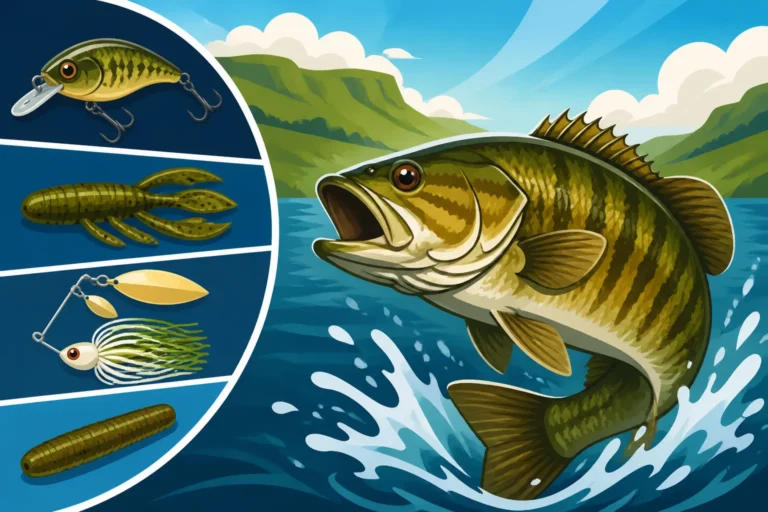
- Smallmouth Bass: These hard-fighting fish prefer rocky shorelines, rip-rap, and gravel beds. Small crankbaits, soft plastic tubes or grubs on jig heads, and live minnows are effective. They often strike aggressively and put up a great fight.
| Species | Preferred Habitat (Shore) | Recommended Rod Action | Go-To Bait/Lure | Best Time to Fish (Shore) |
|---|---|---|---|---|
| Walleye | Drop-offs, points, rocky areas | Medium-Light to Medium | Jig & Minnow, Nightcrawler | Dawn, Dusk, Overcast Days |
| Northern Pike | Weed lines, fallen trees, culverts | Medium to Medium-Heavy | Spoons, Large Spinners, Minnows | Daytime (especially sunny) |
| Yellow Perch | Weed edges, submerged brush, docks | Light to Medium-Light | Small Jigs, Worms, Small Minnows | Daytime |
| Channel Catfish | River bends, deep holes, current breaks | Medium-Heavy | Cut Bait, Stink Bait, Worms | Evening, Night |
| Smallmouth Bass | Rocky shorelines, rip-rap | Medium | Small Crankbaits, Soft Plastics, Live Minnows | Daytime (especially sunny) |
Discovering Prime North Dakota Shore Fishing Locales
One of the most common questions I hear from new anglers is, "Where do I even go?" Thankfully, North Dakota is blessed with an abundance of fantastic shore fishing opportunities, from vast reservoirs to intimate city ponds. You just need to know where to look, and often, the best spots are closer than you think. For a broader overview of the state's potential, check out Best Places to Fish in North Dakota.
Popular Lakes and Rivers with Easy Access
North Dakota’s larger bodies of water, while famous for their boat fishing, also offer extensive shore access, particularly in state parks and public access areas.
- Lake Sakakawea: While famous for its boat fishing, many accessible points offer incredible shore fishing, especially for walleye and northern pike. Areas around state parks like Lake Sakakawea State Park and Fort Stevenson State Park often have designated fishing piers and easy bank access. Look for points, creek mouths, and rip-rap areas, especially during spring and fall when fish are shallower. The sheer size of the lake means there are always new spots to explore, and the fish can be absolutely massive.
- Devils Lake: Known for its prolific walleye and yellow perch fishery, Devils Lake also provides excellent shore opportunities due to its unique flooded landscape. Many road accesses, public boat ramps (even without a boat, you can fish nearby), and state-managed fishing access sites offer direct bank fishing. Focus on submerged roads, flooded timber edges, and rocky points for aggressive walleye and fat perch. The fluctuating water levels create unique structures accessible from shore that concentrate fish.
- Missouri River: Flowing through the heart of the state, the Missouri River, particularly below Garrison Dam, offers fantastic fishing. Areas around Bismarck and Mandan have numerous public parks and access points where you can target walleye, sauger, and catfish from shore. Look for current breaks, eddies, and deeper holes created by the river's flow. The tailrace areas below dams, though sometimes restricted due to safety, can be incredibly productive if accessible for shore anglers seeking a variety of species.
- Red River of the North: A true gem for trophy channel catfish, the Red River offers abundant shore fishing in cities like Fargo and Grand Forks. Parks along the river often feature bank access, and the slow, meandering current creates deep bends and holes perfect for large catfish. Focus on these deep holes, outside bends, and areas with slower current, especially in the evening and at night. Remember to check specific regulations for the Red River, as some daily limits, like the North Dakota Northern Pike Daily Limit on the Red River, can differ from statewide rules.
Hidden Gems and Local Ponds
Beyond the big-name waters, North Dakota has countless smaller lakes, reservoirs, and community fishing ponds that are perfect for shore anglers, especially beginners or families. These often receive regular stockings and are designed for easy, convenient access, offering a less intimidating environment to learn.
- Community Fisheries: Many cities and towns across North Dakota, including Bismarck, Fargo, Grand Forks, and Minot, maintain small fishing ponds within city limits or in nearby parks. These are usually well-stocked with trout (especially in spring and fall), panfish, and sometimes even bass or catfish, offering high catch rates and convenient access for a quick outing. These are perfect spots to practice your casting and reeling without the pressure of a major lake. Check city park and recreation websites for specific locations and stocking schedules, as these ponds are often managed with shore anglers in mind.
- Wildlife Management Areas (WMAs) and State Parks: Beyond the large state parks, many smaller WMAs and numerous state parks often have smaller ponds or sections of larger lakes with excellent shore access. These spots are often less crowded and provide a more tranquil fishing experience, allowing you to connect with nature without the bustle of popular boat ramps. These can be great places to find Best Bluegill Ponds in North Dakota or other panfish.
- Small Lakes and Reservoirs: Lakes like Lake Audubon, Lake Ashtabula, and Jamestown Reservoir, while popular for boating, also feature extensive shorelines, fishing piers, and designated bank access points that are often less pressured than the main lake areas. These offer a chance to catch larger game fish like walleye and pike from shore. Always check local regulations before heading out, as some smaller bodies of water may have specific rules regarding bait, tackle, or catch limits. Remember that a North Dakota Fishing License Guide is crucial before your first cast, regardless of where you decide to fish.
Elevating Your Shore Fishing Game for Consistent Success
Shore fishing is more than just throwing a line in the water; it's a blend of skill, observation, and attitude. To truly excel, you'll need to cultivate patience, learn from every outing, and continuously refine your approach. These aren't just tips; they're philosophies that will make you a better angler, no matter where you cast your line. Fishing is a journey of continuous learning, and the bank provides an excellent classroom.
Patience and Persistence
Let's face it, some days the fish just aren't biting, and it can be incredibly frustrating to stand on the bank for hours with nothing to show for it. This is where patience truly shines. Don't get discouraged by a slow bite. Instead, use that time to observe. What are the birds doing? Is there any baitfish activity near the surface? What's the wind direction and how is it affecting the water? Sometimes, moving just 50 yards down the bank can put you onto a whole new school of fish or a previously unnoticed piece of structure.
Persistence means trying different baits, varying your retrieve speed and depth, or even switching up your location when one spot isn't producing. The fish are there; you just need to crack the code by experimenting with different variables. Remember, every "skunk" day is a learning opportunity. It teaches you resilience, sharpens your observational skills, and hones your problem-solving abilities, which are valuable far beyond fishing. The satisfaction of finally hooking a fish after a challenging period makes the reward even sweeter.
Practice and Learning from Each Outing
Fishing is a skill, and like any skill, it improves with practice. The more you cast, the more accurate and effortless your casts will become. The more you experiment with different lures and retrieves, the better you'll understand what works and when.
- Keep a Fishing Log: This might sound nerdy, but jotting down details like date, time, weather conditions (air temp, water temp if you have a thermometer), moon phase, what you caught (species, size), what bait/lure you used, and where you were fishing can be incredibly insightful. Over time, you'll start to see patterns and correlations. For example, you might notice that a certain jig color works best for walleye on Lake Sakakawea during cloudy fall days, or that catfish bite better on cut bait during certain moon phases. This data-driven approach will help you make more informed decisions on future outings. You can find simple waterproof notebooks on Amazon for this purpose.
- Observe Other Anglers: When you see successful anglers, politely observe what they are doing. What kind of rods are they using? What techniques are they employing (e.g., slip bobber, bottom rig, casting and retrieving)? You can learn a lot by watching their methods, even if you don't use their exact setup. Don't be afraid to strike up a friendly conversation and ask for tips or what they're using, but always be respectful of their space and experience. Many experienced anglers are happy to share their knowledge, especially with eager beginners.
- Stay Informed: Regularly check fishing reports from the North Dakota Game and Fish Department or local tackle shops. These reports often provide current conditions, hot baits, species activity, and even water levels for various lakes and rivers. This information can give you a significant advantage, helping you decide where to go and what to use before you even leave home. Also, consistently understanding and adhering to the North Dakota Fishing Regulations Explained is key for ethical, legal, and sustainable fishing practices, ensuring the resource remains healthy for future generations.
Disclaimer
Fishing involves inherent risks. Always prioritize safety, understand and follow all local and state regulations, and be mindful of your surroundings. This guide is for informational purposes only, and individuals should exercise their own judgment and take appropriate precautions while engaged in fishing activities.