Best Walleye Jig Color for Stained Water
It can be incredibly frustrating to hit your favorite North Dakota walleye spot only to find the water is murky, tea-stained, or cloudy from a recent rain or heavy winds. Suddenly, those tried-and-true jig colors that usually produce simply aren't getting any bites, leaving you scratching your head and wondering what in the world changed. This comprehensive guide will dive deep into understanding how walleye see in low-visibility conditions and exactly which jig colors are your best bet when faced with stained water in North Dakota's diverse fishing environments.
Understanding Stained Water and Its Impact on Walleye Fishing
Fishing in stained water is a unique challenge, and it's something every North Dakota angler encounters, whether on the vast expanses of Lake Sakakawea, the fertile waters of Devils Lake, or the slow-moving currents of the Red River. It’s not just about what we see from above; it's about what the walleye sees—or doesn't see—below the surface.
What Causes Stained Water in North Dakota Lakes and Rivers
Stained water isn't a single phenomenon; it can come from various sources, each affecting light penetration differently. In North Dakota, you'll commonly encounter a few types. First, there's the natural tannin stain, often a brownish or tea-like color, prevalent in many prairie potholes and smaller lakes, particularly those with boggy shorelines or heavy vegetation decomposition. This kind of stain filters out certain light wavelengths. Then you have agricultural runoff, which can cloud rivers and reservoirs with suspended silt and nutrients, giving the water a milky or greenish tint after heavy rains. The Missouri River system and its reservoirs, including Lake Oahe, can sometimes experience this. Finally, heavy winds are a huge factor on our larger lakes. A strong blow can churn up shallow areas, suspending fine sediment and significantly reducing visibility, turning even clear water into a cloudy mess overnight. Imagine pulling up to a spot on Lake Sakakawea Fishing Guide after a major wind event and seeing that once-clear bay turned into a coffee-colored swirl – it’s a common scenario that forces a change in strategy.
How Light Penetration Affects Fish Behavior
When water is stained, less light penetrates the water column, and the quality of that light changes dramatically. Certain colors of light are absorbed more quickly than others. Red light, for instance, disappears very quickly in water, even clear water, while blue and green light penetrate deeper. In stained water, this effect is amplified, and the overall spectrum of available light for a walleye to see is greatly reduced.
Walleye are masters of low-light conditions; their large, sensitive eyes have a special reflective layer called the tapetum lucidum, which helps them gather what little light is available. This is why they're often most active during dawn, dusk, and at night. However, even with their incredible low-light vision, extremely stained water poses a significant challenge. Fish become more reliant on other senses, like their lateral line (detecting vibrations) and their sense of smell. What this means for us anglers is that our jigs need to be more than just a visual stimulus; they often need to stand out in a compromised visual field and potentially appeal to those other senses. It's a real head-scratcher when you're used to sight fishing and suddenly you're essentially fishing blind, hoping your lure is even noticed.
The Science Behind Walleye Vision and Jig Colors
Choosing the right jig color in stained water isn't just guesswork; there's some fascinating science behind it. Understanding how walleye perceive color and light in their environment can give you a significant edge, turning a frustrating day into a successful one.
Walleye Eye Structure and Light Absorption
As mentioned, walleye have those incredible, often glass-like, eyes designed for low light. This adaptation allows them to hunt effectively when other predator species are less active. Their eyes are particularly sensitive to greens and yellows, which tend to penetrate water best, especially at greater depths or in slightly stained conditions. However, in heavily stained water, almost all light is diminished, and the color spectrum they can discern narrows significantly.
Think of it this way: if you're underwater in murky conditions, a bright red object might appear dull brown or even black because the red wavelengths have been absorbed long before they reach your eye. What seems vibrant above the surface can be completely muted down below. This is why simply picking your favorite "bright" color might not always be the answer. Their tapetum lucidum helps them gather more light, but it doesn't create light or magically make colors visible if the specific light wavelengths aren't present to begin with. The struggle is real when you pull out a beautifully painted jig, drop it in the water, and realize it's practically invisible a foot below the surface.
How Different Colors Appear in Low Visibility
When light hits stained water, it scatters and absorbs in predictable ways. Certain colors maintain their visibility better than others because their wavelengths are less prone to absorption or scattering.
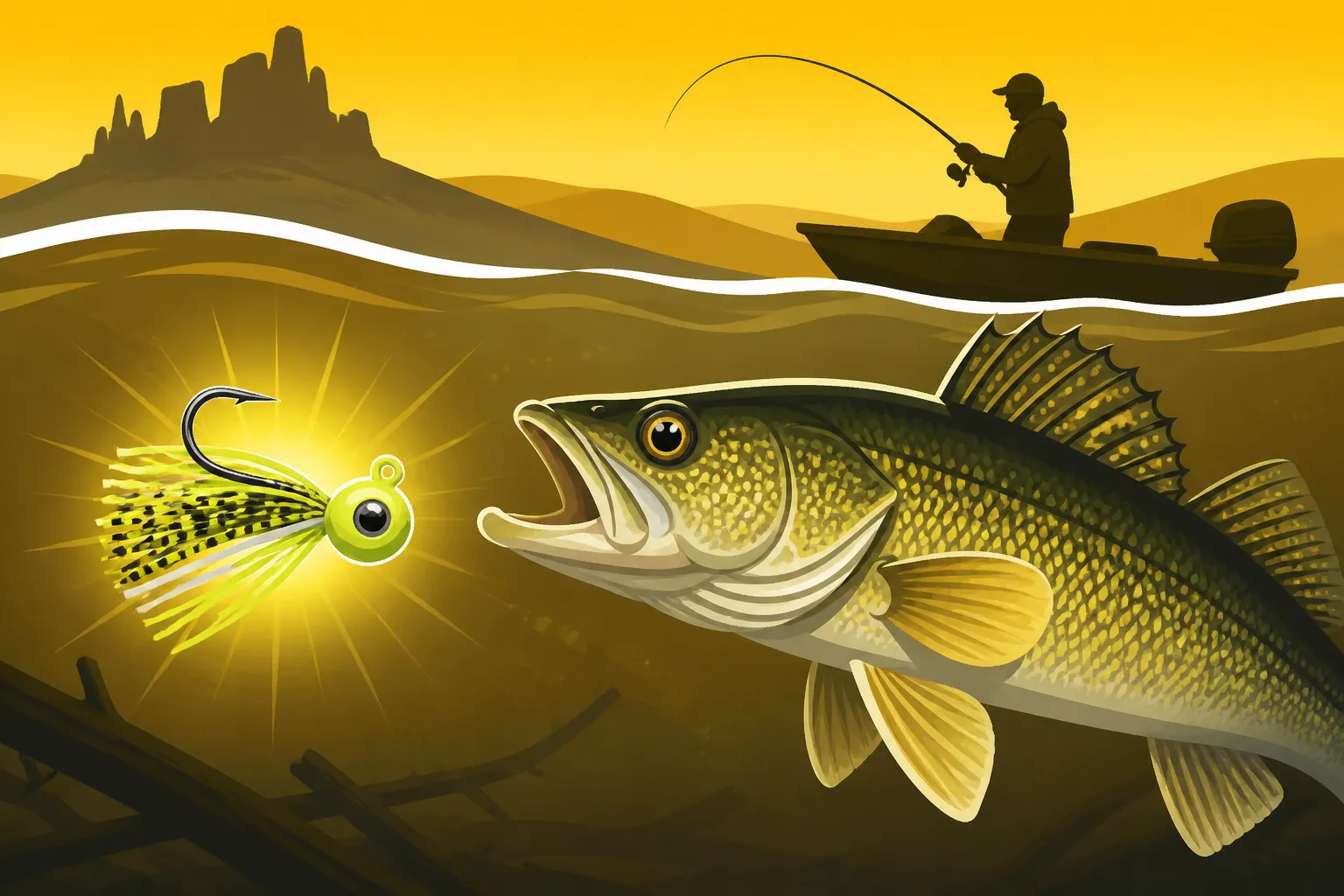
- Fluorescent Colors: These colors (like chartreuse, bright orange, and certain pinks) don't just reflect light; they fluoresce. This means they absorb higher-energy UV light and re-emit it as visible light, effectively "glowing" or appearing brighter than non-fluorescent colors in low-light situations. This effect can make them exceptionally visible to walleye, even in tannin-stained or turbid waters. It’s like they have their own tiny internal light source, catching the walleye's attention when everything else blends into the murk.
- Darker Colors (Silhouettes): In extremely dark or heavily stained water, where even fluorescent colors might struggle to "pop," creating a strong silhouette can be incredibly effective. Colors like black, dark purple, or dark blue contrast sharply against any ambient light, even if it's minimal light coming from above. A walleye might not see the color of the jig, but it will definitely see the shape moving against the faint light, making it an easy target. This is particularly useful in places like the Red River where the water is often a rich, dark brown, and a simple black jig can be a deadly choice for big catfish, and equally effective for walleye lurking below.
- Metallic Flashes: Adding a metallic element, like gold or silver flakes or a metallic painted head, can also create a visual stimulus. These metallic finishes can catch and reflect what little light is present, creating subtle flashes that imitate baitfish scales. This flicker, even if muted, can sometimes be enough to draw a walleye's attention, especially if it’s paired with a contrasting color.
The key takeaway here is that you're trying to create either the brightest, most attention-grabbing beacon or the clearest, most obvious profile for the walleye to home in on. It's a delicate balance, and experimentation is often necessary.
Top Jig Colors for Stained Water Walleye
Alright, let's get down to brass tacks. When that North Dakota water turns from clear to cloudy, these are the jig colors you want tied on. You’ll find that a small adjustment in color can make a huge difference, turning a slow day into a productive one.
Fluorescent and High-Contrast Colors
These are often your first line of defense against murky conditions. Their ability to stand out is unparalleled.
- Chartreuse: This is, without a doubt, a go-to color for stained water across North Dakota. Its bright yellow-green hue is highly visible in various water clarities, from the tea-stained waters of the Turtle Mountains to the churned-up bays of Devils Lake Walleye Fishing Spots. Chartreuse jigs seem to cut through the murk, offering a strong visual beacon that walleye can track. Many anglers swear by it, and for good reason—it consistently produces. You can find a huge variety of chartreuse jigs on Amazon, from small finesse jigs to larger offerings for aggressive fish.
- Orange and Hot Pink: While not as universally praised as chartreuse, bright orange and hot pink jigs can be incredibly effective, especially in heavily overcast conditions or very turbid water. These colors offer a different kind of "pop" that can sometimes be exactly what walleye are looking for. Think about some of the darker, muddier rivers; sometimes a neon orange or pink jig can be the only thing they’ll hit. It's always worth having a few of these in your tackle box for those exceptionally tough days.
- Firetiger: This classic pattern, a combination of chartreuse, orange, and black stripes, incorporates the best of both worlds: bright, fluorescent colors with a distinct, silhouetted pattern. It's a fantastic choice for mimicking stressed baitfish in stained conditions and offers high contrast. A firetiger jig under a slip bobber near a weed line can be deadly when the walleyes are holding tight in dirty water.
Darker, Silhouetting Colors
When the water is so dark that even your brightest colors seem to disappear, it's time to go dark.
- Black: A simple black jig can be incredibly effective in very dark or heavily stained water. Instead of relying on color, black creates a distinct silhouette against the ambient light from above, making it easy for a walleye to detect its shape. This is particularly true when fish are looking up. Imagine a black piece of paper held up to a dim light—you don't see color, but you certainly see the outline. This strategy is especially useful in the often-turbid waters of the Red River, where catfish thrive, and walleye are used to hunting by profile. Many experienced anglers keep a healthy supply of black jigs for tough conditions.
- Purple: Dark purple can be a fantastic choice, offering a subtle blend of color and silhouette. It’s dark enough to create a good profile but has a hue that many walleye seem to respond to, especially in deeper, stained water. Sometimes, a pure black is too stark, and purple offers a more natural, yet still highly visible, alternative. It's a good transitional color to try if brights aren't working and black feels too extreme.
- Blue and Black Combinations: Often, a jig combining a dark blue head with a black body, or vice versa, can hit that sweet spot. The blue provides a hint of natural color that might be picked up, while the black ensures a strong profile. These combinations are particularly effective when the water has a slight brownish or tannic tint.
Adding Metallic Flash or Glow
Sometimes, you need a little something extra to seal the deal.
- Gold and Silver Accents: Jigs with gold or silver flakes embedded in their paint, or even a metallic head, can provide that subtle flash that mimics baitfish. In stained water, these flashes might be muted, but they can still be enough to catch a walleye's eye and trigger a strike. Gold often works better in brownish or tea-stained water, while silver can be effective in more turbid, greenish-stained conditions.
- Glow-in-the-Dark Jigs: These jigs are truly designed for ultra-low light. They absorb light (either ambient light or from a flashlight charge) and then emit it, literally glowing underwater. While often associated with ice fishing, glow jigs can be incredibly powerful for open-water walleye in extremely stained conditions or at night. The visibility they offer is unmatched when there’s virtually no natural light. You might feel a bit like you’re cheating, but when the walleye are biting, who cares? These specialized jigs can also be found easily on Amazon if your local tackle shop doesn't have a wide selection.
Here's a quick reference table to help you decide:
| Water Clarity/Stain Type | Primary Jig Colors to Try | Secondary Options | Why They Work |
|---|---|---|---|
| Light Tannin Stain | Chartreuse, Orange, Firetiger | Gold, White | High visibility, cuts through light brown tint |
| Heavy Tannin Stain | Chartreuse, Hot Pink, Black | Purple, Glow | Strong contrast, fluorescence, or silhouette |
| Turbid/Muddy Water | Black, Dark Purple, Firetiger | Hot Pink, Chartreuse | Strong silhouette, high contrast in low light |
| Overcast/Low Light (Stained) | Chartreuse, Orange, Firetiger | Black, Purple | Best for visible "pop" or clear silhouette |
Beyond Color: Other Factors for Stained Water Success
While jig color is paramount in stained water, it’s not the only piece of the puzzle. Walleye become more reliant on other senses when their vision is limited, and understanding this can drastically improve your chances. When you’re trying to catch walleye, every little advantage helps, especially when conditions are tough.
Jig Size, Profile, and Weight Considerations
In stained water, it's often a good idea to slightly increase the size or profile of your jig. A larger silhouette is simply easier for a walleye to see and track. Don't be afraid to go up a size or two from what you'd typically use in clear water. For example, if you usually throw a 1/8 oz jig, consider a 1/4 oz or even a 3/8 oz jig with a bulkier plastic or a larger minnow.
The profile of your soft plastic trailer also matters. Opt for plastics with more aggressive tails, paddles, or ribs that displace more water. A grub with a large curly tail, a paddle tail swimbait, or even a plastic with small appendages can create more commotion underwater, sending out stronger vibrations that walleye can pick up with their lateral line. It's about making your presentation as "noisy" and noticeable as possible without being unnatural.
Weight is crucial too. In stained water, walleye often hold tighter to structure or the bottom. You need enough weight to get your jig down quickly and keep it in the strike zone, especially if there's any current. If you're fishing a deep breakline on How to Find Walleye Structure With a Map, make sure your jig hits the bottom and stays there. A jig that's too light will simply drift out of the target zone unnoticed.
Incorporating Scent and Vibration
Since vision is compromised, activating a walleye's other senses becomes critical. This is where scent and vibration really shine.
- Scent: Adding scent to your jig is a game-changer in stained water. Whether it's live bait, a scented soft plastic, or an applied liquid/gel scent, it gives walleye another way to locate your offering. A lively minnow, leech, or piece of crawler on your jig is almost always a good idea in dirty water. For artificials, brands like Berkley Gulp! or PowerBait, which are heavily scented, can be incredibly effective. Even if the walleye can't see your jig clearly, they can smell it from a distance and home in. Think of it like following a scent trail—it guides them right to your presentation. Many anglers will even "juice up" their chartreuse or black jigs with an extra dollop of scent.
- Vibration: This is where your jig's movement and design come into play. Jigs with rattles (internal or external) create auditory signals that walleye can feel with their lateral line. Even subtle vibrations from a paddle tail or a jig's thumping action can make a difference. Experiment with different retrieves—a hard jigging snap might send out a stronger vibration than a slow drag. Vertical jigging directly below the boat can be especially effective, as it allows you to control the exact depth and maximize the jig's movement within a small strike zone, sending out consistent vibrations. Consider vertical jigging techniques on Jigging for Walleye on Lake Sakakawea for more insights.
Fishing Techniques for Low Visibility
Your retrieve and approach also need to adapt to stained water. Walleye in these conditions are often less willing to chase, so you need to bring the bait to them and keep it in their face longer.
- Slow Down Your Presentation: Don't expect walleye to dart across a vast expanse of murky water to hit your fast-moving jig. Instead, slow your retrieve down significantly. Often, a slow, deliberate lift-and-drop, or even just dragging the jig along the bottom, is what it takes. Give the fish ample time to find and react to your bait.
- Focus on Structure and Cover: Walleye will often be holding tighter to structure in stained water, using it for ambush points and security. Concentrate your efforts on points, rock piles, submerged timber, weed edges, and sudden depth changes. These are spots where walleye can quickly dart out and grab a meal. Think about the Missouri River Fishing Below Garrison Dam in North Dakota where current breaks and deeper holes are prime territory.
- Shorter Casting Distances and Precision: In clear water, you might make long casts to cover water. In stained water, shorter, more precise casts are often more effective. You want to land your jig right on top of or slightly past your target structure, allowing it to fall directly into the strike zone. This also means you can more easily detect subtle bites, which are common in low visibility.
- Use Your Electronics: Even in stained water, your fish finder is your best friend. Look for baitfish schools and individual walleye holding tight to the bottom or structure. Modern fish finders can penetrate stained water to show you what’s down there, guiding your casts and vertical presentations.
By combining the right jig color with appropriate size, scent, vibration, and a patient, precise approach, you’ll be much better equipped to tackle those frustrating stained-water conditions in North Dakota and put more walleye in the boat.
Catching walleye in North Dakota's stained waters is a unique challenge that many anglers face, but it's far from an impossible feat. By understanding how walleye perceive their world through murky lenses, and by making informed choices about your jig colors, you can significantly increase your success. Remember, when the water gets cloudy, think bright, think dark, think noisy, and think smelly. Always be willing to experiment; what works one day on North Dakota Fishing Season Calendar might need a slight tweak the next. Don't be afraid to try a chartreuse jig with a heavy scent, or a simple black jig with a big minnow. The walleye will tell you what they prefer, so pay attention, stay persistent, and enjoy the reward of cracking the code on a tough bite!
Disclaimer
Fishing regulations, license requirements, and local conditions can change frequently. Always consult the latest North Dakota Game and Fish Department regulations before heading out on the water. This guide provides general information and recommendations.