Best Kayak Fishing Gear for North Dakota Lakes
Kayak fishing in North Dakota can be an incredibly rewarding experience, offering access to secluded spots and a unique perspective on our beautiful waterways. However, the diverse and often challenging conditions of North Dakota's lakes and rivers – from the vast, windswept expanse of Lake Sakakawea to the winding currents of the Red River – mean that choosing the right gear isn't just about comfort, it's about safety and success. This guide will walk you through the essential kayak fishing gear you'll need to confidently and effectively pursue your angling adventures across the state.
Choosing the Right Kayak for North Dakota's Diverse Waters
When it comes to kayak fishing, your kayak itself is the most crucial piece of equipment. It's not just a vessel; it's your fishing platform, your tackle box, and your means of navigation. North Dakota's waters demand specific considerations.
Stability and Size: Battling the Wind and Waves
North Dakota is known for its strong winds, which can whip up significant chop on larger lakes like Sakakawea and Devils Lake in a hurry. For this reason, stability is paramount for kayak anglers here. Sit-on-top (SOT) kayaks are overwhelmingly popular for fishing due to their inherent stability and ease of entry/exit. A wider hull (typically 30 inches or more) will provide a much more stable platform for casting, standing, and reeling in fish, even when the water gets a little frisky. While a longer kayak generally tracks better and is faster, it can be harder to maneuver in tight spaces. Conversely, a shorter kayak is more agile but can be a struggle to paddle in strong winds or across large bodies of water. You'll need to weigh these factors against the primary locations you plan to fish.
Consider the length of your trips and the amount of gear you typically bring. A 10-12 foot kayak might be great for smaller, calmer lakes or rivers, but if you're venturing out onto the big waters for a full day of walleye fishing, a 13-14 foot model with more storage and better wave handling might be a wiser investment. Remember, a larger kayak also means more stability and often a higher weight capacity, which is crucial once you load it up with tackle, a cooler, and perhaps even a small trolling motor and battery. It's not just about paddling; it's about confidently standing up to sight-fish a shallow bay or handling a sudden gust of wind without feeling like you're about to tip.
Propulsion Options: Pedal vs. Paddle
The traditional paddle kayak is a fantastic, straightforward option, offering great exercise and a direct connection to the water. They are generally lighter and less expensive. However, in North Dakota, where covering distance and fighting wind are common, paddle kayaks can sometimes leave you wishing for more. This is where pedal-drive kayaks shine. Systems like those offered by Hobie (MirageDrive) or Old Town (Sportsman Autopilot) allow you to propel your kayak using your legs, freeing up your hands for casting, reeling, and managing your lines. This is a game-changer when trolling or trying to hold position against a current or wind. Imagine fighting a feisty northern pike while simultaneously pedaling to stay off the weed line – it's a huge advantage!
While pedal-drive kayaks are a larger investment and typically heavier, the benefits often outweigh the drawbacks for serious North Dakota kayak anglers. They allow for much greater range and less fatigue, meaning you can stay on the water longer and explore more areas. Some modern kayaks even integrate electric trolling motors directly into the hull design, offering yet another level of hands-free propulsion, though this requires compliance with North Dakota Boat Registration Requirements and potentially an Aquatic Nuisance Species fee. Whether you choose paddle, pedal, or motor, understanding the specific demands of the water you intend to fish is key. If you're a beginner, a good quality paddle kayak is a great starting point, but consider the long-term benefits of a pedal drive if big water or longer trips are in your future.
Storage and Rigging: Keeping Your Gear Secure
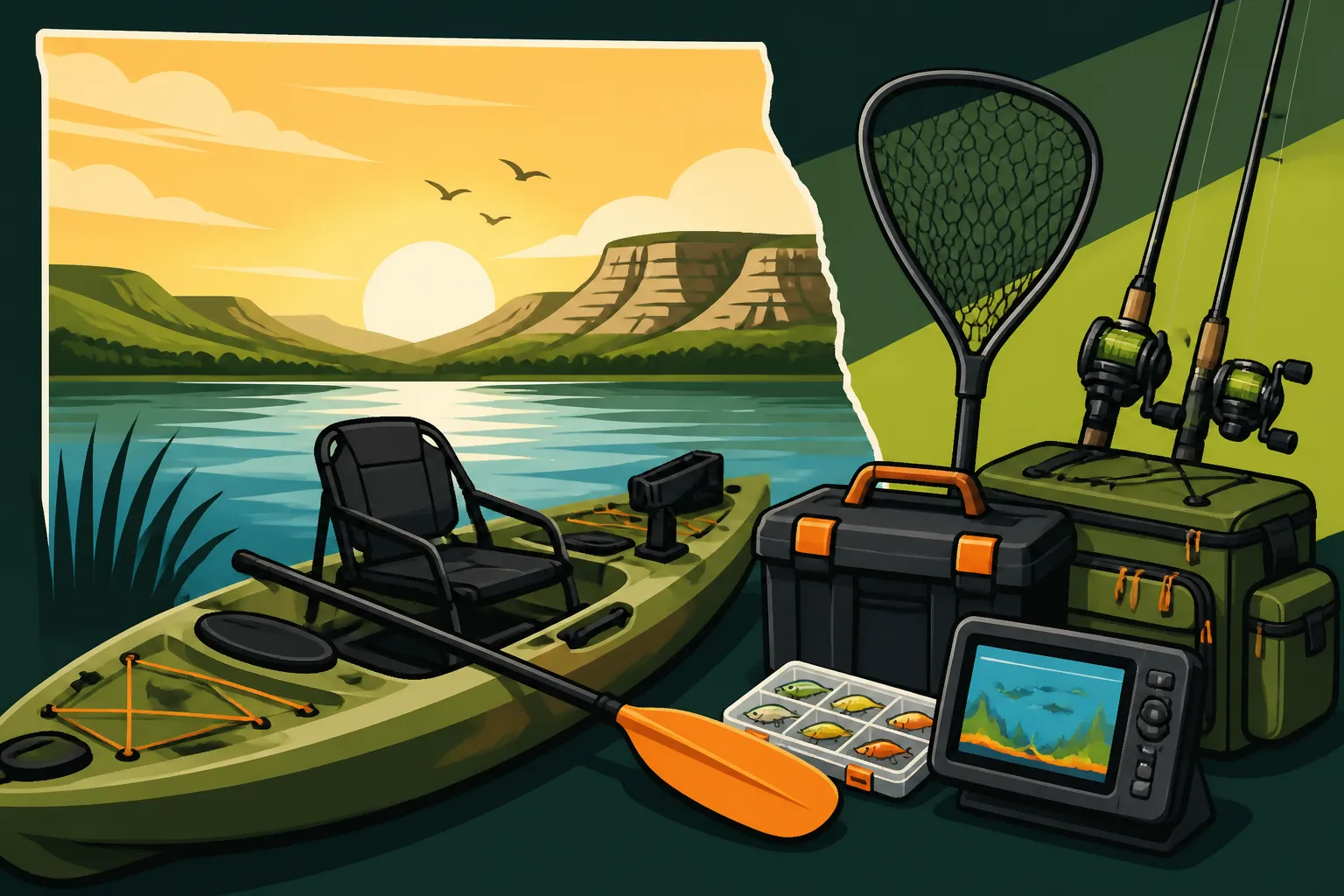
Kayak fishing means bringing a lot of gear in a relatively small space. Adequate and well-designed storage is non-negotiable. Look for kayaks with plenty of accessible storage, including front and rear hatches, tankwells (open storage areas usually at the stern, often with bungee cords), and track systems for mounting accessories. The tankwell is perfect for a cooler or a tackle crate, while hatches can secure dry bags with extra clothing, snacks, and important documents. Many fishing kayaks come with built-in rod holders, but track systems allow for customization, letting you add additional rod holders, fish finder mounts, or camera mounts exactly where you need them.
Rigging your kayak effectively is an ongoing process that evolves with your fishing style. For example, a good tackle management system that fits neatly in your tankwell will keep your lures, tools, and extra line within arm's reach. Think about waterproof storage for electronics and a small dry bag for your phone, keys, and wallet. Many anglers use "milk crates" or specialized fishing crates (which you can find readily on Amazon) to organize their tackle. Consider how easy it is to access your gear while seated, and how securely everything can be fastened down. Losing a favorite rod or tackle box to a rogue wave on Lake Sakakawea would be a tough lesson learned!
Essential Safety and Comfort Gear for ND Kayak Anglers
North Dakota's weather can be unpredictable, and water temperatures, especially in spring and fall, can be dangerously cold. Prioritizing safety and comfort will make your kayak fishing trips much more enjoyable and, more importantly, much safer.
Personal Flotation Devices PFDs: A Non-Negotiable Item
This cannot be stressed enough: wear your PFD at all times when kayak fishing in North Dakota. It's not just a good idea; it's often a legal requirement. Even strong swimmers can be quickly overcome by cold water shock or disoriented if they unexpectedly enter the water, especially if they are bundled in heavy fishing clothing. Fishing-specific PFDs are designed with large armholes for casting, multiple pockets for small tackle, and often a high back to comfortably clear the seat. They are a worthwhile investment in your safety and comfort.
There are various types of PFDs, but for kayak fishing, inflatable PFDs (manual or automatic) or a traditional Type III vest are most common. Inflatables are less bulky and cooler in summer, but they require proper maintenance and don't offer inherent flotation like a foam vest. Regardless of type, ensure it fits properly – snug but not restrictive – and is U.S. Coast Guard approved. Always check the weather forecast before heading out, especially on large bodies of water like Lake Sakakawea, and never overestimate your abilities against Mother Nature. Learning about Best Life Jackets for Cold Water Fishing is vital for safety in the changing seasons.
Staying Warm and Dry: Dressing for North Dakota Weather
North Dakota weather is infamous for its rapid changes. A beautiful sunny morning can quickly turn into a windy, chilly afternoon. Layering is your best friend. Start with a moisture-wicking base layer (not cotton!), add insulating layers like fleece, and top it with a waterproof and windproof outer shell. In colder seasons, neoprene waders or a dry suit might be necessary to protect against immersion in cold water. Even in summer, a light rain jacket and pants are smart to have packed away. Remember, you'll be seated for long periods, so warmth from below is also important – consider insulated seat pads or even a small stadium-style seat for added comfort and thermal protection.
Gloves, a warm hat (even in spring and fall), and appropriate footwear are also crucial. Your extremities are the first to get cold. Consider waterproof gloves for handling fish and a wool or synthetic hat that covers your ears. For footwear, neoprene booties or waterproof hiking boots that can get wet are often ideal. Hypothermia is a real danger in North Dakota's waters, even when the air temperature feels mild. Always pack more layers than you think you'll need, especially if you're exploring large, exposed lakes.
Anchoring and Positioning: Holding Your Spot
Kayak fishing often involves precise positioning. Whether you're trying to hold over a brush pile, drift a weed line, or stay out of the current in a river, an effective anchoring system is vital. A simple anchor trolley system (which runs the length of your kayak and allows you to deploy an anchor from either the bow or stern) combined with a grapple anchor or a drag chain is popular. A grapple anchor works well in soft bottoms or rocky areas, while a drag chain is excellent for slowing your drift in current. You can find robust anchoring kits on Amazon designed specifically for kayaks.
For those fishing rivers or in specific current seams, a small, collapsible drift sock can also be incredibly useful for slowing your drift rate without having to anchor completely. This allows you to cover more water efficiently while maintaining boat control. Remember to always use a quick-release anchor system that allows you to easily detach from your anchor if you get snagged or if sudden adverse weather requires a quick departure. Understanding Best Kayak Anchors for River Current can greatly enhance your ability to effectively fish moving water.
Smart Electronics and Fishing Tackle for Kayak Fishing
Modern fishing electronics have revolutionized kayak fishing, and choosing the right tackle can make all the difference in catching more fish.
Compact Fish Finders and GPS
A fish finder is almost a necessity for effective kayak fishing, especially on North Dakota's larger lakes. It helps you locate structure, identify depth contours, and, of course, find fish. For kayaks, compact, portable units are key. Look for models with CHIRP sonar for clear target separation and a built-in GPS for marking waypoints, navigating, and tracking your drifts. Brands like Humminbird PiranhaMax or Garmin Striker series offer excellent performance in small, battery-friendly packages. Powering these units usually involves a small 12V sealed lead-acid or lithium battery, which can be stored in a dry box.
Mounting is also important. Many kayaks have transducer scuppers or mounting points, but universal mounting kits can adapt most units. You'll want a display that's easy to read in direct sunlight and one that can be positioned for easy viewing without obstructing your paddling or casting. The GPS function is invaluable for finding your way back to productive spots or navigating unfamiliar waters. Imagine marking a productive rock pile on Lake Audubon and being able to return to it later, even if the wind has shifted you significantly. For more details on choosing the right tech, check out our guide on Best Fish Finders for North Dakota Lakes.
Rods, Reels, and Line: Tailoring Your Tackle
The limited space in a kayak means you can't bring an entire arsenal of rods. Focus on versatile setups or specialized rods for your target species. For walleye, a medium-light to medium power spinning rod (6'6" to 7'6") with a fast action is a great all-around choice for jigging, slip bobbers, and casting light crankbaits. Pair it with a 2000 or 2500 size spinning reel spooled with 8-15 lb braided line and a fluorocarbon leader. For northern pike, a slightly heavier medium-heavy rod (7' to 8') with a baitcasting reel is often preferred, allowing you to cast larger lures and handle powerful runs. Learn more about optimal choices in Best Fishing Rods for North Dakota Anglers.
When it comes to line, braided line is a popular choice for kayak fishing due to its strength-to-diameter ratio and sensitivity. It casts well and holds up to abrasion from fish teeth or submerged structure. Always use a fluorocarbon leader for stealth and abrasion resistance, especially when targeting walleye or pike. Keep your tackle as streamlined as possible. Use small, organized tackle boxes that fit securely in your kayak. Consider quick-release lanyards for pliers, clippers, and other essential tools to prevent them from accidentally going overboard.
Specialized Kayak Fishing Accessories
Beyond the basics, several accessories can significantly enhance your kayak fishing experience:
- Rod Holders: While many kayaks come with flush-mount holders, adjustable external rod holders (like those from RAM Mounts or Scotty) allow you to position your rods for trolling or simply keep them out of the way while paddling.
- Paddle Leash: A simple yet crucial item. Losing your paddle on a windy lake can quickly turn into a serious situation. A leash keeps it tethered to your kayak.
- Net: A long-handled landing net is indispensable for safely landing fish, especially larger walleye, pike, or catfish, without bringing them too close to your kayak or risking a hook in your hand. Look for rubberized nets that are gentle on fish and prevent hooks from getting tangled.
- Cooler/Livewell: A small cooler secured in your tankwell is perfect for keeping your catch fresh on ice or for storing snacks and drinks. Some anglers rig up portable livewells for tournaments or catch-and-release fishing. For longer trips, a robust cooler from brands like Yeti or RTIC can keep ice for days. Check out tips for Best Live Bait Cooler for Summer Fishing.
- Safety Flag/Light: For visibility, especially on large, busy lakes or if fishing near dusk/dawn, a bright flag on a tall pole is highly recommended. Some flags can be equipped with an all-around white light for low-light conditions.
Transport, Launching, and Maintenance
Getting your kayak to the water and keeping it in good shape are important practical considerations for any North Dakota angler.
Kayak Transportation Solutions
Unless you live on the water, you'll need a way to transport your kayak. Car-topping is a common method, using roof racks with J-cradles, saddle carriers, or simple foam blocks. Ensure your kayak is securely strapped down at multiple points, including bow and stern lines, especially when traveling at highway speeds or in windy conditions across North Dakota's open plains. For heavier kayaks, a dedicated kayak trailer can make loading and unloading much easier, saving your back and making solo trips more feasible. Some smaller kayak trailers can even be pulled by almost any vehicle, including many sedans.
Once you reach the launch, a kayak cart or trolley is a lifesaver. Even at well-maintained boat ramps, you might need to transport your kayak a short distance from your vehicle to the water. A good quality cart can navigate gravel paths, grass, and even sandy shorelines, making solo launching and retrieval much less of a chore. Choosing the right transport method can greatly reduce the effort involved in getting on the water, allowing you to save your energy for the fishing itself.
Protecting Your Investment: Maintenance Tips
Proper maintenance will extend the life of your kayak and gear. After each outing, especially if fishing in murky or potentially invasive waters, thoroughly rinse your kayak with fresh water to remove mud, sand, and any aquatic nuisance species. Pay close attention to crevices and scupper holes. This is critical not only for longevity but also to comply with Aquatic Nuisance Species Rules for Boaters. Store your kayak out of direct sunlight to prevent UV damage to the hull and plastic components. If storing outdoors, cover it with a breathable tarp.
Regularly check all rigging, screws, and hardware for tightness and corrosion, especially if you fish in brackish water or frequently encounter road salt during transport. Lubricate zippers on dry bags and PFDs. Inspect your PFD for any tears or signs of wear, and if it's an inflatable model, ensure it's properly armed and ready. Keep your electronics dry and clean, and always charge their batteries after each use so they're ready for your next adventure. A little preventative care goes a long way in ensuring your gear lasts for many seasons of North Dakota fishing.
By equipping yourself with the right kayak and a thoughtful selection of safety, comfort, and fishing gear, you'll be well-prepared to tackle the unique and rewarding kayak fishing opportunities across North Dakota.
Disclaimer
This article is for general informational purposes only and does not constitute professional advice. Laws, prices and regulations vary by location and change over time. Consult a qualified professional for guidance on your specific situation.