Best Live Bait Cooler for Summer Fishing
There's nothing quite like the excitement of a summer fishing trip in North Dakota, whether you're chasing walleye on Lake Sakakawea or battling catfish on the Red River. But that excitement can quickly turn to frustration when you open your bait cooler only to find your precious minnows or leeches have kicked the bucket. The scorching prairie sun and warm water temperatures are no friend to live bait, and without the right gear, your bait can quickly become an expensive, lifeless mess. This guide is all about helping you keep your live bait vibrant and ready to catch fish, focusing on finding the best live bait cooler for those long, hot North Dakota summer days.
Why a Dedicated Live Bait Cooler is Essential for North Dakota Summer Fishing
Let's be honest, we've all been there. You grab a regular cooler, toss in some minnows, add a little water, and maybe a few ice cubes, thinking it'll be fine for a few hours. Then you pull up to your favorite spot, excited to drop a line, and half your bait is floating belly-up. It's a gut punch, especially when you've invested time and money into getting good, lively bait. North Dakota summers, with their often blistering heat and bright sunshine, create an incredibly challenging environment for keeping any kind of live bait healthy.
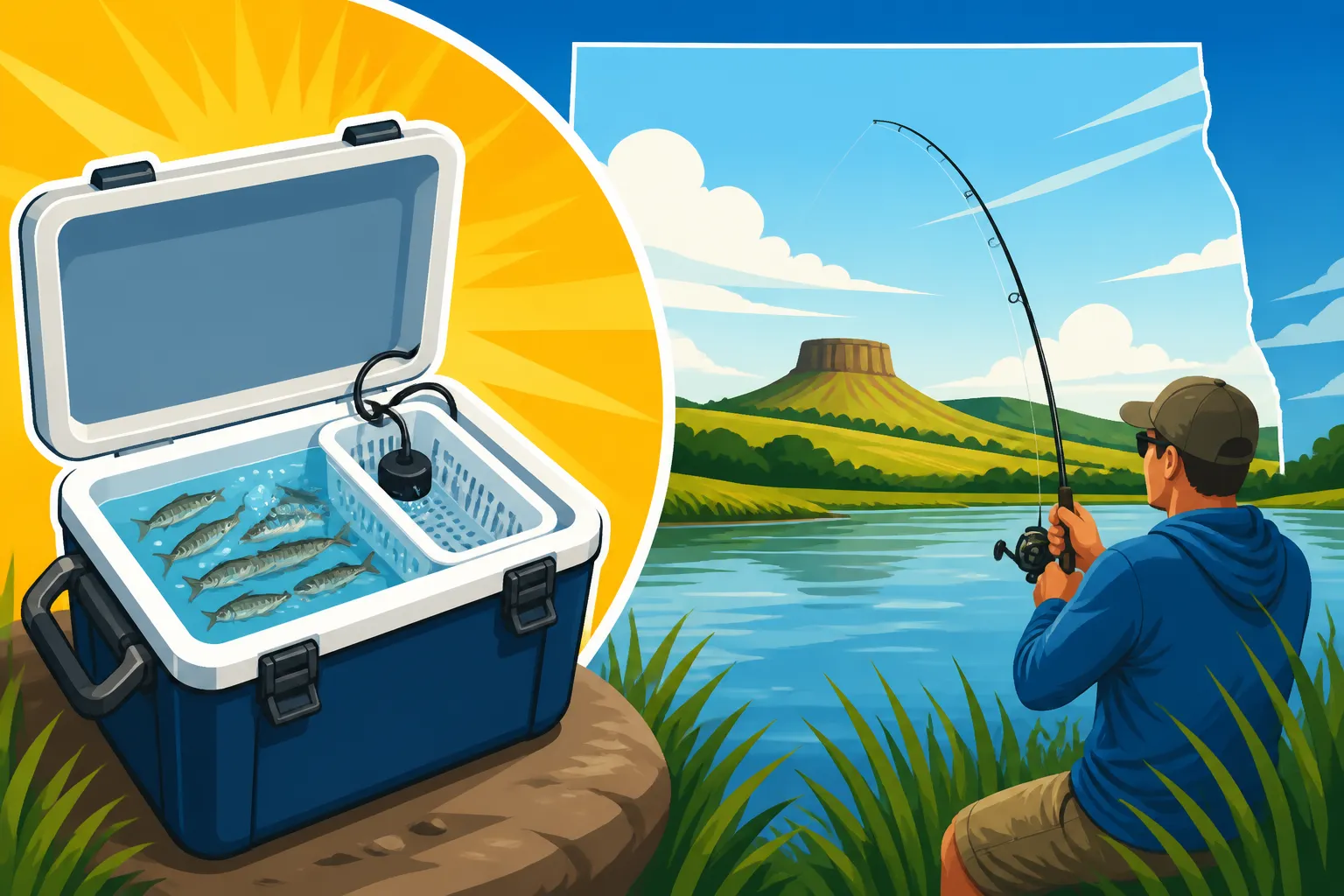
The problem isn't just about keeping the bait cool; it's about maintaining a stable, oxygen-rich environment. Fish, even baitfish, are sensitive creatures. Rapid temperature swings, stagnant water, and lack of oxygen are all major stressors that can quickly lead to their demise. A standard cooler might keep the water cool for a bit, but without circulation and aeration, the oxygen levels will plummet. Imagine being stuck in a hot, stuffy room without a fan – that's what your bait is experiencing. A dedicated live bait cooler addresses these specific needs, ensuring your bait stays lively, which, in turn, often leads to more fish in your boat or on the shore. Think of it as a small, portable life support system for your minnows, leeches, or shiners. They'll be more active, more enticing, and much more likely to tempt that trophy walleye.
Key Features to Look For in a Quality Live Bait Cooler
When you're outfitting yourself for serious North Dakota summer fishing, you need a live bait cooler that can stand up to the challenge. It's not just a box; it's a piece of critical gear. Here’s what you should prioritize:
Superior Insulation and Temperature Control
This is foundational. The whole point of a cooler is to maintain a consistent internal temperature, even when the outside world is roasting. Look for coolers with thick, rotomolded construction if your budget allows. These are built like tanks and offer exceptional insulation, preventing the sun's heat from penetrating and warming your water too quickly. Even well-insulated coolers will struggle if they're left in direct sunlight for hours, so proper placement is still important, but good insulation buys you critical time and stability.
Cheaper coolers might have thinner walls and less effective insulation, meaning you'll be cycling ice more frequently, which can also shock your bait. Consistency is key for bait health, so investing in good insulation means less temperature fluctuation for your precious cargo. Imagine a hot day on Lake Sakakawea Fishing Guide for North Dakota Anglers; a cheap cooler might have your bait struggling before you even hit your second spot.
Integrated or High-Quality Aeration System
Without oxygen, your bait is doomed. A robust aeration system is arguably the most important feature. Some coolers come with integrated aerators that are built right into the lid or side, offering a neat and compact solution. These often run on D-cell or rechargeable batteries and can operate for many hours.
If you're using a cooler that doesn't have a built-in aerator, you'll need a good external one. These typically clip onto the side of the cooler, with an air stone dropped into the water. When shopping for an external aerator, pay attention to battery life and pump strength. You want something reliable that can keep pumping air throughout your entire fishing trip. Many anglers find great deals on reliable external aerators on platforms like Amazon, offering flexibility to convert almost any cooler into a bait-friendly environment. Regardless of whether it's integrated or external, a strong, consistent bubble output is crucial for keeping oxygen levels high enough for your bait to thrive.
Optimal Size and Portability for Your Needs
Size matters, but bigger isn't always better. You need a cooler that's appropriate for the amount of bait you typically carry and the duration of your trips. A smaller, lightweight aerated bucket might be perfect for a quick afternoon of Shore Fishing Techniques for Beginners, while a larger, 30-gallon dedicated bait tank is better suited for a full day of serious walleye fishing from a boat.
Consider the dimensions and how easily it will fit in your boat or vehicle. Does it have sturdy handles that are comfortable to carry, especially when full of water? Some larger models might even have wheels for easier transport from your vehicle to the fishing spot. Think about your typical fishing setup and choose a size that complements it without being cumbersome. Nobody wants to be wrestling a giant, sloshing cooler if they're fishing alone or have limited space.
Durable Construction and Easy Maintenance
Fishing gear takes a beating, and your bait cooler is no exception. It's going to be exposed to sun, water, bumps, and maybe even a few accidental drops. Look for durable, marine-grade plastics that can withstand UV exposure without becoming brittle. The latches, hinges, and drain plugs should be robust and made to last.
Cleaning should also be a breeze. A smooth interior surface prevents grime buildup, and a large drain plug allows for quick and complete emptying of water. Being able to easily rinse out your cooler after each trip helps prevent the growth of algae and bacteria, which can negatively impact future bait health. A well-constructed cooler will last for many seasons, making it a worthwhile investment in your fishing success.
Secure, Leak-Proof Lid and Drain
Nothing's worse than arriving at your fishing spot only to find half your bait water has sloshed out and drenched your gear. A secure, leak-proof lid is essential. Look for coolers with strong, positive-locking latches that keep the lid tightly sealed, even over choppy water or bumpy roads. A good gasket around the lid will further prevent spills.
Similarly, a leak-proof drain plug is critical. It should be easy to open for draining but form a tight seal when closed. This might seem like a small detail, but a leaky drain can make a huge mess and quickly compromise the water quality for your bait. You want to focus on catching fish, not mopping up puddles.
Types of Live Bait Coolers and Their Best Use Cases
The market offers a variety of options, each with its own strengths. Understanding these can help you pick the perfect one for your angling style in North Dakota.
Basic Aerated Buckets
These are often 5-gallon buckets with a battery-operated aerator clipped to the rim, sometimes sold as a kit. They are the most affordable and portable option, excellent for short trips, bank fishing, or ice fishing where you don't need a huge quantity of bait. They're also a popular choice for kids learning the ropes, as they are simple to manage. You can often find these basic setups at local sporting goods stores or online retailers.
- Pros: Inexpensive, lightweight, very portable, easy to clean.
- Cons: Limited insulation (often just a plastic bucket), small capacity, battery life on aerators can be shorter, can slosh easily.
- Best For: Quick trips, Fishing Rules on North Dakota Tribal Waters, shore fishing, carrying smaller quantities of minnows or leeches.
Dedicated Livewells or Bait Tanks
These are purpose-built units designed specifically for keeping bait alive. They come in various sizes, from small portable tanks to large, permanently installed boat livewells. They often feature robust insulation, built-in aeration systems with multiple air stones, and sometimes even circulators to keep water moving evenly. Brands like Bass Pro Shops offer a wide array of these dedicated systems, from portable models to more robust setups for serious anglers.
- Pros: Excellent insulation, superior aeration, larger capacities, very durable, often include features like splash guards and internal dividers.
- Cons: More expensive, heavier, less portable for walking long distances.
- Best For: Serious boat anglers, full-day trips on Lake Sakakawea Walleye Fishing Spots, carrying large quantities of bait, keeping delicate bait species alive. These are often the choice for those who want the absolute best for their bait.
Insulated Coolers with Add-on Aerators
This is a versatile option if you already own a high-quality insulated cooler or want a more flexible setup. You can take a premium roto-molded cooler, like those from popular outdoor brands, and simply add a good quality external aerator. This gives you the excellent insulation of a high-end cooler combined with the life-giving oxygen pump. Many anglers opt for this method because it's often more cost-effective than a dedicated livewell, especially if they can snag a deal on an aerator on Amazon.
- Pros: Leverage existing high-quality coolers, great insulation (if starting with a good cooler), flexible aeration options, can be used as a regular cooler when not holding bait.
- Cons: Aerator is external and can be cumbersome, potential for aerator hose tangles, might not have internal baffles or splash guards of a dedicated unit.
- Best For: Anglers who want versatility, those who already own a good cooler, extended trips where superior insulation is paramount for How to Keep Minnows Alive Longer.
| Cooler Type | Typical Capacity (Gallons) | Insulation Quality | Aeration Method | Portability | Typical Trip Duration |
|---|---|---|---|---|---|
| Basic Aerated Bucket | 3-5 | Low | Clip-on external | High | Short (2-4 hours) |
| Cooler with Add-on Aerator | 10-30 | High | Clip-on external | Medium | Medium-Long (4-12+ hours) |
| Dedicated Livewell/Tank | 15-40+ | High | Integrated or strong external | Low-Medium | Long-Very Long (Full Day+) |
Tips for Maximizing Bait Life in Your Cooler During Summer
Even with the best cooler money can buy, a few simple practices can make a world of difference in how long your bait stays alive and frisky. Remember, lively bait gets bites!
Start with Quality Water and Match Temperatures
This is crucial and often overlooked. Never just dump your bait into tap water from home unless it's specifically dechlorinated. Chlorine and other chemicals in municipal water supplies are toxic to baitfish. Use well water if available, or fill your cooler with lake or river water from where you'll be fishing, making sure it's clean and free of contaminants.
Equally important is temperature matching. If you're buying bait from a bait shop, try to get water from their tank or, at the very least, bring a small amount of your own conditioned water to slowly acclimate the bait. Dumping cold bait into much warmer water, or vice-versa, will shock them and significantly reduce their lifespan. Aim to keep the water temperature in your cooler as stable as possible, close to the temperature of the water they'll be introduced to when you fish. This is especially vital when fishing during the North Dakota Open Water Fishing Season when temperatures can swing wildly throughout the day.
Don't Overcrowd Your Cooler
It's tempting to cram in as much bait as possible, especially if you think you'll go through a lot. However, overcrowding is one of the quickest ways to kill your bait. Too many fish in a confined space rapidly deplete oxygen, increase ammonia levels (from waste), and stress them out. A good rule of thumb is to allow at least one gallon of water per dozen medium-sized minnows. If you have larger baitfish like shiners or suckers, increase that ratio.
Think of it like a packed elevator on a hot day – it gets uncomfortable fast. Give your bait enough room to swim freely without constantly bumping into each other. If you find yourself needing a lot of bait, consider a larger cooler or even two separate bait coolers.
Judicious Use of Ice or Cool Packs
While you want to keep the water cool, simply dumping a bunch of ice cubes directly into your bait cooler can be detrimental. The rapid temperature drop can shock the bait, and the melting ice can introduce chlorinated water if it's tap ice. Instead, use frozen water bottles or gel ice packs that don't directly mix with the bait water. These provide a gradual cooling effect.
Place them inside the cooler, but make sure they're not directly touching your bait for extended periods. Monitor the water temperature with a small thermometer, aiming for a range between 55-65 degrees Fahrenheit for most common baitfish in North Dakota, though this can vary by species. This controlled cooling keeps the bait comfortable and reduces their metabolic rate, meaning they use less oxygen and stay healthier longer.
Keep Your Cooler Out of Direct Sunlight
Even the best-insulated cooler will struggle if it's baking in direct sunlight for hours. Find a shaded spot in your boat or on shore for your bait cooler. If shade isn't available, throw a wet towel over the cooler to help it stay cool through evaporative cooling. This simple step can significantly extend the life of your ice or cool packs and keep the water temperature more stable. Every little bit of effort you put into protecting your bait from the elements contributes to its longevity and liveliness, which ultimately translates to more successful fishing.
By following these tips, you'll ensure your live bait stays in prime condition, giving you the best chance to land those hard-fighting North Dakota fish. Consider checking out Best Bait for North Dakota Fishing for specific recommendations on what works well in our local waters.
Internal Links:
- Best Bait for North Dakota Fishing
- How to Keep Minnows Alive Longer
- Essential Gear Checklist for North Dakota Fishing
- Best Coolers and Storage for North Dakota Anglers
- Best Ice Fishing Gear for North Dakota
- North Dakota Open Water Fishing Season
- Best Fishing Tackle for North Dakota Lakes
- Best Fishing Lakes in North Dakota
- Lake Sakakawea Fishing Guide for North Dakota Anglers
- Shore Fishing Techniques for Beginners
- Fishing Rules on North Dakota Tribal Waters
- Lake Sakakawea Walleye Fishing Spots
Disclaimer
This article is for general informational purposes only and does not constitute professional advice. Laws, prices and regulations vary by location and change over time. Consult a qualified professional for guidance on your specific situation.