Devils Lake State Record Perch Location
Every angler dreams of landing that one fish that makes history – a true lunker that shatters records and stories. When it comes to yellow perch in North Dakota, particularly on the legendary Devils Lake, the state record isn't just a number; it's a testament to an incredible fishery and the pursuit of a lifetime catch. Many of us wonder, where exactly was that monster perch caught? While exact GPS coordinates of a record-breaking moment are usually a closely guarded secret, understanding the conditions and locations that could produce such a fish is a quest every serious angler undertakes. This guide will peel back the layers on the Devils Lake state record yellow perch, delving into the unique characteristics of the lake that grow these giants and offering insights into the types of spots where such a remarkable fish is likely to be found.
The Myth and Reality of Devils Lake's State Record Perch
Devils Lake isn't just famous for its rising waters and spooky name; it's renowned worldwide for its incredible yellow perch fishery. For decades, anglers have flocked here, drawn by the promise of hefty jumbos. But one fish stands above them all.
The Record-Breaking Moment and Its Significance
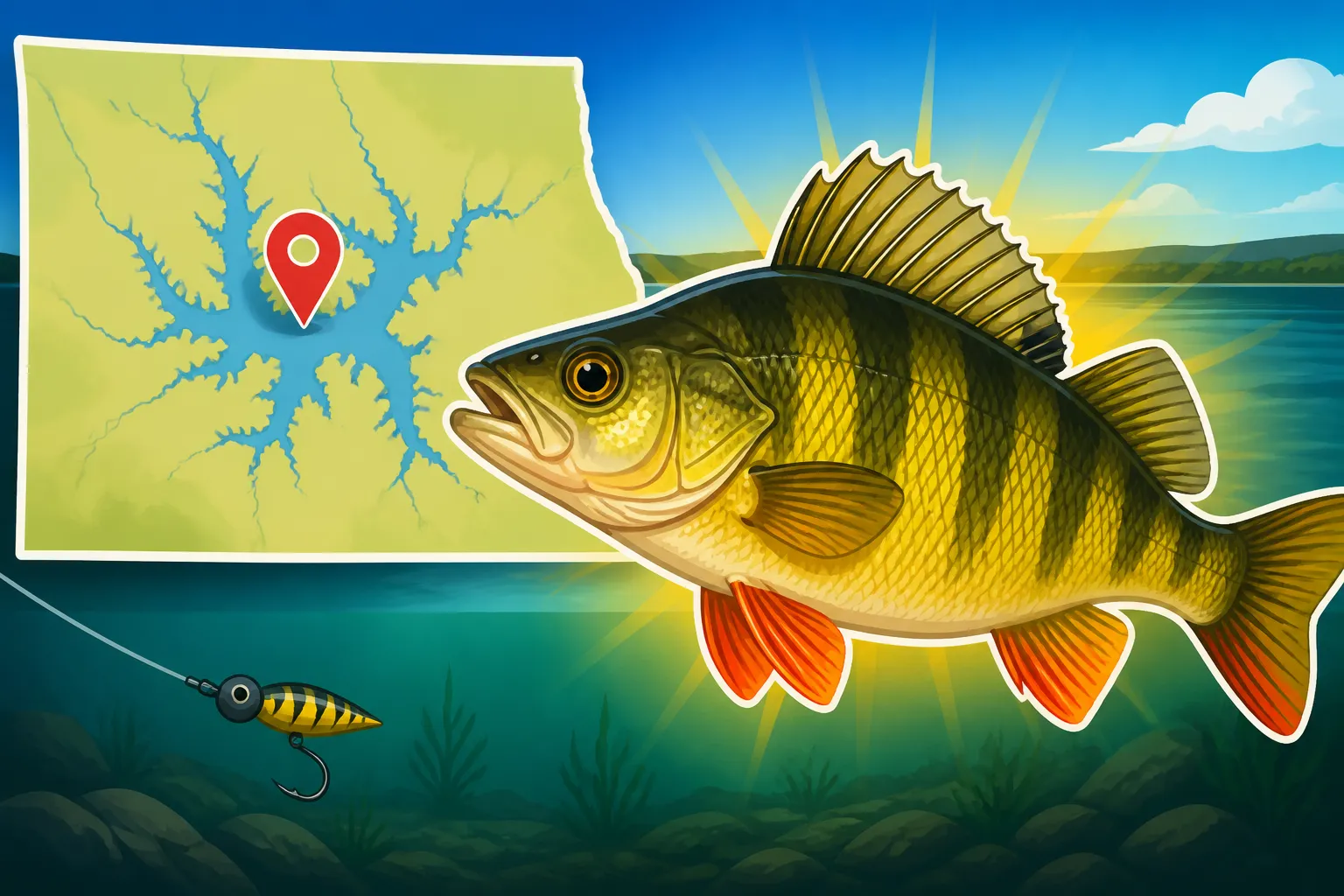
The official North Dakota state record yellow perch is a magnificent specimen weighing in at 2 pounds, 15 ounces. This colossal perch was caught by Robert Smith on March 29, 2012, right here on Devils Lake. Just imagine the thrill of pulling up a perch that almost hits the three-pound mark! For most of us, a one-pound perch is a trophy, so nearly tripling that weight puts this fish in an entirely different league.
This record isn't just about a big fish; it represents the pinnacle of what Devils Lake can produce. It's a testament to the lake's rich ecosystem and its ability to grow fish to exceptional sizes. Catching a perch of this magnitude requires a combination of factors: an older, mature fish, abundant food sources, and ideal environmental conditions for rapid growth. The fact that it was caught in late March also speaks volumes about the productivity of the late ice fishing season, a time when many of North Dakota's premier fish species are bulking up before the spawn.
Why Devils Lake is a Trophy Perch Factory
What makes Devils Lake such an extraordinary place for yellow perch to thrive and reach such epic proportions? It's a complex interplay of geology, hydrology, and biology that creates a unique and highly productive environment.
Firstly, Devils Lake is an endorheic basin, meaning it has no natural outflow. Over the past few decades, its water levels have dramatically risen, inundating thousands of acres of agricultural land, trees, and man-made structures like old roadbeds, fence lines, and farmsteads. This flooded landscape has created an unparalleled amount of diverse habitat. Picture endless submerged timber – old trees standing ghostly in the water – providing countless ambush points and protective cover for perch. This complex underwater structure also offers refuge from predators like northern pike and walleye, allowing perch to grow larger and older.
Secondly, the lake boasts an incredibly rich food chain. The slightly brackish (saline) water, a characteristic of many endorheic lakes, contributes to a dense population of invertebrates and baitfish. Fathead minnows, for example, are a primary forage base for Devils Lake perch, and they are abundant. With such a readily available and high-quality food source, perch can pack on weight quickly. The sheer volume of structure combined with an endless buffet means perch have everything they need to grow big and strong. The expansive shallow bays and submerged fields are perfect nurseries for young perch, protecting them until they are large enough to tackle deeper, more exposed waters. This vibrant ecosystem fuels growth rates that are hard to match in other fisheries.
Deconstructing the "Location" for Giant Perch
While the specific spot where Robert Smith landed his record perch remains private, we can certainly explore the types of locations within Devils Lake that consistently produce giant yellow perch. Understanding these general characteristics is far more valuable than a single GPS coordinate, as fish move and conditions change.
Prime Structural Elements Where Trophy Perch Thrive
Devils Lake is a maze of flooded structure, making it a challenge but also a reward for those who learn to read its contours. Big perch, especially, are creatures of habit and prefer specific types of cover and depth.
- Flooded Timber and Brush Piles: This is perhaps the most iconic Devils Lake habitat. Vast stands of drowned trees, particularly in the shallower, newly flooded areas, are magnets for perch. These areas provide shade, protection from predators, and a rich substrate for insects and smaller baitfish. The biggest perch often lurk on the edges of these timber fields or within thicker pockets where they can ambush prey.
- Old Roadbeds and High Spots: Before the water rose, Devils Lake was surrounded by roads and natural high points. These now submerged features act as significant depth changes and travel corridors for fish. Perch will often stage on the sides of these roadbeds, especially where they intersect with deeper water or other structure. They create a distinct break in the otherwise relatively flat bottom, attracting baitfish and, in turn, hungry perch.
- Submerged Rock Piles and Reefs: While less common than timber, Devils Lake does have rocky areas, particularly in its western basins. These hard bottom structures harbor different invertebrate life and offer alternative ambush points. Large perch will often gravitate to these spots, especially during colder water periods when rocks retain heat.
- Deep Weed Lines and Transition Zones: Even in winter, there can be areas of decaying weeds that provide oxygen and cover. During open water, lush weed beds are crucial. Trophy perch will often hold along the deep edges of these weed lines, moving in and out to feed. Transition zones where soft bottom meets hard bottom, or where shallow flats drop into deeper channels, are also high-percentage spots. These "edges" are where food and cover converge, creating perfect feeding grounds. Anglers looking to explore these zones might consider a specialized Deep Water Structure Fishing Techniques guide to refine their approach.
Understanding Seasonal Patterns for Big Perch Success
Just like any other fish, yellow perch in Devils Lake have distinct seasonal movements that influence where you'll find the biggest ones. The time of year plays a huge role in the "location" aspect.
- Early Ice (November – December): As the lake begins to freeze, perch are often still quite active and can be found in shallower bays and around the edges of remaining green weeds. They're gorging on minnows before the full cold sets in. This is a great time to explore new areas, but safety is paramount for Early Ice Fishing Safety Tips.
- Mid-Winter (January – February): During the brutal cold of mid-winter, perch often move to deeper basins and humps, congregating in large schools. They might be less active, but if you find a school of big ones, the fishing can be phenomenal. Look for areas with slightly softer bottoms adjacent to hard structure.
- Late Ice (March – April): This is arguably the prime time for trophy perch, and it's when the state record was caught. As the days lengthen and the sun warms the ice, perch become incredibly active, feeding aggressively in preparation for spawning. They often move shallower, staging near potential spawning grounds like flooded vegetation. This period, often overlapping with the North Dakota Fishing Season Calendar, can be incredibly productive, but also demands extra caution as ice conditions deteriorate rapidly. Perch will be schooled up and actively chasing bait, making them more susceptible to aggressive jigging.
- Open Water (May – October): Once the ice is out, perch can be found throughout the lake. In spring, they're often shallow, recovering from the spawn. As summer progresses, they'll follow baitfish into deeper water during the heat of the day, moving shallower at dawn and dusk. Fall fishing can be excellent as perch again feed heavily, preparing for winter. They'll often relate to deeper structure during the day and move up onto flats in low light conditions. If you're planning a trip during this period, checking out North Dakota Open Water Fishing Season can provide a complete overview.
Mastering Techniques for Devils Lake's Giants
Finding the right location is only half the battle; you also need the right tools and techniques to coax those record-sized perch into biting. Devils Lake's perch can be finicky, especially the really big ones.
Essential Gear for Targeting Trophy Yellow Perch
To consistently catch big perch, you need to be prepared. This isn't just about having any gear, but having the right gear that gives you an advantage in sensing light bites and handling strong fish.
- Rods and Reels: For ice fishing, ultra-light to light action rods with a sensitive spring bobber or a very soft tip are crucial for detecting the subtle takes of a large perch. A length of 28-32 inches is common. Pair this with a small spinning reel spooled with light line. For open water, a light or medium-light spinning rod (6-7 feet) with a fast action tip provides sensitivity for jigging and enough backbone for fighting.
- Line: Light line is key for sensitivity and natural bait presentation. Two to four-pound test fluorocarbon or monofilament is standard. Many anglers opt for a thin braided mainline (e.g., 6 lb test) with a 3-4 foot fluorocarbon leader for maximum sensitivity and abrasion resistance, especially when fishing around flooded timber.
- Augers: On Devils Lake, especially during mid-winter, ice can be thick. A reliable ice auger is non-negotiable. Many anglers opt for power augers (gas, propane, or electric) to drill numerous holes quickly and efficiently. The faster you can drill and move, the more fish you're likely to find. Electric augers like those from Ion or Strikemaster are gaining popularity for their quiet operation and lack of fumes, especially in an ice shelter. You can learn more about Best Ice Auger Brands for North Dakota to make an informed choice.
- Electronics (Fish Finders): A good flasher (like Vexilar or Marcum) is practically mandatory for ice fishing Devils Lake. It allows you to see your lure, the fish, and their reactions in real-time, helping you fine-tune your presentation. For open water, a quality sonar unit with side imaging can help locate submerged structure and schools of fish before you even drop a line. Understanding Best Fish Finders for Ice Fishing can give you a significant edge.
Baits and Presentations That Lure the Big Ones
Presentation can be the difference between a limit of small perch and a handful of true Devils Lake jumbos. Big fish often prefer slightly different offerings and require more finesse.
- Live Bait: This is often the gold standard for trophy perch. Small fathead minnows (hooked lightly through the back or lips), maggots, and waxworms are incredibly effective. Present them on a small jig or under a slip bobber. The natural scent and subtle movement of live bait can entice even the most wary perch. Many anglers will tip a small artificial lure with a couple of maggots or a waxworm for added appeal.
- Artificial Lures: Small tungsten jigs (1/32 to 1/8 oz) in bright colors (chartreuse, orange, pink) or natural hues (glow white, black) are fantastic, especially when tipped with live bait or small soft plastics. Small spoons (like Northland Forage Minnow or Clam Leech Flutter Spoon) can also be highly effective, especially when aggressively jigged to call in fish, then paused to trigger a strike. Soft plastics, such as small panfish grubs or worm imitations, can be deadly when fished on tiny jig heads. The key is to experiment with jigging cadence – sometimes a subtle quiver works, other times a more aggressive lift-drop is needed.
- Subtle Presentation: Big perch are smart and often wary. A slow, subtle presentation is often more effective than aggressive jigging. Let your bait sit for extended periods, occasionally twitching it slightly. When a fish appears on your flasher, slowly raise or lower your bait to entice a strike. Sometimes, simply holding your lure perfectly still is what seals the deal.
Navigating and Locating Productive Areas
Devils Lake is massive and can be intimidating. Finding fish, let alone trophy perch, requires a systematic approach. Utilizing resources can significantly cut down on search time.
- GPS and Mapping: Modern GPS units with detailed lake maps are invaluable. They show contours, submerged roads, and other features that are invisible from the surface. Use these maps to identify potential humps, drop-offs, and old roadbeds. Mark every spot where you catch fish or see significant activity. Learning How to Find Walleye Structure With a Map can easily be adapted for finding perch.
- Drill Many Holes: The most effective strategy on Devils Lake, particularly for ice fishing, is to drill a grid of holes over a promising area. Don't be afraid to move if you're not seeing fish. Perch are often schooled, so once you find one, you're likely to find more. The goal is to cover ground and find the active fish.
- Hire a Guide: For those new to Devils Lake or wanting to maximize their time, hiring a local guide is an excellent investment. They have up-to-date knowledge of current conditions, fish movements, and productive areas. Platforms like FishingBooker connect you with experienced local guides who can put you on fish quickly. A good guide can teach you more in a day than you might learn in a week on your own. Booking a trip through FishingBooker could give you a serious leg up on finding those trophy perch hotspots.
- Utilize Online Resources and Reports: Stay up-to-date with local fishing reports from bait shops, online forums, and social media groups. Anglers often share general areas or conditions that are producing fish. While they won't give away the state record spot, they can point you in the right direction. Just remember to take everything with a grain of salt and verify conditions yourself.
Preserving the Legacy of Devils Lake's Perch
The appeal of Devils Lake's incredible yellow perch fishery means more anglers are targeting these prized fish. With great fishing comes great responsibility to ensure future generations can also experience the thrill of catching a jumbo perch.
Practicing Responsible Angling and Conservation
Trophy fish, especially large female perch, are crucial for the health of the fishery. These older, bigger fish are often the most prolific spawners, contributing significantly to the next generation of perch.
- Catch and Release: Consider releasing larger perch, particularly those over 12 inches, especially the really big females. While it's tempting to keep every jumbo, letting a few go ensures they can continue to spawn and contribute their strong genetics to the population. Take a quick photo and release them carefully.
- Proper Handling: If you plan to release a large perch, minimize its time out of the water. Handle it gently, supporting its body horizontally. Avoid touching its gills or eyes. Use barbless hooks or de-barb your hooks to make release easier and reduce harm to the fish. A good Best Landing Net for Kayak Fishing or boat fishing can assist in a gentle landing.
- Fish Care for Keeps: If you do keep fish, bleed them immediately and get them on ice to preserve their quality. The colder you keep them, the better they'll taste. Don't let them flop around in a bucket of warm water.
Adhering to North Dakota's Fishing Regulations
The North Dakota Game and Fish Department sets regulations to manage fish populations and ensure sustainable fishing opportunities. Knowing and following these rules is a fundamental part of responsible angling.
- Daily Limits and Possession Limits: Always be aware of the current daily and possession limits for yellow perch on Devils Lake. These limits can change, so it's vital to consult the most recent North Dakota fishing proclamation or the department's website. You can find more details in the North Dakota Fishing Regulations Explained guide.
- Special Regulations: Be aware if there are any special length limits or specific regulations for certain areas of Devils Lake or during particular seasons.
- License Requirements: Make sure you have a valid North Dakota fishing license before you cast a line. For non-residents, there are various options available, like the North Dakota Nonresident Fishing License Guide. You can even explore options for a Nonresident 3-Day Fishing License in North Dakota if you're just visiting. A quick search on FishingBooker can also sometimes provide information on license requirements for specific guide trips.
- Aquatic Nuisance Species (ANS) Awareness: Always clean, drain, and dry your boat and gear after leaving Devils Lake to prevent the spread of ANS like zebra mussels. These invasive species can severely impact fisheries. Following Aquatic Nuisance Species Rules for Boaters is not just a recommendation, it's a critical step in preserving North Dakota's waters.
By understanding the factors that contribute to Devils Lake's incredible perch fishery, employing effective techniques, and practicing responsible angling, you not only increase your chances of catching a trophy but also help ensure that the legend of Devils Lake's giant perch continues for years to come. Who knows, maybe the next state record is waiting for you!
Disclaimer
The information provided in this guide is for general informational purposes only and is subject to change. Fishing regulations, season dates, and limits are set by the North Dakota Game and Fish Department and can be updated. Always consult the official North Dakota Game and Fish Department website or the latest fishing proclamation for the most current and accurate regulations before engaging in any fishing activities. Fishing conditions, ice thickness, and fish locations can vary significantly based on weather, time of year, and other environmental factors. Exercise caution and prioritize safety when on the ice or water.