Best Fishing Rods for North Dakota Anglers
When you're out on the vast, beautiful waters of North Dakota, from the expansive Lake Sakakawea to the wild Red River, one of the most common frustrations anglers face is having the wrong tool for the job. It's disheartening to feel that subtle walleye bite and not be able to set the hook, or to hook into a monster northern pike only to have your rod snap under the pressure. This guide is here to help you navigate the often-confusing world of fishing rods, ensuring you pick the perfect one for every species and scenario North Dakota has to offer, turning those frustrations into triumphant catches.
Understanding North Dakota's Diverse Fishing Landscape
North Dakota isn't just flat plains; it's a tapestry of incredible fishing opportunities, each demanding a specific approach and, naturally, a specific type of rod. From the glacial lakes teeming with perch to the mighty rivers holding colossal catfish, your choice of rod needs to be as adaptable as the fish themselves. It's not a "one rod fits all" kind of state, and anyone who tells you otherwise probably hasn't experienced the thrill of a Sakakawea walleye or the brute force of a Red River cat.
From Walleye Factories to Pike Ponds
Think about the sheer variety of fishing you can encounter here. You might be vertical jigging for walleye on a deep structure in Lake Sakakawea Fishing Guide for North Dakota Anglers, or perhaps you're casting large spoons for aggressive northern pike in a smaller, weedy slough. Each of these situations calls for a vastly different rod. A walleye rod typically demands sensitivity, allowing you to feel the faintest "thunk" as a walleye inhales your bait. You need to be able to detect those nuanced bites that often go unnoticed with a stiffer, less sensitive rod. This sensitivity is crucial because walleye can be notoriously finicky, especially in clear water or during slow bites.
Conversely, when you're targeting pike, especially the larger ones, you're often dealing with powerful runs and explosive strikes. You might be throwing big spinnerbaits or hefty crankbaits into heavy cover, which requires a rod with substantial backbone and a strong tip to accurately cast those heavier lures and then muscle the fish out of snag-prone areas. Trying to use a finesse walleye rod for pike would be a recipe for disaster, leading to broken lines and lost fish. The rod simply wouldn't have the power to control a thrashing pike or to handle the heavy lures needed to attract them.
Then there are the panfish lakes, where yellow perch, crappie, and bluegill abound. Here, the bites can be incredibly subtle, mere whispers on the line. An ultralight setup is often preferred, allowing you to use tiny jigs and light lines, and to feel those almost imperceptible takes. Trying to feel these light bites on a heavy pike rod would be like trying to pick up a feather with a baseball bat – it’s just not going to happen effectively. Each body of water and target species in North Dakota presents its own unique challenges and rewards, and having the right rod significantly increases your chances of success and enjoyment.
The Impact of Weather and Water Conditions
North Dakota's weather is notoriously unpredictable, and these conditions play a massive role in how fish behave and, consequently, what kind of rod you'll want to have in your hand. Imagine trying to cast a lightweight jig into a stiff prairie wind with a flimsy ultralight rod – it's an exercise in futility. The wind would catch your line, making accurate casts impossible and often creating a huge bow in your line that would completely obscure any light bites. In these windy conditions, a rod with a little more backbone and a faster action can help punch through the wind, providing better casting distance and control, and allowing you to maintain better contact with your lure.
Water conditions also come into play. Clearer waters, like some of the deeper sections of Lake Oahe, might call for more finesse tactics and lighter lines, which pair best with more sensitive rods. The fish in clear water often have more time to inspect your lure, and a natural, subtle presentation is key. On the other hand, fishing in murky, current-laden waters, such as portions of the Missouri River Fishing Guide, often means using heavier weights to get your bait down, and stronger, more powerful rods to handle both the weight and the strong current. Fish in murky water might rely more on scent and vibration, so you might be throwing larger, more attention-grabbing baits that also require a more robust rod to cast and retrieve.
Even temperature affects things. In colder water, fish are often less aggressive, requiring slower presentations and ultra-sensitive rods to detect those barely-there strikes. When the water warms up, fish become more active, and you might switch to faster-paced retrieves with a rod that offers a bit more backbone for aggressive hooksets. Understanding how weather and water impact the bite is part of the North Dakota angling experience, and having a diverse selection of rods helps you adapt to whatever Mother Nature throws your way.
Key Considerations When Choosing a Fishing Rod
Picking out a fishing rod isn't just about grabbing the first one that looks good. It's a nuanced decision that involves several critical factors, each influencing how the rod performs in specific situations. Getting these elements right can be the difference between a day of frustration and a day of triumphant catches on North Dakota's lakes and rivers. Understanding rod length, power, and action, along with materials and components, will empower you to make informed choices.
Rod Length: Reaching Far or Close Quarters
The length of your fishing rod significantly impacts your casting distance, accuracy, and leverage when fighting a fish. It's not just a number on the label; it’s a fundamental characteristic that dictates how the rod performs in various North Dakota fishing scenarios. For instance, if you're standing on the shore of a large lake like Devils Lake, trying to reach a distant weed line where walleye are holding, a longer rod—say, 7 to 8 feet—will be your best friend. The extra length provides more leverage, allowing you to cast much further and cover more water. This is incredibly helpful for covering expansive areas from a fixed position, giving your lure more time in the strike zone on a retrieve.
However, longer rods can be cumbersome in tighter quarters. Imagine trying to maneuver an 8-foot rod from a kayak in a small bay or when fishing from a boat with other anglers; it quickly becomes a tangled mess. For situations requiring precision casting or close-quarters combat, such as flipping jigs into dense cover for northern pike or navigating heavy timber in a flooded area, a shorter rod—around 6 to 7 feet—offers superior accuracy and control. These shorter rods are also easier to manage on smaller boats or when you need to make quick, precise casts without hitting obstacles. The ability to switch between different rod lengths based on your fishing environment is a mark of a seasoned North Dakota angler.
Rod Power: From Ultralight Panfish to Heavy Pike
Rod power, sometimes referred to as "rod weight" or "taper," describes how much force it takes to bend the rod. It's essentially the rod's backbone or lifting strength. This is perhaps one of the most critical factors for North Dakota anglers, as you'll encounter everything from tiny perch to massive catfish. An ultralight rod, designed for panfish like yellow perch and crappie, has a very delicate backbone. It allows you to feel the most subtle bites and protects light lines from snapping under minimal stress. Using an ultralight rod with tiny jigs for North Dakota Yellow Perch Fishing Guide is immensely satisfying, as every head shake of a small fish feels like a huge battle.
Moving up the scale, a medium-light or medium power rod is often considered the most versatile for North Dakota, especially for walleye. It offers enough sensitivity to detect subtle bites but still has enough backbone to handle a good-sized walleye or smaller northern pike. When you hook into a strong walleye, this power allows you to control the fight and prevent the fish from diving into snags. For the true beasts of North Dakota, like large northern pike or the formidable channel catfish found in the Red River, you'll want a medium-heavy or heavy power rod. These rods are built to handle heavier lures, strong lines, and the incredible pulling power of bigger fish. Trying to land a 20-pound pike on a medium-light rod would likely result in a broken rod or snapped line. The power rating ensures your rod can withstand the forces exerted by both your lure and your catch.
Rod Action: Sensitivity vs. Hook Setting Power
Rod action refers to where along the blank the rod bends when pressure is applied. It dictates how quickly the rod returns to its resting position after a cast or when a fish bites. This characteristic profoundly impacts sensitivity, casting performance, and hook-setting ability, all crucial for North Dakota's diverse fishing scenarios. A fast action rod bends mostly in the top third, meaning the tip is very flexible while the rest of the rod remains stiff. This design provides exceptional sensitivity, allowing you to feel even the lightest taps and bumps, which is invaluable when jigging for walleye on a calm day or detecting the tentative bite of a cautious perch. The stiff backbone of a fast action rod also translates into powerful, rapid hooksets, driving the hook firmly into a fish's mouth with minimal effort.
Conversely, a moderate action rod bends more in the middle of the blank, providing a smoother, more parabolic curve. This action is excellent for casting lures that have treble hooks, like crankbaits or topwater plugs, because the more forgiving bend helps to keep fish pinned by absorbing their head shakes and sudden surges. The slightly slower action can also enhance casting distance, as the rod loads up more smoothly with the weight of the lure. For certain trolling applications or when using live bait where fish might "mouth" the offering for a moment before committing, a moderate action can prevent you from pulling the bait away too soon.
A slow action rod bends almost from the handle, offering a very soft, continuous curve. While less common for many aggressive North Dakota techniques, they can be ideal for certain delicate presentations, such as ultra-light panfishing with very small baits, or for specific nymphing techniques in fly fishing (though we're focusing on conventional rods here). It really comes down to matching the action to the species and technique. If you're struggling to feel bites, you might need a faster action. If fish are consistently pulling off, a moderate action might keep them buttoned up better.
Rod Material and Construction: Graphite, Fiberglass, and Composites
The material a rod is made from fundamentally affects its weight, sensitivity, and durability. Each material has its own set of characteristics that make it suitable for different North Dakota fishing styles.
-
Graphite Rods: These are highly popular among serious anglers, and for good reason. Graphite is known for being incredibly lightweight and exceptionally sensitive. When you're jigging for walleye on a chilly morning, that extra sensitivity means you can feel the subtle "tick" of a fish mouthing your bait long before it commits. This material allows manufacturers to create rods with very fast actions and responsive tips, making them excellent for techniques that require a direct feel, like vertical jigging, soft plastic presentations, or even some crankbait fishing where subtle vibrations are key. The downside is that graphite can be more brittle than fiberglass, making it more susceptible to breaking if bent too far or accidentally slammed against a boat rail or tailgate. For those delicate walleye bites, a high-modulus graphite rod from a brand like St. Croix or Fenwick (often available at stores like Bass Pro Shops) can be a game-changer.
-
Fiberglass Rods: Fiberglass rods are the workhorses of the fishing world. They are far more durable and flexible than graphite, making them incredibly forgiving. While they are heavier and less sensitive than graphite, their strength and moderate action make them perfect for certain applications. Think about trolling heavy crankbaits for walleye or salmon on Lake Sakakawea; a fiberglass rod can absorb the shock of a strike without easily snapping, and its slower action helps keep fish hooked when they make sudden runs. They also excel at casting heavier, wind-resistant lures. Many seasoned anglers still prefer fiberglass for techniques where brute strength and durability are more important than hyper-sensitivity. They are also typically more budget-friendly.
-
Composite Rods: As the name suggests, composite rods blend graphite and fiberglass to try and achieve the best of both worlds. They aim to offer a balance of sensitivity, strength, and durability. You might get a rod that's lighter and more sensitive than pure fiberglass but more robust and less prone to breakage than pure graphite. These rods can be an excellent middle-ground option for the North Dakota angler who fishes a variety of species and techniques but doesn't want to carry an entire arsenal of specialized rods. For instance, a medium-heavy composite rod could be a versatile choice for both heavier walleye presentations and lighter northern pike setups. The specific blend ratio will determine its overall characteristics, so it's always worth checking the manufacturer's specifications.
Reel Seat and Guides: Comfort and Durability Matters
Often overlooked, the quality of a rod's reel seat and guides can significantly impact your fishing experience and the longevity of your gear.
-
Reel Seat: This is where your fishing reel attaches to the rod. A good reel seat should hold your reel securely without any wobble, which can translate into lost sensitivity and uncomfortable fishing. Beyond just holding the reel, the design of the reel seat can impact how well you feel bites. Many modern reel seats feature exposed blank sections or ergonomic designs that allow your hand to be in direct contact with the rod blank, greatly enhancing sensitivity. For North Dakota anglers spending hours jigging or casting, a comfortable and secure reel seat is paramount. Materials vary from durable plastics to graphite, with some featuring metallic components for added strength. Look for reel seats that offer a firm, non-slip grip, especially if your hands might be wet or cold.
-
Guides: The small rings that line the length of your rod, through which your fishing line passes, are called guides. Their primary function is to smoothly direct the line, reduce friction, and distribute stress evenly along the rod blank when casting or fighting a fish. Cheap, poorly constructed guides can lead to several problems: they can fray or weaken your line, create excessive friction that reduces casting distance, and even bend or break under pressure. Quality guides typically feature inserts made from durable, low-friction materials like ceramic, silicon carbide (SiC), or Alconite. These materials are smooth and hard, resisting grooving from braided lines and allowing for longer, smoother casts. The frames of the guides are often made from stainless steel, sometimes with titanium for corrosion resistance and lighter weight. The number of guides, their spacing, and their size are all engineered to work with the specific action and power of the rod. On a quality rod, you'll find more guides that are smaller in diameter near the tip, helping to preserve the rod's action and distribute stress more effectively. Don't underestimate the importance of good guides; they protect your line and enhance your rod's performance.
Specialized Rods for North Dakota's Favorite Species
North Dakota boasts an incredible variety of game fish, each with its own preferred habitat, feeding patterns, and fighting style. To truly excel, matching your rod to your target species isn't just a suggestion—it's often the key to consistent success. Generic rods might get you by, but a specialized rod will elevate your game, allowing you to feel every subtle nuance and handle every powerful run.
Walleye Rods: The All-Around Workhorse
Walleye are undoubtedly North Dakota's most prized game fish, and rightfully so. They're elusive, challenging, and delicious. Because of their popularity, there's a huge range of techniques used to catch them, from subtle jigging to aggressive trolling, and your rod needs to be up to the task for each.
-
Jigging Rods: When you're vertical jigging for walleye, whether on Devils Lake Walleye Fishing Spots or a deep structure on Lake Sakakawea, sensitivity is king. You need to feel that faint "tick" or "mushy" feeling when a walleye inhales your jig. A typical walleye jigging rod will be around 6 to 7 feet long, with a medium-light to medium power and a fast or extra-fast action. The fast tip allows for incredible sensitivity to feel those light bites, while the robust backbone provides the power for a swift, decisive hookset. Graphite is the preferred material for these rods due to its superior sensitivity and lightweight feel. Many anglers opt for a specific line rating, often 6-10 lb test, to ensure the rod's performance is optimized for the line being used. For instance, brands like Shimano or G. Loomis offer excellent walleye-specific jigging rods that you can often find at reputable fishing shops or online retailers like Amazon.
-
Trolling Rods: When covering vast expanses of water like Lake Sakakawea for roaming walleye, trolling with crankbaits or bottom bouncers is a highly effective method. Trolling rods are a different beast altogether. They tend to be longer, often 7 to 9 feet, with a moderate to moderate-fast action. The longer length helps spread out multiple lines and absorbs the shock of strikes, while the moderate action keeps fish hooked by preventing them from tearing free. Power typically ranges from medium to medium-heavy, depending on the size of the lures and the depth you're targeting. Fiberglass or composite rods are excellent choices here because of their durability and forgiving nature. They can withstand the constant strain of pulling lures and the powerful surges of larger walleye. You want a rod that can load up smoothly with the weight of the lure and then powerfully bend into a fish without being too stiff or too flimsy.
-
Slip-Bobber Rods: For a more relaxed, yet incredibly effective approach, especially when fishing weed lines or specific structures, slip-bobber fishing for walleye is fantastic. These rods are usually a bit longer, perhaps 7 to 7.5 feet, with a medium-light to medium power and a moderate-fast action. The extra length helps with casting lighter bobber rigs and making long, controlled drifts. The moderate-fast action offers a good balance of sensitivity for detecting subtle bobber dips and enough give to handle the fish once it's on. These rods need to be versatile enough to cast a lightweight bobber and bait combination but still have the backbone to control a hooked walleye that might be diving into cover.
Northern Pike Rods: Taming the Freshwater Shark
Northern pike are aggressive, powerful, and a blast to catch in North Dakota. They demand a rod that can handle their brute force and the larger, often heavier, lures used to target them.
-
Casting Rods: For throwing big spinnerbaits, spoons, or swimbaits into heavy cover or across large flats, a casting rod is the way to go for pike. These rods are typically 6.5 to 8 feet long, with a medium-heavy to heavy power and a fast action. The heavy power allows you to launch those hefty lures and then muscle a big pike out of weeds or timber. The fast action provides excellent casting accuracy for hitting tight spots and a strong backbone for immediate, powerful hooksets. Graphite composite or pure graphite rods are common, offering a balance of strength and sensitivity. You need a rod that can take a beating and still perform when that monster pike hits. North Dakota Northern Pike Fishing Guide often emphasizes using gear that can withstand the fight.
-
Trolling Rods for Pike: Similar to walleye trolling, but often with even larger lures or dead bait rigs, pike trolling rods need significant power and durability. They are typically 7 to 9 feet long, with a heavy power and a moderate to moderate-fast action. Fiberglass or heavy composite rods are excellent for this, as they can absorb the tremendous shock of a pike strike and endure the prolonged battles these fish are known for. These rods are often paired with heavy-duty baitcasting reels loaded with strong braided line, designed to handle the toughest fights.
Perch and Panfish Rods: Feeling the Lightest Bite
North Dakota's yellow perch and other panfish species like crappie and bluegill offer fantastic fishing, especially for families or those seeking consistent action. However, their bites can be incredibly subtle, requiring specialized gear.
-
Ultralight Spinning Rods: For perch and other panfish, an ultralight spinning rod is almost essential. These rods are typically 5 to 6.5 feet long, with an ultralight power and a fast or moderate-fast action. Made from highly sensitive graphite, they are designed to detect the lightest "peck" or "tap" of a small fish. The flexible tip protects delicate lines (often 2-4 lb test) and makes even a small perch feel like a trophy. They're perfect for presenting tiny jigs, small spoons, or live bait under a bobber. When you're trying to coax a bite out of finicky Devils Lake perch, this level of sensitivity is a game-changer. North Dakota Yellow Perch Fishing Guide will always recommend a highly sensitive setup.
-
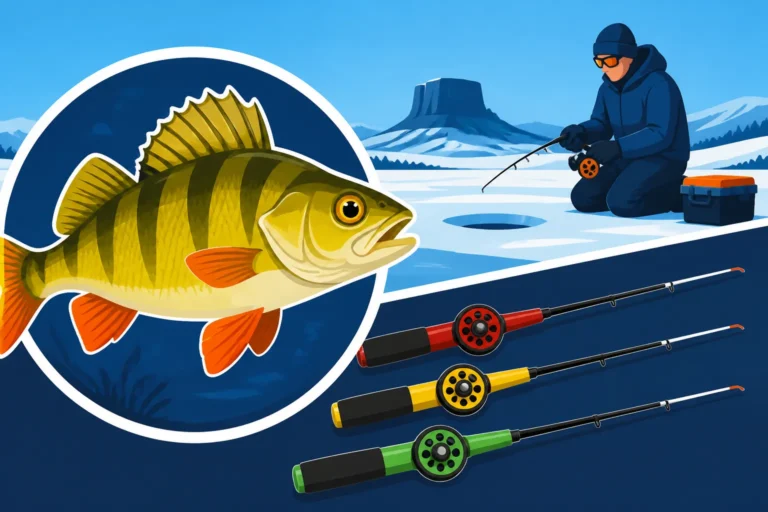
Ice Fishing Rods for Perch: Ice fishing for perch is hugely popular in North Dakota. These rods are much shorter, typically 24-36 inches, with an ultralight to light power and a fast, sensitive tip. The short length allows for comfortable fishing in small ice shelters and offers precise control over tiny jigs. Again, sensitivity is paramount to feel those subtle winter bites. We'll delve deeper into ice fishing rods later, but for perch, think small and sensitive. Best Ice Fishing Rods for Perch will give you even more specialized advice.
Catfish Rods: Power for River Monsters
The Red River of the North is renowned for its trophy channel catfish, and if you plan to tangle with these powerful bottom-dwellers, you'll need a rod built for serious pulling power.
-
Heavy Action Catfish Rods: Catfish rods are designed for brute strength. They are typically 7 to 9 feet long, with a heavy to extra-heavy power and a moderate to moderate-fast action. The heavy power is necessary to handle heavy sinkers in strong river currents and to muscle large catfish away from snags and debris. The moderate action helps absorb the powerful runs of a big cat, preventing hooks from tearing out. Fiberglass or heavy composite materials are common for their durability. Look for sturdy reel seats and guides that can withstand heavy braided line (often 30-80 lb test) and the relentless power of a large fish. North Dakota Channel Catfish Fishing Guide highlights the need for robust gear.
-
Rod Holders: When catfishing on the Red River, anglers often use multiple rods in heavy-duty rod holders set into the bank or boat. This means the rods themselves need to be robust enough to withstand significant tension as they wait for a bite and absorb the initial powerful strike.
Chinook Salmon Rods: Trolling the Depths of Lake Sakakawea
Lake Sakakawea is a unique fishery in North Dakota, hosting a thriving population of landlocked Chinook salmon. Targeting these hard-fighting fish, often found in deep, open water, requires specialized trolling gear.
- Downrigger/Dipsy Diver Rods: Chinook salmon fishing typically involves trolling with downriggers or large dipsy divers to present lures at specific depths. Rods for this technique are generally 8 to 10.5 feet long, with a medium to medium-heavy power and a moderate, parabolic action. The longer length and softer action are crucial for several reasons: they absorb the violent head shakes of a salmon, keep the line tight when the boat is pitching, and provide a good bend that helps to signal a strike when the line pops from a downrigger clip. Fiberglass or composite construction is favored for its durability and flexibility under constant load. These rods need to be able to handle the strain of pulling a large diver or dealing with the drag from a downrigger ball for hours, and then transition smoothly into fighting a powerful, acrobatic salmon. North Dakota Chinook Salmon Fishing Guide will explain the intricacies of this exciting fishery.
Smallmouth Bass Rods: Versatility for Structure Fishing
Smallmouth bass, found in places like Lake Audubon and parts of the Missouri River, are aggressive fighters known for their acrobatic jumps and powerful runs. A versatile rod that offers both casting precision and fighting power is ideal.
- Medium Power, Fast Action Spinning or Casting Rods: A great all-around smallmouth rod will typically be 6.5 to 7.5 feet long, with a medium power and a fast action. The fast action allows for excellent sensitivity when fishing jigs, tubes, or soft plastics on rocky bottoms, where detecting subtle bites is key. The medium power provides enough backbone to set the hook firmly and control the fish during its characteristic strong runs. Depending on your preferred lures and techniques, either a spinning or baitcasting setup can work. Spinning rods are often favored for lighter baits and finesse presentations, while baitcasters excel with heavier jerkbaits or spinnerbaits. Graphite is the material of choice for its sensitivity and lightweight feel, making it easier to cast all day.
Rods for Specific Fishing Techniques in North Dakota
Beyond targeting specific species, North Dakota's diverse fishing opportunities also mean you'll employ a wide range of techniques throughout the year. Each technique often performs best with a rod designed for its unique requirements, whether you're braving the ice or casting from shore in the summer.
Ice Fishing Rods: Precision in the Cold
When the lakes of North Dakota freeze over, a whole new world of fishing opens up. Ice fishing demands specific rods that are designed for close-quarters combat and extreme sensitivity in often frigid conditions.
-
Short Length for Maneuverability: Unlike open water rods, ice fishing rods are remarkably short, typically ranging from 24 to 48 inches. This short length isn't a limitation; it's a feature. It allows anglers to fish comfortably inside ice shelters, or right over an ice hole without hitting the ceiling or snagging on clothing. The compact size also aids in precise jigging motions, often just subtle twitches of the wrist, which are crucial for enticing winter fish that might be sluggish. A common sight on North Dakota ice are anglers meticulously working small jigs with these short, specialized rods.
-
Sensitive Tips for Subtle Bites: Winter fish often have a very light bite; they're not always aggressive. Therefore, ice rods are designed with incredibly sensitive tips, often made of fiberglass or carbon fiber, sometimes even featuring a built-in spring bobber or a very soft, responsive blank material. This extreme sensitivity allows you to detect the faintest "lift" or "drop" bite, which might be imperceptible on a stiffer rod. Paired with ultralight lines, these rods are masterpieces of finesse, letting you know when a perch or walleye has so much as breathed on your bait. How to Ice Fish in North Dakota will emphasize the importance of this sensitivity.
-
Varying Powers for Different Species: While many ice rods are ultralight or light for panfish, you'll also find medium and even medium-heavy options for larger species. For example, when targeting northern pike through the ice with tip-ups, a stronger ice rod might be used for jigging or setting up a dead stick, providing enough backbone to handle a thrashing pike that hits a lure. The blend of a super-sensitive tip with a surprising amount of power in the backbone is a hallmark of good ice rod design.
Shore Fishing Rods: Maximizing Casting Distance
For many anglers, especially those just starting out or exploring new spots, shore fishing is a convenient and effective way to enjoy North Dakota's waters. However, being limited to the bank means you often need to cast a long way to reach productive water.
-
Longer Rods for Distance: Shore fishing rods tend to be on the longer side, often 7 to 10 feet, and sometimes even longer for specific surf or pier applications (though less common in landlocked North Dakota). The extra length provides greater leverage, allowing you to cast further out into the lake or river, reaching those drop-offs, weed lines, or current seams that are often inaccessible from shore with shorter rods. This increased casting distance is crucial for covering more water and getting your bait into areas where fish are likely to be holding. For example, when bank fishing the Missouri River, a longer rod helps get your bait out into the main current where the big fish often reside.
-
Versatile Power and Action: A medium-heavy power with a moderate-fast to fast action is often a good all-around choice for shore fishing. This combination allows you to cast a variety of lure weights, from moderate crankbaits to heavier bottom rigs, and still have enough backbone to handle decent-sized walleye or catfish. The fast action provides enough sensitivity to feel bites at a distance, which can be challenging, and ensures a solid hookset even with a lot of line out. A good quality graphite or composite rod will offer the best balance of casting performance, sensitivity, and durability for the rigors of shore fishing.
Trolling Rods: Built for Battles Behind the Boat
Trolling is a highly effective way to cover vast amounts of water and locate active fish, particularly in large reservoirs like Lake Sakakawea and Lake Oahe. Trolling rods are built to withstand constant pressure and absorb the shock of a strike.
-
Moderate Action for Fish Retention: The hallmark of a good trolling rod is its moderate or slow action. When a fish strikes a trolled lure at boat speed, the impact can be quite violent. A moderate action rod acts like a shock absorber, bending throughout its length to cushion the blow and prevent the hooks from tearing out of the fish's mouth. This is especially important for species like walleye or salmon that can make sudden head shakes or surges. This action also helps keep the line tight and absorb the boat's motion, preventing slack that could lead to lost fish.
-
Durable Materials and Components: Trolling rods are subjected to immense stress over long periods, pulling heavy lures, planer boards, or downrigger balls. Therefore, durability is key. Fiberglass or robust composite materials are favored for their strength and resilience. They can withstand the constant strain without fatiguing or easily breaking. Strong, oversized guides are also crucial to reduce friction with heavy lines and to ensure smooth operation, especially when fighting larger fish that might make powerful runs. The North Dakota Fishing Season Dates and Limits often dictate peak trolling times, so having reliable gear is essential.
Jigging Rods: Feeling Every Bump and Bite
Jigging is a hands-on, interactive fishing technique that requires direct contact with your lure and maximum sensitivity to detect bites. This is particularly true for walleye, but also applies to perch and smallmouth bass.
-
Fast or Extra-Fast Action for Sensitivity: For jigging, you want a rod with a fast or extra-fast action. This means the rod bends primarily in the tip section, allowing you to feel every slight vibration, every bump against the bottom, and most importantly, every subtle bite. The sensitive tip telegraphs these sensations directly to your hand, giving you crucial feedback. Whether you're snap-jigging a Rapala Jigging Rap or slowly working a plastic grub, that immediate feedback helps you understand what's happening beneath the surface.
-
Lightweight and Responsive Blank: Graphite is the material of choice for jigging rods due to its exceptional lightweight nature and responsiveness. A light rod reduces angler fatigue during a long day of jigging and enhances the transfer of vibrations, making those faint bites more noticeable. The responsiveness of graphite means the rod returns to its neutral position quickly after each jigging motion, allowing you to maintain better contact with your lure and detect bites on the fall. Combine this with a sensitive tip and a strong, stiff backbone, and you have a perfect tool for driving hooks home quickly and effectively, especially when targeting walleye in deeper water. North Dakota Walleye Fishing Techniques often highlight the importance of proper jigging setups.
Understanding Rod Components and Their Importance
Beyond the main characteristics of length, power, and action, the smaller components of a fishing rod often dictate its overall quality, comfort, and longevity. Overlooking these details can lead to discomfort, premature wear, and even lost fish.
Handles and Grips: EVA, Cork, and Ergonomics
The handle and grip of your fishing rod are your primary point of contact, and their design significantly impacts comfort, sensitivity, and control throughout a long day on the water.
-
Cork Grips: For decades, cork has been the gold standard for fishing rod grips, and for good reason. High-quality cork is lightweight, extremely sensitive, and offers an excellent tactile feel. It transmits vibrations from the rod blank directly to your hand, allowing you to feel subtle bites and nuances in your lure's action. Cork also maintains its grip even when wet and provides a classic, aesthetically pleasing look. However, cork can wear down over time, especially with heavy use, and cheaper cork composites can crumble or lose their feel. Many premium rods from brands like G. Loomis or Fenwick still feature genuine cork handles for that unmatched blend of sensitivity and tradition.
-
EVA Foam Grips: Ethylene-vinyl acetate (EVA) foam has become increasingly popular for rod grips due to its durability, comfort, and ease of maintenance. EVA is often more resistant to wear and tear, UV rays, and extreme temperatures than cork, making it a great choice for rugged applications or for anglers who are rough on their gear. It also provides excellent grip, even when wet, and is generally easier to clean than cork. While some argue that EVA is slightly less sensitive than premium cork, modern, high-density EVA foams have made significant strides in vibration transmission. It's also typically more cost-effective to produce, making it common on many mid-range and even some high-end rods, offering a comfortable and reliable option for North Dakota anglers.
-
Ergonomics and Design: Beyond the material, the shape and contour of the grip are crucial. An ergonomically designed grip fits naturally in your hand, reducing fatigue and allowing for a more relaxed and comfortable hold. Some grips feature contoured sections for improved thumb placement or tapered ends for better balance. Whether you prefer a full grip, a split grip (where sections of the blank are exposed), or a combination, the design should facilitate a natural connection between you and the rod, enhancing sensitivity and making those long hours of casting or jigging much more enjoyable. Think about the cold hands during early spring fishing; a comfortable, warm grip can make a real difference.
Guides: Minimizing Friction and Maximizing Durability
The guides on a fishing rod, those small rings that channel your fishing line, are critical components that often don't get the attention they deserve. Their quality, material, and placement directly impact casting performance, line longevity, and overall rod durability.
-
Guide Materials: The inserts within the guide frames are arguably the most important part. High-quality inserts are made from incredibly smooth and hard materials that minimize friction on your fishing line, allowing for longer casts and preventing premature line wear, especially when using abrasive braided lines.
- Ceramic (Aluminum Oxide): A common and durable choice, providing good performance for most fishing lines.
- Silicon Carbide (SiC): Harder and smoother than ceramic, offering even less friction and excellent heat dissipation. This is particularly beneficial when fighting large, fast-running fish that can generate heat on the line.
- Alconite (Fuji brand): Another high-performance ceramic that is strong, lightweight, and very smooth.
- Titanium: Often used for guide frames, not inserts, for its exceptional strength-to-weight ratio and corrosion resistance. It makes the rod lighter and more resilient to bending or breaking.
-
Number and Spacing of Guides: You'll notice that rods have varying numbers of guides. Generally, more guides on a rod help distribute stress more evenly along the blank when it's under load, preventing "flat spots" in the bend and preserving the rod's intended action. They also help keep the line from touching the rod blank during casting or fighting a fish, which can create friction and reduce casting distance. The spacing of the guides is also precisely engineered to work with the rod's action, ensuring smooth line flow and optimal performance. For instance, a fast-action rod will often have more, smaller guides near the tip to maintain its sensitive and responsive nature.
-
Frames and Durability: The frames that hold the inserts are typically made from stainless steel or titanium. Stainless steel is robust and cost-effective, while titanium offers superior corrosion resistance and lighter weight, albeit at a higher cost. Strong, well-made frames prevent inserts from popping out and resist bending, which can lead to line damage. For anglers fishing in North Dakota's diverse conditions, from the open waters of Sakakawea to ice fishing in extreme cold, durable guides are essential for reliable performance. Many reputable rod manufacturers utilize guides from trusted brands like Fuji, ensuring top-tier quality and performance.
Reel Seats: Secure Your Connection
The reel seat is the component that firmly attaches your fishing reel to the rod blank. Its design and quality are crucial for maintaining a secure connection, enhancing sensitivity, and ensuring a comfortable grip.
-
Types of Reel Seats:
- Uplocking/Downlocking: These refer to the direction the locking nut tightens. Most spinning rods feature a downlocking nut, while many casting rods use an uplocking nut. This choice is often dictated by balance and ergonomic preferences.
- Graphite vs. Aluminum: Many modern reel seats are made from durable graphite composites, which are lightweight and can transmit vibrations very effectively. Some heavy-duty rods, especially for saltwater or big game (though less common for North Dakota's primary species), might feature aluminum reel seats for maximum strength and corrosion resistance.
- Trigger Grips: Baitcasting reel seats almost universally incorporate a "trigger" that fits between your fingers, providing extra leverage and control during casting and retrieving.
- Fuji ACS or ECS: Brands like Fuji offer widely adopted ergonomic reel seats designed to maximize comfort and blank exposure, allowing anglers to directly touch the rod blank and feel even the most subtle vibrations.
-
Importance of a Secure Fit: A wobbly reel is not only distracting but also dramatically reduces sensitivity. If your reel isn't tightly secured, the vibrations from a bite or lure action are absorbed by the movement of the reel rather than being transmitted to your hand. Furthermore, a loose reel can twist and put unnecessary strain on the reel seat, potentially leading to breakage during a fight. Therefore, a high-quality reel seat with a reliable locking mechanism is vital. It ensures that the rod and reel feel like a single, cohesive unit, providing optimal balance and direct communication with what's happening at the end of your line. When you're spending hours on the water, whether casting for smallmouth bass or battling a walleye, a comfortable and secure reel seat makes all the difference in focus and enjoyment.
Budgeting for Your North Dakota Fishing Rods
Fishing can be an expensive hobby, but it doesn't have to be. When it comes to fishing rods, there's truly something for every budget, from entry-level options that get you started to high-end performance machines. Understanding where different rods fall on the price spectrum can help you make a wise investment for your North Dakota adventures.
Entry-Level Rods: Getting Started Without Breaking the Bank
We've all been there, standing in the aisle at a sporting goods store, overwhelmed by the choices and price tags. The good news is, you don't need to break the bank to start enjoying North Dakota fishing. Entry-level rods are designed to be accessible, offering decent performance without the hefty price tag.
-
Affordable and Functional: These rods, often found as part of a rod-and-reel combo, are typically made from less expensive composite materials or lower-modulus graphite. They might not have the extreme sensitivity of high-end models, but they are perfectly capable of catching fish. Their action tends to be a bit more moderate, making them forgiving for beginners who are still honing their casting and fish-fighting skills. Many of these rods are surprisingly durable, too, making them a good choice for those inevitable bumps and drops that come with learning. You can easily find suitable entry-level options at major retailers like Bass Pro Shops or online at Amazon.
-
Ideal for Beginners and Casual Anglers: If you're just dipping your toes into North Dakota fishing, or you only go out a few times a year, an entry-level rod is a smart choice. It allows you to learn the basics, experiment with different techniques, and figure out what species you enjoy targeting most, all without a significant financial commitment. For example, a basic 6.5-foot medium-action spinning rod can handle everything from smaller walleye to panfish and even smaller pike, making it a versatile first rod. Don't feel pressured to buy the most expensive gear; a well-chosen, affordable rod can provide countless hours of enjoyment.
Mid-Range Rods: The Sweet Spot for Performance and Value
For many North Dakota anglers, mid-range rods represent the ideal balance between performance and cost. These rods offer a significant step up in quality, sensitivity, and specialized features without demanding a premium price point.
-
Enhanced Sensitivity and Durability: Mid-range rods often utilize higher-quality graphite or more refined composite blends, resulting in increased sensitivity and a lighter feel. This means you'll be able to detect more subtle bites, which is a huge advantage when targeting finicky walleye or cautious perch. They also typically feature better components, such as more durable and smoother guide inserts (like SiC or Alconite) and more ergonomic reel seats, which translate into smoother casting and longer lasting gear. While not indestructible, they are generally more robust than their entry-level counterparts.
-
Specialized Options: In this price bracket, you'll start finding rods designed for specific species or techniques, such as dedicated walleye jigging rods or stronger northern pike casting rods. This allows you to tailor your gear to your preferred style of fishing without investing in an entire arsenal of high-end equipment. For an angler who's committed to fishing regularly but isn't a professional, a few well-chosen mid-range rods can cover most North Dakota fishing scenarios beautifully. For instance, a quality 7-foot medium-fast action graphite rod in this range could be an excellent choice for a variety of open-water walleye techniques. Brands like Daiwa, Abu Garcia, or specific series from St. Croix often offer fantastic options in this sweet spot.
High-End Rods: Investing in Top-Tier Sensitivity and Power
For the serious North Dakota angler who demands the absolute best in performance, sensitivity, and specialized capabilities, high-end rods are the ultimate investment. These are the tools that can truly make a difference in competitive fishing or when targeting trophy-class fish.
-
Unrivaled Sensitivity and Lightweight Feel: Premium rods feature the highest modulus graphite, cutting-edge composite materials, and often proprietary technologies that result in an incredibly lightweight, responsive, and sensitive blank. You can literally feel every pebble, weed, and microscopic tap on your lure. This ultra-sensitivity is critical when every single bite counts, allowing for faster reaction times and more hook-ups. The lighter weight also reduces fatigue during long, intense fishing sessions, allowing for more precise control and longer casting.
-
Precision and Specialized Design: High-end rods are often meticulously designed for highly specific applications. This could be a rod engineered solely for drop-shotting for smallmouth, or a specialized heavy-action rod for magnum muskie (though muskie are rare in North Dakota, the principle applies to other large species like trophy pike or catfish). Every component, from the reel seat to the guide train, is chosen for optimal performance and synergy with the rod blank. These rods typically incorporate premium features like titanium guide frames, ergonomic grips crafted from high-grade cork, and advanced resin systems in the blank construction. While the price point is substantial, the performance difference is often noticeable, particularly for experienced anglers who can appreciate the subtle advantages. These are the rods you take with you when you're after North Dakota Walleye State Record Weight or chasing the biggest catfish the Red River can offer. They are an investment in peak performance.
Maintaining Your Fishing Rods for Longevity
Investing in quality fishing rods for your North Dakota adventures is just the first step. To ensure they perform optimally season after season and last for years to come, proper maintenance and care are absolutely essential. Neglecting your rods can lead to reduced performance, premature wear, and even costly breakages.
Cleaning and Storage: Protecting Your Investment
Just like any piece of valuable equipment, your fishing rods benefit immensely from regular cleaning and appropriate storage. This isn't just about keeping them looking good; it's about preserving their functionality and extending their lifespan.
-
Regular Cleaning: After each fishing trip, especially if you've been in dusty, sandy, or muddy conditions, or if your rods have been exposed to fish slime or bait residue, take a few minutes to wipe them down. Use a damp cloth with mild soap and water to gently clean the rod blank, guides, reel seat, and handle. Pay extra attention to the guides, as salt, dirt, or debris can accumulate there and potentially abrade your line on subsequent outings. Rinse thoroughly with clean water, ensuring no soap residue is left, and then dry completely with a soft towel. This simple step prevents buildup that can degrade components over time and keeps your rod looking and performing its best. For instance, after a day on the silty Red River, cleaning off that fine mud from your catfish rods is crucial.
-
Proper Storage: How you store your rods can have a huge impact on their longevity. Never store rods leaning against a wall or in a corner where they can bend or warp under their own weight or external pressure. This can permanently alter the rod's action or even lead to unseen stress fractures. Ideally, rods should be stored horizontally on a rack or vertically in a rod holder that supports the blank securely without putting undue pressure on any single point. Keep them in a cool, dry place away from direct sunlight, which can degrade rod blanks and foam grips over time. If transporting rods, use rod socks or cases to protect them from scratches and impacts, especially when traveling over rough North Dakota roads to your favorite fishing spots. Storing them neatly also prevents tangles and makes them easier to grab for your next adventure. How to Winterize Fishing Gear After the Season will give you specific tips for long-term storage during the off-season.
Inspecting for Damage: Early Detection Prevents Failure
Regularly inspecting your fishing rods for any signs of wear or damage is a proactive measure that can save you from a catastrophic failure on the water. It’s far better to catch a problem early than to have your rod break when you’ve got a trophy fish on the line.
-
Check Guides and Inserts: The guides are often the first point of failure. Run a cotton swab or a piece of stocking material through each guide's ceramic insert. If the cotton or stocking snags, it indicates a crack or groove in the insert. Even a tiny flaw can fray your line, weaken it, and lead to break-offs. Inspect the guide frames for any signs of bending, corrosion, or looseness. Damaged guides can usually be replaced by a qualified rod repair shop, extending the life of your rod significantly. This is especially important for rods used with braided line, which is more abrasive.
-
Examine the Rod Blank: Carefully flex the rod blank and look for any hairline cracks, stress marks, or soft spots, particularly around the ferrules (where multi-piece rods connect) or near the reel seat. These could be signs of internal damage from impacts or excessive bending. Even a small crack can quickly propagate and lead to a complete rod failure under pressure. Also, check the reel seat for any play or looseness. It should hold your reel firmly without any wobble. If you find any significant damage to the blank that isn't just cosmetic, it might be time to consider a replacement or professional repair, as a compromised blank can lead to unexpected and disappointing breakages. Taking a few moments to thoroughly inspect your rods before and after each season, especially before you head out for North Dakota Open Water Fishing Season, can ensure your gear is ready for whatever the fish throw at you.
| Rod Type Category | Common Target Species | Typical Length (feet) | Power Range | Action Range | Material Preference | Key Benefit |
|---|---|---|---|---|---|---|
| Walleye Jigging | Walleye, Sauger, Smallmouth Bass | 6' – 7' | Medium-Light – Medium | Fast – Extra-Fast | Graphite | Max Sensitivity, Quick Hookset |
| Walleye Trolling | Walleye, Northern Pike, Salmon | 7' – 9' | Medium – Medium-Heavy | Moderate – Moderate-Fast | Fiberglass / Composite | Shock Absorption, Lure Spread |
| Northern Pike | Northern Pike, Muskie | 6.5' – 8' | Medium-Heavy – Heavy | Fast | Graphite / Composite | Power Casting, Fish Control |
| Panfish / Perch | Yellow Perch, Crappie, Bluegill | 5' – 6.5' | Ultralight – Light | Fast – Moderate-Fast | Graphite | Light Bite Detection, Finesse |
| Catfish (River) | Channel Catfish | 7' – 9' | Heavy – Extra-Heavy | Moderate – Moderate-Fast | Fiberglass / Composite | Brute Strength, Heavy Line/Lures |
| Chinook Salmon | Chinook Salmon | 8' – 10.5' | Medium – Medium-Heavy | Moderate | Fiberglass / Composite | Downrigger/Dipsy Friendly, Flex |
| Ice Fishing | All Ice Species | 2' – 4' | Ultralight – Medium | Fast – Extra-Fast | Graphite / Fiberglass | Close Quarters, Ultra Sensitivity |
| Shore Fishing | Versatile (Walleye, Pike, Catfish) | 7' – 10' | Medium – Heavy | Moderate-Fast – Fast | Graphite / Composite | Max Casting Distance |
Disclaimer
This article is for general informational purposes only and does not constitute professional advice. Laws, prices and regulations vary by location and change over time. Consult a qualified professional for guidance on your specific situation.